
Bright Products. Dark Intentions: Unmasking the Tobacco Industry’s Appeal Global TV
By Dr. Srinivas Ramaka, MD, DM
- Chairman, Srinivasa Heart Foundation, Hanumakonda, Telangana, India
- Consultant Cardiologist, Srinivasa Heart Centre

Each year, World No Tobacco Day (WNTD) reminds us that behind every tobacco product lies a calculated strategy to addict, deceive, and profit. In 2025, the theme “Bright Products. Dark Intentions. Unmasking the Appeal” draws urgent attention to how the tobacco industry is targeting children and youth through flavoured, attractively packaged, and deceptively marketed products. The campaign, spearheaded by the World Health Organization (WHO), demands collective action to expose and counter these tactics before another generation falls victim to addiction.
WHO: Leading the Global Fight
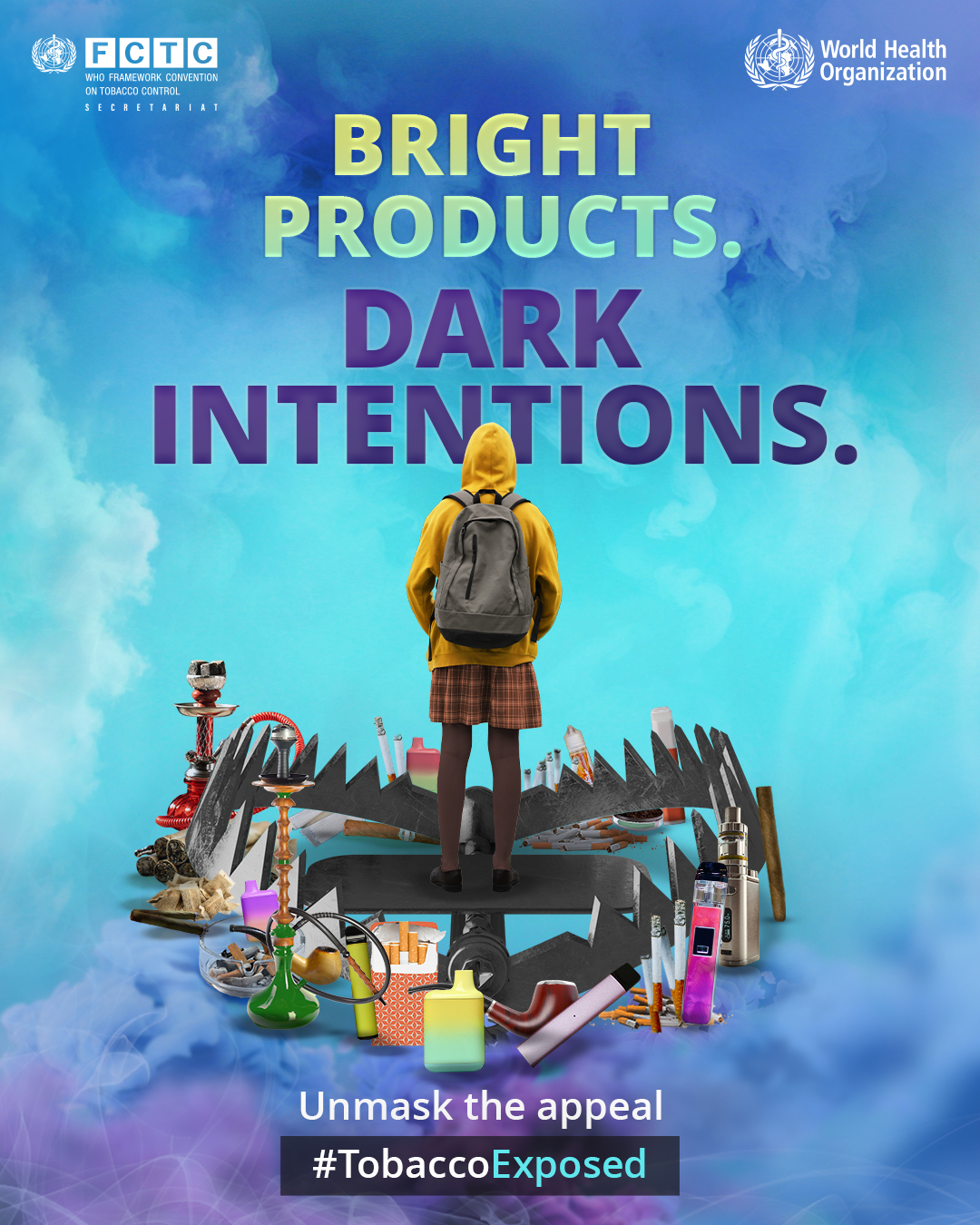
The World Health Organization (WHO) plays a pivotal role in global tobacco control. Through the Framework Convention on Tobacco Control (FCTC); the world’s first public health treaty, WHO provides clear guidelines for member countries to reduce tobacco use. For WNTD 2025, WHO highlights the urgent need to ban flavours, regulate misleading product designs, eliminate tobacco advertising, and enforce smoke- and nicotine-free environments. According to WHO, “flavours hide the truth,” and the appealing design of tobacco products masks the real, lethal risks these products pose; particularly to children.
WHO’s research has shown that flavoured products, misleading descriptors, and aggressive digital marketing all contribute to the global youth tobacco epidemic, making it more difficult for users to quit and easier to get hooked. WHO calls for governments to act now, not only to protect individual health but to uphold the right of every citizen to live in a tobacco-free environment
The Seductive Packaging of Poison

Modern tobacco and nicotine products are meticulously designed to lure young users. Bright colours, toy-like shapes, cartoon characters, and candy flavours like bubble gum or mango are not coincidences; they are psychological triggers. E-cigarettes disguised as pens or cosmetics, nicotine pouches in mint tins, and cigarettes with crushable flavour capsules all speak to a disturbing reality: these products are designed to look harmless while delivering addiction.

As WHO warns, this deceptive design undermines smoke-free policies and exploits regulatory gaps. Over 37 million children aged 13–15 years worldwide already use tobacco, and in several countries, youth use of e-cigarettes surpasses adult rates. On social media alone, tobacco marketing has been viewed over 3.4 billion times by young people
The Sweet Trap of Flavours

Flavours are not harmless. Menthol, vanilla, cotton candy, and thousands of other flavours are designed to mask the bitterness of nicotine and ease inhalation; creating a smoother path to addiction. WHO underscores that more than 16,000 unique flavours exist in tobacco and nicotine products, with flavours often cited as the number one reason for initiation among youth
These additives are often toxic when inhaled, and many have been associated with respiratory illnesses and long-term harm. Even flavour accessories; such as flavour cards or beads, help users circumvent flavour bans and continue usage under the radar of regulation.
Filters, Design, and Deception

Cigarette filters, once marketed as a health “improvement,” have proven to be nothing but a tool of deception. WHO confirms that filters do not reduce health risks. Instead, they make it easier for young users to start smoking and harder to quit. New devices also include customization features, such as adjustable nicotine levels, app connectivity, and even music playback, falsely portraying tobacco use as modern, sleek, and socially acceptable
This strategic manipulation conceals the danger, promotes deeper inhalation, and increases both addictiveness and exposure to harmful toxins; a reality far from the clean, futuristic image projected by these products.
The Digital Battlefield: Marketing to Youth

Tobacco companies have moved from billboards to feeds. Social media influencers, product placements in entertainment, and interactive content have replaced conventional advertisements. WHO has identified that these industries use covert and unregulated marketing tactics online, particularly targeting platforms like TikTok and Instagram. These posts are often free of age restrictions or health warnings, flooding young users with pro-nicotine messages.
What makes this more dangerous is that many “nicotine-free” products were found to contain nicotine upon independent testing. Meanwhile, descriptors like “smooth,” “organic,” or “clean” are used to mislead consumers into believing they are choosing a safer option, further eroding public awareness
What Must Be Done — A WHO-Backed Roadmap
In response, WHO recommends a comprehensive regulatory approach:
- Ban flavours to eliminate the key driver of youth initiation.
- Enforce plain packaging to remove visual appeal.
- Regulate product design to minimize addiction and toxicity.
- Ban advertising, promotion, and sponsorship, particularly online.
- Impose higher taxes to reduce affordability.
- Create tobacco- and nicotine-free public spaces to safeguard clean air.
- Invest in quitting support programs and evidence-based cessation tools.
More than 50 countries have banned flavoured tobacco, over 40 countries ban e-cigarettes, and yet flavour accessories remain dangerously under-regulated. WHO calls on all countries to close these loopholes and adopt strong enforcement mechanisms to protect the most vulnerable.
As a cardiologist deeply concerned with the rising incidence of heart and lung disease tied to tobacco, I echo WHO’s call. We must educate our youth, empower our communities, and expose the industry’s lies. It’s not just about tobacco control; it’s about reclaiming health, dignity, and truth.
This World No Tobacco Day, let us pledge to unmask the appeal and dismantle the machinery of manipulation. With WHO’s leadership and collective will, we can break the cycle of addiction; and build a tobacco-free future for all.


