
From Space Missions to Shaping Minds: The Purpose-Driven Journey of Dr. Oommen Tharakan
NV Paulose, Chairman, Global TV +91 98441 82044
On a quiet morning in the mist laced hills of Peerumedu, Kuttikkanam in Idukki District, an unusual sight drew the attention of the world. Students were thrilled, faculty were inspired, and local residents were very proud. A slender rocket stood elegant on a modest launchpad not in Sriharikota, not backed by massive infrastructure, but on the grounds of an engineering college in semi-rural Kerala.
As the countdown began, there was excitement, nervousness, and disbelief. When the rocket lifted off successfully, it carried more than sensors and circuitry. It carried proof that ambition, when guided by experience and belief, can defy geography.
Behind that moment stood Dr. Oommen Tharakan, a man whose professional life had once revolved around India’s most critical space missions, and who later chose a quieter, yet more difficult challenge: building futures through education. His journey from the Vikram Sarabhai Space Centre (VSSC) to the classrooms and laboratories of Mar Baselios Christian College of Engineering and Technology, Kuttikkanam is not a story of stepping back from science, but of stepping deeper into its purpose.
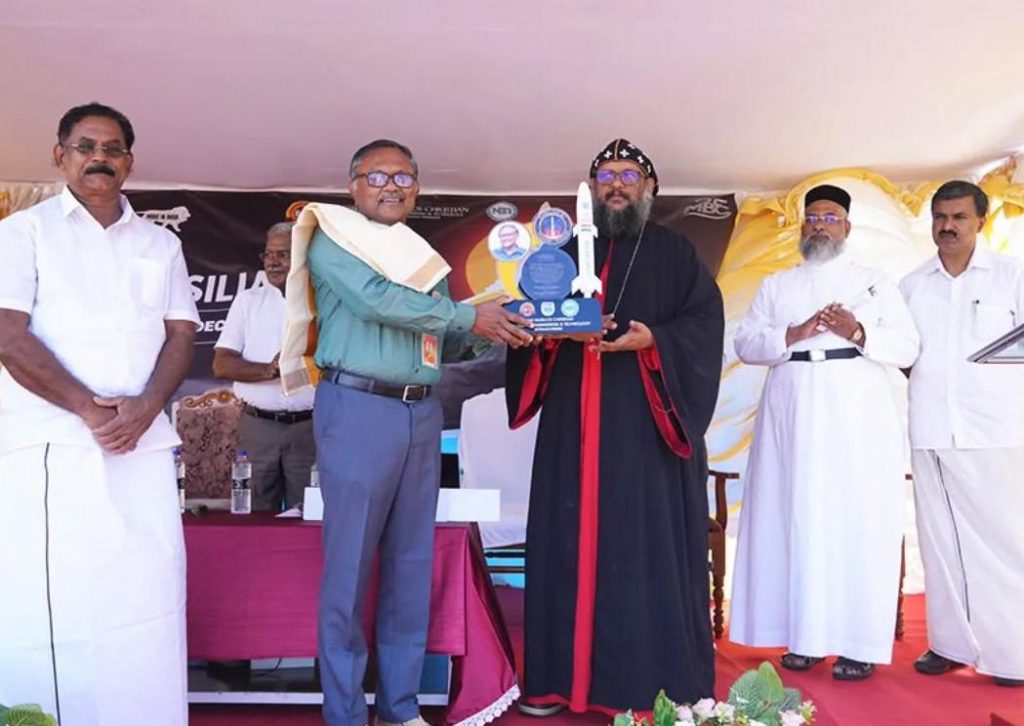
Dr. Oommen Tharakan was awarded the title “Rocket Man of Idukki” in recognition of his pivotal role in leading the Basilian-01 student rocket mission, a landmark achievement in Kerala’s academic space research landscape. Launched on 18 December 2025, Basilian-01 became the first student-built technology demonstrator rocket in Kerala developed outside the ISRO ecosystem, marking a major milestone for independent collegiate aerospace innovation. Drawing on his extensive experience as a former senior scientist at ISRO, Dr. Tharakan provided technical vision, mentorship, and strategic leadership to the student team at Mar Baselios Christian College of Engineering and Technology (MBC Peermade). His guidance not only ensured the mission’s success but also demonstrated how advanced space technology capabilities can be nurtured within regional academic institutions, inspiring a new generation of student innovators.
Early Life and Family Roots
Dr. Oommen Tharakan Kuttiyil Thomas was born in Trivandrum, Kerala, a city renowned for its cultural richness and intellectual traditions. His childhood unfolded in a household deeply rooted in values of faith, discipline, and education. His parents, Thomas Tharakan Kuttiyil Kochummen and Mariamma Thomas Tharakan, instilled in him the importance of perseverance and humility—qualities that would later define his professional and personal journey.
Growing up in Kerala during the 1960s and 1970s meant being surrounded by a society in transition. The state was witnessing rapid developments in education, with literacy rates climbing and scientific curiosity spreading among the younger generation. For young Oommen, this environment was fertile ground. He was fascinated by the mechanics of everyday objects—radios, bicycles, and electrical appliances and books—and often spent hours dismantling and reassembling them. This curiosity was not mere play; it was the seed of a lifelong passion for engineering. During his childhood days his parents promoted writing books and articles in Malayalam and English. His early schooling reflected both diligence and creativity. Teachers often remarked on his ability to grasp complex concepts quickly, but more importantly, they noticed his determination to understand the why behind every principle. Unlike many of his peers, he was not content with rote learning. He sought deeper meaning, often challenging conventional explanations and proposing alternative ways of thinking. This intellectual independence became a hallmark of his later career as a scientist and educator.
Family traditions also played a significant role in shaping his character. The Kuttiyil household emphasized service to society, respect for knowledge, and resilience in the face of adversity. These values were reinforced through community interactions, church activities, and the close-knit social fabric of Kerala. Oommen learned early that success was not measured solely by personal achievement but by the ability to contribute meaningfully to the community.
Another defining aspect of his childhood was exposure to Kerala’s vibrant intellectual culture. The state’s emphasis on education meant that libraries, debates, and science clubs were common even in smaller towns. Oommen participated actively in such forums. These experiences nurtured his confidence and prepared him for the rigorous academic journey that lay ahead.
By the time he completed his secondary education, it was clear to his family and teachers that Oommen was destined for a career in science and engineering. His decision to pursue a Bachelor of Technology at the University of Kerala was not merely a personal ambition but a natural extension of his early life experiences. The strong foundation laid during his formative years—family values, intellectual curiosity, and community engagement—would serve as the bedrock for his future contributions to India’s space program and academia.
Education and Academic Formation
The pursuit of knowledge was always central to Dr. Oommen Tharakan Kuttiyil Thomas’s life. After completing his schooling in Kerala, he embarked on a journey that would take him through some of India’s most prestigious institutions of higher learning. Each stage of his academic formation not only sharpened his technical expertise but also broadened his intellectual horizons, preparing him for the multifaceted career that lay ahead.
His first major academic milestone was the Bachelor of Technology degree at the University of Kerala, completed in 1985. The University of Kerala, with its strong emphasis on foundational sciences and engineering, provided him with a rigorous grounding in electrical and electronic principles. During these formative years, Oommen distinguished himself as a student who combined theoretical mastery with practical ingenuity. He was known among his peers for his ability to translate classroom concepts into working models, often building small prototypes to demonstrate the application of engineering principles. This hands-on approach would later become a hallmark of his teaching and research philosophy.
Becoming a Scientist: The ISRO Years
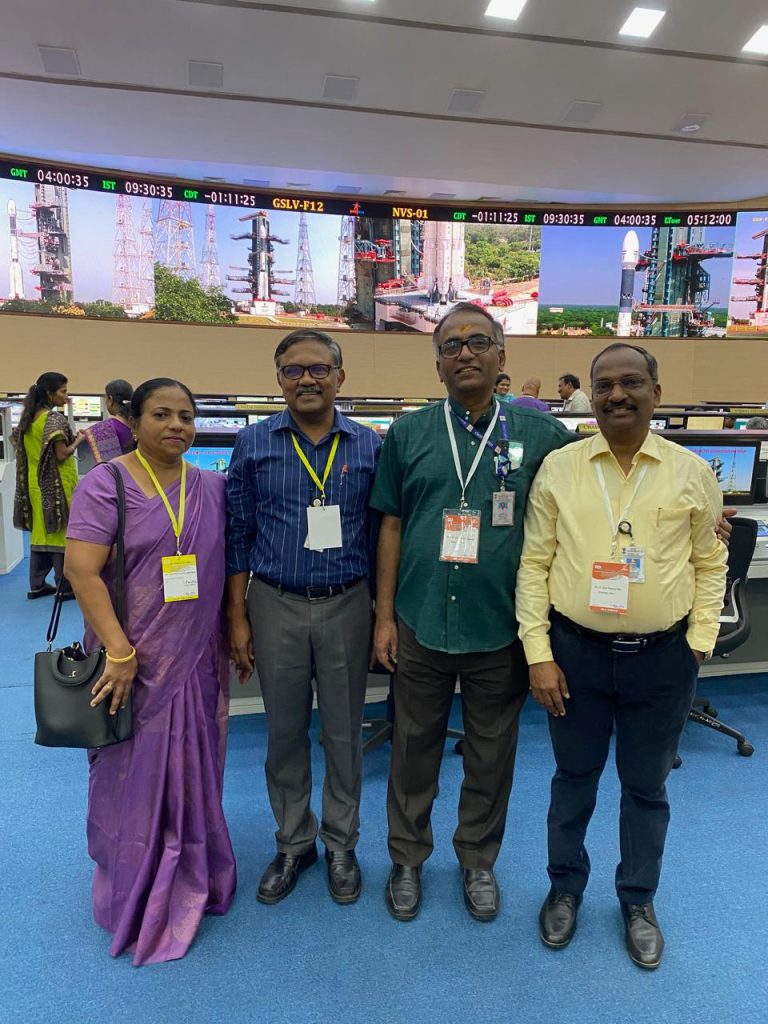
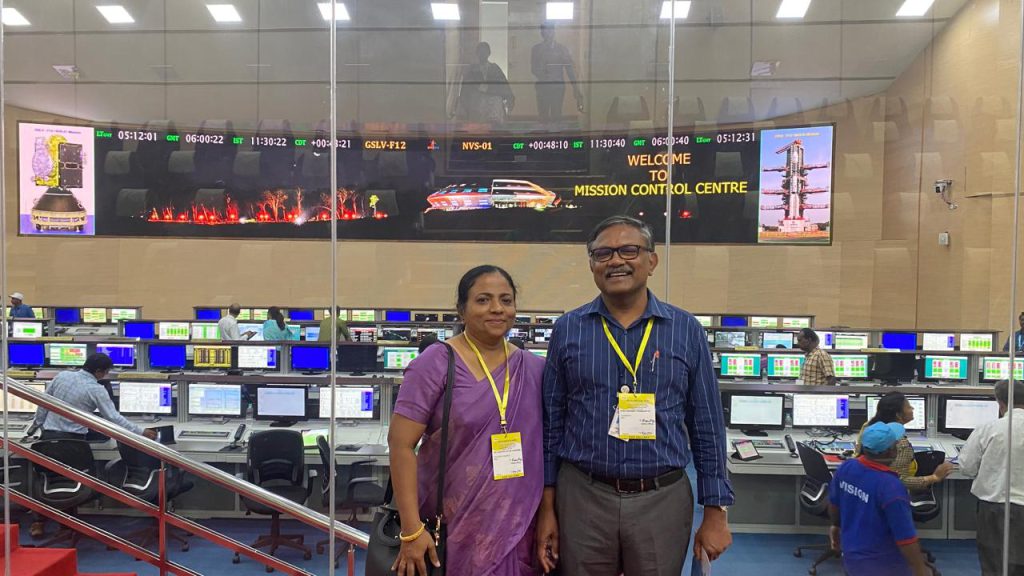
Dr. Oommen Tharakan’s defining professional journey began in 1985 when he joined the Vikram Sarabhai Space Centre, the heart of India’s launch vehicle program. Fresh from his undergraduate studies, he entered an ecosystem shaped by national urgency, intellectual rigor, and an uncompromising commitment to reliability.
These were years when India’s space program operated under severe international technology embargoes. Access to advanced components and test systems was limited, forcing engineers and scientists to innovate with what was available. The challenging times, when looked back on, give tremendous joy to the community of dedicated scientists.
For a young scientist, the challenging environment was demanding and formative. Working on avionics, propulsion related electronics, and reliability engineering, Dr. Oommen Tharakan learned early that in space missions, failure is not an abstract concept; it has consequences measured in lost missions and national setbacks.
The “zero defect” mandate was not a slogan but a lived reality. Each component had to survive vibration, thermal extremes, radiation, and the unforgiving physics of launch. In this crucible, he developed a mindset that would define his career: rigor without shortcuts, creativity grounded in fundamentals, and perseverance under pressure.
He contributed vastly to the indigenisation of electrical, electronic and electromechanical components, helping Indian Space Research Organisation (ISRO) move from dependence on imports toward self-reliance through inspiring Indian industry. We see the echo of this approach in today’s Atmanirbhar Bharat initiatives.
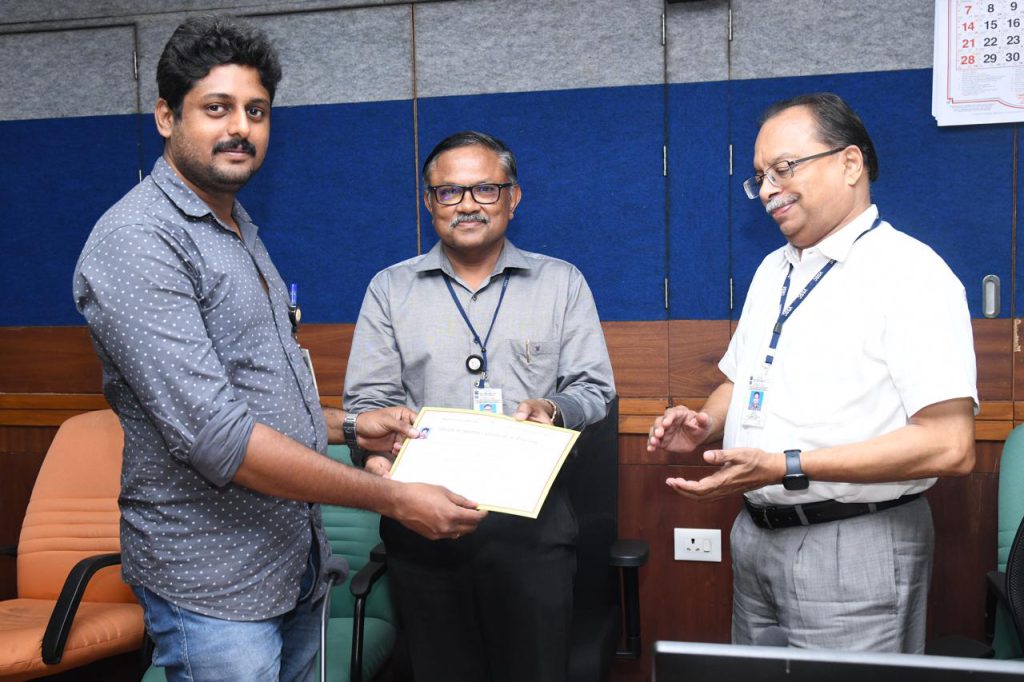
Another significant achievement was his involvement in knowledge transfer and training. Recognizing the importance of building capacity within ISRO, Oommen mentored younger engineers and scientists, sharing his expertise in Indigenisation, VLSI design and test, formal verification, avionics production, reliability engineering and systems design. His ability to explain complex concepts in simple terms made him a respected teacher within the organization. Many of his trainees went on to assume leadership roles in subsequent ISRO missions, a legacy that Oommen continues to cherish.
By the time he left ISRO, Oommen had established himself as a scientist whose contributions had directly impacted the success of India’s space program. His work in components screening, VLSI design and test, reliability engineering, and indigenous innovation ensured that India could pursue its space ambitions with confidence. More importantly, his years at ISRO instilled in him a deep sense of national service and scientific responsibility—values that would guide his later transition into academia.
Deepening the Mind: IISc and IIT Bombay
While his professional responsibilities at ISRO grew, Dr. Oommen Tharakan never viewed learning as complete. His pursuit of higher education was not driven by credentialism, but by a need to understand systems more deeply. Completing his M.E. at the Indian Institute of Science (IISc), Bengaluru in 1991 marked a critical intellectual shift.
IISc exposed him to a culture where questioning assumptions was as important as solving problems. The environment at IISc was transformative: surrounded by some of the brightest minds in the country, Oommen was exposed to cutting-edge research and interdisciplinary collaboration. He learned to approach problems not just as technical challenges but as opportunities for innovation. His time at IISc also instilled in him a strong appreciation for research methodology, scientific rigor, and the importance of publishing work that could contribute to the global body of knowledge.
Years later, his doctoral work at IIT Bombay further transformed his approach to engineering and research. IIT Bombay, known for its emphasis on innovation and entrepreneurship, offered him a platform to explore the intersection of engineering and applied research. Here, he honed his skills in systems design, microelectronics, formal verification and communication technologies. The exposure to diverse faculty and international collaborations at IIT Bombay broadened his perspective, reinforcing the idea that engineering was not confined to laboratories but was a tool for solving real-world problems.
Completing a Ph.D. while handling demanding professional tasks required discipline and sacrifice, but it also reinforced a lifelong lesson: serious scholarship is less about brilliance and more about sustained effort. His research in Genetic algorithms, VLSI design and testing, automatic test pattern generation, and fault simulation addressed practical problems at the intersection of design and production areas often overlooked but crucial to system reliability. Throughout his academic journey, he faced challenges that tested his resilience. The transition from Kerala to Bangalore and later to Bombay required him to adapt to new environments, cultures, and academic expectations. Financial constraints and the pressure of excelling in highly competitive institutions were hurdles he had to overcome. Yet, these challenges only strengthened his resolve. He learned to balance rigorous coursework with independent research, often working late into the night to refine his projects and papers.
By the time he completed his advanced studies, Oommen had acquired not only technical expertise but also a vision for how engineering could serve society. His academic formation was marked by a blend of discipline, creativity, and resilience—qualities that would define his later contributions to ISRO and academia. More importantly, his experiences at the University of Kerala, IISc Bangalore, and IIT Bombay instilled in him a lifelong commitment to learning, teaching, and innovation.
For students and young researchers, this phase of his life stands as a powerful reminder that learning is not confined to age or stage. Intellectual growth is a choice to be renewed daily.
A Global Lens, an Indian Core
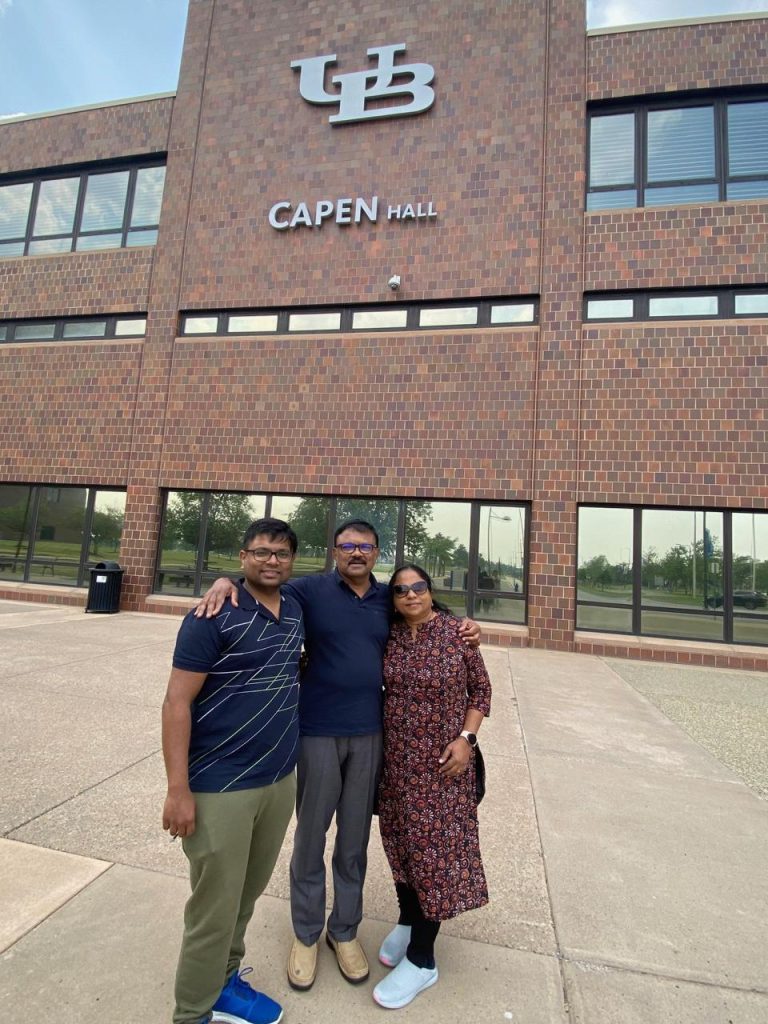
International exposure played a complementary role in richly shaping Dr. Oommen Tharakan’s worldview. Serious participation in global conferences and workshops in Hong Kong, Seoul, Washington DC, Scarborough (Canada), and other international hubs offered him a firsthand view of how engineering problems were approached across cultures.
These experiences did not dilute his commitment to India; instead, they sharpened it. He observed that while resources and infrastructure varied widely, excellence was ultimately driven by clarity of thought, disciplined processes, and ethical responsibility. Returning to India, he carried with him not just technical insights but a conviction that global standards could and should be pursued within Indian institutions, even in environments far removed from metropolitan privilege.
The Shift: From Spacecraft to Students
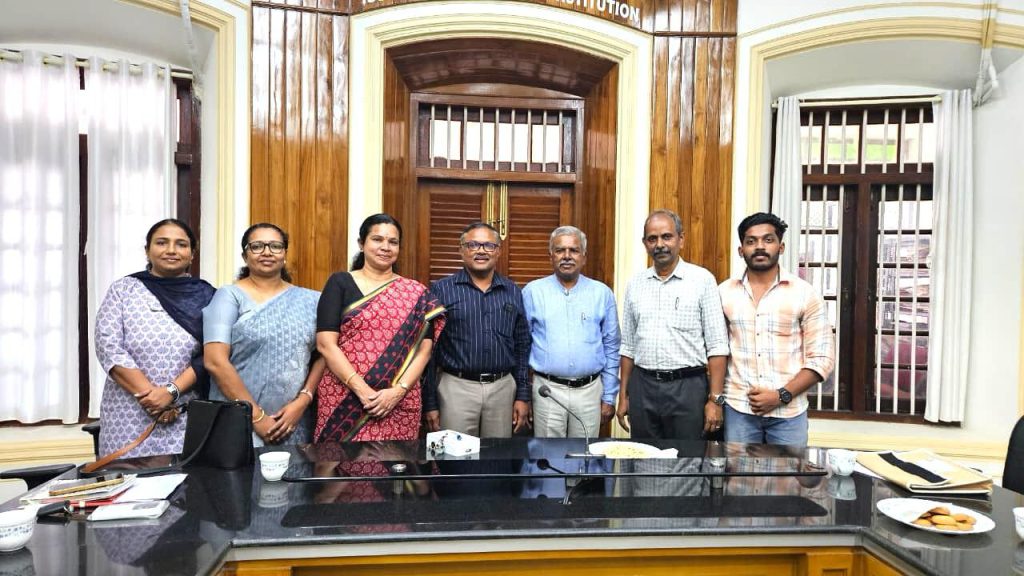
After nearly four decades at ISRO, culminating as Group Director at VSSC, Dr. Oommen Tharakan made a transition that surprised many. Moving into academia full time, particularly in a semi-rural setting, was not an obvious next step. Yet for him, it represented continuity rather than change. “At ISRO, we built systems that would leave the Earth,” he reflects. “In academia, we build minds that must learn to escape limitations.” As Dean of Research and Development and Head of Electronics and Communication at Mar Baselios Christian College of Engineering and Technology (MBCET), he encountered a different set of challenges. Limited resources, diverse student preparedness, and the absence of an entrenched research culture could have become constraints. Instead, they became design parameters.
He approached academic leadership much like a complex engineering problem: define objectives clearly, work with available resources, build robust processes, and iterate relentlessly. The result was the emergence of a vibrant research ecosystem, international collaborations, and most visibly, the BASILIAN-01 rocket project; that made everyone proud. We could look on to the sky and reach our dreams over there as well.
Under his guidance, undergraduate students designed, fabricated, tested, and successfully launched a technology demonstrator rocket, the first such achievement by an engineering college in India. More than the launch itself, the project redefined what students believed was possible. It transformed classrooms into living laboratories and replaced passive learning with ownership and accountability.
Success as a Byproduct of Purpose
Dr. Oommen Tharakan’s career is marked by achievements that span institutions and decades, yet he speaks of them with restraint. Completing his Ph.D. later in life remains a personal milestone, not because of the degree itself, but because it reaffirmed his belief in perseverance. His work on test vector generation for VLSI devices and indigenous component reliability has influenced both academic research and mission critical applications.
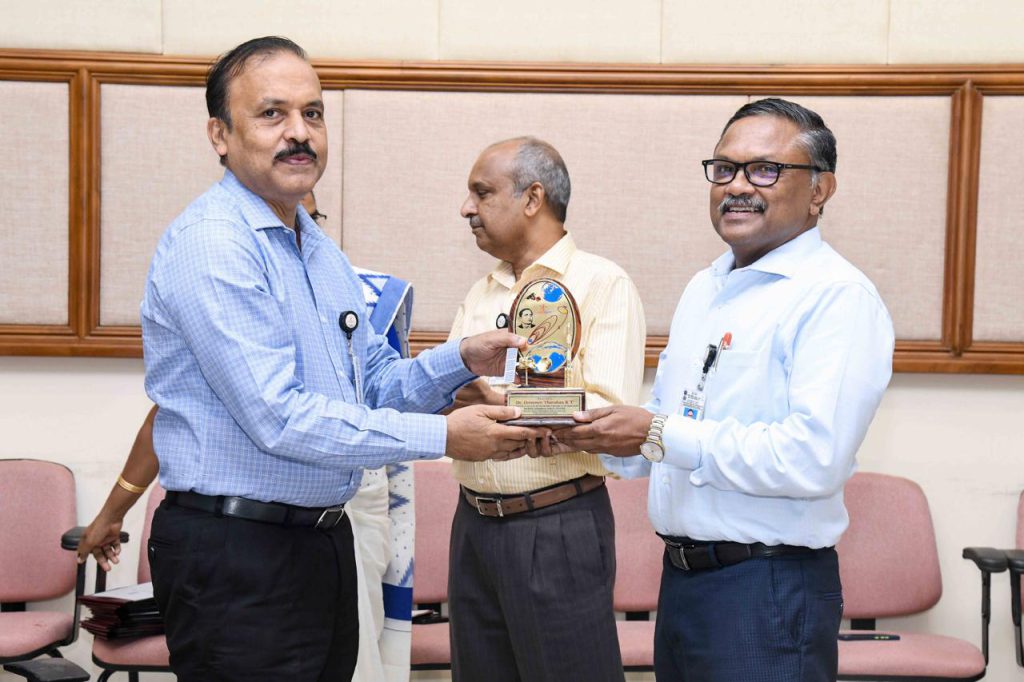
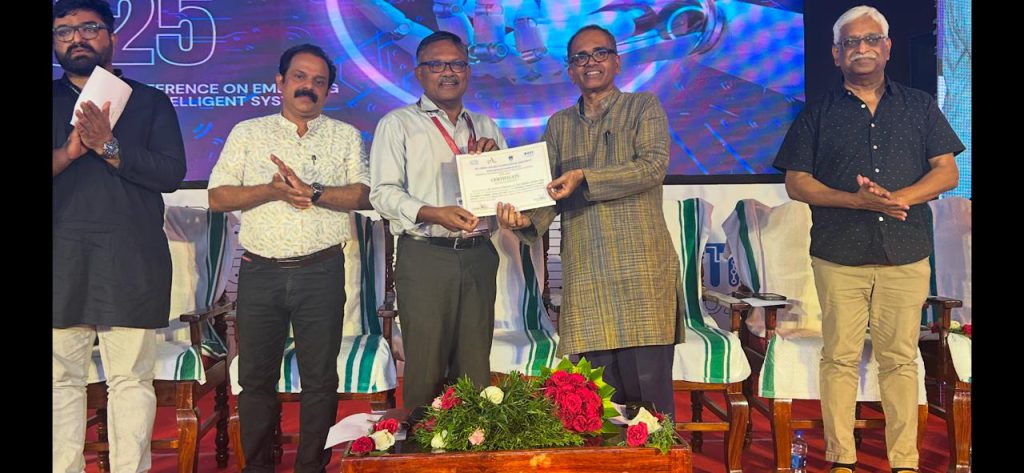
His Springer Nature book, Electronics Production Defects and Analysis, fills a crucial gap between design theory and manufacturing reality, serving engineers and researchers worldwide. Recognition followed in the form of awards, IEEE Senior Membership, and invitations to global expert panels not as goals pursued, but as acknowledgments of sustained contribution.
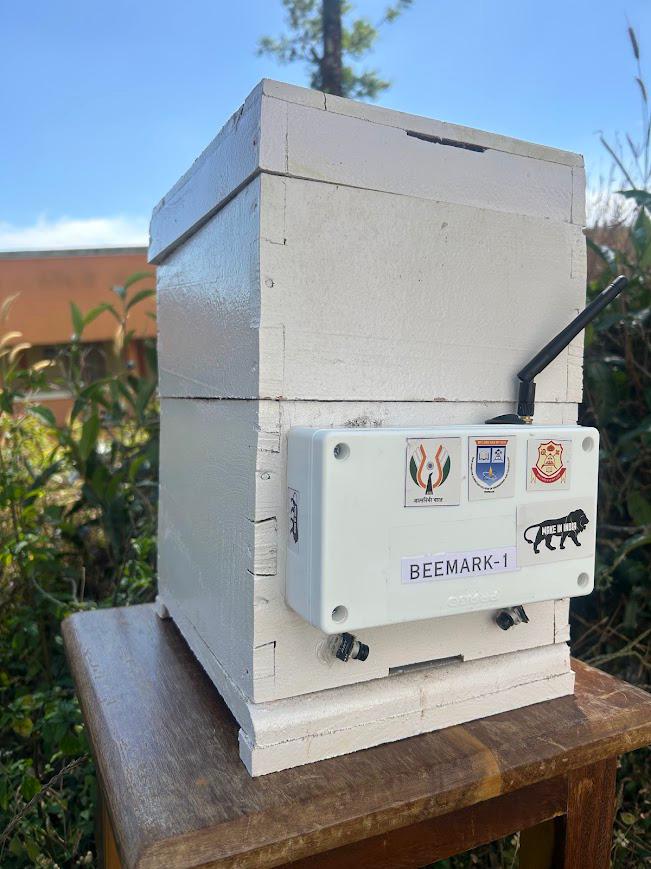
Equally telling is his work beyond aerospace. The BEEMARK-I smart beehive monitoring system, which applies aerospace grade sensor logic to agriculture, reflects his conviction that advanced technology must ultimately serve society. By helping farmers monitor bee colony health, the project demonstrates how high-end engineering can address grassroots needs; bringing collaboration offers from premium centres.
Agriculture Universities to Space Research Organisations opens their doors and windows to welcome students and faculties to practice what is being taught; in fact, going beyond the curriculum and its boundaries. The mindset set in the campus has impacted the thought process of the educational ecosystem in the state of Kerala and beyond.
Personal Life and Values
Behind the professional achievements and academic leadership of Dr. Oommen Tharakan Kuttiyil Thomas lies a deeply grounded personal life shaped by family, faith, and enduring values. For him, success has never been measured solely by titles or accolades, but by the balance between professional dedication and personal integrity.
Raised in Kerala, his early life was steeped in the traditions of community, spirituality, and resilience. These foundations instilled in him a sense of humility and service that carried through his career. Even as he worked on mission-critical projects at ISRO or guided students in academia, he remained rooted in the values of honesty, perseverance, and compassion.
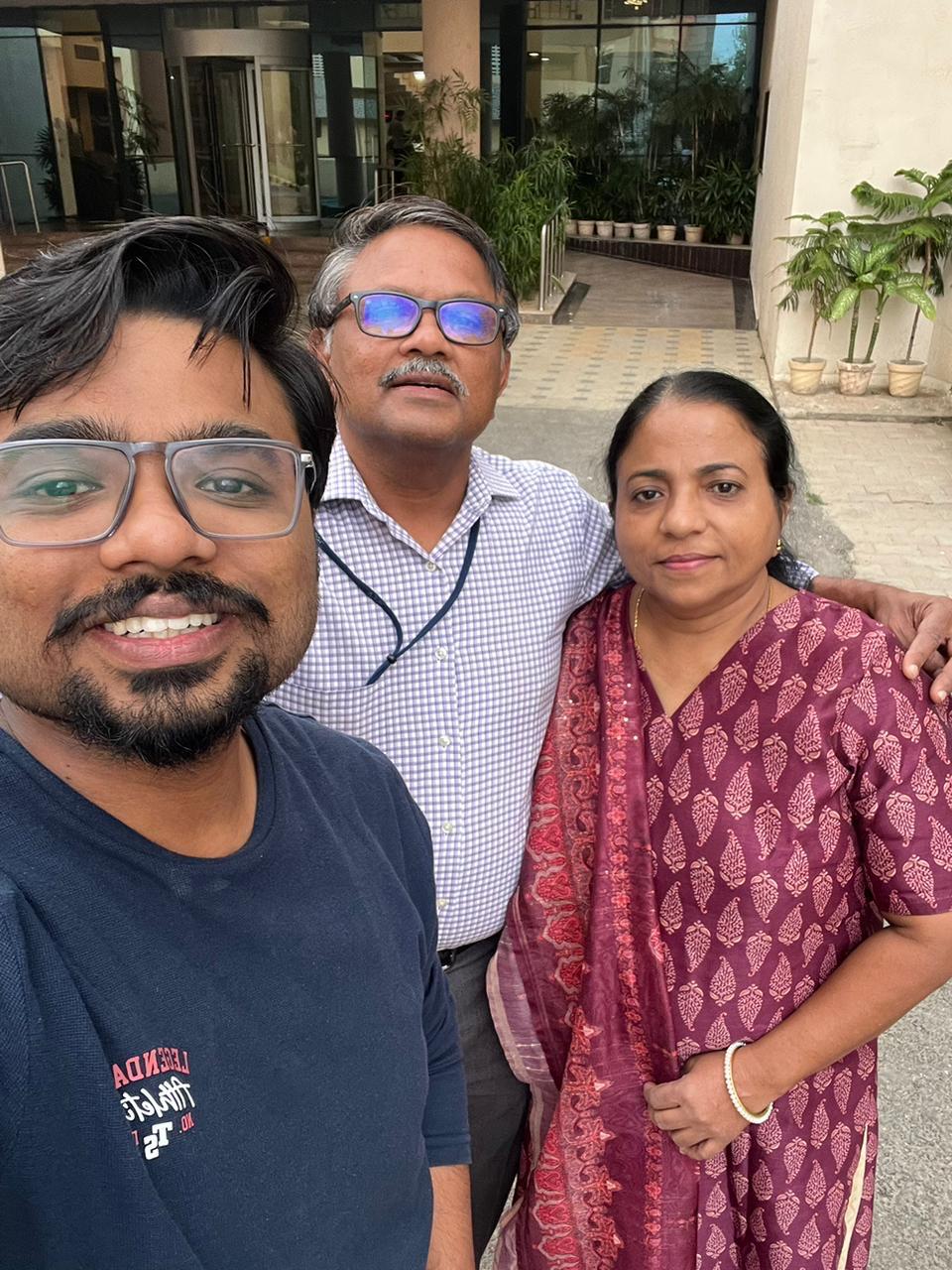
Family has always been central to his journey. He often reflects on how the support of his loved ones enabled him to pursue demanding roles across India and abroad. Their encouragement provided strength during moments of challenge, whether it was the long hours at ISRO, the adjustments required in international environments, or the responsibilities of academic leadership. For Dr. Oommen Tharakan, family is not only a source of personal joy but also a reminder of the importance of balance between work and life.
In essence, Dr. Oommen Tharakan’s personal life and values form the bedrock of his professional achievements. They explain his resilience in the face of challenges, his humility despite recognition, and his unwavering commitment to mentorship and service. For him, the true measure of a life well lived is not in accolades but in the values upheld and the lives touched.
Lessons from a Life in Science
Asked about the principles that guide him, Dr. Tharakan is unequivocal: perseverance outweighs perfection. In research, he believes, solutions emerge once one commits fully to the problem. Curiosity, not rote memorization, is the foundation of education. Students must understand the “why” behind every equation and algorithm.
Failure, in his view, is not an endpoint but feedback. Every setback refines judgment and strengthens resolve. Above all, he emphasizes scientific social responsibility, the idea that technology’s true value lies in its capacity to uplift people and empower communities.
These lessons resonate far beyond engineering. They speak to anyone navigating uncertainty, ambition, and change.
Building Futures: The Hardest Engineering
As the echoes of the BASILIAN-01 launch spread into the hills of Idukki, what remained was not just data or headlines, but a shift in mindset. Students who once doubted their place in advanced engineering began to see themselves as contributors, not spectators.
Dr. Oommen Tharakan’s journey reminds us that while launch vehicles rise once, well taught students rise again and again carrying knowledge, confidence, and purpose into the world. In choosing to build futures rather than rest on past achievements, he has undertaken perhaps the most demanding engineering challenge of all. And by every measure that truly matters, he continues to succeed.


