
Siddaramaiah Defeated in the Tug of War Between Original Congressmen and Migrants
There is no other politician who surpasses Siddaramaiah ideologically. He is a statesman comparable to the late D. Devaraj Urs.
By Wilfred D’Souza
Whether out of necessity or political pressure, Siddaramaiah has resigned from the post of Chief Minister. In the ongoing struggle between the original Congress leaders and those who joined the party from elsewhere, the faction led by D. K. Shivakumar has emerged victorious. It is also a setback to the aspirations of Karnataka’s AHINDA communities. Ultimately, the people of Karnataka are being deprived of the opportunity to be governed by a seasoned statesman.
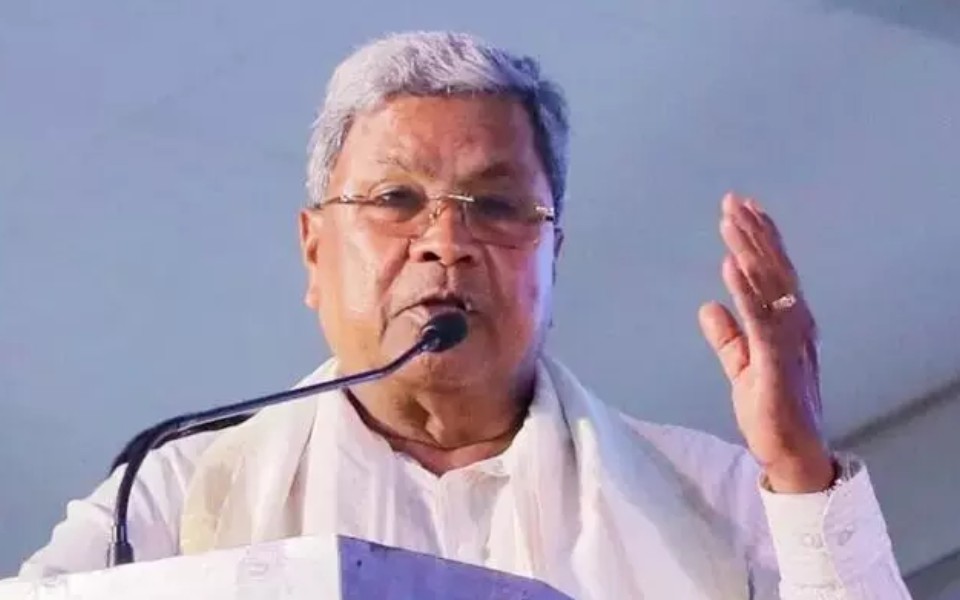
Siddaramaiah’s greatest strengths have been his long political experience, his commitment to the oppressed and backward communities, his dedication to social justice, his ideological consistency, and his political clarity. Through his distinctive style of people oriented governance, he was able to bring dignity to the office of Chief Minister.
With his resignation, the chair is now likely to be occupied by the “Kanakapura Rock,” D. K. Shivakumar.
Siddaramaiah the Socialist
“I do not present the budget after checking for Rahu Kalam, Gulika Kalam, or Yamaganda Kalam. Every day is the same to me. That is why I eat meat even on Ugadi or Shivaratri. It is my choice. What is wrong with that?”
These were the words spoken by Chief Minister Siddaramaiah while replying to the debate on the 2026 and 2027 state budget.
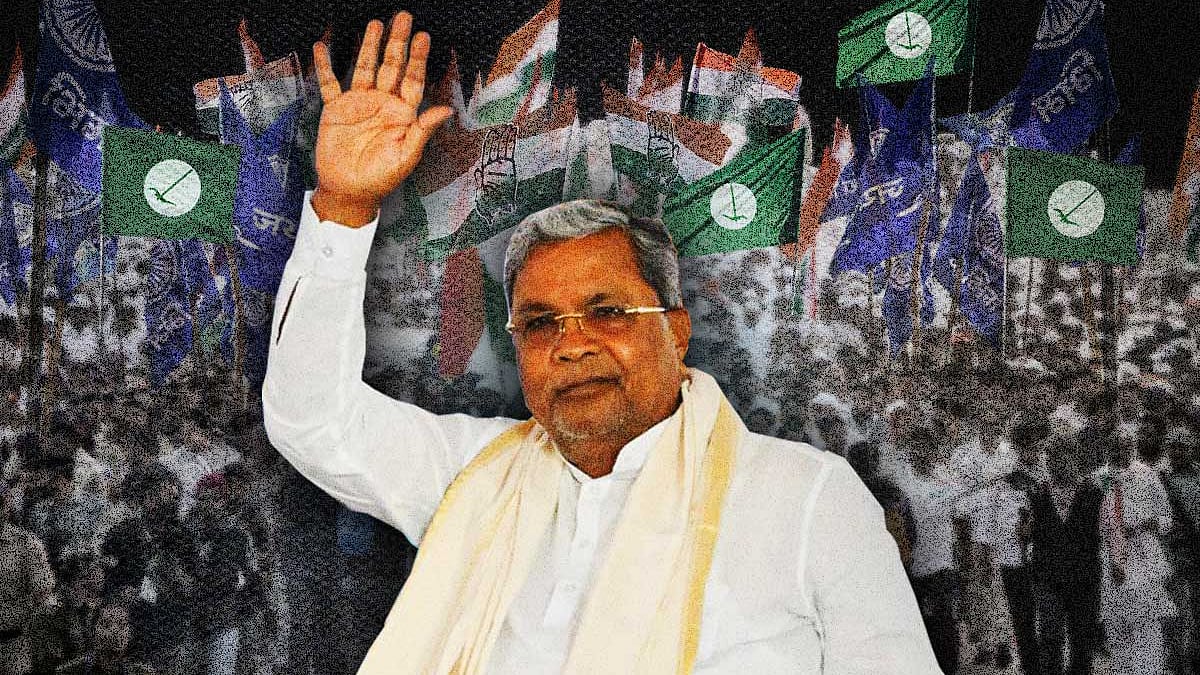
At a time when hollow religiosity has become the very breath of politics, Siddaramaiah is perhaps the only politician with the courage to make such statements on the floor of the Assembly. In the present political climate, there is no other politician who surpasses him in ideological conviction.
He is widely regarded as a powerful leader of the AHINDA communities, a statesman comparable to the late D. Devaraj Urs, and a record holder for presenting the state budget the highest number of times. I have never personally heard Siddaramaiah publicly describe himself as a socialist. Yet, for the media and many of his progressive admirers, he has become the very image of socialism.
At times, observing his words, conduct, and decisions, one feels that he truly is a socialist. Yet, on other occasions, when one sees his actions and his closeness to certain individuals, one cannot help but wonder, “What kind of socialism is this?” Be that as it may, in Karnataka politics today, Siddaramaiah is generally identified as a socialist.
Siddaramaiah Who Was Nearly Lost Amid the Gowda Turmoil
As a journalist interested in politics and as a development activist, I have closely observed Siddaramaiah over the years. When H. D. Deve Gowda and Siddaramaiah were successfully building the Janata Dal as an alternative political force to both the Congress and the BJP, I had become an admirer of both leaders.
Then circumstances changed dramatically. Convinced that the Gowda family’s obsession with dynastic politics would threaten his own political future, Siddaramaiah began mobilizing support through the AHINDA movement.

At that crucial time, the Mysuru based newspaper Andolana stood firmly with Siddaramaiah. Had it not been for the support of Andolana, the result of the Chamundeshwari by election might have been disastrous for him. Amid the political noise created by the Gowda camp, Siddaramaiah could very well have disappeared from Karnataka politics.
The conflict escalated to such an extent that Siddaramaiah, who was then the state president of the Janata Dal, was expelled from the party. Deve Gowda feared that as long as Siddaramaiah remained in the party, it would be impossible to make his son H. D. Kumaraswamy the Chief Minister.
Because of financial constraints, Siddaramaiah abandoned his plan to transform the AHINDA movement into a national political party under the banner of the All India Progressive Janata Dal. Instead, he was compelled to contest the December 2006 Chamundeshwari by election to safeguard his political future.
At that time, I was living in Mysuru. I had resigned from journalism and was working as an adviser at the prestigious Abdul Nazeer Sab institution. Having spent two years as a journalist in Mysuru, I had access to detailed information about every aspect of the by election.
Deve Gowda had made up his mind to politically eliminate Siddaramaiah.
H. D. Kumaraswamy, then the Chief Minister, along with Deputy Chief Minister B. S. Yediyurappa, fielded Shivabasavayya, a wealthy Class One contractor from the Veerashaiva community, as the Janata Dal candidate against Siddaramaiah.
The people of Chamundeshwari witnessed firsthand how caste calculations and the flow of money could influence an election. Kumaraswamy and Yediyurappa demonstrated how state power could be used to win an election.
I personally witnessed some senior bureaucrats, who had once been close friends of Siddaramaiah, quietly joining the Gowda camp and working for his defeat because of caste considerations.
Despite all these conspiracies, Siddaramaiah managed to win by a mere 257 votes. It was nothing short of a political rebirth for him.
The Role of Andolana
During that by election, a young leader who was very close to Siddaramaiah had become upset with him and decided to leave the party. Since he was personally known to me, I spoke with him and persuaded him not to take such a step.
At the same time, the Mysuru newspaper Andolana stood firmly behind Siddaramaiah. Without its support, the Chamundeshwari by election result could have been disastrous for him. Amid the uproar created by the Gowda camp, Siddaramaiah would almost certainly have been politically finished.
For and Against Siddaramaiah
As a development activist, I remain an admirer of Siddaramaiah, though not an unquestioning follower.
Having worked in Mysuru for seventeen years, I have gained some understanding of both his strengths and weaknesses. At a time when he was out of power, my friend Shivakumar, who is now a nominated member of the Karnataka Legislative Council from the Congress, and I spent nearly two hours discussing various issues with Siddaramaiah at the Jaladarshini Guest House.
Many of the ideas he spoke about that day remain fresh in my memory. Subsequently, he had the opportunity to serve two terms as Chief Minister. Unfortunately, he was not able to implement some of the very ideas he had advocated.
This disappoints me. At the same time, I understand the limitations he faced while trying to govern through a party like the Congress, which, in my view, lacks strong ideological commitment and often carries semi feudal tendencies.
On the Five Guarantee Schemes
I have publicly supported the five guarantee schemes introduced by Siddaramaiah’s government. Through these programs, a portion of taxpayers’ money has reached ordinary people. Lakhs of families have benefited from them, and I have argued strongly against those who oppose the guarantees.
Yet, personally, I have some reservations.
Even after so many decades of independence, why should governments still need to offer such benefits simply to secure electoral support? Do women earning between one thousand and five thousand rupees a day really require free bus travel? Could not schemes such as free ration, free electricity, free bus travel, and unemployment allowances be limited to those who genuinely need assistance?
My question is not confined to the guarantee schemes alone. Another welfare measure that deserves re examination is the free electricity scheme for farmers’ pump sets, introduced by another socialist former Chief Minister, the late S. Bangarappa, and still in force today.
An Uncommon Politician
Despite these concerns, I have no hesitation in saying that Siddaramaiah is one of the rarest politicians Karnataka has produced. As far as I can see, there is currently no politician in Karnataka who possesses the same combination of strength, capability, and ideological commitment to truly be considered his equal.


