
A Geriatric Crisis: From Systemic Neglect to a Vision of Compassionate Care in India
Dr. Lavina Noronha | Director of Ave Maria Palliative Care
The true measure of a society’s character is how it treats its elderly. By this measure, India is facing a profound humanitarian and systemic crisis. The current approach to aging and healthcare is a patchwork of broken systems, failing those who built the nation we live in today.
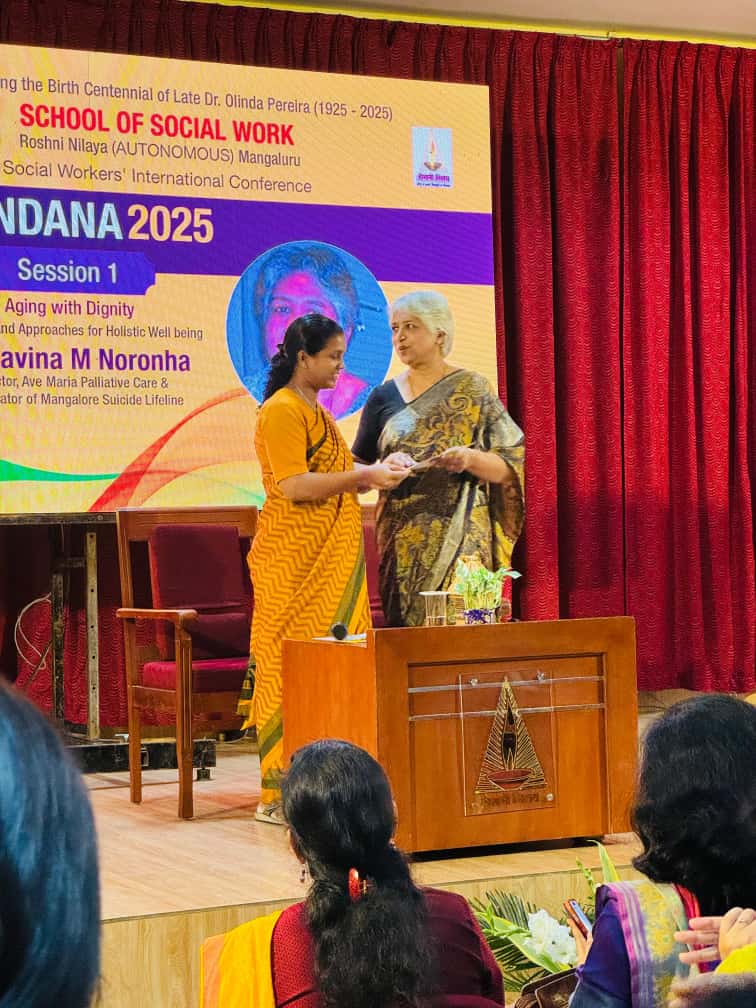
We must shift from a “Geriatric Model” of managing diseases to a “Geriatric Mode” of caring for human beings in a holistic, dignified, and integrative approach.
The Brutal Reality: Survival, Not Living
For a vast number of India’s elderly, life is a daily calculation of impossible choices.
Medication vs. Nutrition: The most stark example is the heartbreaking choice between food and medicine. “I skip one meal to take medicines, or I skip all meals so that I can take medicines.” This is the reality for millions. When anti-hypertensive or diabetic medications are taken on a consistently empty stomach, they can cause severe complications, creating a vicious cycle where the cure exacerbates the problem.
The “Revolving Door” of Healthcare: Our system is designed for quick fixes, not sustainable health. A patient with high diabetes is medicated into hypoglycaemia. A person with high sodium is treated until they become disoriented from low sodium. This “revolving door policy” is exhausting for the elderly and inefficient for the system, focusing on symptoms rather than the person’s overall stability.
Corporatization and Exclusion: The corporatization of healthcare, while a boon for some, has left the elderly behind. Without universal insurance coverage, they are often priced out of essential services. The focus is on profitable, invasive procedures rather than affordable, preventive care.
The Multifaceted Abuse of Dignity
The crisis extends far beyond clinical settings into the very fabric of social life.
Malnutrition and Neglect: Many elderly face severe malnutrition, not by choice, but due to neglect and a lack of support systems.
Emotional and Physical Abuse: The unspoken epidemic of elder abuse; emotional, financial, and horrifyingly, even sexual, is a national shame. The fact that an 80-year-old woman is not spared assault highlights a deep-seated societal failure to protect our most vulnerable.
Dehumanization in Healthcare: The experience of being a patient is often one of humiliation. Standard hospital gowns that don’t cover one fully, making them feel exposed and vulnerable. The statement, “Now I know why they call it ‘I see you’,” is a critique of this loss of dignity. We label people as “the diabetic in bed 3” or “the CA patient,” forgetting the name, the life, and the person behind the diagnosis.
Systemic Failures Deepening the Crisis
The Brain Drain: We produce a high number of skilled medical professionals, but our failure to create a viable and rewarding healthcare ecosystem leads to a mass migration of talent. This “greener pasture” exodus depletes the very resources needed to address these challenges.
Diagnostic Trauma: For an elderly person, especially one who is cognitively challenged, a routine MRI or PET scan can be a nightmare. The confined space, the loud noises, and the lack of empathetic explanation can feel like being trapped and suffocated. Similarly, a 5mm needle for a blood draw can be a source of immense fear when not communicated with patience and compassion. Our system is not equipped with the skills to handle this cognitive and emotional distress.
Outdated Approaches and Polypharmacy: Medical education and practice often cling to outdated models from the 1960s and 70s. This leads to polypharmacy, the over-prescription of medications, without a holistic view of the patient’s overall health, interactions, and quality of life.
The Path Forward: Implementing a True “Geriatric Mode”
The solution requires a fundamental paradigm shift from reactive, symptom-based care to proactive, person-centered care.
1. Integrative and Holistic Healthcare:
We must move beyond treating just physical symptoms. An integrative model considers the physical, psychological, social, and spiritual well-being of the individual. The government’s promotion of Aayush systems is a step in the right direction, offering alternative pathways, but it must be woven into a cohesive system alongside allopathic medicine, not kept as a separate stream.
2. Policy and Education Reform:
Mandatory Geriatric Training: Implement geriatric care modules in all helping professions; medicine, nursing, social work, physiotherapy, counseling, and psychology.
Create Geriatric Units: Establish and fund dedicated geriatric units in hospitals and encourage the development of geriatric-specific clinics.
Focus on Preventive Care: Shift the national health focus from “fixing what’s broken” to preventing the break. Promote and subsidize regular preventive health checkups for the elderly.
3. Dignity in Practice:
Sensitize Healthcare Workers: Train staff to see the person, not the patient. This includes practical changes, like designing dignified hospital gowns and creating calm, explanatory protocols for diagnostic tests.
Respect Cultural Pluralism: India is a pluralistic society. Our care must be sensitive to diverse cultural, linguistic, and religious needs of the elderly, respecting their beliefs and lifestyles.
4. Systemic Shifts:
Address Affordability: Create robust health insurance schemes and subsidies for the elderly to break the “medicines or food” dilemma.
Combat Polypharmacy: Encourage regular medication reviews to reduce unnecessary prescriptions and their adverse effects.
Strengthen Legal and Social Safeguards: Enforce and promote laws against elder abuse and create accessible support networks for reporting and intervention.
From Human Being to Being Human
The journey we need to make is from seeing the elderly as a burden to be managed, to honouring them as human beings with inherent dignity. It is the journey from being a “human doing”; focusing only on tasks and treatments, to “being human” showing empathy, respect, and compassion. This “Geriatric Mode” is not a single policy but a cultural and professional transformation. It demands that we listen to the stories behind the statistics, see the person behind the patient, and build a system that doesn’t just add years to life, but adds life to those years. Our elderly are somebody’s parents, grandparents, and spouses. It is time we started treating them as our own.


One thought on “The journey we need to make is from seeing the elderly as a burden to be managed, to honouring them as human beings with inherent dignity | Dr. Lavina Noronha | Global TV”