
Humanity Is the Common Platform for Collective Action, Emphasized at Intellectual Symposium–2.0 in Mangaluru | Global TV
NV Paulose, Chairman, Global TV +91 98441 82044
Mangaluru, January 8, 2026: The Intellectual Symposium–2.0, aimed at promoting peace, unity, and social responsibility, was held on Thursday at Iqra Arabic School, Kalpana Road, Kankanady, Mangaluru. The programme was organized by the All India Payam-e-Insaniyat Forum (AIPIF), Mangaluru, under the theme “Let us unite on a common platform to discuss the creation of a peaceful environment in India.” Presiding over the symposium, Moulana Syed Abdul Ali Hasani Nadwi of the All India Payam-e-Insaniyat Forum emphasized that humanity is the common platform on which people from all religions, communities, and backgrounds must come together to build a strong and harmonious nation.
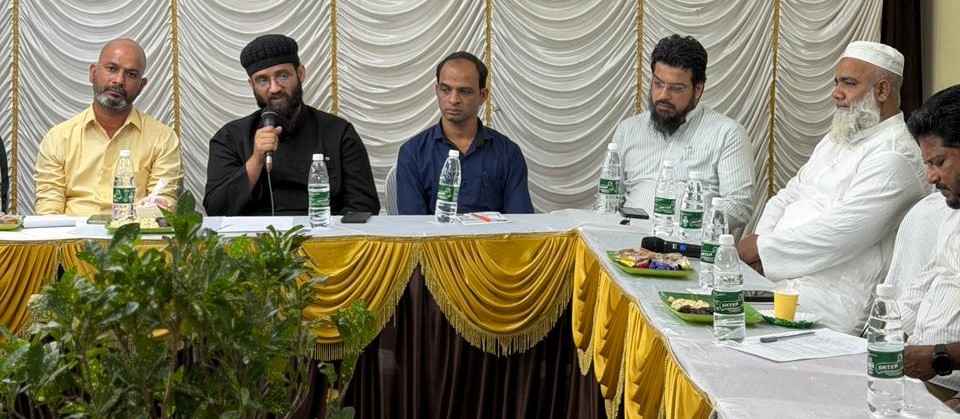
Addressing the gathering, he stated that while discussions are important, meaningful progress can only be achieved through practical and sustained action. He urged individuals and institutions to take responsibility in addressing key social challenges such as hunger, substance abuse, educational shortcomings, unemployment, and health-related issues. He observed that a hunger-free and drug-free society plays a vital role in ensuring peace and reducing social unrest.
Several speakers at the symposium highlighted alarming ground realities related to poverty and hunger. Referring to national and global data, participants pointed out that a significant share of the world’s undernourished population lives in India, with millions surviving on minimal daily income. Speakers also drew attention to gaps in healthcare infrastructure, shortage of medical professionals, and limited access to hospital facilities, particularly affecting rural and economically weaker communities.
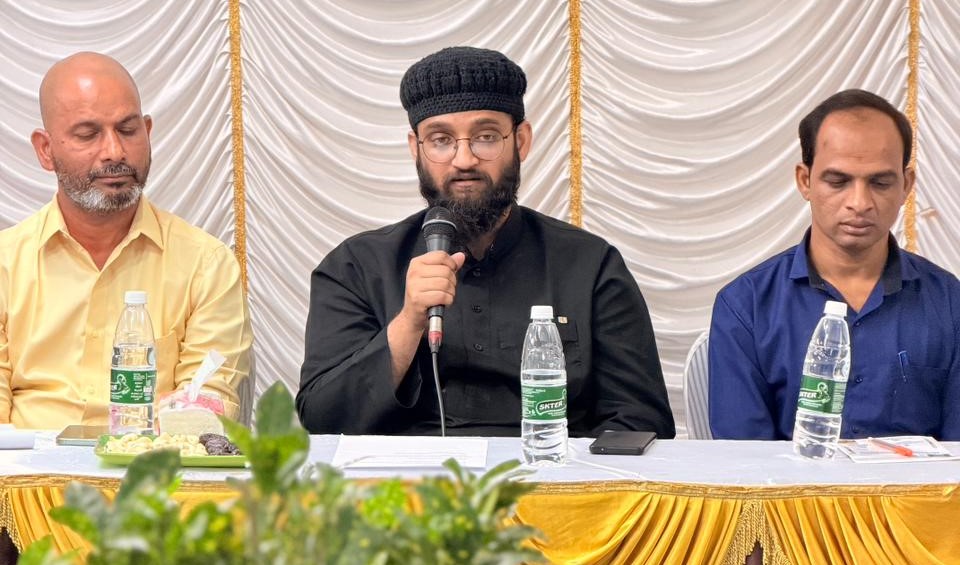
Drug abuse, especially among the youth, emerged as a major concern during the discussions. NG Mohan, Social Reformer and advisor to many institutions shared experiences from the late 1980s, recalling how prescription medicines were misused as narcotics and trafficked illegally. Despite regulatory measures over the years, he noted that drug abuse continues due to poverty, unemployment, social pressure, and lack of awareness. Sharing a recent incident, he narrated how a coastal drug trafficking network came to light during a private film project. The episode, he said, exposed the deeper social roots of the drug trade, pointing to economic insecurity and lack of livelihood opportunities. Several speakers stressed that poverty, hunger, and unemployment are closely linked to drug abuse and other antisocial activities, urging society to address root causes rather than symptoms alone.
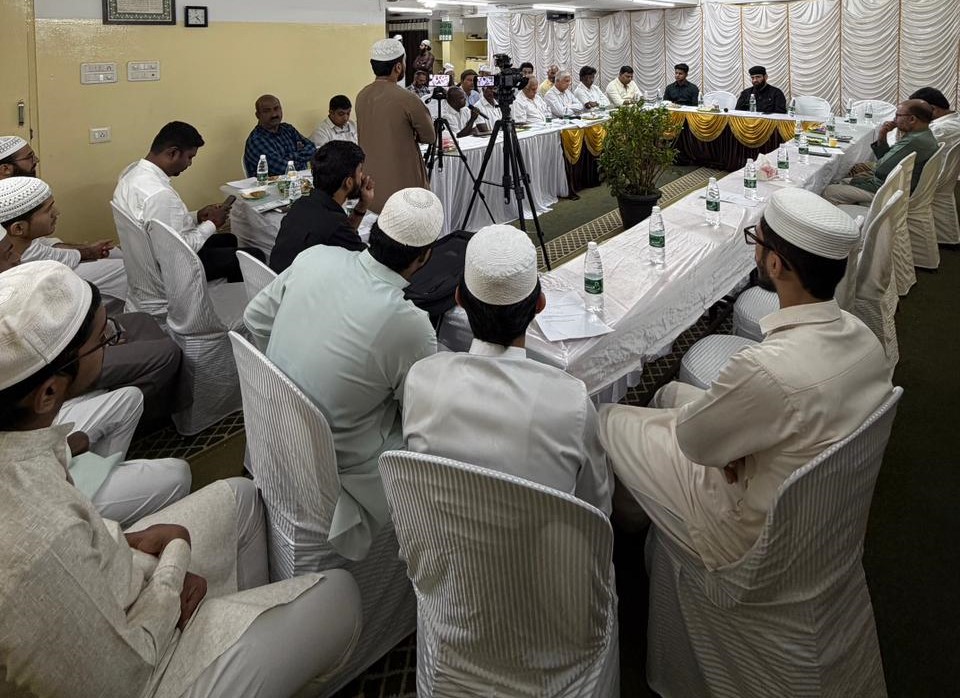
The symposium featured a panel discussion focused on building a hunger-free and drug-free nation, highlighting the need for cooperation, mutual understanding, care, love, and shared sacrifice. Referring to the ‘Imagine Chicago’ initiative launched in the United States in 1992, NV Paulose, Chairman, Global TV explained how community-led action, strength-based approaches, and small achievable goals helped transform neighborhoods, demonstrating the power of collective responsibility. Youth engagement was identified as a key priority. Raguveer Suterpet emphasized the need for regular ground-level programmes that bring young people together across communities without distinctions of religion, caste, or social background. Mentorship, awareness campaigns, and constructive platforms were suggested to positively channel youth energy.
Prosperity-Focused Perspective (News Style Intervention)
Adding a different perspective to the discussion, Dheeraj, Managing Director of Macchhi Group of Hotels, urged participants to adopt a positive, prosperity-oriented approach to nation-building. He said that while issues such as poverty and hunger must be acknowledged, continuously framing the narrative around deprivation alone limits collective thinking.
“Instead of only talking about poverty and hunger, we should talk about prosperity as a goal,” he said, adding that language and mindset play a crucial role in shaping social outcomes. Dheeraj emphasised that true change begins with individual responsibility and constructive action, stating that prosperity-driven thinking encourages innovation, employment, and long-term solutions rather than dependency.
He concluded by noting that sustained national progress would come not merely from slogans, but from consistent effort, self-belief, and a commitment to creating opportunities at every level of society. Other issues discussed included shortages in blood and organ donation, rising educational challenges, child health concerns, and infant mortality. Participants encouraged citizens to actively support blood and organ donation drives and contribute to local education and health initiatives.
Reiterating India’s core values, Moulana Hasani said that secularism, democracy, and non-violence form the pillars of the nation. Respect for all faiths, active participation in democracy, and adherence to non-violence, he said, are essential for sustainable development and national progress.
The programme concluded with a call for self-reflection and character-building, emphasizing that purification of the heart leads to harmony in society. The symposium resolved to develop small, time-bound community action plans and reconvene in the coming months to review progress, reinforcing the commitment to building a peaceful, inclusive, and progressive India.


