
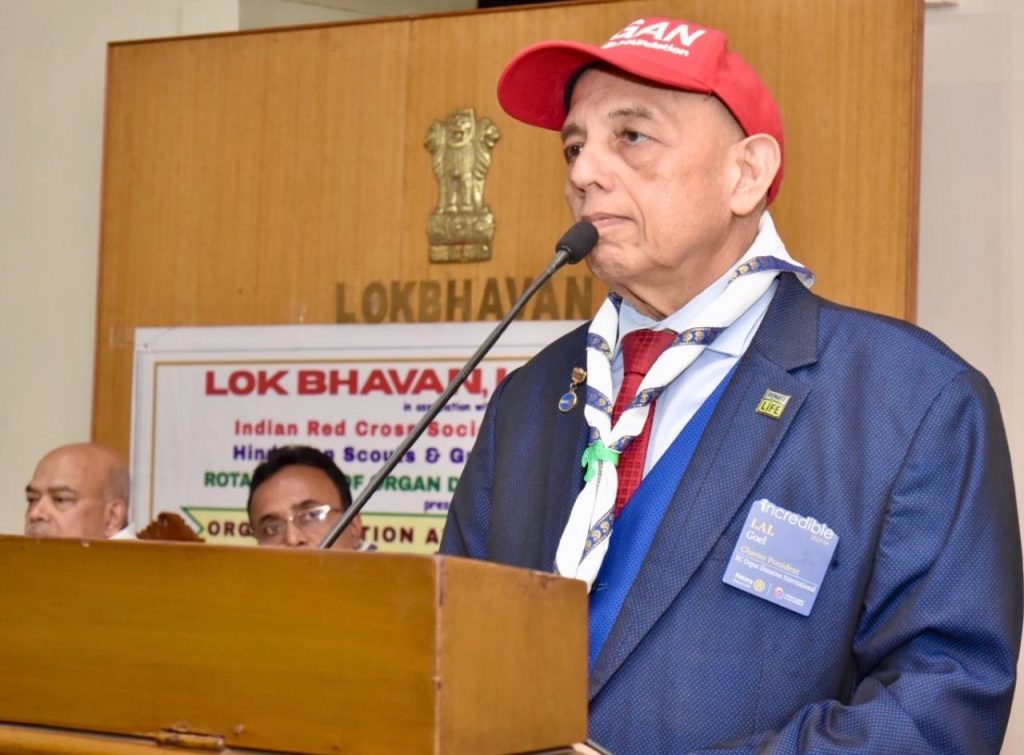
Understanding the Gap and the Way Forward | Written By Rotarian Lal Goel, Founder & Charter President, Rotary Club of Organ Donation International
Organ donation is among humanity’s most profound acts of selflessness—where the end of one life becomes the beginning of hope for many others. Yet, despite India’s rich cultural ethos of compassion, charity, and daan, the country continues to lag far behind the United Kingdom in organ donation rates.
This disparity does not reflect a lack of generosity among Indians. Instead, it highlights systemic gaps in awareness, preparedness, infrastructure, policy execution, and public trust.
The Awareness Divide
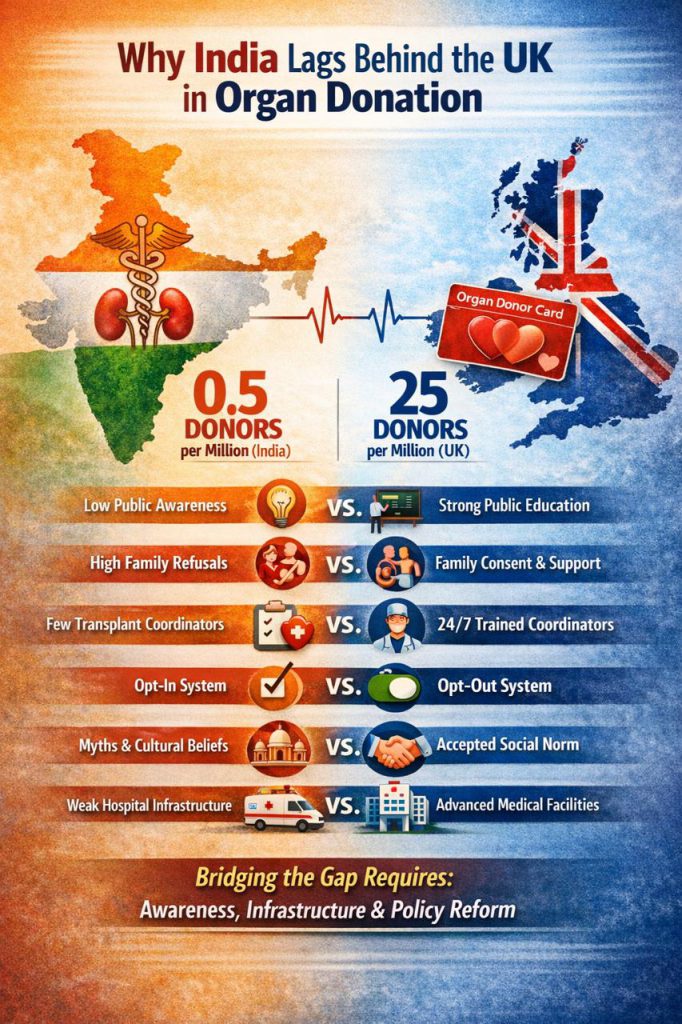
In India, awareness about organ donation—especially deceased and brain-death donation—remains fragmented and inconsistent. Large sections of the population are unfamiliar with the concept of brain death, the legal framework governing donation, and the immense life-saving potential of deceased donors.
In contrast, the UK has embedded organ donation into its social consciousness through sustained public education, school-based learning, and nationwide campaigns led by NHS Blood and Transplant. As a result, organ donation is not a crisis-time conversation but a normalised social responsibility.
When Families Say No
Even when individuals in India pledge their organs during life, donation often does not materialise because families are unprepared or emotionally overwhelmed at the critical moment. Family refusal rates remain high, largely due to a lack of prior discussion and counselling.
In the UK, trained transplant coordinators guide families with empathy and clarity during these difficult conversations. Because donation is openly discussed and socially accepted, families are more prepared—making refusal far less likely.
Infrastructure and Training Gaps
India faces an acute shortage of trained transplant coordinators, grief counsellors, and standardised ICU protocols—especially in government hospitals. Many potential donors are missed due to delayed identification of brain death, inadequate donor maintenance, and logistical inefficiencies in organ retrieval and transport.
The UK, by contrast, operates within a highly integrated national framework, where hospitals follow uniform clinical pathways. Transplant coordinators are available round-the-clock, ensuring every potential donor is managed with precision, dignity, and compassion.
Cultural Myths and Misconceptions
Deep-rooted myths continue to hinder progress in India—fears of body disfigurement, religious prohibitions, and beliefs related to rebirth or karma. These misconceptions often overshadow medical facts.
In the UK, major religious leaders and institutions across faiths have publicly endorsed organ donation as an act of charity, compassion, and service to humanity—helping normalise the practice across diverse communities.
The Policy Question
India follows a strict opt-in consent system, requiring explicit permission for donation. The UK has adopted a soft opt-out system, where consent is presumed unless individuals register an objection—while still respecting family views.
This policy shift, combined with public awareness and trust, has significantly contributed to increased donor numbers in the UK.
The Trust Factor
A crucial barrier in India is public mistrust—fear of organ misuse, commercial exploitation, or premature withdrawal of treatment. These concerns, whether real or perceived, deeply influence family decisions.
The UK addresses this through transparency, rigorous audits, and a centralised organ allocation system, ensuring fairness, accountability, and ethical integrity at every stage.
The Numbers Tell the Story
The cumulative impact of these factors is stark:
- India: ~0.5 deceased donors per million population
- United Kingdom: 24–25 donors per million population
That is nearly 50 times higher.
This gap is not about compassion—it is about systems, preparedness, coordination, and policy execution.
The Path Forward
India does not lack heart.
India lacks systems.
Bridging this gap requires:
- Sustained, grassroots public education
- Normalising family conversations on organ donation
- Strengthening hospital infrastructure and ICU protocols
- Training dedicated transplant coordinators nationwide
- Building public trust through transparency and accountability
- Active engagement from civil society and service organisations like Rotary International
With collective action from government, healthcare institutions, NGOs, and community leaders, organ donation in India can evolve from an exception to an expectation.
When awareness meets preparedness, generosity transforms into saved lives.
The question is not whether India can close this gap— The question is how urgently we choose to act.


