
Call to Save 1.8 Lakh Trees: Society Urges Underground Power Line in Coastal Districts
By Ian Desmond Lobo
Mangaluru/Udupi:
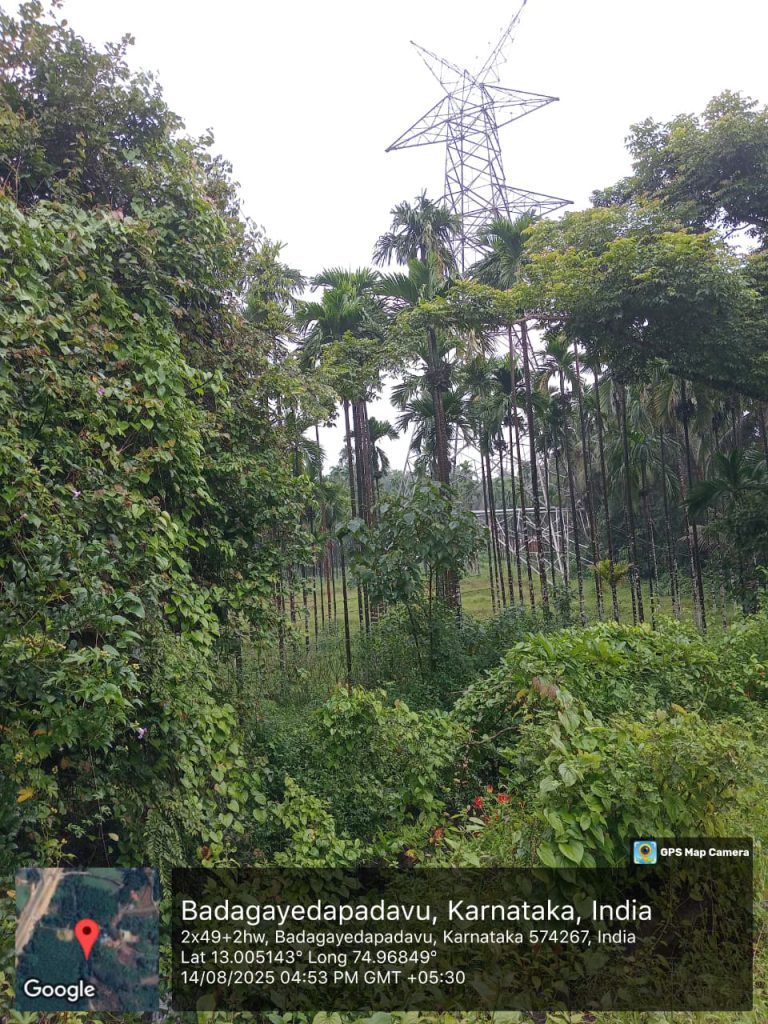
Environmentalists have raised strong objections to the proposed 400 kVA power transmission line between Padubidri in Udupi district and Kasaragod in Kerala, warning that nearly 1.78 lakh trees in private lands and 3,000 trees on government land will be lost if the line is laid overhead.
The Society for Forest, Environment, and Climate Change, Mangaluru, has urged the government to adopt modern underground cabling technology—already implemented in cities like Chennai—in order to safeguard the region’s ecology and communities.
Environmental Cost of Overhead Lines
Addressing a press meet in Mangaluru, Society Secretary Benedict C. Fernandes said the felling of such a massive number of trees would permanently affect the rich biodiversity and fragile environment of Dakshina Kannada and Udupi districts.
“These trees not only provide greenery but also regulate climate, preserve soil and water, and support livelihoods. Their destruction will leave a deep ecological scar,” he cautioned.
Legal and Procedural Concerns
Mr. Fernandes pointed out that the Forest Department had earlier permitted tree felling on government land, but the Society challenged this before the National Green Tribunal (NGT), which stayed the move on August 1.
He further explained that the project proponent has so far received only Stage I (in-principle) clearance from the Union Ministry of Environment, Forest, and Climate Change. Stage II approval is mandatory before any physical work, including land acquisition or tree cutting, can begin.
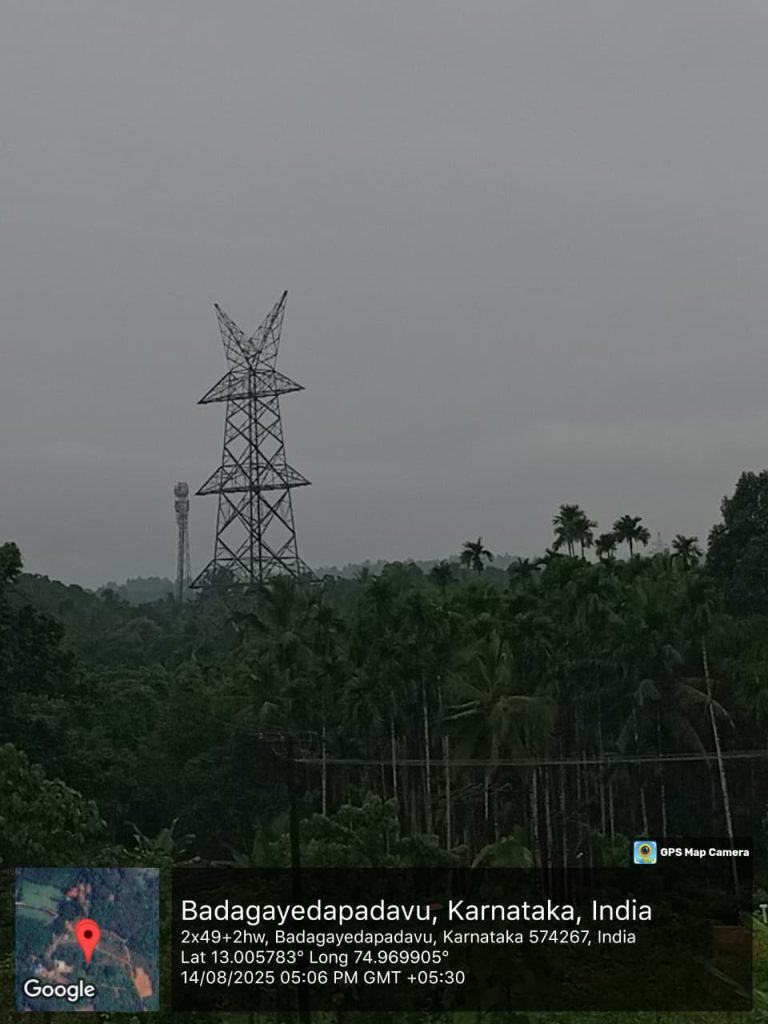
“Shockingly, 35 transmission towers have already been erected without the final clearance,” he alleged.
Farmers’ Rights and Compensation
According to fresh guidelines issued by the Union Ministry of Power (March 21, 2025), once Stage II clearance is obtained, farmers whose land is affected must be identified and compensated at full market value. This process must be supervised by a committee headed by the Deputy Commissioner.
“No such committee has yet been formed, meaning landowners remain in the dark about their rights,” Fernandes said.
Concerns Over Public Health
Beyond the ecological cost, the Society also expressed concern about the radiation emitted from high-tension overhead lines, which could pose long-term health risks for people living in nearby villages.
A Call for Responsible Development
The Society insisted that underground cabling—though initially costlier—would protect both the environment and public health while ensuring reliable power transmission.
“Development projects cannot come at the cost of nature and people’s well-being. Alternatives exist. It is the responsibility of the government to choose wisely,” Fernandes emphasized.


