
Legends call for a Fundamental Rethink of India’s Healthcare and Medical Education
NV Paulose, Chairman, Global TV +91 98441 82044
India must fundamentally rethink the way it approaches healthcare, medical education, and community wellbeing. That was the central message that emerged from an engaging conversation between Dr. Sam Pitroda, the Father of Indian Telecom Revolution and Dr. C.P. Habeeb Rahman, the pioneer of modern healthcare systems in the coastal city of Mangalore.

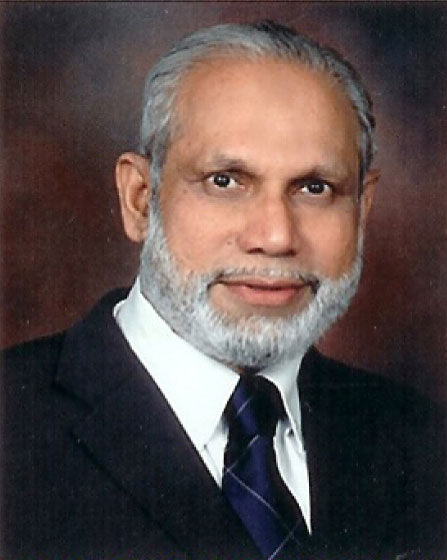
The conversation began on a cordial note. Dr. Habeeb Rahman later remarked that Dr. Pitroda was warm, approachable, and straightforward in his interactions. As the discussion progressed, both quickly found common ground on one central issue; the urgent need to rethink India’s healthcare framework.
Today, Mangalore is widely recognised as one of India’s leading centres for modern healthcare and medical education. The city’s remarkable transformation into a medical hub traces its roots to the vision and pioneering efforts of Dr. C.P. Habeeb Rahman, whose work laid the foundation for the growth of institutions that have since earned national and international recognition. It was therefore fitting that two visionaries from different fields came together to exchange ideas on the future of healthcare in India.
The discussion quickly moved beyond the challenges of hospitals and medical practice to the larger question of how India should redesign its healthcare system for the future. Both agreed that while modern medicine has achieved tremendous progress, the broader framework within which healthcare is delivered has not kept pace with changing societal needs.

Dr. Habeeb Rahman observed that India continues to rely on an educational and healthcare structure inherited from the British period. While this system served an earlier era, he felt it now limits innovation and creative thinking. Referring to Dr. Pitroda’s transformative role in India’s telecommunications revolution, he remarked that healthcare now requires a similar spirit of bold reform.
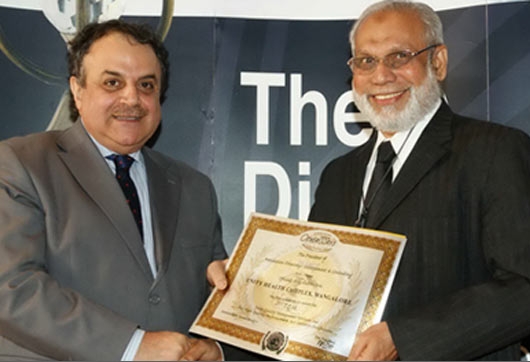
Dr. Pitroda responded by highlighting what he believes is one of the greatest weaknesses of the present system. According to him, society has gradually shifted the responsibility for health entirely to doctors and hospitals. He argued that every individual must accept responsibility for maintaining good health through awareness, prevention, and healthy living. Healthcare, he said, should not begin only after illness appears.
The conversation also explored India’s own traditions of healthcare. Dr. Pitroda and Dr. Habeeb expressed concern that the country has devoted considerable attention to Western medical systems while giving relatively little importance to its own indigenous knowledge, including herbal medicine and other traditional practices. Dr. Pitroda suggested that these systems deserve careful academic study and scientific evaluation, not as replacements for modern medicine but as valuable sources of knowledge that could complement existing healthcare. Referring to work being undertaken in institutions studying Indian and herbal medicine, he observed that these initiatives deserve greater academic attention. Dr. Habeeb Rahman acknowledged that he was yet to study these programmes in detail but agreed that they warranted closer examination.
Attention then turned to one of India’s most persistent challenges, the shortage of doctors willing to serve rural communities. Both agreed that medical education today is largely designed to produce hospital-based graduates, leaving villages underserved. They argued that universities should begin designing specialised programmes that prepare healthcare professionals specifically for rural and community practice.
Dr. Pitroda encouraged universities to take the initiative rather than waiting for policy changes. Institutions, he suggested, have the freedom to introduce innovative courses that respond to local healthcare needs. Such programmes could create a new generation of professionals trained specifically for village health services.
One of the most significant ideas discussed was the concept of every medical college adopting nearby villages as part of its social responsibility. Rather than limiting education to classrooms and teaching hospitals, institutions could become directly involved in improving the health of surrounding communities. Departments responsible for Community and Preventive Medicine could lead these initiatives under the guidance of institutional leadership, creating a meaningful connection between medical education and public health.
The future design of healthcare infrastructure also featured prominently in the conversation. Dr. Pitroda described a model in which a central teaching hospital would be connected to multiple rural hospitals through telemedicine and digital technology. Such a network would allow specialists to provide guidance from urban centres while enabling patients to receive quality care much closer to their homes. He observed that technological advances are steadily making such integrated systems both practical and necessary.
Both participants agreed that primary healthcare requires substantial strengthening. Existing primary health centres should evolve into facilities capable of delivering more comprehensive preventive, emergency, and follow-up care while remaining connected to larger hospitals whenever specialised treatment becomes necessary.
Research and collaboration emerged as recurring themes throughout the discussion. Dr. Pitroda stressed that meaningful reform cannot come from isolated efforts. Universities, researchers, healthcare professionals, and policymakers must work together to create healthcare models that reflect India’s unique social and cultural realities rather than simply replicating systems developed elsewhere.
As the conversation concluded, Dr. Pitroda encouraged Dr. Habeeb Rahman to continue developing these ideas and maintain regular communication. He expressed optimism that universities and healthcare institutions could play a leading role in shaping a new model of healthcare that is community-centred, technology-enabled, and rooted in prevention rather than treatment alone. He also welcomed future discussions and expressed interest in exploring practical collaborations that could help translate these ideas into action.
Perhaps the most powerful thought expressed during the exchange was Dr. Pitroda’s belief that every citizen must take responsibility for personal health in the same way they accept responsibility for fulfilling civic obligations. Healthcare, he suggested, should become a shared responsibility between individuals, communities, and institutions.
The conversation between two distinguished personalities presented a compelling vision for the future of Indian healthcare, one that seeks to combine scientific progress, community participation, rural empowerment, technological innovation, and personal responsibility into a system designed for the needs of the twenty-first century.


