
Shivasundar: A Voice of Conviction in Public Life | The Need for Independent Thinkers
NV Paulose, Chairman, Global TV +91 98441 82044
Meeting a public intellectual often reveals qualities that cannot be understood through books or public speeches alone. A conversation with Shivasundar offers precisely such an experience. Beyond his public identity is a thoughtful individual whose openness, humility, and clarity leave a lasting impression.
Our discussion moved across history, philosophy, economics, democracy, agriculture, caste, and community life. What made the conversation memorable was not simply the range of subjects but the ease with which each idea connected naturally to the next.
The discussion never felt like a lecture. It felt like an invitation to think together.
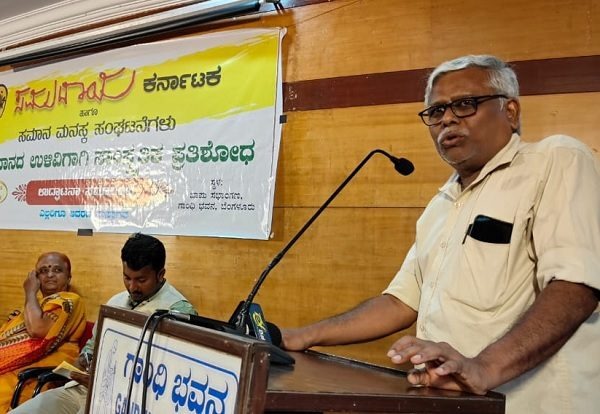
The Quiet Strength of Integrity
Public life frequently rewards visibility, speed, and certainty. Yet the qualities that leave a lasting influence are often quieter. Integrity, patience, humility, openness, and intellectual honesty cannot be measured by popularity. They reveal themselves through consistent conduct over time.
These qualities became evident throughout the conversation. They explain why many people continue to value his writings and public discussions. The most enduring lesson from meeting Shivasundar is that ideas acquire their greatest strength when they are supported by character. Knowledge commands respect, but knowledge combined with humility inspires trust.
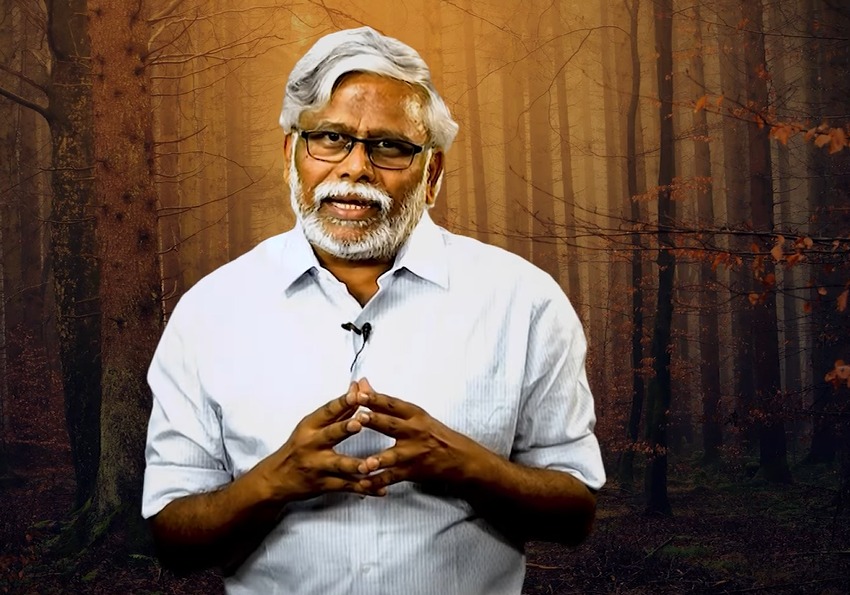
An Open Mind
One of the most striking qualities of Shivasundar is his openness. He does not approach conversations with the intention of defeating opposing views. Instead, he listens carefully, responds patiently, and encourages questions.
This openness reflects confidence rather than uncertainty. People who are secure in their ideas do not fear discussion. They recognise that meaningful dialogue strengthens understanding.
Throughout the conversation, there was no attempt to impose conclusions. Instead, every argument was developed through explanation and reasoning, allowing listeners to reach their own understanding.
Such openness is becoming increasingly rare in public life where debates often become contests rather than conversations.
Clarity of Thought
Knowledge becomes valuable only when it can be communicated clearly. This is one of Shivasundar’s greatest strengths.
Even while discussing subjects that span centuries of history and multiple disciplines, his reasoning remains organised and coherent. Each argument develops naturally from the previous one.
A discussion on the freedom movement becomes a discussion about democracy. Democracy leads to questions about caste. Questions of caste naturally connect with Ambedkar’s philosophy of dignity and autonomy. From there the discussion moves towards capitalism, local economies, agriculture, and community organisation. Nothing appears disconnected because every subject is treated as part of a larger social reality.

Freedom Begins with Responsibility
One idea returned repeatedly throughout the conversation. Real freedom begins with individual responsibility. Political freedom alone is not sufficient. Individuals must become capable of thinking independently, making ethical choices, and accepting responsibility for those choices. Dependence upon external authority, whether political, religious, or economic, weakens personal autonomy.
His reflections on Ambedkar’s philosophy highlighted this point. Human dignity comes from recognising one’s own worth rather than seeking validation from institutions that have historically denied equality. This emphasis on personal responsibility gives his understanding of democracy a deeply human dimension.
Building Instead of Merely Opposing
Another important insight emerged while discussing social movements. Resistance has its place, but meaningful change also requires creation. Instead of focusing only on opposing existing systems, communities can build alternatives through cooperation, local production, and collective action.
His observations on our discussions about agriculture illustrated this perspective. Local cultivation strengthens local economies, reduces unnecessary dependence upon distant markets, and encourages community participation. Even small initiatives have the potential to inspire wider social change when undertaken collectively. This practical optimism distinguishes his thinking from approaches that remain confined to criticism.
Simplicity as a Way of Life
Perhaps the most remarkable aspect of meeting Shivasundar is the simplicity with which he lives and communicates. There is no display of intellectual superiority despite decades of scholarship and public engagement. Ideas are expressed with calmness and without unnecessary ornamentation.
His lifestyle appears consistent with his philosophy. Simplicity is not presented as an aesthetic choice but as an ethical one. Living simply creates the freedom to think independently without becoming captive to status, consumption, or public approval. This consistency between thought and conduct strengthens the credibility of his public voice.
Learning Through Conversation
The conversation demonstrated that genuine education often happens outside classrooms.
Historical events became opportunities to understand present society. Economic questions became discussions about ethics. Political analysis became reflections on everyday life.
Rather than providing ready made answers, Shivasundar encouraged a habit of questioning. His method reminds us that education is not the accumulation of information but the cultivation of judgment.
This approach leaves a deeper impact because it transforms the way people think rather than merely increasing what they know.
Shivasundar: A Voice of Conviction in Public Life | The Need for Independent Thinkers
Every generation produces individuals who influence society not through political office or institutional authority but through the power of ideas. Such people become important because they encourage citizens to think beyond the obvious, question accepted narratives, and examine public life with honesty and reason. In contemporary Karnataka, Shivasundar has emerged as one such voice.
Known for his widely read Samakaleena column and his public lectures and discussions, Shivasundar has consistently participated in conversations that matter. His work reflects an enduring commitment to democratic values, constitutional principles, and social justice. Rather than offering quick opinions that satisfy popular sentiment, he approaches public issues with patience, historical awareness, and intellectual discipline.
His contribution lies not simply in expressing opinions but in creating a space where people are encouraged to think critically. At a time when public discourse often rewards certainty more than inquiry, this approach has become increasingly valuable.
Looking Beyond Immediate Events
One of the defining features of Shivasundar’s work is his ability to place current events within a larger historical and social context. Political developments rarely exist in isolation. They are shaped by history, institutions, economic conditions, and social relationships. His analyses consistently remind audiences that understanding the present requires an understanding of the past.
Whether discussing elections, constitutional institutions, or public policy, he avoids reducing complex issues to slogans. Instead, he invites readers to explore the deeper forces that influence political decisions and social change.
This method encourages citizens to become informed participants in democracy rather than passive consumers of political messaging.
Commitment to Constitutional Values
Throughout his public engagement, constitutional values remain central to his thinking. Democracy, equality, liberty, and justice are not treated merely as words contained in legal documents. They are presented as living principles that require constant protection through public participation and informed debate.
His discussions often emphasise that democracy cannot survive on elections alone. Institutions remain meaningful only when citizens continue to question authority, defend civil liberties, and hold governments accountable irrespective of political affiliation.
Such consistency is particularly significant in periods of political polarisation. Principles acquire value precisely when they are upheld even under pressure.
Courage to Remain Independent
Independent commentary rarely enjoys universal approval. Those who refuse to align themselves completely with any political camp often face criticism from multiple directions. Yet intellectual independence remains one of the foundations of democratic society.
Shivasundar has demonstrated a willingness to maintain his convictions despite disagreement and controversy. This does not mean that every reader must agree with every conclusion he reaches. Rather, it reflects the importance of preserving spaces where ideas can be examined freely without fear of conformity. A healthy democracy requires voices that are prepared to ask uncomfortable questions and challenge accepted assumptions.
Making Complex Ideas Accessible
Another important aspect of his work is accessibility. Constitutional law, political philosophy, economic policy, and social history are subjects that often remain confined to universities and specialist discussions. Shivasundar succeeds in bringing these ideas into everyday public conversation.
His writing and public discussions avoid unnecessary complexity. Difficult concepts are explained through familiar examples drawn from ordinary life. This enables people from different educational backgrounds to participate in discussions that shape public life.
Accessibility should never be mistaken for simplicity of thought. On the contrary, it reflects a deep understanding of the subject. Only those who understand complexity thoroughly can explain it clearly.
A Lasting Contribution
The value of a public intellectual should not be measured solely by agreement or disagreement. Meaningful public commentary encourages reflection, strengthens democratic culture, and expands civic understanding.
By consistently inviting people to examine issues through history, constitutional values, and reason, Shivasundar has contributed to a more informed public discourse. His work reminds us that democracy depends not only upon institutions but also upon citizens who are willing to think independently and engage responsibly.
In an age of instant opinions and rapid reactions, thoughtful analysis remains indispensable. Through his writings and public engagement, Shivasundar continues to demonstrate that ideas grounded in integrity, consistency, and careful reasoning retain their power long after political slogans have faded.


