
An appreciation of a life committed to questioning patriarchy and defending the dignity of women
NV Paulose, Chairman, Global TV +91 98441 82044
K. Ajitha is a remarkable individual whose razor-sharp intellect, deeply rooted principles, and unwavering moral conviction compel us to rethink the way we understand the world. Her courage to question established norms, challenge entrenched injustices, and stand firm in her convictions reflects a rare intellectual independence and strength of character. What makes her particularly admirable is her refusal to let social conventions or prevailing opinions dilute her commitment to justice, equality, and human dignity.
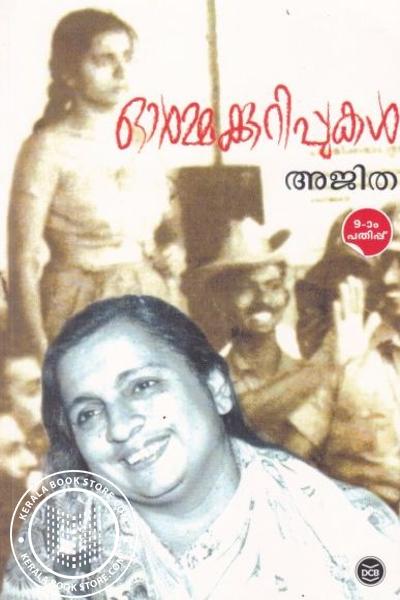
What makes her particularly worthy of appreciation is not simply her identification with feminism, but the seriousness with which she approaches the questions that feminism raises. She invites us to look beyond the familiar explanations offered by society, to question assumptions that have acquired the authority of tradition, and to examine social institutions from the perspective of women whose experiences are too often overlooked. Her life’s work offers an opportunity to reflect on a fundamental question: What would society look like if we genuinely learned to see the world through the eyes of women?
The clarity to question what society takes for granted
Patriarchy survives not only through the visible exercise of power, but also through the ideas, customs, and expectations that people come to accept as natural. It influences how families understand marriage, how communities interpret women’s behaviour, and how institutions respond when women challenge established arrangements.
The remarkable quality of a sharp and independent intellect is its ability to penetrate these layers of accepted thinking. Instead of accepting an explanation merely because it is socially familiar, it asks whether that explanation is just. Instead of treating tradition as sufficient justification, it examines whom the tradition serves and who bears its costs. Ajitha’s feminist activism is significant in this regard. Her political journey, her willingness to question gender discrimination, and her subsequent work through Anweshi demonstrate a sustained engagement with the relationship between social structures and women’s lived experiences.

Her intellectual contribution is best appreciated not through unquestioning admiration, but through the questions her work encourages us to ask. Why should a woman’s freedom be conditional upon social approval? Why should preserving a marriage become more important than preserving the dignity of the woman within it? Why should the burden of adjustment fall disproportionately upon women when relationships become oppressive? These are not merely rhetorical questions. They expose the assumptions upon which unequal relationships can be sustained.
Deep-rooted principles in a society of convenient compromises
A sharp intellect can identify injustice, but intellectual clarity alone does not guarantee the courage to confront it. That requires principles strong enough to withstand social pressure, ideological convenience, and the temptation to remain silent. What makes Ajitha’s public life worthy of admiration is the importance she has attached to questioning injustice rather than allowing established loyalties to place it beyond scrutiny. Her reflections on gender discrimination within political movements, and her subsequent feminist activism, illustrate why equality must be examined in practice rather than accepted as a slogan.
Principled conviction is particularly important when injustice is embedded in institutions that otherwise claim to represent progress. It is easy to speak about equality in the abstract. It is much more demanding to ask whether equality exists within one’s own family, organisation, political movement, or community.
A deeply rooted principle does not change its meaning merely because applying it becomes uncomfortable. This is the quality that makes uncompromising feminist inquiry valuable. It reminds us that no institution should be exempt from scrutiny, no tradition should be immune from criticism, and no claim to social progress should be accepted without considering the actual position of women within it. Such conviction deserves appreciation because it insists that the pursuit of justice must begin with intellectual honesty.
Dowry: Where the patriarchal mindset reveals itself
The dowry problem provides a particularly revealing lens through which to examine the persistence of patriarchy.
Dowry is not simply a financial transaction associated with marriage. When demands, coercion, or harassment are involved, it reflects a deeper problem in which a woman’s position within a relationship becomes entangled with economic expectations and unequal power.
A woman may find herself judged according to what her family has given, what her husband or in-laws expect, or how much humiliation she is prepared to endure to preserve the marriage. Her suffering can be minimised in the name of family honour, social reputation, or the supposed necessity of adjustment.
At the heart of this problem lies a disturbing contradiction: society celebrates marriage as a relationship of love and mutual commitment, yet some women experience it as an arrangement in which their dignity is made conditional upon fulfilling expectations imposed upon them.
A feminist perspective compels us to examine this contradiction from the woman’s side of the experience.
Instead of asking why she cannot adjust, we must ask what she is being asked to adjust to. Instead of treating the continuation of a marriage as the only desirable outcome, we must consider whether the woman is safe, respected, and free to make decisions about her own life.
This shift in perspective is essential to any serious discussion of dowry-related injustice. It moves the conversation away from the preservation of social appearances and toward the protection of the person whose dignity is at stake.
Justice must be understood through the experience of women
The legal system is indispensable in addressing dowry harassment and domestic abuse. Yet the existence of legal provisions does not, by itself, guarantee that every woman will experience the process of seeking justice as safe, accessible, or dignified. A woman who reports harassment may face financial insecurity, social stigma, pressure from relatives, fear of retaliation, and uncertainty about her future. She may need immediate protection, legal assistance, safe accommodation, and the means to rebuild an independent life. These realities deserve serious consideration.
The question is not whether allegations should be investigated fairly; they must be. Nor is it whether every accused person should be presumed guilty; responsibility must be established through due process. The deeper question is whether a system committed to justice can recognise the vulnerability of a woman seeking protection without compromising fairness. A humane approach must hold both principles together: the protection of women from harm and the fair determination of allegations.
This is where the broader significance of Ajitha’s activism becomes apparent. Through Anweshi, she has been associated with practical efforts involving women’s counselling, legal assistance, shelter, and awareness. Such work demonstrates that concern for women’s rights must find expression in institutions and services that women can actually turn to when they need help. The dignity of a woman cannot remain an abstract constitutional or moral ideal. It must be reflected in the way she is heard, protected, treated, and supported.
Seeing the world through women’s eyes
Perhaps the most important transformation required of a patriarchal society is a change in perspective.
For generations, social arrangements have often been explained and evaluated through assumptions that place men’s experiences and authority at the centre. Women’s experiences, meanwhile, have too frequently been treated as secondary considerations to be accommodated within an existing order.
To see the world through women’s eyes is to recognise that the same institution can be experienced very differently by people occupying unequal positions within it.
A family may regard itself as preserving its reputation while a woman within that family experiences silence as a denial of her rights. A community may regard a marriage as successful because it continues, while the woman in that marriage experiences fear, isolation, or humiliation. An institution may consider a matter procedurally complete while the person seeking assistance continues to face serious difficulties.
These differences cannot be understood if the dominant perspective is treated as the only legitimate one.
A woman-centred understanding does not mean that women’s claims should escape scrutiny or that men should be viewed as adversaries by default. It means that women’s experiences must be given equal seriousness and that social arrangements must be examined in light of their actual effects on women’s freedom, safety, and dignity.
This is a profound shift. It requires society not merely to include women within existing structures, but also to question whether those structures need to change.
The objective is not to reverse the hierarchy of power. It is to move beyond the assumption that any gender should possess a privileged claim to define how everyone else must live.
The courage to turn conviction into action
There is an important difference between criticising an injustice and accepting responsibility for confronting it.
Public expressions of concern can be fleeting. Social outrage may intensify when a particular case attracts attention and disappear when public attention moves elsewhere. Meaningful change, however, requires sustained effort: listening to women, supporting those in distress, challenging discriminatory attitudes, and building institutions that respond to their needs.
Ajitha’s work through Anweshi offers a practical dimension to this responsibility. Counselling, shelter, legal assistance, and public awareness are not peripheral to the struggle for equality. They are ways of translating a commitment to women’s dignity into tangible forms of support.
Her example also encourages a broader recognition that the responsibility for change cannot rest on women alone. Men must examine the privileges and expectations they have inherited. Families must stop treating a woman’s endurance of mistreatment as a virtue. Communities must support women who seek help rather than subjecting them to further judgement. Institutions must take their concerns seriously.
A society cannot claim to value women while expecting them to bear the cost of maintaining unequal relationships. Nor can it claim to uphold justice if a woman must repeatedly compromise her dignity merely to obtain the protection to which she is entitled.
Appreciating a person by engaging with her ideas
To appreciate K. Ajitha meaningfully is to recognise the value of a life spent questioning accepted assumptions and working on issues that affect women’s freedom and welfare.
Her razor-sharp intellect is an apt way to describe the quality one admires in a thinker who probes beneath the surface of social conventions. Her deeply rooted principles evoke the importance of remaining committed to equality even when its implications are uncomfortable.
Yet the highest form of appreciation is not to place an individual beyond criticism or turn her into a symbol detached from the complexity of her work. It is to engage seriously with her ideas, examine the questions her activism raises, and allow those questions to challenge our own assumptions.
Ajitha’s contribution provides a reason to reflect on how feminist thought can influence our understanding of marriage, justice, political commitment, and social responsibility. It encourages us to consider whether our institutions are genuinely responsive to women’s experiences and whether our professed commitment to equality survives contact with everyday life.
Her work deserves to be considered within the larger history of feminist efforts to make women’s experiences visible and their rights meaningful.
Conclusion: Beyond patriarchy, toward human dignity
The transition from a patriarchal society to an equal one will not be achieved through legislation alone, nor through education that leaves inherited attitudes untouched. It requires a transformation in the way people understand power, relationships, freedom, and responsibility.
It requires us to stop treating a woman’s ability to endure suffering as proof of her character. It requires us to recognise that marriage cannot justify coercion, that tradition cannot legitimise humiliation, and that family honour cannot take precedence over a woman’s safety and autonomy. Most importantly, it requires us to listen to women not as passive recipients of protection, but as individuals whose experiences and judgements are essential to understanding the society in which we live.
K. Ajitha deserves appreciation for the questions her activism brings into public life and for the practical work associated with her commitment to women’s rights. Her example invites us to look more critically at the structures that govern women’s lives and to imagine a society in which equality is measured not by declarations, but by lived reality. A razor-sharp mind can expose the contradictions of an unjust social order. Deep-rooted principles can sustain the courage to confront them. But the transformation of society requires all of us to act upon what such clarity reveals.
The real movement beyond patriarchy begins when we stop asking women to find their place within a world designed without their experiences in mind, and begin building a world in which their freedom, dignity, and voice are integral to its very design. That is the deeper lesson to draw from an appreciation of K. Ajitha: the value of an independent mind, the strength of principled conviction, and the enduring importance of seeing the world through the eyes of women.


