
HOW LONG CAN YOU SERVE THE MAIN DISH AS A SIDE DISH?
By New Dimension Editorial Desk
There is a fundamental contradiction in the way India approaches education. We speak passionately about becoming a global industrial powerhouse. We talk about manufacturing excellence, technological leadership, innovation, entrepreneurship, employment generation and becoming a developed nation. We launch programmes to bridge the skill gap and prepare our youth for the future. Yet, somewhere in the architecture of our education system, we have made a fundamental mistake.
We have placed academics on the main plate and skills on the side plate. How long can you keep serving the main dish as a side dish? This is perhaps one of the most important questions India’s education policymakers must confront today.
The Skill India Paradox
Skill India is undoubtedly an important national ambition. Recognizing the need to equip India’s enormous young population with employable skills is a significant step in the right direction. But there is a deeper question. Why should skill development be treated as an additional activity after academic education? Why should a student spend years pursuing a conventional academic qualification and then separately search for an institution to teach the skills required to perform the actual job?
Why should industry readiness become a corrective exercise after graduation rather than the foundation upon which education itself is designed? The problem is not that India lacks skill development initiatives. The problem is that we have not sufficiently repositioned the entire education system around the realities of industry and human potential. Skill cannot remain an accessory to education. Skill and industry are inseparable. Academic knowledge must become an integral ingredient of skill development, rather than skill development becoming an additional ingredient of academic education. That is the paradigm shift India needs.
Sir Sohan Roy: Looking Beyond the Traditional University
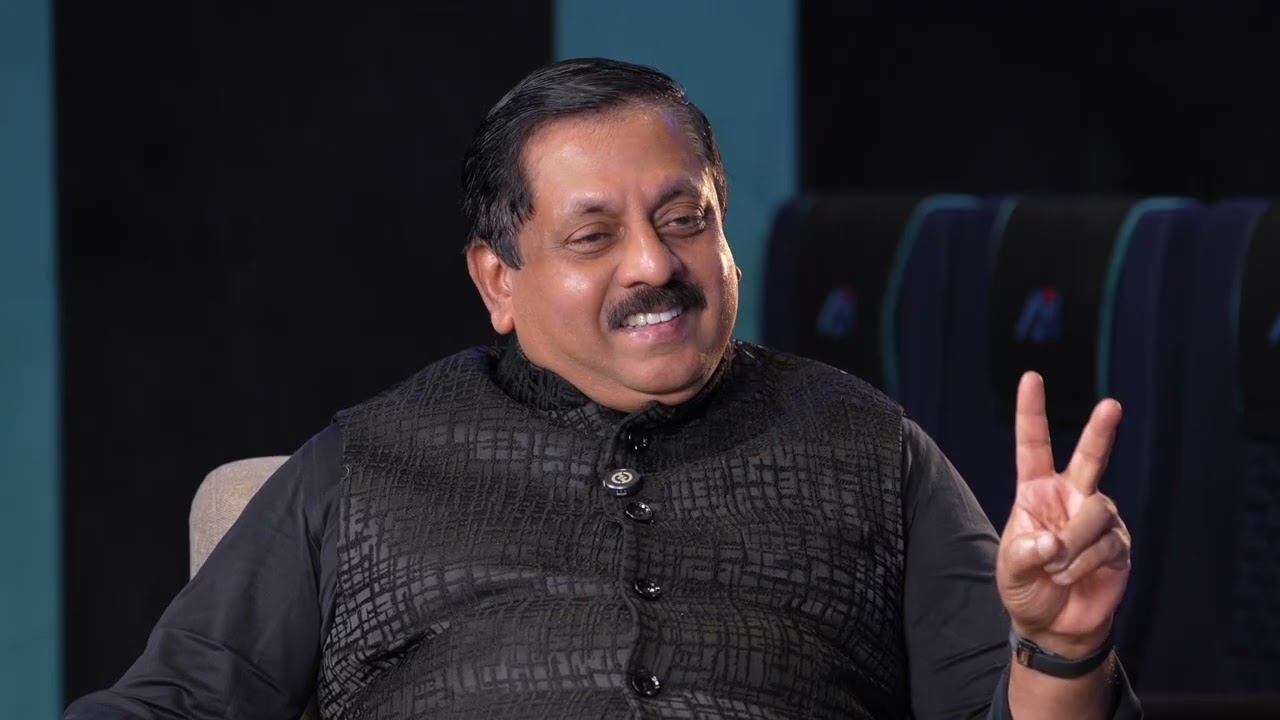
This is where the vision of Sir Sohan Roy, Founder Chairman of Aries Group and the force behind AIMRI’s Indivarsity concept, deserves serious national attention. His proposition is not simply about establishing another educational institution or introducing a few additional vocational courses. It challenges the very purpose, structure and delivery mechanism of conventional education.
The AIMRI I-Varsity vision seeks to build an industrial-oriented learning ecosystem in which the student’s journey begins not with the question, “Which degree should I pursue?” but with a much more fundamental question: “Who am I, what am I naturally good at, what do I genuinely love doing, and where can my abilities create the greatest value?” This changes everything.

Instead of forcing students into predetermined academic streams and expecting them to discover their professional identities later, the proposed model places individual talent, aptitude and passion at the centre of career design. A structured five-year career design approach, industrial mentorship, real-world exposure, practical execution and continuous personal development become integral components of the educational journey. The objective is not merely to produce graduates. It is to develop individuals who know themselves, understand the industrial ecosystem, possess the required competencies and are prepared to contribute meaningfully to society. That is a substantially different educational proposition.
Skill Is Not Just Technical Knowledge
Another important dimension of Sir Sohan Roy’s vision is the need to understand skill in its entirety. For decades, skill development has frequently been interpreted as the ability to operate a machine, use a software package, perform a technical task or execute a particular industrial process. But is that sufficient?

Can an exceptionally talented engineer succeed without communication skills? Can a technically brilliant professional become a good leader without empathy? Can an employee become an effective industrial contributor without punctuality, accountability, discipline and ownership? Can a manager deliver sustainable results without understanding human behaviour? Can a skilled worker remain relevant without continuous learning and adaptability?
Skill has multiple dimensions.
It includes:
- Technical skills: The ability to perform professional and industrial tasks.
- Cognitive skills: Analytical thinking, problem-solving, decision-making and creativity.
- Digital skills: The ability to understand and use emerging technologies.
- Execution skills: Converting knowledge and ideas into measurable results.
- Communication skills: Expressing, listening, negotiating and collaborating.
- Character skills: Discipline, integrity, responsibility and emotional maturity.
- Human skills: Empathy, compassion, teamwork and respect for others.
- Entrepreneurial skills: Identifying opportunities, managing resources and creating value.
- Learning skills: Continuously adapting to new technologies and changing industrial requirements.
A person who possesses only technical knowledge may be employable for a particular task. A person who combines all these dimensions can become an invaluable contributor to an organization and society. This is the distinction between training someone for a job and developing a complete human being for a meaningful professional life.
EFFISM: The Missing Dimension of Human Efficiency
One of the interesting aspects of the Aries Group’s educational philosophy is EFFISM, associated with efficiency, structured improvement and personal development. The underlying proposition is important. Education should not merely transfer information. It should improve the way an individual utilizes time, energy, knowledge and opportunities.
Consider the enormous amount of time students spend learning information that they may never apply, while remaining insufficiently prepared for the challenges they will encounter in their professional lives. The answer is not to eliminate foundational knowledge or academic disciplines. It is to make learning purposeful, relevant, connected and applicable. Every learning activity should have a reason.
Every competency should have a purpose. Every student’s development should have direction. At the same time, efficiency must never be confused with keeping people continuously occupied. Rest, health, happiness, creativity and reflection are essential ingredients of sustainable human performance. A truly efficient education system must develop productive and happy individuals, not exhausted professionals.
The Aptech and NIIT Lesson: What Happens When Industry Moves Faster Than Education?
India has witnessed a similar transformation before. During the 1980s and the decades that followed, computers were still unfamiliar to a large section of the population. Traditional education systems were not yet adequately equipped to prepare everyone for the emerging digital economy. Organizations such as NIIT and Aptech recognized the opportunity and helped popularize structured computer education and professional IT training.
They demonstrated something important. An emerging industry does not always wait for the conventional education system to catch up. When a new competency becomes essential, specialized institutions can move faster, create learning pathways and prepare people for new opportunities. The computer education movement eventually became an important part of India’s broader digital and IT workforce development. There is a lesson here for policymakers.
What if industrial education is now approaching a similar turning point? What if AIMRI’s vision represents an opportunity to anticipate the next major transformation rather than wait for the conventional university system to slowly adapt? The comparison is not that AIMRI and NIIT or Aptech are identical. Their institutional purposes and operating models are different. The comparison is about recognizing an emerging national need before it becomes an unavoidable crisis. The computer revolution demanded computer literacy. The industrial transformation ahead demands something much larger: integrated human capability.
The World of Aries: An Opportunity for Government, Not Just an Institutional Initiative
The Aries ecosystem presents an interesting opportunity because its educational proposition connects multiple dimensions that are often addressed separately. Industrial exposure, career design, talent identification, EFFISM, Hartoise, technology-enabled learning, practical execution and professional mentorship can be considered parts of a unified educational architecture.
The opportunity is to bring these dimensions together. Imagine an educational institution where a student’s career is not decided by examination marks alone. Imagine every student having an individual career roadmap. Imagine industry veterans contributing directly to the learning process. Imagine students solving actual industrial problems while studying. Imagine technical learning combined with communication, leadership, discipline, ethics and empathy. Imagine students being evaluated not merely on what they remember but on what they can actually accomplish.
Imagine an educational ecosystem in which employers participate in defining competencies, mentoring students and evaluating their readiness. And imagine this system becoming accessible to talented young people beyond metropolitan cities. This is the kind of educational transformation that deserves serious consideration by governments, industrial associations, universities and policymakers. Government initiatives such as Skill India and institutional innovations such as AIMRI need not compete with one another. They can complement one another.
Government programmes can provide policy support, scale, accessibility and institutional recognition. Industrial ecosystems can contribute practical expertise, contemporary requirements, mentorship and real-world learning environments. The greatest national benefit will emerge when these capabilities are integrated.
The Danger of Repeating the Same Mistake
India cannot afford to treat every emerging educational requirement as a separate campaign. First came computer literacy. Then came digital literacy. Now we speak about artificial intelligence, robotics, automation, advanced manufacturing, maritime technologies, green energy and Industry 4.0. Each new industrial development creates another demand for specialized training.
But if we continue adding separate skill-development programmes without fundamentally redesigning the educational foundation, we may keep running behind the industry. By the time a conventional curriculum is revised, the industry may already have moved to the next generation of technology. The answer is to build an education system that is continuously connected to industry.
Not an education system that occasionally invites industry representatives to deliver guest lectures. Not an education system that arranges an internship during the final semester. Not an education system that treats placement as the ultimate objective after completing a degree. Industry must become an integral participant in the entire learning journey. That is the structural change required.
The Ultimate Objective: The Right Person in the Right Industry
The most important outcome of this transformation should not be the number of degrees awarded or the number of certificates distributed. It should be the number of individuals who discover their true potential and find meaningful professional opportunities aligned with their abilities and aspirations. One student may be naturally inclined towards engineering. Another may possess extraordinary creative abilities.
Someone else may be an excellent communicator, entrepreneur, designer, researcher, maritime professional or healthcare specialist. Why should all these individuals be measured predominantly through the same academic framework? A meaningful education system must recognize individual differences. It must identify talent, nurture passion, address developmental gaps, develop professional competencies and connect people with suitable industries.
And it must do all this without sacrificing empathy, ethics, happiness and social responsibility. This is where AIMRI’s proposed five-year career design and industrial mentorship model becomes particularly interesting. The purpose is not merely to make students employable. It is to help them become the right professionals in the right environments, doing work that matches their potential while contributing value to the world.
A Call to India’s Policymakers
India has a tremendous demographic opportunity. But demographic advantage does not automatically translate into industrial leadership. The quality of human capability determines whether that opportunity becomes a national success. Skill India has helped put skill development on the national agenda. The next stage should be more ambitious. It should be about transforming the architecture of education itself.
Rather than asking how many students can be trained after graduation, we should ask how many students can be developed correctly from the beginning. Rather than asking how to make academic graduates industry-ready, we should ask why industry readiness was not an integral part of their education in the first place. Rather than treating skill as a side dish, we should redesign the entire educational meal.
Sir Sohan Roy’s AIMRI I-Varsity vision deserves to be examined in this larger national context. The government need not simply adopt one institution’s model without scrutiny. It should evaluate the model, invite independent validation, pilot its strongest components, measure outcomes and explore how successful practices can be integrated into the national education ecosystem. The opportunity is too important to ignore.
The Future Belongs to Integrated Education
The next generation will not be judged merely by how much information it has memorized. It will be judged by what it can create, how effectively it can execute, how intelligently it can adapt, how responsibly it can lead and how compassionately it can work with other human beings. The education system must therefore evolve from information delivery to capability development.
From degree orientation to career design. From theoretical understanding to practical execution. From isolated skill training to integrated human development. From conventional classroom boundaries to continuous industrial learning. And from producing graduates to developing responsible, competent and fulfilled human beings. Perhaps the most important question for India is no longer whether we need skill development. We have already answered that.
The real question is: How long can we continue serving the main dish as a side dish?
If skill is essential to industry, and industry is essential to India’s future, then skill must become a central ingredient of education itself. Sir Sohan Roy’s vision through AIMRI I-Varsity offers an opportunity to explore that transformation. India should not wait until the next industrial revolution exposes the limitations of its education system. It should start redesigning education before that happens. Because the future of India will not be determined merely by how many graduates we produce. It will be determined by how many capable, creative, efficient and empathetic human beings we develop. That is the dimension of education we must now embrace.


