
Reimagining sustainability not as a distant environmental ideal, but as a way of living, connecting and celebrating the city we call home.
Alka Manoj +91 99457 53320 | NV Paulose +91 98441 82044
There is something quietly inspiring about people who choose to live a little differently. People who pause before buying something new, think about where their clothes come from, appreciate the beauty of handmade objects, seek experiences over possessions, and find joy in the simple pleasures of life. It is around this spirit of conscious living that Sustain Mangaluru has been taking shape. What began as an effort to bring like-minded people together has gradually evolved into a vibrant community movement; one that is discovering meaningful ways to connect sustainability with everyday life, local culture, traditional knowledge and creative enterprise. The philosophy behind Sustain Mangaluru is refreshingly simple: sustainability need not be expensive, complicated or exclusive. It can begin with small choices, meaningful conversations, shared experiences and a renewed appreciation of what already exists around us.
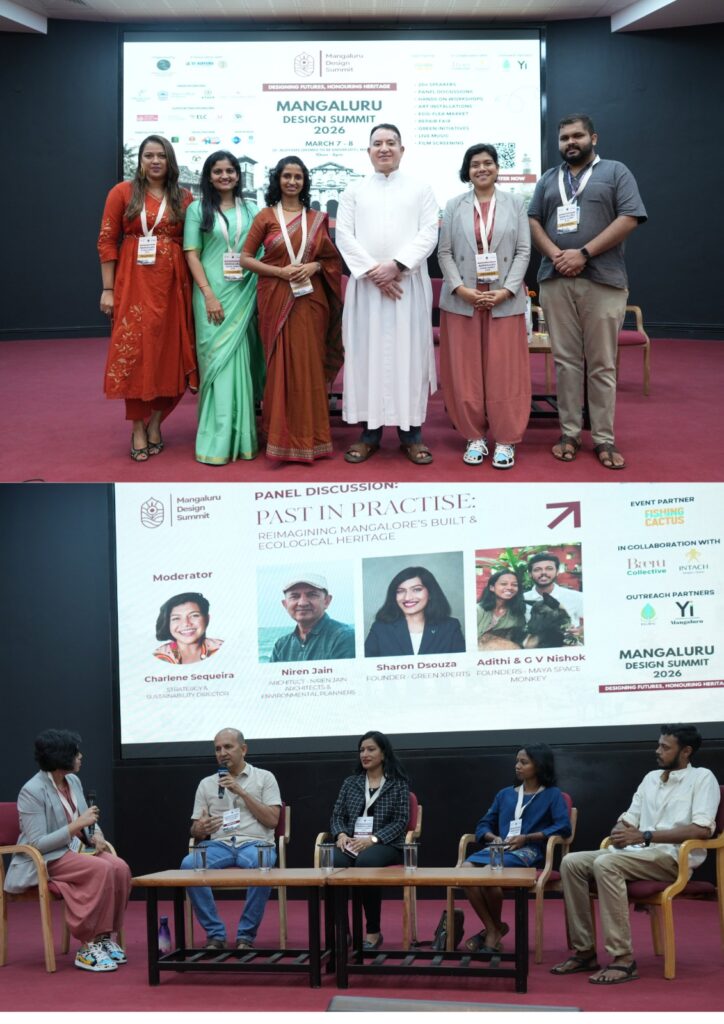
From conscious consumption to collective action
One of the early initiatives emerged from the founder’s own background in textiles and fashion. Recognising the impact of fast fashion and the importance of supporting traditional weavers, the team initiated a thrift movement. Gently used clothes were collected from personal networks and brought together for carefully curated sales. But this was much more than a second-hand clothing sale. The initiative also reached colleges, where students were introduced to conversations around fast fashion, responsible clothing consumption and the people behind the clothes they wear.
The quality of the garments was given particular attention, demonstrating that pre-loved clothing could be desirable, well-maintained and valuable. What makes the initiative especially commendable is its commitment to supporting traditional livelihoods, with 70 per cent of the proceeds directed towards supporting weavers.
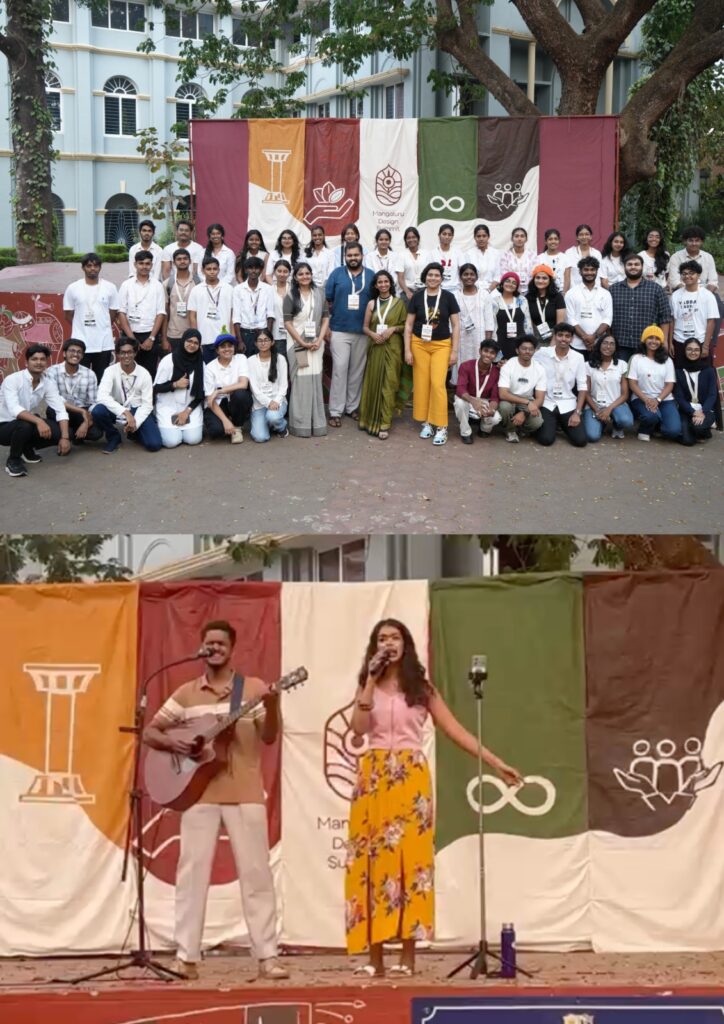
Over months of experimentation, the initiative developed into a practical, repeatable model. With collections of clothing ready and a system in place, the team can respond to invitations, conduct awareness sessions and organise thrift sales in different communities. It is a beautiful example of how an everyday resource, often overlooked in our homes, can become an instrument of social and environmental responsibility.
Design as a bridge between the past and the future
The journey soon expanded into a larger conversation around design and sustainability, leading to the Mangaluru Design Summit. The underlying thought was significant: many of the objects and spaces inherited from previous generations were designed with an intuitive understanding of nature, materials, climate and longevity.
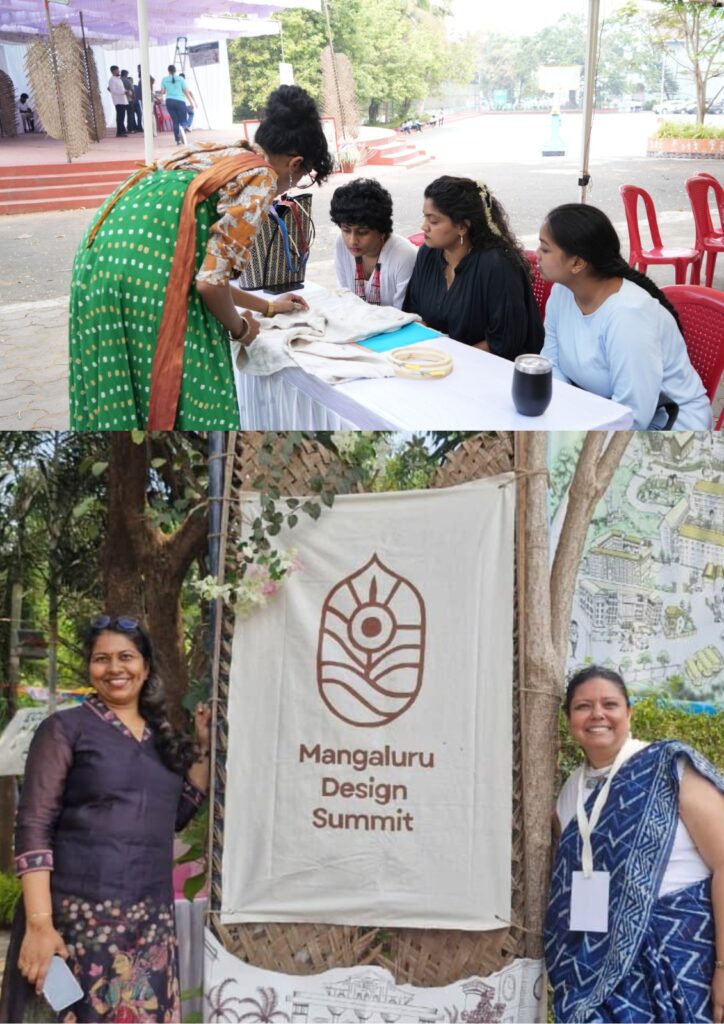
Traditional homes, locally sourced materials, heritage tiles, roofs, furniture and handcrafted objects were not merely aesthetic choices. They represented a way of living that valued resources, craftsmanship and durability. At a time when contemporary aspirations often look towards imported styles and global trends, the summit encouraged people to pause and rediscover the intelligence embedded in local traditions. Architects, interior designers, fashion designers and other creative practitioners came together to explore the relationship between design and sustainability.
The conversations centred on four interconnected themes: heritage, climate, circularity, and livable and inclusive cities. What began as a one-day gathering gradually grew into a two-day event, bringing together discussions, speakers, designer showcases and an Eco Flea Market. The larger message was clear: the future of sustainable design does not necessarily lie in inventing everything anew. Sometimes, it begins by understanding what our communities have already known and practised for generations.
Creating a platform for local makers
Perhaps one of the most heartening outcomes of this journey has been the growth of the Eco Flea Market. The organisers recognised that Mangaluru and its surrounding regions have numerous small businesses, independent makers and creative entrepreneurs producing handcrafted goods and working with natural materials.
Yet these businesses often struggle to find platforms where their work is understood and valued appropriately. A handmade product, for instance, cannot always compete with a mass-produced alternative on price. Its value lies in the skill, time, material, cultural knowledge and human effort that go into making it. The Eco Flea Market sought to create a space where such enterprises could stand alongside one another and be appreciated for their individual contributions.
What began with just four vendors has grown into a community of approximately 170–180 vendors from Mangaluru and its surroundings. Beyond providing a marketplace, the initiative has also encouraged a spirit of collaboration. Through a membership-based support circle, participating businesses can share challenges, exchange ideas, learn from one another and find solutions together. This is community building in its truest sense; not simply bringing sellers together for an exhibition, but nurturing an ecosystem in which small enterprises can grow collectively.
Turning the entire city into a festival
The next chapter of this journey is the Sustain Mangaluru Festival 2026, an ambitious initiative that extends the idea of sustainability beyond a conventional event format. Running from November into December, the festival brings together different spaces, institutions, artists, businesses, heritage venues and community organisations. Instead of restricting the programme to a single venue, it transforms everyday places across Mangaluru into opportunities for discovery, participation and learning.
The programme includes workshops, heritage experiences, art activities, outdoor engagements, flea markets, conversations and cultural gatherings. The idea is to make sustainability something people can experience rather than merely hear about. A workshop, a walk through a heritage space, a conversation about local food, a repair activity or an encounter with a traditional artisan can each become an entry point into a larger understanding of responsible living.
This approach is particularly valuable because the word sustainability can sometimes feel distant or overwhelming. By beginning with familiar activities and accessible experiences, the festival makes the subject relevant to people who may not otherwise engage with it. Its four central pillars; heritage, climate, circularity, and livable cities, provide a framework for exploring how individual choices and collective action can shape the future of Mangaluru.
The festival also builds upon the encouraging response to the March 2026 Mangaluru Design Summit, which brought more than 2,000 people together at St. Aloysius Deemed to be University. What was once a gathering of design professionals is now evolving into an invitation for the entire city to participate.
Giving local heritage and artisans their rightful place
One particularly meaningful aspect of the festival is its intention to bring local artisans into the spotlight. Mangaluru’s cultural identity is deeply connected to its traditional skills, materials, food, architecture and artistic practices. Yet the people who continue to preserve these traditions are not always visible in contemporary public life. By giving artisans a dedicated platform, the festival hopes to encourage a renewed appreciation of their work. More importantly, it seeks to create meaningful connections between traditional artisans and contemporary designers.
Such collaborations could help artisans strengthen their enterprises, explore new possibilities, improve their market access and pass their knowledge to future generations. It is an approach that recognises heritage not as something to be preserved behind glass, but as a living tradition that can continue to evolve. The larger aspiration is to help Mangaluru rediscover the richness of its own cultural and creative identity.
The beauty of building communities
Perhaps the most valuable contribution of Sustain Mangaluru lies not in the scale of its events, the number of participating vendors or the reach of its festival. It lies in the relationships being created. People who care about similar things are finding one another. Small businesses are discovering collaborators. Young people are being introduced to responsible consumption. Designers are engaging with traditional knowledge. Citizens are beginning to look at familiar places and practices with fresh appreciation.
The initiative also recognises that meaningful change cannot happen through a single annual celebration. Its continuing engagement with colleges, schools, communities and corporate organisations reflects an understanding that sustainable habits must become part of everyday life. Carrying a reusable bottle, choosing locally sourced food, repairing rather than replacing, appreciating handmade products and thinking carefully before purchasing are small actions. Yet when these actions become collective habits, they can gradually influence the way a community lives.
A city worth growing into
Sustain Mangaluru is ultimately an invitation to see the city differently. To recognise the value of its old homes, traditional materials, local artisans, neighbourhood businesses, cultural practices and natural surroundings. To understand that progress need not mean abandoning everything that came before us. And to imagine a future where creativity and development move forward without losing their connection to people, place and the environment.
In bringing together sustainability practitioners, designers, entrepreneurs, artists, institutions and ordinary citizens, the initiative is nurturing something that goes beyond an event or an exhibition. It is creating the beginnings of a shared civic culture; one where conscious choices are celebrated, local knowledge is respected, and community participation becomes the foundation for a better future.
Perhaps the most beautiful thing about this movement is that it does not ask people to change their lives overnight. It simply invites them to begin somewhere. And sometimes, that is exactly how meaningful change begins: with a few people who care, an idea worth sharing, and a community willing to grow together.


