NABARD: The Vision That Gave Rural India an Institution of Its Own
NV Paulose, Chairman, Global TV +91 98441 82044
India’s development story has never been only the story of its cities. Long before highways connected distant markets and digital payments reached the remotest villages, India’s economic strength rested on millions of farmers, artisans, rural workers, small entrepreneurs and village communities. Yet for decades, the people who produced much of the country’s food and sustained its rural economy often stood at the weakest end of the formal financial system. The problem was not simply a shortage of money. It was a shortage of institutional attention, suitable credit, infrastructure, organised markets and development support.
It was against this background that a remarkable idea began to take shape: India needed an institution whose entire purpose would be to understand rural India, finance its productive potential and build the institutions that could carry development into its villages. That idea eventually became the National Bank for Agriculture and Rural Development, or NABARD.
NABARD was established on 12 July 1982, under the NABARD Act of 1981. But its story did not begin with the passing of an Act. It began several years earlier, with policymakers and development thinkers who recognised that agricultural credit could not be treated as an isolated banking issue. It was inseparable from the larger question of rural transformation. At the heart of this vision was B. Sivaraman, the distinguished civil servant and former member of the Planning Commission who chaired the Committee to Review Arrangements for Institutional Credit for Agriculture and Rural Development, widely known as the CRAFICARD Committee.
The committee was constituted in 1979 at the initiative of the Reserve Bank of India and the Government of India. Its work led to a fundamental conclusion: rural development required an institution with a clear, undivided and powerful focus on agriculture and rural development. The existing arrangements were fragmented across different institutions. What India needed was a specialised development institution capable of bringing finance, planning, supervision and development together. Sivaraman’s contribution was therefore much greater than simply recommending another financial institution. The vision was to create an organisation that could understand the realities of rural India and strengthen the entire chain through which development could happen.
The creation of NABARD also represented the coming together of the work of several institutions and generations of policymakers. The Reserve Bank of India had already recognised the importance of institutional agricultural credit. The Agricultural Refinance and Development Corporation had developed experience in refinancing agricultural investment. The new institution brought these strands together and gave them a much larger mandate. In this sense, NABARD did not emerge from the vision of one individual alone. It was the product of a larger national school of thought that believed India’s economic development would remain incomplete unless rural India became productive, financially included and capable of generating sustainable livelihoods.
When NABARD was formally inaugurated in 1982, it was entrusted with a mission that was far larger than conventional banking. Its purpose was to promote sustainable and equitable agriculture and rural prosperity by supporting credit, infrastructure, institutions, livelihoods, and innovation.
That founding philosophy remains important even today. Because the central question was never merely: “How do we lend more money to rural India?” The deeper question was: “How do we create the conditions in which rural India can create more income, more enterprises, more employment and a better quality of life?” That distinction explains much of NABARD’s remarkable journey over the past four decades.
From a Rural Bank to an Institution That Builds Rural Economies
NABARD’s uniqueness lies in the fact that it does not function like an ordinary commercial bank serving individual customers through a network of branches. It works largely through the rural financial and development ecosystem. It supports Regional Rural Banks, cooperative banks and other eligible financial institutions through refinance and development assistance. It works with state governments on rural infrastructure. It promotes Self Help Groups, Farmer Producer Organisations and rural enterprises. It supports watershed development, livelihood programmes, financial inclusion, skill development and climate resilient agriculture. Its approach can therefore be understood through a simple principle:
Credit creates possibility. Institutions create capacity. Infrastructure creates access. Enterprise creates income. And income creates development. This is the philosophy that has allowed NABARD to influence rural India far beyond the traditional boundaries of banking.
The Visionaries Behind the Institution
The story of NABARD deserves to be told as a story of public institution building. B. Sivaraman and the members of the CRAFICARD Committee provided the intellectual and institutional blueprint. Their work recognised that rural credit needed to move away from fragmented interventions towards an integrated approach to rural development. The Reserve Bank of India played an important institutional role in this transition. Its earlier work in agricultural credit had already demonstrated that rural finance required specialised attention. NABARD emerged partly by transferring the RBI’s agricultural credit functions and the refinance functions of the Agricultural Refinance and Development Corporation into a new institution with a much wider developmental mandate.
The political leadership of the period also provided the authority necessary to turn this institutional vision into reality. The NABARD Act was passed by Parliament in 1981, and NABARD came into existence on 12 July 1982. The institution was formally dedicated to the nation later that year. The founders therefore represented three complementary forces: developmental thinking, institutional expertise and political will. Their shared insight was remarkably forward looking. Rural India did not need charity. It needed opportunity backed by institutions. That principle would go on to shape some of NABARD’s most influential interventions.
Creating Opportunity Where Finance Once Stopped
One of NABARD’s greatest contributions has been its ability to convert finance into opportunity. Its support for the Self Help Group Bank Linkage Programme helped millions of rural households connect with formal banking. Women in particular became central participants in this transformation. By organising themselves into savings and credit groups, they gained access to finance, developed collective financial discipline and created opportunities for small businesses and livelihoods.
NABARD’s work with Joint Liability Groups similarly sought to bring tenant farmers, small farmers and other borrowers without conventional collateral into the formal credit system. The next major evolution was the Farmer Producer Organisation. Small farmers often struggle because they produce individually but face markets collectively. Through producer organisations, farmers can aggregate their produce, purchase inputs, access technology, negotiate better prices, undertake processing and connect with larger markets. This represents a fundamental change in the rural development model. The objective is no longer simply to help a farmer produce more. It is to help the farmer earn more from what is produced.
Building the Infrastructure of Rural Prosperity
Opportunity cannot survive without infrastructure. A farmer needs irrigation. A village needs roads. A producer needs storage. A rural enterprise needs electricity, connectivity and access to markets. NABARD’s Rural Infrastructure Development Fund has therefore become one of its most significant instruments. Through RIDF, NABARD finances a wide range of projects undertaken by state governments and state owned institutions, including irrigation, rural roads, bridges and social infrastructure.
The economic effect of such investment extends far beyond the project itself. A road reduces the distance between a farmer and a market. Irrigation can transform the productivity of land. A bridge can connect a village to schools and hospitals. A storage facility can reduce distress sales. Better infrastructure can make it viable for an entrepreneur to establish a business in a rural district rather than migrate to a city. This is how infrastructure becomes an instrument of economic development.
NABARD Today: Carrying the Founding Vision into a New Rural Economy
More than four decades after its creation, NABARD continues to evolve. The institution is now dealing with challenges that its founders could not have fully anticipated: climate change, digital finance, fragmented agricultural value chains, changing rural employment patterns, migration, technological disruption and the need for environmentally sustainable growth. Its working model is consequently becoming more technology driven and ecosystem oriented.
NABARD continues to work through rural financial institutions while increasingly supporting digital systems, better credit assessment, financial inclusion, producer organisations, rural enterprises and climate resilient development. Shri Shaji K. V. is the Chairman of NABARD. Its governance structure brings together representatives and nominees associated with the Government of India, the Reserve Bank of India, state governments and NABARD’s executive leadership.
The institution’s future challenge is enormous but also full of possibility. India’s villages are no longer defined only by subsistence agriculture. Rural India is increasingly becoming a landscape of food processing, renewable energy, digital services, rural tourism, manufacturing, producer companies, startups, women led enterprises and technology enabled agriculture.
The question NABARD must continue answering is the same question that inspired its creation in 1982:
How can India’s enormous rural potential be converted into sustainable economic opportunity? The answer has evolved from agricultural credit to something much larger. It is now about building finance, institutions, infrastructure, enterprise, technology and human capability together. That is perhaps the most enduring legacy of the visionaries who created NABARD.
They understood something that remains true today: a nation cannot build lasting prosperity by developing its cities while leaving its villages behind. Rural development is not a separate chapter of India’s economic story. It is one of its foundations.
CONNECT UNTIL EVERY LINEAR SYSTEM BECOMES CIRCULAR
NV Paulose, Chairman, Global TV +91 98441 82044
1. Every human organisation begins with people. People come together because they have a common concern, a common purpose, or a common need. But as an organisation grows, something important can change. People who once knew each other personally may become strangers. Communication becomes slower. Decisions move farther away from the people affected by them. Responsibility becomes less personal. The possibility of misuse of power also increases. Therefore, the question is not only how large an organisation can become. The more important question is how large it can become without losing human connection, trust, responsibility, and accountability. This is why a 10 × 10 × 10 formation offers a powerful model for human organisation.
1. The Principle Begins With Concern
2. The foundation of a circular organisation is simple. Instead of asking, “What can I get from you?”, we begin by asking, “What can I do so that you also benefit?” This small change in thinking can transform relationships. It changes competition into cooperation. It changes extraction into contribution. It changes a transaction into a relationship. When people genuinely care about the benefit of others, their own success becomes connected to the success of others. This is the beginning of a circular system. A circular system is not created merely by drawing a circle. It is created when people understand that their actions affect others and that the benefit created for one person can become an input for another.
2. From Linear to Circular
3. Most systems around us are linear. One person gives something, another receives it, and the process ends. A Mentor teaches a Trainer. A Trainer teaches a Student. A business sells to a customer. A worker completes a task for an organisation. These relationships can be useful, but they can remain one-way. A circular system works differently. The Student learns and creates value for the community. The community creates new experiences and opportunities. The Connector brings those opportunities back into the network. The Trainer learns from the experience. The Mentor learns from the Trainer. The system becomes a continuous flow of learning, contribution, benefit, and renewal. Output becomes input. Contribution becomes opportunity. Benefit returns as new capacity.
4. This leads to a simple principle for organisation building: Connect until all your linear systems become circular. Every time we find a one-way relationship, we should look for the missing connection. If knowledge is flowing only from Mentor to Trainer, connect the Trainer’s experience back to the Mentor. If resources are flowing only from an organisation to a community, create a mechanism through which the community can contribute knowledge, feedback, and solutions. If a Student receives training, create opportunities for that Student to help another person. The objective is not to make everyone equal in every role. The objective is to make everyone part of the flow.
3. The 10 × 10 × 10 Formation
5. The 10 × 10 × 10 formation provides a practical human scale for this philosophy. Ten Mentors can each support ten Trainers. Each Trainer can support ten Students. This creates ten Mentors, one hundred Trainers, and one thousand Students. Together, they form a maximum unit of 1,110 people. The number is large enough to create meaningful collective strength, but small enough to organise through identifiable relationships. Each person can belong to a defined circle. Each circle can have a clear responsibility. Each person can know where they belong and whom they are responsible for supporting.
6. The three levels do not create three classes of people. They create three levels of responsibility. A Mentor’s responsibility is to develop Trainers. A Trainer’s responsibility is to develop Students. A Student’s responsibility is to learn, participate, and create useful outcomes. But the movement is circular. A Student can teach another Student. A Trainer can learn from a Student. A Mentor can learn from Trainers. A Connector can connect opportunities across all levels. Therefore, position does not mean superiority. It means responsibility. The higher the responsibility, the greater the duty to serve.
4. Three Movements, One Circle
7. The organisation can focus on three major areas: Health Ambassadors, Green Warriors, and Career Coaches. These should not become isolated departments. They should become three movements that continuously interact. Health affects a person’s ability to learn and work. A healthy environment affects health. Career opportunities give people the capacity to improve their families and communities. Green projects can create livelihoods. Career development can support health services. Health awareness can strengthen productive communities. The three areas therefore form a living triangle. Every person can participate in every movement, even when they have a primary responsibility in one area.
8. This is where Connectors become essential. A Connector does not simply introduce two people. A Connector identifies where one person’s need can become another person’s opportunity. A Health Ambassador may identify a community health concern. A Green Warrior may have a solution involving clean water or waste management. A Career Coach may identify young people who can turn that solution into employment or enterprise. The Connector brings these people together. A new project is created. New learning takes place. The result feeds back into the network. Connection converts separate activities into a circular system.
5. Why the Circle Must Have a Limit
9. Growth is normally considered a sign of success. Bigger organisations are often seen as more powerful. But bigger is not always better for a human organisation. As the circle grows, personal knowledge can decline. Communication can become impersonal. Decisions can become concentrated. People may begin to follow procedures without understanding the purpose behind them. Most importantly, accountability can become weaker. When nobody feels personally responsible, small compromises can become large problems. This is one reason why the risk of corruption and misuse of power can increase as human systems become too large and distant. A healthy organisation must therefore recognise the limits of human relationships.
10. The 1,110-person limit should not be understood as a mathematical law that applies to every organisation. It is a design principle for maintaining manageable human relationships. When a unit becomes too large, the answer should not simply be to add more layers of management. The approach itself should change. The unit should divide into smaller circles. Each new circle should retain the same principles of responsibility, transparency, participation, and mutual benefit. In this way, growth happens through replication rather than uncontrolled expansion.
11. This creates an important safeguard. A unit can grow stronger without becoming a giant centralised structure. Ten Mentors can create ten Mentor circles. Each circle can develop its own Trainers and Students. When the number becomes too large for one unit to remain personal and accountable, it can become another set of connected units. The larger organisation is then not one giant circle. It is a network of smaller circles. Each circle remains responsible for itself while remaining connected to the others. This makes it harder for power to accumulate in one place.
6. The Circle Must Keep Moving
12. A circular organisation cannot depend only on good intentions. It needs practices that keep the circle healthy. People must regularly share information. Decisions must be visible. Responsibilities must be clear. Feedback must move in both directions. Leaders must be accountable to the people they serve. New people must be developed continuously. Opportunities must circulate rather than remain concentrated among a few people. When something goes wrong, the system must learn from it. These practices turn the idea of circularity into an operating system.
13. The most important measure is therefore not the number of people inside the organisation. It is the amount of value that circulates between them. Are Mentors creating better Trainers? Are Trainers creating stronger Students? Are Students creating useful community outcomes? Are Connectors creating meaningful opportunities? Are successful people helping others succeed? Is knowledge returning to the system? If the answer is yes, the circle is alive. If people are only taking value out of the system, the circle has become linear again.
14. The ultimate purpose is not to create a large organisation. It is to create a large impact through small, responsible circles. Each person should experience both sides of the relationship. Everyone should have something to give and something to receive. Everyone should have an opportunity to learn and an opportunity to teach. Everyone should be able to benefit and should also feel responsible for creating benefit for others. This creates a culture where success is not measured only by personal gain. Success is measured by how much capacity we create in other people.
15. The philosophy can therefore be expressed in one continuous movement: Concern → Connect → Contribute → Benefit → Share → Learn → Connect Again. The 10 × 10 × 10 formation gives this movement a practical human structure. The maximum unit of 1,110 people protects the quality of relationships and accountability. When a circle becomes too large, it does not simply expand. It creates new circles and connects them. In this way, growth does not destroy connection. It multiplies connection. The goal is simple and powerful: instead of asking what we can get from others, we ask what we can do so that others also benefit. Then we connect until every linear system becomes circular.
7. Storytelling: The Connecting Link and Revenue Model
16. Every circular system needs a way to connect people, experiences, achievements, and opportunities. Storytelling can become that connecting link. Every person has a story. A Mentor has a story of what they have learned. A Trainer has a story of people they have helped. A Student has a story of challenges overcome. A Health Ambassador has a story about improving wellbeing. A Green Warrior has a story about protecting the environment. A Career Coach has a story about helping someone find a skill, opportunity, or livelihood. When these stories are shared, people who were previously disconnected can discover common interests and opportunities. A story creates a human connection before a transaction takes place.
17. This makes storytelling more than communication. It becomes a productive activity within the circular economy. People can document their journey, interview others, create videos, produce articles, share community achievements, and tell stories of innovation, education, culture, governance, health, careers, environment, and community development. The poster’s idea of “Share. Inspire. Impact.” captures this perfectly. A person’s story can inspire another person to participate. That participation can create a new project. The project creates new results. Those results create new stories. The stories attract new people, resources, partnerships, and opportunities. The circle continues.
18. Storytelling can also become a revenue model for everyone in the system. Instead of depending entirely on donations or central funding, participants can create value through responsible storytelling and media production. A Student can learn storytelling and document a local project. A Trainer can mentor a group in producing stories. A Connector can connect those stories with organisations, institutions, businesses, and audiences. A Mentor can help identify stories with wider social value. Global TV, or a similar platform, can provide the distribution channel. Revenue generated from storytelling can then flow back into the people and projects that created the stories. The story becomes the output, the audience becomes the connection, the opportunity becomes the input, and the revenue becomes fuel for the next cycle.
19. The idea of “Icons of Excellence” gives this model a strong identity. We do not only tell stories about famous people. We discover ordinary people doing extraordinary things in their communities. We give visibility to people who are creating change. We ask simple questions: What is your story? What drives you? What challenges have you overcome? What change do you want to see in your city? How can we build a better future together? These questions turn passive audiences into active participants. Every person can become an Icon when their experience inspires another person to act.
20. The storytelling movement can connect all the major areas of the organisation. Health stories can show how communities become healthier. Education stories can show how minds are empowered. Career stories can show how opportunities are created. Environment stories can show how cities become sustainable. Community stories can show how people become stronger together. Innovation stories can show how ideas become solutions. Culture and Arts stories can preserve identity and inspire creativity. Governance stories can demonstrate accountability and better leadership. These are not separate stories. Together, they become the story of a better city and a better society.
21. The revenue principle should therefore be simple: create value before extracting value. If a person tells a meaningful story, produces useful content, builds an audience, connects people, promotes a community solution, or creates visibility for an organisation, that activity can have economic value. The revenue generated should not flow only to the platform. It should circulate among the storyteller, Trainer, Mentor, Connector, production team, community project, and the wider movement according to a transparent model. In this way, storytelling itself becomes circular: people create stories → stories create connections → connections create opportunities → opportunities create revenue → revenue supports people and projects → new stories are created.
22. This gives the entire 10 × 10 × 10 formation another dimension. We are not simply creating 10 Mentors, 100 Trainers, and 1,000 Students. We are creating 1,110 potential storytellers, contributors, connectors, and creators of value. Everyone can tell a story. Everyone can discover a story. Everyone can connect a story to an opportunity. Everyone can benefit from the value created. The ultimate message becomes: “Tell your story. Inspire others. Build better cities. Create what matters most.” When storytelling is placed at the centre, the organisation does not merely grow larger. It becomes more visible, more connected, more participatory, and more capable of sustaining itself.
The Complete Circular Principle
This addition makes the whole philosophy much stronger:
CONCERN FOR OTHERS → CONNECT → CONTRIBUTE → CREATE VALUE → TELL THE STORY → INSPIRE → CREATE OPPORTUNITY → GENERATE REVENUE → REINVEST → CONNECT AGAIN
And the central statement can now be:
CONNECT UNTIL ALL YOUR LINEAR SYSTEMS BECOME CIRCULAR
Don’t ask, “What can I get from you?” Ask, “What can I do so that you also benefit?” Then tell the story, connect the people, circulate the value, and begin the next cycle.
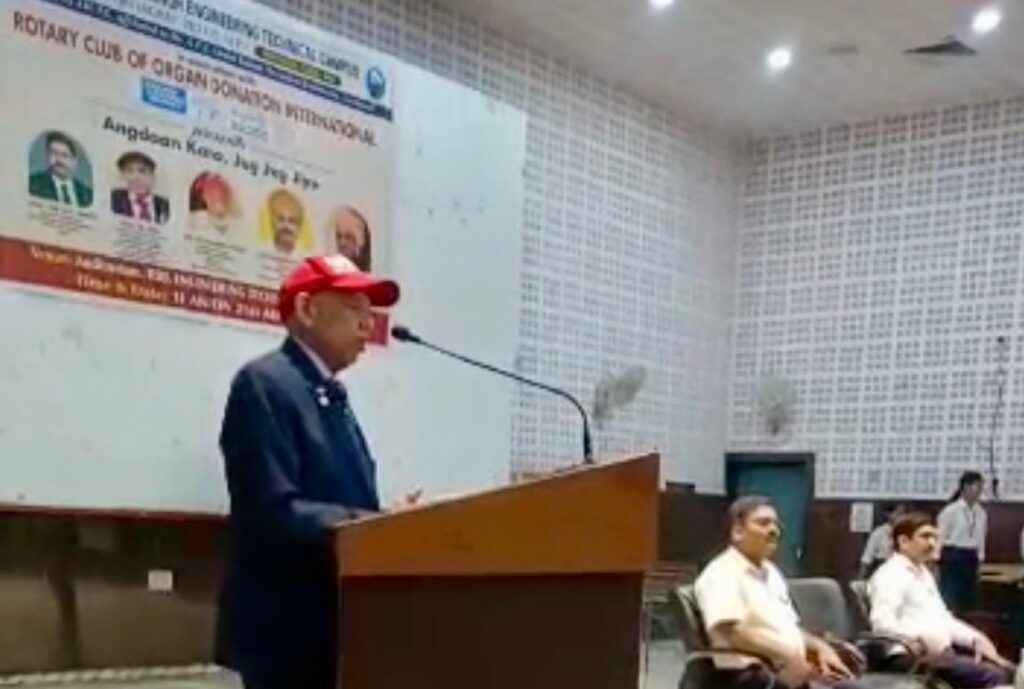
ROTARIAN LAL GOEL DELIVERS KEYNOTE ADDRESS ON NOTTO’S 2026 THEME, “ANGDAAN KARO, JUG JUG JIYO,” AT RBS ENGINEERING TECHNICAL CAMPUS, AGRA
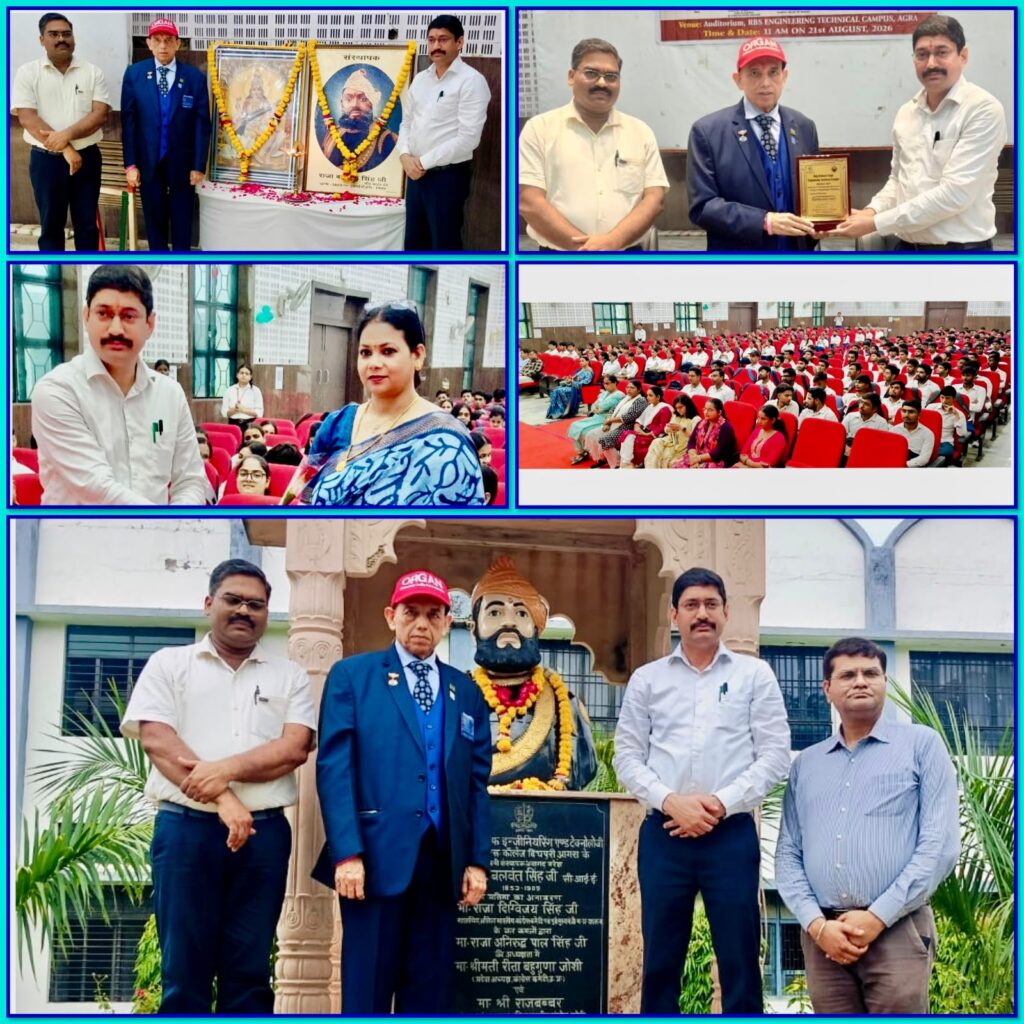
Agra, 21 August 2026 — Rotarian Lal Goel, Founder & Charter President of the Rotary Club of Organ Donation International and Chairman of Organ Donation India Foundation & GYAN, was the Chief Guest and Keynote Speaker at Raja Balwant Singh Engineering Technical Campus, Agra, at a programme titled “Angdaan Karo, Jug Jug Jiyo,” based on the 2026 theme of the National Organ & Tissue Transplant Organisation (NOTTO).
The programme began with Rotarian Lal Goel, Director Prof. Dr B. K. Singh, and Rtn Prof. Dr Nitin Agrawal paying floral tribute to Raja Balwant Singh, founder of the RBS Group of Institutions.
In his keynote address, Rotarian Lal Goel urged the youth to transform the steady stream of information they receive every day into meaningful knowledge — knowledge that can illuminate the importance of organ donation and inspire greater participation in India.
Prof. Dr B. K. Singh, Director of the College, welcomed Rotarian Lal Goel and expressed hope that the programme would show students a new path and inspire them to contribute to this noble cause.
Rtn Prof. Dr Nitin Agrawal proposed the vote of thanks, expressing gratitude to the Chief Guest, dignitaries, faculty members, and students for their participation and valuable support in making this theme-based programme a success.
The programme was organised by Dr. A.P.J. Abdul Kalam Technical University, Lucknow, and Raja Balwant Singh Engineering Technical Campus, Agra, in association with the Rotary Club of Organ Donation International.
The event was attended by Rtn Leena Harit, an active member of the Rotary Club of Organ Donation International, Dr S. P. Pandey, faculty members, and a large number of students.
Rotarian Lal Goel also interacted with the students and answered their questions in detail, encouraging them to become informed ambassadors of organ donation.
Rotarian Lal Goel expressed his heartfelt gratitude to Hon’ble Raja Anirudh Pal Singh Ji, Chairman, Governing Council, Raja Balwant Singh Engineering Technical Campus; Rtn Kr Narendra Singh, National Chief Patron, Akhil Bhartiya Kshatriya Mahasabha & Vice President, Rashtriya Lok Dal, Uttar Pradesh, Mathura; and Yuvraj Ambareesh Pal Singh, Secretary, Balwant Educational Society and Observer, RBS Engineering Technical Campus, Agra, for their wholehearted cooperation and support in organising the programme.
War to Peace and Prosperity | A Massive Transformation of the World | The Mission of Mangalore and Mangaloreans
Paul, Chairman, Global TV +91 98441 82044
The next journey is from Illness to Wellness and Integration of Career with Education
Mangalore, now known as Mangaluru, occupies a remarkable position in the economic history of India. It is a city that has repeatedly transformed its geographical advantage, international connections, entrepreneurial culture, and human capital into institutions of national importance. From its historic maritime trade to its celebrated tile industry, from the birth of major Indian banks to the rise of world class educational and medical institutions, and from traditional hospitality to modern hotel groups, Mangalore has demonstrated an unusual capacity to convert ideas and opportunities into lasting economic transformation.
The story of Mangalore is therefore not simply a story of a coastal city. It is a story of a community that learned to connect the local with the global.
A City Connected to the World
Mangalore’s geographical position on the Arabian Sea has shaped its history for centuries. Its natural harbour, its proximity to the Western Ghats and its connections with the hinterland made it an important centre of maritime commerce. Arab traders, European merchants and other communities connected the city with the wider Indian Ocean trading network.
This international orientation created a culture of mobility and enterprise. Goods moved outward from the coast, while ideas, technologies, capital and commercial practices moved inward. Spices, coffee, cashew, timber and other products connected the region with markets beyond India. The most important legacy of these connections was not merely trade. It was the ability of Mangaloreans to absorb outside ideas and adapt them to local conditions.
The Mangalore Tile: A Local Industry with Global Reach
Few products illustrate this better than the famous Mangalore tile. The modern industrial production of Mangalore tiles began with the Basel Mission in the nineteenth century. German missionary Georg Plebst studied European tile making techniques and adapted them to the clay available along the Netravathi and Gurupura rivers. The first industrial tile factory was established at Jeppu in 1865.
But the story did not remain a missionary enterprise. Local entrepreneurs quickly entered the industry and transformed it into a major commercial activity. One of the pioneers was Alex Albuquerque, who began manufacturing tiles in 1868. His enterprise eventually developed into a substantial industrial operation. His son Felix Albuquerque continued the business, introduced mechanisation and diversified into construction. Felix also became one of the early users of electric motors among Mangalore tile manufacturers.
By the beginning of the twentieth century, approximately twenty five tile factories were operating in and around Mangalore. The industry created employment for thousands of people and developed an ecosystem involving clay extraction, transport, kiln technology, manufacturing, trading and shipping.
More importantly, Mangalore tiles did not remain a regional product. They travelled throughout India and across the Indian Ocean. They became particularly associated with buildings in South India, Sri Lanka, East Africa and other overseas markets. The industry connected Mangalore’s riverbanks and kilns with an international network of merchants and shipping routes. The tile industry therefore represents one of Mangalore’s earliest examples of transformational innovation. International technology met local resources, local entrepreneurs created businesses, and maritime connections opened global markets.
Mangalore: The Cradle of Indian Banking
If tiles demonstrated Mangalore’s industrial entrepreneurship, banking demonstrated its ability to create institutions that transformed the Indian economy. The coastal region became one of the most important centres of Indian banking. Canara Bank was founded in Mangalore in 1906 by Ammembal Subba Rao Pai. Karnataka Bank was established in Mangalore in 1924. Syndicate Bank was founded in nearby Manipal in 1925 by T. M. A. Pai, Upendra Ananth Pai and Vaman Srinivas Kudva. Vijaya Bank was founded in Mangalore in 1931 by A. B. Shetty. Corporation Bank was established in the region in 1906 by Khan Bahadur Haji Abdulla.
The significance of these institutions cannot be overstated. These banks were created at a time when modern banking facilities were largely concentrated in major colonial commercial centres. Mangalorean entrepreneurs recognised that ordinary farmers, traders, workers and small businesses needed access to organised finance.
Ammembal Subba Rao Pai had a particularly broad vision. Canara Bank was conceived not merely as a commercial institution but as an institution that would encourage savings, education and social advancement. The story of Syndicate Bank provides another powerful example. T. M. A. Pai and his associates developed innovative approaches to collecting small savings and bringing banking services closer to ordinary people. The famous Pigmy Deposit Scheme became an important example of financial inclusion. This was transformational innovation in its purest form. The entrepreneurs of coastal Karnataka did not simply create banks. They helped create a culture of savings, credit and entrepreneurship.
The T. M. A. Pai Vision: Education as Economic Infrastructure
The banking story eventually led to an even larger transformation. T. M. A. Pai understood that money alone could not transform a society. A modern economy required educated people, doctors, engineers, managers and entrepreneurs. His vision contributed to the creation of an educational and medical ecosystem in Manipal. Kasturba Medical College was established in 1953 and the Manipal Institute of Technology followed in 1957.
Over time, Manipal became a globally connected centre for higher education and healthcare. Students from different parts of India and from other countries came to the region, while graduates from the institutions established there travelled throughout the world.
This created a new form of export for Mangalore and the coastal region. The region was no longer exporting only tiles, spices and agricultural products. It was exporting knowledge, professional expertise and human capital. Doctors trained in the region went to hospitals across India, the Gulf, Europe, North America and elsewhere. Engineers, accountants, bankers and business professionals similarly became part of the international workforce. The global Mangalorean network therefore became an economic asset in itself.
Hospitality: From Mangalorean Enterprise to National Brands
Mangalore’s entrepreneurial culture is equally visible in hospitality. The story of The Ocean Pearl Hotels is particularly significant. Jayaram Banan, a Mangalorean entrepreneur, began his independent business journey at a very young age. After working and struggling in Mumbai, Bengaluru and Ghaziabad, he established the Sagar Restaurant in Delhi. The success of the Sagar and Sagar Ratna brands eventually led to diversification into hotels.
Ocean Pearl Hotels later established a significant presence in Mangalore. The company states that its origins are connected with the Sagar and Sagar Ratna restaurant businesses and that the hotel company was incorporated in 1997 under Jayaram Banan’s leadership. The Ocean Pearl hotel in Mangalore became an important hospitality landmark in the city.
What makes this story particularly relevant to Mangalore’s economic history is that the entrepreneur did not restrict his ambition to his hometown. The business journey moved from Mangalore to Mumbai, Delhi and other parts of India before establishing a major hospitality presence back on the coast. It is a perfect illustration of the Mangalorean entrepreneurial pattern: leave the hometown, learn from the wider world, build something successful, and bring that experience back to the region.
Goldfinch Hotels and the New Generation of Hospitality
Another important example is Goldfinch Hotels, part of the MRG Group founded by Dr. K. Prakash Shetty.
The MRG Group was founded in 1993 and developed from a restaurant business into a diversified enterprise spanning hospitality, real estate, construction and infrastructure. Goldfinch Hotels became one of its important hospitality brands. The group today operates hotels in Mangaluru and other major Indian cities. The Goldfinch story represents a newer generation of Mangalorean entrepreneurship.
The business is not confined to accommodation. Its Mangaluru property combines rooms, restaurants, banqueting and business facilities. Its signature restaurant Sana di ge also highlights coastal cuisine and the region’s culinary identity. This is important because modern hospitality is no longer simply about providing a room. It creates employment, attracts business travellers, supports conferences and weddings, strengthens tourism and creates demand for local suppliers. Goldfinch therefore represents another stage in Mangalore’s economic evolution, where local entrepreneurship is combined with modern management, professional hospitality and national expansion.
The Mangalorean Medical Transformation: From Hospital to Healthcare Ecosystem
Among the most remarkable chapters in Mangalore’s story of transformational innovation is the emergence of healthcare as an economic, educational and hospitality ecosystem. The city did not merely acquire more hospitals. It gradually developed an environment in which medicine, medical education, architecture, hospitality, professional training, entrepreneurship and international connections began reinforcing one another. At the heart of this transformation was an older entrepreneurial tradition.
Yenepoya Moideen Kunhi and the Creation of an Ecosystem
Any discussion of the modern medical transformation of Mangalore must acknowledge the pioneering role of Late Yenepoya Moideen Kunhi, the founder of the Yenepoya Group. The Yenepoya Group was established in 1940. What began with the timber trade eventually diversified into commerce, industry, hospitality, healthcare and education. The Yenepoya institutions themselves describe Moideen Kunhi as a visionary whose original dream was to contribute to society through education.
This diversification was crucial. Moideen Kunhi did not build merely a business house. He created an entrepreneurial ecosystem in which commercial success could eventually support social institutions, education and healthcare. That ecosystem became particularly important for the next generation.
His family and extended network became associated with a remarkable group of professionals, educationists and medical pioneers. Among them was Dr. C. P. Habeeb Rahman, who would become one of the important figures in the development of modern private healthcare in Mangalore. In this sense, the Yenepoya story should be understood not merely as the history of one institution. It was one of the foundations upon which a much wider Mangalorean medical ecosystem could develop.
Dr. C. P. Habeeb Rahman and the Modern Hospital
Dr. C. P. Habeeb Rahman represents another important strand of this transformation. He was the principal promoter of Unity Care and Health Services, later its Chairman and Medical Director, and the driving force behind Unity Hospital in Mangalore. The origins of Unity Hospital go back to 1978, when Dr. Habeeb Rahman started the hospital as a partnership venture under the name Yenepoya Health Institute. With the growth of the institution, he went on to develop nursing education and later a nursing degree programme, creating a direct relationship between healthcare delivery and professional education. In 2000, the enterprise was converted into Unity Care and Health Services Private Limited.
This is a significant point in Mangalore’s economic history. The hospital was not conceived merely as a place where doctors treated patients. It became a place where healthcare, professional training, technology, employment and service delivery converged. That is precisely what distinguishes an economic ecosystem from an individual enterprise.
From Hospital Architecture to Hospitality
The evolution of Unity Hospital also illustrates a broader transformation in the philosophy of healthcare. The traditional hospital was primarily designed around clinical function. The modern hospital increasingly began to consider the patient experience.
The architecture of a contemporary hospital began borrowing certain principles from hospitality. Reception areas became more welcoming. Patient rooms became more comfortable. Privacy became more important. Waiting areas became less institutional. Food services, cleanliness, nursing assistance, ambience and family accommodation became part of the overall patient experience.
This was not simply cosmetic.
A person entering a hospital is often anxious, uncertain and vulnerable. The physical environment can therefore influence the psychological experience of illness. This gave rise to the increasingly important idea of therapeutic architecture. Natural light, greenery, quiet spaces, comfortable interiors, patient friendly circulation, privacy and pleasant surroundings can help create a more reassuring environment. Architecture cannot cure disease, but the environment in which treatment takes place can influence comfort, confidence and emotional well being.
Unity Hospital provides an interesting example of this evolution. Its later development included specialised facilities designed around patient experience. The next geneation innovation of the hospital’s Birth and Beyond centre, for example, was described as having a peaceful ambience, soothing interiors, music and facilities designed to create a more positive experience for mothers and families.
The hospitals in the city followed the model and introduced semi private, private and star-luxury corporate rooms designed with patient friendly facilities. The innovations speak about the continuing need to reinvest in technology and infrastructure and the challenge of effectively rebuilding and modernising a hospital as medical technology changes.
The connection between hospitality and healthcare is very interesting. A hotel asks how a guest can be made comfortable. A modern hospital asks how a patient can be made comfortable while receiving highly complex medical treatment. The two purposes are fundamentally different, but the principles of service, privacy, ambience, food, accommodation and human dignity increasingly overlap.
The Family and Institutional Network Behind the Transformation
The story becomes even more interesting because Mangalore’s medical transformation was not produced by one entrepreneur working in isolation. It emerged from a network of families, doctors, educationists, philanthropists and institutions. The relationship between the Yenepoya family and Dr. Habeeb Rahman is particularly significant in this context. Dr. Habeeb Rahman is the son in law of the Yenepoya family, and his association with the wider Yenepoya institutional ecosystem illustrates how relationships between entrepreneurship, medicine and education helped accelerate the development of healthcare in the region.
This network produced something larger than individual hospitals. It created an environment in which doctors could establish institutions, medical professionals could be trained locally, hospitals could provide clinical experience, educational institutions could produce healthcare workers and entrepreneurs could invest in modern infrastructure. The result was a self reinforcing cycle.
Education produced professionals. Professionals strengthened hospitals. Hospitals created demand for technology and specialised services. Successful institutions attracted more professionals. The growing medical ecosystem attracted patients from outside the region.
Mangalore gradually became a medical destination.
From Mangalore to the World
The next stage of this transformation was globalisation. Mangalore’s medical professionals travelled extensively. Doctors and nurses from the region found opportunities in the Gulf, Europe, America and other parts of the world. At the same time, international connections brought new technologies, professional practices and investment ideas back to the region.
One of the most extraordinary examples of this global Mangalorean medical entrepreneurship is Dr. Thumbay Moideen. Born in Mangalore, Dr. Moideen took the entrepreneurial tradition of the coast to the United Arab Emirates. He founded Thumbay Group in 1997 and subsequently established Gulf Medical College, which later became Gulf Medical University.
The significance of Thumbay’s achievement lies in the fact that he did not establish merely a hospital or merely a medical college. He created an integrated ecosystem connecting medical education, hospitals, research and healthcare services.
Gulf Medical University has developed into an international institution with students from more than 100 countries and partnerships with institutions around the world. Thumbay’s healthcare network has likewise expanded to serve patients from many nationalities.
The Mangalorean connection has therefore moved through several stages. First came the export of commodities such as tiles. Then came banking and financial services. Then came professional education and healthcare. Now comes the export of medical education and integrated healthcare systems.
A New Kind of Mangalorean Innovation
The story of Yenepoya Moideen Kunhi, Dr. C. P. Habeeb Rahman and Dr. Thumbay Moideen demonstrates something profound about Mangalore. The city’s greatest innovation has often been its ability to create ecosystems rather than isolated businesses. Yenepoya Moideen Kunhi created an entrepreneurial foundation that expanded from timber into hospitality, healthcare and education.
Dr. C. P. Habeeb Rahman helped transform that wider environment into a modern healthcare enterprise in which hospital services, nursing education, technology and patient care were brought together. Dr. Thumbay Moideen carried the Mangalorean entrepreneurial spirit into the Gulf and created an international medical education and healthcare ecosystem.
These are not separate stories. They are chapters of the same larger story. The transformation of Mangalore’s medical sector can therefore be understood as a movement:
from hospital to healthcare system, from treatment to patient experience, from hospital architecture to therapeutic architecture, from healthcare to hospitality, and from local medical education to global medical education.
This is why the medical sector deserves a central place in the story of Mangalore as a City of Transformational Innovations. The city did not merely produce doctors. It produced medical entrepreneurs, institutions, educators, hospital builders and global healthcare leaders.
And behind many of these achievements was an ecosystem created over generations by people who understood that economic development becomes truly transformational when commerce, education, healthcare and social purpose reinforce one another.
The Global Mangalorean
Perhaps the most remarkable economic asset of Mangalore is its people. For generations, Mangaloreans have travelled to Mumbai, Bengaluru, Chennai, Delhi, the Gulf countries, Africa, Europe, North America and other parts of the world. They have worked as bankers, doctors, engineers, teachers, hoteliers, accountants, entrepreneurs and professionals. Many established businesses abroad while maintaining strong relationships with their home region.
This created an unusual economic network.
A Mangalorean entrepreneur could establish a business in Mumbai, employ people from the coast, maintain financial relationships with a bank founded in Mangalore, invest in property or education back home and eventually establish a hotel or business in Mangaluru. Thus migration became more than movement of people. It became movement of capital, knowledge, skills, contacts and ideas. This global network continues to influence the city’s development.
From Port City to Modern Economic Centre
Mangalore’s economic transformation has also been strengthened by modern infrastructure. The New Mangalore Port has given the region a modern gateway to international maritime commerce. The city has developed major industrial activities, including petroleum, chemicals, fertilisers, manufacturing and related services. At the same time, Mangalore has expanded its role as a centre for education, healthcare, banking, hospitality, retail, construction and professional services. The result is an economy that is remarkably diversified for a city of its size. Its strength does not depend upon one industry. It rests upon a combination of maritime trade, manufacturing, finance, education, healthcare, hospitality, migration and entrepreneurship.
The Mangalorean Model of Transformation
The deeper lesson from Mangalore is that innovation does not always mean inventing something completely new. Sometimes innovation means taking an existing idea and applying it in a new environment. The Basel Mission brought European tile technology. Mangalorean entrepreneurs transformed it into an international industry. Modern banking models existed elsewhere. Mangalorean entrepreneurs adapted banking to the needs of ordinary people and built institutions that eventually served millions. Education existed elsewhere. T. M. A. Pai transformed it into an ecosystem that made Manipal a global destination for professional education and healthcare.
Hospitality existed everywhere. Entrepreneurs such as Jayaram Banan and K. Prakash Shetty built businesses that carried Mangalorean entrepreneurial values and culinary traditions into modern Indian hospitality. This is why Mangalore deserves to be described as a City of Transformational Innovations. Its greatest achievement is not a single invention or a single company. It is a continuing culture of transformation.
Mangalore’s history demonstrates the extraordinary economic influence that can emerge from a relatively small coastal city.
Its riverbanks produced tiles that travelled across oceans. Its entrepreneurs created banks that became national institutions. Its educationists created universities, medical colleges and professional institutions that attracted students from around the world. Its migrants created global networks of skills and capital. Its hoteliers built businesses that connected Mangalorean hospitality with India’s expanding tourism and business economy.
The stories of Alex Albuquerque, Ammembal Subba Rao Pai, T. M. A. Pai, A. B. Shetty, Jayaram Banan and Dr. K. Prakash Shetty belong to different generations and different industries. Yet they share a common characteristic: they looked beyond the immediate boundaries of Mangalore.
That is the real global connection of Mangalore.
The city has repeatedly taken something from the world, adapted it locally, created something valuable and then sent it back into the world. From tiles to banking, from education to healthcare, from restaurants to hotels, from local enterprise to global careers, Mangalore has demonstrated that transformational innovation is not determined by the size of a city. It is determined by the ambition, adaptability and imagination of its people.
Open Challenge | Saji Thomas | Mobile: 9137807691 | A human being who has been living with a Klebsiella bacterial infection since May 2023 | Global TV
Dear Friends / Dr. Abby Philips and Arif Hussain,
I have watched many videos presented by both of you in Malayalam. In particular, I watched a video in which you raised the question, “Can liver cancer be cured with homeopathic medicines?”
I have also watched many videos in which you spoke against Ayurveda, Yoga, and Naturopathy. Generally speaking, I have felt that, in your videos, you blindly criticize all alternative systems of medicine under the Ministry of AYUSH as government-supported pseudoscience.
This note is my response to those videos.
First, let me ask a question: What is cancer? Who is more likely to develop cancer? What are the causes of cancer?
My name is Saji Thomas (Mobile: 9137807691). I am a living human being who has been living with a Klebsiella bacterial infection since May 2023 and am still alive today.
You frequently use and emphasize the word “scientific.” Could you explain to me the science behind the microorganism I mentioned above? Similarly, have either of you heard of the bacterium Staphylococcus aureus? Do you know the science behind that infection? If so, please explain that to me as well.
Since May 2023, I have been scientifically studying these two infections. So far, I have continued my own observations and experiments without accepting assistance from modern medicine, including antibiotics, hospitalization, or hospital-based treatment support.
Do either of you understand what these two infections actually are; what difficulties they can cause in a person; how someone can control such an infection and remain alive without dying even when the infection is serious; how many antibiotics may currently be required to treat such infections; how much money might be spent; how much time might be required from doctors trained in modern medicine, paramedical staff, and other support systems; and how many different laboratory tests might be necessary?
Let us set all that aside for now. Nevertheless, can you scientifically explain what caused me to develop these infections? You are people who claim to possess extensive scientific knowledge.
Do you understand the importance and potential value of Ayurveda, Yoga, and Naturopathy?
I am not saying this based on what superstitious people, pseudoscience advocates, or religious scholars say. I am conducting this scientific study based on actual laboratory test reports from DDRC SRL/Agilus and Neethi Diagnostic Centre.
A great scientist, a doctor of modern medicine, a researcher, or any person with at least a reasonable degree of the scientific temper promoted by the Constitution of India may come forward for a scientific discussion with me.
I welcome you to a discussion.
When you come, please come well prepared. Take as much time as necessary. I am prepared to give you the entire year of 2026 for your preparation. In the new year, 2027, we can have a major discussion.
If necessary, I also request that this be treated as the “Essence Global Challenge,” bringing all concerned parties together peacefully for a meaningful scientific discussion.
As part of my own studies and research, I am continuing my studies this year as well. I am very busy with my M.Sc. Yoga and Geriatric Counselling (Fourth Semester) studies at the Centre for Yoga and Naturopathy, Mahatma Gandhi University, Kottayam. I will complete it this year itself.
I specifically request that those who come to debate with me should first properly study at least Toxicology and Bacteriology and come with appropriate scientific references.
You may visit the Environmental Science Department Library at Mahatma Gandhi University and collect the necessary references. Please bring at least some written references or supporting scientific information with you.
I do not insist that you visit this particular library to collect references. My only request is this: Do not come empty-handed and waste each other’s valuable time.
Both your time and mine, as well as our lives, are extremely valuable.
Therefore, instead of blindly following people who spread superstition and becoming victims of exploitation, let us try to live with awareness, rational thinking, scientific thought, and knowledge, and strive for a long and meaningful life without blindly depending on anyone.
My Specific Question to Dr. Abby Philips
If I had a continuous Klebsiella infection from May 8, 2023, to September 2025, could that have increased my risk of developing cancer? Or could I currently have some form of cancer?
To support this question, I am providing here some information from my laboratory reports.
The following findings have been recorded in my laboratory records:
May 2023: Growth of Klebsiella species was detected.
April 2024: Moderate growth of Klebsiella species was detected.
September 2024: Heavy growth of Klebsiella was detected.
April 2025: Heavy growth of both Klebsiella species and Staphylococcus aureus was detected.
September 2025: Heavy growth of Klebsiella was detected.
These tests were conducted at DDRC SRL/Agilus and Neethi Diagnostic Centre.
Therefore, based on the available evidence, I request a scientific explanation as to whether these long-standing bacterial infections have any connection with the development of cancer, or whether I currently have cancer.
Kerala Samajam Mangalore Celebrates Onam 2026 with Grandeur and Cultural Splendour
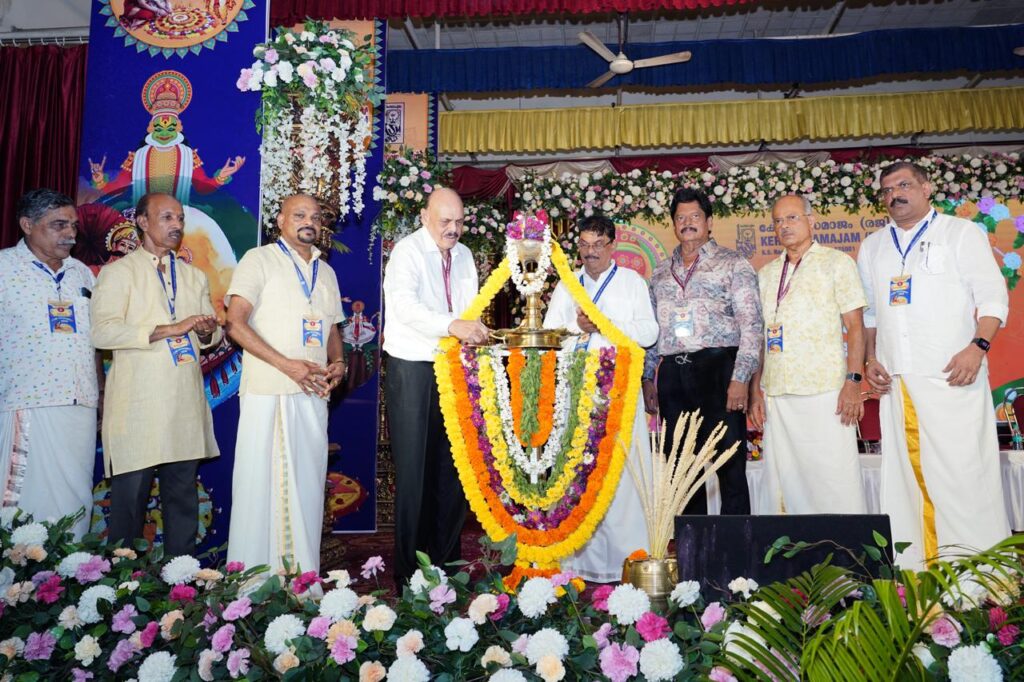
Mangalore, August 23, 2026: Kerala Samajam, Mangalore celebrated Onam 2026 with great enthusiasm and traditional fervour at the Kootakala Auditorium, Mangalore, bringing together members of the Malayali community and distinguished guests for a day filled with cultural programmes, fellowship, and festive celebrations.
The formal function was presided over by Sri T.K. Rajan, President of Kerala Samajam, Mangalore. Sri Maxin Sebastian, Secretary of Kerala Samajam, welcomed the gathering and extended greetings to the dignitaries, members, and guests present on the occasion.
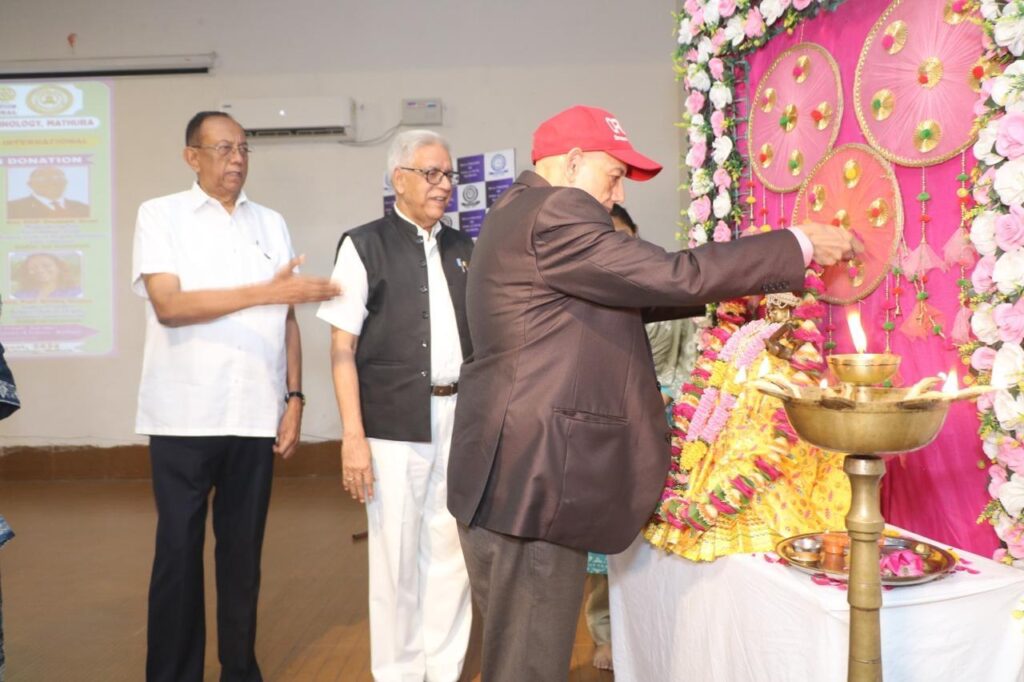
The celebrations were inaugurated by Dr. A.J. Shetty, Chairman and Managing Director of A.J. Group of Institutions, who ceremonially lit the traditional lamp and conveyed his Onam greetings to the gathering. Several eminent personalities graced the occasion, including Sri Ivan D’Souza, MLC, Sri Suresh Shetty, former president HMS. Sri Karunakaran, Managing Director of Karuna Infratech, and many other distinguished guests from various fields.
A major attraction of the celebration was the beautifully designed Athapookalam (floral carpet), which reflected the rich cultural heritage and festive spirit of Kerala. The audience was treated to a variety of colourful cultural programmes presented by the members of the Cultural Wing, Ladies Wing, and Youth Wing of Kerala Samajam. The performances included traditional dances, music, and entertainment programmes that captivated the gathering and showcased the talents of the participants.
As part of the festivities, a sumptuous and authentic Kerala Onam Sadya comprising a wide range of traditional delicacies was served to all attendees, adding to the festive atmosphere and spirit of togetherness.
The programme concluded with a vote of thanks proposed by Sri T.A. Ashokan, who expressed gratitude to the chief guests, dignitaries, organisers, volunteers, performers, sponsors, media representatives, and all members who contributed to the grand success of the event.
The Onam celebration reaffirmed Kerala Samajam Mangalore’s commitment to preserving and promoting Kerala’s rich cultural traditions while strengthening the bonds of unity and friendship among the community.
15-Year Legacy | 60+ homes built for the needy | Safe water projects & social reforms | Crisis support during floods & pandemics | Standing for a better, cleaner, happier India |
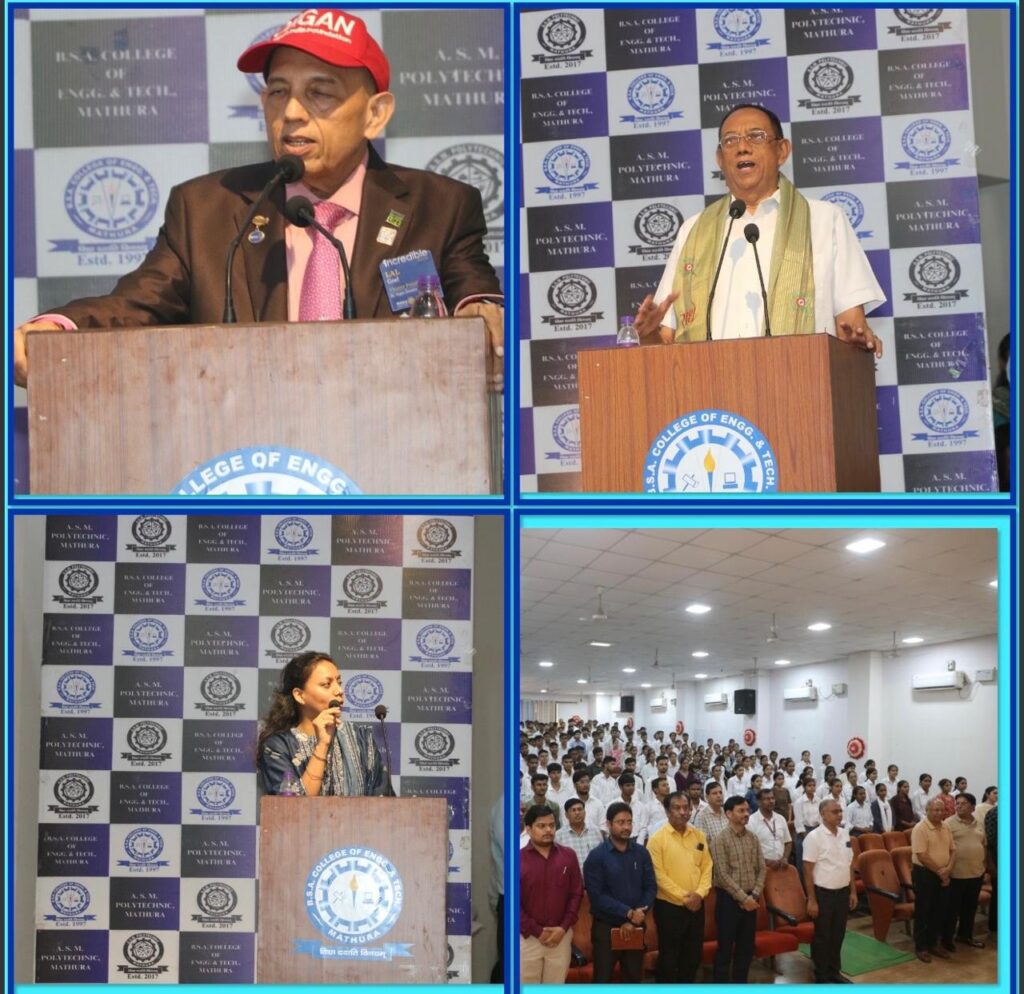
RTN LAL GOEL WAS CHIEF GUEST AND MOTIVATIONAL SPEAKER ON “ROLE OF YOUTH IN ORGAN DONATION” AT BSA ENGINEERING & TECHNOLOGY, MATHURA
Mathura, 20 August 2026: Rtn Lal Goel, Founder & Charter President, Rotary Club of Organ Donation International and Chairman of Organ Donation India Foundation & GYAN was the Chief Guest and Motivational Speaker at BSA College of Engineering & Technology, Mathura, where he addressed students on “The Role of Youth in Organ Donation.”
In his motivational address, Rtn Lal Goel urged young people to take responsibility for creating awareness about organ donation, beginning by educating their parents and encouraging them to pledge their organs.
Advocate Uma Shankar Agrawal, Chairman of BSA College of Engineering & Technology, Mathura, and Guest of Honour, emphasised the importance of organ donation.
Rtn PHF Deepak Goel, Foundation Chair of the Rotary Club of OrganDonation International and Guest of Honour, spoke about Rotary International and the Rotary Club of Organ Donation International.
Rtn PHF Ritika Gupta, Inspire President of the Rotary Club of Organ Donation International, introduced Chief Guest Rtn Lal Goel to the gathering.
Also present were Rtn Adv. Ramesh Kumar Sharma, Vice-President and Director Legal, Rotary Club of Organ Donation International; Rtn Ramesh Juneja, Rotary Club of Organ Donation International; Rtn Virendra Goyal, Rotary Club of Mathura Central; Er. Nitin Mittal, Vice Chairman, BSA Engineering & Technology; Mr S. K. Kansal, who donated his wife’s organs; Mr Radhey Shyam Bansal, Treasurer, Senior Citizens Welfare Society of Mathura; heads of departments; faculty members; and a large gathering of students.
The programme concluded with an interactive question-and-answer session, during which Rtn Lal Goel answered questions from students and attendees.