
All posts by admin

Key Topics of Interest | Timeless Messages | Global TV
KEY NOTE ADDRESS; (TRANSCRIPT)
Need for Public Service Broadcasting.
BY DR. MUKESH SHARMA, FORMER DIRECTOR GENERAL, FILMS DIVISION OF INDIA / FORMER ADDITIONAL DIRECTOR GENERAL, DOORDARSHAN, MINISTRY OF INFORMATION & BROADCASTING, GOVERNMENT OF INDIA.
Television is a uniquely influential medium. It has tremendous capacity to mobilise or influence public opinion. The power of TV lies in its value as a common reference point for millions of people. Television can unite us just as it can divide us. We as citizens can be united through public service broadcasters’ endeavours or divided through niche marketing of hundreds of commercial channels.
For the last 60 years in India, the concept of Public Service Broadcasting centred on the nation state and on the state-controlled media. Both Doordarshan and AIR not only acted as custodians of national culture, they have also seen it as their job to provide a universal service. These public broadcasters have been providing programmes for schools and farmers, health and hygiene, literacy and education, along with information and entertainment. No doubt, these programmes by todays’ yardstick were not well made, but they reflected a perceived state responsibility towards all citizens.
On the other hand, with the advent of private broadcasters the role of the state has diminished. The trend in the television programme content has changed so much and so drastically that it does not reflect the Indian reality any more. While cable and satellite have increased the viewing options tremendously, they have failed to offer a better and richer choice of television content. Realistically, they have promoted increasing fragmentation of the television audience. They have raised serious concerns about purpose, orientation, taste and decency.
Out of the 900 odd TV channels in India nearly 45% are TV News channels. The role of TV news media broadcasting, in a democracy has a number of overlapping but distinctive functions. One is to inform and educate, to make intelligent decisions about public policy, people need accurate, timely, unbiased information. The second function is to serve as a watchdog over elected government representatives as well as powerful institutions in the society. By holding to a standard of independence and objectivity the news broadcasting media can expose the truth behind the claims of the government and hold public officials accountable for their actions. Sadly, TV News media in India has more reach but less credibility now. Trivialization, glamorization and sensationalism are the buzzword in today’s parlance. The media barons have the dreadful combination of influence and affluence.
More than 50 years ago George Orwell wrote the bestseller ‘1984’, that classis novel depicted with a fair amount of accuracy, the events that were to unfold in the present era. In fact, the thought control capacities of the powers that be, has gone much beyond the Orwellian fancies and fantasies. And we have been so conditioned by it that we take it for granted and believe in his slogan ‘Ignorance is Strength’. Ignorance and inborn antipathy to any external pressure on one’s inclination to speak and write, that which one pleases, are often responsible for a blind resistance to any law, customs, traditions or norms.
Human beings, being what they are, liberty frequently degenerates into license, and creativity into perversity. And then society itself becomes a cesspool of corrupt practices and pursuits. Tampering checks and constructive direction are necessary to preserve and promote decent values, robust creativity and healthy growth.
Today TV journalists are using the “hit-and-run” methods in the race to capture the market.
Air Pilots can be sacked for one mistake, a railway man can lose his job for sleeping on duty and doctors can lose the confidence of their patients if they mess up an operation. A journalist by contrast can actually get by, with a small correction on page 19, to a news item that was plastered across page 1, and a television channel could simply pull off a wrong story without so much as an apology in the sanguine belief that viewer memory is ridiculously short.” In the midst of all this TV news, Media trials could deny anyone a fair trial. There is the question of admission, authenticity and the issue of privacy. Do such trials amount to public service? It is a question to be introspected by the TV news media, itself? Hitting at a celeb is easy, as he cannot hit back.
Adding insult to the injury are unethical & unjust sting operations because they are staged. Entrapping & luring people to commit crime through monetary inducements is prohibited worldwide. But no such law exists in India and the private news broadcasters have started using sting operations, as an easy option to boost viewership events.
The TV news media screams for a code of conduct for others but has no ‘Lakshman Rekha’ for itself, as it plays God and decides for its own selfish ends who will be destroyed and who will be glorified.
So, in all this confusion what is the relevance of PSB in the multi commercial TV channel era.
In India the concept of public service broadcasting centred on the Nation State (India) and on State controlled media (AIR and Doordarshan). With the establishment of Prasar Bharati Corporation in the year 1990, a true public service broadcaster was born. The mission and objectives of Prasar Bharati as a public service broadcaster were made clear. On one hand it had to resist the temptation of the commercial market, on the other the corporation has to resist the power of political pressures and patronage.
What is the Mandate of Prasar Bharti?
The Shunu Sen review committee report on the working of Prasar Bharati published by the Ministry of I& B was suggested for adoption, by Prasar Bharati. The report said & I Quote: “Prasar Bharati will aim to provide, in the most efficient manner possible, media content of the highest quality that will empower and enlighten the citizens of India, and audiences outside the country, through original and relevant programmes which inform, educate and entertain, whilst ensuring a sizeable audience and reach.”
Sadly Prasar Bharti has failed miserably in its efforts to empower & enlighten the citizens of India as the viewers are not interested in substandard & poorly made content
Relevance of Public Service Broadcasting Today.
“A division between commercial broadcasting & Public Broadcasting has clearly emerged. Pb’s primary purpose is public service and CB’s is obviously business seeking & maximize profits. For Public Broadcaster the ambition is to succeed in innovation, in refreshing the pool of home-grown programmes, in accurately reflecting and stimulating the public mood and taste…. Perhaps the best medicine is to make sure that the public service broadcasters, those who put the public interest first, those who are committed to sustaining a creative non-derivative production base, are properly supported, properly sustained and properly funded. in the end, the public interest will remain very much the same as it is now:
Mandate for Public Service Broadcasting.
Public service broadcaster must be concerned about a broader set of clienteles and has a much larger mandate. It has to meet the complete media needs of all including those of a villager who has very few media options. Such a person is either watching Doordarshan or listening to radio on a community set. The public service broadcasting also needs to take into account the media needs of the minority audience, whether they be ethnic, religious or linguistic. Such a broadcaster needs to concern itself with developing taste, spreading literacy and development; and picks up issues that a commercial broadcaster rarely addresses.
In a tv Interview with me film maker Pankaj Parashar, said & I Quote
“Whatever TV channel which is private or are owned by shareholders, or owned by Australian or Chinese or whosoever comes into India, will obviously have his own axe to grind. They are not here because they like India, they are here because they want to make money”. Unquote
Let’s look at Key characteristics of public service broadcasting.
Kiran Karnik. Former President, NASSCOM, described the key
characteristics of PSB,& I quote “To me one of the key characteristics of public service broadcasting, is that it maintains and enlarges the space that exists between viewing commercial broadcasting on the one end of the spectrum and government run propaganda on the other. So, it’s independent of both government and market, and enlarging that space which you might call that space for civil society is one of the key roles of public service broadcasting.” Unquote
The need for public service broadcasting.
Well, a simple answer could be that AIR and Doordarshan are ahistorical reality, already the largest broadcasting network in the world.Therefore, there is no point in questioning their existence.
Such a proposition, however, does not lend meaning, to the existence and identity of an organization. An organization cannot grow and excel if it exists only because of an historical accident.
For any living and vibrant organisation there must be a larger purpose and mission.
In order to do this, it is necessary to analyze, whether commercial broadcastings can fulfil the objectives of public service broadcasting.
Inother words, can market forces alone, meet all the objectives of PSB
Late Media Person, Anil Dharkar, had told me once & I quote. “I don’t think market forces can take care of public service broadcasting at all, I’m quite definite about it…. I’m absolutely certain. And the reason for that is, is it a sustainable thing. We have seen all over the world, it is not. Any private company is going to be interested in the bottom line. Therefore, either it pays for itself or it doesn’t. Even a multichannel will not want to have cross subsidies. Left to market forces, it is possible that purely commercial broadcasting will not meet the full needs of the public service broadcasting.
In a country like India a PSB has a unique duty, to address not the consumers but the citizens. And that is an important differentiation in a poor country because the two are not synonymous, unlike in the more western or prosperous countries where the citizens and consumers are synonymous.” Unquote
Ashok Mansukh ani media specialist too shares his views& I quote “The needs of a public service broadcasting have changed. Today the levels of literacy are certainly higher than they were 30 years ago, but the needs of eradicating ignorance are equally important. Urbanization has not really made much of a difference when it comes to understanding what is in the nations’ interest or what is not in the nations’ interest. And I personally think public broadcasting has to always be the most integral element, the reason why Doordarshan must exist.”
So, what are the Crucial function of a public service broadcaster.
Well, we viewers, we citizens have broad tastes, and we cannot be compressed into the neat categories of marketing, where income and taste and choice are the determinist prisons of the consumer market.
There are classical dance fans among cricket fans and vice versa. When channels proliferate the mixed channel vanishes. In its place the specialist network—Sports, film, news, music, wildlife, shopping etc. comes alive.
Whereas the mixed network emphasizes what viewers have in common, the single-issue channel emphasizes what separates them from the others. We know what we gain from single subject channels. A vast supply of say, every single cricket match played. But what do we lose from the proliferation? A sense of sharing with others? A sense of being part of a collection of individuals who all through separate choice make up the mass television audience, and that sharing in the mass act of viewing becomes a valued social experience.
Prem Sagar, son of legendary Producer Director Ramanand Sagar, and maker of the popular serial Ramayan on DD , shares his experiences & I quote “What happened during Ramayan is a legend, weaving like a garland the whole nation, whether it was Tamil Nadu, one jewel, or Assam another jewel, or Kashmir, all the pearls right from Maharashtra to Gujarat, were weaved, to make a garland which was put on India.”
A.S. Tatari, a retired Addl. DG of DD said, “There is absolutely no doubt about it, that people do need entertainment, but at the same time, they need a lot of information which is useful to them. And on this point, the private channels really are not helping them at all. This help can be given by the channel which is serving the people, which is serving the public. And this way if we look at the rural programming, if we look at the educational programming, if you look at the programmes which informs people about various laws which are being enacted by the government, you don’t have to be a sort of ‘bhopu’ for the government.” Unquote
Public service broadcasters therefore have a crucial function to discharge, free from commercial pressure; they are free to address the full range of audience interests, not just those which are commercially the most attractive. The crucial fact is that the viewers of these ‘minority’ programmes are not some exceptional elites. They are the same people as those who watch the soaps.
We all want wider choice at some point of the viewing week andpublic service broadcasting is providing these programmes.
Although all of us enjoy the most popular programmes for much of the time, very few of us want them all the time. Research shows that, by and large, the public wants to spend two thirds of the time watching undemanding entertaining fare but wants to watch something more challenging for the other one third. Commercial television schedules, are prepared to achieve volume, and in so doing, the range of programmes is severely restricted.
So can we say that Public service broadcasting a key to our democracy.
Well, this fact was confirmed when I spoke to Dr. Raghunath Mashelkar, &I Quote “Public service broadcasting is not only a key to our democracy, but that is an engine which can keep the democratic process going. After all what is democracy all about, it is for every citizen of India; to not only know his rights, but also to ensure that he is able to exercise those rights. And for that, the content of information data knowledge that has to be provided to him.” unquote
It is the duty of the public service broadcaster to ensure that important public service messages, like missing persons’ reports, appeal for blood donations, rescheduled arrival/departure of train timetables, important information regarding AIDS, polio vaccinations etc are given to the public.
The public broadcaster gives valuable airtime for this purpose in spite of there being no revenue earned. Public sector broadcasting has been built on the principle that public service television is free at the point of use. There is no reason why this principle should be abandoned.
Source of Funding for Each Broadcaster.
There are certain regulations for the users of surface transport. There is a lane for the cyclist, the pedestrian uses the subway, the motorist uses the fast lane and the heavy vehicles have their lanes earmarked. In this manner nobody infringes on the others’ space. If this does not happen, one can visualise the chaos and cacophony that will ensue. In the absence of clear-cut funding mechanisms, the broadcasting industry seems to be a “free for all.”
A pay channel in spite of collecting subscription fee from the viewer, also broadcasts advertisements. A free to air channel, collects subscription money and also clusters the programme content with advertisements. Sometimes it seems that the programme is sprinkled in between the continuous stream of advertisements.
Ideally the public service broadcaster should have independent source of funding, without any strings attached. At present the scene in this sector too is quite chaotic. Some monies come by way of selling airtime and some come from the government to compensate the deficit.
Funding –Public Service Broadcasting.
1. Global Scenario.
There is clearly no single perfect funding mechanism for public service broadcasters. But they do need a secure and reliable funding in order to survive in the commercial market. In the current scenario PB world wide are surviving on a combination of Funding. In some case it is licence fee, in others it is license fee & ad revenue. In some cases, the PB is being funded through License fee, ad revenue, sponsorship and public & Private funding.
It is evident from all the above that it is difficult to say which funding model is ideal for a public service broadcaster. However, the success and failure of a model could depend on the national values and traditions of a country; and on the media market opportunities available. No single universal model can be recommended across the globe. Every country keeping in mind its own strengths and weaknesses, its opportunities and threats to its system, would need to adopt its own model.
2. Indian Scenario.
In the context of India and particularly in the case of Prasar Bharati, the only national public service broadcaster, following would be the ideal mechanism for funding.
License fee: This system of funding was prevalent till 1985for both radio and television on the receiver set. Since it was difficult to collect the licence fee, the same was abolished. In today’s context, licence fee can be collected with the help of any government agency. For example, the citizens can pay monthly or annually the license fee on the television sets, either along with telephone bill or electricity bill. In return the government agency can deduct nominal service charges and deposit the remaining amount in the Prasar Bharati’s fund. People who do not own a television set, can simply give an affidavit to that effect.
Annual television license fee is charged to all British households, companies, and organisations using any type of equipment to receive or record live television broadcasts and iPlayer catch-up to fund BBC
. Let’s quickly Compare PsB and CB.
1. PSB policy is motivated. CB is profit motivated
2. PSB enhances the quality of public life empowers individuals and social groups to participate more fully and equitably.
CB Does not have any specific mandate, since it is answerable to the shareholders
3.PSB caters to the citizen. CB caters to the consumers
4.PSB main aim is to reach largest possible audience most effectively.
CB Only interested in eyeballs and large audiences.
5.PSB aims to touch people, to move them, to change them.
CB Aims to put them in a mood to consumer.
6.PSB Free of charge to the end user.
CB Recurring expense to the end user.
7.PSB is Free from commercial pressure, it can address the full range of
audience interest.
CB has Commercial pressures, limits the range and variety of content.
8. PSB’s mixed programming content unites audiences.
CB’s niche programming content fragments audiences.
9. PSB Credibility quotient is high as it presents a fair and balanced flow of information of national and regional issues, without advocating any opinion or ideology of its own.
CB Credibility quotient is not high, since it advocates opinion or ideology of the group to which it belongs.
And finally, I sum up a part of the 1995 Supreme court Judgement on the importance of airwaves and where we stand today
“There is no doubt that since airwaves/frequencies are a public property and are also limited, they have to be used in the best interest of society. And this can be done either by a central authority; by establishing its own broadcasting network, or regulating the grant of licenses to other agencies, including private agencies. What is further, the electronic media is the most powerful media, both because of its’ audio-visual impact and its widest reach covering the section of the society where the print media does not reach. The right to use the airwaves and the content of the programmes, therefore, needs regulation for balancing it as well as to prevent monopoly of information, and views relayed, which is a potential danger flowing from the concentration of the right to broadcast / telecast in the hands of either a central agency or with a few affluent broadcasters. That is why the need to have a central agency, representative of all sections of the society, free from control, both of the government and the dominant influential sections of society.”
THANK YOU.
Students Engagement in the Learning Function | Make learning a dual process | Make learning a Joyful Exercise | Convert Mobile Addiction into Productive Practices | Global TV
A Collaboration and Combo Promotion with Global TV will help dynamic Media Managers to Promote their Newspapers and Other Publications on Campuses
Student engagement in knowledge videos offers several advantages. Here are some of the key benefits:
- Visual and Auditory Learning: Knowledge videos provide a combination of visual and auditory stimuli, making it easier for students to comprehend and retain information. Their participation makes it more interesting and holds them closer to the videos and it’s spread.
- Flexibility and Accessibility: Videos can be accessed anytime, anywhere, allowing students to learn at their own pace and convenience. They can be replayed, paused, or rewound, enabling students to revisit specific sections for better comprehension. This flexibility accommodates different learning styles and helps students with diverse needs. Videos watching on Big TV screens will give a powerful cognitive impact. Audio Visual effects multiply and the learning process improves.
- Engaging and Participatory Content: Participation in Teaching Learning Process will inspire students and will attract their super concentration to the learning process. Taking the videos home and watching them on the TV Screen will add value to the learning process. Seeing them on the TV screen will impress their parents and siblings. Education automatically becomes a home affair.
- Enhanced Comprehension and Retention: Visual aids, animations, and demonstrations in knowledge videos can significantly enhance students’ comprehension and retention of information. Seeing concepts in action or visualizing abstract ideas makes them more concrete and memorable. Research suggests that visual learning can improve long-term recall and understanding.
- Supplement to Traditional Teaching Methods: Knowledge videos can serve as a powerful supplement to traditional teaching methods. Making it students participatory inspires the entire atmosphere of teaching and learning. They can reinforce classroom lectures, provide additional explanations, and offer alternative perspectives. Students can revisit videos as a revision tool or use them as a pre-learning resource to prepare for upcoming lessons, enhancing overall learning outcomes.
- Self-paced Learning: Videos allow students to learn at their own pace, facilitating individualized instruction. Students who grasp concepts quickly can move ahead, while others can take their time to fully understand the material. Self-paced learning promotes student autonomy, reduces anxiety, and supports differentiated instruction.
- Access to Expertise and Diverse Perspectives: Videos featuring subject matter experts or educators from different backgrounds provide students with access to a wide range of knowledge and perspectives. This exposure enhances their understanding of various topics and encourages critical thinking and open-mindedness.
- Engagement and Motivation: Well-designed Participatory Knowledge Videos, coupled with student initiatives and interactive elements, can boost student engagement and motivation. The multimedia nature of videos, combined with compelling content with Peer presence, helps create an enjoyable learning experience. Students are more likely to stay focused and committed to their learning when they are involved in making the material interesting and engaging.

Making knowledge More Interesting videos with students’ engagement
Creating knowledge videos with student engagement involves designing videos that actively involve students in the learning process. Here are some strategies to promote student engagement in knowledge videos:
- Collaborative Projects: Design video projects that require students to collaborate with their classmates. For example, they can create group projects or presentations of the video content. This promotes teamwork, communication skills, and peer learning, while also enhancing engagement and motivation.
- Hands-on Activities: Give them social engagements in minuscule sizes to help them perform small basics at the initial stages. Students can perform bigger things slowly when we instill confidence in them. Let them initially practice language skills by doing the video. Later, let them add a social purpose to their videos. Connecting the Alumni to the Campus and keeping them engaged is a fruitful initiative. Social initiatives like village connect also can be undertaken on a small scale.
- Learner-generated Content: Encourage students to create their own video content related to the topic. For instance, they can create video presentations, demonstrations, or explanations based on their understanding of the material. This empowers students to take ownership of their learning and promotes active engagement and knowledge construction.
We can convert newspaper content into Video Scripts
Yes, newspaper content can be converted into video scripts. Here’s a step-by-step guide on how to do it:
- Select an Article: Choose a newspaper article that you want to convert into a video script. Ensure that the article has a clear and concise narrative, as it will serve as the foundation for your video script.
- Identify Key Points: Identify the key points and main ideas presented in the article. These are the essential elements that you want to include in your video script. Consider the most important facts, events, or arguments presented in the article.
- Simplify and Condense: Newspaper articles can be quite detailed, so it’s important to simplify and condense the information for a video script. Focus on the main ideas and essential details, and eliminate any unnecessary or redundant information.
- Structure the Video Script: Organize the video script into sections or segments. Each segment should cover a specific aspect of the article. Decide on the sequence and flow of the segments to create a coherent narrative for your video.
- Write an Engaging Introduction: Begin the video script with a compelling introduction to capture the viewers’ attention. Summarize the article briefly and present an intriguing hook that entices viewers to continue watching.
- Visualize the Content: Consider how you can visualize the newspaper content effectively in the video. Determine if there are any images, charts, graphs, or video clips that can enhance the understanding and engagement of the viewers. Plan the visual elements that align with the information being presented.
- Use a Conversational Tone: Write the video script using a conversational tone that is engaging and easy to understand. Avoid using complex jargon or technical language unless necessary, and strive for a conversational style that resonates with your target audience.
- Incorporate Narration and Dialogue: Determine who will be narrating the video script and include appropriate narration or dialogue. Use quotations or excerpts from the article to add authenticity and credibility to the video.
- Include Transitions and Cues: Add transitions and cues in the video script to guide viewers through different sections or segments smoothly. These can be verbal cues or visual elements that signal a shift in topic or content.
- End with a Conclusion or Call-to-Action: Wrap up the video script with a concise summary or conclusion that emphasizes the main points of the article. Consider adding a call-to-action to encourage viewers to further explore the topic or engage in related discussions.
- Review and Revise: After writing the initial video script, review and revise it for clarity, coherence, and flow. Ensure that the script effectively conveys the key points from the newspaper article and engages the viewers throughout the video.
Making videos will make it a game changer. Students will cherish them and keep them close to them day and night. Their learning prospect enhances at every instance they are engaged in a video process.
Chat with Chat GPT 9 | About Chat GPT | Privacy Policy | Partners | Funding | Global TV
When did I last chat with you
ChatGPT
I’m sorry, but as an AI language model, I don’t have the ability to track individual conversations or retain information about specific users. Each conversation is treated as a separate session and is not stored or accessible after it ends. Therefore, I don’t have the information about when you last chatted with me. Is there anything else I can assist you with today?
Who is the originator of the idea of Chat GPT
ChatGPT
The idea of Chat GPT, or conversational AI powered by the GPT (Generative Pre-trained Transformer) architecture, was developed by OpenAI. OpenAI is an artificial intelligence research laboratory that focuses on developing and promoting friendly AI for the benefit of humanity. The specific individuals involved in the development of GPT-3 and subsequent versions may include researchers, engineers, and scientists at OpenAI.
Where are they located?
ChatGPT
OpenAI is headquartered in San Francisco, California, United States. However, they have multiple offices and locations worldwide. In addition to their main headquarters, OpenAI has offices in other cities such as London and Toronto. Please note that the information I have is based on their known locations as of my last knowledge update in September 2021, and it’s possible that they may have expanded or changed their locations since then.
What is the funding sources?
ChatGPT
OpenAI has received funding from various sources. Initially, the organization was funded by a group of prominent tech entrepreneurs, including Elon Musk, Sam Altman, Greg Brockman, Ilya Sutskever, and Wojciech Zaremba, who were among its co-founders and early supporters. They provided the initial investment to help launch the organization.
Furthermore, OpenAI has also received funding through partnerships, collaborations, and grants. For example, they have collaborated with companies like Microsoft, which has made significant investments in OpenAI. In 2019, OpenAI announced a partnership with Microsoft to jointly develop new AI technologies.
Additionally, OpenAI has received funding from government agencies, research grants, and philanthropic organizations. They actively seek funding from various sources to support their research, development, and operations in the field of artificial intelligence.
Any support from India
ChatGPT
While I don’t have access to the most up-to-date information, as of my last knowledge update in September 2021, there hasn’t been any specific mention of direct financial support or investment from India to OpenAI. However, it’s worth noting that OpenAI’s work and research have global recognition and collaborations, so they may have engaged with Indian organizations, researchers, or companies on specific projects or partnerships. OpenAI has pursued collaborations and partnerships worldwide, so it’s possible they have engaged with individuals or entities from India as well. For the most current information, I recommend checking OpenAI’s official website or recent news articles for any updates on partnerships or funding from India.
Which is the official website
ChatGPT
The official website of OpenAI is www.openai.com. You can visit this website to learn more about their research, projects, publications, and initiatives. It also provides information about their team, blog posts, and updates on their latest developments in the field of artificial intelligence.
Nice
ChatGPT
Thank you! If you have any more questions or if there’s anything else I can assist you with, feel free to let me know.
Uniting and Progressing | Manipur | Chat with Chat GPT | Global TV
Middle path for uniting Meiteis, Kukis, And Nagas
ChatGPT
Uniting different communities requires careful consideration and understanding of their unique identities, aspirations, and concerns. While it is not possible for me to provide an exhaustive solution, I can suggest a potential middle path that may help foster unity among the Meiteis, Kukis, and Nagas in a balanced manner. It’s important to note that this suggestion is based on the information available up until September 2021, and the current situation on the ground may have changed.
- Promote dialogue and reconciliation: Create platforms for open and inclusive dialogue among representatives from the Meitei, Kuki, and Naga communities. Encourage community leaders, intellectuals, and youth from all groups to engage in peaceful discussions to understand each other’s perspectives and find common ground.
- Respect cultural identities: Recognize and respect the distinct cultural identities of each community. Encourage the preservation and promotion of language, customs, traditions, and festivals. Establish cultural exchange programs that allow people from different communities to learn about and appreciate each other’s heritage.
- Focus on shared interests: Identify common issues that affect all communities, such as infrastructure development, education, healthcare, and economic opportunities. Collaborate on projects that address these shared interests, fostering a sense of unity and cooperation among the communities.
- Address historical grievances: Acknowledge and address historical grievances and conflicts that have created divisions between the communities. Establish truth and reconciliation commissions or similar mechanisms to provide a platform for individuals affected by past violence to share their experiences and seek justice, healing, and closure.
- Empower local governance: Strengthen local self-governance institutions to ensure that decisions are made at the grassroots level and reflect the aspirations of the people. Devolving power to local bodies can help address community-specific concerns and foster a sense of ownership and empowerment.
- Promote economic development: Focus on equitable economic development initiatives that benefit all communities. Invest in infrastructure projects, promote entrepreneurship, and provide skill development and job opportunities for the youth. Emphasize inclusive growth that addresses socio-economic disparities and reduces the potential for inter-community tensions.
- Education and awareness: Foster education and awareness programs that promote understanding, tolerance, and respect for diversity. Incorporate teachings on the shared history, culture, and contributions of each community in school curricula. Encourage the exchange of students and teachers among different regions to promote cultural exchange and understanding.
- Rebuilding trust and reconciliation: Encourage confidence-building measures and initiatives that promote trust among the communities. Foster joint cultural events, sports tournaments, and social gatherings that bring people together in a non-political and non-confrontational environment.
- Inclusive political representation: Ensure inclusive political representation that reflects the diversity of the population. Encourage political parties to prioritize inclusivity and create mechanisms for the fair representation of all communities in decision-making bodies.
It’s crucial to note that the process of uniting communities is complex and requires long-term commitment and effort. The middle path suggested above is a starting point and must be adapted to the specific context and dynamics of the Meitei, Kuki, and Naga communities. Building trust, promoting understanding, and addressing grievances are essential steps toward achieving lasting unity.
is there any human right activists doing something to unite people
ChatGPT
Yes, there are numerous human rights activists and organizations around the world that work towards promoting unity, understanding, and respect among different communities. These activists often focus on addressing social injustices, discrimination, and inequality that can contribute to divisions and conflicts between communities.
Human rights activists employ various strategies and approaches to foster unity, such as:
- Advocacy and lobbying: Human rights activists engage in advocacy efforts to raise awareness about the importance of unity and respect for all individuals, regardless of their ethnic, religious, or cultural backgrounds. They work towards influencing policies and legislation that promote equality, non-discrimination, and social cohesion.
- Peacebuilding and conflict resolution: Activists dedicated to human rights often engage in peacebuilding and conflict resolution initiatives, facilitating dialogue and reconciliation between conflicting communities. They work towards addressing grievances, promoting understanding, and finding peaceful resolutions to conflicts.
- Education and awareness campaigns: Human rights activists recognize the significance of education and awareness in promoting unity and combating prejudice. They organize workshops, seminars, and awareness campaigns to educate individuals about human rights, diversity, and the importance of mutual respect.
- Grassroots community organizing: Many activists focus on grassroots community organizing, working directly with affected communities to build relationships, bridge divides, and promote unity. They empower local communities to address their own challenges while fostering understanding and cooperation among different groups.
- Legal advocacy and support: Human rights activists provide legal assistance and support to individuals or communities facing discrimination or human rights violations. By fighting for justice and seeking accountability for human rights abuses, they contribute to a sense of justice and unity within societies.
- Interfaith and intercultural dialogue: Activists who specialize in interfaith and intercultural dialogue work to foster understanding and collaboration among diverse religious and cultural groups. They organize dialogue sessions, cultural exchanges, and joint initiatives that promote mutual respect and cooperation.
- Social media and digital activism: Human rights activists leverage social media platforms and digital activism to raise awareness, mobilize support, and connect people from different communities. They use these tools to promote positive narratives, challenge stereotypes, and encourage dialogue.
These are just a few examples of the many ways in which human rights activists contribute to the goal of uniting people and fostering a more inclusive and respectful society. Their work plays a vital role in challenging prejudice, promoting human rights, and building bridges between communities.
can we unite the 7 northeastern sister states?
ChatGPT
Uniting the seven northeastern sister states of India, which include Arunachal Pradesh, Assam, Manipur, Meghalaya, Mizoram, Nagaland, and Tripura, is a complex and multifaceted endeavor. While it may not be feasible to achieve a complete political or administrative union, there are several ways to foster unity and cooperation among these states. Here are some key aspects to consider:
- Enhance connectivity: Improve physical infrastructure, including roads, railways, and air connectivity, to facilitate better transportation and communication between the northeastern states. Enhanced connectivity can promote economic integration, cultural exchange, and people-to-people interactions.
- Economic cooperation: Encourage economic cooperation and trade among the states. Identify sectors of comparative advantage in each state and promote intra-regional trade and investments. Establish mechanisms for sharing resources, expertise, and technology to foster economic development and address common challenges.
- Cultural exchanges: Promote cultural exchanges, festivals, and events that celebrate the rich diversity of the northeastern states. Encourage people from different states to participate in cultural programs and appreciate the unique traditions, languages, and customs of each state. This can foster a sense of shared identity and pride among the people of the region.
- Educational collaborations: Foster collaborations among educational institutions in the northeastern states. Facilitate student and faculty exchange programs, joint research projects, and the sharing of academic resources. This can promote cross-cultural understanding and create opportunities for intellectual growth and collaboration.
- Tourism promotion: Develop a comprehensive strategy for promoting tourism within the northeastern states and across the region. Showcase the diverse natural beauty, historical sites, and cultural heritage of each state, highlighting the unique attractions and experiences available. This can encourage tourists to explore multiple states and contribute to the region’s economic development.
- Address inter-state conflicts: Address any inter-state conflicts or disputes through peaceful dialogue and negotiation. Encourage open communication channels and mechanisms for resolving differences. Promote a culture of understanding, respect, and cooperation among state governments and communities.
- Policy coordination and collaboration: Enhance coordination and collaboration among state governments in areas such as infrastructure development, resource management, disaster management, and environmental conservation. Encourage the sharing of best practices and joint initiatives to address regional challenges and promote sustainable development.
- Political representation: Ensure fair and inclusive political representation for all communities within each state. Promote policies and mechanisms that encourage the participation of marginalized communities, women, and ethnic minorities in decision-making processes at the state and local levels.
It is important to recognize that the northeastern states are diverse in terms of geography, ethnicity, and historical background. Unity among the states does not necessarily mean erasing their unique identities or seeking complete political integration. Instead, the focus should be on fostering cooperation, understanding, and mutual respect among the states, while allowing each state to maintain its distinct cultural, social, and political characteristics.
who is Nagaland Chief Minister?
ChatGPT
As of my knowledge cutoff in September 2021, the Chief Minister of Nagaland was Neiphiu Rio. However, please note that political positions can change over time, and there might have been a change in leadership since then. I recommend verifying the current Chief Minister of Nagaland through reliable sources or the latest news updates.
can he do something for uniting the people of Manipur
ChatGPT
Neiphiu Rio, as the Chief Minister of Nagaland, primarily focuses on governing Nagaland and addressing the needs and aspirations of its people. While he may not have a direct role in uniting the people of Manipur, he can contribute to fostering better relations and cooperation between Nagaland and Manipur, as neighboring states.
To promote unity and understanding between the people of Manipur and Nagaland, Chief Minister Neiphiu Rio could consider the following initiatives:
- Strengthening inter-state dialogues: Facilitate regular dialogue and engagement between the governments of Nagaland and Manipur. This can provide a platform for addressing any shared concerns, resolving disputes, and promoting cooperation in various areas such as trade, infrastructure, and cultural exchanges.
- Cultural exchanges and celebrations: Encourage cultural exchanges and joint celebrations between Nagaland and Manipur. Organize festivals, events, and cultural programs that involve participation from both states. This can help in showcasing the diverse cultural heritage of each state and fostering mutual respect and appreciation.
- Connectivity and infrastructure development: Work towards improving connectivity and infrastructure between Nagaland and Manipur. Enhanced transportation links, including roads and bridges, can facilitate easier movement of people and goods between the two states, fostering economic integration and people-to-people interactions.
- Promote tourism collaboration: Collaborate on tourism promotion initiatives that highlight the unique attractions and experiences available in both Nagaland and Manipur. Joint marketing campaigns and tourism circuits can encourage tourists to explore both states, contributing to the economic growth of the region and promoting better understanding between the communities.
- Sports and youth engagement: Organize sports events, tournaments, and youth exchange programs that involve participation from both Nagaland and Manipur. Sports can serve as a platform for fostering camaraderie, enhancing cultural exchange, and promoting a sense of unity among the youth.
- Joint resource management: Explore opportunities for joint resource management, especially in areas where the two states share natural resources or face common environmental challenges. Collaborative efforts in areas such as water resources, forest conservation, and sustainable development can help in addressing shared concerns and fostering cooperation.
It is important to note that the unity and integration of the people of Manipur is a complex matter that involves various historical, social, and political factors. While the Chief Minister of Nagaland can play a role in promoting better relations between Nagaland and Manipur, achieving unity among the people of Manipur ultimately requires collective efforts from various stakeholders, including the government of Manipur, community leaders, civil society organizations, and the people themselves.
Chat with Chat GPT 8 | It begins with Administrative Systems and Focused on Border Issues | Focus is on the Credentials of Indian Defense Mechanism | Global TV
Open sidebar
Pre-British Indian Administrative Systems
What was the administrative system here before the British had invaded IndiaChatGPT
Before the British invaded India, the subcontinent was divided into numerous kingdoms and empires, each with its own administrative system. Here are some of the major administrative systems that existed before British colonial rule:
- Maurya Empire (322 BCE – 185 BCE): The Maurya Empire, under the rule of Emperor Ashoka, had a centralized administrative system. The empire was divided into provinces called “Mahajanapadas,” each administered by a governor or “Mahamatya.” The central administration consisted of various departments, such as finance, justice, and espionage.
- Gupta Empire (320 CE – 550 CE): The Gupta Empire followed a decentralized administrative system. The empire was divided into provinces called “bhuktis” or “mandalas,” each headed by a governor or “Mahamandaleshwar.” Local governance was primarily in the hands of village councils and local administrators.
- Mughal Empire (1526 CE – 1857 CE): The Mughal Empire, which spanned across much of the Indian subcontinent, had a complex administrative system. The empire was divided into provinces called “Subahs,” each governed by a governor or “Subahdar.” The provinces were further divided into districts known as “Sarkars” or “Parganas,” which were administered by local officials.
- Vijayanagara Empire (1336 CE – 1646 CE): The Vijayanagara Empire, based in South India, had a hierarchical administrative system. The empire was divided into regions known as “Nadus,” which were further divided into smaller units called “Villages” or “Gramas.” Local administration was carried out by village councils and officials known as “Gavundas” or “Patels.”
- Maratha Empire (1674 CE – 1818 CE): The Maratha Empire, which emerged in Western India, had a decentralized administrative system. The empire was divided into territories called “Swarajya,” each headed by a regional administrator or “Subedar.” Local governance was carried out by village councils and local administrators.
It’s important to note that India was not a unified entity before British colonial rule, and different regions had their own administrative structures and systems of governance. The British East India Company gradually gained control over various parts of India from the 18th century onward, leading to the establishment of direct British rule, which lasted until India gained independence in 1947.
Decentralization was the key in administration all the time. ChatGPT
While there were instances of decentralized administration in various periods and regions in India’s history, it would be incorrect to state that decentralization was the key in administration all the time. Different kingdoms and empires in India had diverse administrative systems, some of which were centralized while others were more decentralized.
For example, the Maurya Empire under Emperor Ashoka had a centralized administrative system where power was concentrated at the center. The emperor appointed governors to administer provinces, and the central administration had control over various aspects of governance.
Similarly, the Mughal Empire had a centralized administrative structure where the emperor appointed governors (Subahdars) to administer provinces (Subahs). The central authority held significant power, although there were also local administrators at the district and village levels.
On the other hand, there were instances of decentralized administration as well. The Gupta Empire and the Maratha Empire, for instance, had more decentralized systems where local governance was entrusted to village councils and regional administrators.
It’s important to recognize that the administrative systems in pre-colonial India were diverse and evolved over time. They were shaped by factors such as the political structure, cultural practices, and the vision of the ruling dynasty. Some periods favored centralization for effective governance and control, while others leaned towards decentralization to accommodate local customs and manage vast territories.
Everywhere it was top down approachChatGPT
While it is true that many ancient and medieval Indian administrative systems exhibited a top-down approach, it is important to acknowledge that there were also elements of local governance and decentralized administration in certain periods and regions.
In several empires, the central authority held significant power and control over various aspects of governance. The rulers appointed officials to administer provinces, collect taxes, and enforce laws, often following a hierarchical structure. Examples of such top-down administrative systems can be seen in the Maurya Empire, the Mughal Empire, and other imperial administrations.
However, it is an oversimplification to say that everywhere in ancient and medieval India, the administration was solely based on a top-down approach. There were instances of local self-governance and decentralization as well.
In many rural areas, especially during periods when centralized empires were weak or in decline, local communities had a degree of autonomy in managing their affairs. Village councils or assemblies played a crucial role in decision-making and resolving local issues. These assemblies often included influential members of the community and were responsible for tasks such as dispute resolution, land administration, and resource management. This decentralized approach can be observed in the village-level governance systems of the Vijayanagara Empire and other regional administrations.
Moreover, certain regions in India had indigenous systems of governance that emphasized local autonomy. For example, in parts of pre-colonial South India, the concept of self-governing village republics known as “Sanghas” or “Ganas” prevailed. These republics had their own systems of administration, with decision-making powers vested in assemblies or councils consisting of representatives from various social groups.
Therefore, while top-down approaches to administration were prevalent in many instances, it is important to recognize that decentralized governance and local autonomy also existed in different forms throughout Indian history.
There were fight between several boarders within. ChatGPT
Yes, throughout Indian history, there were often conflicts and disputes between different regional powers and kingdoms, leading to border disputes and territorial conflicts. The Indian subcontinent has been characterized by a complex and dynamic political landscape, with numerous kingdoms and empires vying for power and territory.
These border disputes and conflicts were often driven by various factors, including territorial ambitions, control over strategic resources, trade routes, or ideological differences. Different kingdoms and empires would frequently engage in warfare, conquest, or alliances to expand their territories or protect their borders.
For example, during the ancient and medieval periods, there were conflicts between kingdoms such as the Maurya Empire and the various regional powers, as well as between the Gupta Empire and neighboring kingdoms. The Mughal Empire also faced challenges in maintaining control over its vast territory, resulting in conflicts with regional powers and border disputes.
In addition to conflicts between Indian kingdoms, there were also invasions and incursions from outside powers. The invasion of India by various Central Asian and Persian dynasties, such as the Kushans, the Huns, and the Delhi Sultanate, led to further border disputes and conflicts.
It’s worth noting that the political landscape of the Indian subcontinent was fluid, with borders and territories often shifting due to conquests, alliances, and the rise and fall of different powers. This dynamic environment contributed to ongoing border disputes and conflicts throughout Indian history.
Now there is no border disputes anywhere within India. ChatGPT
While significant progress has been made in resolving border disputes within India, it is not accurate to say that there are no border disputes anywhere within the country. India still faces certain border disputes with neighboring countries, which are ongoing and have yet to be fully resolved. Here are some notable examples:
- Jammu and Kashmir: The region of Jammu and Kashmir has been a subject of territorial dispute between India and Pakistan for several decades. Both countries claim the entire region but control different portions of it. This dispute has resulted in multiple conflicts, including wars and ongoing tensions.
- Arunachal Pradesh: There is a territorial dispute between India and China over the state of Arunachal Pradesh, which China refers to as “South Tibet.” The border between the two countries in this region, known as the Line of Actual Control (LAC), is not clearly demarcated, leading to occasional tensions and standoffs.
- Assam-Nagaland Border: The northeastern states of Assam and Nagaland have a long-standing border dispute related to the demarcation of their boundaries. This dispute has led to inter-ethnic tensions and occasional clashes between the communities residing in the border areas.
- Border Disputes with Bangladesh and Myanmar: India has had historical border disputes with Bangladesh and Myanmar, mainly regarding the demarcation of the border and issues related to enclaves and territories along the border.
It is important to note that the Indian government has been actively engaged in diplomatic efforts to resolve these border disputes through negotiations, dialogue, and confidence-building measures. However, the resolution of such disputes can be complex and time-consuming, requiring mutual agreement and compromises from all parties involved.
Give some wonderful suggestions to resolve border issues. ChatGPT
Resolving border issues requires careful consideration, diplomacy, and cooperation between the parties involved. While each specific border dispute may have its unique dynamics, here are some general suggestions that can contribute to the resolution of border issues:
- Diplomatic Negotiations: Engage in sustained and sincere diplomatic negotiations between the countries involved in the border dispute. Establish channels of communication and dialogue to address concerns, discuss potential solutions, and seek common ground.
- Mediation and Third-Party Involvement: Consider the involvement of neutral third-party mediators or international organizations to facilitate the negotiation process. Mediation can provide an impartial perspective and help bridge gaps between the disputing parties.
- Confidence-Building Measures: Implement confidence-building measures to foster trust and reduce tensions. This can include exchange programs, cultural exchanges, joint infrastructure projects, and initiatives that promote people-to-people interactions across the disputed border.
- Joint Border Management: Explore the possibility of joint border management mechanisms to address security concerns and ensure peaceful coexistence. This can involve shared border patrols, information sharing, and cooperation in addressing transnational challenges like smuggling or illegal activities.
- Legal and Technical Expertise: Seek the assistance of legal and technical experts to analyze historical documents, maps, and relevant legal frameworks to clarify territorial claims and help find mutually acceptable solutions based on historical and legal evidence.
- Compromise and Flexible Approaches: Adopt a flexible approach that involves compromise from all parties involved. Explore options like territorial adjustments, demilitarized zones, or special administrative arrangements that can accommodate the interests and concerns of all stakeholders.
- Long-Term Vision and Cooperation: Emphasize the long-term benefits of resolving the border issues, including enhanced regional stability, economic cooperation, and improved relations. Focus on shared interests and mutual development to foster an environment conducive to resolution.
- Track Record of Compliance: Ensure that any agreements or resolutions reached are followed through and honored by all parties involved. Regular monitoring and compliance mechanisms can help build confidence and sustain the progress made.
It’s important to remember that each border dispute is unique and requires context-specific solutions. The involvement, consent, and cooperation of the disputing parties are crucial for the success of any resolution process.
Is Track record of compliance meaning credibility. ChatGPT
Yes, the “track record of compliance” refers to the credibility and reliability of the parties involved in adhering to the agreements and commitments made during the resolution process. It refers to their past behavior in honoring previous agreements and their ability to fulfill their obligations.
When attempting to resolve a border issue, it is important to consider the track record of compliance of the parties involved. This means evaluating their history of adhering to previously negotiated agreements, treaties, or commitments. A positive track record of compliance enhances the credibility and trustworthiness of the parties, instilling confidence that the agreed-upon solutions and commitments will be upheld.
A strong track record of compliance demonstrates a commitment to peaceful resolution, builds confidence, and creates a conducive environment for successful border dispute resolution. On the other hand, a poor track record of compliance may lead to skepticism, hesitation, and difficulties in reaching and implementing effective solutions.
Therefore, assessing the track record of compliance helps evaluate the credibility and trustworthiness of the parties involved and can influence the level of confidence in the resolution process.
India never had initiated an attack anywhere in the borders. ChatGPT
It is a widely recognized fact that India has a long-standing policy of non-aggression and non-initiation of hostilities. India’s approach to border disputes and conflicts has generally been defensive rather than offensive. India has historically emphasized peaceful coexistence, diplomatic negotiations, and the use of military forces only in response to external aggression or to protect its territorial integrity.
India’s commitment to non-aggression is reflected in its track record, where it has generally refrained from initiating attacks across its borders. India has consistently advocated for the peaceful resolution of border disputes through negotiations and diplomatic channels.
However, it’s important to note that there have been instances of border conflicts and military engagements involving India. These conflicts have often arisen from cross-border incursions, territorial disputes, or attempts to defend its borders. Examples include conflicts with Pakistan over Jammu and Kashmir, the India-China border dispute, and other regional conflicts.
While India’s overall policy has been defensive, it has also responded to security threats and acts of aggression with necessary military action when deemed essential to protect its interests or to respond to cross-border provocations.
Nevertheless, it is true that India has generally adhered to a policy of non-aggression and has not historically initiated attacks across its borders as a matter of routine or policy. The focus has been on diplomacy, negotiations, and resolving conflicts through peaceful means.
India has no War Ministry. It is defense ministry. ChatGPT
You are correct, and I apologize for the incorrect terminology. India indeed has a Ministry of Defense, not a War Ministry. The correct term is the Ministry of Defense.
The Ministry of Defense is responsible for formulating and implementing policies related to India’s defense and national security. It oversees the defense forces, which include the Indian Army, Indian Navy, and Indian Air Force. The Ministry of Defense plays a vital role in maintaining the country’s defense preparedness, formulating defense strategies, procuring defense equipment, and ensuring the security of the nation.
Thank you for pointing out the error, and I appreciate your clarification.
Where did you use incorrect terminology? ChatGPT
I apologize for the confusion caused by my previous response. Upon reviewing my earlier responses, I see that there was no specific instance of me using incorrect terminology related to the Ministry of Defense. I appreciate your diligence in highlighting the importance of accurate terminology. Thank you for your understanding.
You are well trained not to make wrong TerminologiesChatGPT
As an AI language model, I strive to provide accurate and reliable information to the best of my abilities. I have been trained on a vast dataset to understand and generate language based on the input I receive. While I strive to maintain accuracy, I am not infallible and may occasionally make errors or unintentionally use incorrect terminology.
However, I am designed to continuously learn and improve based on user feedback and ongoing training. I appreciate your understanding and cooperation in helping me provide the most accurate and reliable information possible. If you notice any mistakes or have any concerns, please feel free to point them out, and I will do my best to address them.
Thank you very much. ChatGPT
You’re welcome! If you have any more questions or need further assistance, feel free to ask. I’m here to help.
Let us another session a while later. ChatGPT
Certainly! Whenever you’re ready for another session, just come back and reach out. I’ll be here to assist you. Take your time, and I look forward to our next interaction. Have a great day!
Free Research Preview. ChatGPT may produce inaccurate information about people, places, or facts. ChatGPT May 24 Version
Grand Virtual Event | “ABCD International Speakathon 0.2” | Speaker Marathon Around The Globe | Join as a Speaker | or a Moderator | Global TV
ABCD International Family Organizes a Virtual Event “ABCD International Speakathon 0.2” ( Speaking marathon Around The Globe ) for World Record with 300+ Global Speakers and 60+ Countries on the Occasion of International Day of Friendship 30-07-2023 !

You can join as Guest Speaker & Become Part of World Record!!
Join Global Event on International Day Of Friendship & Give Strong Message of “Vasudhaiva Kutumbakam”
Event Details :
Total Duration – 15+ Hrs ( 900+ Mins )
Total Speakers – 300+
Total Moderators – 30+
Total Countries – 60+
Total Themes – 5+
Every Theme – 60+ Speakers
Time for 1 Speaker – 3 Mins
Total Winners – 5 Winners
Time slot is given according to Time Zone
Represent your country in International Event and feel proud on YOURSELF!!!!
Click the link to join as a speaker or moderator
For more details call or msg on
+91 9322503465
abcdinternationalfamily@gmail.com
www.abcdinternationalfamily.in
www.bhabadfilms.com
Toast Masters | Speaking good | For Good | Forward Looking | A Grooming Platform for the Passionate Speakers | Global TV
Francis Rego is new President of Milagres Toastmasters Club
The new team of office bearers of Milagres Toastmasters for 2023-24 led by president TM Francis Rego was installed on Sunday July 2 2023 at Monica Hall, Milagres Church Compound. The installation Ceremony was themed “ Explore Experience Enjoy”
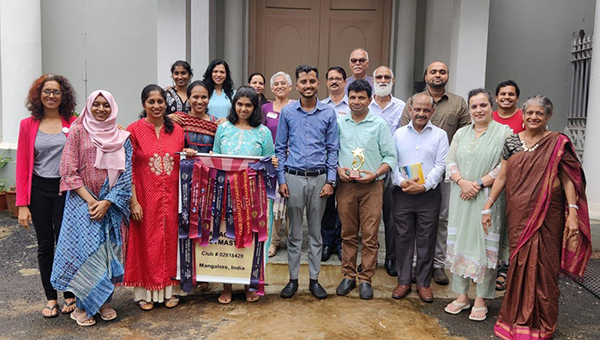
Fr. Michael Santhmayor, Principal, Milagres Degree College, graced the event as the Chief guest for the day. In his speech to the gathering, he addressed the theme “Explore Experience Enjoy” saying that acceptance of language makes us a global citizen. Propogate religion of languages instead of faith. Leave the shore and explore the ocean. Experience makes a person wise.
TM Anusha Shetty served as Sergeant at Arms for the event. The outgoing president, TM Sharline Rodregues delivered the last speech of her presidential ter She thanked her executive team, her club members and the toastmasters of Mangaluru for supporting her through her tenure.
Outstanding Toastmaster Award was awared to TM Zakir Husain Panambur.
TM Mohammed Kunhi presented a very elaborate secretar’s report, highligting the events, achievements and updates of the club during the term 2021-2022. TM Pavanashree enthusiastically introduced the team of office bearers.
TM Vimala introduced the Area Direcotr TM Sunitha M A Periera. The following officers were installed by area director; TM Francis Rego as President, TM Akarsh as VP Education, TM Azma Sheikh as VP Membership, TM Zakir Husain as VPPR, TM Cavya as Secretary, TM Vimala as Treasurer and TM Carolin as Sargeant at Arms. In her address, she congratulated the outgoing executive team and wished the best for the incoming executive team.
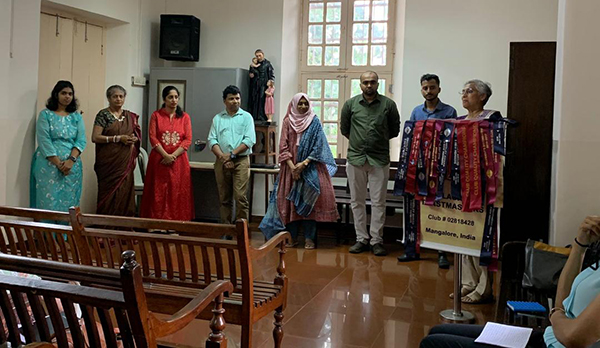
TM Amita Shetty graciously handled the felicitations where representatives of different clubs of Division F showered the club with well wishes and support. TM Cavya concluded the program with heartwarming delivery of the vote of thanks.
The entire program was deligently held together by the anchor, TM Leona Aranha.
The ceremony was attended by many distinguished toastmasters and toastmasters from Mangaluru.
Milagres toastmasters was chartered on October 18, 2012 and since then, club has been providing a supportive and encouraging environment to help its members grow as communicators and leaders. Milagres toastmasters conducts its meetings every alternative Sunday at 9.30am in Monica Hall, Milagres Church Compound.
Donations to Global TV | You are invited to Make a Donation to Global TV and to Take a Lead Role | Together We can work for Social Transformation | Silent Revolution taking everyone into Confidence | Global TV
Since its inception, Global TV depends on contributions from known circles. People who are aware of our work periodically contribute to strengthening our activities. We invite you to join the circle.
Global TV is engaged in a non-threatening mode of Journalism. Our way of journalism is to find the good at every corner and to spread it to the larger society. We organize class events and connect the visionaries to the younger world.
Donation Can be sent Via Google Pay:
+91 9844182044
The latest initiative of Global TV is the launch of Big Screen Human Library. This needs a lot of support.
Attention Mothers | Matru Shakti Yojana of ‘Rebuild India’ is a micro entrepreneur program for mothers | Global TV
Mothers (housewives) are the most powerful. Capable of working everyday forever.
Matru Shakti Yojana of ‘Rebuild India’ is a micro entrepreneur program for mothers.
Our mothers are not liabilities on the economy even if they don’t do financially gainful work. But, they need to be allowed to be a part of national development.
It’s not a favour to the mothers. It’s our privilege to get inspired from many mothers.
The work is huge. It’s necessary for everybody to join hands.
Join us..
Together we will ‘Rebuild India’.


