
The Woman Who Helped Build Tissue Banking in India | Global TV
NV Paulose, Chairman, Global TV +91 98441 82044
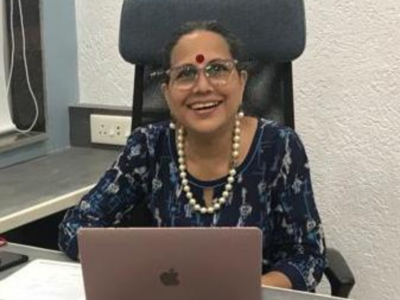
In the history of modern medicine in India, there are a few pioneers whose contributions have quietly transformed countless lives without ever attracting widespread public attention. Among them stands Dr. Astrid Lobo Gajiwala, a scientist, educator, and humanitarian whose work laid the foundation for tissue banking and transplantation in the country.

While organ transplantation often captures public imagination, tissue transplantation, the use of donated bone, skin, amniotic membrane, heart valves, and other human tissues, has saved and improved the lives of thousands of patients recovering from cancer, trauma, burns, and congenital disorders. Much of the early growth of this field in India can be traced to the vision and dedication of Dr. Gajiwala.
A Scientist with a Humanitarian Vision
Dr. Astrid Lobo Gajiwala belongs to a rare group of medical scientists who combined rigorous scientific training with a deep commitment to public service. Associated for many years with the Tata Memorial Hospital in Mumbai, one of India’s premier cancer care institutions, she recognized that many patients undergoing complex surgeries required biological grafts that were either unavailable or prohibitively expensive.

During the 1980s, tissue banking was still a relatively new concept in India. Imported graft materials were scarce, and awareness about tissue donation was almost non-existent. Dr. Gajiwala saw an opportunity to bridge this gap by creating an indigenous system that could process, preserve, and distribute donated human tissues safely and ethically.
Her work would eventually lead to the establishment of one of India’s first organized tissue banks at Tata Memorial Hospital, an achievement that marked a significant milestone in the country’s medical history.
Building India’s First Tissue Bank
The Tissue Bank at Tata Memorial Hospital became operational in 1988, making it the first facility of its kind in India. At a time when tissue preservation technologies were still evolving globally, Dr. Gajiwala and her team introduced scientific protocols for the retrieval, processing, sterilization, storage, and distribution of human tissues.
Unlike organ transplantation, which requires immediate transfer from donor to recipient, many tissues can be carefully processed and preserved for future use. Bone grafts, for example, are invaluable in orthopedic reconstruction, cancer surgery, and trauma management. Similarly, amniotic membrane grafts have found extensive applications in ophthalmology and wound healing.
Creating such a facility involved much more than laboratory work. It required establishing ethical guidelines, maintaining strict quality control, developing sterilization techniques, and building public trust in the idea of tissue donation.
Dr. Gajiwala understood that scientific excellence alone would not be enough. Society itself had to embrace the concept that donated tissues could continue to serve humanity long after death.
Transforming Cancer Care
At Tata Memorial Hospital, many patients undergo extensive surgical procedures to remove tumors affecting bones and soft tissues. Reconstruction after these operations often demands biological graft materials that integrate naturally with the patient’s body.
The tissue bank under Dr. Gajiwala’s leadership supplied processed bone allografts that enabled surgeons to reconstruct skeletal defects without the need for additional surgeries to harvest bone from the patient. This reduced pain, shortened recovery times, and expanded treatment options for complex cases.
Beyond orthopedics, the bank provided preserved amniotic membranes used in burn management and ocular surface reconstruction. Such tissues offered cost-effective alternatives that were particularly valuable in a country where access to advanced medical materials was often limited.
The cumulative impact of these innovations has been enormous, benefiting thousands of patients over several decades.
Championing Ethical Tissue Donation
One of Dr. Gajiwala’s lasting contributions lies in her advocacy for ethical standards in tissue donation and transplantation. She consistently emphasized that the success of transplantation medicine depends not only on technical expertise but also on public confidence.
She argued that donation systems must be transparent, voluntary, and respectful of both donors and their families. Through lectures, publications, and policy discussions, she helped shape the framework within which tissue banking developed in India.
Her scholarly work on the regulatory aspects of tissue donation examined the evolution of Indian transplantation laws and highlighted the importance of balancing medical needs with ethical safeguards. At a time when organ trafficking and commercialization were global concerns, her insistence on ethical integrity helped strengthen public trust.
An Educator and International Collaborator
Dr. Gajiwala’s influence extends well beyond the walls of a single institution. She has contributed significantly to the education and training of surgeons, scientists, tissue bank managers, and healthcare professionals.
Her collaborations with international organizations, including initiatives related to radiation sterilization and tissue preservation, helped bring world-class best practices to India. By adapting advanced technologies to local conditions, she demonstrated that world-class tissue banking could be developed within the country’s own healthcare infrastructure.
She has authored numerous scientific papers and has been invited to speak at conferences on tissue transplantation, sterilization technologies, and healthcare ethics. Her writings have served as valuable resources for professionals working in transplantation medicine.
Beyond Science: A Voice for Dialogue and Society
What makes Dr. Astrid Lobo Gajiwala especially remarkable is the breadth of her intellectual interests. Alongside her scientific career, she has pursued studies in theology and social thought, becoming a respected writer and speaker on issues of interfaith dialogue, gender justice, and ethics.
She has written extensively on the relationship between science, religion, and society, arguing that technological progress should always be accompanied by moral reflection. Her unique background has allowed her to approach medical ethics not merely as a legal or administrative issue but as a profoundly human concern.
This interdisciplinary perspective has enriched her contributions to transplantation medicine, where questions of consent, dignity, and altruism are inseparable from clinical practice.
Inspiring a Culture of Donation
India continues to face a significant shortage of organs and transplantable tissues. Although awareness has improved dramatically over the past two decades, misconceptions and cultural hesitations still limit donation rates.
Dr. Gajiwala has consistently emphasized that tissue donation represents one of the purest forms of social solidarity. A single donor can help multiple recipients by providing bone, skin, heart valves, corneas, and other tissues that restore function and quality of life.
Her advocacy has contributed to the gradual normalization of tissue donation as an act of compassion and community responsibility. Through public engagement and professional leadership, she has helped transform a little-understood medical procedure into a recognized component of modern healthcare.
A Legacy That Lives On
The true measure of a medical pioneer is not the number of awards received but the enduring systems they create and the lives they touch. In that respect, Dr. Astrid Lobo Gajiwala’s legacy is extraordinary.
The tissue banking infrastructure she helped establish continues to support surgeons and patients across India. The ethical principles she championed remain central to transplantation practice. The students and professionals she mentored carry forward her commitment to scientific excellence and public service.
Yet, despite these achievements, her name remains less familiar to the general public than many other figures in Indian medicine. Perhaps this reflects the quiet nature of her work. Tissue banking happens behind laboratory doors, away from headlines, but its impact is written into every patient who regains mobility after reconstructive surgery, every burn victim whose wounds heal more effectively, and every family that finds meaning in the gift of donation.
Dr. Astrid Lobo Gajiwala exemplifies the idea that medical progress is not driven solely by dramatic breakthroughs but also by patient institution-building, ethical leadership, and unwavering dedication to human welfare.
Her story is ultimately one of vision: the vision to see possibility where others saw limitations, to build systems where none existed, and to remind society that even after death, the human body can continue to heal, restore, and give hope.
In the annals of Indian healthcare, she deserves recognition not merely as a scientist, but as one of the architects of a culture of donation that continues to save lives every day.


