
Stories of Vision, Service and Sacrifice from the World Konkani Hall of Fame
NV Paulose, Chairman, Global TV +91 98441 82044
“History is not merely about remembering the past. It is about inspiring the future.”
That philosophy comes alive the moment one steps into the Hall of Fame at the World Konkani Centre in Mangaluru. At first glance, it appears to be a gallery of portraits. Rows of distinguished faces look down from the walls, representing different generations, professions and achievements. But within moments, one realizes that this is no ordinary gallery. It is a conversation across time.
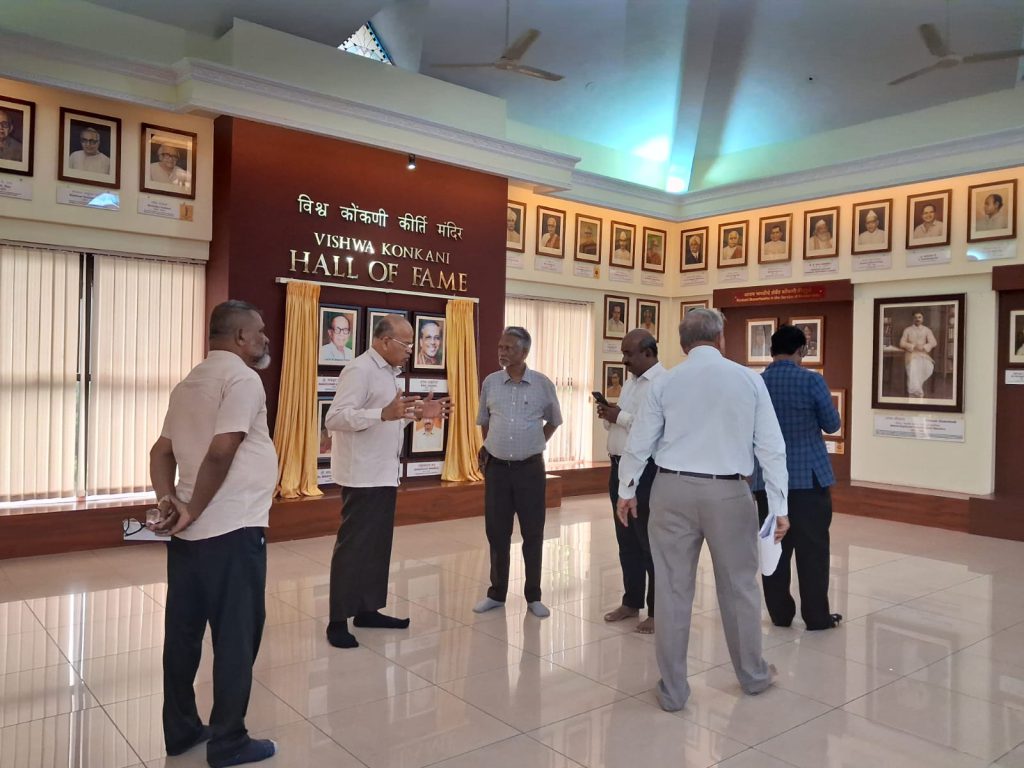
Every portrait has a story, every name carries a legacy and every face offers a lesson. As one walks through the gallery in the company of Mr Nandagopal Shenoy, President of the World Konkani Centre, the walls seem to come alive. He does not merely identify the personalities. He narrates their lives with warmth, pride and deep affection, revealing little known anecdotes that transform history into lived experience.
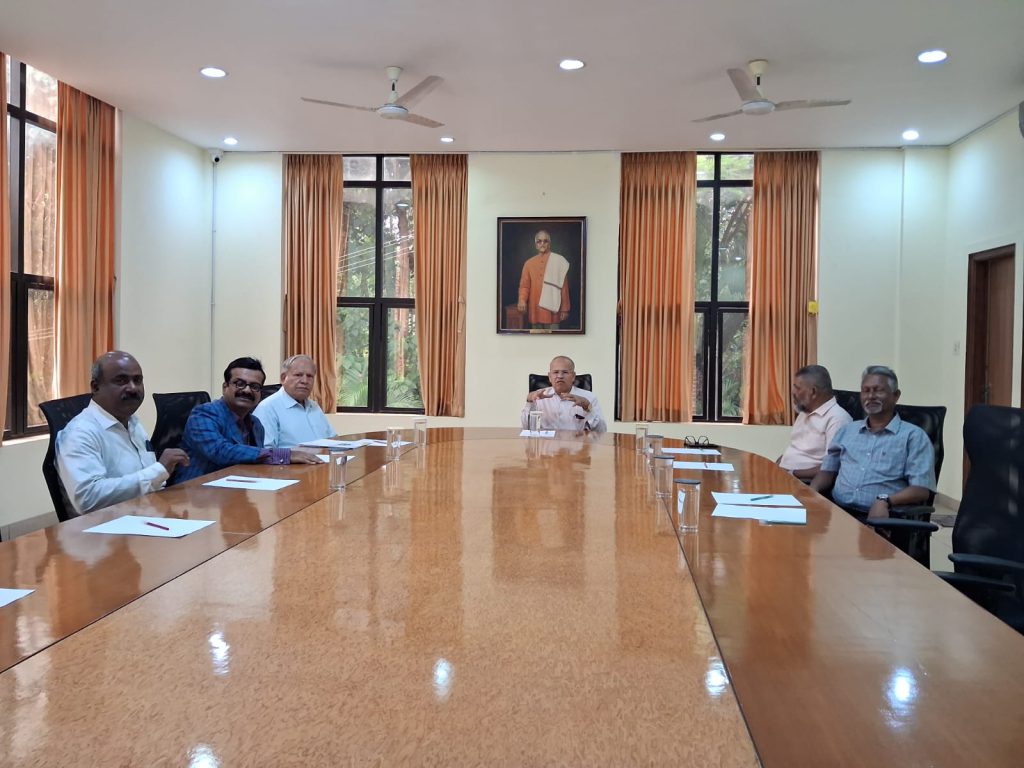
The Hall of Fame was never conceived as a museum where visitors quietly admire portraits before moving on. It was created as a place of inspiration. Young people arrive at the Centre for camps, leadership programmes and skill development initiatives. They walk through these corridors and begin asking questions. Who were these people? What made them extraordinary? What can we learn from them? For Mr Shenoy, those questions are the true measure of the Hall’s success.
“When youngsters come here and begin asking questions, the portraits have already begun their work.”
The World Konkani Centre itself stands as a symbol of the community’s commitment to preserving its language, culture and identity. The Hall of Fame adds another dimension to that mission. It reminds every visitor that greatness is never inherited. It is earned through courage, scholarship, compassion, perseverance and service.
More Than Portraits
Unlike conventional galleries that celebrate fame, the Hall of Fame celebrates contribution. Here, judges stand beside teachers, soldiers beside scholars, artists beside administrators, industrialists beside social reformers. Some names are instantly recognizable while others have quietly disappeared from public memory. Yet every individual displayed here has enriched society in a meaningful way.
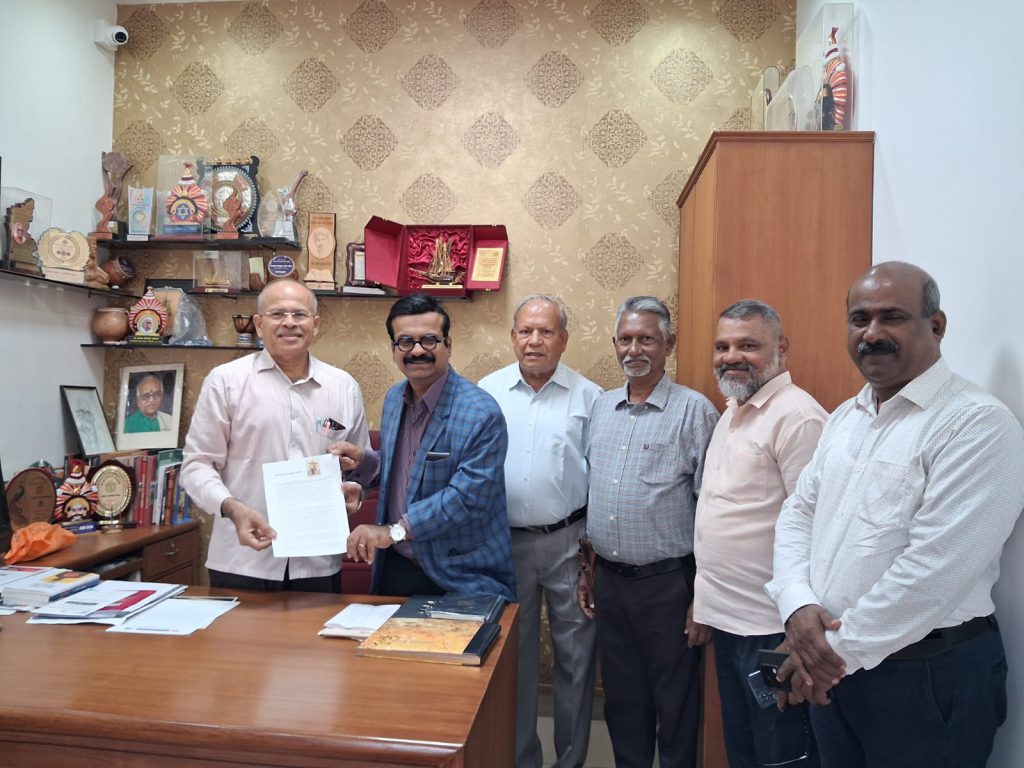
As Mr Shenoy leads visitors from one portrait to another, it becomes evident that this is not a collection of famous people. It is a collection of remarkable lives. Each story leaves behind an enduring question.
What will your contribution be?
The Forgotten Architects of the Constitution
One section of the Hall surprises almost every visitor.
Most Indians know Dr B R Ambedkar as the chief architect of the Constitution of India, and rightly so. Yet the creation of the Constitution was the result of years of collective effort by many brilliant minds. Standing together on one wall are five distinguished personalities from the Konkani community who played significant roles in that historic process.
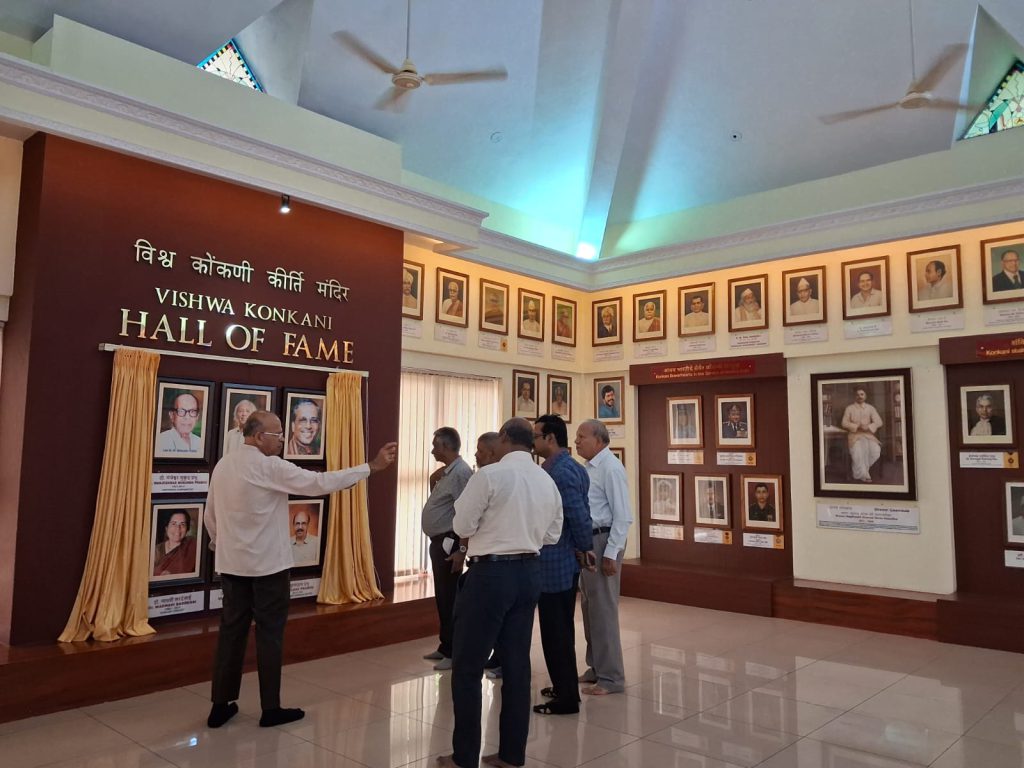
Sir Benegal Narsing Rau, the Constitutional Adviser, prepared the initial draft that became the foundation of the Constitution. His exhaustive study of constitutions from around the world helped shape India’s democratic framework. Alongside him are Benegal Shiva Rao, the noted parliamentarian and constitutional scholar, Ullal Srinivasa Mallya, who represented South Canara in the Constituent Assembly, H V Kamath, remembered for his incisive debates, and Father Jerome D Souza, whose wisdom and moderation enriched discussions on education and minority rights.
Standing before these portraits, Mr Shenoy gently reminds visitors that history often celebrates a few towering figures while many equally dedicated contributors remain hidden behind the pages of textbooks. Their presence on this wall restores that forgotten balance.
“A Constitution of such magnitude could never have been the work of one person alone.”
When a Name Becomes History
One of the most engaging moments during the tour comes when Mr Shenoy pauses before a series of portraits bearing the surname Benegal. The name, he explains, is much more than a family identity.
Like many Chitrapur Saraswat families, the Benegal family derived its surname from its native village. Across the Konkan coast, families often adopted the names of the places from which they originated. Over generations these village names became family names, preserving geography within identity itself.
A surname therefore became a living archive. Every such name tells a story of migration, settlement, administration and community life. Even today, these names quietly preserve chapters of history that might otherwise have been forgotten.
The Spirit of Social Reform
Among the portraits that command immediate respect is that of Kudmul Ranga Rao, one of the greatest social reformers produced by coastal Karnataka.
Long before social justice became a national movement, Kudmul Ranga Rao devoted his life to improving the lives of the underprivileged. At a time when society remained deeply divided by caste and inequality, he chose to challenge convention through education and compassion. He established institutions, encouraged learning and opened doors for those who had long remained outside the mainstream. Standing before his portrait, one realizes that genuine reform rarely begins with dramatic speeches. It begins quietly with individuals who believe society can become more humane than it is.
The Wall of Courage
If one section of the Hall stirs admiration, another touches the heart. Here are the portraits of men and women who wore the uniform of the nation with honour. As Mr Shenoy narrates their stories, the atmosphere changes. These are no longer stories of achievement alone. They are stories of sacrifice.
One portrait in particular continues to move every visitor. It belongs to Captain Omkar Nath Rao, who laid down his life during the Kargil conflict while still in the prime of his years. Mr Shenoy recalls the day when the portrait was unveiled. The hall was filled with people. Captain Rao’s father had come for the ceremony. “I thought he would break down while speaking,” he recalls.
Instead, the father stood before the gathering with remarkable composure. There was sadness, there was grief, but above all there was immense pride. Usually a son unveils his father’s portrait. Here, it was a father unveiling the portrait of his son. The silence that filled the hall spoke louder than any speech.
It became one of the defining moments in the history of the World Konkani Centre. The family’s commitment to national service continued despite unimaginable loss. For Mr Shenoy, this is the true spirit of the armed forces. It is not loud or dramatic. It is quiet, steadfast and deeply rooted in values.
“Sacrifice is not remembered because it is tragic. It is remembered because it inspires.”
Lives That Continue to Inspire
The Hall of Fame continues to grow with time. New portraits are added as the community discovers forgotten pioneers and honours contemporary achievers. It remains a living institution rather than a completed project, reflecting the continuing journey of the Konkani community across generations.
Scientists, judges, artists, industrialists, educationists, administrators, freedom fighters, entrepreneurs and philanthropists all find their place here. Together they demonstrate that excellence has no single definition. It can be found in scholarship, in public service, in entrepreneurship, in creativity and in quiet acts of compassion. The Hall celebrates none of these achievements for the sake of prestige. It celebrates them because they changed lives.
The Questions That Matter
Perhaps the greatest achievement of the Hall of Fame is not the preservation of history but the creation of aspiration. As school children and young professionals walk through its corridors, they begin to look beyond the portraits. They wonder what choices these people made. What obstacles they overcame. What values guided their lives.
The gallery encourages them to believe that extraordinary achievements are not reserved for extraordinary people. They are the result of ordinary individuals pursuing excellence with unwavering commitment. That quiet realization can change the course of a young life.
A Living Legacy
The World Konkani Hall of Fame is many things at once. It is a museum, a classroom, a memorial and an archive. Above all, it is a celebration of identity and achievement.
History here refuses to remain confined to books. It speaks through the forgotten architects of the Constitution. It smiles through the lives of scholars, artists and reformers. It stands tall in the quiet dignity of soldiers who gave everything for the nation. It reminds every visitor that the measure of a community lies not in its numbers but in the values it nurtures and the contributions it makes to society.
As visitors leave the gallery, the portraits no longer appear as painted faces on a wall. They become companions on a journey, silently urging every young mind to dream a little bigger, serve a little more selflessly and leave behind a legacy worthy of remembrance. That is the enduring purpose of the Wall of Fame. It does not merely preserve memories. It creates aspirations.
“Every portrait has a story, every name carries a legacy and every face offers a lesson.”
The Hall of Fame celebrates contribution rather than celebrity, reminding visitors that true greatness is measured by service to society.
The gallery honours scholars, soldiers, artists, reformers, industrialists, judges and visionaries whose lives continue to inspire future generations.
For every youngster who walks through these corridors, the Wall of Fame asks one timeless question: What will your contribution be?


