
The Teacher Who Awakened Kerala’s Environmental Conscience | Global TV
NV Paulose | Dr. Shaji Mon T. John
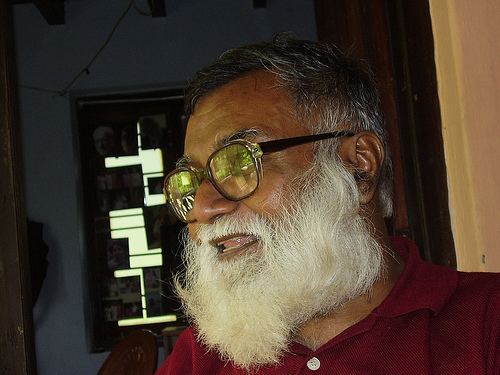
Prof. John C. Jacob, affectionately known as “Johnsi,” was a zoology professor who taught lessons from real life than from textbooks. He was a teacher who believed that education must open the eyes of students to the world around them. He stands out in the history of environmental awareness in Kerala. He had a farsighted vision about inspiring the young minds to keep nature close to their hearts.
Through teaching, positivism, writing, and grassroots movements, he helped nurture the earliest environmental consciousness movements in Kerala. His influence extended far beyond the walls of a classroom, inspiring generations of students to understand, respect, and protect nature. The story of John C. Jacob is ultimately the story of how a committed teacher can transform society.

A Teacher With a Mission
Born in 1936 in Kerala, John C. Jacob developed an early fascination with the natural world. Like many children who grow up close to rivers, forests, and fields, he learned to observe life carefully. That curiosity eventually led him to study zoology and become a teacher.
But teaching for him was never about delivering lectures and finishing the syllabus. He believed education should ignite curiosity and responsibility. When he joined Payyannur College in northern Kerala in the early 1970s as the head of the Zoology Department, he saw an opportunity not merely to teach students about animals and ecosystems, but to inspire them to protect the environment itself.
At that time, environmental awareness was not widely discussed in India. Development was often equated with industrial growth and large infrastructure projects. Questions about ecological damage were rarely raised. John C. Jacob saw the danger long before it became widely understood. His walk on the streets with his students is historical.
The Birth of a Campus Movement
In 1972, Jacob started a Zoology Club at Payyannur College. What began as a small student group soon evolved into something far more influential. Instead of limiting activities to laboratory work, the club encouraged students to step outside and explore nature directly.

Field trips to forests, wetlands, and coastal ecosystems became regular activities. Students learned to observe birds, insects, plants, and animals in their natural habitats. These experiences changed how students understood the environment. Nature was no longer an abstract concept in textbooks. It became a living system they could see, touch, and appreciate. The club gradually expanded beyond observation.
It began addressing environmental threats in the region. Students organized discussions, public meetings, and awareness campaigns. Slowly, the club became the earliest campus-based environmental initiatives in the state. What John C. Jacob created was a movement. The impact was remarkable. Teachers, students, and the community began to discuss ecological issues more openly. Environmental awareness began spreading from campuses into society.
The Silent Valley Struggle
One of the defining moments in Kerala’s environmental history was the movement to save Silent Valley, a pristine tropical rainforest in the Western Ghats. During the 1970s, plans were proposed to build a hydroelectric dam in the Silent Valley region. The project promised electricity. Scientists and environmentalists warned that it would destroy one of the last remaining stretches of untouched rainforest in India. John C. Jacob was among the early voices who raised concern about the ecological consequences of the project. Through student discussions, awareness meetings, and public campaigns, he helped bring attention to the issue. The movement gradually grew into a statewide effort involving scientists, writers, activists, and citizens. What began as a small awareness campaign eventually became one of India’s most significant environmental movements.

The Silent Valley project was eventually cancelled, and the region was declared a national biodiversity park. Today it remains one of the most important biodiversity hotspots in the country. Jacob’s role in raising early awareness among students and the public demonstrated how education can become a powerful force for environmental protection.
The Power of Communication
John C. Jacob understood that environmental awareness could not remain confined to classrooms or academic journals. If society was to change, ordinary people needed access to information and ideas about nature and conservation. To achieve this, he helped establish the Society for Environment Education in Kerala (SEEK).
SEEK became a platform for environmental education and positive activism. Through camps, training programs, and community initiatives, it brought ecological discussions into public life. One of its most influential contributions was the publication of Soochimukhi, an environmental magazine written in Malayalam. At a time when environmental journalism was rare in India, this magazine served as an important voice for ecological awareness. Soochimukhi discussed topics such as forest conservation, pollution, pesticide hazards, and biodiversity protection. It helped people understand environmental issues were connected to everyday life. Through writing and publishing, Jacob ensured that environmental knowledge reached beyond academic circles and entered public consciousness.
A Writer With Ecological Vision
Apart from teaching and activism, Jacob was also a thoughtful writer. His books reflected deep observation of nature and a philosophical understanding of humanity’s relationship with the environment. Among his works are Prakrithi: Nireekshanavum Vyakhyanavum and Urangunnavarude Thazhvaraka. These writings encouraged readers to observe nature carefully and reflect on their responsibilities toward the environment. Jacob’s writing was not merely scientific analysis; it was a call to rethink the way humans interact with the natural world.
He believed that modern society often forgets that human survival ultimately depends on the health of ecosystems.
A Legacy Honored by Nature
The scientific community recognized John C. Jacob’s contributions in a meaningful way when a plant species discovered in the Western Ghats was named Impatiens johnsiana in his honour. This rare plant grows in evergreen forests in the high ranges of the Western Ghats and exists in very small numbers. It is considered critically endangered.
Naming the species after him symbolized his deep commitment to preserving biodiversity in one of the world’s richest ecological regions.
He also received awards such as the Haritham Award from the Kerala Biodiversity Board and the Vana Mithra Award from the Kerala government in recognition of his environmental contributions.
Yet his greatest legacy lies not in awards or titles, but in the generations of students and citizens he inspired.
The Responsibility of Teachers Today
The story of John C. Jacob carries an important message for educators today. In modern education systems, teachers often face pressure to focus only on examinations, grades, and employment statistics. While these concerns are important, education must aim for something deeper.
A teacher’s role is not limited to transferring information. A true teacher shapes the thinking, curiosity, and values of students. John C. Jacob understood that education must connect knowledge with real life.
By encouraging students to explore nature and question destructive development, he transformed learning into a tool for social change.
Teachers today hold the same potential.
World is facing biodiversity loss, and social inequality. Students need more than technical skills. They need critical thinking, creativity, and a sense of responsibility toward society and the environment. Education must encourage students to observe, question, and innovate.
Creating Opportunities at Home
Another important lesson from Jacob’s life is the idea that meaningful work can be created wherever people choose to build it. In many parts of India today, young people often believe that success requires leaving their hometowns or even their country in search of opportunities abroad. While global exposure can be valuable, we should explore the opportunity exists in and around our own society and community.
Jacob showed a different path.
He built his work in small towns and local communities. He created environmental movements from classrooms and college campuses. His initiatives grew because he believed in the potential of people around him. Opportunity does not always come from outside.
Often it is created by those who recognize possibilities where others see limitations. In fact, places with large populations often hold immense potential. Where there are more people, there are more ideas, more needs, and more possibilities for innovation.
Creating opportunities for others may be the greatest opportunity of all. When students develop the confidence to build solutions in their own communities, they become agents of transformation rather than passive job seekers. We need opportunity creators more than spectators.
Education as a Force for Change
India today stands at a critical moment in its development. The country has a young population, vibrant institutions, and extraordinary cultural and ecological diversity. But these strengths can only be fully realized through education that encourages creativity, responsibility, and leadership. Teachers must help students discover their abilities and passions. They must create spaces where young minds can experiment, collaborate, and imagine solutions to real problems.
Environmental conservation, sustainable development, innovation, and community leadership are areas where young people can make contributions. John C. Jacob demonstrated that when students are given the freedom to explore, they can influence society in powerful ways.
An Enduring Inspiration
John C. Jacob passed away in 2008, but his influence continues to be felt. The students he inspired have carried forward environmental work in many parts of Kerala and beyond. The institutions he helped create, the books he wrote, and the awareness he spread continue to inspire new generations. More importantly, his life reminds us that social change often begins with individuals who dare to think differently.
- A teacher who encourages curiosity.
- A student who asks questions.
- A small group that begins discussing an idea.
From such beginnings, movements grow.
Prof. John C. Jacob showed that protecting nature is not merely a scientific responsibility; it is a moral responsibility shared by all citizens. His legacy is a powerful reminder that education, when guided by vision and courage, can transform society itself.


