
From Propaganda to Peace Ethics Truth and the Future of Journalism
NV Paulose, Chairman, Global TV +91 98441 82044
The International Media Conclave 2026, hosted by the Nitte Institute of Communication NICO, concluded with a powerful valedictory ceremony that brought together reflection, recognition, and a renewed commitment to ethical journalism. Over two days, the conclave evolved into a vibrant platform for dialogue, debate, and introspection on the role of media in an increasingly complex global environment.
A Theme Rooted in Global Urgency.
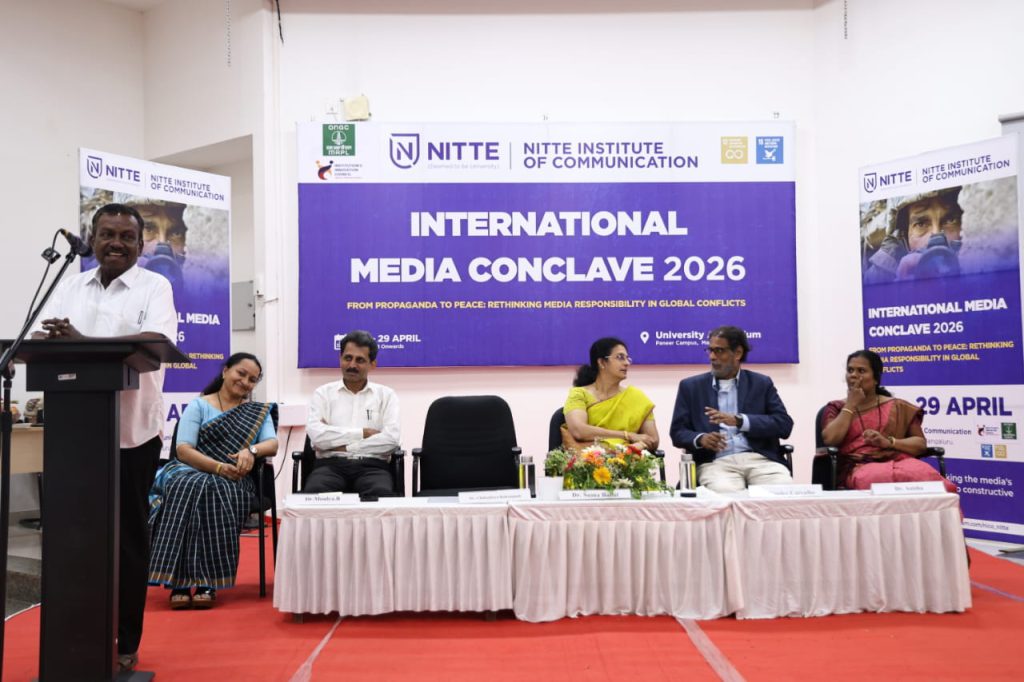
The conclave revolved around the theme: From Propaganda to Peace: India’s Responsibility Amid Rising Global Tensions. In an era marked by misinformation, digital manipulation, and polarized narratives, this theme is both timely and necessary. Participants engaged deeply with issues such as:
- Propaganda and information warfare
- Fake news and misinformation
- Social media influence
- Media ethics and responsibility
These discussions echoed participants to rethink not only how media operates, but also how it should evolve in the face of global uncertainty.
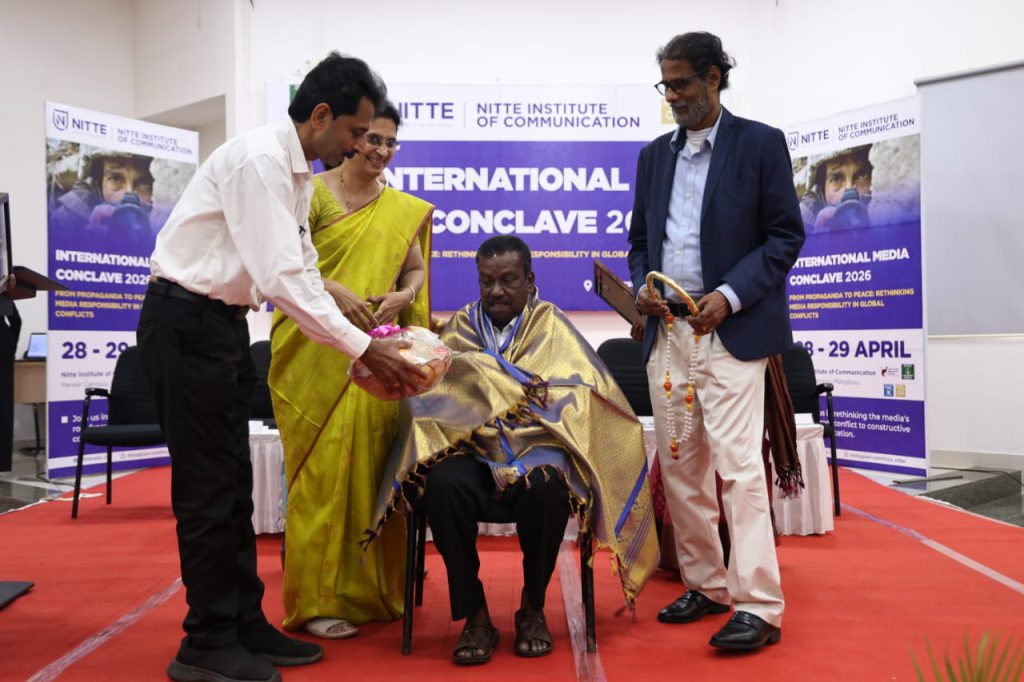
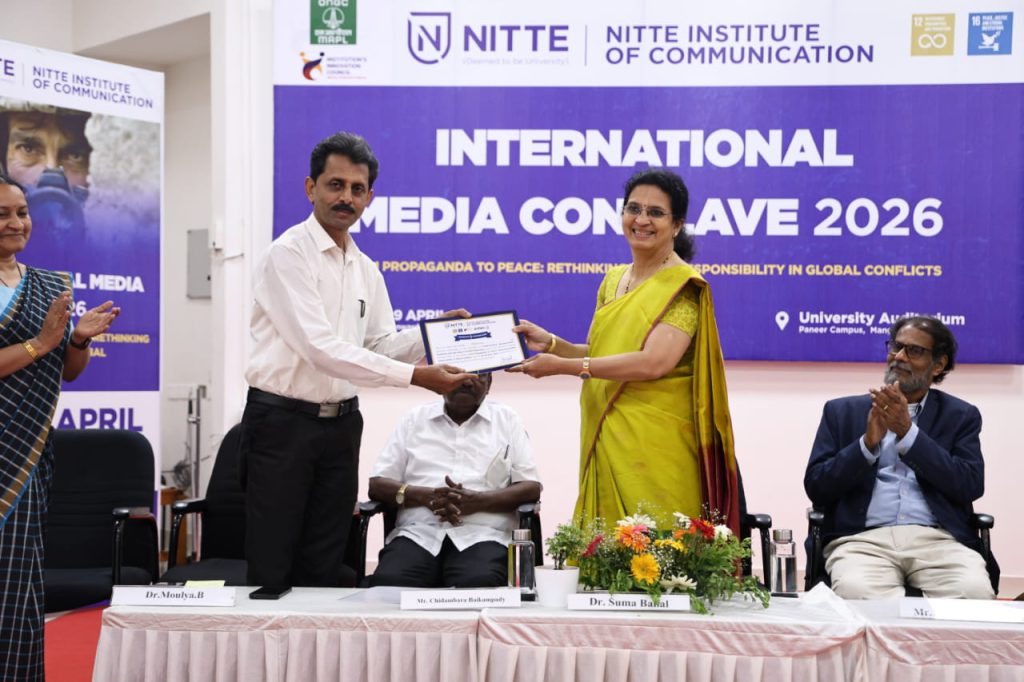
NICO honoured Chidambara Baikampady, Most Reputed Among the Senior Journalist, recipient of the Media Excellence Award. His contributions to journalism reflect on a deep ethical commitment. He spoke in depth about the way truth is replaced in journalism over the years. Individualised Reporting is lost its ways in front of AI Journalism. Today, the involvement of Journalists are less in truth finding. We see same news in all newspapers, he said. In those days, politicians were afraid to face the journalists and were cautious while answering their questions. A mistake would have cost their political career. Today, the scenario had reversed almost brutally.
Valedictory Ceremony A Moment of Gratitude and Reflection
The valedictory ceremony marked the culmination of the conclave, beginning with a warm welcome to distinguished guests. The Chief Guest, Dr Suma Ballal, Deputy Registrar, was acknowledged for her leadership and commitment to sustainability and environmental awareness within academia. The presence of Dr Varadesh Hiregange, Former Director of MIC and GCPAS at MAHE Manipal, added significant academic depth to the session. His reflections on Chidambara Baikampady highlighted the enduring values of truth, sensitivity, and social responsibility in journalism.
The conclave also witnessed the notable presence of senior journalists, led by Pushparaj B N, who currently serves as the President of the Dakshina Kannada Working Journalists’ Association for the 2025 to 2028 term. A seasoned journalist and Mangaluru Bureau Chief of Vartha Bharati, he brings nearly three decades of experience in journalism and public engagement, adding significant credibility and professional insight to the proceedings.
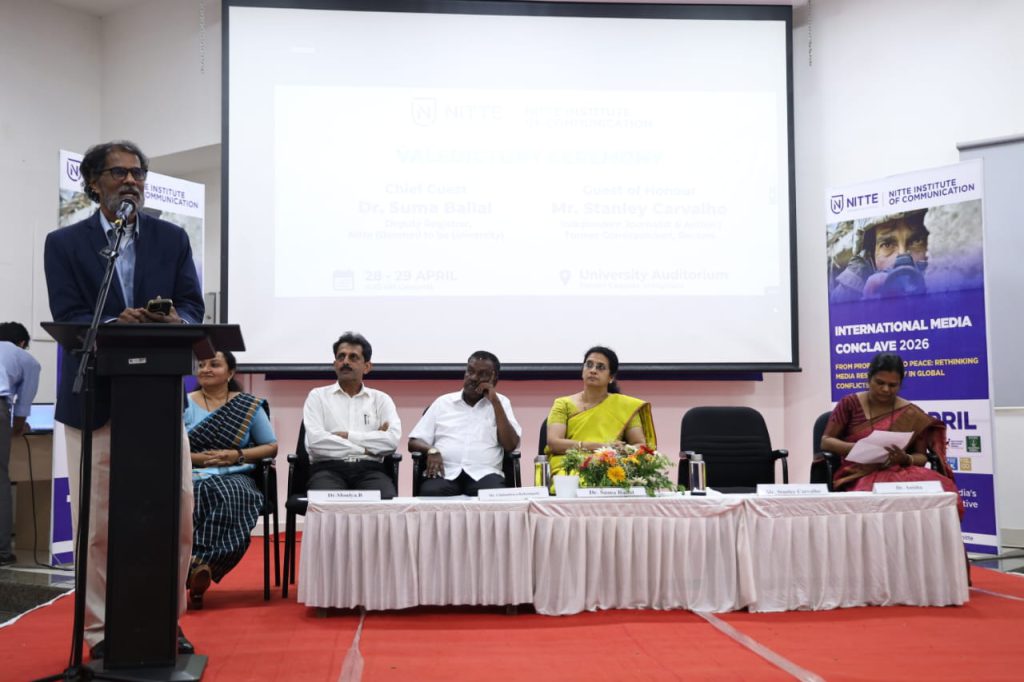
The presence of Stanley Carvalho, a columnist, author, and former correspondent with Reuters, added depth to the ceremony. His insights during both the panels and the closing address left a lasting impression on the audience. One of the strongest messages emerging from the conclave was the primacy of ethics in journalism. In his address, Stanley Carvalho posed critical questions to aspiring journalists:
- Will you choose speed over accuracy
- Amplification over verification
- Sensation over substance
His message was clear. Truth and accuracy must always come before speed. The real battlefield is not just digital. It is our judgment. In a world flooded with information, the responsibility of journalists lies in discerning truth from noise and maintaining credibility.
Truth, Facts, and the Responsibility to Question
A key philosophical insight discussed during the session was the nature of truth itself. Truth is often multidimensional and shaped by perception. However, one principle remains non-negotiable: Facts are sacred and comment is free. This distinction defines responsible journalism. While interpretations may vary, facts must be verified, protected, and presented without distortion. Equally important is the courage to ask questions. Journalism thrives on curiosity and critical inquiry. The zeal to question narratives, challenge authority, and seek clarity is what sustains the integrity of the profession.
Journalism as an Ism
An engaging perspective that emerged was the idea of journalism as an ism, a philosophy comparable to ideologies like Marxism or Gandhism.
In this sense, journalism is not merely a profession but a commitment to:
- Truth
- Justice
- Accountability
- Social responsibility
At its core lies a timeless principle. Journalism must serve as the voice of the voiceless.
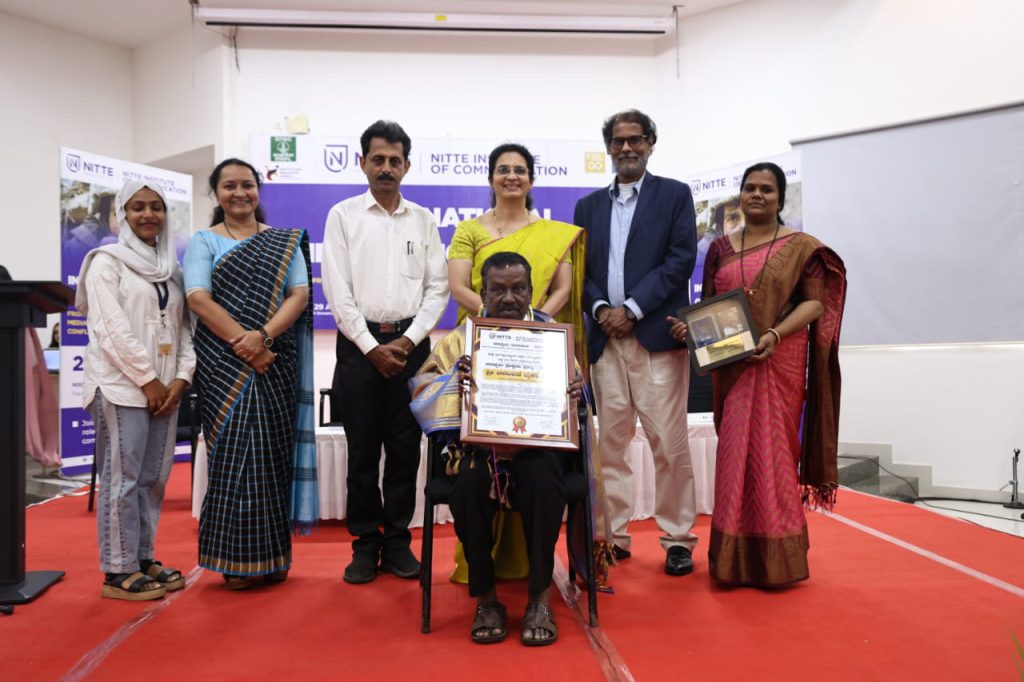
Giving Voice to the Marginalized
A recurring theme in the discussion of Chidambara Baikampady’s work was the role of journalism in representing the marginalized. Historically, journalism has stood as a platform for:
- The oppressed
- The unheard
- The underrepresented
This responsibility remains crucial today. In an age dominated by powerful narratives and digital amplification, ensuring that marginalized voices are heard is more important than ever.
Baikampady’s work was praised for its sensitivity and authenticity in capturing these voices, reinforcing the human dimension of journalism.
The Creative Expression of Truth
While journalism often operates within constraints such as deadlines, formats, and editorial limits, creative writing offers a space for deeper and more personal expression. Reflections on Baikampady’s literary contributions, including his work Black Boy, highlighted how creative writing allows for:
- Honest self-expression
- Emotional depth
- Exploration of nuanced truths
In creative spaces, a writer is free from structural limitations, enabling a more complete and authentic articulation of ideas.
Media, Humanity, and Ethical Balance
Another significant concern raised during the conclave was the over sensationalization of news, particularly tragic events. While breaking news is essential in a competitive media environment, excessive repetition and dramatization can desensitize audiences. Instead of fostering empathy, it risks turning suffering into spectacle. The message was clear. Journalism must balance urgency with humanity. Ethical reporting requires not just accuracy, but also compassion and responsibility toward those affected by the news.
The Digital Battlefield and the Crisis of Trust
The conclave repeatedly emphasized that today’s media landscape is a digital battlefield, not merely of information, but of perception and judgment. Key challenges include:
- Declining trust in media
- Rapid spread of misinformation
- Narratives shaped by algorithms
In this context, the future of media will not be shaped solely by technology, but by the choices journalists make:
- To verify before believing
- To question before sharing
- To listen before reacting
Behind the Scenes The Making of a Conclave
Organizing an international conclave of this scale is no small feat. It requires months of preparation, coordination, and teamwork. The event was widely appreciated for its:
- Meticulous planning
- Seamless execution
- Thoughtful selection of themes
- Effective coordination of speakers and logistics
From travel arrangements to session scheduling, every detail was handled with precision, reflecting the dedication of the organizing team.
A Collective Effort
Special recognition was given to the HoD, Dr. Moulya Baladi, faculty members and organizers, including , Dr Anisha, Dr Mesa, and Mr.Jayanth Kodkani, for their leadership and commitment. Equally commendable was the active participation of students, who played a vital role in:
- Organizing sessions
- Engaging in discussions
- Contributing to the overall success of the conclave
Their enthusiasm and involvement highlighted the importance of experiential learning in media education. Supported by MRPL, the conclave brought together journalists, scholars, and media professionals to deliberate on media responsibility in global conflicts.
Beyond the Conclave A Beginning Not an End
As the conclave concluded, speakers emphasized that it should not be seen as the end of a conversation, but the beginning of a responsibility. Students were encouraged to:
- Reflect on the discussions
- Continue questioning dominant narratives
- Carry forward the values of truth and integrity
A Call to the Next Generation
The final message of the International Media Conclave 2026 was both inspiring and challenging.
The future of media lies in the hands of today’s students. They are stepping into a world that is complex and often uncertain. Yet, with courage, clarity, and conscience, they have the power to shape a media landscape that is ethical, trustworthy, and humane.
The International Media Conclave 2026 converged into a platform for transformation. By addressing critical issues at the intersection of media, ethics, and global responsibility, it encouraged participants to rethink the purpose of journalism. At its core, the conclave reaffirmed a timeless truth. Journalism is not just about reporting the world. It is about shaping it responsibly.


