
Inspired Vision By Mr. Gilbert D’Souza
NV Paulose, Chairman, Global TV +91 98441 82044
History moves forward because a few individuals dare to imagine what the rest of the world considers impossible. There was a time when slavery was accepted as normal. There was a time when democracy was dismissed as an unrealistic dream. There was a time when crossing oceans, flying across continents, or walking on the Moon belonged only to fantasy. Every great transformation began as an impossible idea in the mind of someone courageous enough to believe.
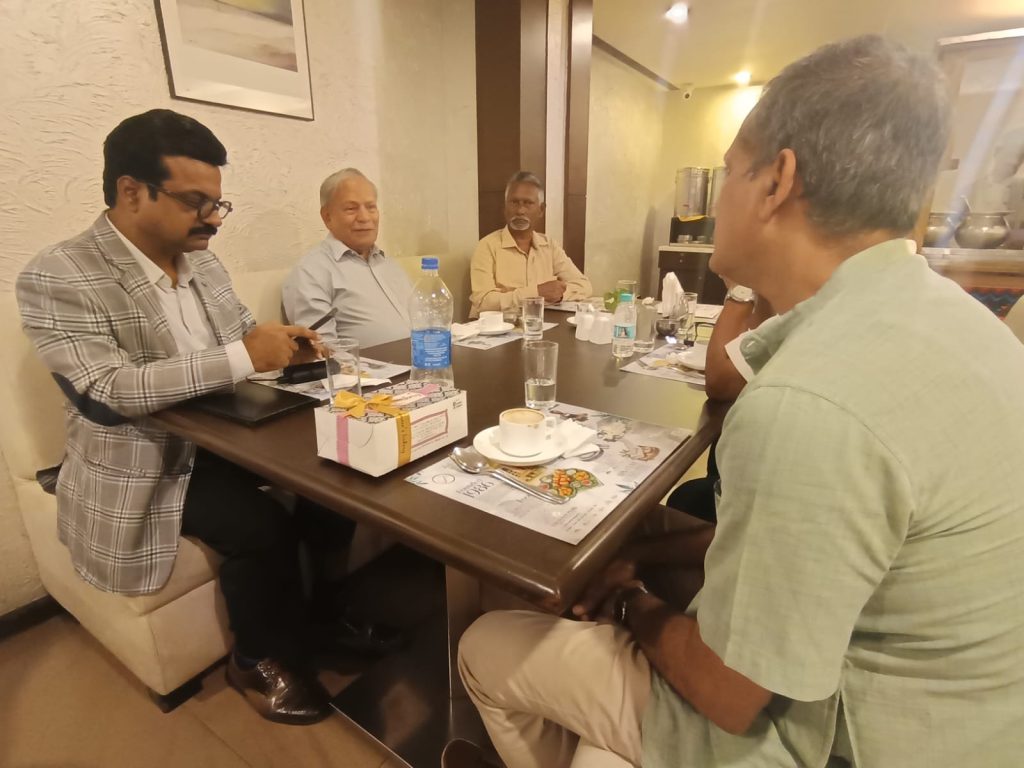
Today, another such vision is being presented, not by a politician seeking power, nor by a military strategist seeking superiority, but by Mr. Gilbert D’Souza, a visionary entrepreneur and an energetic senior citizen from Mangalore whose dream is beautifully simple:
A World Without Military.
His broader philosophy is captured in the timeless Indian ideal of “Vasudhaiva Kutumbakam”, meaning The World is One Family, and in the powerful message of One World, One Family.
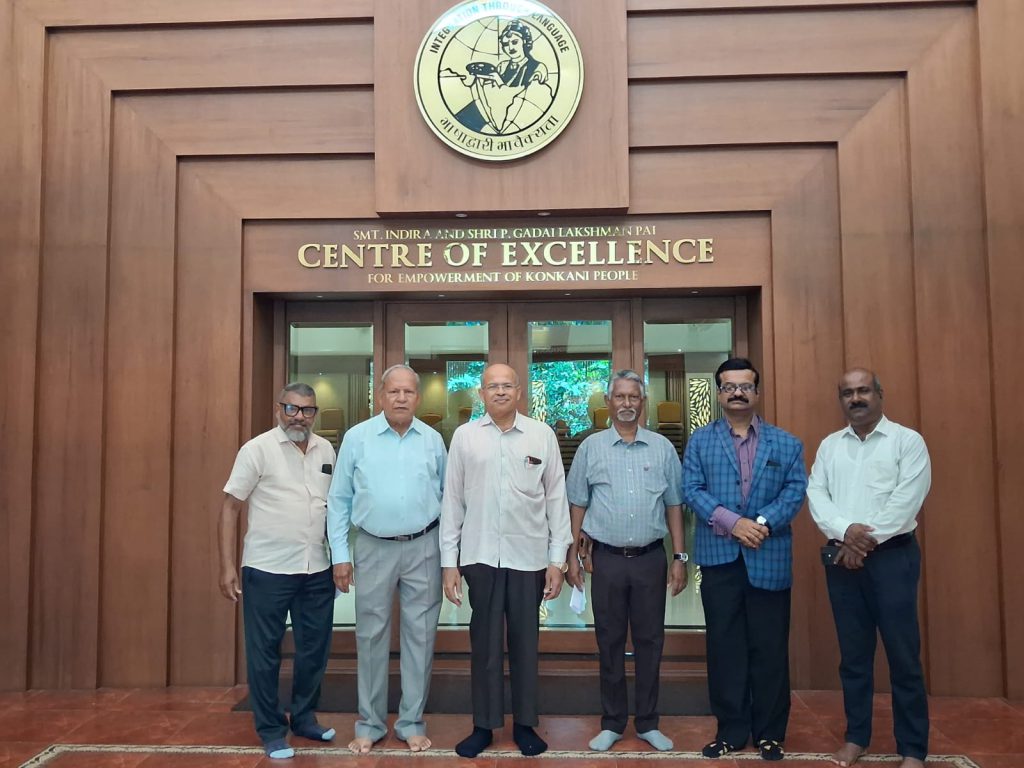
When Mr. Gilbert D’Souza shared this vision with me, what impressed me was not merely the proposal itself but the passion behind it. His enthusiasm reflected genuine faith in humanity’s ability to evolve beyond conflict. At first glance, the proposal may appear idealistic. Critics may immediately ask, “How can a world survive without armies?” Perhaps the better question is: “How long can humanity survive with them?”
The Greatest Contradiction of Civilization
Human civilization has achieved astonishing progress. We have decoded the human genome, communicate instantly across continents, use Artificial Intelligence to reshape industries, explore space, and rely on medical science that saves millions of lives each year.

Yet alongside these extraordinary achievements, nations continue to invest unimaginable sums in preparing for war. Every year, vast amounts of money are spent manufacturing weapons designed not to build life but to destroy it. The brightest engineers create smarter missiles, the most advanced scientists develop deadlier technologies, and entire economies depend upon the business of war.
This is perhaps the greatest contradiction of modern civilization. We possess the intelligence to build a better future, yet we continue investing enormous resources in preparing for humanity’s worst instincts.
Looking at Earth from Space
Astronauts often describe a profound emotional experience after seeing Earth from space. From that distance, there are no visible borders, no political divisions, no religious boundaries, and no racial identities. There is only one beautiful blue planet floating silently in the darkness of the universe.
As India’s astronaut Shubhanshu Shukla observed after viewing Earth from space, our planet appears as one home without visible borders, reminding humanity that we share a common destiny. That thought forms part of the inspiration behind this vision. Nature never created countries. Nature created one Earth. Humanity created borders. If borders were created by people, perhaps people can also learn to make them less divisive.
One Family, Many Nations
The phrase Vasudhaiva Kutumbakam is thousands of years old, yet its relevance has never been greater. It does not demand the disappearance of cultures, languages, or national identities. Instead, it asks humanity to recognise something larger.
A family may consist of individuals with different personalities. They may disagree. They may compete. But they do not seek each other’s destruction. The same principle can guide international relations. Countries may remain independent while accepting that cooperation is ultimately more rewarding than confrontation.
Is a World Without Military Possible?
Realistically, not immediately. Today’s geopolitical realities include territorial disputes, terrorism, organised crime, cyber warfare, and strategic rivalries. In such a world, military institutions continue to play significant roles in national security.
Recognising that reality does not diminish the value of a long term aspiration. The abolition of slavery once seemed impossible. Universal education once seemed impossible. International human rights once seemed impossible.
The European Union emerged from a continent devastated by repeated wars, demonstrating that former adversaries can build lasting institutions of cooperation. The important distinction is between today’s necessity and tomorrow’s aspiration. Dreams are not roadmaps. They are destinations.
Investing in Peace
Imagine if even a fraction of global military expenditure were redirected towards human development. Schools instead of bunkers. Hospitals instead of missiles. Scientific research instead of arms races. Renewable energy instead of destructive technologies. Food security instead of battlefield logistics.
Millions could be lifted out of poverty. Healthcare could reach remote communities. Children everywhere could receive quality education. Climate challenges could be addressed with unprecedented resources. The dividends of peace would benefit every nation.
Security Beyond Weapons
Military strength alone has never guaranteed lasting peace. Many of history’s most destructive conflicts occurred despite enormous military power. True security is broader. It includes economic stability, education, healthcare, environmental sustainability, trust between nations, respect for international law, and strong diplomatic institutions. Weapons may deter aggression. But trust prevents it. Dialogue resolves it. Justice reduces its causes. Peace is ultimately built not only through defence but through relationships.
Technology Can Unite
Ironically, the same technologies that can intensify conflict also possess unprecedented power to unite humanity. Artificial Intelligence can improve healthcare. Digital communication connects families across continents. Translation technologies reduce language barriers. Scientific collaboration crosses national boundaries every day.
Global research teams work together to solve problems that no single nation can address alone. Pandemics, climate change, ocean conservation, and space exploration are challenges that recognise no national borders. Increasingly, humanity succeeds together or fails together.
Leadership Beyond Politics
Great ideas are not always born in government offices. Sometimes they emerge from classrooms, laboratories, ordinary citizens, or experienced senior citizens who have watched history unfold and refuse to stop dreaming. Mr. Gilbert D’Souza belongs to that tradition. His proposal is not simply about removing armies. It is about changing human thinking. Every transformation begins first in imagination. Without vision, action has no direction.
The Responsibility of the Media
Media often reports wars, conflicts, and political disputes. But media also carries another responsibility. It must create conversations about peace and encourage humanity to think beyond today’s crises. Ideas shape public opinion. Public opinion shapes policy. Policy shapes history. Perhaps discussing bold visions today helps prepare wiser decisions tomorrow.
A Journey Rather Than an Event
No serious observer expects armies to disappear overnight. Nor should such a proposal ignore the complex realities of international security.
Yet history shows that lasting peace is built step by step: reducing hostility, strengthening diplomacy, expanding economic cooperation, building cultural understanding, promoting education, encouraging mutual trust, and supporting international institutions that reduce the risk of conflict. Each successful step makes the next one possible. Peace is not achieved through a single declaration. It is constructed patiently across generations.
The Courage to Imagine
Human progress depends upon imagination. Every invention, every scientific breakthrough, every social reform, and every democratic institution began as ideas that others once dismissed. The value of a visionary lies not merely in predicting the future but in inspiring society to build a better one. That is why visions matter, even when they appear distant and especially when they appear difficult.
One Earth, One Humanity
Perhaps the greatest lesson of our age is that humanity’s future is increasingly shared. Climate disasters affect everyone. Economic crises cross borders. Diseases travel internationally. Technology connects every society. The challenges are global. The solutions must increasingly become global as well. The idea of One World, One Family therefore extends beyond philosophy. It is becoming practical wisdom. The more interconnected humanity becomes, the less sustainable permanent conflict appears.
A Vision Worth Discussing
Whether or not the world ever reaches a stage where militaries become unnecessary remains uncertain. Honest discussion requires acknowledging that current security challenges are real and that peace also depends on effective diplomacy, justice, and responsible governance.
Yet the importance of Mr. Gilbert D’Souza’s vision lies elsewhere. It invites us to ask difficult questions. Can humanity reduce its dependence on military confrontation? Can nations invest more in cooperation than competition? Can future generations inherit a world where peace becomes the highest measure of national greatness? History belongs to those who dare to ask such questions.
The dream of One World, One Family is ultimately not about eliminating nations. It is about strengthening our shared humanity. It reminds us that beyond every border, every language, every religion, and every flag lives the same human aspiration: to live in safety, dignity, and hope. Perhaps that is where every lasting peace begins: not on the battlefield, but in the human heart.


