
As the evening deepens, the sky is covered with a soft lavender light. It is a moment of calm and beauty, as though the world is holding its breath.
NV Paulose, Chairman, Global TV +91 98441 82044
I first read it as a simple story about a shepherd boy searching for treasure, but over time I realized that it was really a narrative about the making of an alchemist and perhaps the making of every human being.
What stayed with me most was not the treasure at the end of the journey, but the moments of silence and reflection that shaped the boy. I often remember him sitting alone in the desert, surrounded by endless sand, thinking about his destiny and trying to understand the language of the world.
There is something deeply moving about that image, a young boy sitting in solitude and listening to the wind as if it were an old teacher. He does not command nature. He speaks to it. He asks questions that have no easy answers and waits patiently for wisdom to reveal itself.
The desert around him becomes more than a landscape. The sand becomes a witness to countless journeys and transformations. In its silence, the boy learns that understanding cannot always be found in books or in the words of others. Sometimes it emerges from stillness itself.
Then comes the wind. It carries stories from distant places and whispers of mysteries beyond human understanding. The boy speaks to the wind because he senses that all things are connected and that the universe has a language of its own.
As the evening deepens, the sky is covered with a soft lavender light. It is a moment of calm and beauty, as though the world is holding its breath. The boy sits there, suspended between what he knows and what he is about to discover.
But revelation rarely arrives in peace. The lavender sky slowly disappears as dark clouds gather. The wind grows stronger and the first rumble of thunder echoes across the desert. Nature itself seems to awaken.
Soon a mighty thunderstorm erupts. Lightning tears through the heavens and the sand rises into the air. Yet the boy remains seated and unafraid because he has begun to understand that transformation often comes in the midst of chaos.
In that storm lies the true formation of an alchemist. To become an alchemist is not merely to turn metal into gold. It is to transform fear into courage, uncertainty into faith, and ordinary experience into wisdom. The storm teaches the boy that every trial is part of his becoming.
That is why The Alchemist remains the most influential book in my life. It taught me that life’s greatest treasure is not something we find at the end of a journey. It is the person we become while sitting in silence, speaking to the wind, listening to the sand, and enduring the storms that shape our souls.
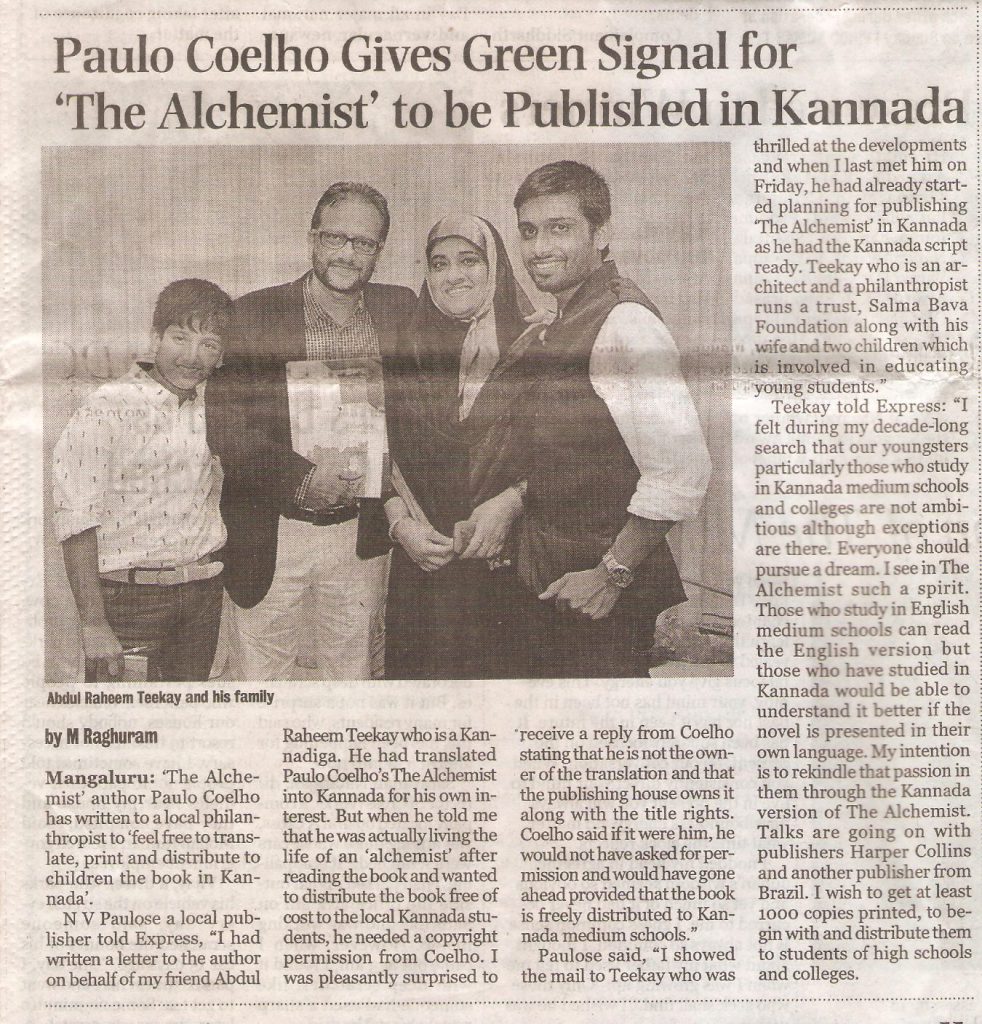
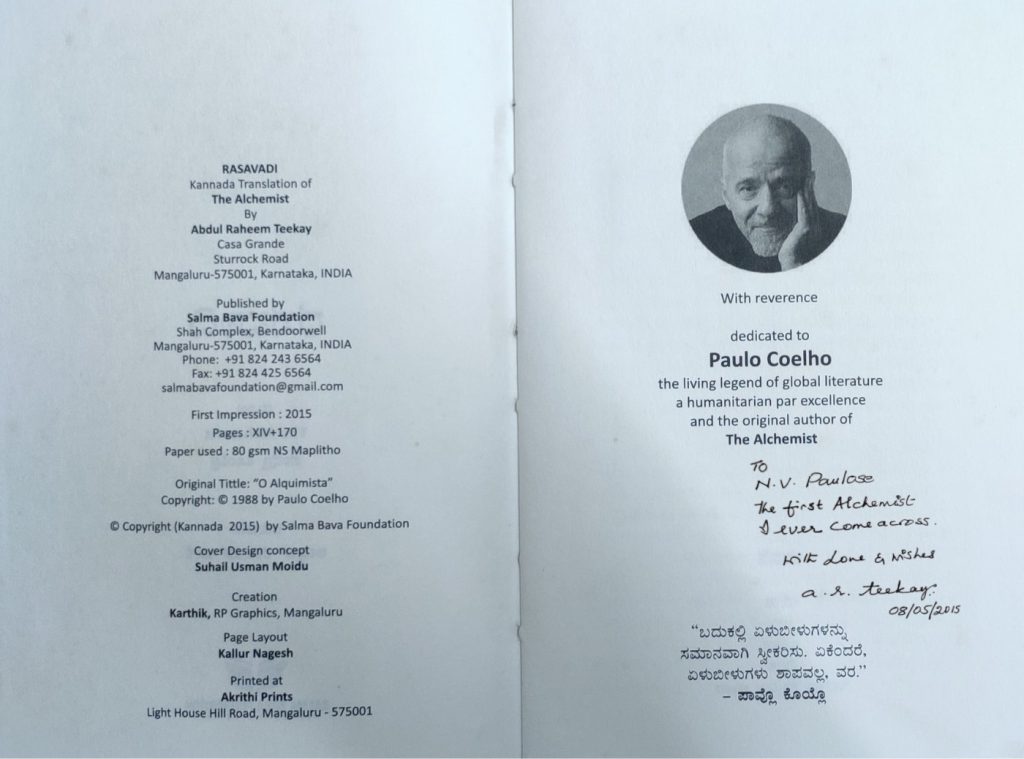
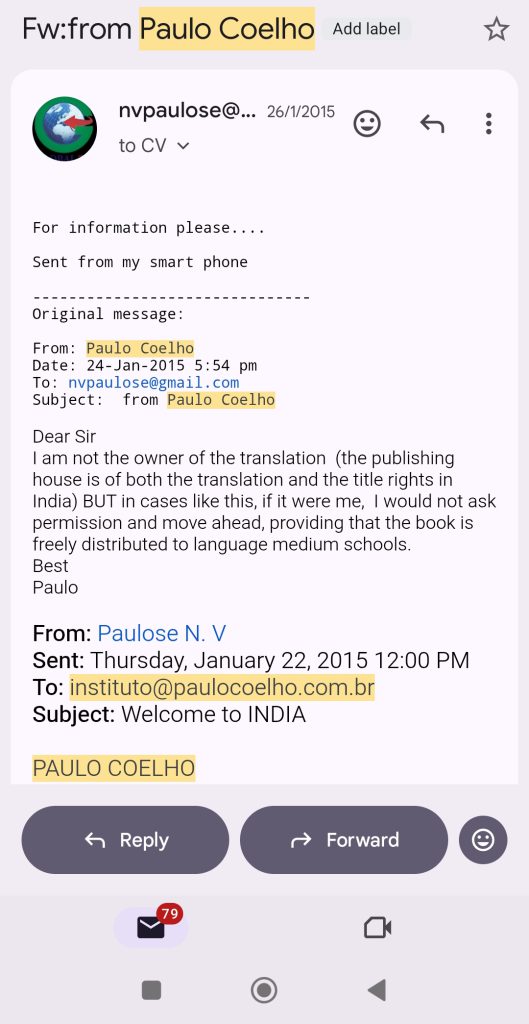
I have read the book more than two hundred times so far. I have three copies of the book with me. English, Malayalam and Kannada. I get it more connected when I read the book in my mother tongue.


