
V. P. Menon: The Silent Genius Who Helped Build a United India | Global TV
NV Paulose, Chairman, Global TV +91 98441 82044
When the story of modern India is told, the names of Mahatma Gandhi, Jawaharlal Nehru, and Sardar Vallabhbhai Patel naturally come to mind. Their leadership and sacrifices shaped the destiny of a new nation. Yet, behind one of the greatest achievements in Indian history, the peaceful integration of hundreds of princely states into a single Union, stood a remarkable man who rarely appeared in the public eye. That man was Vappala Pangunni Menon, better known as V. P. Menon.
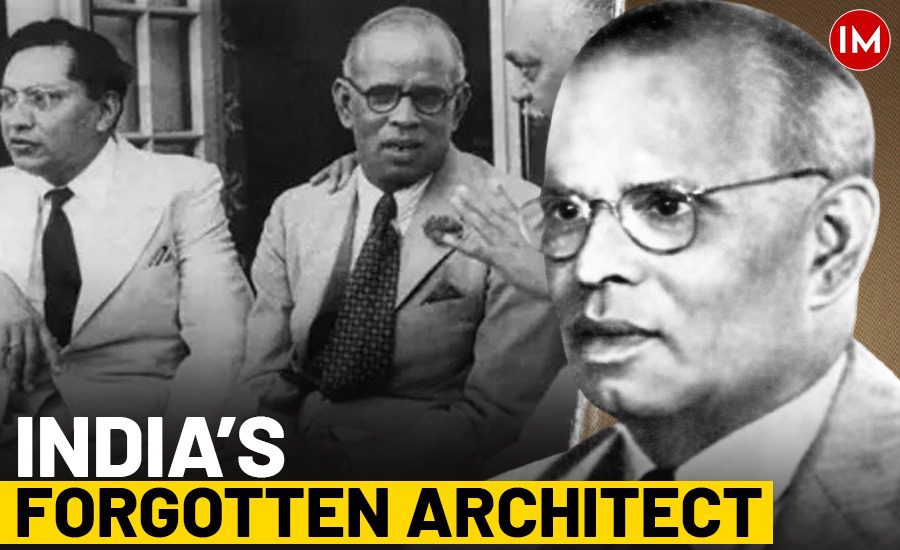
He was neither a famous political leader nor a mass movement organizer. Instead, he was an exceptional civil servant whose wisdom, administrative ability, and practical thinking helped create the India we know today. Working closely with Sardar Vallabhbhai Patel, he played a decisive role in uniting a fragmented land into one nation. His story is a powerful reminder that history is not shaped only by those who stand before crowds, but also by those who quietly build the foundations upon which nations stand.
From Humble Origins to National Service
V. P. Menon was born on 30 September 1893 in Ottapalam, in present day Kerala. He came from a simple family and experienced financial hardship during his childhood. Unlike many of the influential figures of his time, he did not receive a university education. Economic difficulties forced him to leave school early, and he took up various jobs to earn a living.
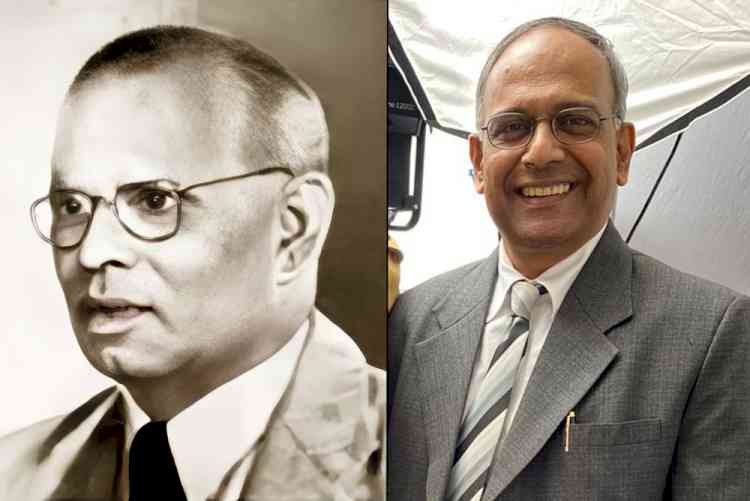
His journey, however, was one of determination and self improvement. Menon believed that knowledge could be gained through hard work and discipline. After moving to Delhi, he entered government service and steadily rose through the ranks. His intelligence, honesty, and ability to solve complicated problems earned him the respect of his colleagues and senior officials.
Working in the Reforms Office of the Government of India, Menon developed a deep understanding of constitutional law and public administration. His practical approach to governance and his mastery of complex political issues made him one of the most capable administrators of his generation.
Standing at the Turning Point of History
As India moved closer to independence, V. P. Menon found himself at the center of historic events. He served as the Constitutional Adviser to Lord Louis Mountbatten, the last Viceroy of British India. During this crucial period, he was deeply involved in discussions concerning the transfer of power from British rule to independent Indian leadership.
The partition of British India into India and Pakistan was one of the most difficult moments in the history of the subcontinent. The process required careful planning, legal expertise, and extraordinary administrative skill. Menon worked tirelessly behind the scenes to ensure that the transition was carried out with order and clarity.

Although he did not make public speeches or seek political recognition, his contribution to the creation of independent India was immense. He served as a trusted link between British officials and Indian leaders, helping them navigate one of the most significant political transformations of the twentieth century.
The Mastermind Behind the Integration of India
At the time of independence in 1947, India was not a single unified nation. In addition to the territories directly governed by the British, there were more than 560 princely states ruled by kings, nawabs, and maharajas. These rulers were given the choice of joining India, joining Pakistan, or remaining independent. Had many of them chosen separate paths, India could have become a collection of small and disconnected states.
The responsibility of integrating these princely states was entrusted to Sardar Vallabhbhai Patel, India’s first Deputy Prime Minister and Home Minister. His closest associate in this enormous task was V. P. Menon.
Menon prepared the Instrument of Accession, the legal document that allowed princely states to become part of the Indian Union. He met rulers personally, listened to their concerns, explained the advantages of joining India, and negotiated with patience and dignity. His calm personality and logical reasoning helped convince many hesitant rulers.
Some states, including Hyderabad, Junagadh, and Kashmir, presented unique challenges. Menon worked side by side with Patel to find practical solutions that would protect the interests of the nation while avoiding unnecessary conflict. Through diplomacy, strategic planning, and firm leadership, the vast majority of princely states became part of India.
The successful integration of these states remains one of the greatest administrative achievements in world history. It laid the foundation for a stable and united Republic of India and ensured that future generations would inherit one nation rather than hundreds of separate territories.
A Man of Vision, Discipline, and Practical Wisdom
V. P. Menon was widely respected for his efficiency and straightforward approach to public service. He believed that governments should focus on practical solutions rather than endless debates. His ability to remain calm under pressure and make clear decisions made him an invaluable adviser during one of the most uncertain periods in Indian history.
After retiring from government service, Menon turned his attention to writing. He authored several important books that documented the events surrounding Indian independence and the integration of the princely states. Among his best known works are The Story of the Integration of the Indian States and The Transfer of Power in India. These books continue to serve as valuable historical records and provide future generations with a firsthand account of the making of modern India.
Despite his extraordinary accomplishments, Menon remained a modest individual. He never sought fame or political power. His satisfaction came from serving the nation and helping build a stronger future for its people. His life demonstrates that dedication, integrity, and quiet determination can leave an impact as great as that of the most celebrated leaders.
Lessons for the India of Today and Tomorrow
The story of V. P. Menon is not simply a chapter from the past. It offers valuable lessons for the present and the future. India today is one of the world’s fastest growing nations, filled with talent, ambition, and opportunity. At the same time, it faces many complex administrative and developmental challenges that require thoughtful and capable leadership.
The country needs more officials who can identify opportunities where others see obstacles. Menon possessed the rare ability to understand the larger national interest while also paying close attention to practical details. His vision allowed him to create solutions that strengthened the country for generations.
Modern India has built impressive roads, railways, airports, and digital networks. However, a truly strong nation is built not only through infrastructure but also through effective systems and institutions. Progress depends upon simple procedures, transparent governance, and structures that allow people to achieve their goals without unnecessary complications. V. P. Menon understood that lasting development comes from creating systems that work efficiently and fairly.
As India moves deeper into the twenty first century, the nation can greatly benefit from leaders and civil servants who combine honesty with innovation. The country needs individuals who can simplify systems, create lasting structures, and build institutions that continue to serve people long after they are gone. V. P. Menon proved that one dedicated administrator can influence the lives of millions and shape the destiny of an entire nation.
A Legacy That Continues to Inspire
V. P. Menon passed away on 31 December 1965, but his contribution to India remains alive in every state that forms part of the Union today. His work ensured that the dream of a united India became a lasting reality.
History often celebrates those who stand in the spotlight, but nations are also built by quiet visionaries who work behind the scenes. V. P. Menon was one such visionary. Rising from humble beginnings without the benefit of higher education, he became one of the principal architects of modern India through intelligence, perseverance, and an unwavering commitment to public service.
His life reminds us that true greatness is measured not by fame but by the lasting value of one’s work. The map of India that we know today stands as a silent tribute to his efforts. Future generations would do well to remember that the strength of a nation depends not only on great leaders but also on dedicated builders like V. P. Menon, whose wisdom and service helped transform a collection of kingdoms into one united country.


