
Value Consciousness and Power Consciousness: A Reflection on the Syrian Orthodox and Syrian Catholic Churches in Kerala
NV Paulose, Chairman, Global TV +91 98441 82044
There are moments when the differences between Christian communities are not found in their doctrines, liturgies or ecclesiastical structures, but in the manner in which they conduct themselves in relation to the world around them. In Kerala, where Christianity has existed for centuries and where the Syrian Christian tradition has become deeply woven into society, it is worth asking a more uncomfortable and introspective question. How do our churches relate to power?
I raise this question with humility, because no institution is made up entirely of saints, and no community is entirely free from human weakness. The Syrian Orthodox Church and the Syrian Catholic Church have both contributed enormously to the religious, educational and social life of Kerala. Both have produced people of faith, learning, service and sacrifice. Yet, from an institutional and cultural perspective, one can perceive a difference in their attitude toward worldly power.
My argument is that the Syrian Orthodox tradition in Kerala appears to have retained a stronger sense of value consciousness, while the Catholic establishment can sometimes appear more conscious of institutional power and the opportunities that accompany it. This is not an assertion that Orthodox Christians are always virtuous or that Catholics are always motivated by power. Such a conclusion would be both unfair and intellectually careless. The question is not about the character of individual believers. It is about institutional instinct. It is about what an institution does when it finds itself standing close to political authority, economic influence and social privilege.
There is something significant about the ability of a church to maintain a certain distance from power.
Power is attractive because it offers possibilities. It can open doors, provide resources, strengthen institutions and make difficult things easier. A relationship with a powerful person can produce immediate material benefits. A connection with a political establishment can make it easier to obtain land, permissions, recognition, financial assistance or influence. The temptation is therefore understandable.
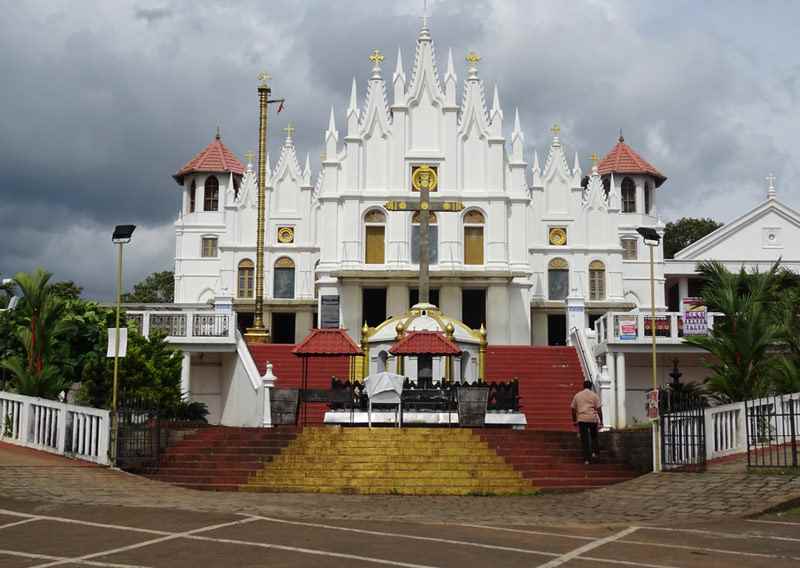
Yet precisely because the temptation is understandable, the ability to resist it becomes morally meaningful. The Syrian Orthodox tradition in Kerala, in my observation, has often maintained a certain reserve toward such proximity. Even when relationships with centres of power could potentially produce substantial material advantages, there appears to be a cultural reluctance to make those relationships the foundation of institutional life. There is value in such restraint.
A church does not necessarily become stronger because it becomes closer to powerful people. Sometimes it becomes weaker. There is a subtle transformation that can occur when an institution repeatedly seeks advantage through proximity to power. Friendship can become access. Access can become influence. Influence can become dependence. Eventually, the institution may become reluctant to challenge the very people from whom it receives its advantages.
That is when moral independence begins to disappear.
The issue is not whether churches should have relationships with political leaders, industrialists, administrators or wealthy benefactors. Of course they will. A church that serves society cannot live in complete isolation from society. Nor is there anything wrong with accepting legitimate assistance for schools, hospitals, charitable activities or other works of public benefit.
The question is more fundamental. Can the church remain equally willing to speak the truth when the person standing before it is powerful? Can it refuse an attractive benefit when accepting it would compromise its independence? Can it maintain a friendship with someone powerful without allowing that friendship to determine its principles? Can it accept money without allowing money to influence its moral voice? These are difficult questions because power rarely announces itself as corruption. It often arrives as generosity, friendship, opportunity, or goodwill.

This is where the distinction between value consciousness and power consciousness becomes important. A value-conscious institution begins with the question, “What is right?” A power-conscious institution is tempted to begin with the question, “What is advantageous?” The difference may appear small, but over time it can transform an institution. Values ask for sacrifice. Power asks for accommodation. Values sometimes require saying no. Power rewards saying yes. Values can survive without wealth. Power generally requires resources. A church that places values before advantage may sometimes appear weak, inefficient or even foolish in the eyes of the world. It may lose opportunities. It may possess fewer buildings, fewer influential connections and fewer material resources. But it may retain something far more precious: the freedom to speak without fear.
The Catholic Church in Kerala presents a more complicated picture because of the extraordinary breadth of its institutional presence. Catholic communities have built schools, colleges, hospitals, charitable organisations and other institutions that have served generations of people. Such institutions necessarily require money, administration, political engagement and interaction with people of influence.
This institutional strength is not in itself a moral failure. On the contrary, much of it has served society well.
But institutional strength creates a particular danger. The larger the institution becomes, the greater the temptation to preserve the institution at any cost. When survival, expansion and influence become dominant concerns, values can gradually become secondary. The danger is not that the church has money. The danger is that money begins to determine the direction of the church. The danger is not that the church has influence. The danger is that influence becomes an end rather than a means of service. The danger is not that church leaders meet powerful people. The danger is when access to powerful people becomes a measure of institutional success. This is where I believe the Catholic establishment deserves honest introspection. Has the pursuit of institutional strength sometimes overshadowed the simplicity of the Gospel? Has proximity to political and economic power sometimes become too attractive? Have material possibilities occasionally received greater attention than moral possibilities? And, most importantly, has the church sometimes become more concerned with possessing influence than with preserving the freedom to challenge those who possess influence?
These questions should not be interpreted as hostility toward Catholic Christians. They should be understood as questions that every powerful institution must ask itself. Indeed, the same questions must be directed toward the Syrian Orthodox Church. The Orthodox Church should not assume that historical restraint automatically guarantees moral superiority. Institutions change. Circumstances change. Human beings change. A church that has maintained distance from power in one generation can become attracted to power in another. Therefore, value consciousness cannot be inherited merely through tradition. It must be consciously renewed by every generation.
The real strength of a church is not demonstrated by the number of powerful people who attend its functions, the amount of property it controls, the size of its institutions or the influence it possesses in public life. Its real strength is demonstrated when it can stand before power without becoming dependent upon it. A church should be able to accept assistance without selling its conscience. It should be able to maintain friendship without becoming a client. It should be able to enter the rooms of the powerful without forgetting the people outside those rooms. It should be able to lose a material advantage rather than compromise a moral principle. Perhaps this is the deepest distinction between being value conscious and being power conscious. Power asks, “Who can help us?” Values ask, “Whom are we called to serve?” Power asks, “What can we obtain?” Values ask, “What can we give?” Power asks, “How close are we to those who control things?” Values ask, “How faithfully do we stand with those who have nothing to give us?” For a Christian institution, the second set of questions should always prevail.
The Gospel was not born in the corridors of power. Christ did not build His ministry by cultivating proximity to political authority or accumulating material influence. His authority came from truth, sacrifice, compassion, and moral courage. That is why the greatest danger to a church may not be its lack of power. It may be its excessive desire for power. Perhaps, therefore, the Syrian Orthodox Church has something valuable to preserve in its instinct for distance, restraint and independence. And perhaps the Syrian Catholic Church, precisely because of its considerable institutional strength and social influence, has an even greater responsibility to examine how it uses that strength. But the lesson ultimately belongs to both.
The question is not which church is better. The question is what kind of church we want to become.
A church can possess little and still be spiritually rich. Another can possess enormous resources and still become spiritually poor. Buildings can be rebuilt. Institutions can expand. Financial resources can be accumulated again. But once a church loses the courage to stand independently before power, recovering that moral independence is far more difficult. Perhaps the most valuable possession of any church is therefore not its wealth, influence or institutional reach. It is the ability to say no. To say no when money demands silence. To say no when influence demands compromise. To say no when friendship demands obedience. And to say no even when saying yes would be materially beneficial. That is not weakness. That is freedom. And perhaps, in an age increasingly fascinated by power, freedom from power is one of the most important Christian values a church can preserve.


