
Dr. Kankanady Devaraj | Challenging the Challenge straightforward
NV Paulose, Chairman, Global TV +91 98441 82044
There are academics who teach, and administrators who manage. There are a few institution builders who understand that an educational institution is not merely a collection of classrooms, courses, buildings and regulations, but a living ecosystem that must continuously evolve. Dr. K. Devaraj belongs to that category of visionaries who are blessed with the third eye to see what others often miss. His career in education and management showcases an important lesson in what it means to build an institution in India: with conviction, persistence, relationships, practical intelligence, and, above all, a belief that education must prepare people for the real world.
For sixteen years, from 1997 to 2013, Dr. Devaraj served as Principal of SDM College of Business Management in Mangaluru. He subsequently moved into the leadership of its postgraduate management centre and is ever recognised being its Founder Director. His academic and professional qualifications include M.Com., LL.B., FIMA and Ph.D. But titles and qualifications alone do not adequately explain his contribution. The more revealing story lies in the way he thinks about education, institutions, people and the changing world.
Education is not merely about information
One of the strongest ideas that emerges from a conversation with Dr. Devaraj is his insistence that access to information does not automatically produce education. We live in a world where almost everything is available. Libraries are digital, knowledge is searchable, software can perform calculations instantly, and artificial intelligence can generate answers within seconds. Yet the crucial question remains: Do people know what to search for? The educated person is not merely someone who possesses information, but someone who knows what question to ask, where to look, how to evaluate an answer, and what to do with the knowledge obtained.
This distinction is particularly important in management education. The purpose of an institution, in Dr. Devaraj’s view, is not simply to deliver a syllabus but to develop judgement. Students need confidence, practical exposure, interaction with industry and opportunities to test their abilities outside the classroom. The institution must therefore create an environment in which students can practise being managers rather than merely study management as a subject.
The institution must meet the world
Dr. Devaraj’s years at SDM were marked by an emphasis on connecting students with the world beyond the classroom. Management and technology events brought students together in competitive and collaborative settings and connected them with companies and professionals. Such activities were not merely extracurricular entertainment. They were part of an educational philosophy in which students encountered real problems, communicated with others, organized events, and learned to take responsibility. A good college, in this view, cannot remain an island. It must connect students with industry, professionals, entrepreneurs, government, ideas, and society.
This philosophy also explains the importance he places on institutional visibility and publicity. Doing good work is essential, but people must also know about that work. Former students returning to the institution, speaking about their experiences and carrying its reputation into the wider world become part of the institution’s living legacy. The memories students carry long after graduation may ultimately be among the most important measures of an educational institution’s success.
The human being cannot be replaced by the machine
Perhaps the most contemporary part of Dr. Devaraj’s thinking concerns artificial intelligence. His argument is not anti-technology. He recognizes that technology makes difficult tasks easier and has transformed banking, accounting, communication, medicine and countless other fields. Artificial intelligence can assist doctors, writers, researchers, teachers and professionals. But assistance is not the same thing as replacement. A pilot cannot simply disappear from an aircraft because an automated system exists; a surgeon cannot surrender judgement to a machine; and a writer cannot outsource imagination. Technology can augment human ability, but it cannot automatically provide human judgement.
Dr. Devaraj places today’s AI debate in a longer historical perspective. When computers entered banks and offices, people feared that machines would eliminate employment. There were strikes and resistance. Yet computerization also created entirely new industries and millions of new jobs. The lesson is not that technology never destroys jobs—it does. The lesson is that technology changes the definition of work. Some occupations disappear, others are transformed, and new occupations emerge. The responsibility of education, therefore, is not simply to protect people from technology, but to prepare them to work intelligently with it.
The value of the human touch
Interestingly, his faith in technology is accompanied by an equally strong appreciation of the human touch. Technology can make communication faster, clearer and more efficient. A typed letter or document is often preferable because it is easy to read, easy to reproduce and difficult to misunderstand. But efficiency alone does not always get things done. In institutions, particularly large organizations and government offices, personal relationships, direct communication and the ability to understand people can make a significant difference. Dr. Devaraj’s experience suggests that when something matters, one cannot always depend on a file, a letter or a digital message moving through a system. Sometimes it is important to meet the person, explain the matter, build confidence and establish a relationship.
This is not necessarily about bypassing rules or compromising principles. It is about understanding that institutions are ultimately made up of people. A procedure may tell you what should happen, but people determine how effectively that procedure is understood and implemented. Knowing whom to approach, how to communicate, when to follow up and how to maintain a good relationship can help legitimate work move forward in the way it is intended. In this sense, personal touch is not a substitute for systems; it is what makes systems work more effectively. For Dr. Devaraj, this human dimension of administration appears to be an important part of practical intelligence: technology can connect us, systems can guide us, but relationships help us get things done.
Ethics in the real world
One of the most intriguing parts of the conversation is his discussion of the tension between ethics and practical reality. Anyone who has dealt with public institutions knows that the formal system and the lived system can sometimes feel very different. There are relationships, expectations, informal practices and people who can help or obstruct a process. Dr. Devaraj’s stories about inspiring government offices, even to delay his files to inherit seniority to someone else, getting official approvals just in time, reveal a practical understanding of this reality. His lesson is to understand how institutions work, persist when necessary, meet people, communicate clearly, and find legitimate ways through obstacles, without surrendering one’s ethical compass.
Four kinds of intelligence
Listening to Dr. Devaraj’s reflections on education, administration, technology and institution-building, one is struck by the different kinds of intelligence that he appears to bring together. He understands the possibilities of artificial intelligence and technology, while recognizing their limitations. He possesses what might be called bureaucratic intelligence—the practical ability to understand institutions, procedures, people and systems, and to navigate them effectively without losing sight of the objective. He also demonstrates creative intelligence, visible in his ability to imagine new possibilities in education and institutional development. And there is a fourth dimension: intuitive or human intelligence, the confidence to recognize an opportunity, believe that something can be achieved and work towards making it happen.

These qualities rarely come together in one person. Someone may understand technology but struggle with people; another may be an excellent administrator but lack imagination; another may have creative ideas but find it difficult to turn them into reality. Dr. Devaraj’s strength appears to lie in bringing these different forms of intelligence together. He can understand systems, work with people, appreciate technology, think creatively and, perhaps most importantly, have the intuition and conviction to pursue an idea until it becomes a reality. That combination may explain much of his effectiveness as an academic and institution builder. His achievement is not that he belongs to one particular kind of intelligence, but that he is able to draw upon all of them when the situation demands it.
Institution building begins with intention
This may be the deepest connection between Dr. Devaraj’s philosophy and his career. An institution does not become respected merely because someone establishes a building. It becomes respected because generations of people begin to attach meaning to it. Students remember teachers, teachers remember leaders, alumni return, professional networks develop, events become traditions, traditions become culture, and culture becomes reputation. An institution builder therefore works on a timescale longer than his own tenure. He plants things whose full value may become visible only years later.
Leadership is not about occupying the chair
Dr. Devaraj’s career illustrates this distinction particularly well. After serving as Principal for sixteen years, from 1997 to 2013, he continued his engagement with management education rather than simply stepping away from institutional life. He moved into the leadership of the MBA/postgraduate management centre and remained active in professional and management forums. His association with the Mangalore Management Association further reflects his commitment to connecting academic institutions with the wider professional world. Leadership, in this sense, is not defined by occupying a particular chair; it is defined by continuing to contribute after the chair changes.
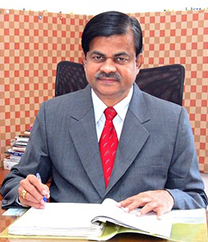
The Devaraj lesson | What remains after the administrator leaves?
Buildings age. Technology changes. Curricula become obsolete. Job descriptions disappear. Even organizational structures are eventually replaced. But certain things endure: a student who develops confidence, a teacher who discovers a new way of teaching, an alumnus who returns to help the next generation, a culture that encourages curiosity, a reputation for doing things well, and a habit of facing problems instead of avoiding them. These are the invisible assets of an institution, and they are often the hardest to build.
Listening to Dr. K. Devaraj, one gets the sense that he does not see education as an isolated profession. He sees it as a bridge between knowledge and action, between students and industry, between technology and humanity, between institutions and society, and between ambition and ethics. Most importantly, he sees education as a bridge between what exists and what could exist. That is where institution builders live: they look at an ordinary institution and imagine what it could become.

They encounter resistance and continue. They use technology but do not worship it. They understand systems without becoming servants of them. They believe in relationships without confusing relationships with compromise. They value publicity but know that reputation ultimately has to rest on substance. And they understand that education is ultimately about creating people capable of thinking and acting for themselves. That is why Dr. K. Devaraj’s story is worth remembering, not simply because he occupied the principal’s chair for sixteen years, not simply because he helped build management education, and not simply because of his academic and professional qualifications, but because his philosophy points toward a larger definition of leadership: Do not merely run the institution you inherit. Build something that will outlive you. That may be the most meaningful measure of an academic leader, and perhaps the finest definition of an institution builder.
A new chapter: From management to law
His journey has now taken another significant turn, into the legal fraternity. At an important juncture in his career, when the BBA college was being considered for closure and he was expected to move to the Law College, which was already a popular and established institution, Dr. Devaraj chose a different path. Instead of allowing the BBA institution to fade away, he saw its potential and worked to strengthen and develop it. He did not merely preserve what existed; he expanded its possibilities. Under his leadership, the institution grew in stature, and the introduction of the MBA programme opened an entirely new dimension for management education. What might have been seen as an institution nearing closure became an institution with a renewed purpose and a larger academic vision.
Today, as Dr. Devaraj steps into the legal fraternity on a larger platform, this journey acquires a special significance. His move into law is not a departure from his earlier work but another expression of the same institution-building instinct. He has moved from strengthening undergraduate management education, to creating opportunities for postgraduate management education, and now towards contributing to the field of law. The journey reflects a consistent pattern: when presented with an existing structure, he looks beyond its immediate limitations and asks what more it can become. That ability to see possibilities where others may see constraints is perhaps one of the defining qualities of Dr. Devaraj’s long and evolving journey in education and institutional leadership.


