
Ink and Resistance | How Indian Cartoonists Drew Seven Decades of Tibetan History
NV Paulose, Chairman, Global TV +91 98441 82044
History is rarely written solely in the solemn pages of academic archives and dusty state papers. Often, it is scribbled in margin notes, etched in quick, sharp strokes of ink, and splashed across newsprint with a biting sense of irony. The visual narrative of Tibet over the past seventy five years offers a profound testament to this truth. Through the compiled works of India editorial cartoonists, a sweeping chronicle emerges, one that captures geopolitical shifts, moral dilemmas, and human resilience through the universal language of satire and empathy.
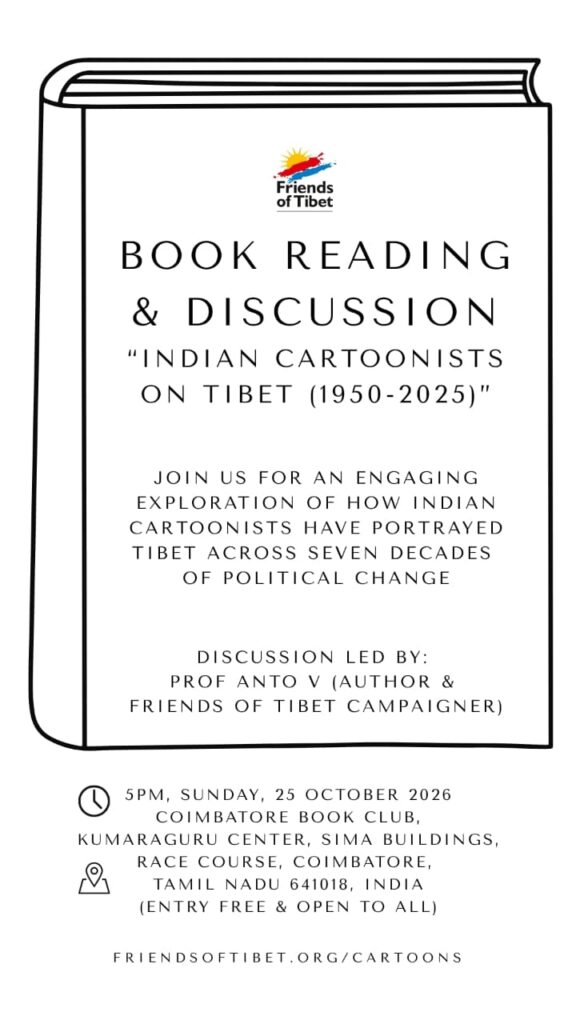
The upcoming book reading and discussion event on Indian Cartoonists on Tibet from 1950 to 2025, led by author and campaigner Prof. Anto V at the Coimbatore Book Club, brings this lesser known artistic heritage into sharp focus. Published by The Alcove Publishers in association with the Friends of Tibet Foundation, the collection serves as a visual mirror reflecting how India independent press and creative minds engaged with the Tibetan narrative. From the momentous upheavals of 1950 through decades of shifting diplomatic winds, Indian cartoonists have served as vigilant chroniclers of a displaced culture and a contested borderland.
What makes these editorial cartoons enduring is their ability to distill complex international diplomacy and human suffering into an immediate, evocative image. While official state communiques often cloak political realignments in diplomatic ambiguity, the cartoonist pen cuts straight to the heart of the matter. Over the decades, Indian satirists have captured the shifting postures of leadership, the plight of refugees, and the quiet dignity of a spiritual community striving to preserve its identity in exile. These drawings are not merely reactions to the news of the day, they are historical artifacts that document the shifting moral conscience of a region.
Art as resistance occupies a vital space in this historical continuum. When a nation or a people is systematically erased or sidelined by dominant global power structures, cultural memory becomes an act of defiance. The cartoons curated in this volume remind us that witnessing injustice is the first step toward solidarity. By drawing what others chose to overlook, these artists ensured that the Tibetan story remained visible in the Indian public consciousness across generations of political change.
As discussions unfold around works like Indian Cartoonists on Tibet from 1950 to 2025, they offer an invitation to look past the surface of standard political discourse. They challenge contemporary audiences to appreciate how ink, wit, and moral clarity can outlast temporary political expedience. Ultimately, these cartoons do more than illustrate history, they keep its heartbeat alive, proving that the pen remains an unmatched instrument of truth, memory, and enduring hope.
Would you like to explore specific talking points or custom promotional framing for this upcoming session?


