
All posts by admin

A Purposeful Life | യുദ്ധമാമാങ്കം നാടിൻ്റെ ശാപം | A Brilliant Story | Global TV
മരിച്ചവരെ വീണ്ടും പെട്ടെന്നുതന്നെ പുനർജ്ജനിപ്പിച്ച് വീരന്മാരാക്കി വളർത്തിയെടുക്കുന്ന ക്രിയാപദ്ധതി വള്ളുവനാട്ടിൽ ആരംഭിച്ചതുതന്നെ മാമാങ്കം എന്ന കുടിപ്പകയെത്തുടർന്നാണ്.
NV Paulose, Chairman, Global TV +91 98441 82044
കേരളത്തിന്റെ കുംഭമേള
തിരുനാവായ മഹാമാഘമഹോത്സവം
തിരുനാവായ നവാമുകുന്ദ ക്ഷേത്രപരിസരത്ത്.
ജനുവരി 16 മുതല് ഫെബ്രുവരി 3 വരെ
Rotarian Lal Goel | Founder & Charter President | Rotary Club of Organ Donation International | Global TV
How Uttar Pradesh Can Become India’s Leader in Organ Donation & Transplantation | A Strategic, Systems-Driven Roadmap | Rotarian Lal Goel
NV Paulose, Chairman, Global TV +91 98441 82044
Uttar Pradesh (UP)—India’s most populous state with nearly 240 million people—holds unparalleled potential to transform India’s organ donation and transplantation landscape. At a time when over 5 lakh Indians await life-saving organ transplants, UP’s deceased organ donation rate remains below 0.1 donors per million population (PMP), among the lowest in the country.
As of 2024–25, India’s transplant ecosystem continues to rely overwhelmingly on living donors (approximately 17,000 living donor transplants versus ~1,100 deceased donor transplants annually), raising ethical, gender, and access concerns. In contrast, Indian states such as Tamil Nadu (≈3.7 PMP) and Telangana (≈4.9 PMP) demonstrate that organ donation outcomes are driven by governance, systems, and leadership—not by culture or religion.
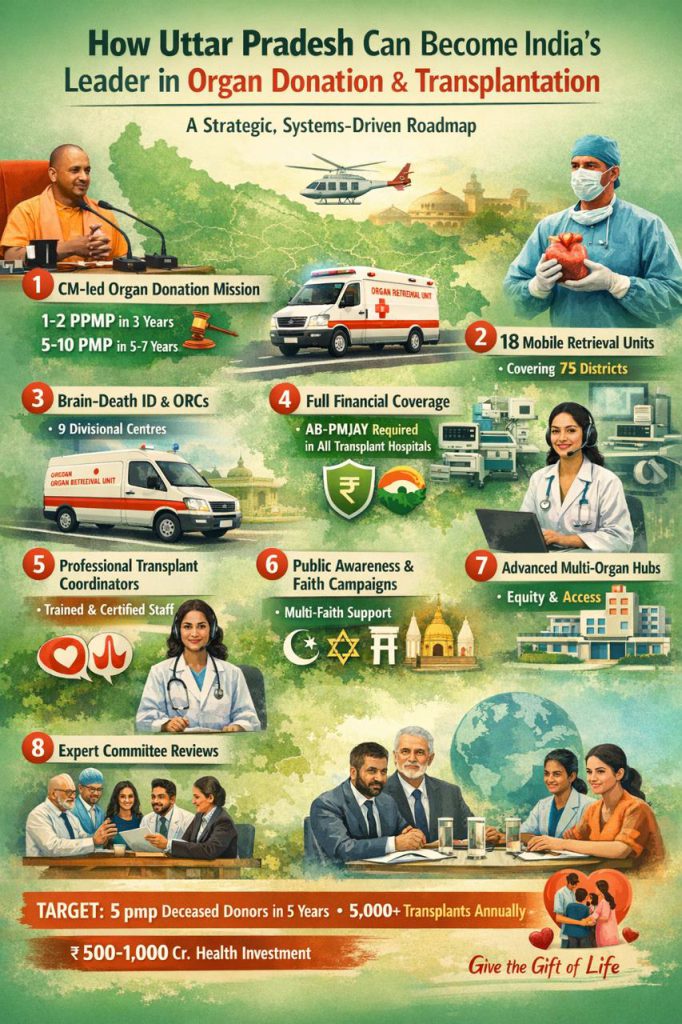
This roadmap—aligned with 2025 NOTTO best practices and Indian public-health realities—lays out a phased, executable pathway for Uttar Pradesh:
• 1–2 PMP within 3 years
• 5–10 PMP within 5–7 years
with a strong focus on equity, transparency, affordability, and public trust.
- Elevate Deceased Organ Donation into a Public Health Mission
Organ donation must be treated as a core public-health responsibility, not an optional awareness activity.
Action Steps
• Launch a Chief Minister–led Uttar Pradesh Organ Donation Mission with clearly defined annual targets.
• Establish Key Performance Indicators (KPIs) such as:
• Brain-death declarations per 1,000 ICU deaths
• Consent conversion rates
• Organs retrieved and transplants performed (district-wise)
• Publish monthly public dashboards integrated with NOTTO/SOTTO platforms.
• Link district health reviews, incentives, and performance appraisals to organ donation outcomes.
• Institute state recognition and awards aligned with Indian Organ Donation Day.
Why it matters
States that institutionalised organ donation as a government mission today accounts for over 70% of India’s deceased organ donations.
- Build a Statewide Brain-Death Identification & Retrieval Network
An estimated 70–80% of potential deceased donors are missed due to delayed brain-death identification and lack of retrieval infrastructure.
Action Steps
• Enforce mandatory brain-death declaration protocols across:
• All government medical colleges
• District hospitals
• Major private ICUs
• Conduct six-monthly audits aligned with NOTTO guidelines.
• Establish permanent Organ Retrieval Centres (ORCs) at all 18 divisional headquarters, ensuring <200 km coverage.
• Fund 24×7 trained retrieval teams, including neurosurgeons, anaesthetists, perfusionists, and coordinators.
• Standardise green corridors, air-ambulance tie-ups, and tele-ICU certification support for underserved districts.
2A. Deploy Mobile Organ Retrieval Vehicles (Interim Capacity Bridging)
Until each district has a permanent Organ Retrieval Centre, Uttar Pradesh must deploy mobile retrieval capacity to prevent organ loss due to distance and time constraints.
Action Steps
• The UP Government shall deploy Mobile Organ Retrieval Vehicles (MORVs) across all 18 Administrative Divisions
(Total: 18 Mobile Units) to cover all 75 districts.
• These mobile units shall function as temporary retrieval centres, equipped with:
• Sterile surgical retrieval infrastructure
• Organ preservation and cold storage facilities
• Rapid transport and communication systems
• Each MORV shall be formally attached to a licensed transplant hospital authorised to carry out organ retrieval and/or transplantation.
• MORVs shall operate 24×7, coordinated through SOTTO, until every district has at least one functional ORC.
Rationale
Mobile retrieval units are essential for large states like UP and ensure rural and semi-urban equity during infrastructure scale-up.
- Professionalise Transplant Coordination – Building the Backbone
Transplant coordinators are the single most important determinant of consent, yet remain under-resourced.
Action Steps
• Appoint full-time, salaried transplant coordinators in all licensed hospitals
(Benchmark: 1 coordinator per 50 ICU beds).
• Establish a State Organ Donation Training Academy, aligned with NOTTO certification.
• Provide legal protection and operational authority to coordinators to initiate donation protocols without delay.
• Mandate refresher training every two years.
Evidence
Professionally trained coordinators consistently double consent rates—from ~30% to 60% or more.
- Transform Public Mindset: From Myths to Moral Leadership
Reluctance to donate is driven more by misinformation and family uncertainty than religion. Surveys suggest ~28% of people in UP are unwilling, despite high latent support.
Action Steps
• Secure multi-faith endorsements through joint declarations by Hindu, Muslim, Sikh, Christian, Jain, and other leaders.
• Institutionalise Annual Donor Family Honour Ceremonies at district and state levels.
• Integrate organ donation education into:
• School curricula
• NSS/NCC
• Panchayats and SHGs
• Deploy targeted Behaviour Change Communication (BCC) campaigns in low-consent districts.
• Promote women-led and youth-led advocacy, recognising higher willingness among women for posthumous donation.
- Scale Transplant Capacity with Equity at the Core
Currently, less than 10% of UP’s transplant demand is met, with services concentrated in a few urban centres.
Action Steps
• Upgrade 6–8 government medical colleges into multi-organ transplant hubs (kidney, liver, heart, lung).
• Prioritise Eastern and North-Eastern UP to reduce regional imbalance.
• Develop PPP models with strict cost caps and quality audits.
• Ring-fence ICUs, OTs, diagnostics, and immunosuppressants under Ayushman Bharat (AB-PMJAY).
5A. Mandatory Acceptance of Government Financial Schemes
To ensure fairness and public trust:
Action Steps
• All licensed transplant hospitals in Uttar Pradesh must mandatorily accept AB-PMJAY in full for organ transplantation.
• Hospitals must also accept any new financial schemes introduced by:
• Government of India
• Government of Uttar Pradesh
• Non-compliance shall attract:
• Financial penalties
• Audit action
• Suspension or non-renewal of transplant licences
Principle
Organs from deceased donors are a public resource and must never be restricted by the ability to pay.
- Ensure Ethics, Transparency, and Trust
Action Steps
• Mandate digital organ allocation and traceability through NOTTO/SOTTO.
• Conduct bi-annual independent audits of all transplant centres.
• Explore ethically designed consent optimisation models, with strong legal safeguards and family-centric approaches.
- Leverage Technology, Data, and Rapid Response
Action Steps
• Implement ICU-to-SOTTO real-time alerts through secure mobile platforms.
• Use AI-enabled logistics to reduce transport times by 30%.
• Deploy tele-ICU services for district hospitals.
• Create a statewide digital donor pledge registry.
- Empower Citizens and Civil Society
Action Steps
• Promote family discussions and donor pledges through apps and community platforms.
• Engage Rotary, youth organisations, survivor networks, and NGOs for outreach and social audits.
• Establish district-level citizen monitoring committees.
- Constitute a High-Level Expert Committee
Action Steps
• Establish an Expert Committee under the leadership of the Chief Minister or Health Minister.
• Members to include:
• Transplant surgeons
• ICU specialists
• Public-health experts
• Legal and ethics experts
• Civil society representatives
• The committee shall:
• Study best practices within India and internationally
• Recommend annual policy, legal, and operational reforms
• Submit time-bound reports to the State Government
Leadership Benchmarks for Uttar Pradesh
With committed execution:
• 5 PMP deceased donors within 5 years, scaling beyond 10 PMP
• 5,000+ additional transplants annually
• A nationally replicable model, as Tamil Nadu once demonstrated
Estimated investment: ₹500–1,000 crore over 5 years
Return: One of the highest public-health ROIs in India
Conclusion: From Potential to Proven Leadership
Uttar Pradesh can redefine India’s organ donation future by treating it as a moral, medical, and administrative imperative. Through bold political leadership, system-ready hospitals, informed communities, and empowered citizens, every ICU tragedy can become a life-saving legacy.
Start with pilots in 2–3 districts. Scale statewide by 2028. Let Uttar Pradesh lead India.
first-ever Padma Shri in the field of organ donation on Nilesh Mandlewala | Global TV
ROTARIAN LAL GOEL COMMENDS PRIME MINISTER MODI FOR HISTORIC PADMA HONOUR IN ORGAN DONATION
NV Paulose Chairman Global TV +91 98441 82044
Mumbai, 26 January 2026 — Rotarian Lal Goel, Founder and Charter President of the Rotary Club of Organ Donation International and Chairman of the Organ Donation India Foundation & GYAN, has expressed deep appreciation to Hon’ble Prime Minister Narendra Modi for the historic decision to confer the first-ever Padma Shri in the field of organ donation on Nilesh Mandlewala.
This unprecedented recognition marks a defining milestone for India’s organ donation movement, formally recognising organ donation and transplantation as a national life-saving priority and bringing long-overdue visibility to a cause that saves thousands of lives every year.
Rotarian Lal Goel lauded the Prime Minister’s consistent, sensitive, and visionary leadership in strengthening India’s organ donation ecosystem. He highlighted several transformative initiatives undertaken under the Prime Minister’s guidance, including:
• The landmark enhancement of Ayushman Bharat coverage under the AB-PMJAY Scheme for organ transplantation from ₹5 lakh to ₹15 lakh in 2023, significantly improving access to life-saving procedures for economically vulnerable families.
• Reiterated emphasis on organ donation through Mann Ki Baat, which has played a crucial role in sensitising, motivating, and inspiring millions of citizens across the country.
“This Padma Shri is not merely an individual honour; it is a tribute to the entire organ donation fraternity—volunteers, doctors, transplant coordinators, counsellors, and donor families—who work quietly and tirelessly to save lives,” said Rotarian Lal Goel. “We are deeply grateful to the Hon’ble Prime Minister for giving national recognition to this noble, humanitarian, and urgent cause.”
Rotarian Lal Goel warmly congratulated Mr Nilesh Mandlewala for his selfless and sustained service to society and recalled his association with him through several online interactions. He expressed confidence that this historic honour will inspire many more individuals, institutions, corporates, and youth to actively support organ donation and help bridge the critical gap between demand and availability of organs in India.
“This historic Padma honour must now translate into mass action. Organ donation must move beyond recognition and become a nationwide people’s movement—because every donation is a life-saver, and every donor has the power to save many lives,” Rotarian Lal Goel concluded.
Rotarian Lal Goel | Students should adopt a healthy lifestyle to protect their vital organs and prevent organ failure | Global TV
A HEALTHY LIFESTYLE IS KEY TO PREVENTING ORGAN FAILURE: ROTARIAN LAL GOEL
NV Paulose Chairman Global TV +91 98441 82044
Indore, 21 January 2026: Rotarian Lal Goel, Founder and Charter President of the Rotary Club of Organ Donation International and Chairman of Organ Donation India Foundation & GYAN, urged students to adopt a healthy lifestyle to protect their vital organs and prevent organ failure.
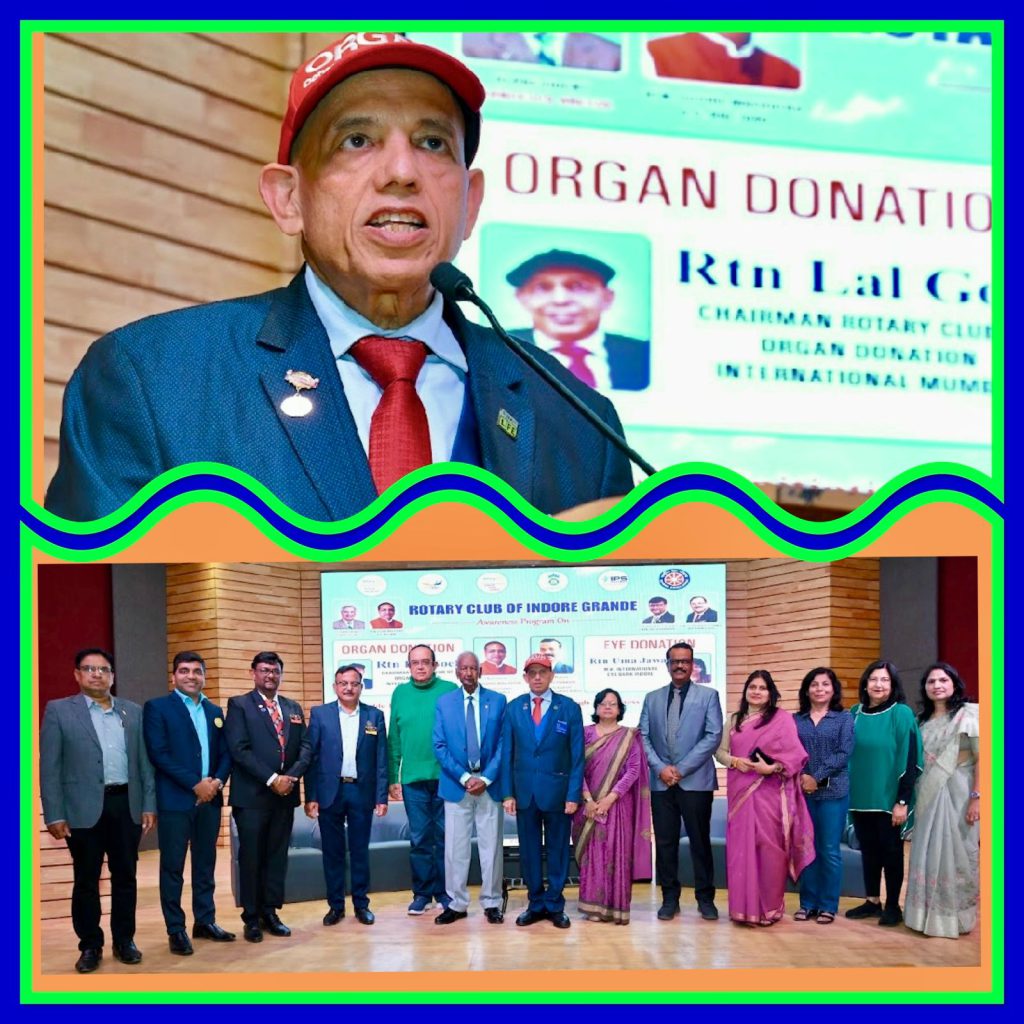
Addressing students at IPS Academy, Indore, while speaking on the importance of organ donation, Rotarian Lal Goel highlighted a stark reality: over five lakh people die every year in India due to the non-availability of organs. He pointed out that this figure represents only 15–20% of the population, as 80–85% of district headquarters in the country still lack organ retrieval and transplant centres.
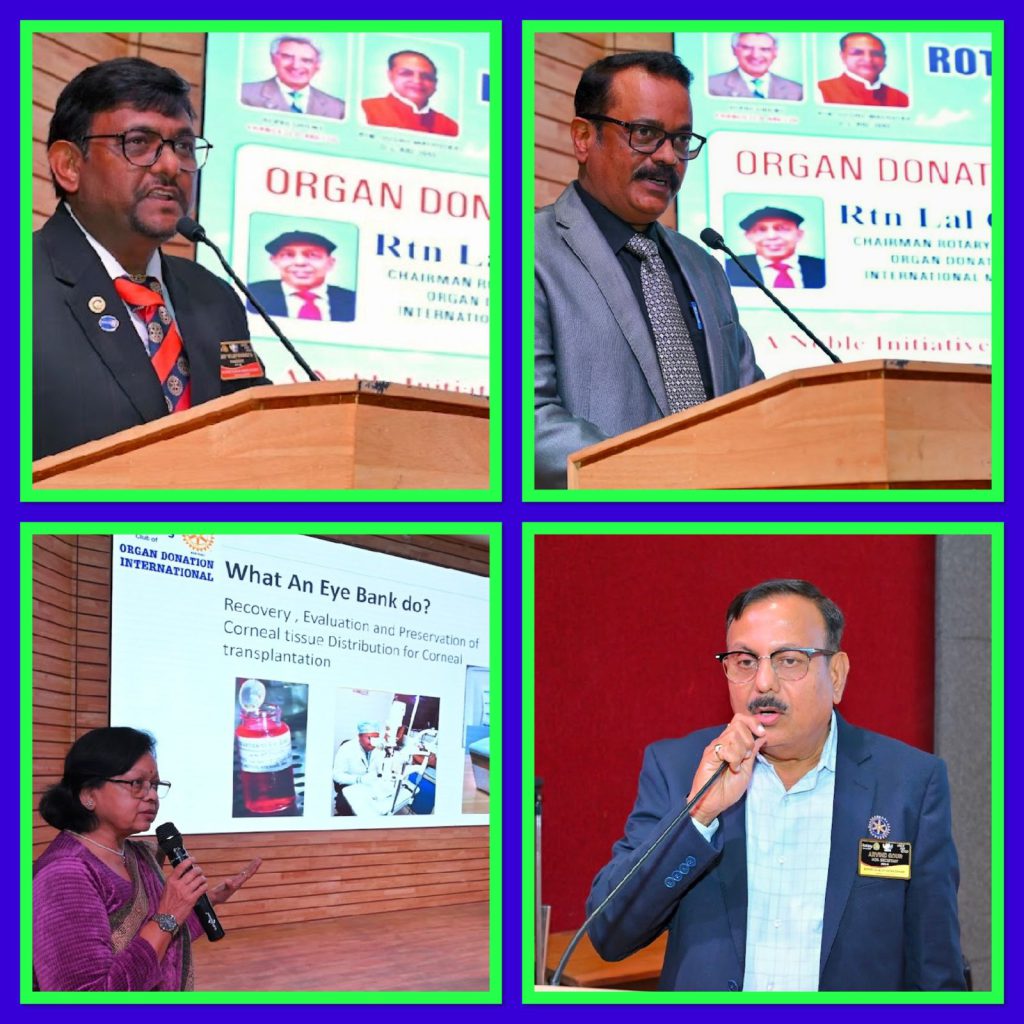
Emphasising prevention alongside donation, he stressed that unhealthy lifestyles—poor diet, lack of exercise, substance abuse, and unmanaged stress—are major contributors to organ failure, especially among youth.
Rtn Ajay Vijaywargia, President of the Rotary Club of Indore Grande, formally welcomed Rotarian Lal Goel and honoured him with a memento.
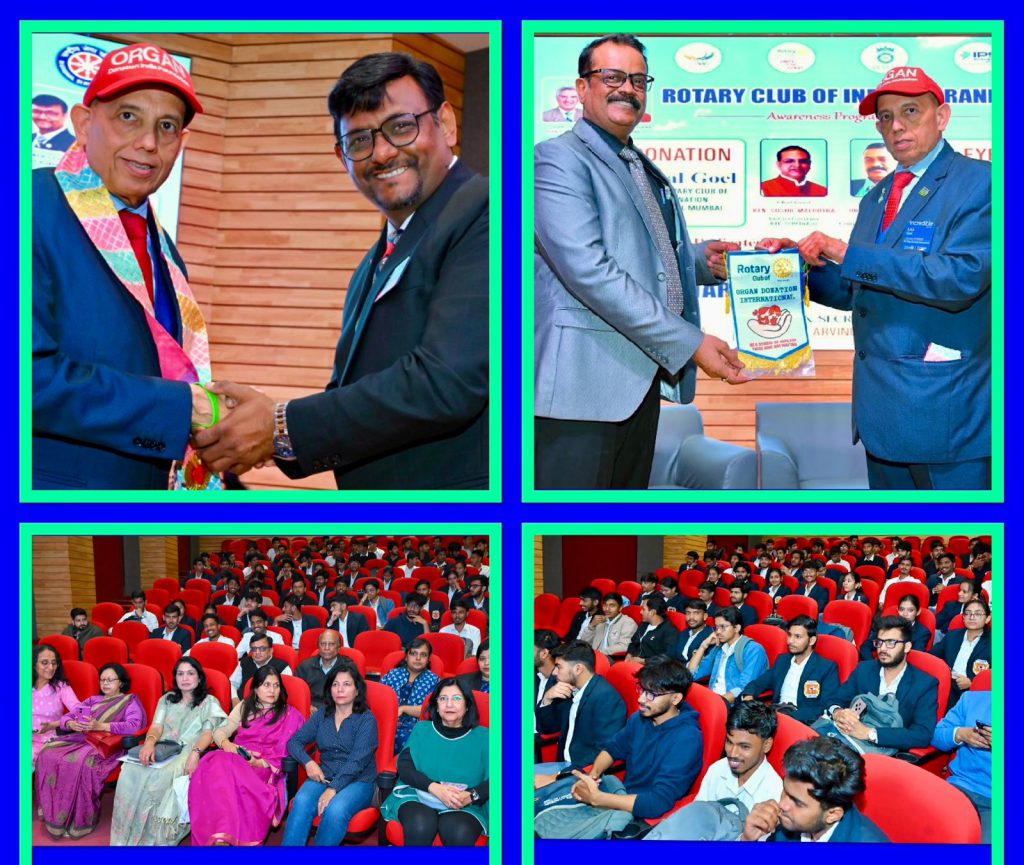
Dr Manish Pundlik, Principal, School of Computers, IPS Academy, expressed hope that the programme would positively influence students’ attitudes towards health, organ donation, and social responsibility.
Rtn Uma Jhawar of the Rotary Club of Organ Donation International delivered an informative and impactful PowerPoint presentation on eye donation, addressing myths and encouraging pledging.
The vote of thanks was delivered by Rtn Arvind Gour, Honorary Secretary, Rotary Club of Indore Grande.
Rotarians Dr S K Verma, Dr Rajiv Gupta, Ms Poonam Gupta, Rotary Members, faculty members, and a large number of students attended the inspiring programme.
The awareness programme was jointly organised by the Rotary Club of Indore Grande in association with the Rotary Club of Organ Donation International.
Youth in Organ Donation Awareness Campaign | Rotarian Lal Goel | Global TV
YOUTH MUST LEAD INDIA’S ORGAN DONATION MOVEMENT: ROTARIAN LAL GOEL
NV Paulose Chairman Global TV +91 98441 82044
Indore, 21 January 2026: Rotarian Lal Goel, Founder and Charter President of the Rotary Club of Organ Donation International and Chairman of the Organ Donation India Foundation & GYAN, called upon India’s youth to assume leadership in transforming the country’s organ donation ecosystem.
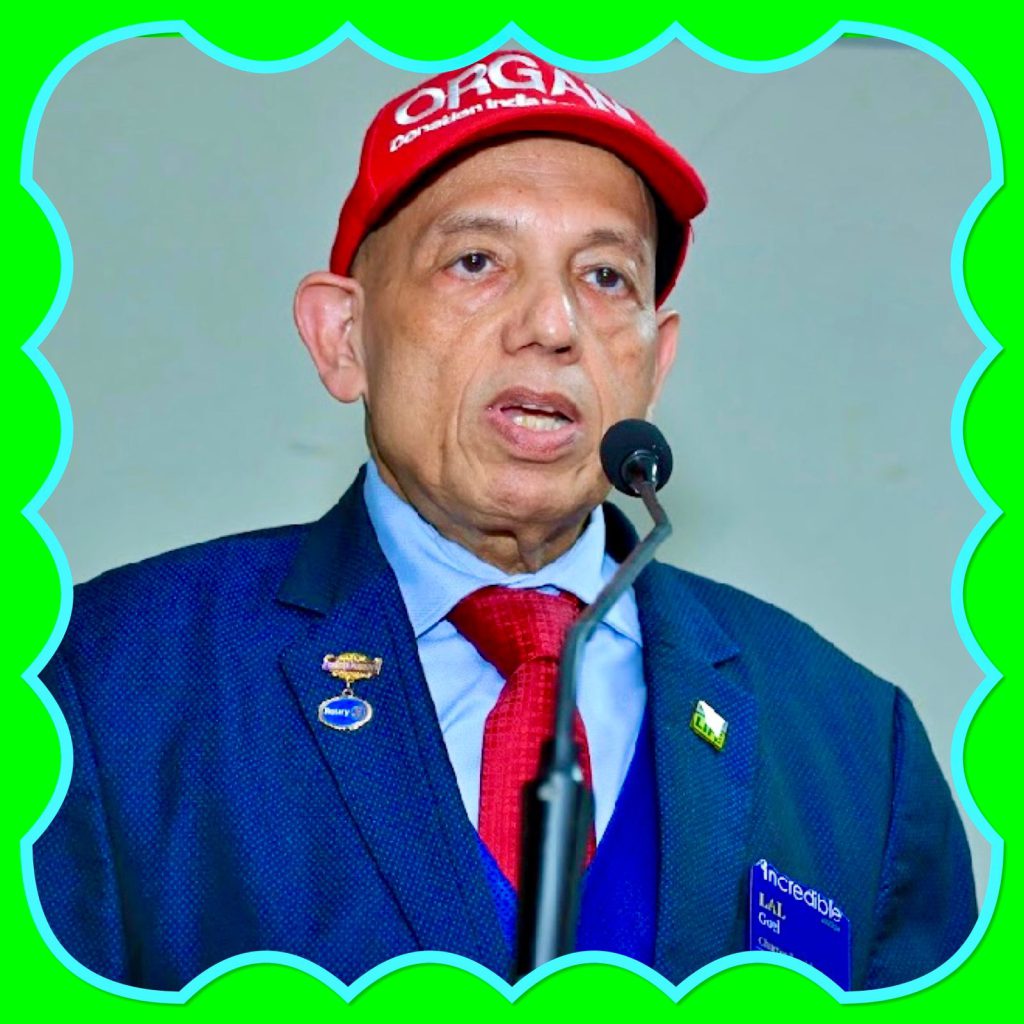
Addressing students at the College of Dental Science & Hospital, Rotarian Lal Goel emphasised that awareness without action is ineffective. He urged students to become informed ambassadors of organ donation, actively dispel social myths, initiate conversations within families, and advocate ethical organ donation practices. He highlighted that lakhs of lives are lost annually in India due to the severe shortage of organs, a crisis worsened by inadequate infrastructure and limited public understanding.
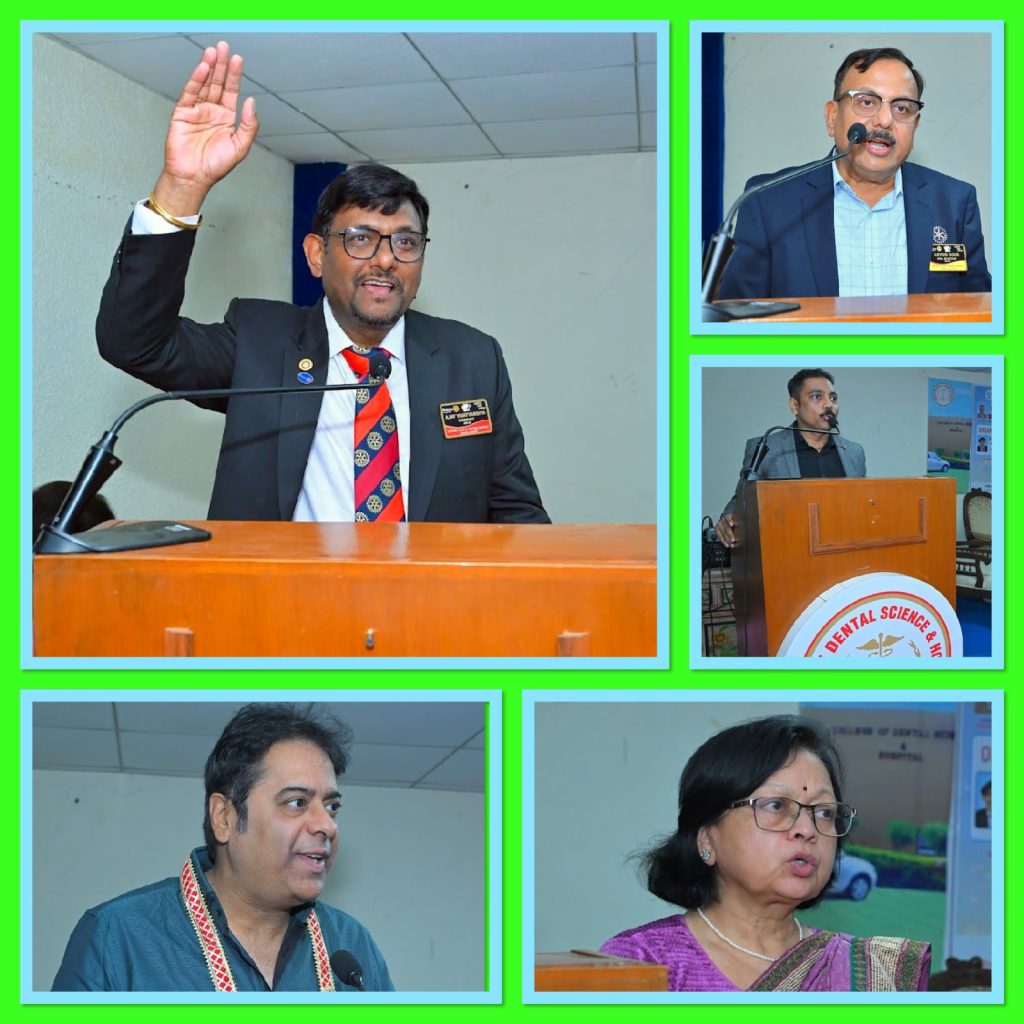
He also spoke in detail about xenotransplantation and encouraged young professionals to pursue research and innovation in this emerging field, which has the potential to redefine the future of transplantation and save innumerable lives.
Renowned blood donation activist Mr Girish Lulla, the Guest of Honour, drew a powerful parallel between blood donation and organ donation. He remarked that blood donation too was once considered difficult and unacceptable, but sustained awareness and community efforts transformed it into a social norm. He expressed confidence that, with the committed efforts of Rotary Clubs, organ donation would also overcome existing barriers and gain widespread acceptance.
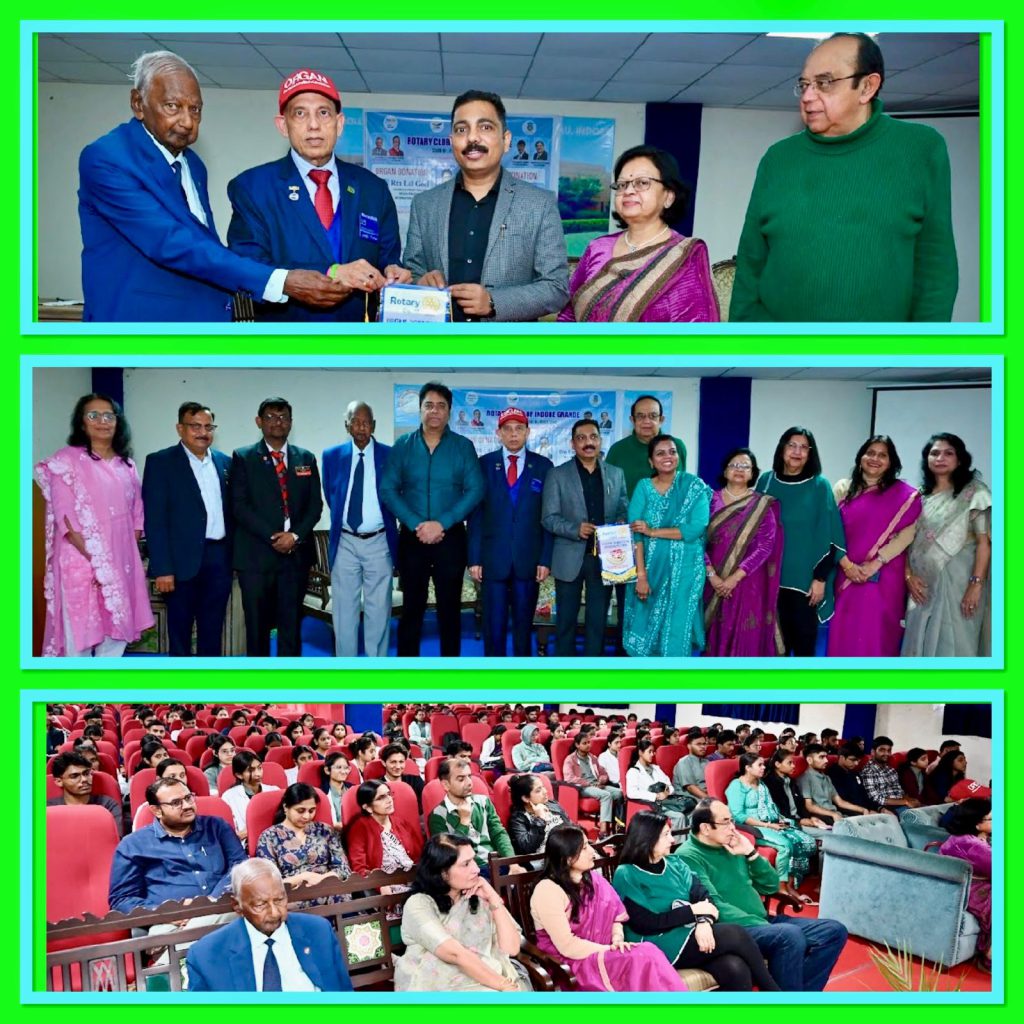
Rtn Ajay Vijaywargia, President of the Rotary Club of Indore Grande, formally welcomed Rotarian Lal Goel and the dignitaries, acknowledging his relentless national and international advocacy for organ donation.
Prof Dr Amit Nirwan, Dean of the College of Dental Science & Hospital, thanked Rotarian Lal Goel and Rotarian Uma Jhawar for inspiring students with a strong sense of social responsibility and purpose.
Rtn Uma Jhawar of the Rotary Club of Organ Donation International highlighted that a single eye donation can restore vision to up to six individuals, underscoring how one informed decision can transform multiple lives.
The vote of thanks was delivered by Rtn Arvind Gour, Honorary Secretary, Rotary Club of Indore Grande.
The programme was attended by Rotarians Dr S. K. Verma, Dr Rajiv Gupta, Ms Poonam Gupta, other Rotary members, faculty members, and a large number of enthusiastic students.
The impactful awareness programme was jointly organised by the Rotary Club of Indore Grande in association with the Rotary Club of Organ Donation International.
Basel Mission | Written by: Fr Joswin Pereira SJ | School of communication and media studies | St Joseph’s University, Bengaluru | Global TV
Unseen builders of coastal Karnataka | Lecture by Dr Peter Wilson Prabhakar on the contribution of to Coastal Karnataka | Global TV
NV Paulose Chairman Global TV +91 98441 82044
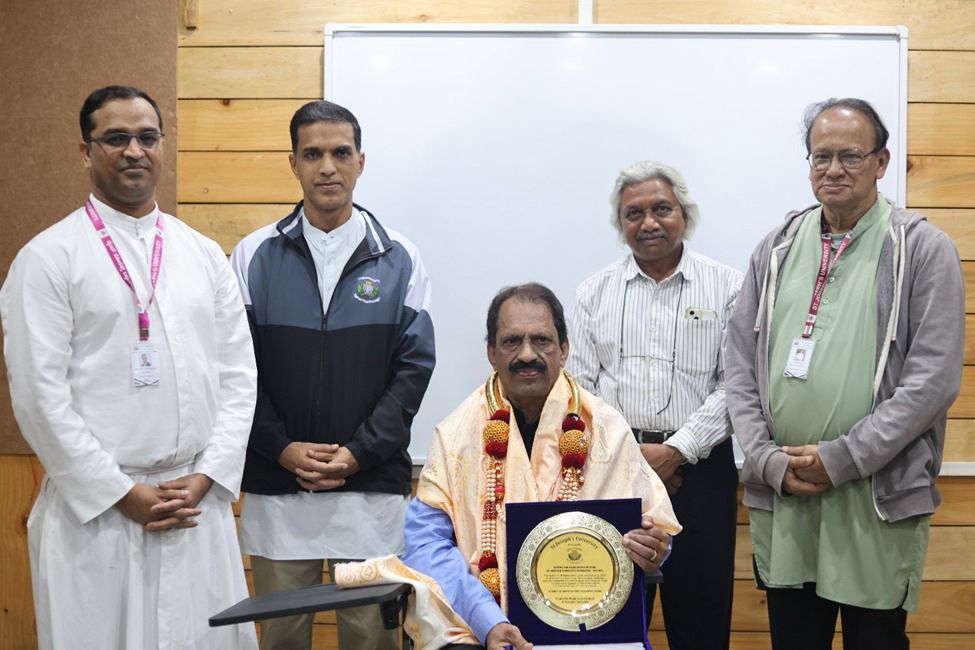
Dr Peter Wilson Prabhakar, a historian and scholar of the Basel Mission, delivered a lecture on January 20, organised by Centre for Religion and Culture at St Joseph’s University (SJU).
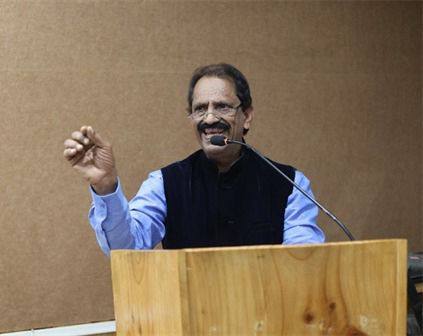
The lecture titled, The Legacy of the Basel Mission in Karnataka, emphasised the underrepresentation of Christian literary and industrial contributions in public discourse. This underrepresentation became the focus of the lecture delivered by Dr Peter Wilson Prabhakar, a historian and scholar of the Basel Mission, on January 20, organised by Centre for Religion and Culture at St Joseph’s University (SJU). Prabhakar introduced a “compelling” concept to explain this phenomenon, the “mission compound culture”, a tendency of Christian organisations to confine their narratives within institutional walls rather than sharing achievements with the broader public. “We should always try to take the achievements of Christian institutions and organisations to the people,” Prabhakar emphasised, arguing that self-imposed isolation has fostered public indifference. The Basel Mission (a Swiss Protestant missionary society) has transformed coastal Karnataka through groundbreaking works, including establishing the first Anglo-vernacular (English-Kannada) school in 1837, pioneering Kannada and Tulu literature, and inventing khaki in 1852, which became the global standard for military uniforms. They also established Mangalore Tiles, an internationally recognised brand. Despite their lasting impact, many of these contributions remain largely invisible to those who have benefited the most from them.
History that speaks
When eight young seminary students in war-torn Basel made a desperate vow in 1815 as Napoleon’s armies threatened their city, they could not have imagined their promise would rewrite Karnataka’s cultural and industrial destiny. The seminary they established in 1816 eventually became the Basel Evangelical Missionary Society, which arrived on Mangalore’s shores on October 30, 1834. Three missionaries Rev. Samuel Hebich, John Christian Lehner, and Christian Greiner stepped onto a coastline that would become their laboratory of transformation.
Educational Contributions
The Basel Mission’s first work focused on education, establishing institutions for both Christians and non-Christians. They created nursery schools, night schools, middle schools, training schools, and vocational institutions. An important principle they followed was for every ten schools opened, they established one for depressed classes and one for drummers and other handicapped people. The first Anglo-vernacular school (teaching both English and Kannada) in the entire coastal belt was established in 1837, the present Mission BM School at Car Street, Mangalore. It continues to operate from primary through PUC level, even today, after 189 years, making it the first English-Kannada school in the coastal belt.
Education was closely connected with printing. The first printing press in the coastal belt was established in Mangalore in February 1841, under the charge of Rev. John Wegel. The first book printed was the Tulu Kirtane (a portion of the Bible containing the Gospel of Saint Luke) in the Tulu language. For nearly fifty years, it remained the only press in the region until the Kodial Bale Press was established in 1882. From 1840 to 1940 almost all textbooks for the Madras and Bombay governments were printed at the Mangalore press. Today, this press continues under the name Balmatta Institute of Printing Technology.
Literary and scholarly contributions
The true revolution lay in the missionaries’ linguistic humility. They learned Tulu, Kannada, and Malayalam not as tools of conversion but as bridges to genuine partnership. Dr Hermann Mögling, a German linguist who mastered Kannada, launched Mangaluru Samachara in 1843, the region’s first newspaper covering district affairs, international news, and even medical information. His Bibliotheca Karnataka preserved classical literature, and Rajendranama, a historical texts boldly reformed Kannada script by eliminating complex conjunct consonants, making literacy accessible to common people. Tübingen University recognized this brilliance, awarding Mögling the first doctorate in Kannada literature from a foreign university in 1858.
Rev. Ferdinand Kittel built upon this foundation, creating the monumental Kannada-English Dictionary published in 1894. His work remains the gold standard, unmatched by later lexicographers. For Tulu, missionaries August Männer and James Brigel compiled comprehensive dictionaries and grammars that still define the language. Even Malayalam owes its first English dictionary to Rev. Hermann Gundert, another Basel missionary. Three languages, three definitive dictionaries, one missionary society that chose to preserve rather than replace.
Industrial contributions
The industrial contributions defy every stereotype of missionary work. When Christian converts faced ostracism and employment discrimination, the missionaries manufactured livelihoods. In 1844, they established the region’s first modern weaving factory. By 1852, John Hebler had extracted oil from cashew nut shells to create a dye that would become the world’s first true khaki. When the Madras Governor witnessed the colour, he recommended it to the British government. The result, every British soldier worldwide, and subsequently military forces across continents, donned khaki invented in Mangalore by missionaries. Transport workers, schoolchildren, and conductors still wear this legacy daily.
The tile industry tells a similar story of accidental globalization. Karnataka’s traditional “Nada Hanchu” tiles were crude and leaky. Basel missionary Georg Plebst, trained in German engineering, introduced modern manufacturing techniques in Jeppu, Mangalore. The “Mangalore tile” brand became so synonymous with quality that sixty-seven factories eventually adopted the name, exporting across the British Empire. A product born from missionary necessity became a global standard.
Medical and agricultural outreach
The Basel Mission entered the medical field relatively late but with significant impact. They established three major hospitals: the Calicut Hospital in 1886, the Gadag-Betigeri Hospital in 1903, and the Udupi Hospital (Lombard Memorial Hospital) in 1923. These three medical centres served different regions of Karnataka. The mission also established a farm in Mudabidre, which became one of the finest farms of that era, specializing in pineapple and coconut cultivation.
Lessons from the “mission compound”
Dr. Prabhakar’s concept of “mission compound culture” remains strikingly relevant. Christians often confine their achievements within institutional walls, creating public indifference. The Basel Mission’s greatest lesson transcends its tangible achievements. These German missionaries succeeded because they surrendered linguistic arrogance. They documented local knowledge, celebrated indigenous literature, and created infrastructure that served entire communities regardless of faith. Their evangelical purpose may have faded from memory, but their cultural and industrial imprint remains indelible. Dr Prabhakar emphasised, taking these achievements to the broader public is essential for fostering a more inclusive understanding of Karnataka’s development.
Central Warehousing Corporation | Milestone Achievement | Global TV
The landmark rake was flagged off from the CWC facility at Thokur by CWC Managing Director Shri Santosh Sinha in the presence of Shri Samuel Praveen Kumar, Director (Marketing & Commercial Planning)
NV Paulose Chairman Global TV +91 98441 82044
CWC Flags Off First Container Rake for MRPL Polypropylene from Thokur to Morbi
Central Warehousing Corporation (CWC) achieved a major milestone on January 22, 2026, with the successful movement of its first container rake carrying Polypropylene consignment of Mangalore Refinery and Petrochemicals Limited (MRPL) from Thokur in Karnataka to Morbi in Gujarat.
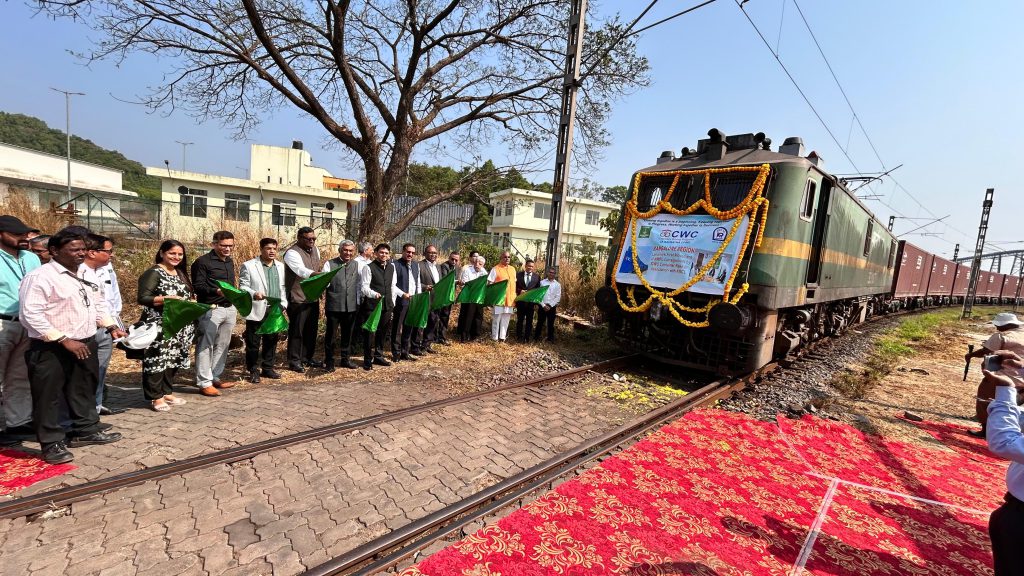
CWC has entered into an agreement with MRPL for providing total supply chain solution comprising multimodal transportation of Polypropylene from Mangalore to Morbi along with inventory management at Morbi. The operation includes stuffing Polypropylene bags into containers at Thokur, transportation through the rail network of Konkan Railway Corporation Limited (KRCL), storage at Morbi and de-stuffing for onward delivery.
The landmark rake was flagged off from the CWC facility at Thokur by CWC Managing Director Shri Santosh Sinha in the presence of Shri Samuel Praveen Kumar, Director (Marketing & Commercial Planning), and Shri Neeraj Priyadarshi, Director (Finance). From MRPL, the event was attended by Managing Director Shri Mundkur Shyamprasad Kamath, Director (Refinery) Shri Nandakumar Velayudhan Pillai, Director (Finance) Shri Devendra Kumar, and Dr. Deepak Prabhakar P., Executive Director (Marketing & Business Development). Senior officials from KRCL, including Shri Sandeep Gupta, Director (Commercial & Operations), and Shri Ashutosh Srivastava, Chief Commercial Manager, were also present.
The successful movement marks a significant step in CWC’s expansion into integrated logistics services, demonstrating its capability in handling end-to-end multimodal transportation along with inventory management as a one stop total supply chain solution provider.
Srinivasa Heart Foundation | The Hundred Day Challenge | Global TV
A National Habit for a Healthier and Stronger India
NV Paulose Chairman Global TV+91 98441 82054
India is standing at a critical moment in its journey of development. Non communicable diseases, especially cardiovascular diseases, are becoming one of the biggest threats to population health, national productivity, and long term economic growth. At the same time, India has an extraordinary strength that no disease can defeat: its people, its communities, and its capacity to act together with purpose.
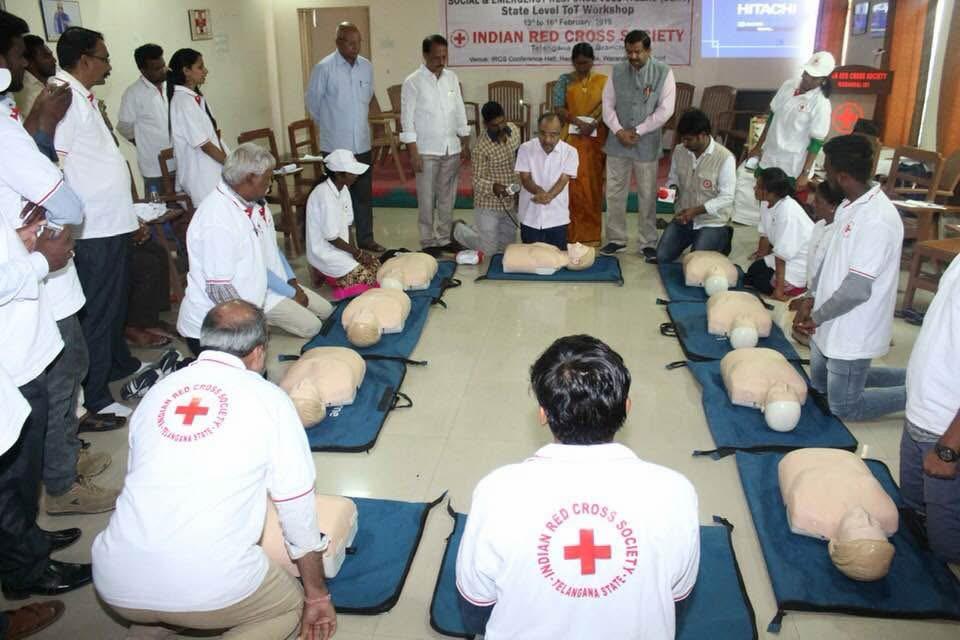
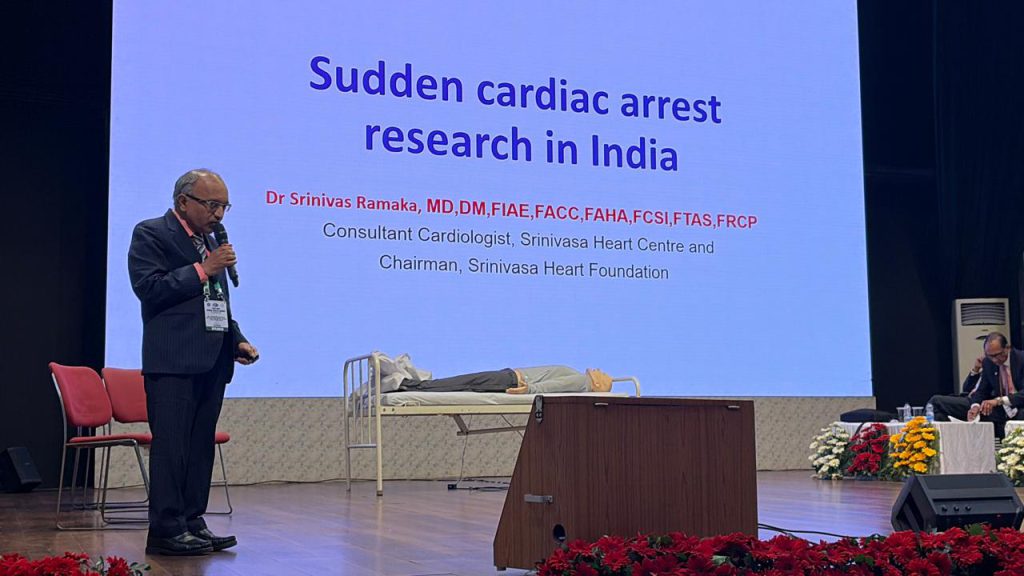
The Hundred Day Challenge, initiated by the Srinivasa Heart Foundation, is a structured national framework that turns ideas into measurable outcomes in just 100 days. It begins with heart health, expands into overall wellbeing, and supports broader social progress through disciplined action and shared responsibility.
Why India Needs a 100 Day Movement
Many initiatives fail not because ideas are weak, but because execution is slow, scattered, or unmeasured. The Hundred Day Challenge solves this gap with one powerful advantage: a clear timeline.
One hundred days is long enough to build momentum and deliver results, and short enough to create urgency, focus, and accountability. It helps people move from intention to action, and from action to impact.
The Simple Formula That Anyone Can Follow
The Hundred Day Challenge is built on a practical and repeatable cycle.
- Learn what must change
- Act with a clear plan
- Measure what improved
- Sustain what worked
This makes it effective for individuals, institutions, communities, and governments alike.
Not Only for Health Professionals, But for Every Citizen
Health is not the responsibility of doctors alone. It is a shared national duty.
You do not need to be a cardiologist to prevent heart disease. You do not need funding to start positive change. You only need commitment, consistency, and the willingness to act for 100 days.
In a country as large and diverse as India, national transformation happens only when change becomes personal, local, and practical.
The 100 Day Challenge Can Work in Every Field
The real strength of this challenge is that it is not limited to hospitals or clinics. It can be applied to every sector and every profession.
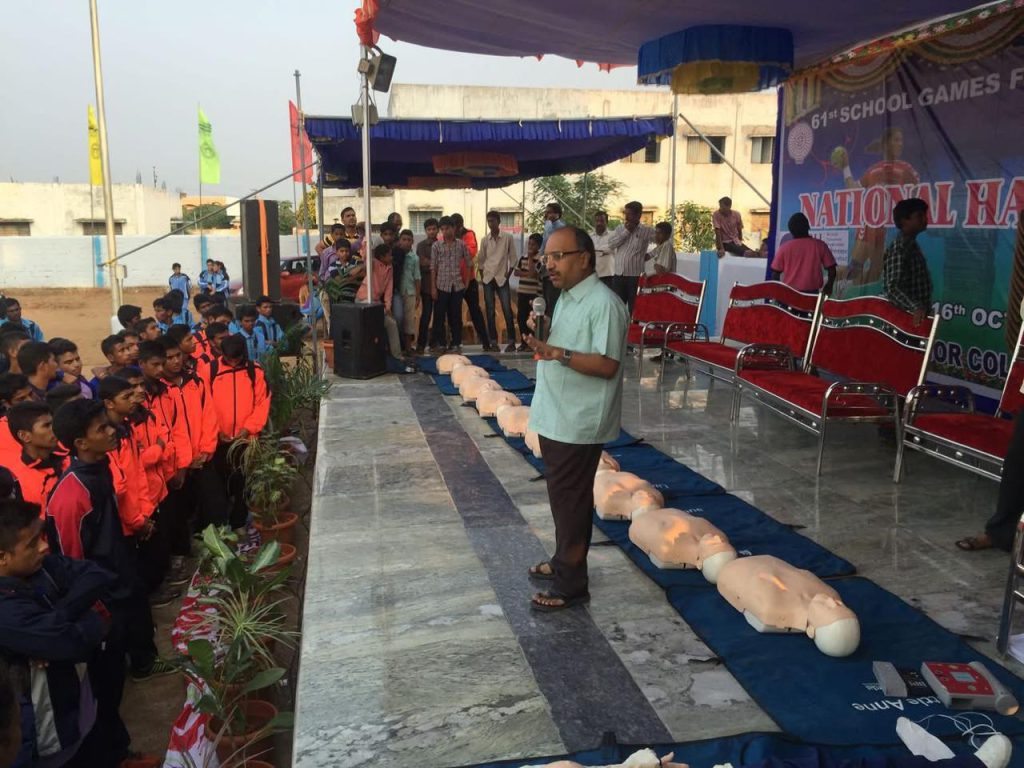
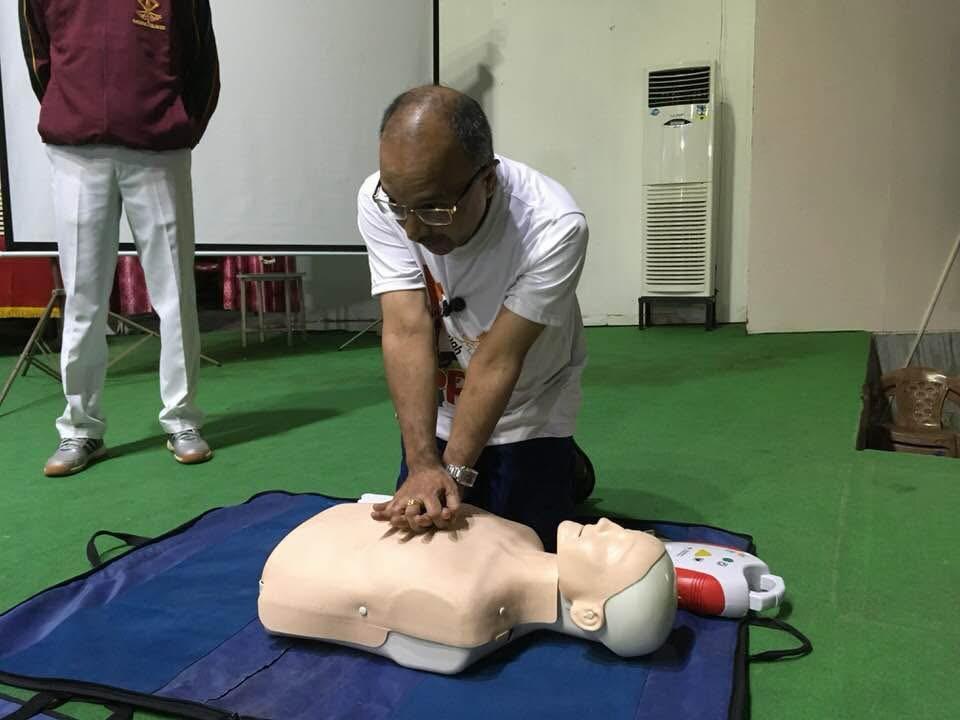
In education, 100 days can create healthier schools through nutrition awareness, daily activity habits, and CPR learning.
In workplaces, 100 days can improve wellbeing through fitness routines, stress reduction, preventive screening, and health literacy.
In villages and urban neighborhoods, 100 days can build community strength through awareness drives, lifestyle support groups, and early detection camps.
In households, 100 days can improve family health through better food choices, reduced salt and sugar intake, regular walking, and blood pressure monitoring.
In civil society and NGOs, 100 days can strengthen grassroots programs through better documentation, measurement, and visible outcomes.
In government systems, 100 days can enable rapid pilots, community level evidence, and scalable models that can be expanded district by district.
No matter the field, the approach remains the same: choose one goal, act daily, track progress, and build continuity.
A Time Bound Framework That Creates Measurable Results
The Hundred Day Challenge is designed as a step by step action cycle.
Days 1 to 15 focus on understanding local needs, creating partnerships, and collecting baseline information.
Days 16 to 60 focus on implementation through awareness, training, screening, or community interventions.
Days 61 to 90 focus on measurement, improvement, course correction, and documentation.
Days 91 to 100 focus on reporting, sharing outcomes, planning sustainability, and preparing for scale up.
This is how short term action becomes long term change.
A Direct Path to Viksit Bharat Through Local Action
The vision of Mera Bharat Mahaan becomes real only when it is visible in healthier homes, safer communities, and stronger citizens. Viksit Bharat is not built only through policies and budgets. It is built when individuals and institutions act with commitment and measurable outcomes.
When every citizen contributes 100 days of focused effort, the nation gains years of health, productivity, and progress.
The National Call to Action
The Hundred Day Challenge is a call to every Indian.
Choose one goal that strengthens health, safety, learning, or wellbeing.
Commit to it for 100 days with discipline and sincerity.
Measure the change you created.
Sustain the habit and scale the model.
Because when individuals act with purpose and institutions act with accountability, nations progress.
Closing Message
India does not need more promises. India needs more measurable action.
Let the Hundred Day Challenge become a national habit across every field and every home.
100 Days. One Nation. Healthier India.
GOD | God Can Be Misrepresented but Cannot Be Manipulated | Global TV
God has been portrayed as a justification for war, conquest, slavery, patriarchy, and oppression.
NV Paulose, Chairman, Global TV +91 98441 82044
Throughout human history, God has been spoken about, argued over, feared, loved, invoked, denied, and defended. Entire civilizations have risen and fallen around ideas of the divine. Yet within all this human activity lies a crucial distinction. God can be misrepresented, but God cannot be manipulated. This statement captures a tension at the heart of religious experience, the gap between human interpretation and divine reality.
To say that God can be misrepresented is to acknowledge a basic truth about human limitation. Every description of God passes through human language, culture, psychology, and power structures. Words are imperfect tools for describing the infinite, and institutions are flawed vessels for carrying transcendent truth. As a result, images of God are often shaped more by human fear, desire, or ambition than by any authentic encounter with the divine.
History offers countless examples. God has been portrayed as a justification for war, conquest, slavery, patriarchy, and oppression. In some eras, God has been reduced to a harsh judge obsessed with punishment. In others, God has been reduced to a distant abstraction with no moral demands at all. Political leaders have claimed divine approval for their authority. Religious figures have used the name of God to control behavior or silence dissent. In these cases, God is not being revealed. God is being used as a symbol molded to fit human agendas.
This misrepresentation does not mean God has changed. It means our projections have changed. Humans tend to remake God in their own image, reflecting their values, fears, and social norms. A violent society imagines a violent God. A fearful society imagines a God who demands constant appeasement. These images often say more about the people who create them than about God.
Yet misrepresentation has limits. This is where the second truth becomes essential. God cannot be manipulated.
Manipulation implies control. It suggests that through rituals, words, sacrifices, prayers, or moral performance, humans could force God to act according to their will. Many religious systems drift toward this idea, whether openly or subtly. People may believe that if they pray correctly, obey rules precisely, or align with the right doctrine, God will reward them with success or protection. In this view, God becomes transactional.
But a truly transcendent God does not function this way. If God is infinite and sovereign, then God cannot be cornered by formulas or coerced by performance. Prayer does not override divine will. Ritual does not trap God into obligation. Morality does not place God in debt. Attempts to manipulate God fail because they assume human leverage over what is beyond human control.
This truth carries both warning and comfort. God cannot be hijacked by institutions, ideologies, or loud voices. No group owns God. No doctrine contains God. Faith, therefore, is not about control but humility. It is not about bending God toward human desire, but aligning oneself with what is already true.
Reaching Out to God When God Cannot Be Manipulated
If God cannot be manipulated, the question naturally follows. How do you reach out to God?
The answer begins with a shift in intention. Reaching out to God is not about getting God to do what you want. It is about becoming open to what God already is, and what God may already be doing in you.
Many people approach God through strategies, bargaining, and fear. They pray only when desperate. They obey in order to earn safety or reward. But if God is not a force to be managed, then the relationship cannot be transactional. It must be rooted in truth, surrender, and presence.
This is where the insight becomes meaningful. What you are searching for is searching for you as well. The longing for God may itself be evidence that God is already reaching toward you. The desire to understand, to return, to heal, to become whole does not arise from nothing. In many spiritual traditions, the first movement is not human effort but divine invitation. Seeking is often a response, not a beginning.
So how does one respond?
First, through honesty. You do not need perfect language or polished faith. Confusion, doubt, grief, anger, and longing can all become prayer when they are sincere. God cannot be manipulated, but God can be encountered through truth.
Second, through stillness. Many people speak endlessly to God but never listen. Silence is not absence. It is attention. It is the willingness to quiet the ego long enough to notice what has been present all along.
Third, through daily alignment rather than occasional desperation. Choose what is good when it costs something. Practice kindness when no one sees it. Forgive slowly if necessary but intentionally. These are not ways to earn God. They are ways of moving closer to the nature of God.
Finally, trust consistency. Connection often grows quietly. Not every encounter is dramatic. Sometimes God comes like light, steady and undeniable over time. If you continue seeking with humility, you may discover that you were never truly alone. The search itself may be proof that you are already being found.
When God Cannot Be Manipulated What About You
If God cannot be manipulated, the next question is deeply personal. What about you? Can you be manipulated?
The honest answer is yes. Human beings can be manipulated, often more easily than we want to admit. This is not because we are weak minded. It is because we are human. We are shaped by needs for belonging, approval, safety, meaning, and love. Wherever those needs exist, manipulation can take root.
Manipulation works by identifying pressure points. Fear, guilt, pride, insecurity, or longing can all be exploited. It can appear as emotional pressure, religious pressure, social pressure, or false urgency. Often it feels convincing because it appeals to something real inside you.
One of the most dangerous forms is spiritual manipulation. When someone claims to speak for God in a way that silences your questions, demands unquestioning obedience, or uses fear to maintain control, God is being misrepresented again. God is not being manipulated. People are.
This is why discernment matters. Manipulation does not always feel abusive at first. Sometimes it feels like love, certainty, or belonging. Ask yourself whether you are free to say no. Ask whether boundaries are respected. Ask whether your conscience is being strengthened or overridden.
There is an important difference between conviction and control. Conviction invites growth while preserving freedom. Control demands surrender to a person or system rather than to truth.
The antidote is a direct relationship with God. When your spiritual life depends entirely on another person approval, manipulation thrives. When you cultivate your own prayer, reflection, and moral clarity, manipulation loses its grip.
Here lies the paradox. The more deeply you accept that God cannot be manipulated, the more clearly you see that you must guard against being manipulated yourself. God is not a tool for anyone agenda. And neither are you. A genuine spiritual path leads not into fear or dependence, but into clarity, courage, and freedom.


