
When we connect with our roots; we enrich our present and create a more inclusive, sustainable and fascinating future for India.
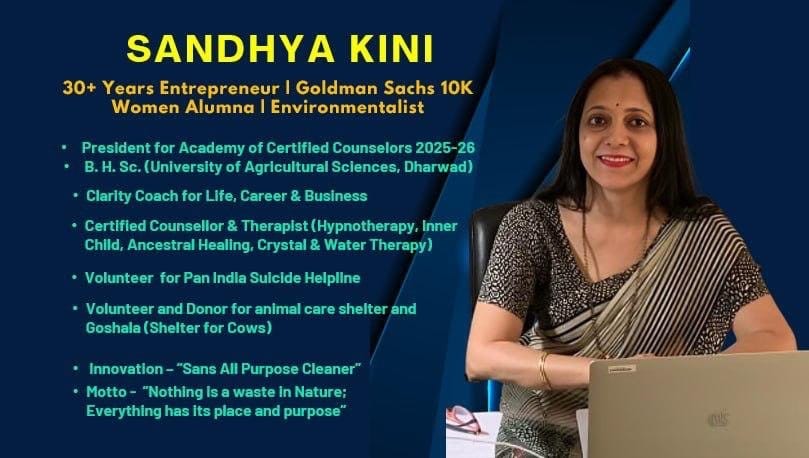
Sandhya Kini, Founder Member, Mangalore Listeners Club
India is a land of extraordinary diversity, where every region, community and village has a story to tell. Our traditions are not merely remnants of the past; they are living expressions of knowledge, experience, values and a deep understanding of our relationship with nature. Yet, in our journey towards modernisation and development, we have gradually moved away from many of the practices and wisdom that once shaped our everyday lives.
Perhaps it is time to pause, rediscover our roots and recognise the immense value embedded in our traditions. Connecting with our heritage is not about going backwards. It is about moving forward with a deeper understanding of who we are, what we have inherited and what we can preserve for future generations.

Rediscover, Reconnect and Remind
The vision of Connecting Our Roots rests on three simple yet meaningful principles: Rediscover, Reconnect and Remind. To rediscover is to explore the knowledge, practices and traditions that have existed within our communities for generations. To reconnect is to bring these valuable elements back into our everyday lives. To remind is to ensure that the wisdom of our ancestors is not forgotten but shared with younger generations.
Our heritage extends far beyond monuments, architecture and historical landmarks. It lives in our traditional cuisines, indigenous agricultural practices, folk art, local crafts, home remedies, festivals, lifestyles, relationships with animals and our understanding of nature. Every village has something unique to offer. Every community has knowledge worth exploring. Every generation has something valuable to pass on.
Wisdom Lives Within Our Communities
One of India’s greatest strengths is its cultural diversity. Across regions and communities, people have developed ways of living that reflect their environment, available resources, local needs and accumulated experience. Traditional cuisines, for instance, are not simply about taste. They often reflect an intimate understanding of seasonal ingredients, locally available produce and traditional methods of preparation. Similarly, many households continue to practise home remedies and natural wellness traditions that have been passed down through generations. Interestingly, some of these practices remain undocumented, even though they continue to be followed in everyday life.
Around Madurai and its neighbouring regions, there is tremendous scope to explore and document such knowledge across communities, including Hindu, Muslim and Christian households. Their cuisines, household practices, traditional remedies and cultural experiences represent a rich and fascinating repository of collective wisdom. The objective should be to listen, learn, document and share without discrimination. Every community deserves recognition, and every valuable tradition deserves an opportunity to be understood.
Traditional remedies and health practices should also be documented responsibly, distinguishing cultural knowledge from scientifically established medical evidence. Preserving knowledge does not mean accepting every traditional claim without examination; it means respecting the experience of previous generations while encouraging informed understanding.
Reconnecting with Nature and Indigenous Cows
An important part of reconnecting with our roots is rebuilding our relationship with nature and animals. For generations, indigenous cattle have been closely associated with Indian agriculture, rural livelihoods and traditional household life. They have played a significant role in farming systems, local economies and cultural practices. However, many indigenous cattle breeds face challenges arising from changing agricultural practices, urbanisation and declining awareness of their importance.
There is a need to create greater awareness about indigenous breeds and encourage their protection and responsible care. Having personally cared for cows for nearly fifteen years, I have experienced the special relationship that can develop between humans and these gentle animals. This experience has strengthened my belief that indigenous cows deserve greater appreciation beyond their traditional association with milk production.
In particular, smaller indigenous breeds such as Malnad Gidda and other native varieties deserve greater public awareness. Their characteristics, adaptability and suitability for different environments can be explored through responsible breed conservation and scientific understanding. One interesting possibility is to encourage suitable households with adequate space and resources to consider caring for indigenous cows, not merely as milk-producing animals but as animals worthy of companionship and protection.
This idea also challenges the common perception that keeping a cow necessarily involves the responsibility of daily milk production. Animal welfare must come first. A cow should never be treated merely as a source of milk. Her natural needs, including the needs of her calf, must be respected.
Such an initiative would require proper veterinary guidance, adequate shelter, nutrition, financial planning and responsible ownership. It is not a suggestion for every household, particularly those living in apartments or without suitable facilities. Rather, it is an invitation to explore how more people can contribute to the preservation and care of indigenous cattle.
Traditions That Deserve a Place in Modern Life
Connecting with our roots does not mean rejecting technology, scientific progress or modern lifestyles. Instead, it means identifying what is valuable in our traditional practices and finding meaningful ways to integrate them into contemporary life. Our ancestors developed agricultural practices suited to local climates, preserved seeds, made use of natural resources and built lifestyles closely connected with their surroundings. Many of these practices offer important lessons in sustainability, resource conservation and community participation.
Similarly, traditional crafts, textiles, indigenous food varieties, folk performances and regional art forms deserve opportunities to flourish in today’s world. Technology can become a powerful partner in this effort. Digital archives, community platforms, documentaries, storytelling initiatives and educational programmes can help preserve knowledge that might otherwise disappear. The aim is not simply to collect information but to make it accessible, relevant and meaningful to people today.
Inclusive India has A Shared Heritage
Perhaps the most beautiful aspect of this initiative is its potential to bring people together. India’s traditions are not confined to one religion, language, caste or geographical region. Our collective heritage has evolved through centuries of interaction, exchange and coexistence. A traditional recipe from one community, an agricultural practice from another, a folk art form from a particular region or a household remedy passed down through generations can all contribute to our shared cultural identity.
By documenting and celebrating these contributions equally, we can create a platform that promotes understanding, mutual respect and appreciation. Instead of focusing on differences that divide us, we can discover the knowledge and experiences that connect us. An inclusive approach to heritage encourages people to participate not as representatives of separate communities but as custodians of a shared legacy.
Passing Our Wisdom to Future Generations
One of the greatest concerns today is the widening gap between generations. Many young people are unfamiliar with traditional practices that their grandparents considered an integral part of everyday life. The knowledge of preparing regional foods, identifying local plants, preserving seeds, practising traditional crafts and caring for animals may gradually disappear when it is no longer shared.
We must create opportunities for older generations to become teachers and younger generations to become curious learners. Schools, colleges, community organisations, farmers, artisans, homemakers and local institutions can all participate in this process. Imagine a platform where an elderly woman shares a traditional recipe, a farmer explains an indigenous agricultural practice, an artisan demonstrates a disappearing craft and a family shares its experience of caring for native cattle. These are not merely stories from the past. They are opportunities to create awareness, preserve identity and inspire meaningful action.
A Living Movement for a Better Tomorrow
Connecting Our Roots should ultimately grow into a continuous and evolving movement rather than remain a one-time documentation project. It can begin with small, meaningful initiatives: recording traditional cuisines, documenting indigenous knowledge, promoting awareness about native cattle, exploring village lifestyles and recognising individuals who continue to preserve valuable practices.
Over time, these efforts can expand into collaborations with educational institutions, researchers, farmers, animal welfare organisations, cultural practitioners and local communities. There is also scope to create opportunities for traditional knowledge holders and local entrepreneurs, enabling cultural preservation to support livelihoods and community development. The larger purpose is to create a meaningful connection between heritage, sustainability, education, social responsibility and modern development.
India does not have to choose between tradition and progress. We can embrace scientific advancement while respecting inherited wisdom. We can celebrate diversity while strengthening unity. We can build modern lifestyles without losing our connection with nature and our cultural identity. The roots of a tree are invisible, yet they determine its strength, stability and ability to flourish. Similarly, the strength of a nation lies not only in its economic achievements and technological advancements but also in the wisdom, values and cultural richness that sustain it.


