
From an Unexpected Career Choice to a Lifelong Commitment to Knowledge
NV Paulose, Chairman, Global TV +91 98441 82044
Dr. Janet Dotty Lobo, Chief Librarian of Father Muller Charitable Institutions, Mangaluru, exemplifies how dedicated stewardship can transform an academic library from a repository of books into a thriving hub of learning and research. Throughout her career, her contribution has extended far beyond traditional administrative and technical responsibilities, leaving a lasting mark on the institution’s educational landscape. By modernizing information access, facilitating research initiatives, and fostering a collaborative learning environment, she quietly shapes the academic culture around her.
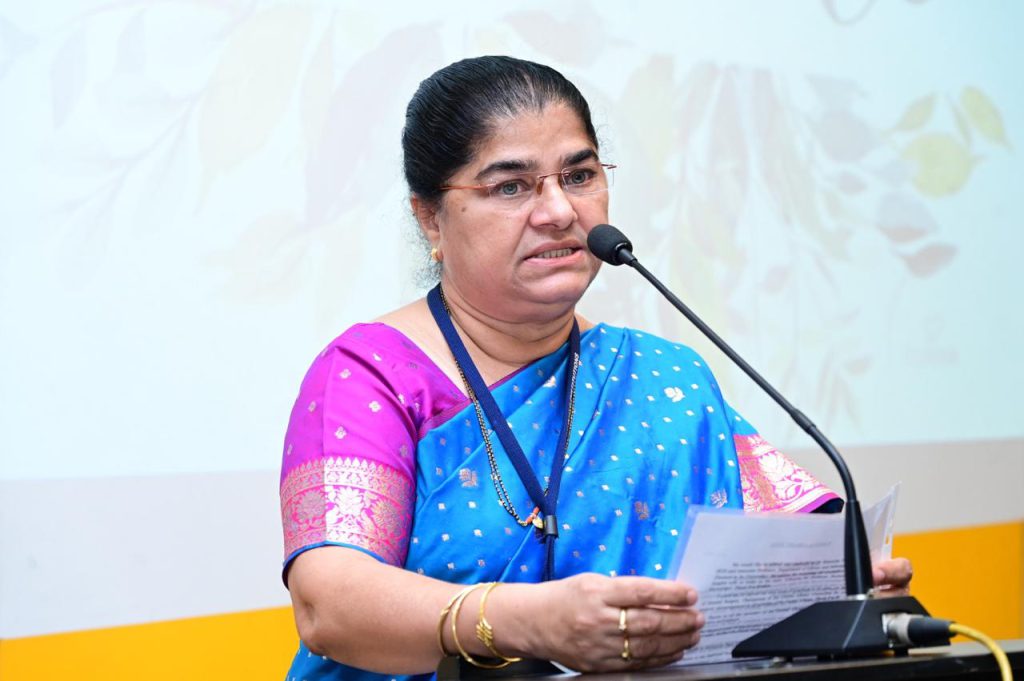
Her efforts create vital opportunities for students, faculty, and researchers alike, ensuring that knowledge is not merely stored, but actively connected to the people who need it most. Through her years of service, she has witnessed the changing face of libraries and has remained committed to one enduring belief: knowledge becomes meaningful when people are encouraged to seek it, understand it and use it.
Dr. Lobo holds qualifications including B.Com., M.L.I.S. and Ph.D. and serves as the Chief Librarian of the Father Muller Central Library. The library, which began functioning in 1985, has developed considerably over the years. In 2011, the institution established the Father Muller Knowledge Centre with modern facilities to meet the changing needs of its academic community. Behind this transformation has been the work of professionals like Dr. Lobo, whose responsibilities extend from managing resources to guiding students and faculty towards effective use of information.
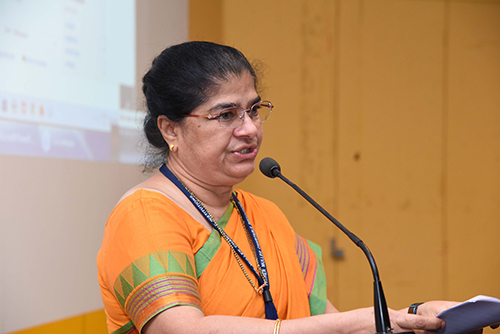
Her journey into librarianship was not entirely planned. Born and brought up in Puttur, DK District, she was studying at St. Philomena College when circumstances presented her with a possible career path. She applied for two courses, one of them being library science. At the time, she had thought that a qualification in library science might give her an opportunity to work at her former college. She attended an interview at Mangalore university and was selected on the same day. What began as a practical career decision eventually became a profession to which she devoted much of her working life. Looking back, she says that otherwise she might have become a teacher. Librarianship allowed her to become a teacher of a different kind. One of the aspects she values most about her profession is the opportunity to meet people from different disciplines.
A principal or specialist may interact mainly with people from particular academic areas, but the library brings everyone together. Students from different courses, faculty members and researchers all pass through its doors. Over the years, this has enabled Dr. Lobo to meet countless people and build relationships across the institution. Former students sometimes recognise her in public places even when she does not immediately recognise them, a reminder of how lasting the relationship between a librarian and a student can become. For Dr. Lobo, the library is much more than a building containing books. It is a place of peace, concentration and positive energy. She compares the atmosphere of a library to a form of meditation because people come there with the intention of acquiring knowledge. This environment, she believes, also influences the people who work there. A librarian should be calm, approachable, and welcoming. Students should never feel that they are entering a place where they will be reprimanded. When someone comes to the library to read, that effort should be respected because it reflects a desire to learn.
Keeping Reading Alive in an Age of Digital Information
Her concern about reading has become even stronger in an age dominated by mobile phones and digital information. Although students today have access to an enormous amount of information, Dr. Lobo believes that access alone does not guarantee knowledge. Information found online may not always be authenticated, reliable, or supported by evidence. Students therefore need guidance in identifying credible sources. This is one reason she believes librarians continue to have an important role. A librarian does not merely provide information but helps people understand what to read, where to find it, and how to evaluate it. She strongly believes that reading remains essential for personal and professional growth. In her view, it is difficult to identify successful people who have completely avoided reading and learning throughout their lives. Reading requires attention and reflection. Information that is casually consumed on a mobile phone can easily disappear from memory if it is not properly understood and processed. For her, reading is therefore not simply an academic activity. It is a process through which people develop their ability to think, question, and understand the world around them.
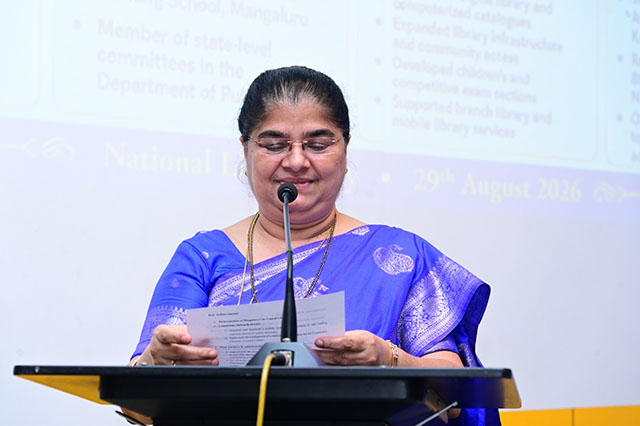
At the same time, Dr. Lobo does not believe that libraries should remain only silent spaces where individuals read in isolation. She sees the modern library as a vibrant centre for knowledge sharing. Reading should lead to thinking, and thinking should lead to action. Group discussions, storytelling and collaborative learning can help people take knowledge beyond the pages of a book. She suggests that even a single book can become the basis for collective learning if different people read different chapters and discuss what they have understood. In this way, the library becomes a place where knowledge is shared and transformed into ideas. This philosophy is reflected in her professional activities. Dr. Lobo has conducted orientation programmes, faculty development programmes and user awareness sessions to help students and faculty understand the resources available through the library. These programmes introduce users to library services, catalogues, electronic resources, remote access facilities and research support tools. Her work therefore extends beyond the traditional responsibility of maintaining books and journals. She helps users become independent and confident in navigating the academic information environment.
The transformation of the library into a digital information centre has been an important part of this work. Students and faculty can access subscribed electronic resources using usernames and passwords even when they are away from the campus. They can check the library catalogue before visiting, find out whether a particular book is available, and identify the location of physical resources. Digital resources can also be accessed from home or from other parts of the world. For Dr. Lobo, this has given the library a global dimension. The physical library remains important, but its services can now reach people far beyond its walls.
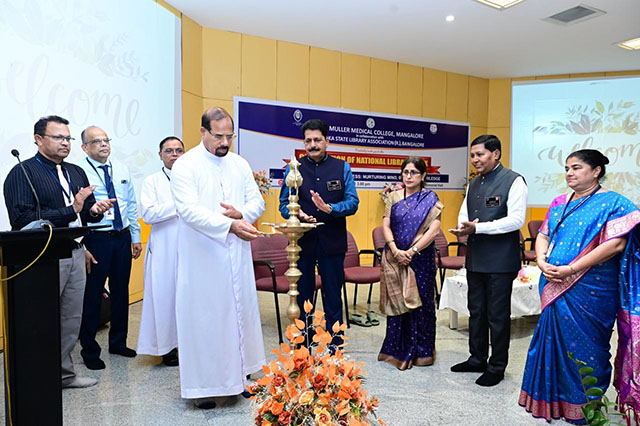
Her role has also involved supporting research and academic development. Students and faculty need reliable literature, scholarly journals, research databases and appropriate tools when they undertake academic work. Dr. Lobo has been involved in programmes that introduce users to electronic resources, online literature searches and research support services. She has also participated in initiatives related to scholarly publishing, plagiarism detection and the effective use of academic information. Through these activities, the librarian becomes an academic facilitator who helps researchers find and use information more effectively.
Her professional responsibilities have extended across several institutions and programmes within the Father Muller system. She has been involved in the centralised purchase of books and journals and has worked with medical, nursing and allied health institutions. She has also faced the demanding preparation required for inspections and accreditation processes. Various regulatory and academic bodies have inspected institutional facilities and documentation, requiring extensive preparation and coordination. These responsibilities reveal another side of librarianship that is rarely visible to students. Behind a functioning library is a substantial amount of planning, organisation, documentation, and professional responsibility.
Despite these administrative demands, Dr. Lobo remains focused on the people who use the library. She believes that a library should welcome those who come seeking knowledge. Instead of creating an atmosphere of fear, librarians should encourage students to feel comfortable in the library. This simple change in attitude can influence whether young people develop a lasting relationship with reading. For her, promoting reading is not about forcing students to open a book. It is about creating an environment in which they understand the value of doing so.
Dr. Lobo also sees the librarian as a custodian of knowledge. In an age of fake news and unverified digital content, this responsibility has become increasingly significant. A book entering a library collection is not normally accepted without some form of evaluation and selection. Librarians examine resources and consider their relevance and credibility. The same spirit of careful evaluation is necessary when people navigate digital information. Technology has made information easier to access, but it has also made it easier for inaccurate information to spread. Professional judgement therefore remains essential.
Her belief in the importance of qualified librarians is closely connected to this responsibility. She suggests that the quality of a library depends greatly on the knowledge and competence of the people managing it. Simply placing information in a room or making digital resources available does not automatically create a strong library. There must be professionals who understand how information is organised, evaluated, and made accessible. In her view, the librarian should be an essential part of the academic structure of an institution rather than someone whose role is considered secondary.
For Dr. Lobo, the library can be described as the brain of an institution. It connects different academic disciplines through information and provides a common space where students, teachers and researchers can seek knowledge. A vibrant campus, she believes, should have a vibrant library. The library should not exist separately from academic life. It should be connected to teaching, learning, research and the wider intellectual development of students. Its purpose is not merely to store knowledge but to ensure that knowledge reaches those who need it.
Editor’s Note: Some of our most meaningful professional lessons have also come through observing teachers and students. During an FDP, participants were asked to make a paper plane and, before flying it in the classroom, to write the name of a teacher who had influenced them on one of the wings of the paper plane. When the papers were picked back randomly and read aloud, it explained why those teachers had made an impact in their lives. Their reasons were often not simply related to classroom teaching. They remembered teachers who had supported them during difficult times, encouraged them, gave them confidence, and believed in their abilities. Education is not only about transferring information; it is also about supporting a generation, and a librarian carries a similar responsibility through the power of knowledge.
Building a Library That Connects People, Knowledge and Possibility
Over the years, Dr. Lobo has seen many students pass through the library and move on to successful professional lives. Some of them continue to remember the people who helped them during their student years. These relationships form an important but often invisible part of a librarian’s legacy. A library can measure books, journals, databases and programmes, but the deeper impact is found in the people who used those resources to learn and grow. Every student who discovers a useful book, finds an important research article or learns how to search for reliable information represents another small success.
Her professional journey has also been shaped by mentors and opportunities. She recalls an early instance in which the former Director, Rev. Fr. Baptist Menezes, told her that one day she would become recognised in the history of the institution. Today, she looks back on those words with gratitude. Her visibility in the academic and professional community has grown through years of effort, programmes, initiatives and service. She believes that recognition does not come simply from holding a position. It comes from the willingness to work, organise programmes, support people and contribute consistently.

After more than two decades of professional service, Dr. Janet Dotty Lobo represents a generation of librarians who have witnessed the transformation from traditional collections to digital information environments. Yet the fundamental purpose of her profession has remained unchanged. Whether a student is turning the pages of a printed book or accessing a scholarly database from home, the objective is the same: to help that person discover reliable knowledge. Her career demonstrates that the librarian of today is not merely a custodian of books but a guide, educator, information specialist, research supporter, and mentor.
Dr. Janet Dotty Lobo shares a simple message. Reading should never disappear. Libraries should remain welcoming spaces where people can learn, think, and exchange ideas. Technology should expand access to knowledge without replacing the need for critical thinking. Most importantly, knowledge should not end with reading. It should lead to thought, and thought should lead to action. Through her service at Father Muller Charitable Institutions, Dr. Janet Dotty Lobo has sought to keep that cycle alive. Her journey is a reminder that behind every meaningful library is a dedicated professional who believes that every book opened, every question answered, and every student guided can contribute to creating a more informed and intellectually empowered society.


Dr. Janet Lobo is a very hard working and dedicated woman. She is very efficient in her work and has a good knowledge of all the aspects of library work. She has guided thousands of students through a well maintained library in achieving their goals. Through her constant support and guidance many students have come up in bright colours and achieved a great future and they remember her forever.
Wishing her all the success in her future endeavours