
When Was the Last Time You Held Your Father’s Hand? Dr. Rohan Monis, Chief Administrative Medical Officer, Kanachur Institute of Medical Sciences
- Conversation on men, fatherhood, and the unspoken language of love
When was the last time you held your father’s hand? When was the last time your father hugged you? For many people, these questions may seem simple. Yet, for some, they bring an uncomfortable silence, revealing an aspect of family life that often goes unnoticed: the difficulty many men experience in expressing and receiving affection. In a thought-provoking talk, Dr. Rohan Monis explored the emotional lives of boys and men, drawing attention to the importance of parental affection, the influence of childhood experiences, and the patterns that can pass from one generation to the next.
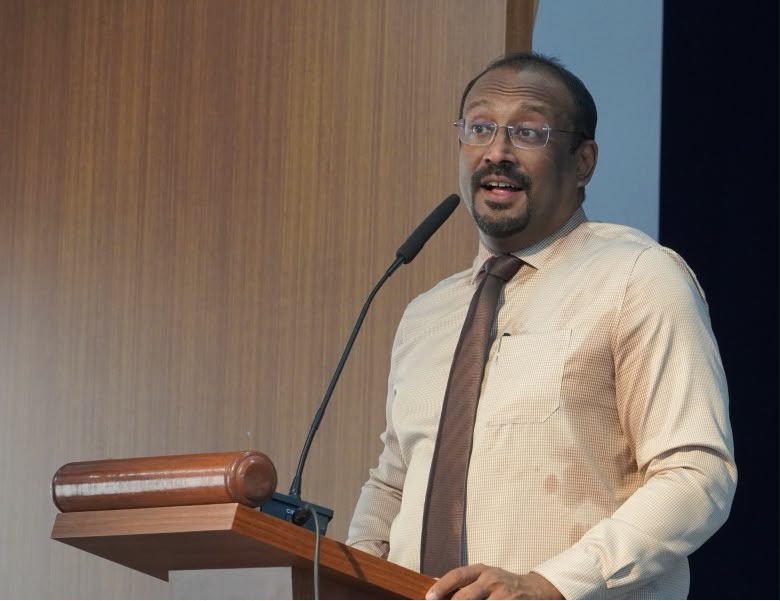
Through personal reflections and experiences from his interactions with students and parents, he invited his audience to reconsider what it means to raise emotionally healthy children. His message was straightforward: boys need affection, too, and the responsibility to nurture emotional connection begins at home.
The affection that was never received
Dr. Monis reflected on a question that had stayed with him: Do you remember the last time your father held your hand? When he asked himself this question, he realised that he could not remember. This personal reflection led him to consider a larger issue. What happens when a boy grows up without receiving regular expressions of affection from his father? And what happens when that boy becomes a father himself? A man who grew up without hugs, reassuring words, or physical expressions of tenderness may find it difficult to offer them to his own children. He may love them deeply, yet struggle to communicate that love in ways they can recognise and experience.

This can create a cycle of emotional distance. A father who never received affection may not know how to express it, and his children may grow up with similar experiences. Such patterns are not inevitable, but breaking them requires awareness and conscious effort. Understanding the past can help parents make different choices for the next generation.
A revealing conversation with schoolboys
Dr. Monis recalled being invited to address approximately 75 boys at St. Theresas’ School. The proposed discussion included pornography, life, etiquette, and responsible thinking. Rather than beginning with judgement or a lecture, he chose to speak about the human body. As a doctor, he explained, seeing naked bodies was part of his professional life. Bodies come in different shapes and sizes, and these differences should not automatically become reasons for embarrassment, ridicule, or judgement.
He then steered the conversation towards a more personal subject. He asked the boys how many lived with their parents. Almost all raised their hands. Then came a different question: how many remembered the last time their father had held their hand? According to Dr. Monis, only around three boys raised their hands. The contrast was striking. Most of the boys had fathers in their lives, yet very few could recall this simple gesture of affection. The silence that followed prompted an important question: how can fathers and sons share a home and a life, yet rarely express tenderness towards one another?
Dr. Monis encouraged the boys to return home and hold their fathers’ hands. It was a small suggestion, but it carried a powerful message. Sometimes, the first step towards changing a relationship is a gesture that takes only a few seconds.
Why boys gradually stop receiving affection
In early childhood, boys and girls often receive hugs, cuddles, kisses, and comforting touches from their parents. As they grow older, however, the treatment they receive can change. Boys may increasingly be expected to appear tough, independent, and emotionally self-sufficient. Expressions of affection may become less frequent, while vulnerability is sometimes mistaken for weakness.

Girls, in some families and cultures, may continue to receive open expressions of affection well into adulthood, while boys are expected to maintain emotional distance. These patterns differ across households, but they raise an important question: why should growing older mean receiving less affection? Boys need reassurance and tenderness just as much as girls do. They need to know that they are loved not only when they succeed or meet expectations, but also when they struggle, make mistakes, or feel uncertain.
Affection does not make boys weak. When expressed appropriately and with respect for personal boundaries, it can help children feel secure, valued, and connected to their families. The objective is not to force hugs or physical contact. It is to create an environment in which affection is natural, respectful, and welcomed.
The discomfort of receiving a hug
Dr. Monis also discussed how some men react when someone unexpectedly offers them a hug or another expression of physical affection. Instead of responding comfortably, they may feel awkward, restless, or unsure how to react. This discomfort does not automatically indicate childhood trauma. However, it may reflect unfamiliarity with receiving affection.
People learn emotional habits through experience. Someone who rarely experienced tenderness growing up may not immediately know how to respond when it is offered later in life. A simple hug can provide comfort and reassurance. Yet, for a person unaccustomed to physical affection, it may initially feel unfamiliar. This is why the everyday expression of love matters. Children who grow up experiencing warmth and emotional support may find it easier to offer comfort, communicate their feelings, and develop close relationships. Love should not be something people feel embarrassed to give or receive.
Understanding the father behind the father
It is easy to criticise a father who struggles to express affection. It takes greater understanding to consider what may have shaped him. Perhaps his own father was emotionally distant. Perhaps he grew up in a household where discipline and achievement were valued more openly than tenderness. Perhaps nobody taught him that love could be expressed through a hug, an encouraging word, or the simple act of holding his child’s hand.
Understanding these possibilities does not excuse harmful behaviour or remove parental responsibility. Instead, it helps explain how emotional patterns can continue across generations. A father does not have to repeat the childhood he experienced. He can consciously choose to offer his children what he may never have received himself. That choice need not involve dramatic changes. It can begin with asking about a child’s day, listening without immediately criticising, offering encouragement, and expressing affection in ways the child welcomes. Small gestures, repeated consistently, can strengthen family relationships.
Taking the message to parents
Dr. Monis extended his message to parents of children in Grades 1 to 5, encouraging them to reflect on how they express love in everyday life. Parents do not need to wait for birthdays, special occasions, or moments of achievement to show affection. A warm greeting before school, a hug after returning home, a reassuring touch, or a few minutes of undivided attention can communicate care.
Children also need to feel heard. Asking about their experiences is valuable, but listening patiently to their answers is equally important. A child who can speak openly without immediately fearing ridicule or rejection may find it easier to approach a parent when facing difficulties.
Schools have a role to play, too. Conversations about pornography, relationships, etiquette, and responsible behaviour should go beyond warnings and punishment. They should also address respect, personal boundaries, emotional maturity, and healthy relationships. Boys deserve to learn that strength and tenderness can coexist.
Raising a generation that knows how to love
Children benefit from consistent warmth, responsive parenting, and a secure sense of belonging. Although affection alone cannot guarantee that a child will become a responsible adult, supportive family relationships can contribute to emotional well-being and the development of healthy relationships.
The larger lesson is that emotional connection deserves as much attention as academic achievement, discipline, and material provision. A father may work tirelessly to provide education, opportunities, and financial security for his children. These contributions matter. But children also need their father’s emotional presence through listening, encouragement, reassurance, and affection.
Providing for a child and connecting emotionally with a child are not competing responsibilities. Both are essential aspects of parenting. Ultimately, Dr. Rohan Monis’s message invites fathers, mothers, educators, and society to reconsider the way boys are raised. Men, too, need spaces where tenderness is accepted and emotional expression is encouraged. The cycle of emotional distance can be broken very easily by making a beginning. Perhaps the change begins with a simple question: When was the last time you held your father’s hand? And if you are a father, perhaps the more important question is this: When was the last time you held your child’s hand simply to show that you love them? Sometimes, the smallest gesture can begin a much bigger change.


