
How Dr. Srinivas Ramaka and the Srinivasa Heart Foundation turned modest budgets, global collaborations, and nearly three decades of grassroots grit into a blueprint for Indian cardiovascular science
By Global TV Special Feature Desk
- Why the launch of CREATOR Centre demands national institutional backing.
When national research councils, science ministries, and grant committees in New Delhi evaluate where to invest India’s scientific capital, they often look first at sprawling metropolitan campuses, multi-crore laboratories, and legacy institutional banners. Yet some of the most consequential, real-world public health research in the country is being built far from the corridors of power—powered by conviction, clinical rigor, and relentless community execution.
In Hanumakonda, Warangal, Dr. Srinivas Ramaka (MD, DM)—Consultant Cardiologist at Srinivasa Heart Centre and Chairman and Managing Trustee of the Srinivasa Heart Foundation—has spent nearly three decades proving what high-impact, low-overhead scientific leadership looks like in practice.
On November 24, 2026, the Foundation formally launched CREATOR Centre (Centre for Cardiovascular Research, Education, Awareness, Training, Outreach and Resuscitation)—a unified institutional platform designed to take over two decades of registered trust work and nearly thirty years of clinical and community service onto a larger national and international stage.

If the heads of India’s premier research funding bodies—from the Department of Science and Technology (DST) and the Indian Council of Medical Research (ICMR) to the Anusandhan National Research Foundation (ANRF) and corporate CSR boards—are looking for models that deliver extraordinary scientific and social return on every rupee, Dr. Ramaka’s body of work is an open invitation to pick up the phone.
Pioneering Science Where It Matters Most
Long before “translational research” and “community-to-clinic pipelines” became policy buzzwords, Dr. Ramaka was building them on the ground in Telangana.
Registered as a charitable trust in 2005, the Srinivasa Heart Foundation has consistently bridged the divide between clinical cardiology, epidemiological evidence, and public action. Most notably, Dr. Ramaka served as Principal Investigator for the Warangal Area Out-of-Hospital Cardiac Arrest Registry (WACAR)—recognized as India’s first dedicated out-of-hospital cardiac arrest (OHCA) registry. Conducted alongside international collaborators including faculty from the University of Illinois at Chicago College of Medicine as well as regional medical institutions such as Kakatiya Medical College and Mahatma Gandhi Memorial Hospital, WACAR tackled one of Indian healthcare’s biggest blind spots: what actually happens to cardiac arrest victims before they ever reach a hospital door.
His work has earned recognition well beyond regional borders, including:
- World Health Organization (WHO-SEARO): Regional Director’s Special Appreciation Award (World No Tobacco Day, 2013) for tobacco prevention advocacy.
- American Association of Physicians of Indian Origin (AAPI): Global Health Summit Special Award (2014) for community work in cardiology.
- Global & National Academic Standing: Fellowships and leadership roles across major cardiology and resuscitation forums (including FACC, FAHA, FRCP, FCSI, and national emergency life-support training initiatives), alongside regular recognition by the World Heart Federation for World Heart Day and the National CPR Challenge Campaign.
The Paradox of “Low-Cost, High-Impact” Research in India
Behind these milestones lies a quiet frustration familiar to many independent physician-scientists across Tier-2 and Tier-3 India. Over the years, Dr. Ramaka has completed more than a dozen original research studies, mentored young medical students and researchers, and trained thousands of citizens, students, and professionals in Hands-Only CPR and AED use—including single-day community drives reaching over 1,500 participants. Yet when seeking formal institutional research center recognition from central science authorities, lean, self-funded, single-leader foundations often hit a structural wall.
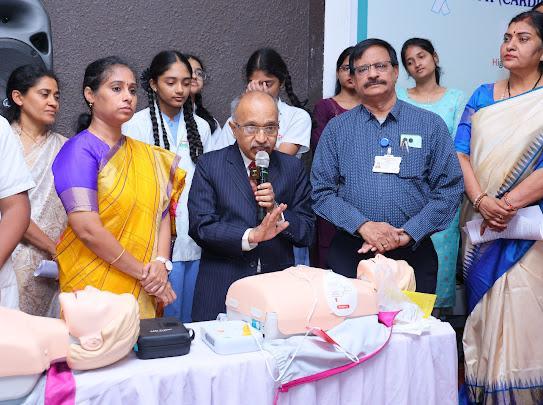
In a system accustomed to evaluating proposals inflated into tens of lakhs of rupees for administrative overhead and infrastructure, grassroots research that delivers rigorous data on a shoestring budget can paradoxically be overlooked as “too small” or “single-person driven”. Furthermore, without formal adjunct or visiting faculty status at degree-granting universities, seasoned clinical researchers who actively guide students are frequently barred from receiving official academic credit as research guides.
It is precisely the kind of systemic bottleneck that India’s new research-funding vision—meant to democratize science beyond elite metros and reward demonstrable output over bureaucratic bulk—was created to solve.
Enter CREATOR Centre: Six Pillars Built for Scale
Rather than waiting for validation, Dr. Ramaka and the Srinivasa Heart Foundation have structured their next chapter to be impossible to ignore. Conceived as the dedicated academic, research, education, and outreach division operating directly under the Srinivasa Heart Foundation umbrella, CREATOR Centre organizes nearly three decades of lived experience into six integrated pillars:
- Cardiovascular Research: Clinical studies, epidemiological registries, population health data, and AI/machine learning applications in cardiovascular medicine.
- Education: Academic learning programmes, fellowships, scientific publications, continuing medical education (CME), and research capacity building for young healthcare professionals.
- Awareness: Preventive cardiology and evidence-based public health education.
- Training: High-quality CPR, AED usage, and emergency cardiac response capacity building for both clinicians and lay rescuers.
- Outreach: Rural, urban, institutional, and population-level screening and cardiovascular health programmes.
- Resuscitation: Out-of-hospital cardiac arrest (OHCA) research, emergency response systems, and nationwide initiatives like the National CPR Challenge Campaign.
The virtual launch of CREATOR Centre on November 24, 2026, drew endorsement from respected voices in medicine and public health across India and abroad—including Dr. Vemuri S. Murthy (University of Illinois College of Medicine, Chicago), Dr. Ravikumar Chodavarapu, Dr. Naveen Chinanda, and Dayasagar—underscoring the deep peer respect Dr. Ramaka commands.
A Call to India’s Science and Research Leadership
India faces an escalating epidemic of premature cardiovascular disease and sudden cardiac arrest. Solving it cannot rely solely on tertiary hospitals in New Delhi, Mumbai, Bengaluru, or Hyderabad; it requires replicable, community-anchored models in cities like Warangal that combine real-world registries, grassroots CPR literacy, and mentorship for the next generation of clinician-scientists.
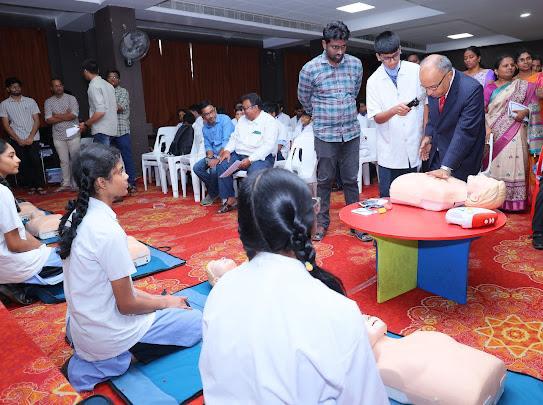
Dr. Srinivas Ramaka has already built the engine, proven the data, and mobilized the community. With CREATOR Centre now active under the Srinivasa Heart Foundation, the opportunity before India’s research funding directors, DST/ICMR leaders, and academic policymakers is clear: recognize, affiliate, and empower a proven centre of excellence that has been doing the nation’s work for nearly thirty years.
Global TV is proud to feature the Srinivasa Heart Foundation and CREATOR Centre as part of its ongoing campaign celebrating three decades of dedicated service in cardiovascular health and community empowerment.


