
Extensive experience in technical education | Decades of engagement with emerging technologies | Innovation and Higher Education
NV Paulose, Chairman, Clobal TV +91 98441 82044
Prof. Dr. Ciza Thomas represents a distinctive generation of academic leaders in Kerala, professionals whose careers have evolved from teaching and research into institutional leadership, public administration and the governance of some of the state’s most important universities. With a background in engineering, a Ph.D. from the Indian Institute of Science, extensive experience in technical education and decades of engagement with emerging technologies, Dr. Thomas has built a career at the intersection of engineering education, cybersecurity, artificial intelligence, digital transformation and higher education administration.
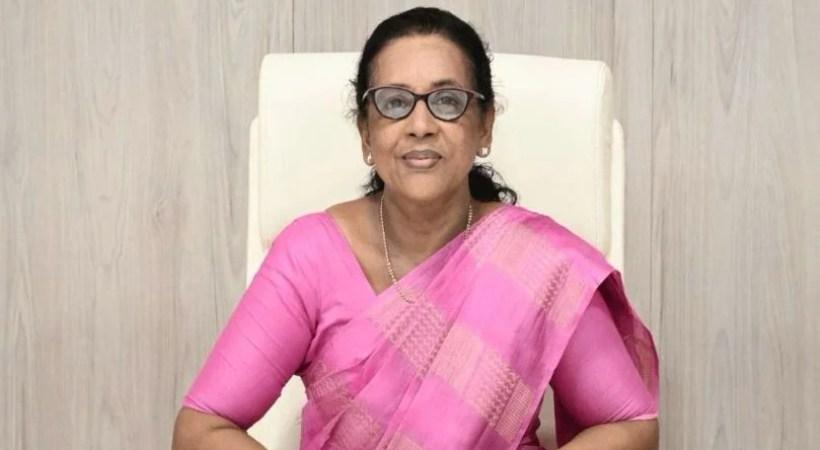
Today, her position as Vice Chancellor of Kerala University of Digital Sciences, Innovation and Technology, widely known as Digital University Kerala, places her at the centre of an institution closely connected to Kerala’s ambitions in digital technology, innovation, research and the knowledge economy. Her leadership responsibilities extend beyond a single institution. She is also serving as Vice Chancellor of APJ Abdul Kalam Technological University, giving her a particularly significant role in Kerala’s higher education landscape. In March 2026, she was additionally entrusted with the charge of Sree Sankaracharya University of Sanskrit. These responsibilities reflect not only the breadth of her experience but also the importance of academic leadership at a time when universities are being called upon to respond to rapid technological, social and economic change.
From Engineering Education to University Leadership
Dr. Thomas’s professional journey is rooted in engineering education. She completed her B.Tech. and M.Tech. at the College of Engineering, Trivandrum, before earning her Ph.D. from the Indian Institute of Science in Bengaluru. Her academic preparation was complemented by a long career in Kerala’s government engineering education system, where she progressed through positions including Assistant Professor, Associate Professor, Professor, Principal and senior administrative roles.
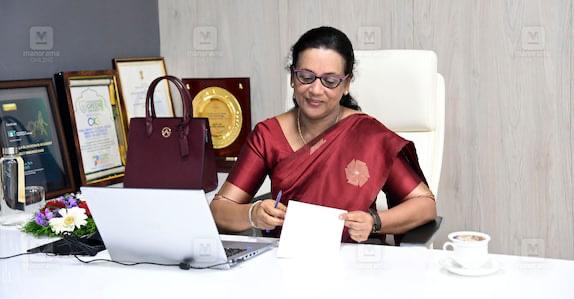
Her academic career included leadership responsibilities at the College of Engineering, Trivandrum, where she served as Professor and Head in Electronics and Communication Engineering and also in Computer Applications. She subsequently served as Principal of Government Engineering College, Barton Hill, and held senior responsibilities within the Directorate of Technical Education, Government of Kerala. This progression is important in understanding Dr. Thomas’s approach to university leadership. She has experienced higher education from several perspectives. She has been a teacher working directly with students, a researcher engaged with emerging areas of technology, a department head responsible for academic programmes, a principal responsible for an institution and a senior administrator involved in the wider technical education system. The Vice Chancellor’s office brings many of these responsibilities together. Her professional journey has therefore given her an unusually broad understanding of higher education, extending from the classroom and laboratory to curriculum development, institutional administration, public policy and university governance.
Leading Digital University Kerala
Her position at Digital University Kerala is particularly significant because of its close alignment with her academic and professional background. The university was established with a mandate centred on digital sciences, innovation and technology. Its ecosystem brings together academic research, industry engagement, entrepreneurship, government initiatives and emerging areas of technology. In such an environment, the role of the Vice Chancellor extends well beyond conventional university administration.
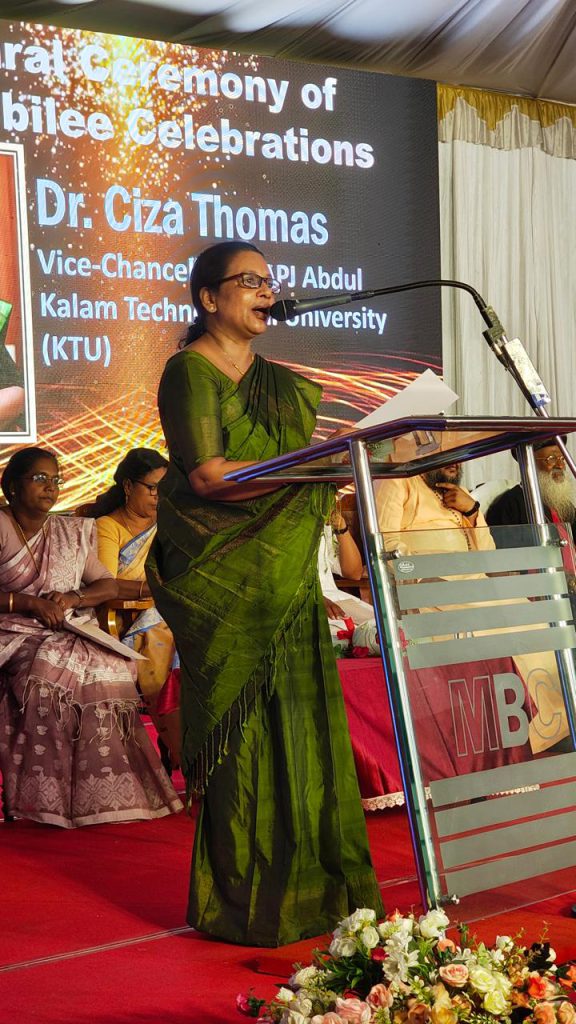
It involves creating an academic culture in which research, innovation, entrepreneurship and education can reinforce one another. For Dr. Thomas, this represents a natural continuation of her professional interests. Her research expertise includes areas such as cybersecurity, artificial intelligence, image processing, pattern recognition and data mining. These fields have become increasingly important to modern society and are now closely connected with national security, economic development, public administration, healthcare, financial systems and digital governance. A university dedicated to digital sciences therefore requires leadership capable of understanding both the technical foundations of these fields and the institutional structures necessary to develop them. Dr. Thomas’s career places her at precisely that intersection.
A Researcher Who Understands Technology
Before becoming a university administrator, Dr. Thomas established herself as a researcher and educator. Her academic work has extended across cybersecurity and related areas of computing and engineering. Her professional profile identifies research interests that include cybersecurity, artificial intelligence, image processing, pattern recognition and data mining. Her research career also reflects a broader understanding of the relationship between technology and education. Engineering education cannot remain static while technology changes rapidly around it.
The emergence of artificial intelligence, increasingly sophisticated cyber threats, data driven decision making and digital infrastructure has fundamentally altered the skills required of engineers and researchers. Universities therefore have to continually reconsider their curricula, research priorities and relationships with industry. This challenge is particularly relevant to a Vice Chancellor leading an institution dedicated to digital sciences. The university must not simply teach technologies that are already established. It must prepare students and researchers to work with technologies that are still emerging. That requires an institutional culture that encourages curiosity, experimentation, interdisciplinary collaboration and research.
From Academic Leadership to Public Administration
One of the most significant aspects of Dr. Thomas’s career is her transition from academic leadership to public administration. She served as Senior Joint Director and later as Director in charge of the Directorate of Technical Education, Government of Kerala. She also served as Principal of Government Engineering College, Barton Hill. These positions exposed her to higher education on a system-wide scale.
A university department can concentrate primarily on its students, faculty and research programmes. A principal must think about an entire institution. A senior technical education administrator must consider a much larger ecosystem involving institutions, faculty, students, infrastructure, examinations, technology, policy and government priorities. The Vice Chancellor’s position brings these dimensions together.
Dr. Thomas therefore entered university leadership with experience extending well beyond conventional academic credentials. Her career has given her an understanding of both academic institutions and the administrative structures through which higher education is planned and delivered.
Her Leadership at APJ Abdul Kalam Technological University
Her association with APJ Abdul Kalam Technological University has been another important chapter of her career. Dr. Thomas first came to national attention in connection with KTU when she was appointed Vice Chancellor in charge in 2022. The Kerala High Court subsequently upheld her qualification for the role, noting her seniority and credentials under the applicable regulations. Her relationship with KTU was subsequently shaped by a prolonged institutional and legal debate surrounding Vice Chancellor appointments in Kerala.
Beyond the immediate controversy, this period formed part of a larger discussion concerning university autonomy, statutory authority, the role of the Chancellor and the relationship between governments and universities. In December 2025, after a prolonged impasse, Dr. Thomas was formally appointed Vice Chancellor of KTU. Her continued leadership of KTU places her at the centre of one of Kerala’s largest engineering education ecosystems. The university has an important responsibility in shaping the academic and professional preparation of thousands of engineering students. Its decisions concerning curriculum, academic standards, research, examinations and institutional development have consequences across the state. Her experience in technical education and engineering administration therefore becomes particularly relevant in this role.
Leadership During a Period of Change
Universities today operate in an environment of rapid and sometimes unpredictable change. They must maintain academic standards while responding to technological transformation. They must expand research while demonstrating relevance to society and industry. They must prepare graduates for professional environments that may themselves be transformed by artificial intelligence and automation. At the same time, public universities must function within complex regulatory, financial and administrative frameworks. The Vice Chancellor consequently becomes much more than the ceremonial head of an institution. The position requires a balance between academic freedom, institutional accountability, research excellence, student interests, government policy, industry expectations and long term strategic planning.
Dr. Thomas’s career has provided experience across many of these dimensions. Her background allows her to approach university administration not only from the perspective of governance, but also from an understanding of what happens inside academic departments, laboratories and classrooms.
Responsibility Beyond a Single University
Dr. Thomas’s additional responsibilities at Sree Sankaracharya University of Sanskrit in 2026 added another dimension to her leadership profile. The university is fundamentally different from a technology focused institution. Its academic identity is rooted in Sanskrit, humanities, culture and traditional knowledge. Yet Dr. Thomas was entrusted with additional charge of the university while serving as Vice Chancellor of KTU. This provides an interesting illustration of the broader nature of university administration. Effective leadership of a university is not limited to subject expertise. It also requires the ability to understand institutions, people, systems, regulations and organisational change.
The responsibilities associated with university leadership therefore demand qualities that extend beyond a particular academic discipline. They require judgement, administrative experience, accountability and the ability to work with diverse academic communities.
A Career Built Around Technology and Education
The common thread running through Dr. Thomas’s career is the relationship between technology and education. She began as an engineer and academic at a time when electronics and computing were transforming education and industry. She moved into research as these technologies became increasingly sophisticated. She then entered institutional and public administration as technology became more deeply embedded in the education system. Today, she leads universities dealing directly with the next stage of that transformation. Her responsibilities encompass questions about artificial intelligence, cybersecurity, digital education, research, innovation, entrepreneurship and the future of engineering.
Her career can therefore be understood as a progression through several interconnected roles. She understands technology as a researcher. She understands education as a teacher. She understands institutions as an administrator. And she understands university governance through experience at the highest level.
Recognition and Professional Contributions
Dr. Thomas’s professional achievements have also received recognition through several awards and honours. Her curriculum vitae records an appreciation award from Kerala’s Higher Education Department in 2010 for implementing an institutional repository and e learning system across government engineering colleges and polytechnics in the state. She also received Kerala’s E learning IT Award in 2014, Best Paper Awards at four international conferences and the Catholicate Best Scientist Award in 2023.
These recognitions reflect different aspects of her career, including technology implementation, research, scientific contribution and educational innovation. They also illustrate a recurring feature of her professional work: an interest in using technology to improve education.
The Opportunity Before the Vice Chancellor
The most important question today is not simply what positions Dr. Ciza Thomas has held. It is what she can accomplish through them. Kerala has a strong tradition of public education and high levels of educational achievement. At the same time, its universities face many of the challenges confronting higher education around the world. Artificial intelligence is changing professional education. Cybersecurity threats are expanding. Industry requires graduates with new combinations of technical and interdisciplinary skills. Research institutions are increasingly expected to translate knowledge into innovation. Universities are also being asked to contribute more directly to economic and social development. For Digital University Kerala, these challenges create significant opportunities.
The university can become a platform connecting research, entrepreneurship, artificial intelligence, cybersecurity, advanced computing, digital governance and industry. For KTU, the challenge is broader still. It serves a large engineering education ecosystem and must continually adapt its academic programmes and institutional structures to changing technological and professional requirements. The leadership of both institutions therefore carries implications well beyond their individual campuses.
Building Institutions for the Future
The role of a Vice Chancellor is ultimately about institution building. It involves creating systems that can survive beyond individual personalities and administrations. It means strengthening academic standards, supporting faculty, encouraging research, expanding opportunities for students and creating partnerships that can bring new knowledge and resources into the university. It also means making difficult decisions when institutional interests require them. For a technology focused university, institution building also means anticipating what the next decade will demand. The technologies that dominate higher education today may not be the technologies that define the next generation.
Universities must therefore develop the capacity to learn continuously. That requires investment in people as much as infrastructure. It requires faculty development, interdisciplinary research, international collaboration and meaningful engagement with industry. It requires students to become not merely users of technology but creators, researchers and responsible innovators. This is where Dr. Thomas’s combination of technical expertise and administrative experience becomes particularly relevant.
An Academic Leader for a Digital Generation
Prof. Dr. Ciza Thomas’s professional journey reflects the evolution of engineering education and the expanding role of technology in society. She began her career as an engineer and academic. She developed expertise as a researcher. She assumed institutional leadership as a principal. She moved into public administration through the Directorate of Technical Education. She subsequently took on responsibilities at the level of university governance.
Today, she stands at the helm of institutions dealing directly with the future of technology and higher education. Her position as Vice Chancellor of Digital University Kerala places her at an important point in Kerala’s digital transformation. Her leadership of APJ Abdul Kalam Technological University places her within one of the state’s most significant engineering education networks. Her additional responsibility at Sree Sankaracharya University of Sanskrit demonstrates the breadth of institutional trust placed in her administrative experience. Together, these roles represent a remarkable convergence of technology, education, research and public service.
The significance of her present position therefore extends beyond the title of Vice Chancellor. It places her in a position where decisions concerning curriculum, research, innovation, faculty development, student opportunities and institutional partnerships can influence the next generation of professionals and researchers. Her legacy will ultimately be measured not by the number of positions she has occupied, but by the institutions she strengthens, the researchers she enables, the students she inspires and the academic culture she helps create. At a time when Kerala’s higher education system is being called upon to become more innovative, digitally capable, research oriented and globally connected, Prof. Dr. Ciza Thomas brings to the task a career shaped by engineering, scholarship, administration and public service.
Her journey from the engineering classroom to the Vice Chancellor’s office is, in many ways, a reflection of the journey of technology itself. And the most consequential chapter of that journey may well be the one she is writing now.


