Rotary Club of Organ Donation International Inspires Action Through Awareness, Education and Service
NV Paulose, Chairman, Global TV, +91 98441 82044
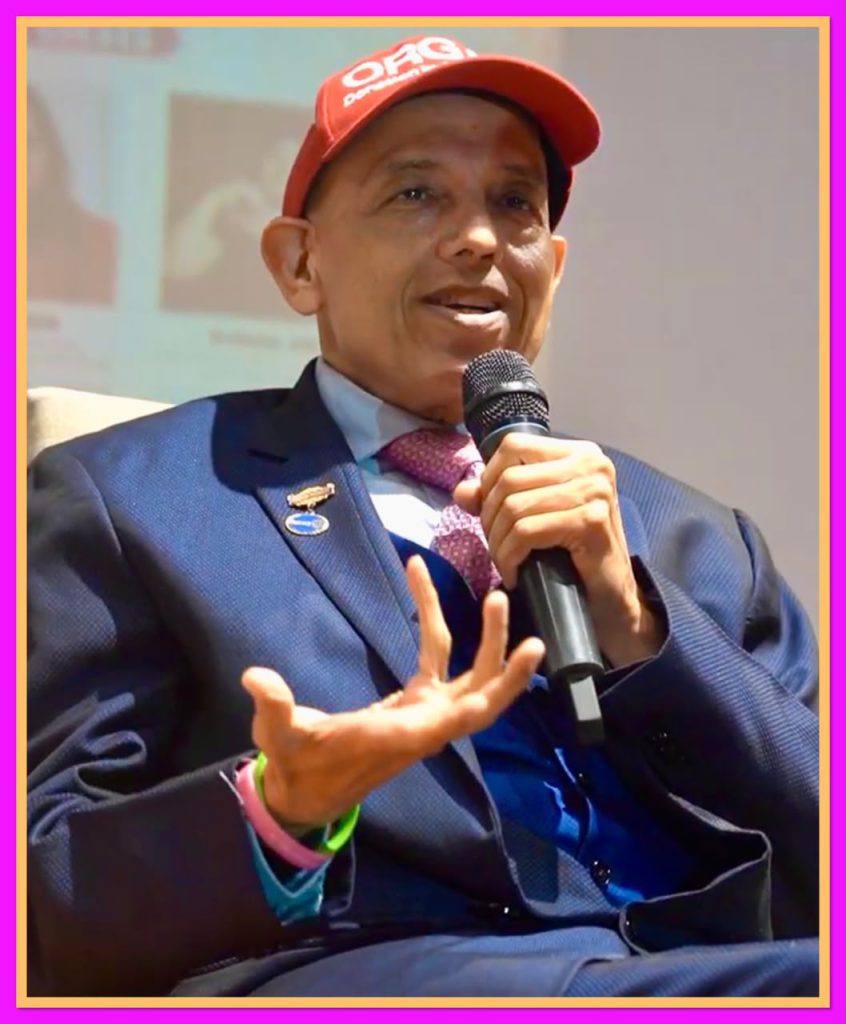
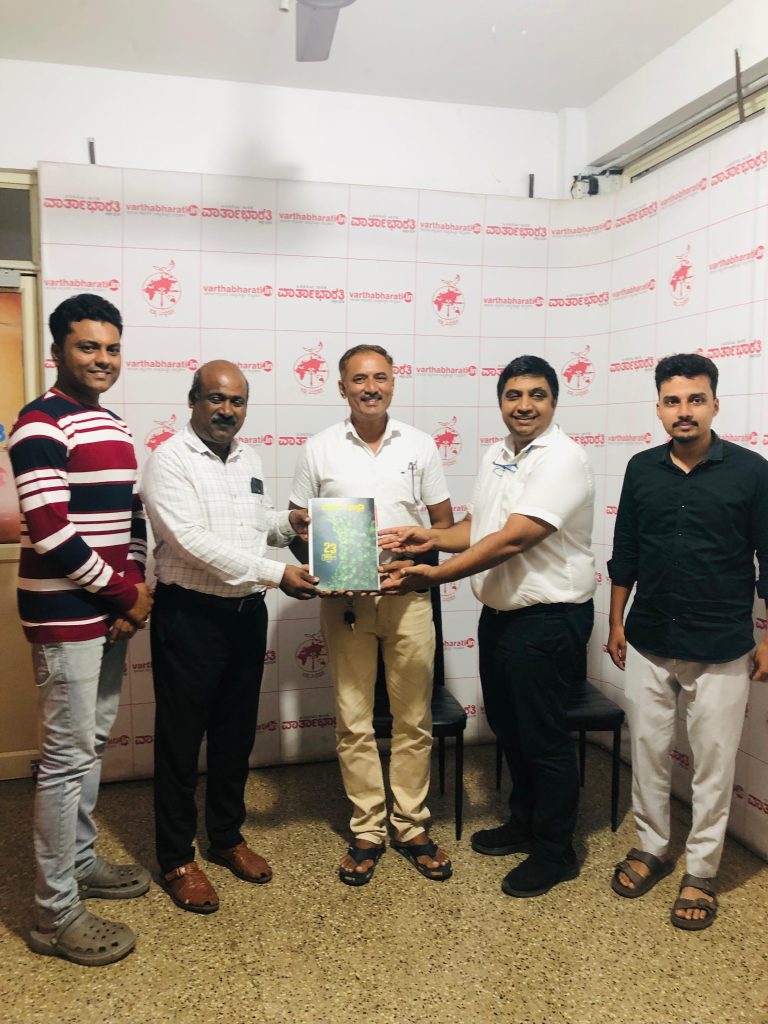
The latest weekly bulletin of the Rotary Club of Organ Donation International (RCODI), released on 10 July 2026, highlights the club’s unwavering commitment to promoting organ donation awareness while celebrating community service, leadership, and healthy living. Packed with inspiring stories, educational content, and meaningful initiatives, the bulletin reflects the club’s mission of transforming lives through awareness and compassion.
Leading this edition is a message from Chief Managing Editor and Founder & Charter President, Rtn Lal Goel, who shares his experience of addressing hundreds of home-based women entrepreneurs and social workers at the “पंख को उड़ने दो 4.0” programme in Mumbai. Despite heavy monsoon rains, the event witnessed enthusiastic participation and served as a platform to recognise the remarkable contributions of women in building stronger communities. During his keynote address, Goel stressed the importance of gender equality, urging families to provide equal opportunities to boys and girls while drawing attention to the disparity between women who donate organs and those who receive transplants. His message reinforced the belief that social transformation begins at home.
The bulletin also carries an informative article by Dr Kamal Jain, Tissue Donation Chair of RCODI, explaining the process of brain death certification in India. The article simplifies the legal and medical aspects of brain death under the Transplantation of Human Organs and Tissues Act (THOTA), 1994, helping readers understand how certified brain death enables deceased organ donation. By clarifying common misconceptions, the piece encourages informed conversations about one of the most important aspects of organ donation.
Another noteworthy feature highlights the awareness efforts undertaken by Rotarian Uma Jhawar in Indore. During a condolence meeting held in memory of the late Shri Prakash Chand Naroliya, she sensitised nearly 200 attendees about the importance of eye donation. The initiative demonstrated how even moments of grief can become opportunities to inspire hope and save lives through awareness.
The bulletin also celebrates the continued expansion of the Organ Donation Warriors movement, a nationwide initiative aimed at creating a network of trained volunteers to promote organ, tissue, and body donation. Rotarian Lalit Sharma of Jaipur has been appointed as the Public Relations Officer of the movement. His appointment is expected to strengthen media outreach, public engagement, and awareness campaigns across India, further advancing the mission of making organ donation a household conversation.
Adding an emotional dimension to the publication is a heartfelt poem titled Leave a Legacy That Breathes, written by Regal President Rtn Hemalatha Bhandari. The poem beautifully captures the enduring impact of organ and tissue donation, reminding readers that even after death, one can continue to give the priceless gift of life to others.
Promoting healthy living remains another important aspect of the bulletin. In the “Healthy Food – Healthy Organs” section, Regal Secretary Rtn Ruby Agarwal shares an easy-to-prepare healthy protein bar recipe made with sattu, dates, nuts, cocoa, and peanut butter. Rich in protein and fibre, the recipe encourages readers to adopt nutritious eating habits that support long-term organ health.
The final pages introduce club member Rtn Manikandan Venkateswaran, offering readers a glimpse into his personal interests, family life, and motivation for joining the Rotary Club of Organ Donation International. His simple yet powerful reason—to “live through others even after death”—perfectly embodies the spirit of organ donation.
The bulletin successfully combines education, inspiration, and community engagement. It not only informs readers about the latest initiatives of the Rotary Club of Organ Donation International but also reinforces the powerful message that one organ donor can save multiple lives. Through awareness, compassion, and collective action, the club continues to inspire individuals to leave behind a legacy that truly breathes.
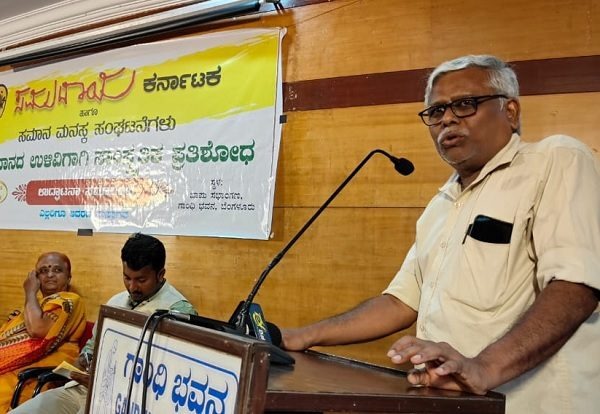
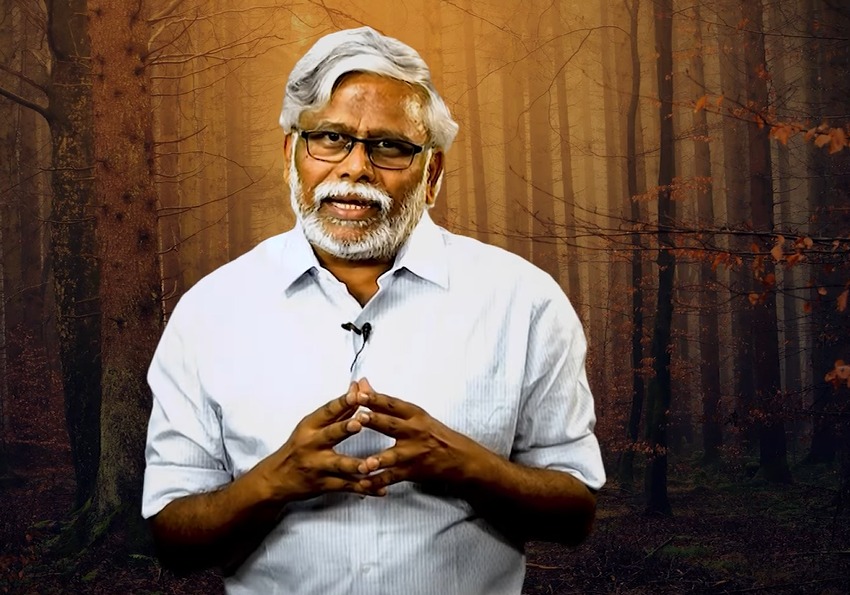
Shivasundar: A Voice of Conviction in Public Life | The Need for Independent Thinkers
NV Paulose, Chairman, Global TV +91 98441 82044
Meeting a public intellectual often reveals qualities that cannot be understood through books or public speeches alone. A conversation with Shivasundar offers precisely such an experience. Beyond his public identity is a thoughtful individual whose openness, humility, and clarity leave a lasting impression.
Our discussion moved across history, philosophy, economics, democracy, agriculture, caste, and community life. What made the conversation memorable was not simply the range of subjects but the ease with which each idea connected naturally to the next.
The discussion never felt like a lecture. It felt like an invitation to think together.
The Quiet Strength of Integrity
Public life frequently rewards visibility, speed, and certainty. Yet the qualities that leave a lasting influence are often quieter. Integrity, patience, humility, openness, and intellectual honesty cannot be measured by popularity. They reveal themselves through consistent conduct over time.
These qualities became evident throughout the conversation. They explain why many people continue to value his writings and public discussions. The most enduring lesson from meeting Shivasundar is that ideas acquire their greatest strength when they are supported by character. Knowledge commands respect, but knowledge combined with humility inspires trust.
An Open Mind
One of the most striking qualities of Shivasundar is his openness. He does not approach conversations with the intention of defeating opposing views. Instead, he listens carefully, responds patiently, and encourages questions.
This openness reflects confidence rather than uncertainty. People who are secure in their ideas do not fear discussion. They recognise that meaningful dialogue strengthens understanding.
Throughout the conversation, there was no attempt to impose conclusions. Instead, every argument was developed through explanation and reasoning, allowing listeners to reach their own understanding.
Such openness is becoming increasingly rare in public life where debates often become contests rather than conversations.
Clarity of Thought
Knowledge becomes valuable only when it can be communicated clearly. This is one of Shivasundar’s greatest strengths.
Even while discussing subjects that span centuries of history and multiple disciplines, his reasoning remains organised and coherent. Each argument develops naturally from the previous one.
A discussion on the freedom movement becomes a discussion about democracy. Democracy leads to questions about caste. Questions of caste naturally connect with Ambedkar’s philosophy of dignity and autonomy. From there the discussion moves towards capitalism, local economies, agriculture, and community organisation. Nothing appears disconnected because every subject is treated as part of a larger social reality.
Freedom Begins with Responsibility
One idea returned repeatedly throughout the conversation. Real freedom begins with individual responsibility. Political freedom alone is not sufficient. Individuals must become capable of thinking independently, making ethical choices, and accepting responsibility for those choices. Dependence upon external authority, whether political, religious, or economic, weakens personal autonomy.
His reflections on Ambedkar’s philosophy highlighted this point. Human dignity comes from recognising one’s own worth rather than seeking validation from institutions that have historically denied equality. This emphasis on personal responsibility gives his understanding of democracy a deeply human dimension.
Building Instead of Merely Opposing
Another important insight emerged while discussing social movements. Resistance has its place, but meaningful change also requires creation. Instead of focusing only on opposing existing systems, communities can build alternatives through cooperation, local production, and collective action.
His observations on our discussions about agriculture illustrated this perspective. Local cultivation strengthens local economies, reduces unnecessary dependence upon distant markets, and encourages community participation. Even small initiatives have the potential to inspire wider social change when undertaken collectively. This practical optimism distinguishes his thinking from approaches that remain confined to criticism.
Simplicity as a Way of Life
Perhaps the most remarkable aspect of meeting Shivasundar is the simplicity with which he lives and communicates. There is no display of intellectual superiority despite decades of scholarship and public engagement. Ideas are expressed with calmness and without unnecessary ornamentation.
His lifestyle appears consistent with his philosophy. Simplicity is not presented as an aesthetic choice but as an ethical one. Living simply creates the freedom to think independently without becoming captive to status, consumption, or public approval. This consistency between thought and conduct strengthens the credibility of his public voice.
Learning Through Conversation
The conversation demonstrated that genuine education often happens outside classrooms.
Historical events became opportunities to understand present society. Economic questions became discussions about ethics. Political analysis became reflections on everyday life.
Rather than providing ready made answers, Shivasundar encouraged a habit of questioning. His method reminds us that education is not the accumulation of information but the cultivation of judgment.
This approach leaves a deeper impact because it transforms the way people think rather than merely increasing what they know.
Shivasundar: A Voice of Conviction in Public Life | The Need for Independent Thinkers
Every generation produces individuals who influence society not through political office or institutional authority but through the power of ideas. Such people become important because they encourage citizens to think beyond the obvious, question accepted narratives, and examine public life with honesty and reason. In contemporary Karnataka, Shivasundar has emerged as one such voice.
Known for his widely read Samakaleena column and his public lectures and discussions, Shivasundar has consistently participated in conversations that matter. His work reflects an enduring commitment to democratic values, constitutional principles, and social justice. Rather than offering quick opinions that satisfy popular sentiment, he approaches public issues with patience, historical awareness, and intellectual discipline.
His contribution lies not simply in expressing opinions but in creating a space where people are encouraged to think critically. At a time when public discourse often rewards certainty more than inquiry, this approach has become increasingly valuable.
Looking Beyond Immediate Events
One of the defining features of Shivasundar’s work is his ability to place current events within a larger historical and social context. Political developments rarely exist in isolation. They are shaped by history, institutions, economic conditions, and social relationships. His analyses consistently remind audiences that understanding the present requires an understanding of the past.
Whether discussing elections, constitutional institutions, or public policy, he avoids reducing complex issues to slogans. Instead, he invites readers to explore the deeper forces that influence political decisions and social change.
This method encourages citizens to become informed participants in democracy rather than passive consumers of political messaging.
Commitment to Constitutional Values
Throughout his public engagement, constitutional values remain central to his thinking. Democracy, equality, liberty, and justice are not treated merely as words contained in legal documents. They are presented as living principles that require constant protection through public participation and informed debate.
His discussions often emphasise that democracy cannot survive on elections alone. Institutions remain meaningful only when citizens continue to question authority, defend civil liberties, and hold governments accountable irrespective of political affiliation.
Such consistency is particularly significant in periods of political polarisation. Principles acquire value precisely when they are upheld even under pressure.
Courage to Remain Independent
Independent commentary rarely enjoys universal approval. Those who refuse to align themselves completely with any political camp often face criticism from multiple directions. Yet intellectual independence remains one of the foundations of democratic society.
Shivasundar has demonstrated a willingness to maintain his convictions despite disagreement and controversy. This does not mean that every reader must agree with every conclusion he reaches. Rather, it reflects the importance of preserving spaces where ideas can be examined freely without fear of conformity. A healthy democracy requires voices that are prepared to ask uncomfortable questions and challenge accepted assumptions.
Making Complex Ideas Accessible
Another important aspect of his work is accessibility. Constitutional law, political philosophy, economic policy, and social history are subjects that often remain confined to universities and specialist discussions. Shivasundar succeeds in bringing these ideas into everyday public conversation.
His writing and public discussions avoid unnecessary complexity. Difficult concepts are explained through familiar examples drawn from ordinary life. This enables people from different educational backgrounds to participate in discussions that shape public life.
Accessibility should never be mistaken for simplicity of thought. On the contrary, it reflects a deep understanding of the subject. Only those who understand complexity thoroughly can explain it clearly.
A Lasting Contribution
The value of a public intellectual should not be measured solely by agreement or disagreement. Meaningful public commentary encourages reflection, strengthens democratic culture, and expands civic understanding.
By consistently inviting people to examine issues through history, constitutional values, and reason, Shivasundar has contributed to a more informed public discourse. His work reminds us that democracy depends not only upon institutions but also upon citizens who are willing to think independently and engage responsibly.
In an age of instant opinions and rapid reactions, thoughtful analysis remains indispensable. Through his writings and public engagement, Shivasundar continues to demonstrate that ideas grounded in integrity, consistency, and careful reasoning retain their power long after political slogans have faded.
ROTARIAN LAL GOEL CALLS FOR GENDER EQUALITY AND GREATER ORGAN DONATION AWARENESS WHILE ADDRESSING HOME-BASED WOMEN ENTREPRENEURS & WOMEN SOCIAL WORKERS IN MUMBAI
NV Paulose, Chairman, Global TV +91 98441 82044
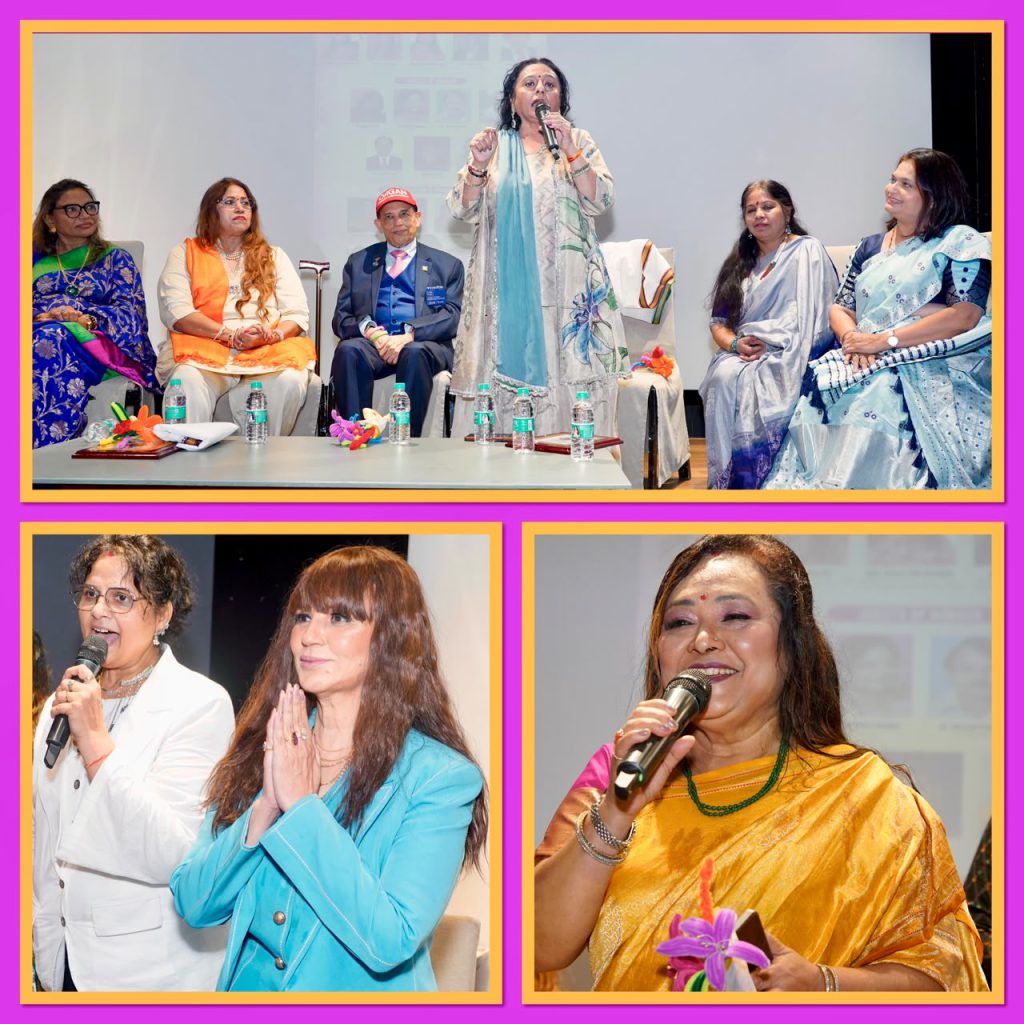
Mumbai, 4 July: Rotarian Lal Goel, Founder & Charter President of the Rotary Club of Organ Donation International (RCODI) and Chairman of Organ Donation India Foundation & GYAN, addressed and inspired hundreds of home-based women entrepreneurs and women social workers as the Chief Guest at “पंखों को उड़ने दो 4.0”, held at Lodha Park Clubhouse, Mumbai.
In his keynote address, Rotarian Lal Goel said that women today have demonstrated their capabilities across every field and are playing a pivotal role in shaping a stronger and more inclusive society. He observed that although today’s generation has access to an unprecedented amount of information, true progress depends on transforming information into knowledge, wisdom, and responsible action.
Speaking on organ donation, he highlighted the disparity between the number of women who become living organ donors and the comparatively smaller number of women who receive organ transplants. He said this imbalance deserves serious attention from society and stressed that the journey towards equality begins within every family. He urged parents to raise their children with equal respect and opportunities for both boys and girls, adding that lasting social transformation starts at home.
The programme celebrated the courage, resilience, and achievements of home-based women entrepreneurs and women social workers whose dedication continues to strengthen families, communities, and the nation.
The event was organised by Ms Rashmi Mishra, Founder, CEO & Director of IIW – Inspiring Indian Women (UK & India), with the generous support of Smt Manju Mangalprabhat Lodha, renowned philanthropist.
The programme was graced by several eminent personalities, including Padma Shri Kalpana Saroj, Ms Preety G. Sharma, Smt Deepa Udit Narayan, Ms Neeta Lulla, Rotarian Ruby Agarwal, Mr Vibhuti Jain, and many other distinguished guests.
Rotarian Lal Goel congratulated Ms Rashmi Mishra and her team for organising such a meaningful initiative despite the heavy monsoon rains in Mumbai. He described the programme as an inspiring platform that recognises and celebrates the invaluable contribution of women entrepreneurs and women social workers, while encouraging greater social responsibility and community participation.
When We Looked Everywhere Except Where the Treasure Lay
NV Paulose, Chairman, Global TV +91 98441 82044
There is an old story that has stayed with me for years. At first glance it appears humorous. On closer reflection, it explains one of the greatest weaknesses of human civilization.
A driving instructor was teaching a nervous young learner. The road ahead was uneven, filled with ditches. With understandable concern, the instructor repeatedly warned him, “Be careful. Avoid the ditches.”
The learner became completely preoccupied with the ditches. Every decision he made was driven by the fear of entering one. As he attempted to avoid the first ditch, the car slipped into another. While trying to recover from that, it entered a third. One mistake led to another until he had almost visited every ditch on the road.
Finally, the instructor asked him to stop.
“Reverse the car,” he said.
The learner slowly retraced his path until he reached the point where the journey had begun.
The instructor smiled and said, “You missed one ditch. Go back and cover that one as well.”
The story makes us smile because it captures something fundamental about the way human beings think. When our attention becomes completely occupied by one set of possibilities, we often fail to notice the one possibility that truly matters. We become experts at reacting while forgetting to discover. We improve what already exists but overlook what could fundamentally change the future.
History, in many ways, has behaved exactly like that learner.
Civilizations Also Miss Their Greatest Opportunities
Every civilization likes to believe that progress is the inevitable result of intelligence. History tells a different story. Progress often depends less upon intelligence than upon recognition. Many transformative ideas appear long before society develops the wisdom to understand them. Some are dismissed as impractical. Others are delayed because institutions remain committed to familiar ways of thinking. Occasionally, an idea is admired without its deeper significance ever being recognised.
The real tragedy is not that great ideas are rejected. The greater tragedy is that societies frequently fail to recognise the living source from which those ideas emerge. They admire the visible achievement but overlook the creative process that produced it. They celebrate the invention while neglecting the inventor. They preserve the product while allowing the capacity for further innovation to disappear.
This pattern has repeated itself throughout history, not because people lack intelligence, but because they often mistake the obvious for the important.
We Improved Television Without Redefining It
Television offers a remarkable example of this pattern.
For almost a century, humanity accepted a simple definition of television. It was understood as a broadcasting medium. A few broadcasters created programmes. Millions of people watched them. Information travelled in one direction from the centre to the audience. The audience remained largely passive.
Within this understanding, remarkable progress was made. Better cameras were developed. Colour replaced black and white. Satellite broadcasting expanded global reach. Digital transmission improved quality. High definition became ultra high definition. Smart televisions entered our homes. Every decade introduced another technological improvement.
Each of these developments represented genuine achievement. Yet they all shared one silent assumption. Television was expected to become a better broadcasting system.
Very few people paused to ask a more fundamental question.
What if television had been misunderstood from the very beginning?
What if its greatest potential was never broadcasting at all?
The Day Millions of Global Communication Channels are Added to Television Broadcasting
The difference between broadcasting and communication may appear small, yet it changes the entire philosophy of the medium.
Broadcasting distributes information from one source to many receivers. Communication allows every participant to become both a sender and a receiver. Broadcasting creates audiences. Communication creates communities. Broadcasting encourages passive consumption. Communication encourages active participation.
The future of television does not lie in broadcasting more content alone. It lies in creating richer human interaction.
When television becomes an interactive communication platform, its purpose changes completely. It ceases to be a machine that entertains people for a few hours every day. Instead, it becomes an instrument through which neighbourhoods exchange knowledge, teachers educate students, doctors guide families, entrepreneurs reach local markets, artists share their creativity, and ordinary citizens participate in shaping the life of their own communities.
Television then becomes not merely a screen, but a public square.
That possibility has existed for decades.
We simply failed to recognise it.
History Had Already Whispered the Possibility
More than twenty years ago, when broadband itself was still uncommon and Internet streaming was only beginning to emerge, several respected newspapers quietly documented experiments that challenged conventional thinking.
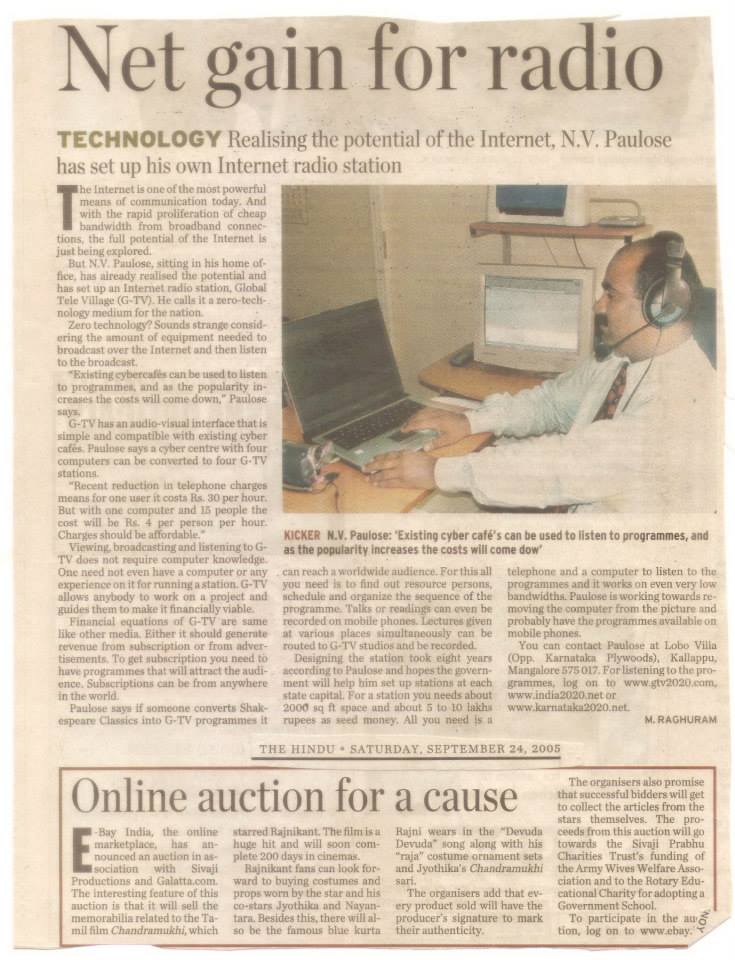
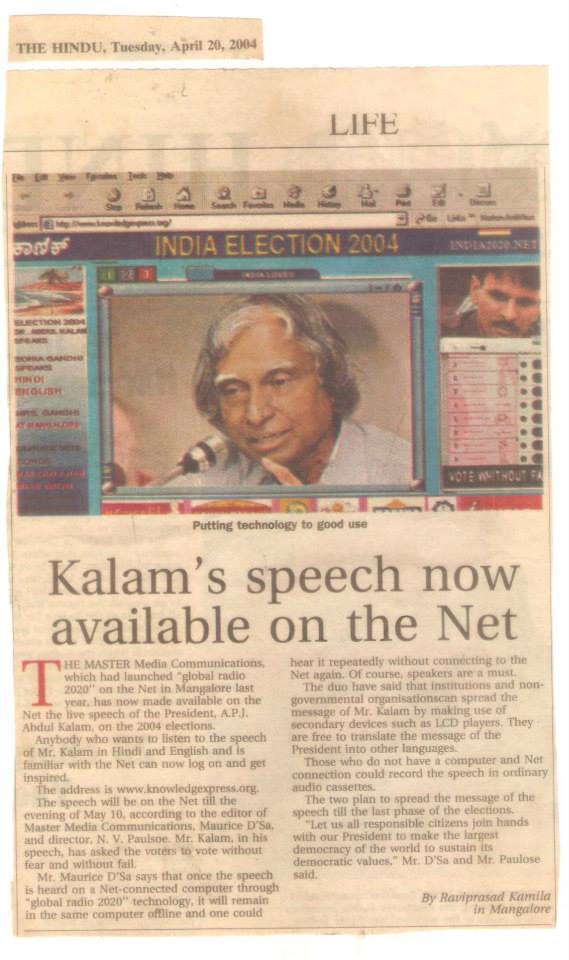
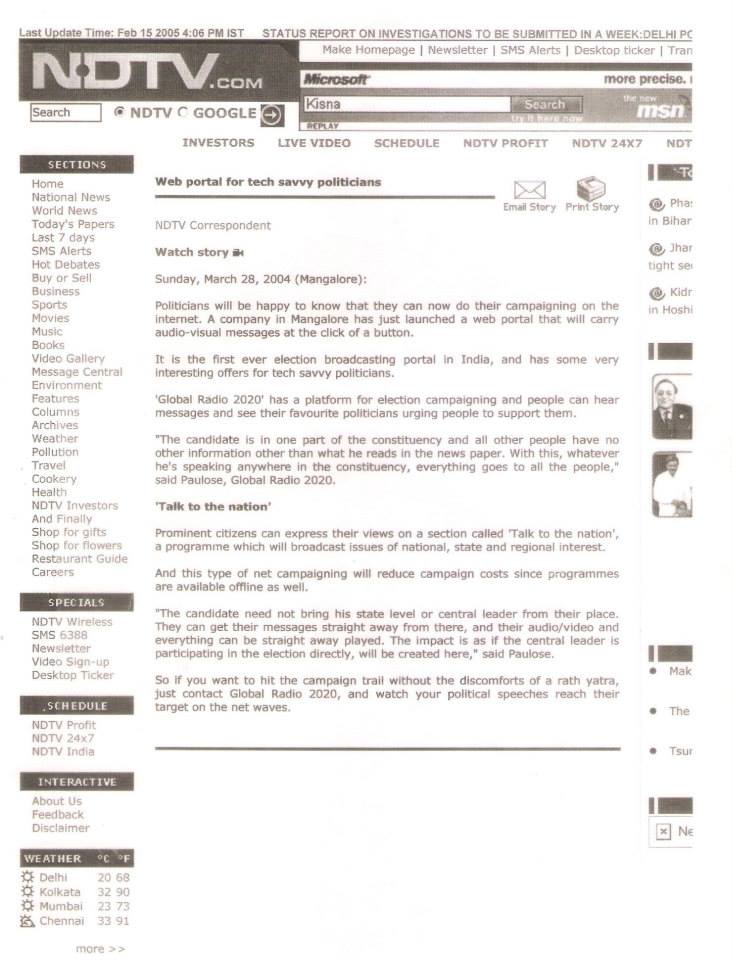
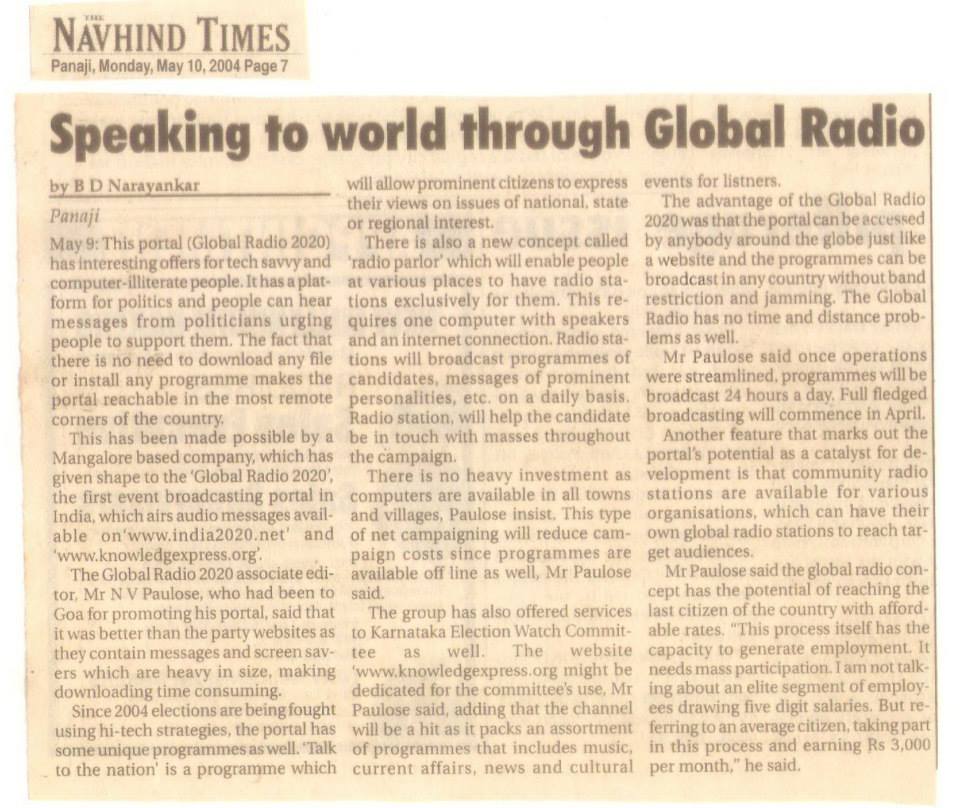
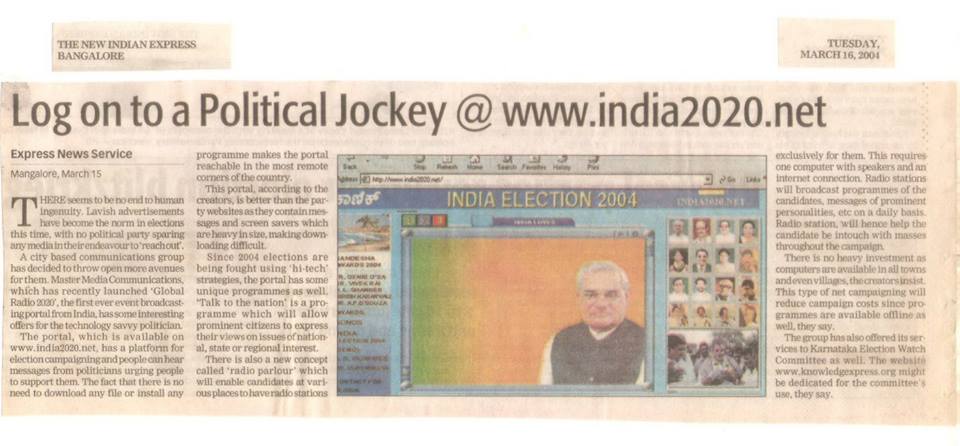
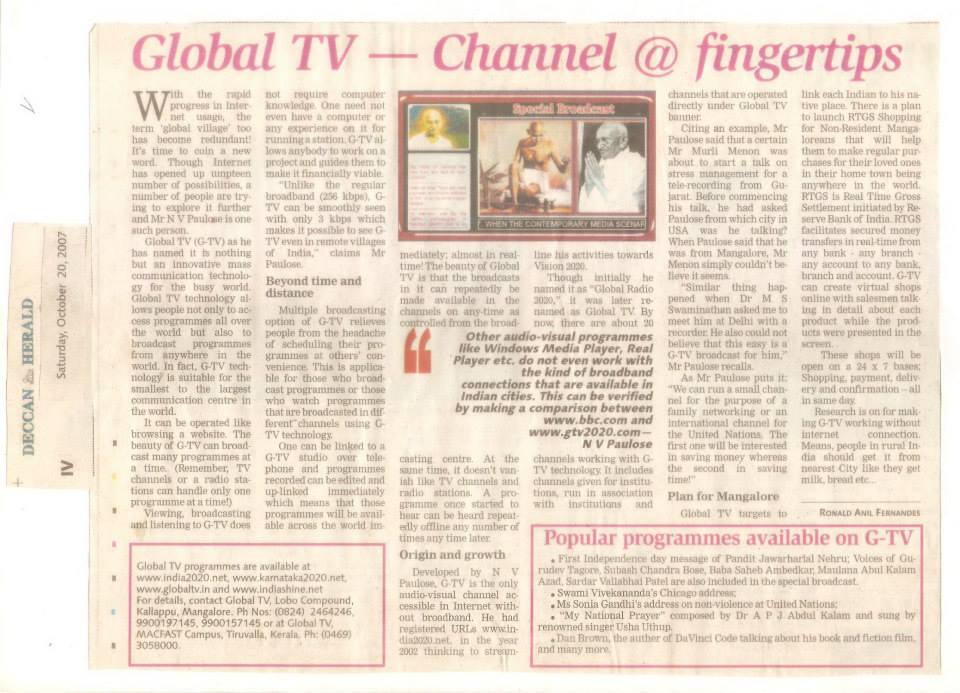
The Hindu reported initiatives involving Internet television and the online dissemination of important public addresses, including speeches by Dr. A. P. J. Abdul Kalam. The Indian Express, Deccan Herald, Navhind Times, and NDTV described Internet broadcasting, election information portals, community communication initiatives, and early attempts to use digital networks as instruments of public participation rather than mere transmission.
At the time, these reports appeared to describe isolated technological experiments.
Looking back after two decades, they tell a different story.
Taken together, they reveal the early emergence of an entirely different philosophy. Television was no longer being imagined as a one way broadcasting medium. It was being reimagined as an interactive communication platform capable of connecting people, institutions, knowledge, and communities.
History had quietly whispered the future.
The world heard the technology.
It did not fully hear the idea.
Recognition Is the Beginning of Every Revolution
History occasionally offers inspiring examples of what becomes possible when vision is recognised at the right moment.
Rajiv Gandhi recognised not merely a proposal from Sam Pitroda but a way of thinking about India’s future. He understood that telecommunications represented far more than technology. It represented national transformation through connectivity. More importantly, he entrusted the originator with the opportunity to participate in shaping that transformation.
That decision carries an enduring lesson.
One may always ask a simple question.
What if the proposal had merely been taken and handed over to someone else?
Would the same result have emerged?
No one can answer with certainty.
Yet history repeatedly suggests that ideas are not isolated objects that can simply be transferred from one person to another. Great ideas continue evolving during implementation. Their creators possess insights that rarely appear in written documents. The greatest contribution of an innovator is often not the first idea but the countless refinements that follow.
Recognition therefore is not an act of generosity.
It is an act of wisdom.
The Flower Was Never the Plant
This is why I often return to a simple metaphor.
An idea resembles a flowering plant.
Everyone notices the flower because it is colourful and immediately visible. Some admire it. Others pluck it. Yet the flower is only one expression of a living organism whose roots remain hidden beneath the surface. The plant continues drawing nourishment, growing quietly, and producing new blossoms season after season.
If someone plucks the flower and carries it away, they possess beauty for a few days.
What they never possess is the living source capable of producing countless flowers.
Ideas behave in precisely the same manner.
Institutions frequently believe they have acquired innovation simply because they have acquired one successful proposal. In reality, they may have separated the flower from the plant. They obtain one visible achievement while losing the continuing source of future creativity.
The Malayalam proverb expresses this truth beautifully.
“ഉപ്പോളം വരുമോ ഉപ്പിലിട്ടത്?”
Can what has merely been preserved in salt ever become equal to salt itself?
The proverb reminds us that something derived from an original source can never completely replace the source itself. Creativity cannot simply be transferred like property. It grows from a living process of observation, imagination, experience, and continuous refinement.
The Treasure We Left Behind
The story of the learner driver now returns with renewed meaning.
Humanity entered countless technological ditches. We improved broadcasting. We multiplied channels. We developed better screens. We created streaming services. We built social media. We introduced artificial intelligence. Each development contributed something valuable.
Yet throughout this extraordinary journey, we overlooked the one treasure that had quietly remained before us. We never fully transformed television into an interactive communication platform serving local communities. We travelled everywhere except the place where the greatest opportunity waited.
Fortunately, history sometimes grants civilizations a second chance. Returning to an unfinished idea is not moving backward. It is recovering something valuable that was left behind.
Table TV and a New Communication Economy
This is where the idea of Table TV becomes significant.
Imagine a world in which every neighbourhood, every village, every apartment complex, every educational institution, every professional association, and every local community has its own television platform serving approximately two hundred people.
Such platforms would not exist merely to broadcast programmes.
They would become centres of communication, learning, entrepreneurship, culture, healthcare, public dialogue, and local economic activity.
Students could present projects.
Teachers could conduct interactive classes.
Doctors could offer preventive healthcare guidance.
Farmers could exchange practical knowledge.
Artists could perform before their own communities.
Senior citizens could preserve local history.
Young people could create meaningful content.
Homemakers could become educators, communicators, entrepreneurs, organisers, and custodians of community knowledge.
Television would no longer be something people simply watch.
It would become something through which people participate in building their communities.
The economic implications are equally profound. Such a decentralised communication network could meaningfully engage one crore young people and homemakers. It would create livelihoods not by distributing subsidies but by creating genuine social and economic value through knowledge, creativity, communication, and participation.
This is not merely a media model.
It is the foundation of a new communication economy.
Perhaps the Treasure Has Been Waiting for Us All Along
The journey of civilization is not merely the story of inventions. It is the story of recognition. Again and again, humanity has been presented with extraordinary possibilities that first appeared as quiet ideas in the minds of a few individuals. Some were recognised and nurtured. Others waited patiently until society finally became ready to understand them.
The opportunity to transform television from a broadcasting medium into an interactive communication platform has never disappeared. It has waited with remarkable patience while we explored countless other technological possibilities. Today we possess global connectivity, affordable digital devices, cloud computing, artificial intelligence, and communication networks of unprecedented reach. What remains unfinished is not the technology. What remains unfinished is our imagination.
I often reflect upon a simple thought. There is a divine intelligence that governs the conduct of the universe, and we are all participants in it. This is not a religious statement but a philosophical one. Human beings do not own truth. We encounter it. We do not create every possibility. We discover it. Great ideas appear through prepared minds, but they ultimately belong to the unfolding story of human civilization.
Perhaps the opportunity before us is not to invent something entirely new. Perhaps it is simply to recognise the treasure that has been waiting for us all along. If we have the wisdom to recover it now, television can become far more than a broadcasting medium. It can become the communication platform that empowers communities, strengthens democracy, creates knowledge, and rewardingly engages one crore young people and homemakers in shaping a more participative and creative future.
Sometimes the greatest step into the future begins by returning to the one opportunity we unknowingly left behind.
Silver Membership Class on Mind Power and Personal Success Begins August 3
NV Paulose, Chairman, Global TV +91 98441 82044
A new batch of the Silver Membership Class, a one-month personal development program focused on achieving life success through the power of the mind, is scheduled to begin on August 3.
The course offers daily one-hour online sessions, with participants able to choose between 1:00 PM and 9:00 PM batches. The program is designed to help individuals develop a positive mindset, strengthen mental resilience, and apply practical techniques for personal and professional growth.
According to the organizers, the course includes training in creating a mental blueprint for success, reprogramming the mind through proven techniques, improving interpersonal relationships, developing a healthy attitude toward wealth, setting and achieving meaningful goals, and building a happy and harmonious family life.
Participants will also learn methods to maintain happiness, enhance peace within the family, strengthen intuition through meditation, manage finances responsibly, overcome debt, achieve personal aspirations, and improve relationships with others. An interactive question-and-answer session will allow participants to clarify their doubts throughout the program.
The course fee is ₹2,360 (₹1,999 + GST) for the one-month program.
Interested individuals can register by contacting the organizers via WhatsApp at +91 95672 74997 or +91 70125 05861.
Payments can be made through Google Pay (8089011019) or by bank transfer to SUJA R MOHAN ACADEMY. Participants are requested to send the payment screenshot to +91 95672 74997 to complete their registration.
The organizers encourage anyone interested in self-improvement, mental empowerment, and personal success to enroll and take advantage of this structured learning opportunity.
Organized by Team Suja R Mohan.
Suja R Mohan: Empowering Personal Growth Through Mindset and Life Coaching
Suja R Mohan has emerged as a prominent life coach, motivational speaker, and mind power trainer from Kerala, inspiring thousands of people through her coaching programs, public talks, and digital platforms. As the founder of Suja R Mohan Academy, she has built a growing community focused on personal development, self-belief, and achieving success through mindset transformation.
With more than a decade of experience in coaching and mentoring, Suja R Mohan specializes in life coaching, mind power training, business coaching, and celebrity coaching. According to her academy, her mission is to help individuals identify their true potential, overcome limiting beliefs, and create meaningful personal and professional growth. Her coaching philosophy emphasizes the connection between thoughts, emotions, and actions, encouraging people to develop a positive mindset while pursuing their goals.
Through the Suja R Mohan Academy, she offers a variety of structured programs designed for different stages of personal development. These include Silver, Gold, and Platinum Memberships, along with specialized courses such as Mind Mastery, Wealth Mastery, Health Mastery, Relationship Mastery, Law of Attraction workshops, student coaching, and business coaching. The academy states that its programs are designed to provide practical techniques, goal-setting strategies, confidence building, and guidance for personal transformation.
One of the distinguishing features of Suja R Mohan’s work is her emphasis on mind power and manifestation techniques. She frequently speaks about visualization, affirmations, self-discipline, and developing empowering habits that can help individuals pursue success in various aspects of life. In interviews and public appearances, she describes manifestation as aligning one’s thoughts, emotions, beliefs, and actions toward a desired outcome while maintaining consistent effort and personal responsibility.
Her influence has expanded significantly through social media and online platforms, where she regularly shares motivational messages, inspirational videos, and practical advice on personal growth. Her official website highlights a large online community, multiple coaching programs, and testimonials from participants who credit her guidance with helping them improve confidence, relationships, and career direction.
Beyond coaching individuals, Suja R Mohan also works with entrepreneurs, professionals, students, and public personalities through customized mentoring programs. Her coaching approach focuses on helping clients set clear goals, strengthen decision-making abilities, improve communication skills, and build resilience in the face of challenges. The academy emphasizes personalized coaching, recognizing that every individual has unique aspirations and circumstances requiring tailored guidance.
As interest in personal development continues to grow, Suja R Mohan has become one of Kerala’s well-known motivational coaches, attracting participants from different parts of India and abroad through online learning. Her academy continues to expand its range of programs with the aim of helping people cultivate confidence, clarity, and purpose in both their personal and professional lives.
Through her message of self-belief, continuous learning, and disciplined action, Suja R Mohan encourages people to take responsibility for their own growth and work consistently toward building a more successful and fulfilling future.
History is often written as a chronicle of great events, powerful leaders, and technological revolutions. Yet beneath every transformation lies something far less visible: an idea. Every civilization has advanced because someone imagined a possibility that others could not yet see. Some of these ideas were embraced and nurtured. Many others were dismissed, delayed, or quietly forgotten, only to reappear years later through different people and under different circumstances.
This recurring pattern raises a profound question. Do ideas belong to individuals, or are individuals merely participants in a larger process of discovery?
I have often reflected on a simple thought: there is a divine intelligence that governs the conduct of the universe, and we are all part of it. This is not a religious assertion. It is a philosophical observation born from watching history unfold. Human beings do not create reality; they discover aspects of it. Ideas emerge through minds that are prepared to perceive possibilities hidden from others. Some are recognized in their own time. Others must wait for history to catch up.
The tragedy of civilization is not merely that great ideas are rejected. It is that societies often fail to recognize the living source from which those ideas arise.
Seeing the Future Before It Arrives
At the beginning of this century, India stood at the threshold of the digital age. Broadband connectivity was limited. Streaming media was almost unknown. Social media platforms that dominate public discourse today either did not exist or were in their infancy. Television remained what it had been for decades: a one-way broadcasting medium. Information flowed from the broadcaster to millions of passive viewers. The audience watched, but it did not participate.
Amid this technological landscape, a different possibility began to emerge.
Instead of treating television as a device for broadcasting information, it could be reimagined as an interactive communication platform. Every viewer could become a participant. Instead of transmitting programmes from a single source to a passive audience, television could become a digital meeting place where citizens, institutions, governments, educators, and communities communicated with one another.
The distinction may appear subtle, but it represents a fundamental shift in philosophy.
Broadcasting creates audiences.
Communication creates relationships.
Broadcasting distributes information.
Communication builds communities.
Looking back from today’s world of streaming platforms, interactive media, video conferencing, citizen journalism, and digital civic engagement, such a vision appears almost obvious. Yet two decades ago it was far from conventional thinking.
Several respected newspapers documented these efforts.
The Hindu reported experiments involving Internet television and the online dissemination of important public addresses, including speeches by Dr. A. P. J. Abdul Kalam. The Indian Express, Deccan Herald, Navhind Times, and NDTV carried reports describing Internet broadcasting, election information portals, community-based digital communication, and new ways of using emerging technologies to connect people.
At the time, these initiatives were viewed as interesting experiments. Today, they read like early glimpses of a future that had not yet arrived. History has a curious habit of making yesterday’s vision appear obvious only after it becomes reality.
Beyond Technology
Many people assume that innovation is primarily about technology.
It is not.
Technology is merely an instrument.
Innovation begins with changing the way we understand a problem.
The real question was never how to improve television.
The question was whether television itself had been misunderstood.
For nearly a century, television was defined by its hardware. Cameras produced images. Broadcasting stations transmitted signals. Receivers displayed programmes. But perhaps television was never merely a broadcasting system. Perhaps it was always capable of becoming an interactive communication network.
This shift resembles the transformation of the telephone. A telephone is not valuable because it transmits sound. It is valuable because it enables human connection.
Similarly, the future of television was not about producing better broadcasts. It was about enabling richer communication.
This distinction changes everything.
A broadcaster speaks.
A communicator listens.
A broadcaster informs.
A communicator engages.
A broadcaster creates spectators.
A communicator creates participants.
The digital age has gradually confirmed this transformation. Today’s media ecosystem is no longer defined by one-way broadcasting. Viewers create content, respond instantly, participate in discussions, collaborate across continents, and influence public conversations in real time.
What once appeared visionary has quietly become everyday reality.
Recognition and the Courage to Trust Vision
History occasionally presents remarkable examples of societies recognizing creative potential before its value becomes universally accepted. One such example is Sam Pitroda. Rajiv Gandhi did not merely appreciate a technical proposal concerning telecommunications. He recognized an individual whose way of thinking could reshape India’s future. More importantly, he entrusted the originator with the opportunity to participate in implementing that vision.
This distinction deserves careful attention. Imagine an alternative history.
Suppose the proposal had been accepted but handed to someone else merely because that individual happened to be politically connected or administratively convenient.
Would the outcome have been identical? No one can answer with certainty. But history repeatedly suggests that ideas cannot always be separated from the minds that produced them.
Vision evolves continuously during implementation. The creator understands subtleties that rarely appear in written documents. Innovation is not a single moment of inspiration. It is an ongoing conversation between observation, experimentation, correction, and imagination.
Recognizing an idea is important. Recognizing the person capable of nurturing that idea may be even more important.
The Flower Is Not the Plant
There is a simple metaphor that captures this truth.
An idea is like a flowering plant. Everyone admires the flower. Some even pluck it. But the flower is not the plant. The flower is only the visible expression of a much deeper living system. Hidden beneath the surface are roots drawing nourishment from the earth. The stem continues to grow.
New buds continue to form. The plant possesses the capacity to produce countless flowers throughout its life. If someone plucks the flower and runs away, they possess beauty for a short while. Eventually the flower withers. What they never acquired was the living system that produced it. Ideas behave in precisely the same manner.
Organizations frequently believe they can separate an idea from its creator and expect the same creative process to continue elsewhere. Sometimes they obtain immediate results. Often they lose the far greater opportunity. They acquire one flower while abandoning the garden.
A Lesson from a Malayalam Proverb
Malayalam expresses this wisdom with remarkable simplicity.
“ഉപ്പോളം വരുമോ ഉപ്പിലിട്ടത്?”
Can something preserved in salt ever become equal to salt itself?
The proverb reminds us that something derived from an original source cannot automatically become identical to the source. This is not a criticism of those who implement ideas. Implementation is indispensable. But implementation without understanding is rarely equivalent to creation accompanied by continuous refinement. Societies sometimes assume that once an idea has been documented, anyone can reproduce its future. History suggests otherwise. The most valuable asset is often not the proposal. It is the creative intelligence that continues generating new possibilities long after the first proposal has been written.
The Illusion That Everything Can Be Bought
Modern civilization has become extraordinarily successful at assigning monetary value.
Land has a price. Technology has a price. Labour has a price. Even intellectual property can be purchased.
This success has encouraged an illusion: that creativity itself can also be bought.
Money can finance innovation.
Money can reward innovation.
Money can accelerate innovation.
But money cannot manufacture originality. Original insight cannot be ordered like machinery. No budget has ever guaranteed imagination. No committee has ever voted an invention into existence.
The deepest source of creativity remains beyond financial calculation. This is why organizations that attempt merely to purchase ideas often discover that genuine innovation gradually disappears.
The visible products remain. The invisible source has quietly departed.
Why Ideas Return
History contains another remarkable pattern.
Ideas often reappear. Scientific principles are rediscovered. Mathematical truths emerge independently in different civilizations. Technological breakthroughs occur simultaneously in different countries. Philosophical insights return across generations.
This does not necessarily imply coincidence. It suggests that reality continually offers opportunities for discovery. When conditions become favourable, prepared minds perceive similar truths.
One individual may be ignored. Another may arrive. The pathway changes. The underlying possibility remains. Ideas possess an extraordinary power because they are rooted not merely in personal ambition but in the structure of reality itself.
The Intelligence Behind Civilization
This brings us back to the thought with which we began. There is a divine intelligence that governs the conduct of the universe, and we are all part of it. Whether one interprets this as the intelligence inherent in nature, the deep order of reality, or the unseen logic through which civilizations evolve, the essential insight remains unchanged.
Human beings are not isolated creators.
We are participants.
We discover.
We interpret.
We contribute.
Every great innovation represents a dialogue between the human mind and the deeper order of existence. No individual owns truth. No institution owns wisdom. At best, we become temporary custodians of insights that pass through us. Some societies recognize those insights while they are still unfolding. Others notice only after history has already moved on.
A Responsibility for the Future
The greatest responsibility of any civilization is therefore not merely to celebrate success after it becomes obvious. Its responsibility is to recognize living sources of creativity while they are still quietly growing.
History does not reward societies simply because they possess resources. It rewards those that possess discernment. The future rarely announces itself with certainty. It first appears as an unusual idea in the mind of someone willing to imagine possibilities beyond conventional thinking.
If that person is ignored, the idea may disappear for a time. Or it may re-emerge elsewhere, through another individual, another institution, or another generation. Reality is patient. Human institutions are not always so.
The Way Ahead
The history of civilization is not merely the history of inventions.
It is the history of recognition.
Again and again, humanity has faced the same choice.
Will we admire only the flower, or will we nurture the plant?
Will we collect ideas after they become fashionable, or will we recognize the minds capable of producing them?
The newspaper reports published two decades ago were not merely records of technological experiments. They documented an emerging philosophy: that communication technologies should empower participation rather than passive consumption; that television could evolve from a broadcasting medium into an interactive communication platform; and that digital networks could strengthen communities rather than simply distribute content.
Today, much of the world is moving in precisely that direction.
The lesson extends far beyond one individual or one innovation.
Ideas cannot be reduced to commodities.
They are living expressions of a deeper creative process.
One may appropriate a proposal.
One may imitate an invention.
One may delay recognition.
But one cannot permanently possess the source of creativity by taking only its visible expression.
To pluck the flower is easy.
To understand the plant requires wisdom.
And perhaps the true measure of a civilization is not how many flowers it gathers, but how carefully it learns to recognize, protect, and cultivate the gardens from which they bloom.
Joseph G. M. Rebello is an environmental activist; an educator, trainer, motivator, social auditor, and a true servant of society.
NV Paulose, Chairman, Global TV +91 98441 82044
Ratnashree Joseph G. M. Rebello is a remarkable personality. His unwavering commitment to environmental conservation, water management, social accountability, and public awareness has made him a respected name across Karnataka. Through decades of dedicated service, he has shown that one determined individual can create lasting change. He works quietly, transforms communities and inspires generations. He never seek fame or recognition, but dedicated his life to serve people and protecting nature.
Joseph G. M. Rebello is an environmental activist; an educator, trainer, motivator, social auditor, and a true servant of society. He has devoted his entire life to promoting sustainable living, protecting natural resources, and encouraging citizens to become responsible custodians of the environment. His work reflects a rare combination of knowledge, practical experience, integrity, and compassion.
One of the most significant areas of Mr. Rebello’s contribution is water conservation. He strongly believes that water is life’s most precious resource and that every drop must be valued. Rainfall is uncertain everywhere in the world. Some years bring abundant rain, while others experience drought. Climate change has made weather patterns even more unpredictable. Understanding this reality, Mr. Rebello has continuously promoted rainwater harvesting as a practical and permanent solution for water security.
As he often demonstrates through his work, rain is not a regular phenomenon anywhere in the world, but efforts to harvest and conserve rainwater must be regular, continuous, and perpetual. This philosophy has become the foundation of his lifelong mission. While nature decides when it rains, human beings can decide how wisely they collect, store, and recharge every drop that falls. His consistent efforts have encouraged thousands of families, institutions, and government departments to adopt rainwater harvesting systems that benefit both present and future generations.
Mr. Rebello’s popular awareness programme, “Connecting with Rainwater – Cleanliness Begins at Home,” has reached people from different walks of life. Through this initiative, he teaches that environmental conservation starts with simple habits practiced within every household. He explains that maintaining clean surroundings, preventing water pollution, segregating waste, and harvesting rainwater are responsibilities that belong to every citizen. His training sessions are practical, easy to understand, and supported by real-life examples, enabling participants to implement these practices immediately.
His expertise extends beyond water conservation. As a State Resource Person and Trainer, he has shared his knowledge on groundwater conservation, rainwater harvesting, solid and liquid waste management, plastic waste management, sanitation, and environmental protection. His ability to simplify complex environmental issues has made him one of the most sought-after trainers in Karnataka. Government officials, engineers, elected representatives, teachers, students, self-help groups, non-governmental organisations, and community leaders have all benefited from his guidance.
Over the years, Mr. Rebello has conducted about 6,000 training programmes across all 31 districts of Karnataka, directly creating awareness among over 300,000 people. These numbers reflect not merely the scale of his work but also his relentless commitment to educating society. Every programme has inspired individuals to become active participants in protecting the environment rather than passive observers.
His contribution to cleanliness and sanitation is equally noteworthy. Serving as the Swachhata Ambassador of Udupi City Municipal Council, he has tirelessly promoted the principles of cleanliness and hygiene. He firmly believes that a clean environment is the foundation of a healthy society. Instead of limiting himself to speeches and awareness campaigns, he leads by example. Whether it is encouraging proper waste disposal, promoting source segregation, or educating communities about composting and recycling, he actively participates in every aspect of environmental cleanliness.
One quality that distinguishes Mr. Rebello is his courage to act. Many people notice littering but remain silent. Mr. Rebello does not. Whenever he sees people throwing garbage in public places, he politely but firmly stops them and explains their civic responsibility. His objective is never to embarrass anyone but to educate them and encourage behavioural change. Such actions have earned him immense respect as a fearless environmental advocate who practices what he teaches.
His concern for the environment is holistic. He understands that clean water, healthy soil, forests, fresh air, and proper waste management are interconnected. Protecting one without safeguarding the others is impossible. Therefore, his campaigns address every aspect of environmental sustainability. He consistently educates people about reducing plastic usage, managing biodegradable and non-biodegradable waste responsibly, conserving groundwater, planting trees, and protecting natural ecosystems. His vision extends beyond immediate environmental problems to securing a healthier planet for future generations.
Apart from environmental conservation, Mr. Rebello has made significant contributions to good governance and social accountability. Integrity and transparency form the cornerstone of his public service. As a Social Auditor for several Central and State Government schemes, he has played an important role in ensuring that public welfare programmes are implemented honestly and efficiently. His work involves carefully examining government projects, identifying irregularities, and recommending corrective measures. Whenever he discovered misuse of funds or procedural lapses, he fearlessly reported them without yielding to pressure or influence.
Such honesty requires courage because exposing irregularities is never easy. Yet Mr. Rebello has always placed public interest above personal convenience. His commitment to ethical governance has strengthened people’s trust in public institutions and demonstrated that accountability is essential for meaningful development.
His service extends to many sections of society, especially those who need support the most. He has actively worked for the welfare of senior citizens, women, children, construction workers, and sanitation workers. As an active member associated with the Udupi District Legal Services Authority and the Women and Child Protection Unit, he has participated in various programmes aimed at protecting vulnerable communities and promoting legal awareness. His compassionate approach reflects his belief that true development must include social justice, dignity, and equal opportunity for all.
Despite his impressive achievements, Mr. Rebello is widely admired for his humility. Those who have attended his training programmes often describe him as soft-spoken, approachable, and patient. He treats every participant with respect, whether they are senior government officials or school children. His simplicity allows people to connect with him easily, while his deep knowledge earns their admiration. He never imposes ideas but patiently explains why environmental responsibility benefits every individual and every family.
The impact of his work has been recognised through numerous prestigious awards. These honours celebrate not only his personal achievements but also the positive influence he has had on society. Among the many recognitions he has received are the Best Bharat Nirman Sevak Award (2014), Adhunik Bhagiratha Award (2015), Jalaratna Award (2016), Ratnashree Award (2017), District Karnataka Rajyotsava Award (2018), Seva Chaitanya Award (2019), Sadhana Shri Award (2021), Prakruthi Chetana Forest Department Award (2022), and the Bayalu Shikshana Prabhava Teacher Award (2022). Each award represents society’s appreciation for his tireless efforts in environmental protection and public service.
His achievements have also received widespread attention through Doordarshan, radio programmes, newspapers, and various educational publications. Educational institutions, government departments, civic organisations, and social service groups frequently invite him to deliver lectures and conduct workshops because of his practical knowledge and inspiring approach.
Mr. Rebello has also served as a member of several developmental committees under the Udupi Zilla Panchayat and as an evaluator for various government competitions. These responsibilities reflect the confidence that public institutions place in his expertise, fairness, and professional integrity.
Perhaps the greatest lesson from Joseph G. M. Rebello’s life is that environmental protection is not the responsibility of governments alone. Every individual has a role to play. Saving water, planting trees, keeping surroundings clean, reducing waste, protecting groundwater, and using natural resources responsibly are simple actions that collectively create a powerful impact. Through his life and work, he has shown that meaningful change begins with personal responsibility and spreads through education and collective participation.
In a world facing increasing environmental challenges, Mr. Rebello’s message is more relevant than ever. Climate change, water scarcity, pollution, and waste generation demand continuous action rather than occasional concern. His lifelong campaign reminds us that while rainfall cannot be controlled by human beings, our commitment to conserving every drop of water can and must remain constant. Rainwater harvesting is not merely a technical solution; it is a way of thinking that values nature and prepares society for the future.
Today, Ratnashree Joseph G. M. Rebello stands as a shining example of dedication, honesty, and selfless service. His work has enriched communities, strengthened environmental awareness, promoted good governance, and inspired countless people to become responsible citizens. His life demonstrates that true leadership is measured not by position or power but by the positive difference one makes in the lives of others.
It is indeed a privilege for any institution or organisation to have Ratnashree Joseph G. M. Rebello as a resource person and mentor. His wisdom, practical experience, and unwavering commitment continue to inspire people across Karnataka and beyond. His legacy reminds us that protecting nature is not a one-time effort but a lifelong responsibility. By following his example, every citizen can contribute towards building a cleaner, greener, healthier, and more sustainable future for generations to come.
A Review of Women in the Fisheries Sector by K. Sathyavathi
NV Paulose Chairman Global TV+91 98441 82044
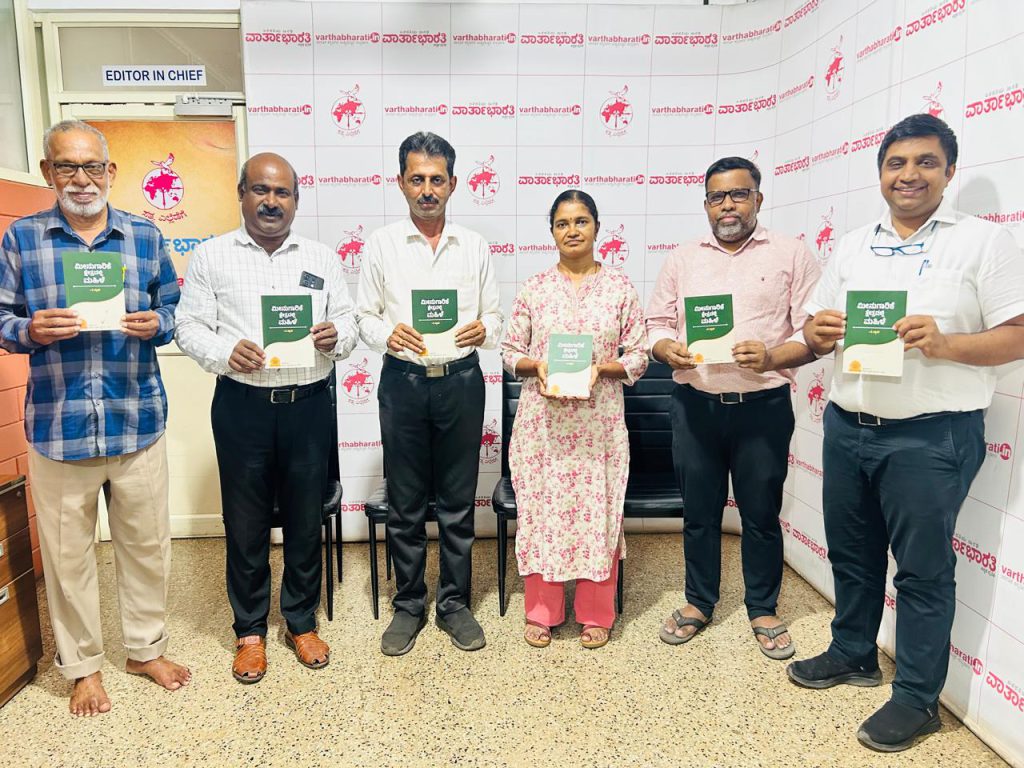
Women in the Fisheries Sector, written by K. Sathyavathi, is an important Kannada book that highlights the lives, struggles, and contributions of women belonging to fishing communities. Published by Kannada University, Hampi, through the Onake Obavva Study Chair, the book focuses on a section of society that has often remained invisible despite its significant contribution to the economy and community life. The author brings together her experience as a journalist, field observations, and official records to present a realistic picture of the social, economic, and cultural conditions of fisherwomen.
The book begins by emphasizing the importance of women in every sphere of society. Whether in agriculture, industry, education, science, or technology, women have made remarkable contributions. However, despite their hard work and dedication, they continue to face discrimination, neglect, and exploitation. The condition of women from marginalized communities is even more difficult, as they often struggle with poverty, lack of education, and limited opportunities. Fisherwomen are one such group whose lives are filled with hardships but whose contributions remain largely unrecognized.
In the author’s note, K. Sathyavathi shares the story behind the creation of this book. Although writing has been her profession for more than twenty-five years as a journalist, she had never written a full-length book because she believed that book writing demands time, detailed research, and careful reflection. Her journey toward writing this work began when journalist B. M. Basheer and Professor N. Chinnaswamy Sosale encouraged her to prepare a book on the condition of fisherwomen for the Onake Obavva Study Chair. Their encouragement inspired her to transform years of reporting and interaction with fishing communities into a comprehensive study.
One of the greatest strengths of this book is the author’s close connection with fishing communities. Having reported extensively on their lives, she presents not only statistics and government data but also the lived experiences of women who depend on fishing for their survival. The book combines journalistic observation with academic research, making it informative as well as emotionally engaging. Instead of presenting fisherwomen merely as victims, the author portrays them as courageous, hardworking, and determined individuals who continue to support their families under extremely challenging conditions.
The book explains that fishing is not limited to catching fish. Women actively participate in cleaning, sorting, processing, drying, transporting, and selling fish. They also manage household responsibilities while contributing significantly to the family income. Despite performing multiple roles, they receive little recognition, limited financial security, and inadequate access to education and healthcare. Their work often remains unpaid or undervalued, reflecting the broader gender inequalities present in society.
A significant theme discussed in the book is exploitation. The author points out that even though India’s economy continues to grow, the benefits of development have not reached many fisherwomen. They continue to face unstable incomes, poor working conditions, social discrimination, and inadequate government support. Many women spend long hours under difficult weather conditions, carrying heavy loads and traveling to markets, yet they earn only modest incomes. These realities expose the gap between economic development and social justice.
The book also places the lives of fisherwomen within a broader global context. Across oceans, seas, rivers, and lakes around the world, millions of families depend on fishing for their livelihood. Although the specific conditions vary according to geography, culture, and local traditions, women everywhere play an essential role in sustaining fishing economies. By highlighting this wider perspective, the author reminds readers that the struggles of fisherwomen are not isolated but are shared by communities across the world.
An inspiring aspect of the book is its portrayal of the resilience of coastal women. They are described as bold, hardworking, and capable of overcoming numerous obstacles. In coastal Karnataka, fisherwomen are often known for their confidence and determination. However, despite their strength, their social, educational, and economic progress has remained slow. While a few women have achieved success and leadership in their profession, thousands continue to live with poverty, debt, and insecurity. This contrast demonstrates that individual success alone cannot solve structural inequalities.
The foreword and introductory remarks further strengthen the significance of the book. They stress that knowledge should emerge from the experiences of ordinary people and marginalized communities, not only from traditional academic sources. Kannada University, Hampi, has undertaken the important responsibility of documenting such lived realities through its research centers and publications. By publishing this book, the university contributes to preserving social history while encouraging greater awareness of women’s issues.
K. Sathyavathi’s writing style is simple, direct, and compassionate. Her background in journalism allows her to explain complex social issues in a clear and accessible manner. Rather than relying only on emotional appeals, she supports her observations with facts, official reports, and practical examples. This balanced approach makes the book useful for students, researchers, policymakers, social workers, and general readers interested in women’s studies, rural development, and social justice.
Ultimately, Women in the Fisheries Sector is much more than a study of fishing communities. It is a powerful reminder that women who work behind the scenes often sustain families, communities, and local economies without receiving the recognition they deserve. The book calls upon society to acknowledge their contributions, address the inequalities they face, and ensure that development includes even the most marginalized sections of society.
K. Sathyavathi’s Women in the Fisheries Sector is a valuable contribution to Kannada literature and social research. It successfully combines journalism, research, and human sensitivity to document the lives of fisherwomen with honesty and respect. By giving voice to women whose stories are rarely heard, the book encourages readers to reflect on issues of gender equality, dignity of labour, and social inclusion. It stands as an important resource for understanding both the hardships and the resilience of women in the fisheries sector and serves as a meaningful call for greater justice, recognition, and empowerment
From STD Booths to Storytelling Dynamic Hubs: A Systemic Vision for Global Village Television
NV Paulose, Chairman, Global TV +91 98441 82044
India witnessed one of the greatest communication revolutions through the establishment of STD (Subscriber Trunk Dialing) booths. Before mobile phones became common, millions of people gained access to communication because a simple booth connected individuals with the rest of the country and the world. The success of the STD booth was technological, social, economic, and entrepreneurial.
Every booth became a local communication centre, enabling ordinary citizens to participate in the communication economy. It created employment, encouraged entrepreneurship, and made communication accessible to people from every section of society.
Today, communication has reached another turning point.
Television has achieved extraordinary reach, yet its role has remained largely confined to broadcasting information, entertainment, and news. Unlike telecommunications, which transformed person to person communication, television has not yet realised its larger potential as a platform for community communication, collective intelligence, large scale social participation, and global collaboration.
It has succeeded in creating one-sided audiences, but it has not fully evolved into a system that enables communities to become active creators, contributors, and partners in communication.
The next stage in the evolution of television is not simply better broadcasting. It is participatory communication. It is about enabling communities to tell their own stories, document their knowledge, share their innovations, preserve their cultural heritage, and engage directly with people across the world. It is about sharing spaces.
When communities become storytellers and appreciative Inquiry (AI) Practitioners rather than passive viewers, television becomes a catalyst for development rather than merely a medium of entertainment. True miracles happen when people are connected. Can we present ourselves as a community and a shared entity of mutual collaboration?
Collaborative storytelling opens opportunities that extend far beyond one-sided communication. It becomes the foundation for participatory development projects, community entrepreneurship, local innovation, educational exchange, cultural preservation, tourism, and economic cooperation. We can initiate Asset Light Establishments (ALE) in large numbers when we are connected as a community. Stories reveal strengths, resources, skills, traditions, aspirations, and opportunities that often remain invisible in conventional development models.
Once our strengths are visible, we can organise them around shared goals and attract partners, guests, investors, researchers, educational institutions, and businesses interested in mutual collaboration. Villages possesses valuable resources that are often underutilised; including people, knowledge, traditions, skills, enterprises, natural assets, cultural practices, educational institutions, and social networks.
Storytelling makes these resources visible. Once documented and shared through a community communication platform, they become part of a living resource pool that can be accessed, strengthened, and connected with similar resources elsewhere. Communities begin learning from one another instead of working in isolation. They share ideas, avoid duplication of effort, reduce costs through cooperation, and create solutions that benefit everyone involved.
This creates significant cost advantages. Shared knowledge reduces the cost of experimentation. Shared infrastructure reduces the cost of communication. Shared experiences reduce the cost of learning. Shared participation reduces the cost of development. Communities become partners in creating value rather than isolated beneficiaries of external programmes.
History shows that major economic revolutions occur when systems become interconnected. One of the finest examples is containerisation in global shipping. Before the introduction of standard shipping containers, transporting goods across countries was slow, expensive, and inefficient. Containerisation created a common system that connected ships, ports, railways, and road transport into one integrated global logistics network. The result was a dramatic reduction in transportation costs, greater efficiency, increased trade, and unprecedented global economic growth.
Global communication now stands at a similar moment. Local stories remain scattered like goods before containerisation. Every village possesses knowledge, culture, innovations, and experiences, yet these remain disconnected from one another and from the rest of the world.
Storytelling Dynamic Hubs can become the standard communication infrastructure that connects these scattered resources into a global knowledge network. As containerisation transformed the movement of goods, Storytelling Dynamic Hubs can transform the movement of ideas, experiences, cultural knowledge, and community innovations.
The cost of discovering knowledge decreases. The speed of learning increases. Collaboration becomes easier. Communities become visible to one another, and new opportunities emerge naturally through connection.
Global TV practices an innovative communication architecture called Storytelling Dynamic Hubs, or STD Hubs.
The transition from Booth to Hub represents a profound shift in the philosophy of communication. A booth serves individual communication. A hub enables community communication. A booth connects one person with another. A hub connects families, villages, educational institutions, businesses, visitors, researchers, governments, and global communities through shared stories and shared purpose. The hub is not simply a media centre. It is a centre for knowledge creation, relationship building, community development, and economic participation.
At the heart of every Storytelling Dynamic Hub lies the philosophy of Appreciative Inquiry. Instead of beginning with problems, Appreciative Inquiry begins by discovering strengths, achievements, capabilities, aspirations, and possibilities. Every person, every family, every organisation, and every village possesses unique assets. Storytelling becomes the process through which these assets are identified, appreciated, documented, shared, and transformed into opportunities for collective action.
As stories accumulate, they create collective intelligence. Individual experiences become community knowledge. Community knowledge becomes shared wisdom. Shared wisdom becomes innovation. Innovation generates new enterprises, strengthens local economies, attracts responsible tourism, improves education, encourages investment, and enhances the quality of life.
Communication therefore evolves beyond the transmission of information. It becomes a living system for continuous learning, collaboration, innovation, and value creation.
The movement from Booth to Hub represents far more than a technological change. It represents a transformation in the way humanity communicates, collaborates, learns, and develops. It marks the evolution from individual access to collective participation, from broadcasting to dialogue, from isolated communities to connected global villages, and from passive audiences to active partners in creating a more prosperous, sustainable, and interconnected world.
The STD Booth transformed access to communication in India.
The Storytelling Dynamic Hub has the potential to transform communication into a global ecosystem for knowledge, culture, cooperation, and shared prosperity.
1. The Forgotten Dimension of Television
Television is one of humanity’s most influential inventions. It has informed, educated, entertained, and connected billions of people across geographical and cultural boundaries. Yet, despite its enormous reach, television has remained largely a one way communication medium. A relatively small number of institutions create content, while millions of people watch it. The audience participates emotionally but rarely contributes actively to the communication process.
This broadcasting model has achieved remarkable success in disseminating information, but it has not fully realised the deeper purpose of mass communication. Communication is not merely the transmission of information from one source to many receivers. It is also the creation of understanding, relationships, shared learning, and collective action. A truly mature communication system enables every individual and every community to become both a learner and a contributor.
Every village, every neighbourhood, every institution, and every family possesses valuable experiences that deserve to be shared. Farmers develop innovative cultivation methods. Teachers create effective educational practices. Artisans preserve traditional skills. Women lead successful community initiatives. Young people introduce new technologies. Elders carry historical memories and cultural wisdom. Unfortunately, most of this knowledge remains invisible because existing media systems are not designed to capture and circulate it.
Global Village Television seeks to recover this forgotten dimension of television. Instead of functioning only as a broadcasting platform, television becomes a community communication platform where people actively document, exchange, and celebrate their knowledge. Communities are no longer passive audiences waiting for recognition from national or international media. They become producers of meaningful content that reflects their own identity, achievements, aspirations, and innovations.
When television evolves from broadcasting programmes to facilitating community participation, it begins to strengthen democracy, preserve culture, promote learning, encourage entrepreneurship, and build stronger social relationships. The television screen becomes not merely a window through which people observe the world, but a mirror through which communities discover themselves and a bridge through which they connect with the rest of humanity.
This is the forgotten dimension of television. Its greatest potential lies not in producing more programmes but in enabling more people to participate in creating knowledge, sharing stories, and shaping the future of their communities.
2. From Broadcasting to Storytelling
Information informs. Stories inspire transformation.
Facts communicate what happened. Stories explain why it happened, how people experienced it, and what others can learn from it. Human beings have always understood the world through stories. Long before the invention of writing, libraries, newspapers, radio, or television, knowledge was preserved and transmitted through storytelling. Stories carried history, culture, values, ethics, practical wisdom, and collective memory from one generation to another.
Modern communication has become increasingly dominated by facts, statistics, headlines, and short lived information. While these are essential, they often fail to create emotional connection or lasting understanding. Storytelling fills this gap by connecting information with human experience. It transforms data into meaning and observation into learning.
Global Village Television places storytelling at the centre of community communication. Every village possesses thousands of untold stories waiting to be discovered. There are stories of farmers adapting to climate challenges, teachers transforming schools, entrepreneurs creating employment, artists preserving cultural traditions, doctors improving community health, women’s groups strengthening local economies, and young innovators solving practical problems. These stories are not merely interesting. They are valuable social resources that can inspire similar initiatives in other communities.
Storytelling also creates trust. People naturally relate to real experiences shared by people like themselves. When one village shares its successful practices, another village gains confidence to adapt and improve them. Knowledge spreads more effectively because it is embedded in lived experience rather than abstract instruction.
In this sense, storytelling becomes much more than entertainment. It becomes a method of education, community development, leadership, conflict resolution, cultural preservation, tourism promotion, and economic growth. Every story contributes to a growing body of community knowledge that benefits future generations.
Global Village Television therefore views storytelling not simply as a communication technique but as the operating system of community development. Stories connect people. Connected people create ideas. Shared ideas generate collaboration. Collaboration produces innovation, prosperity, and social progress.
3. What is a Storytelling Dynamic Hub?
A Storytelling Dynamic Hub represents the next stage in the evolution of communication infrastructure. Just as the STD Booth democratised access to telephone communication, the Storytelling Dynamic Hub democratises participation in mass communication.
A booth provides access to communication. A hub creates an ecosystem for communication.
Within a hub, stories are collected, documented, produced, translated, archived, and shared. Local knowledge becomes globally accessible while global knowledge becomes locally relevant. The hub functions simultaneously as a media centre, a learning centre, an innovation centre, a cultural archive, a tourism information centre, and a community collaboration platform.
Every Storytelling Dynamic Hub connects multiple stakeholders. Families contribute their experiences. Schools document educational innovations. Farmers share agricultural practices. Entrepreneurs present business ideas. Artists preserve cultural heritage. Researchers discover local knowledge. Visitors experience authentic community life. Hotels, educational institutions, businesses, governments, and development organisations become partners within the same communication ecosystem.
Unlike conventional television studios that primarily produce programmes, Storytelling Dynamic Hubs produce relationships. Every conversation generates new knowledge. Every interview creates learning. Every visitor contributes fresh perspectives. Every collaboration opens new opportunities for education, employment, entrepreneurship, cultural exchange, and investment.
The Hub also functions as a living knowledge repository. Instead of allowing valuable experiences to disappear with each generation, it systematically preserves community memory through digital storytelling. Oral histories, local innovations, traditional medicine, indigenous agriculture, family enterprises, festivals, crafts, environmental practices, and community achievements become permanent assets that continue to educate and inspire future generations.
The Hub is equally an economic institution. Storytelling attracts visitors. Visitors generate demand for hospitality, local food, handicrafts, transportation, education, cultural experiences, and professional services. Local enterprises gain visibility. Young people discover meaningful careers in media production, tourism, digital communication, research, and community entrepreneurship. Knowledge itself becomes an economic resource capable of creating sustainable livelihoods.
Most importantly, every Storytelling Dynamic Hub becomes part of a global network. Villages do not function as isolated communities but as members of a worldwide learning system. A successful innovation in one village can inspire hundreds of others. A cultural tradition preserved in one country can enrich communities elsewhere. A local solution can become a global solution.
The Storytelling Dynamic Hub therefore represents far more than a communication centre. It is a centre for collective intelligence, appreciative inquiry, collaborative learning, community enterprise, cultural preservation, and sustainable development. It transforms communication from the simple exchange of information into the continuous creation of knowledge, relationships, opportunity, and shared prosperity
4. The Global Village Television Station
The Global Village Television Station is the operational heart of the Storytelling Dynamic Hub. It is not conceived as a conventional television studio with expensive equipment, large production teams, or one way broadcasting schedules. Instead, it is a community communication centre where local people become creators, curators, and custodians of knowledge.
Every village has stories worth telling. Every town has innovations worth sharing. Every community has experiences that can benefit others. The Global Village Television Station provides the infrastructure through which these stories are identified, documented, produced, archived, translated, and shared with regional, national, and global audiences.
Programming is generated by the community itself. Farmers document successful agricultural practices. Teachers share educational innovations. Doctors discuss preventive healthcare. Women’s groups present livelihood initiatives. Young entrepreneurs introduce new business ideas. Artists preserve music, dance, crafts, and oral traditions. Senior citizens record local history and community memories. Children contribute creative ideas that reflect the aspirations of the next generation.
Unlike conventional broadcasting, where content flows from a central authority to passive viewers, the Global Village Television Station enables multidirectional communication. Villages learn from neighbouring villages. Regions learn from one another. Countries exchange ideas directly through authentic local experiences. Every participant is simultaneously a learner and a contributor.
Digital technologies, artificial intelligence, multilingual translation, cloud archives, and online communication platforms make it possible for even small communities to produce content of international relevance. Local stories become global learning resources. At the same time, global knowledge becomes accessible in local languages and cultural contexts.
The Global Village Television Station therefore functions as a knowledge exchange, a cultural archive, an educational platform, a tourism gateway, and a catalyst for community development. It transforms media from an industry that distributes programmes into an institution that cultivates participation, learning, and collaboration.
5. Appreciative Inquiry as the Communication Philosophy
Every communication system reflects the questions it asks. If the primary question is “What is wrong?” attention naturally concentrates on problems, deficiencies, and failures. While identifying problems is important, sustainable development requires an equally systematic exploration of strengths, achievements, capabilities, and opportunities.
Global Village Television adopts Appreciative Inquiry as its guiding communication philosophy.
Appreciative Inquiry begins with the belief that every individual, every family, every organisation, and every community possesses valuable strengths. Development becomes more effective when these strengths are recognised, appreciated, connected, and expanded.
Instead of asking why a village is underdeveloped, the conversation begins by asking what the village already does exceptionally well. Instead of focusing only on unemployment, attention is also given to successful entrepreneurs. Instead of concentrating only on educational challenges, the search includes outstanding teachers and innovative schools. Instead of highlighting social conflicts alone, communication also celebrates cooperation, resilience, creativity, and leadership.
Storytelling becomes the practical method through which Appreciative Inquiry is implemented. Every interview, every documentary, every community discussion, and every local programme seeks to identify positive experiences that others can learn from. These stories do not ignore problems. Rather, they demonstrate how communities have successfully addressed challenges through creativity, cooperation, and determination.
As positive stories circulate, confidence grows. People begin recognising the assets within their own communities. They discover that solutions often already exist nearby. Successful practices spread naturally because they are communicated through authentic human experiences rather than abstract theories.
Appreciative Inquiry also creates social trust. When communities celebrate one another’s achievements, relationships become stronger. Collaboration becomes easier. Innovation accelerates because people are encouraged to build upon existing successes instead of remaining discouraged by limitations.
In this way, communication becomes a force for possibility rather than pessimism. It creates hope grounded in evidence, confidence supported by experience, and development driven by collective strengths.
6. Introducing the Joint Family Kiosk
One of India’s greatest social innovations has been the Joint Family, where several generations share resources, responsibilities, knowledge, and emotional support. Hospitality within this tradition extends beyond providing accommodation. Visitors are welcomed as members of the family and invited to participate in everyday life.
The Joint Family Kiosk applies this timeless cultural principle to the emerging global communication economy.
Located within every Storytelling Dynamic Hub, the Joint Family Kiosk becomes the community’s welcome centre for visitors from across India and around the world. It serves as the first point of contact where guests are introduced not only to places but also to people, stories, traditions, values, and opportunities for meaningful engagement.
Rather than functioning as a conventional tourist information desk, the Joint Family Kiosk connects visitors with authentic community experiences. Guests may choose to spend time with farming families, participate in traditional cooking, learn local crafts, attend cultural performances, visit schools, interact with entrepreneurs, or join community development activities. Every visit becomes an exchange of knowledge and friendship rather than a commercial transaction.
The kiosk also serves local residents. Families interested in hosting visitors receive orientation, training, and support. Young volunteers develop skills in communication, translation, digital media, and cultural interpretation. Women’s groups organise culinary experiences. Local artisans demonstrate traditional skills. Educational institutions host student exchanges. Entrepreneurs showcase locally produced goods and services.
The Joint Family Kiosk therefore becomes a bridge between local communities and global citizens. It creates relationships that continue long after the visit has ended, transforming hospitality into an enduring network of learning, cooperation, and mutual respect.
7. Storytelling Based Community Tourism
Tourism has traditionally been organised around monuments, landscapes, and historical sites. While these attractions remain important, increasing numbers of travellers seek authentic experiences that allow them to understand how people actually live, work, learn, celebrate, and solve problems within their communities.
Storytelling based community tourism responds to this emerging aspiration.
Instead of merely showing places, communities share the stories behind those places. A farm becomes a story about sustainable agriculture. A village pond becomes a story about water conservation. A local festival becomes a story about cultural identity. A family enterprise becomes a story about entrepreneurship across generations. Every location becomes meaningful because it is interpreted through human experience.
Visitors become active participants rather than passive observers. They prepare traditional meals with local families, join agricultural activities, learn indigenous crafts, attend storytelling evenings, interact with teachers and students, participate in community celebrations, and contribute their own knowledge and experiences. Tourism evolves into a process of mutual learning.
This model also creates substantial economic benefits. Income is distributed across many sectors of the local economy. Farmers, artisans, transport providers, guides, storytellers, performers, restaurants, home kitchens, hotels, educational institutions, and community organisations all become participants in the tourism ecosystem. The value created by each visitor circulates throughout the community rather than remaining concentrated within a few businesses.
Storytelling based tourism also encourages responsible travel. Visitors develop genuine respect for local culture because they understand its history and significance. Communities preserve their traditions because they recognise their educational and economic value. Young people develop pride in their heritage and discover opportunities for meaningful employment within their own villages.
The result is a model in which tourism strengthens culture instead of replacing it, creates livelihoods without exhausting natural resources, and builds enduring relationships between communities across the world.
Within the Global Village Television ecosystem, every visitor becomes a learner, every host becomes a teacher, and every shared experience becomes another story that enriches the growing network of collective human knowledge.
8. Hotel Partnerships as Community Development Partners
Hotels have traditionally been viewed as providers of accommodation. Their primary function has been to offer visitors comfortable places to stay while they explore nearby attractions. Within the Global Village Television ecosystem, however, hotels become much more than lodging facilities. They become active partners in community development, storytelling, and cultural exchange.
Every visitor arriving at a hotel is searching for experiences, not merely accommodation. The hotel therefore becomes the first gateway through which guests are introduced to the stories of the surrounding communities. Instead of offering only sightseeing information, hotels can connect visitors with Storytelling Dynamic Hubs, Joint Family Kiosks, village television programmes, educational institutions, local entrepreneurs, artisans, farmers, and community organisations.
This partnership creates value for everyone involved. Hotels enhance the quality of the visitor experience by offering authentic cultural engagement that cannot be replicated elsewhere. Communities receive increased visibility, new markets, and opportunities for sustainable livelihoods. Visitors gain meaningful interactions rather than superficial tourism. Local governments benefit from longer visitor stays and increased economic activity.
Hotels also become venues for storytelling events. Evening conversations with local innovators, exhibitions by artisans, cultural performances, documentary screenings, village entrepreneurship forums, and educational dialogues can all become part of the hospitality experience. The hotel transforms into a meeting place where local communities and global visitors exchange ideas, experiences, and aspirations.
Rather than competing with villages, hotels become partners that extend the reach of community storytelling. Together they create an integrated hospitality ecosystem in which tourism supports education, entrepreneurship, culture, and local development.
9. Storytelling Breakfast, Lunch, and Dinner Experiences
Food is one of humanity’s oldest forms of storytelling. Every meal reflects the geography, climate, agriculture, history, traditions, beliefs, and creativity of a community. Recipes are living documents that preserve generations of accumulated knowledge.
Global Village Television proposes transforming meals into structured learning experiences through storytelling.
A Storytelling Breakfast introduces visitors to the rhythm of community life. Guests learn about local agriculture, seasonal foods, nutritional traditions, family routines, and the relationship between food and health. Farmers explain how crops are cultivated. Elders share stories connected with traditional breakfast practices. Nutrition experts discuss the scientific value of indigenous foods.
A Storytelling Lunch explores the productive life of the community. Visitors interact with entrepreneurs, craftspeople, teachers, women’s groups, cooperatives, and local industries while sharing regional cuisine. Discussions focus on livelihoods, innovation, education, environmental sustainability, and community cooperation. Meals become opportunities for dialogue rather than simply consumption.
A Storytelling Dinner celebrates relationships and culture. Music, folklore, theatre, oral history, poetry, local achievements, family traditions, and community aspirations are shared in an atmosphere of friendship and reflection. Visitors experience not only the food but also the values and identities that give meaning to community life.
Each meal becomes an educational event that combines hospitality, culture, dialogue, and learning. Instead of purchasing food alone, visitors participate in experiences that deepen understanding and build lasting relationships.
Separate breakfast, lunch, and dinner programmes also create flexible participation models. Visitors may choose individual experiences or combine them into comprehensive cultural packages, generating multiple revenue opportunities for communities while encouraging longer stays.
10. Revenue Models for Storytelling Dynamic Hubs
A sustainable communication system must generate sustainable economic value. Storytelling Dynamic Hubs are designed not as charitable institutions but as community enterprises capable of creating multiple streams of income while strengthening social and cultural capital.
The first source of revenue arises from storytelling experiences themselves. Visitors participate in guided conversations, village walks, heritage programmes, educational workshops, cultural performances, and community interaction sessions. Each experience contributes directly to local livelihoods while preserving community knowledge.
Hospitality partnerships generate additional income through collaborative tourism packages. Hotels, restaurants, transport providers, and local guides work together with Storytelling Dynamic Hubs to create integrated visitor experiences. Revenue is shared across multiple participants, ensuring that economic benefits circulate throughout the local community.
Educational institutions represent another major opportunity. Schools, universities, management institutes, research organisations, and international study programmes increasingly seek experiential learning environments. Villages become living classrooms where students learn directly from practitioners, entrepreneurs, farmers, artists, health workers, and community leaders.
Digital platforms create global participation beyond physical travel. Storytelling programmes can be accessed through online memberships, subscriptions, virtual learning sessions, multilingual archives, documentary channels, and specialised knowledge networks. Communities gain worldwide visibility while generating recurring income from digital audiences.
Local entrepreneurship expands naturally within this ecosystem. Artisans market traditional products. Farmers introduce value added agricultural products. Women’s groups offer culinary experiences. Young media professionals provide documentation, editing, translation, and digital communication services. Community enterprises emerge around the growing demand created by storytelling tourism.
Corporate partnerships also become possible. Businesses seeking meaningful community engagement, responsible tourism initiatives, employee learning programmes, and social responsibility projects can collaborate with Storytelling Dynamic Hubs. Rather than offering one time donations, such partnerships support long term community capacity building.
The diversity of these revenue streams ensures that Storytelling Dynamic Hubs remain economically resilient while fulfilling their educational and social missions.
11. Empowering Youth Through the Storytelling Economy
Young people represent the greatest resource of every community. Yet many villages experience the migration of talented youth because meaningful employment opportunities appear limited. The Storytelling Dynamic Hub introduces an entirely new knowledge economy in which young people become creators, innovators, communicators, entrepreneurs, and global connectors.
The digital economy increasingly values creativity, communication, design, media production, research, cultural interpretation, education, hospitality, and community leadership. These are precisely the capabilities that Storytelling Dynamic Hubs cultivate.
Young people can serve as interviewers, documentary producers, editors, photographers, translators, digital archivists, artificial intelligence facilitators, tourism coordinators, social media managers, cultural interpreters, event organisers, researchers, and entrepreneurship mentors. Every story collected and every visitor welcomed creates opportunities for learning and professional growth.
The model also encourages young people to rediscover the knowledge available within their own communities. Instead of viewing villages as places to leave behind, they begin recognising them as centres of innovation, culture, enterprise, and global opportunity. Elders become teachers. Local practitioners become mentors. Community history becomes a source of inspiration for future entrepreneurship.
Importantly, this is not merely employment generation. It is leadership development. Young people learn communication, collaboration, systems thinking, project management, intercultural dialogue, digital technologies, and Appreciative Inquiry. These capabilities prepare them to become leaders within both local communities and global networks.
As Storytelling Dynamic Hubs expand across regions and countries, youth become ambassadors of their communities. They connect villages with universities, businesses, governments, tourists, researchers, and international organisations. They help transform local knowledge into global knowledge and global opportunities into local prosperity.
The Storytelling Economy therefore offers a new development paradigm. Instead of exporting talented young people in search of opportunity, communities create opportunities that encourage them to remain connected with their roots while participating confidently in the global knowledge society.
In this emerging economy, stories become assets, communication becomes enterprise, culture becomes innovation, and young people become the architects of a connected and prosperous Global Village.
12. Preserving Community Knowledge as Living Heritage
Every community possesses an immense wealth of knowledge accumulated over generations. Much of this knowledge exists not in books or digital archives but in the memories and experiences of ordinary people. Elders remember the history of the village, traditional farming methods, local medicinal practices, water conservation techniques, cultural festivals, family enterprises, and social customs that have sustained communities for centuries. Unless these stories are documented, they disappear with every passing generation.
The Storytelling Dynamic Hub transforms community knowledge into a living heritage archive. Every interview, conversation, documentary, and community event contributes to an expanding repository of human experience. Knowledge that once remained confined to a few individuals becomes available to future generations, researchers, educators, entrepreneurs, and communities around the world.
Unlike conventional archives that simply preserve information, Storytelling Dynamic Hubs encourage continuous interaction with knowledge. Young people reinterpret traditional practices through modern technologies. Researchers validate indigenous innovations through scientific methods. Entrepreneurs transform traditional skills into sustainable enterprises. Teachers integrate local knowledge into education. Thus, preservation becomes an active process of renewal rather than passive storage.
Community knowledge is one of humanity’s most valuable yet least recognised resources. By preserving it systematically, every village becomes a knowledge institution whose contributions extend far beyond its geographical boundaries.
13. Building the Global Village Network
An individual Storytelling Dynamic Hub creates value for one community. A network of Storytelling Dynamic Hubs creates value for the world.
The vision of Global Village Television extends beyond establishing isolated community media centres. Every hub becomes part of an interconnected global network where villages, towns, educational institutions, businesses, researchers, governments, and civil society organisations continuously exchange knowledge, experiences, innovations, and opportunities.
A successful agricultural practice developed in one country may benefit farmers on another continent. A community health initiative can inspire improvements elsewhere. A traditional craft can find new markets internationally. Educational innovations, environmental solutions, cooperative business models, and cultural programmes can all travel across the network through storytelling.
This network transforms local experiences into global public knowledge. Instead of depending entirely upon centralised institutions for innovation, communities begin learning directly from one another. Development becomes horizontal as well as vertical. Every community contributes. Every community learns.
Technology enables this network to function continuously through multilingual communication, artificial intelligence assisted translation, digital archives, virtual conferences, collaborative research, and shared educational platforms. Geography no longer limits participation. Every village becomes both a classroom and a teacher within the Global Village.
14. The Power of Hubs
History demonstrates that transformative progress rarely occurs through isolated individuals alone. It emerges through networks that connect people, ideas, institutions, and resources. The Hub represents this principle in its simplest and most practical form.
A booth provides access.
A hub creates relationships.
A booth enables communication.
A hub enables collaboration.
A booth serves one individual at a time.
A hub serves entire communities.
A booth facilitates transactions.
A hub creates ecosystems.
The Storytelling Dynamic Hub combines communication, education, culture, entrepreneurship, tourism, hospitality, research, and community development within a single integrated framework. Instead of operating as separate activities managed by separate institutions, they become mutually reinforcing components of one living system.
As more participants join the hub, its value increases for everyone. Every additional story enriches collective knowledge. Every visitor creates new opportunities. Every partnership expands available resources. Every successful project inspires another community. The Hub therefore grows stronger through participation, making collaboration itself the source of increasing value.
This systemic approach distinguishes the Hub from traditional communication models. Its purpose is not simply to distribute information but to cultivate relationships that continuously generate knowledge, innovation, trust, and prosperity.
15. Technology as the Enabler, Humanity as the Purpose
Technology has transformed the speed and scale of communication. Smartphones, digital cameras, cloud computing, artificial intelligence, multilingual translation, virtual meetings, and global internet connectivity have made it possible for even the smallest communities to communicate with the world.
Yet technology alone does not create meaningful communication. Human relationships, shared experiences, trust, and purpose remain at the centre of every successful community.
Within the Storytelling Dynamic Hub, technology functions as an enabler rather than the objective. Artificial intelligence assists translation, transcription, documentation, and knowledge discovery. Digital platforms expand the reach of local stories. Cloud archives preserve community memory. Interactive media encourage participation across geographical boundaries.
However, the true value of technology lies in strengthening human connections. The objective is not more content but more understanding. Not more viewers but more participants. Not more information but more wisdom.
Technology serves humanity best when it helps people learn from one another, appreciate diversity, solve shared challenges, and create opportunities for future generations.
16. Creating a New Communication Economy
Communication has traditionally been viewed as a service that supports economic activity. Global Village Television proposes a broader perspective in which communication itself becomes an engine of economic development.
Stories generate visibility.
Visibility attracts visitors.
Visitors create demand.
Demand supports entrepreneurship.
Entrepreneurship generates employment.
Employment strengthens communities.
This cycle creates a Communication Economy where knowledge, culture, hospitality, education, tourism, creativity, and innovation become interconnected sources of value.
Unlike extractive economic models that depend upon finite natural resources, the Communication Economy grows through participation. The more communities contribute their stories, the more valuable the entire network becomes. Every participant benefits from the increasing richness of shared knowledge.
The Storytelling Dynamic Hub therefore creates multiple forms of capital simultaneously. It strengthens social capital through trust and cooperation. It preserves cultural capital through storytelling. It develops intellectual capital through shared learning. It generates economic capital through entrepreneurship and tourism. It builds human capital by developing communication, leadership, and digital skills.
Prosperity is no longer measured only by financial wealth. It is measured by the strength of relationships, the quality of knowledge, the resilience of communities, and the opportunities available to future generations.
17. From Local Villages to a Global Movement
The vision of Global Village Television extends far beyond individual projects or national boundaries. Every country possesses villages, neighbourhoods, towns, and communities with unique knowledge and cultural heritage. Every society has stories capable of enriching humanity.
The Storytelling Dynamic Hub provides a common framework through which these communities can collaborate while preserving their distinct identities. Diversity becomes a strength rather than a barrier. Communities learn not by becoming identical but by appreciating one another’s uniqueness.
The movement therefore encourages cooperation across cultures, religions, languages, professions, and generations. Farmers exchange ideas with farmers. Teachers collaborate with teachers. Artists inspire artists. Entrepreneurs mentor entrepreneurs. Young people build friendships across continents. Elders preserve wisdom for future generations.
Gradually, the Global Village becomes more than a metaphor. It becomes a practical communication network built upon mutual respect, shared learning, appreciative inquiry, and collaborative development.
The objective is not global uniformity. The objective is global understanding through local participation.
18. From Booth to Hub, From Communication to Civilization
Every great transformation begins with a simple but powerful idea.
The STD Booth transformed India’s communication landscape because it democratised access. Millions of ordinary citizens gained the ability to connect with one another regardless of distance. That simple innovation became one of the foundations of India’s telecommunications revolution.
Today, humanity stands before a similar opportunity.
The Storytelling Dynamic Hub represents the next stage in the evolution of communication. It democratises participation rather than merely access. It enables every community to become a creator of knowledge, every citizen to become a storyteller, and every village to become a contributor to global progress.
Global Village Television is therefore not merely a television initiative. It is a systemic framework for community development, education, tourism, entrepreneurship, hospitality, cultural preservation, research, and international cooperation. It integrates these dimensions into a single ecosystem where communication creates value far beyond the exchange of information.
The transition from Booth to Hub symbolises the evolution of society itself. We move from isolated conversations to collective intelligence. From broadcasting to dialogue. From passive audiences to active participation. From fragmented efforts to integrated ecosystems. From local experiences to global learning.
If the twentieth century demonstrated that communication could connect people, the twenty-first century can demonstrate that storytelling can connect communities.
The future belongs to societies that learn together, create together, and prosper together.
The Storytelling Dynamic Hub offers a pathway towards that future.
It is not simply a new model of television.
It is a new model of communication.
It is a new model of development.
It is a new model of the Global Village.
And perhaps, it is the beginning of the next great communication revolution.
Legends call for a Fundamental Rethink of India’s Healthcare and Medical Education
NV Paulose, Chairman, Global TV +91 98441 82044
India must fundamentally rethink the way it approaches healthcare, medical education, and community wellbeing. That was the central message that emerged from an engaging conversation between Dr. Sam Pitroda, the Father of Indian Telecom Revolution and Dr. C.P. Habeeb Rahman, the pioneer of modern healthcare systems in the coastal city of Mangalore.
The conversation began on a cordial note. Dr. Habeeb Rahman later remarked that Dr. Pitroda was warm, approachable, and straightforward in his interactions. As the discussion progressed, both quickly found common ground on one central issue; the urgent need to rethink India’s healthcare framework.
Today, Mangalore is widely recognised as one of India’s leading centres for modern healthcare and medical education. The city’s remarkable transformation into a medical hub traces its roots to the vision and pioneering efforts of Dr. C.P. Habeeb Rahman, whose work laid the foundation for the growth of institutions that have since earned national and international recognition. It was therefore fitting that two visionaries from different fields came together to exchange ideas on the future of healthcare in India.
The discussion quickly moved beyond the challenges of hospitals and medical practice to the larger question of how India should redesign its healthcare system for the future. Both agreed that while modern medicine has achieved tremendous progress, the broader framework within which healthcare is delivered has not kept pace with changing societal needs.
Dr. Habeeb Rahman observed that India continues to rely on an educational and healthcare structure inherited from the British period. While this system served an earlier era, he felt it now limits innovation and creative thinking. Referring to Dr. Pitroda’s transformative role in India’s telecommunications revolution, he remarked that healthcare now requires a similar spirit of bold reform.
Dr. Pitroda responded by highlighting what he believes is one of the greatest weaknesses of the present system. According to him, society has gradually shifted the responsibility for health entirely to doctors and hospitals. He argued that every individual must accept responsibility for maintaining good health through awareness, prevention, and healthy living. Healthcare, he said, should not begin only after illness appears.
The conversation also explored India’s own traditions of healthcare. Dr. Pitroda and Dr. Habeeb expressed concern that the country has devoted considerable attention to Western medical systems while giving relatively little importance to its own indigenous knowledge, including herbal medicine and other traditional practices. Dr. Pitroda suggested that these systems deserve careful academic study and scientific evaluation, not as replacements for modern medicine but as valuable sources of knowledge that could complement existing healthcare. Referring to work being undertaken in institutions studying Indian and herbal medicine, he observed that these initiatives deserve greater academic attention. Dr. Habeeb Rahman acknowledged that he was yet to study these programmes in detail but agreed that they warranted closer examination.
Attention then turned to one of India’s most persistent challenges, the shortage of doctors willing to serve rural communities. Both agreed that medical education today is largely designed to produce hospital-based graduates, leaving villages underserved. They argued that universities should begin designing specialised programmes that prepare healthcare professionals specifically for rural and community practice.
Dr. Pitroda encouraged universities to take the initiative rather than waiting for policy changes. Institutions, he suggested, have the freedom to introduce innovative courses that respond to local healthcare needs. Such programmes could create a new generation of professionals trained specifically for village health services.
One of the most significant ideas discussed was the concept of every medical college adopting nearby villages as part of its social responsibility. Rather than limiting education to classrooms and teaching hospitals, institutions could become directly involved in improving the health of surrounding communities. Departments responsible for Community and Preventive Medicine could lead these initiatives under the guidance of institutional leadership, creating a meaningful connection between medical education and public health.
The future design of healthcare infrastructure also featured prominently in the conversation. Dr. Pitroda described a model in which a central teaching hospital would be connected to multiple rural hospitals through telemedicine and digital technology. Such a network would allow specialists to provide guidance from urban centres while enabling patients to receive quality care much closer to their homes. He observed that technological advances are steadily making such integrated systems both practical and necessary.
Both participants agreed that primary healthcare requires substantial strengthening. Existing primary health centres should evolve into facilities capable of delivering more comprehensive preventive, emergency, and follow-up care while remaining connected to larger hospitals whenever specialised treatment becomes necessary.
Research and collaboration emerged as recurring themes throughout the discussion. Dr. Pitroda stressed that meaningful reform cannot come from isolated efforts. Universities, researchers, healthcare professionals, and policymakers must work together to create healthcare models that reflect India’s unique social and cultural realities rather than simply replicating systems developed elsewhere.
As the conversation concluded, Dr. Pitroda encouraged Dr. Habeeb Rahman to continue developing these ideas and maintain regular communication. He expressed optimism that universities and healthcare institutions could play a leading role in shaping a new model of healthcare that is community-centred, technology-enabled, and rooted in prevention rather than treatment alone. He also welcomed future discussions and expressed interest in exploring practical collaborations that could help translate these ideas into action.
Perhaps the most powerful thought expressed during the exchange was Dr. Pitroda’s belief that every citizen must take responsibility for personal health in the same way they accept responsibility for fulfilling civic obligations. Healthcare, he suggested, should become a shared responsibility between individuals, communities, and institutions.
The conversation between two distinguished personalities presented a compelling vision for the future of Indian healthcare, one that seeks to combine scientific progress, community participation, rural empowerment, technological innovation, and personal responsibility into a system designed for the needs of the twenty-first century.