

All posts by admin

Mid Wife | ASHA Workers | Father Muller set example by recognizing the works of them | Global TV
Celebrating Midwifery Day: Honoring the Contributions of Midwives and Asha Workers at Father Muller Charitable Institutions
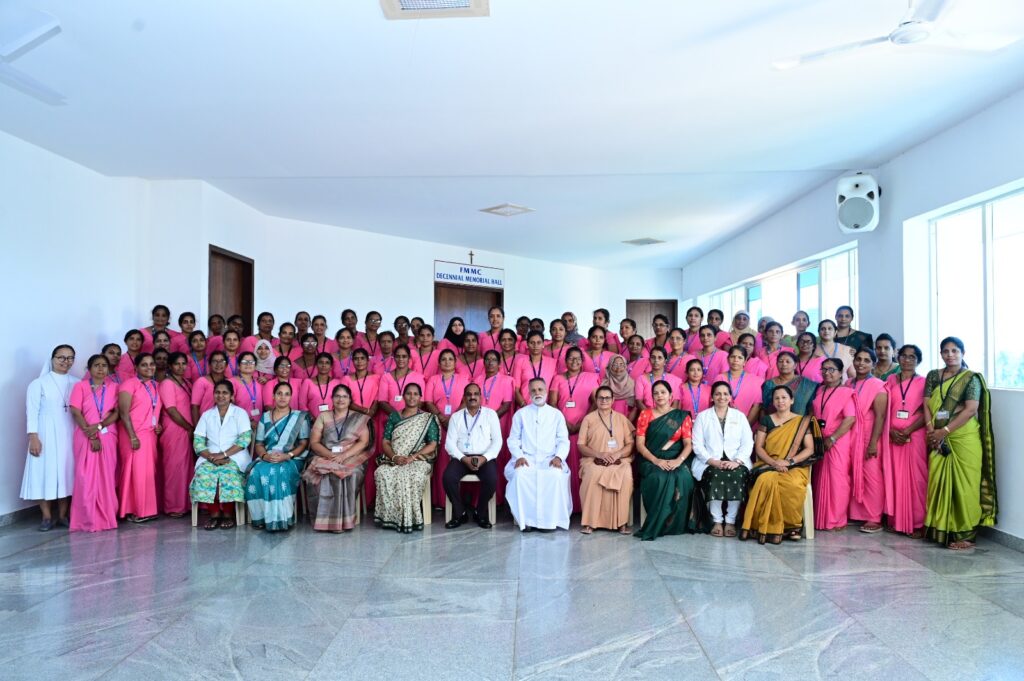
Mangalore, May 15, 2024 — The Department of Obstetrics and Gynaecological Nursing of Father Muller College of Nursing (a unit of Father Muller Charitable Institutions ), in collaboration with the Department of District Health and Family Welfare, Mangalore, organized an International Midwifery Day celebration at the Decennial Memorial Hall today. The event commenced at 9 a.m. with an enlightening talk on HPV by Dr. Deepa Kanagal, Head of the OBG Department at Father Muller Medical College and Hospital.
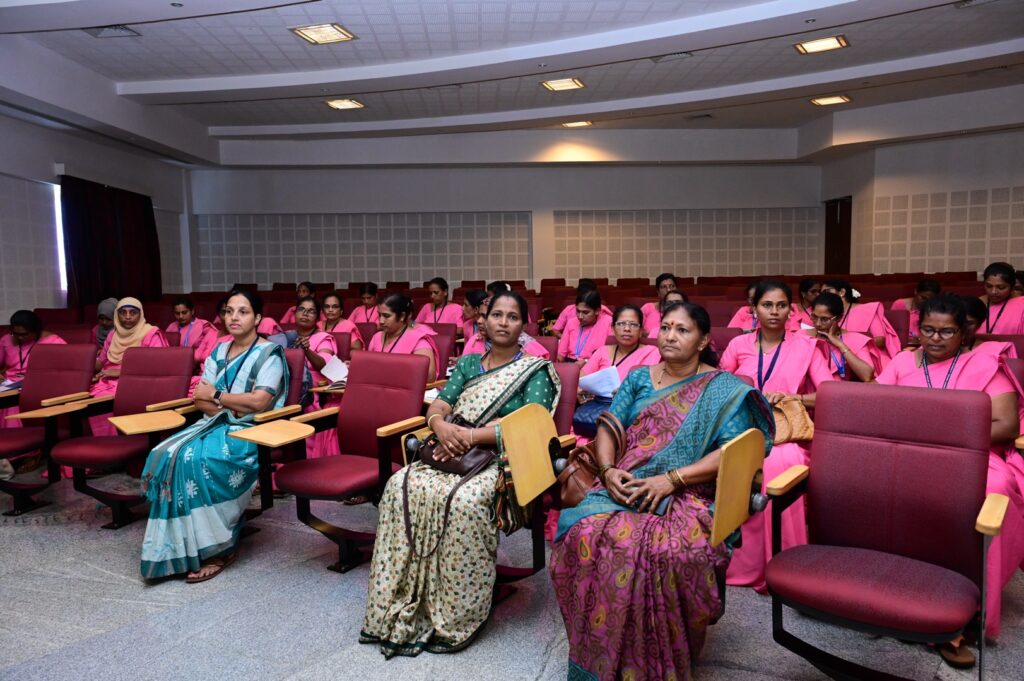
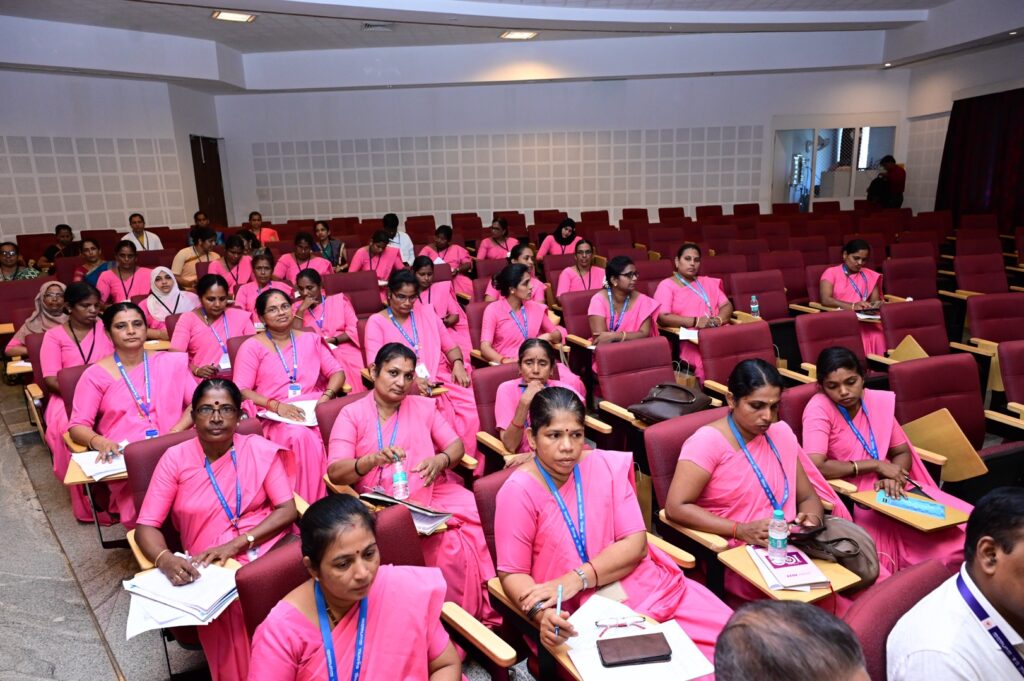
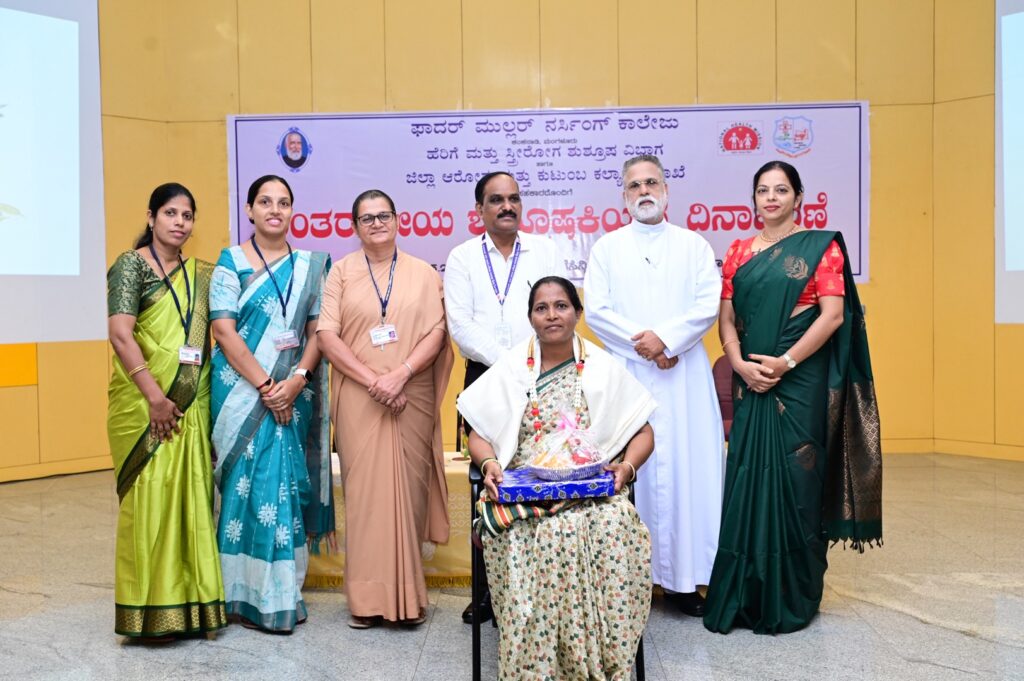
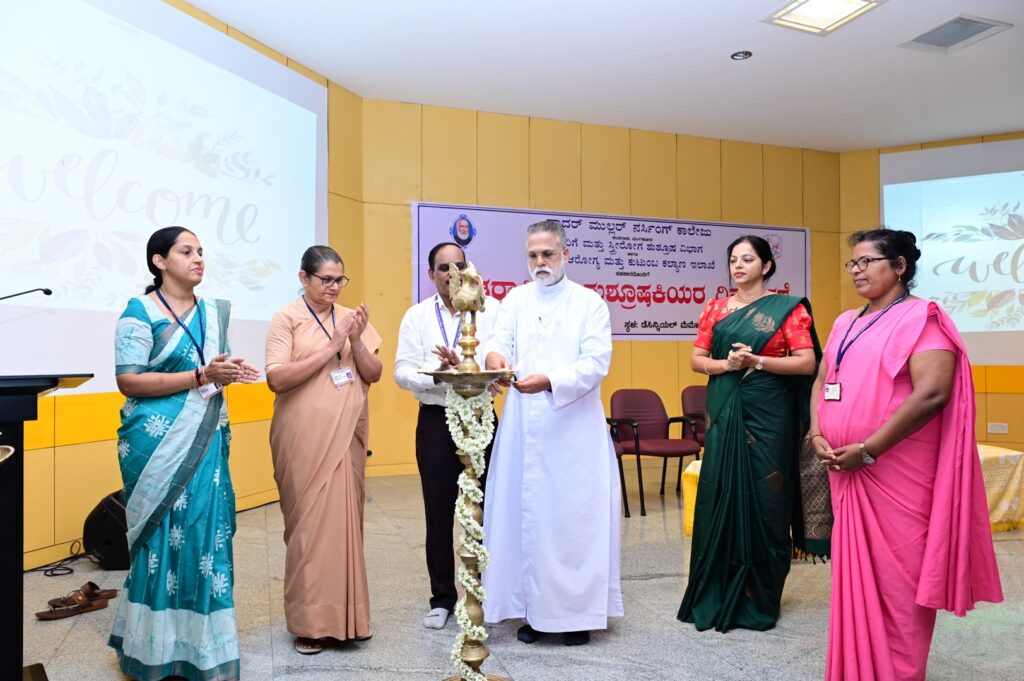
Dr. H. R. Thimmaiah, District Health Officer of Mangalore, emphasized the invaluable contributions of midwives and Asha workers to society. He underscored the continuous nature of learning and the critical roles of both mothers and nurses, noting that without women or nurses, the world would cease to function.
Rev. Fr. Richard Aloysius Coelho, Director of Father Muller Charitable Institutions, delivered the presidential address. He highlighted the often-overlooked hard work of Asha workers who go door-to-door providing essential health services and encouraged participants to seize the opportunities presented to them.
The event also honored Mrs. Damayanthi N., an ASHA worker, for her dedicated service to women and children. The session concluded with Ms. Clerita Lobo proposing the vote of thanks.
Following the formal proceedings, the OBG Nursing Department conducted hands-on sessions covering CPR, first aid management during emergencies, and breast self-examination. Additionally, a campus tour showcased the facilities available at the college to the delegates. A total of 66 ASHA workers from Dakshina Kannada participated in the workshop, which concluded at 1:30 p.m.
The celebration not only recognized the critical work of midwives and ASHA workers but also provided valuable training and insights, reinforcing the essential role these professionals play in the healthcare system.
—
The Potential of Fasting as a Cancer Treatment Strategy | How Fasting Affects Glucose Metabolism | Global TV
Understanding the Intersection of Fasting, Glucose Metabolism, and Cancer
By NV Paulose with Paramjit Kaur
Fasting, the practice of abstaining from food for extended periods, has gained popularity in recent years due to its potential health benefits. One area of particular interest is its impact on glucose metabolism and its potential implications for cancer treatment. There is a complex relationship between fasting, glucose metabolism, and cancer. We should find out ways and means that suit with our health conditions and the changes that we are looking forward. Here we delve into a general stream of thoughts that can give a basic insight about the vast possibilities to achieve advancements in healthcare and the antiaging process.
The Role of Glucose in the Body
Glucose is a simple sugar and the primary source of energy for the body’s cells. When we eat carbohydrates, they are broken down into glucose during digestion and absorbed into the bloodstream. In response, the pancreas releases insulin, a hormone that helps transport glucose from the bloodstream into cells, where it can be used for energy. Any excess glucose is stored in the liver and muscles for later use.

The Warburg Effect: Cancer’s Dependence on Glucose
Cancer cells have a high demand for glucose, which they use as a source of energy to fuel their rapid growth and proliferation. This phenomenon is known as the “Warburg effect,” named after the scientist Otto Warburg who first observed it in the 1920s. Even in the presence of oxygen, cancer cells preferentially use glycolysis (the breakdown of glucose) to produce energy, which is less efficient than oxidative phosphorylation. As a result, cancer cells consume large amounts of glucose to support their rapid growth and division.
The Potential of Fasting as a Cancer Treatment Strategy
Given cancer cells’ dependence on glucose, researchers have explored targeting glucose metabolism as a potential strategy for cancer treatment. Some cancer treatments, such as certain chemotherapy drugs and targeted therapies, work by interfering with the ability of cancer cells to take up and use glucose, effectively starving the cancer cells of their energy source.
How Fasting Affects Glucose Metabolism
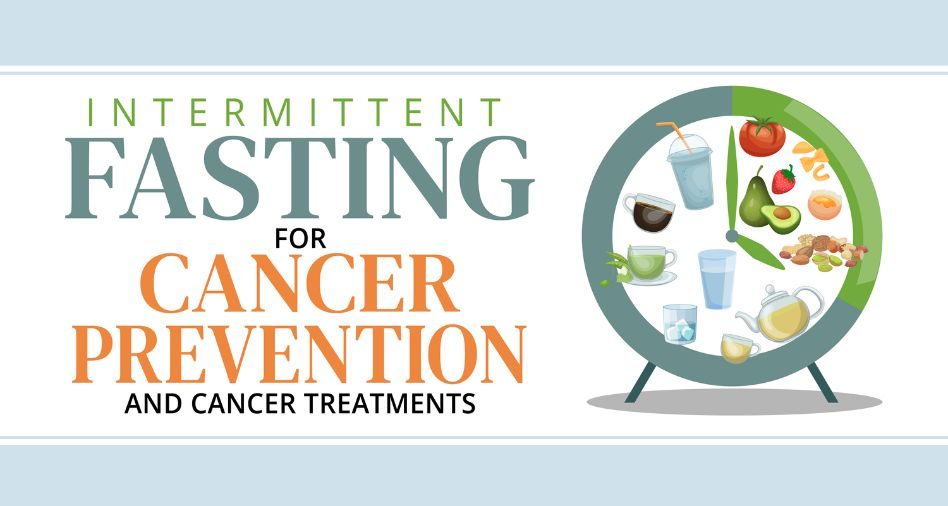
When we fast, especially for extended periods, several changes occur in the body’s glucose metabolism. Initially, insulin levels drop, and the body starts using stored glucose for energy. Once glycogen stores are depleted, the body begins breaking down fat stores into fatty acids and glycerol, which can be converted into energy through a process called lipolysis. As a result, glucose levels in the bloodstream decrease, which may help slow down the growth of cancer cells that rely on glucose for energy.
The Warrior Diet and Glucose Metabolism
One popular fasting regimen is the Warrior Diet, which involves fasting for 20 hours and consuming all daily calories within a 4-hour eating window. This fasting regimen can help limit glucose availability to cancer cells, potentially slowing down their growth. However, it’s essential to approach fasting, including the Warrior Diet, with caution and ensure that you’re still meeting your nutritional needs during your eating window.
Fasting, glucose metabolism, and cancer are interconnected in complex ways. While fasting and targeting glucose metabolism show promise as potential cancer treatment strategies, more research is needed to better understand the relationship between glucose metabolism and cancer growth and to develop more effective treatments targeting this pathway. In the meantime, it’s essential to approach fasting with caution and to consult with a healthcare professional before making any significant changes to your diet or fasting regimen.
References
Warburg, O. (1956). On the origin of cancer cells. Science, 123(3191), 309-314.
Pavlova, N. N., & Thompson, C. B. (2016). The emerging hallmarks of cancer metabolism. Cell metabolism, 23(1), 27-47.
Longo, V. D., & Mattson, M. P. (2014). Fasting: molecular mechanisms and clinical applications. Cell metabolism, 19(2), 181-192.
Vyas, M., & Gogineni, K. (2019). The role of fasting in cancer treatment. Journal of alternative and complementary medicine, 25(12), 1249-1255.
Note: Those who are looking for real interventions should go for a more detailed exploration of the complex relationship between fasting, glucose metabolism, and cancer, including potential treatment strategies and future directions for research. We suggest you to take further guidelines from Dr. PP Devan who is a renowned doctor and an ardent researcher on various health advancements and treatment protocols.
“One God; One People: Discovering God’s Script for the Wellbeing of the World” | Let us all grow together | Global TV
Embrace the magnificent world of evolution with prudence, for you have a role to play in the script of the scriptures. Explore this divine narrative through the works of Archbishop Mar Joseph Pamplany.
By NVP and Albert D’Silva
Spirituality offers us a profound way to engage with God’s creation on Earth, allowing us to witness the unfolding beauty of the world through our own eyes. Instead of worrying about God’s role, we are encouraged to immerse ourselves in the magnificent process of evolution, recognizing that it unfolds according to a divine prescription. Each of us has a unique role to play in this grand script of the scriptures. Therefore, we are urged to fill the spaces within this divine narrative with our names, contributing to the ongoing creation and unfolding of God’s plan for the world.
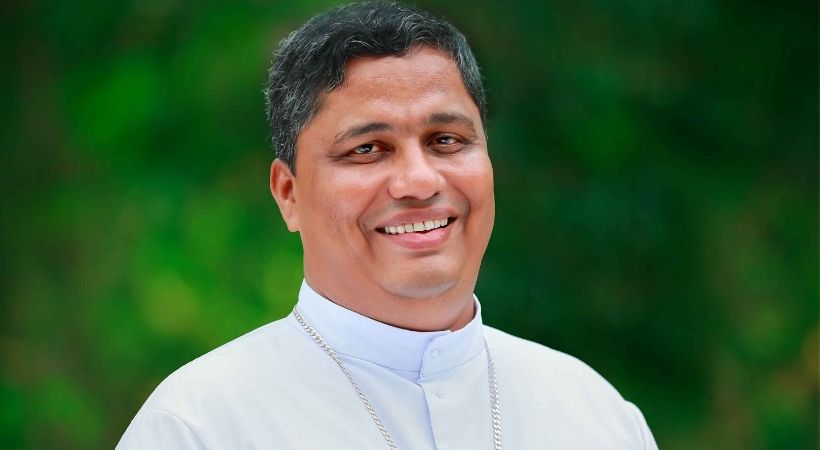
“Indian Christianity rubs shoulders with Jewish traditions; it is people-centric more than institution-centric.” Yes, that sentence effectively captures the essence of Archbishop Mar Joseph Pamplany’s exploration of the Jewish roots of the Addai-Mari Anaphora. It highlights the close relationship between Indian Christianity and Jewish traditions, emphasizing the people-centric nature of the Addai-Mari Anaphora and its focus on community rather than institutional structures.
Explore the Jewish Roots of the Addai-Mari Anaphora: Insights from Archbishop Mar Joseph Pamplany’s Crossing the Temple
Archbishop Mar Joseph Pamplany wrote Crossing the Temple to explore the Jewish roots of the Addai-Mari Anaphora, a prayer used in some Christian churches. This ancient text is central to the liturgy of the Assyrian Church of the East and the Chaldean Catholic Church. The Metropolitan’s work uncovers how this early Christian prayer connects with ancient Jewish practices.
In the exploration of the Jewish roots of the Addai-Mari Anaphora, Archbishop Mar Joseph Pamplany unveils a profound connection between Indian Christianity and Jewish traditions. The phrase “One God; One People” encapsulates the essence of this connection, emphasizing the shared monotheistic belief and the unity of purpose between Judaism and Christianity. As the Metropolitan delves into the ancient liturgical text, he invites readers to join in the journey of discovery, seeking God’s script for the wellbeing of the world. In this shared pursuit, the Addai-Mari Anaphora emerges as a testament to the people-centric nature of Indian Christianity, prioritizing community and the collective pursuit of God’s will over institutional structures. Through the Metropolitan’s insightful analysis, the Addai-Mari Anaphora serves not only as a bridge between two ancient traditions but also as a guiding light for contemporary efforts towards global harmony and well-being.

“One God; One People: Discovering God’s Script for the Wellbeing of the World”
Bridging Faiths: Embracing Shared Values and Interreligious Dialogue
The approach towards other religious traditions, as reflected in Archbishop Mar Joseph Pamplany’s exploration of the Jewish roots of the Addai-Mari Anaphora, is one of respect, dialogue, and recognition of shared values. The Metropolitan’s works underscore the interconnectedness of religious traditions and highlight the common ground shared by Christianity and Judaism. This approach encourages mutual understanding, cooperation, and appreciation for the diverse ways in which different religious traditions seek to understand and connect with the divine. By recognizing and celebrating these shared values and common goals, The Metropolitan’s works promote interfaith dialogue and cooperation, fostering a spirit of harmony and cooperation among different religious communities.
Background on the Addai-Mari Anaphora
The Addai-Mari Anaphora is an ancient prayer used during the Eucharist. It is named after Addai and Mari, two missionaries who helped spread Christianity. Their prayer is one of the oldest Christian liturgical texts still in use and holds a special place in Christian history for its connection with early Christian communities.
Jewish Roots Explored
The Metropolitan traces the Addai-Mari Anaphora’s strong links to ancient Jewish worship. He notes how early Christians were influenced by Jewish practices, as many were Jewish themselves. He identifies several elements in the Anaphora that mirror Jewish liturgy:
Structure and Themes: The prayer’s structure and themes resemble those in Jewish worship, such as blessings and thanksgiving.
Phrases and Symbols: Some words and symbols used in the Anaphora also appear in Jewish texts, reflecting common religious language.
By comparing the Anaphora with Jewish prayers, The Metropolitan shows how early Christians maintained their Jewish roots while creating new traditions.

Theological Implications
The Metropolitan’s work helps us understand early Christian theology and worship. He shows that early Christians didn’t abandon their Jewish heritage but blended their new faith with their Jewish past. This suggests that Christianity and Judaism share a deep connection, especially in their forms of worship.
The book also raises important questions about how Christian liturgy developed over time. If the Addai-Mari Anaphora has these strong Jewish connections, other Christian liturgies might too. The Metropolitan’s research encourages scholars to explore these connections further.
Critical Analysis
Archbishop Mar Joseph Pamplany’s research is thorough. He draws from historical texts, theology, and liturgical studies to make his case. His work highlights overlooked details that reveal how deeply connected the Jewish and Christian practices were. Early Christian liturgy is a complex field, and it’s often hard to be precise. His works reflect elaborate studies conducted to reach clear findings.
Crossing the Temple offers a fascinating look at the ancient roots of the Addai-Mari Anaphora. Archbishop Mar Joseph Pamplany’s work is valuable for anyone interested in early Christian worship. His research bridges the gap between Jewish and Christian practices, showing their shared history. He opens the door for future studies to continue exploring these important connections.
About the Author
Archbishop Joseph Pamplany is a respected scholar and religious leader known for his expertise in liturgical studies and early Christianity. He has dedicated much of his academic career to exploring the intersection of Christian liturgy and Jewish worship practices. As the author of Crossing the Temple: Jewish Roots of Addai-Mari Anaphora, Archbishop Mar Joseph Pamplany offers valuable insights into the historical and theological connections between the Addai-Mari Anaphora and ancient Jewish liturgical traditions.
Throughout his spiritual mission, Archbishop Mar Joseph Pamplany has contributed significantly to the field of liturgical studies, particularly in understanding the development of Christian worship practices. His research often focuses on the early Christian communities of the Mesopotamian region and their connection to Jewish tradition.
Archbishop Mar Joseph Pamplany serves as a youthful and proactive spiritual leader within the Christian community, leading one of the largest sectors of the catholic faith in Kerala, the entire Malabar region, and beyond, guiding the community into all-round prosperity by providing guidance and insight into matters of faith, youth, life, and practice. Through his writings and teachings, he continues to deepen our understanding of the catholic church in India and its rich historical and theological foundation.
Live authentically, and permit others to do so as well | Our courage becomes contagious | Global TV
Being true to oneself is The Ultimate Triumph
We are living in a confused world. The world is constantly bombarding everyone including the perpetrators and manipulators with expectations, norms, and societal pressures. Even the so-called controllers of the world are running helter-skelter, trying to find a firm place to stand. Fear of failure makes them more ferocious and very fervent in turning their dictations into dictums and doctrines.
Staying true to oneself is an extraordinary feat in today’s world. To be you and just like you is the greatest accomplishment and ultimate aim in life. Let the world constantly attempt to make us something else. It is designed in that way. But we find our greatest strength and deepest fulfillment in embracing our true selves.

The Power of Embracing Individuality
Being true to oneself isn’t just about staying true to who we are; it’s about celebrating what makes us unique. It’s about owning our strengths and weaknesses, preferences, and characteristics. When we embrace our individuality, we honor our authenticity. This authenticity is the foundation of genuine connections and meaningful relationships. Whether it’s in personal or professional spheres, staying true to oneself attracts trust and respect. People are drawn to those who are blatantly themselves, as it gives them permission to do the same.
In a society that often values conventionality over individuality, embracing what makes us unique can be a revolutionary act. It requires courage to resist the pressure to fit in and instead, choose to stand out. However, the rewards of embracing our individuality are immeasurable. When we are true to ourselves, we not only find deeper connections with others but also a greater sense of fulfillment and purpose in our own lives. That is how we are destined to be in the world. All other compromises that we make are the outcomes of our own confusions.
Defying Societal Pressures
Society often imposes rigid standards of beauty, success, and behavior. It dictates how we should look, what we should do for a living, and even whom we should love and live with. And they keep it changing on and off. However, these standards are often unrealistic and unattainable for many. By resisting these pressures and staying true to ourselves, we reclaim our power and define our own paths.
This resistance is not an act of rebellion of any sorts but an assertion of our right to be on ourselves and self-determined. It’s a clear declaration that our worth is not determined by society’s arbitrary standards but by our own values and beliefs.
In a world where we are bombarded with images and messages telling us how we should look, what we should own, and who we should aspire to be, it can be easy to lose sight of our own identity. Each person is inbuilt with a clear roadmap of accomplishments. By resisting societal pressures and being true to oneself only, we can break free from these constraints and live a life that is authentic to us.
Discovering Inner Peace
When we are true to ourselves, we find inner peace. We no longer need to pretend to be someone we’re not or constantly seek validation from others. Instead, we are comfortable in our own skin, content with who we are. This inner peace is invaluable, as it allows us to navigate life’s challenges with grace and resilience. We become less affected by external circumstances and more anchored in our sense of self. Even in the face of adversity, we remain steadfast, knowing that our worth is not dependent on external validation. We are empowered within.
Finding inner peace is not always easy, especially in a world that is constantly pulling us in different directions. However, by being true to ourselves, we can find a sense of calm and contentment that is not easily shaken. Instead of seeking validation from others, we learn to trust ourselves and our own instincts, knowing that we are enough just as we are. Of course, we should hear all that the people are trying to tell us. At times, we should shut our ears to hear our inner voice.
Inspiring Others to Be True to Themselves
Finally, being true to oneself is not just about ourselves; it’s also about inspiring others to do the same. When we live authentically, we give others permission to do so as well. Our courage becomes contagious, encouraging those around us to embrace their true selves and live life on their own terms. In a world where conformity is often prized above all else, being true to oneself is a revolutionary act. It challenges the status quo and paves the way for a more inclusive, accepting society where everyone is free to be themselves. Transparency is a great virtue.
Staying true to oneself is indeed the greatest accomplishment. It requires courage, resilience, and a willingness to defy societal expectations. However, the rewards are immeasurable. By being true to ourselves, we find inner peace, inspire others, and live a life that is authentic to our values and beliefs. We should learn and put efforts to be ourselves. Forget the world that is constantly trying to make us and everyone around us something else. Being ourselves is an accomplishment.
Remain grounded and compassionate in your practice; Fr. Dennis D’Sa | Global TV
Celebration of 25-Year Reunion and Guruvandana of MBBS Batch ’99 at Father Muller Medical College Mangalore | Global TV
The Muller Mini Convention Centre was abuzz with nostalgia and celebration as the esteemed Father Muller Medical College commemorated the 25th reunion and Guruvandana of the pioneering MBBS Batch ’99, the college’s first MBBS batch. Organized with meticulous care and reverence, the event was a testament to the bonds forged and the journey shared by these esteemed medical professionals.
The day began with a soulful Thanksgiving Mass at the Fr. Muller Chapel, celebrated by Rev. Fr. Ajith Menezes, the Administrator of FMMC. The atmosphere was uplifted by the melodious choir sung by the Alumni of Batch ’99, filling the air with a sense of reverence and gratitude. After the mass, the batch of MBBS ’99 gathered in their classroom to attend a class taken by their teacher, Dr. Hilda Pinto, retired professor from the Department of Microbiology, to relive their student days.

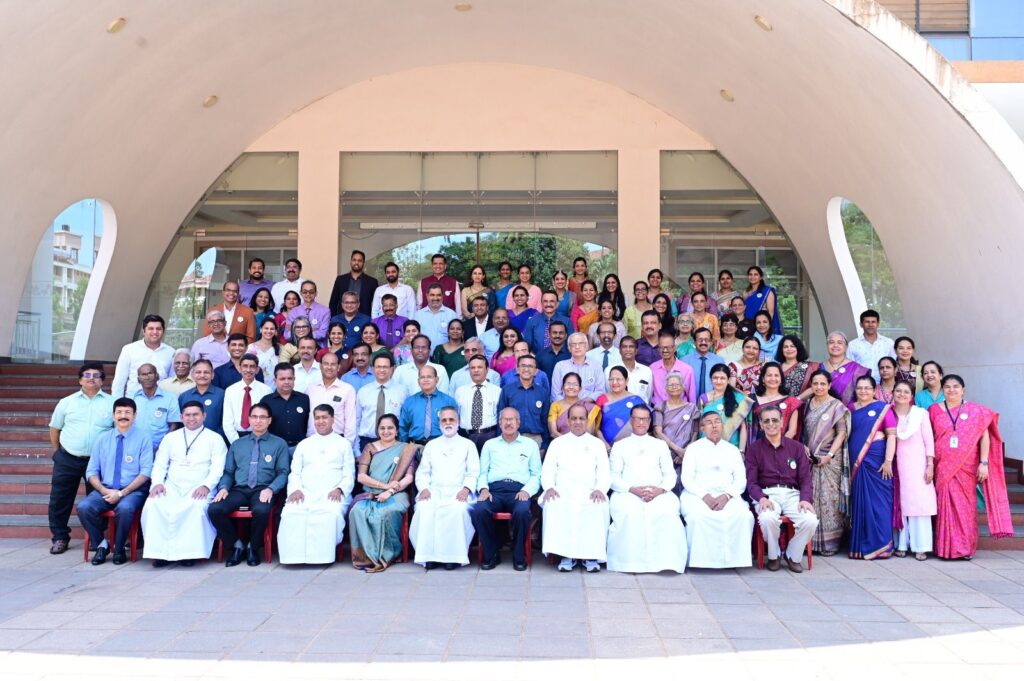
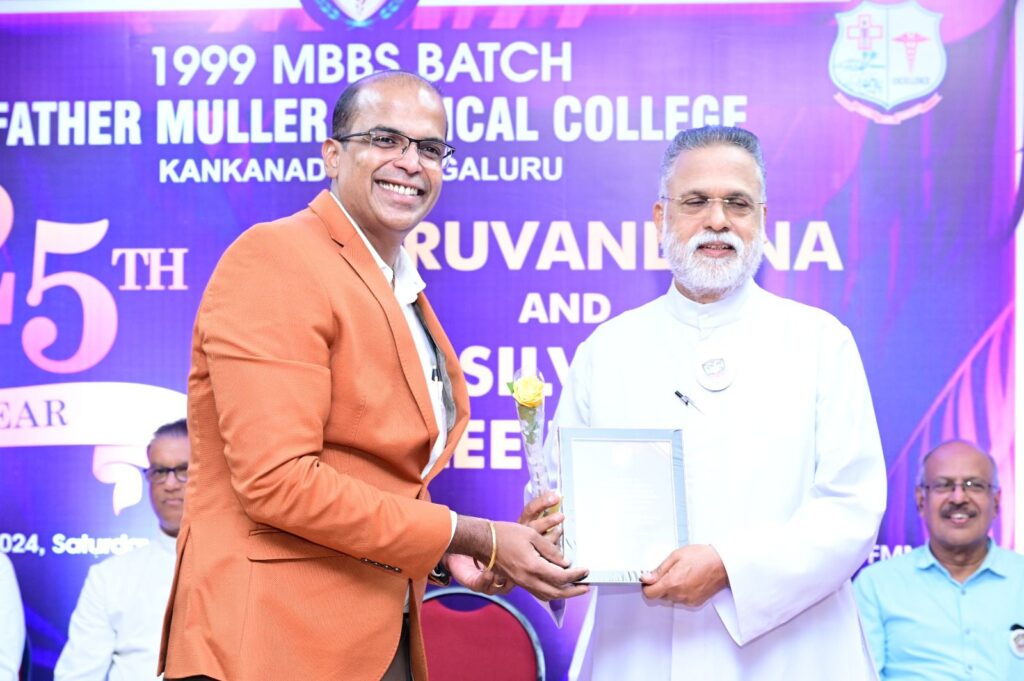

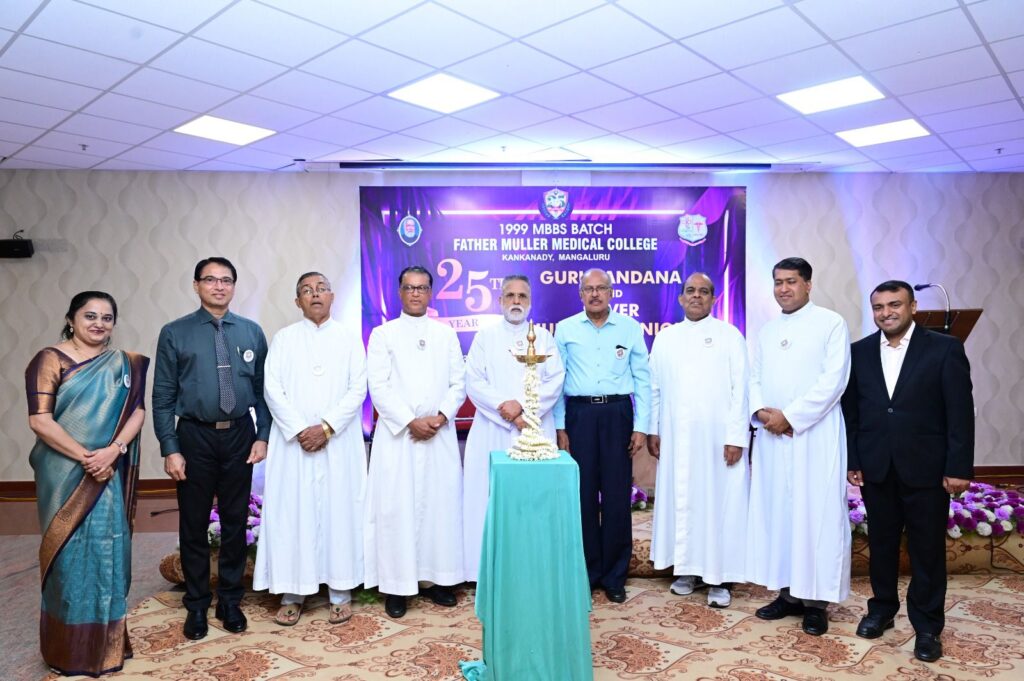
Following the Mass, the official program commenced at the Muller Mini, 2nd-floor Convention Centre, with the 25-year reunion celebration of the MBBS Batch ’99. The event commenced with a soulful prayer song by Dr. Jermine Harriet and team, setting the tone for the evening’s festivities. The event was graced by esteemed personalities including Chief Guest Dr. Sanjeev Rai, former Dean of FMMC, and Guest of Honour Fr. Dennis D’Sa, former administrator of FMMC. Other dignitaries on the dais included Rev. Fr. Richard Coelho, Director FMCI; Fr. Ajith Menezes, Administrator FMMC; Fr. Valerian D’Souza & Fr. William Menezes, former administrators of FMMC; and Dr. Antony S. D’Souza, Dean FMMC.
The programme was anchored by the alumni of FMMC, Batch ’99, Dr. Gladys Rodrigues, Consultant Vitreo Retinal Surgeon and Associate Professor in the Department of Ophthalmology at KMC Mangalore, and Dr. Kusuma Sachin, Physiologist, and family practitioner in Mangalore. Dr. Archana Bhat, Professor of Medicine at FMMC and President of the Alumni Association, delivered a warm welcome speech, acknowledging the significant contributions of the alumni to the field of medicine and society at large. The ceremonial lighting of the lamp, a symbol of enlightenment and auspiciousness, was performed by all the dignitaries, accompanied by the class representative, Dr. Thomas John, a Consultant in Internal Medicine from London, UK.
In his address, Dr. Sanjeev Rai praised the growth and impact of the batch, highlighting their vital role as doctors in society. He reminisced about their humble beginnings at Father Muller Charitable Institutions, acknowledging the journey that has led them to success today.
Fr. Dennis D’Sa emphasized the importance of introspection and service, urging the alumni to remain grounded and compassionate in their practice. He expressed gratitude for the education and values instilled by their gurus, noting the balance between technological advancement and humanistic care.
Director Rev. Fr. Richard Coelho commended the batch for their hard work, dedication, and perseverance in serving humanity. He emphasized the importance of the art of medicine and the love of humanity, encouraging the doctors to go beyond their comfort zones to bring solace to their patients.
The cultural program featured a mesmerizing dance performance by Dr. Aneeshya Prasad, a consultant Oncopathologist from Coventry, UK. The felicitation of teachers and non-clinical staff who contributed to the ’99 batch’s education added a heartfelt touch to the evening.
Slideshows showcasing tributes to departed teachers, campus memories, and video messages from absentees further enriched the event. Dr. Jeedhu Radhakrishnan, Head of the Department of Emergency at KMC Mangalore and Regional Head -Department of Emergency Medicine of Manipal Hospitals (Goa, Mangalore, and Kerala), delivered a gracious vote of thanks, expressing gratitude to all who made the event a success.
The reunion concluded with a photo session and a sumptuous lunch along with talks by some of the teachers who fondly remembered the good old days, providing an opportunity for the alumni to reconnect and reminisce. It was heartening to see doctors from around the world come together to celebrate this milestone, showcasing the strong bonds and cherished memories forged during their time at Father Muller Charitable Institutions. The event was not just a celebration of the past but also a reaffirmation of the bonds, values, and shared experiences that continue to unite the MBBS Batch ’99 family.
Constructive Practices | Navigating the Thin Line between Corrupt and Constructive Practices | Global TV
There is only a very thin layer between corrupt practices and Constructive practices in the world. Every wealth becomes public wealth in the long run.
Building a Prosperous Nation through Constructive Practices is very important today. When everyone adheres to principles, the entire country prospers. The prevalence of corrupt practices not only undermines societal trust but also hinders the growth of the nation. However, it’s important to recognize that there are ample opportunities for individuals to thrive through ethical and professional means.
People who keep themselves away from the system under the pretext of corruption should join hands with others to encash the opportunities that are open and plenty to explore and share. We should come out of the small world of governance and get into the large world of opportunities. Informality and flexibility are the coins more powerful than Bitcoin today to make people involved in wealth creation.

Recognizing the True Wealth of a Nation
In any society, people are the true wealth. When individuals are given the opportunity to utilize their skills and talents in a constructive manner, the entire nation benefits. Therefore, it is crucial for organizations and institutions to welcome individuals, identify their strengths, and provide them with the necessary support and resources to thrive.
Creating Opportunities for Growth
There are numerous avenues through which individuals can contribute to the growth of the nation without resorting to corrupt practices. By creating opportunities for people to engage in meaningful work, organizations can harness their potential and drive positive change.
Empowering Through Interventions
Various interventions such as Neuro-Linguistic Programming (NLP), Appreciative Inquiry (AI), Enneagram, and programs like the Landmark Forum can be instrumental in helping individuals unlock their full potential. These interventions provide individuals with the tools and techniques they need to identify their strengths, overcome challenges, and achieve their goals.
Adding Value to Society
One of the most effective ways to contribute to the nation’s growth is by adding value wherever possible. For example, stepping into the agriculture sector can have a significant impact. Ensuring farmers receive fair prices for their products is an important step that we can easily take up at the local level.
Community Engagement and Social Responsibility
Organizing events such as Fresh Farm Festivals can bring communities together and create opportunities for social and economic development. By bringing people from different villages together, we can foster a sense of community and solidarity while also promoting economic growth.
Monetizing Social Initiatives
Charitable initiatives such as feeding the poor can also have a significant impact on society. By properly monitoring and monetizing these events, we can ensure that all stakeholders benefit. By sharing the revenue generated from these initiatives with all stakeholders, we can create a sustainable model that incentivizes ethical behaviour and promotes the common good.
Building a prosperous nation requires the collective effort of its citizens. By embracing ethical practices, creating opportunities for growth, and fostering a culture of social responsibility, we can create a society where everyone can thrive.
Navigating the Thin Line between Corrupt and Constructive Practices
In the realm of human endeavours, the line between what is corrupt and what is constructive can often appear blurred. The distinction between these two sets of practices is vital, yet the line that separates them is often finer than we might think. Understanding this delicate balance is crucial, as it can have significant implications for individuals, organizations, and society as a whole.
The Gray Area
At first glance, corrupt and constructive practices might seem diametrically opposed. However, upon closer inspection, we find that there exists a gray area where these two categories intersect. In this gray area, actions that might be deemed corrupt could, under certain circumstances, also be viewed as constructive.
Defining Factors
To better understand the distinction between corrupt and constructive practices, it is essential to examine the defining factors that separate the two. Several key factors come into play, including ethics, intent, legality, and impact.
Ethics plays a significant role in determining whether a practice is corrupt or constructive. Actions that prioritize honesty, integrity, and fairness are generally considered constructive, while those that involve deception, exploitation, or dishonesty are often seen as corrupt. However, ethical considerations alone are not always sufficient to make this determination. Intent is also crucial.
Ethical Decision-Making
Given the complexities involved, how can individuals and organizations navigate the thin line between corrupt and constructive practices? The key lies in ethical decision-making. First and foremost, it is essential to consider the ethical implications of one’s actions. This involves reflecting on the potential consequences of a particular course of action and considering whether it aligns with one’s values and principles.
Transparency is also crucial. By being transparent about their actions and intentions, individuals and organizations can help ensure that their practices are seen as constructive rather than corrupt.
Furthermore, it is important to seek input from others and consider multiple perspectives. By soliciting feedback from colleagues, stakeholders, and experts, individuals and organizations can gain valuable insights into the potential ethical implications of their actions.
Finally, it is essential to hold oneself and others accountable for their actions. By establishing clear ethical standards and holding themselves and others accountable for adhering to those standards, individuals and organizations can help ensure that their practices remain constructive rather than corrupt.
The line between corrupt and constructive practices is indeed thin, but it is not insurmountable. By considering factors such as ethics, intent, legality, and impact, individuals and organizations can navigate this line with confidence. By engaging in ethical decision-making, being transparent about their actions and intentions, seeking input from others, and holding themselves and others accountable, they can help ensure that their practices are seen as constructive rather than corrupt. In doing so, they can contribute to a more ethical, fair, and just society for all.
Building a prosperous nation requires the collective effort of its citizens. By embracing ethical practices, creating opportunities for growth, and fostering a culture of social responsibility, we can create a society where everyone can thrive. Let us work together to build a nation where corruption has no place, and where every individual has the opportunity to reach their full potential.
Studying criminology at the School of Social Work, Roshni Nilaya, Mangalore, opens up a world of opportunities | Global TV
Unlocking Opportunities: Study Criminology at School of Social Work, Roshni Nilaya, Mangalore
Criminology, the study of crime from a social perspective, has become increasingly important in understanding the dynamics of society. At the School of Social Work, Roshni Nilaya, Mangalore, students are offered a unique opportunity to delve into this fascinating field and make a difference in society.
Instagram post
History and Mission:
Established in 1978, the School of Social Work has been a pioneer in offering Criminology as one of the optional subjects for BA undergraduates under Mangalore University. With a mission to provide quality education and promote awareness about social justice, the school has been instrumental in shaping the minds of students interested in understanding the causes of crime and the individuals who commit them.

Curriculum and Practical Exposure:
Students at the School of Social Work are exposed to a comprehensive curriculum covering various aspects of criminology, including:
Basic principles of crimes
Social problems and their reparations
Forensic Science
Scientific Investigation
Court Functions
Criminal Psychology
Cyber Investigation
Penology
Victimology
Forensic Medicine
Police Administration
Security and Vigilance
The school places a strong emphasis on practical learning, with students participating in laboratory experiments and field exposure visits. These visits include trips to penal, criminological, and forensic important places such as Police Stations, Correctional Institutions, Forensic Labs, Cyber Police Stations, and more.

Teaching Methods and Best Practices:
The School of Social Work employs various teaching methods to ensure students receive a well-rounded education in criminology. These include assignments, projects, presentations, and practical classes where students engage in activities such as:
Identifying criminologically important crime news items
Simulated crime scenes
Mock interrogation of suspects and witnesses
Writing simulated FIRs, issuing summons, warrants, and more
One of the best practices of the department is its collaboration with the police department, offering students rifle training, enhancing their practical skills.

Objectives and Career Opportunities:
The objectives of the department include:
Creating awareness on crime prevention and its consequences on society
Imparting knowledge on the scientific examination of crime scenes
Understanding the behavior of anti-social elements and their rehabilitation
Learning the functions of the Criminal Justice System
Upon completion of their studies, students have a wide range of career options, including:
Job opportunities in police establishments
Career opportunities in correctional institutions
Opportunities in vigilance and security departments of banking and financial institutions
Establishing private detective agencies or working for such agencies
Opportunities in Government and Private Forensic Science Laboratories
Studying criminology at the School of Social Work, Roshni Nilaya, Mangalore, opens up a world of opportunities for students interested in making a difference in society. With a comprehensive curriculum, practical exposure, and strong career prospects, the course equips students with the knowledge and skills needed to excel in the field of criminology and forensic science.
For more information; Ms. Sarik Ankitha, HoD : +91 86605 16809
വെളുത്തേടത്തുപറമ്പിൽ മാണിയച്ചൻ | ഒരു തുറന്ന പുസ്തകം |
ദേ വന്നു ദാ പോയി എന്ന് പറഞ്ഞതുപോലെ മൂന്നുവർഷം. കൊടകിലെ സിദ്ധാപുരത്തുനിന്നും ഒരു ലോഡ് ചക്കയുമായി കാങ്കനാടി സെൻറ് അൽഫോൻസാ ദേവാലയത്തിൽ വന്ന വെളുത്തേടത്തുപറമ്പിൽ മാണിയച്ചൻ ജഡിക്കൽ ഫൊറോനാ വികാരിയായി പോകുമ്പോൾ ഇവിടെനിന്ന് ഒന്നും കൊണ്ടുപോകുന്നില്ല. പകരം സൗത്ത് ഇന്ത്യൻ ബാങ്കിൽ അടക്കം നിരവധി സ്ഥിരനിക്ഷേപ സർട്ടിഫിക്കറ്റുകൾ നമുക്കുവേണ്ടി കരുതി വച്ചിട്ടാണ് ആദ്ദേഹം ഇവിടെനിന്നും മടങ്ങി പോകുന്നത്. മാണിയച്ചനെക്കുറിച്ച് പറയുമ്പോൾ അദ്ദേഹം പച്ചയായ ഒരു മനുഷ്യസ്നേഹി ആണെന്ന് നമ്മുക്ക് പറയാൻ കഴിയും.
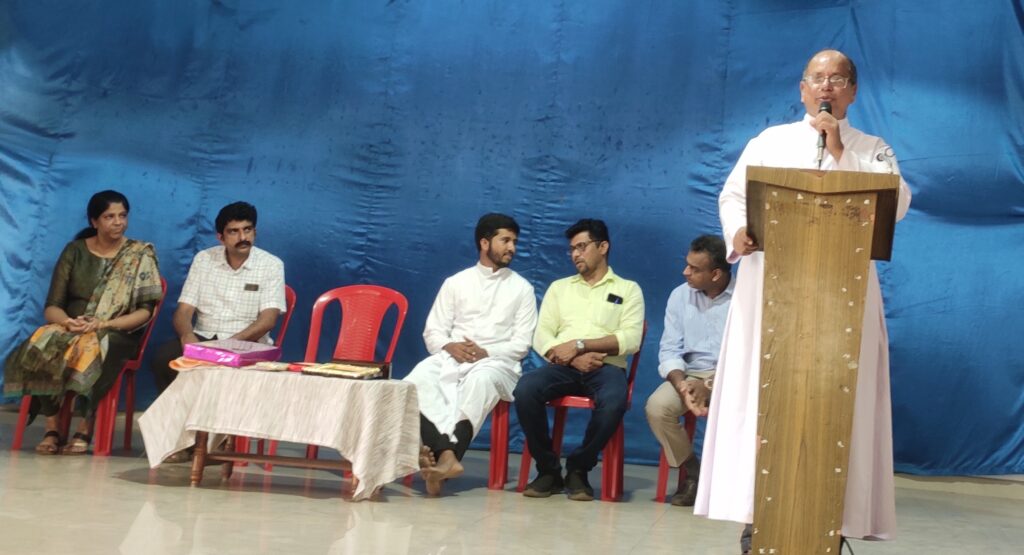
പുറമെനിന്ന് നോക്കുന്നവർക്ക് ഒരു ഒറ്റയാൻ എന്ന് തോന്നിക്കുമെങ്കിലും പ്രവർത്തിക്കുന്നവർക്കെല്ലാം പ്രോത്സാഹനം നൽകുന്ന സ്നേഹനിധിയായ വൈദികനാണ് അദ്ദേഹം എന്ന് നിസ്സംശയം പറയാൻ എനിക്ക് കഴിയും. അദ്ദേഹം ഒരു തുറന്ന പുസ്തകമാണ്. തന്നെ ആകർഷിക്കുന്ന ആശയങ്ങളെയെല്ലാം സ്വാംശീകരിച്ച് തന്റേതായ രീതിയിൽ പ്രാവർത്തികമാക്കുന്ന രീതിയാണ് അദ്ദേഹത്തിനിഷ്ടം.
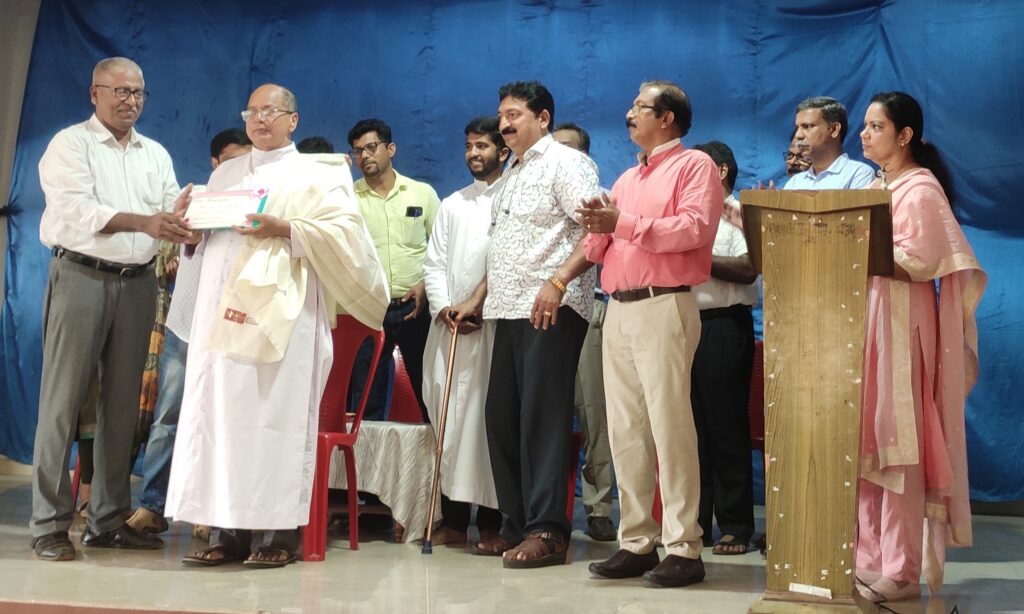
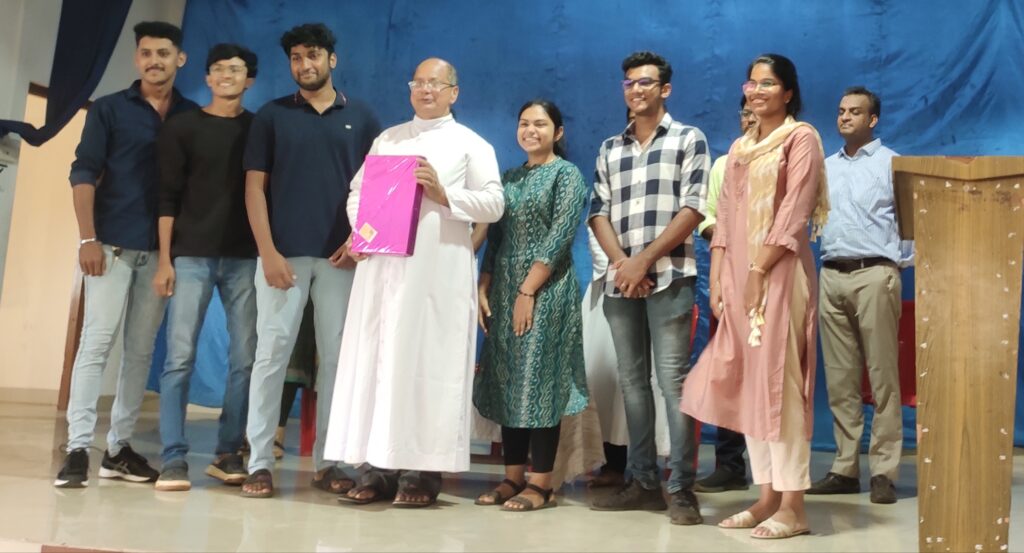
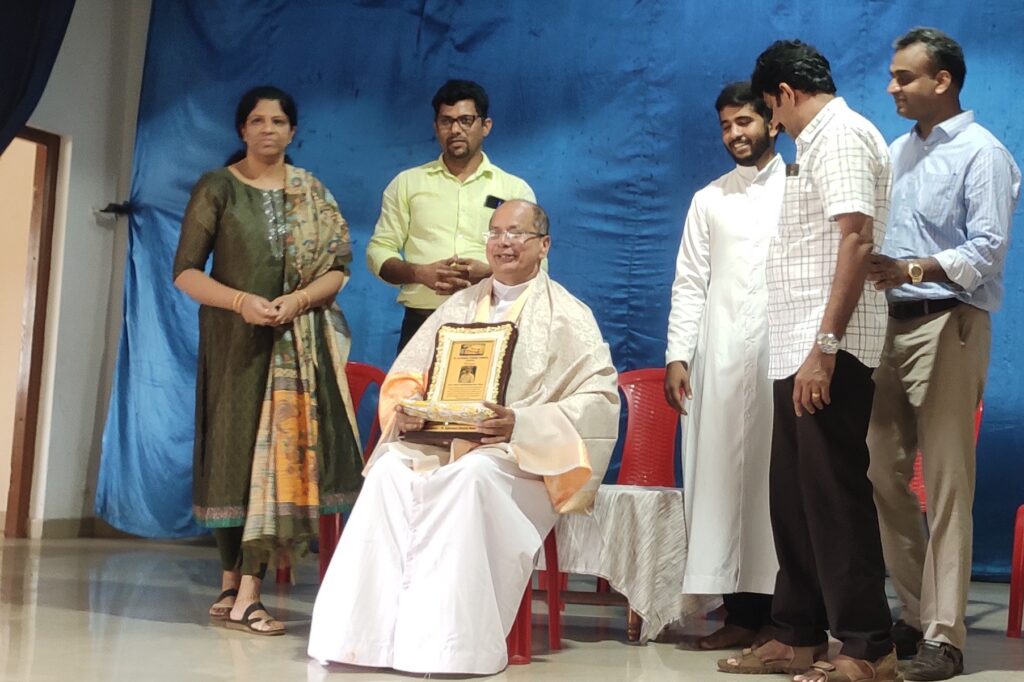
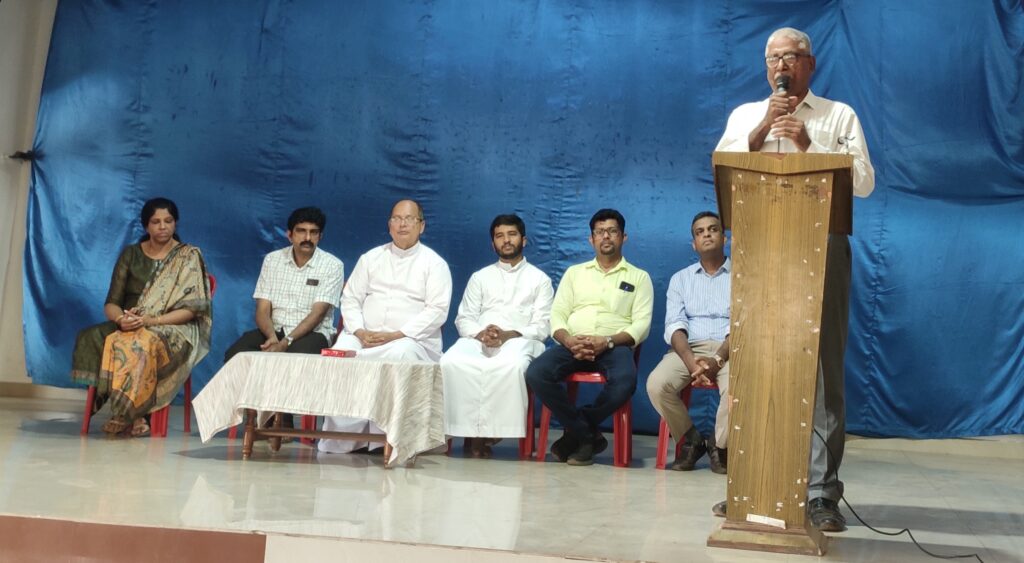
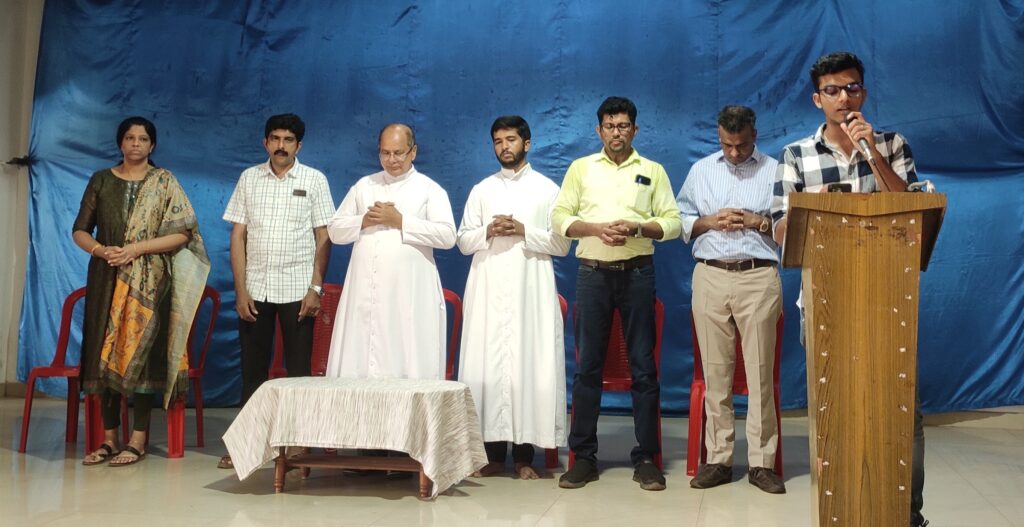
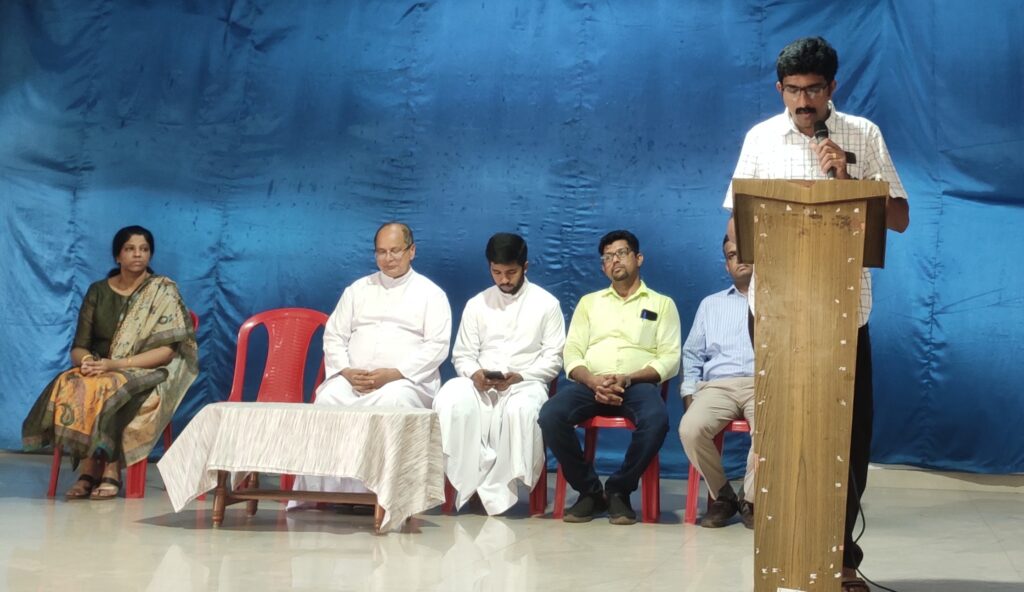
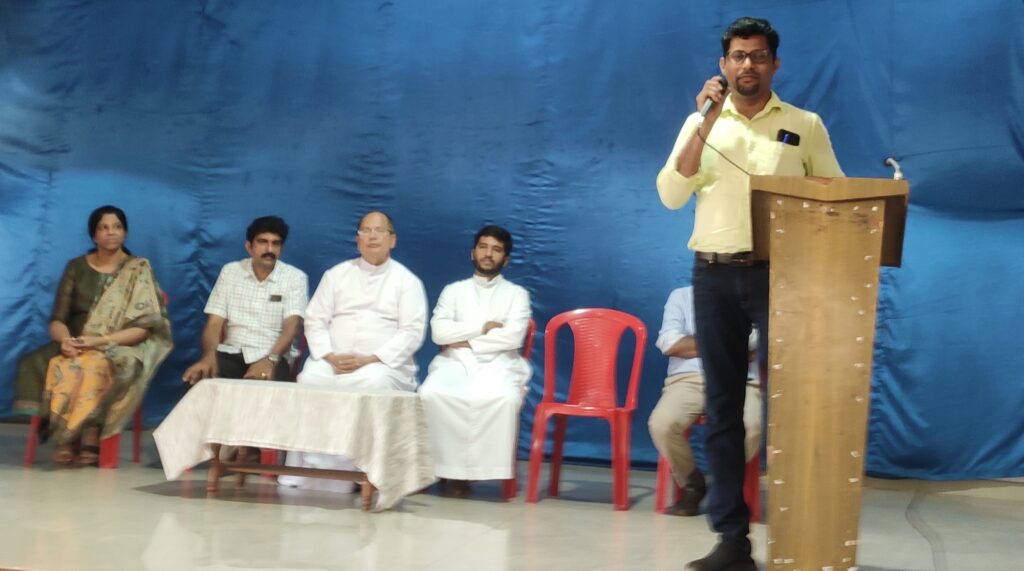
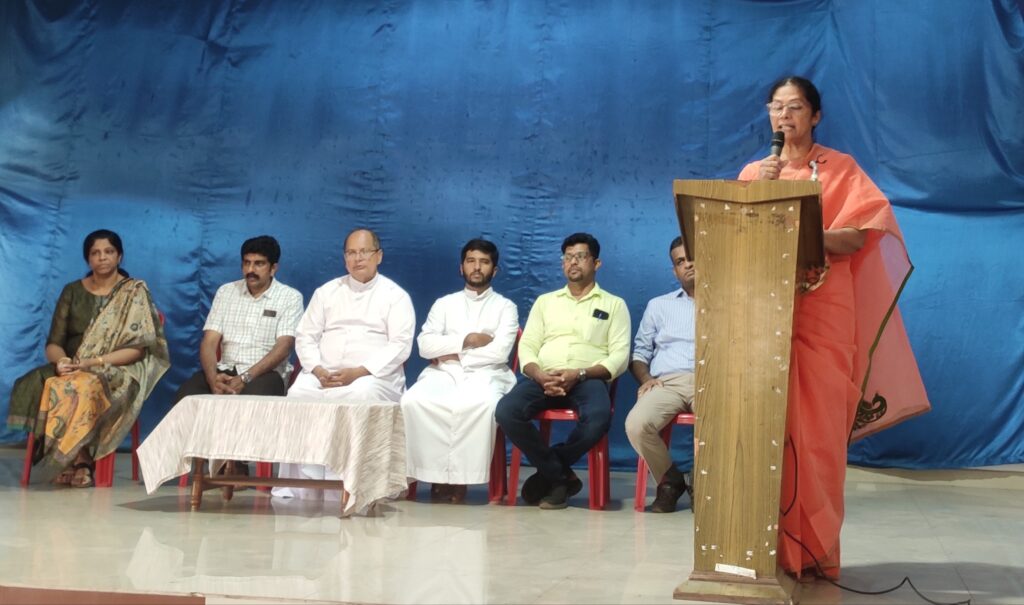
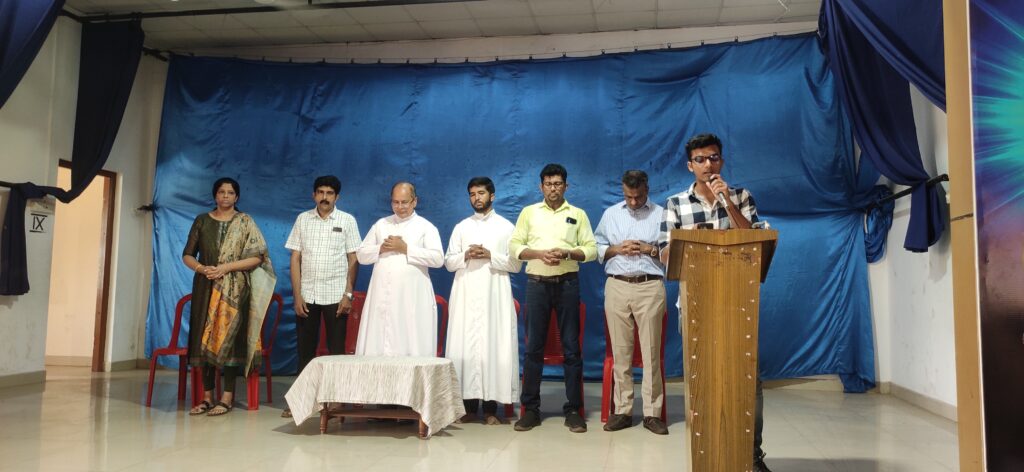
അദ്ദേഹത്തിൻ്റെ മനസ്സ് നിറയെ ഭാവിയെക്കുറിച്ചുള്ള സ്വപ്നങ്ങളാണ്. ഒരേ സമയം ദീർഘ ദർശിയും ദാർശനികനുമായ അദ്ദേഹം തുടങ്ങി വച്ചതെല്ലാം വൻ സംരംഭങ്ങൾ ആയി മാറിയിട്ടുണ്ട്. വിദ്യാഭ്യാസ മേഖല മുതൽ സാമ്പത്തിക രംഗത്തുവരെ തനതായ മുദ്ര പതിപ്പിക്കാൻ അദ്ദേത്തിന് കഴിഞ്ഞു. കങ്കനാടിയിൽ കഴിഞ്ഞ വർഷം തുടക്കമിട്ട ബാംങ്കിംഗ് സംരംഭം ഒരു വട വൃക്ഷം ആയി മാറുമ്പോൾ അതിൻ്റെ ആഘോഷങ്ങളിൽ പങ്കെടുക്കാൻ മാണിയച്ഛനെ വിളിക്കാൻ അന്നത്തെ ഭാരവാഹികൾ മറന്നുപോയി എന്ന് വരാം. അപ്പോഴും ചരിത്രത്തിൻ്റെ ഇടനാഴിയിൽ കുറിച്ചിട്ട ഈ പ്രാരംഭ ചിത്രം മായാതെയിരിക്കും എന്നുള്ളതാണ് സത്യം.
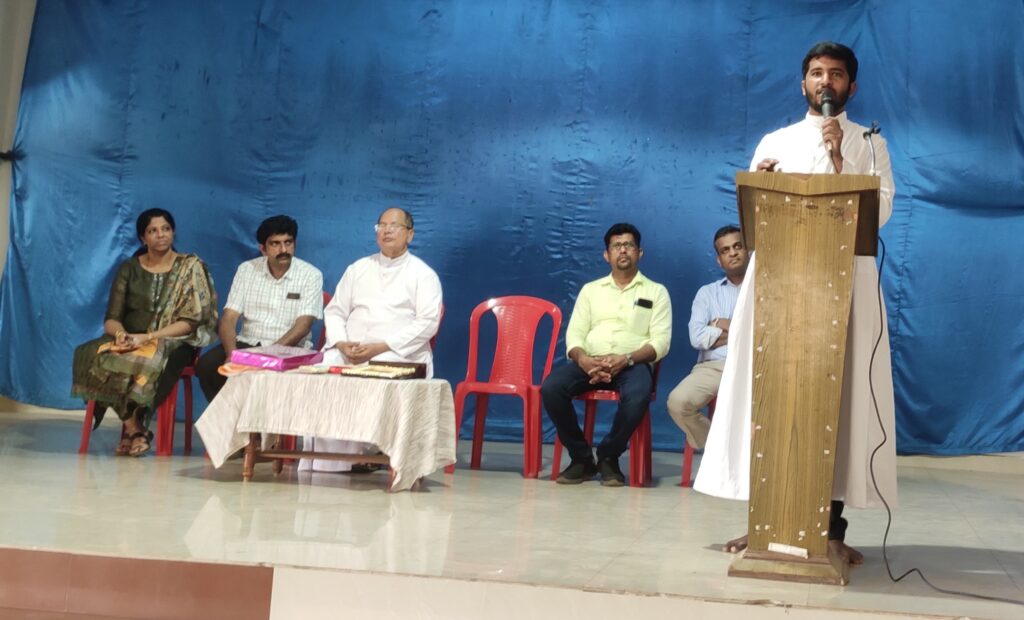
സ്ഥിരോത്സാഹിയായ അദ്ദേഹം 20:20 ക്രിക്കറ്റ് കളിക്കാരനെപ്പോലെ എല്ലാ ബോളിലും റൺസ് എടുക്കുന്ന പ്രകൃതക്കാരനാണ്. പലതുള്ളി പെരുവെള്ളം എന്ന് ചെറുപ്പം മുതലേ മനസ്സിലാക്കിയിട്ടുള്ള മാണിയച്ചൻ റൺസ് എടുക്കാനുള്ള ഒരവസരവും പാഴാക്കുകയില്ല. ഇടവകക്കാരുടെ വീടുകളിൽ ഇരിക്കുന്ന പത്തുരൂപ നാണയങ്ങൾ ശേഖരിച്ച് ആണ് അദ്ദേഹം മംഗലാപുരത്ത് നമ്മുടെ അഭിമാനം ആകാനിരിക്കുന്ന പള്ളിപണിയുടെ ഫണ്ടുശേകരണം ആരംഭിച്ചത് എന്ന് നമ്മൾ ഓർക്കണം. പിന്നീട് അവിടവിടെ ഇരിക്കുന്ന പഴയ സ്വർണ്ണ ശകലങ്ങളിലേക്ക് അത് കടന്നുചെന്നു. അച്ചാറും മറ്റും വില്പന നടത്തിയ വകയിൽ രണ്ട് ലക്ഷത്തോളം രൂപ സ്വരൂപിക്കാൻ മാണിയച്ചന് കഴിഞ്ഞെകിൽ അദ്ദേഹത്തിന് അസാധ്യമായി ഒന്നുമില്ല എന്ന് നമ്മൾ മനസ്സിലാക്കണം.
ആഘോഷാവരങ്ങളിൽ എല്ലാം എല്ലാവരും വയറുനിറയെ രുചികരമായ ഭക്ഷണം കഴിക്കണം എന്ന് മാണിയച്ചന് നിർബന്ധമുണ്ട്. ഇന്ന് അദ്ദേഹത്തിന് നമ്മൾ സ്നേഹപൂർവ്വം യാത്ര അയപ്പ് നടത്തുമ്പോൾ പോലും ഇതൊന്നും അറിയാതെ അദ്ദേഹം നമുക്കുവേണ്ടി സദ്യ ഒരുക്കി എന്നുള്ളത് ഒരു നിമിത്തം മാത്രമാണ്.
സദാ പ്രവർത്തന നിരതനായ മാണിയച്ചൻ നമ്മുക്കെല്ലാം വലിയൊരു മാതൃകയാണ്. ചെറിയ തുടക്കം തുടർച്ചയായ പ്രവർത്തങ്ങളിലൂടെ വലിയ സംരംഭങ്ങൾ ആയി മാറും എന്ന തിരിച്ചറിവ് അദ്ദേഹത്തിനുണ്ട്. വരും തലമുറയെ മുന്നിൽകണ്ട് പ്രവർത്തിക്കുമ്പോൾ ദൈവത്തിൻ്റെ കണ്ണുകളും കരങ്ങളുമായി മനുഷ്യർ മാറുകയാണ്. ഓരോ ചുവടുവയ്പ്പും ദൈവത്തോടൊപ്പവും ദൈവവിചാരത്തോടെയും ആയിരിക്കുക എന്നതാണ് അച്ഛൻ നമ്മെ പഠിപ്പിക്കുന്ന പാഠം. അദ്ദേഹത്തിന് മാതൃകയായി തീർന്ന മഹത്വ്യക്തികളെ അനുസ്മരിക്കാൻ ഈ നിമിഷം ഇടയാകട്ടെ എന്ന് ആശംസിക്കുന്നു.
Learn 25 amazing magic tricks in 5 days with Magician Kudroli Ganesh | Global TV
🎩ABRACADABRA !!!🎩
Magic Course for Kids by Internationally Renowned Magician Kudroli Ganesh
5-day workshop with more than 15 hours of in-depth training.
Date : 14th – 18th May, 2024
Timings :
9.30 am – 12.30 pm – Senior Batch – for the Students of 8th, 9th and 10th Standard
2.00 pm – 5.00 pm – Junior Batch – for the students of 5th, 6th and 7th Standard
Venue: CIL LIFE SKILL HUB,
2nd floor, Nalapad Building
Mallikatte, Kadri, Mangalore
Course Fees: Rs.3,000/-
Please Note – Participants will get the necessary props to perform various tricks. The value of Magic props and learning material is more than Rs.2,000/-
Six benefits why your kid should learn Magic
Building Confidence

Becoming the Center of Attraction
Enhancing Focus
Memory Improvement
Enhancing Communication Skills
Fostering Creativity and Imagination
Guarantees of Magic Course
Participants will learn 25 amazing magic tricks
Magic Course Students will perform Stage Magic and Close-up Magic for 45 minutes to one hour.
Last Date for Registration – May 10th Friday, 2024
For More Details and Registration: WhatsApp/Call – 9986134542
Kindly share this message to your friends and family and help this message reach out to the magic aspirant🙏🙏🙏


