Timeless Wisdom | From Inspiration to Impact: Prof. Yadapadithaya Unveils the KASHV Formula in New Delhi | Global TV
NV Paulose, Chairman, Global TV +91 98441 82044
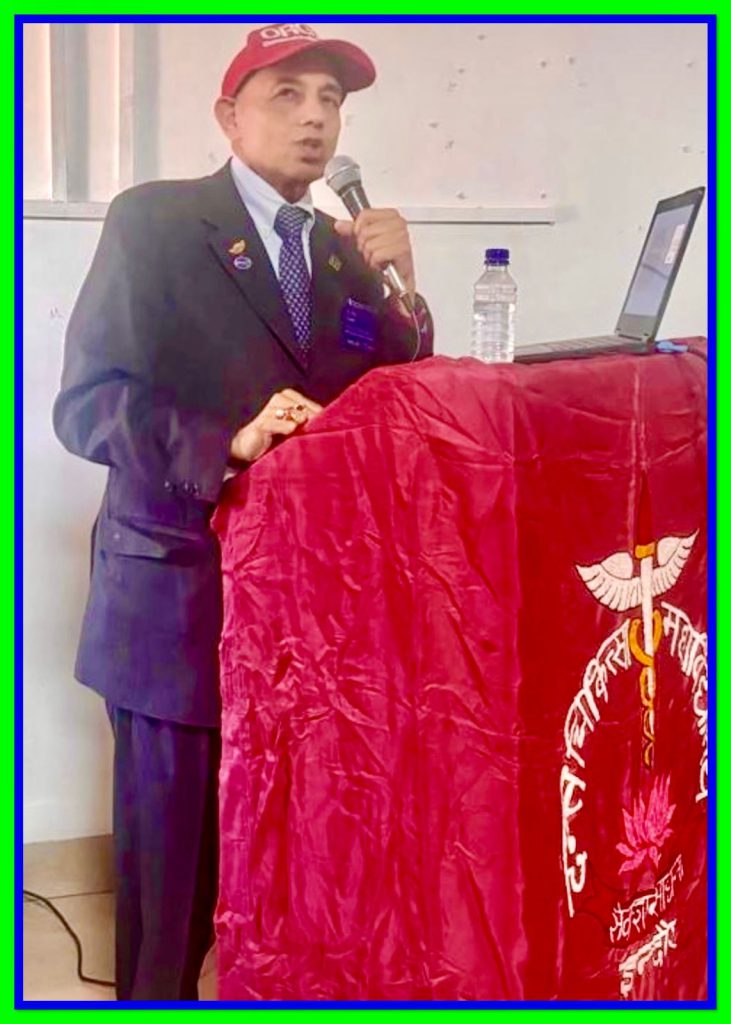
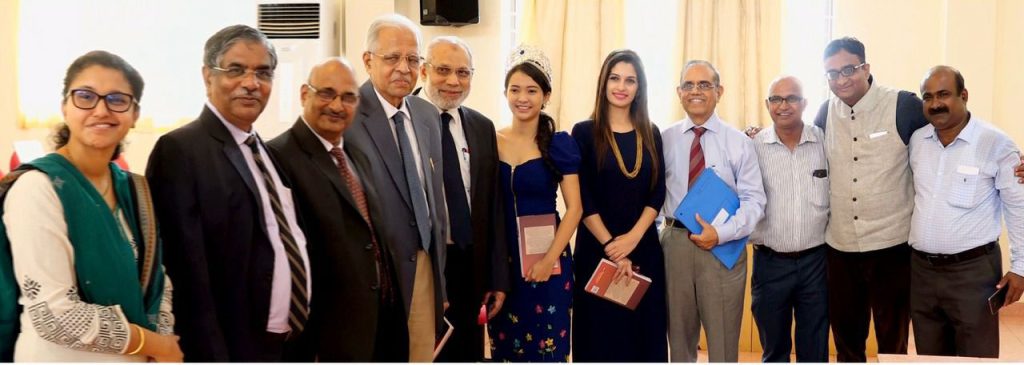
NEW DELHI: A conference on sanitation and social reform in the national capital became the setting for a profound life lesson, as Prof. Dr. Subramanya Yadapadithaya, then Vice Chancellor of Mangalore University, outlined a powerful blueprint for meaningful achievement. His address, while honouring the legacy of Dr. Bindeshwar Pathak, transcended the event’s theme to deliver a universal message on building a life of impact.
Setting the tone, Prof. Yadapadithaya highlighted the unique nature of the New Delhi gathering. “Great people will not do different things,” he stated, “they do things differently.” He credited Dr. Pathak’s revolutionary success not to textbook theories, but to lived experience and a profound commitment to Gandhian values.
The Alchemy of an Idea
“An idea can change your life,” Prof. Yadapadithaya asserted. However, he clarified that an idea alone is not enough. “It must be incubated with a sense of purpose, pride, and direction,” he said, explaining that this crucial process is what separates a fleeting thought from a lasting legacy.
He then provided a clear roadmap for success, emphasizing a three part engine: Inspiration, Aspiration, and Perspiration.
“Inspiration is readily available to our youth,” he noted. “The critical question is whether we can connect it to our own aspiration. And this connection remains incomplete without the third, vital element: perspiration, or hard work.”
Moving Beyond Degrees: The KASHV Model for Competence
The core of his speech drew a critical distinction between being qualified and being truly competent. He introduced a simple yet profound formula for building real world competence: the KASHV model.
K for Knowledge: The need for application oriented knowledge that benefits society, as advocated by the National Education Policy 2020.
A for Attitude: “Our attitude will always determine our altitude,” he declared, championing a positive mindset as the foundation of all success.
S for Skills: The importance of mastering relevant life skills and soft skills (kaushal). “Survival is one thing,” he noted, “living gracefully is different.”
H for Habits: The positive habits cultivated during education become the positive work habits that define a professional’s career.
V for Values: In his most resonant point, he stated, “Values left in our children touch their destiny more than valuables left to them,” underscoring that material wealth is no substitute for universal compassion.
Prof. Yadapadithaya appreciated the monumental work of Dr. Bindeshwar Pathak as a living testament to the KASHV model. His life’s mission, far from being “a child’s play nor Sunday gardening,” powerfully demonstrates how competence, built on a strong foundation of values, can truly transform the world.
Dr. Bindeshwar Pathak was a sanitation pioneer. he was a humanitarian visionary who restored health, dignity, and freedom to millions | Global TV
NV Paulose, Chairman, Global TV +91 98441 82044
Dr. Bindeshwar Pathak was a renowned Indian sociologist and social activist. He was the founder of Sulabh International, a nonprofit organization that became synonymous with one of the world’s most successful sanitation movements. He is best known for inventing an affordable, ecofriendly two pit pour flush toilet system that changed the lives of millions.
His work elegantly combined technology, social reform, and human dignity, making him a true legend in the field of public health and social justice.
The Genesis of a Revolution: A Life Changing Encounter
The seed of his life’s mission was sown in his youth. After completing his masters in Sociology, he joined a committee focused on liberating manual scavengers. These were people historically tasked with manually cleaning dry, non-flush human excreta from unsanitary latrines. This “lived in experience” that Prof. Dr. Yadapadithaya referred to was a profound period for Dr. Pathak. He witnessed firsthand the dehumanizing conditions and brutal social ostracization faced by these communities.
This experience ignited in him a fierce determination to fulfill Mahatma Gandhi’s dream of eradicating manual scavenging and ensuring sanitation for all.
Key Contributions and Innovations
The Sulabh Two Pit Pour Flush Toilet: This was his groundbreaking innovation.
Technology: It is a simple, low-cost water seal toilet that uses minimal water per flush. Its ingenious two pit system allows waste to decompose in one pit for over two years, turning it into harmless, odourless, pathogen free manure, while the other pit is in use.
Impact: This technology provided a sustainable and affordable alternative to unsanitary dry latrines and expensive sewer systems, making it accessible to millions of households and public institutions.
Liberation and Rehabilitation of Manual Scavengers: Dr. Pathak’s mission was never just about building toilets. It was about liberating people. Sulabh International worked to free manual scavengers from their degrading work. The organization provided them with vocational training and educational support, helping them integrate into mainstream society with dignity.
Building Public Toilets and Bath Complexes: Sulabh built and maintained thousands of public toilet complexes across India. These pay and use models were key to keeping them clean and sustainable. The complexes often included facilities like bathrooms and laundries, significantly improving public health, especially for women and the urban poor.
Path Breaking Social Initiatives:
Sulabh International Museum of Toilets: A unique museum in Delhi that traces the global history of sanitation.
Empowerment of Women: The organization empowered women from former manual scavenging communities, helping them become entrepreneurs.
Why Prof. Dr. Subramanya Yadapadithaya’s Praise is So Fitting
When Prof. Dr. P S Yadapadithaya said Dr. Pathak “does things differently,” he was referring to this holistic model. Dr. Pathak did not just invent a toilet; he created a complete ecosystem for change:
He turned a social problem into a socio technical solution.
He viewed waste not as a problem, but as a resource.
He combined compassion with commerce, creating sustainable models beyond mere charity.
For his extraordinary work, Dr. Bindeshwar Pathak received numerous awards, including the Padma Bhushan, one of India’s highest civilian honors.
Dr. Bindeshwar Pathak was a sanitation pioneer. he was a humanitarian visionary who restored health, dignity, and freedom to millions. His life and work are a perfect embodiment of knowledge, a positive attitude, innovative skills, disciplined habits, and unwavering values.
Master Mentors Mission | Brainstorm and Position the Top 20 in Make of The Salt Magic | See the Whole Picture | Keep the Vision Alive and Dynamic | Lift Others Up
NV Paulose, Chairman, Global TV +91 98441 82044
Master Mentors are Mutually Supporting Visionaries and Action Leaders who are open towards greater ideas for the benefit of the bottom line of the society. Bottom Line of a Society (BLS) is not very difficult to identify. We have an easy way to identify them.
The Security Guards in smaller buildings in a city, Housekeeping staff, Petrol Station employees, Day workers and similar ones are identified in the bottom line of society as a referral point. It is the team to ponder on to make additions in the list, time to time.
Master Mentors are the Guides and Coaches. You are the strength on which The Salt Magic stands. You are the bridge between a great dream and the real work that brings it to life.
The Master Mentor Mission is the mind and the heart of this movement. Others are meant to prepare and distribute, but you hold the purpose that keeps everything alive.
The dream is very big. You are the ones to make sure the mission grows, stays pure, and reaches everyone it is meant to serve.
The Salt Magic; Master Mentor Mission Has Three Clear Paths
1. See the Whole Picture
Women Editors who look after village editions also prepare snacks. The students complete the task by reaching them to the beneficiaries. Master Mentors see everything. You notice where help is needed and where success is happening. You connect people and share good ideas. You keep the mission healthy by connecting every supporting hand to join with others locally and globally in making the mission grow big.
2. Keep the Vision Alive and Dynamic
The idea of “one spoon of salt” may feel too small compared to the size of human suffering. But you remind everyone that the salt is more than a measure. It stands for unity, care, collective action and goodness that gives life its taste. You hold the people of hope together in making great things happen. You are the steady light leading the society ahead.
3. Lift Others Up
True leadership is not about giving orders. It is about bringing out the best in people. You guide twenty Women Editors with encouragement, and trust. You help them find their own strength. You help them grow confident and independent; that is your real success.
You are the weavers of a new kind of community. One built with compassion, creativity, and fairness. Students will learn from Editors. Families will receive care and support. But it is you, the Master Mentors, who make The Salt Magic strong, lasting, and real.
You are the keepers of the first spark. Guard it with love. Feed it with faith. Let it grow until it lights up every home in the district.
Do not ask about what’s next; take one step that you are sure will take us one step ahead. There are no wrong steps. When you fall, get up and walk. Make sure you keep holding the hands of others.
The Inspiring Journey of Prof. (Dr.) Ganapathi Gowda S | Inspired by their kindness and care |
NV Paulose, Chairman, Global TV +91 98441 82044
Prof. (Dr.) Ganapathi Gowda S., Principal of University College, Mangalore, is a man whose life shines with the power of education, hard work, and gratitude. His story begins in a small village and rises to the heights of academic excellence.
He was born in the humble hamlet of Halageri in Honnavar taluk. Ganapathi grew up in a large family with seven children. His father worked as a labourer, struggling every day to provide food for the family. His mother often joined him in the fields. Though both parents could not read or write, they carried a great dream in their hearts that their children should study and live a better life.
But life was very difficult. When Ganapathi was in the fourth standard, his parents had to make a painful decision. To earn some extra money, they sent him to look after an arecanut garden. The little boy cried every day, more out of fear of animals and a longing to return to school. After three months, his father, moved by his son’s tears, decided to bring him back. That moment changed everything. It was a turning point in his life, when a father’s faith in his child became stronger than the weight of poverty.
Once back in school, Ganapathi never looked back. He studied with all his heart, determined to make his parents’ sacrifices worthwhile. He completed his schooling in Kumta while staying in a hostel away from home. Later, he joined SDM College, Honnavara, for his pre university studies. To support himself, he worked in the mornings and studied in the afternoons. He truly lived by the words, “Earn while you learn.”
His hard work continued through college. He completed his Bachelor of Arts in History, Economics, and Political Science and then went on to Karnataka University in Dharwad, where he completed his Master of Arts in Ancient Indian History and Epigraphy, securing the second rank. He later earned a Diploma in Epigraphy, a Master of Philosophy, and finally a Doctor of Philosophy in the year 1996. His research was on the Minor Dynasties of Uttara Kannada Region, a topic very close to his roots.
Throughout his journey, his teachers played a major role. They were not just instructors but guides who cared deeply. He still remembers how his lecturers once collected money to pay for his appendix surgery when he had nothing. They trained him with love and discipline, correcting mistakes patiently and teaching him that a teacher can truly change the life of a student.
Inspired by their kindness and care, Dr. Gowda carried the same spirit into his own teaching career. He began as a lecturer at Field Marshal K M Cariappa College in Madikeri in 1994. For eighteen years he served there before joining University College, Mangalore, in 2012. Step by step, he rose from lecturer to associate professor and finally became the principal. Every step was earned through sincerity and hard work.
His research focused on the history, epigraphy, and archaeology of coastal Karnataka. He completed two research projects sponsored by the University Grants Commission and wrote books in Kannada and English. He also presented his work at many national and international conferences, speaking about Jain antiquities, Buddhism, and the ancient history of Karnataka.
His Scholarly Contributions
Dr. Gowda’s profound connection to his roots and his academic rigor are permanently etched into his seminal literary works. His research has gifted Kannada historiography several important books, including “Pandyas of Shishugali and Chandavara Kadambas,” which delves into the intricacies of local dynasties; “Uttara Kannada Jilleya Shashanagala Samskrutika Adhyayana,” a cultural study of the region’s inscriptions; and “Grama Okkaligara Samskrutika Adhyayana mattu Samakaleena Charitre,” which explores the cultural history and contemporary narrative of the Okkaliga community. These publications are not merely academic exercises; they are the intellectual harvest from the very soil he once trod as a child, ensuring that the rich tapestry of Karnataka’s local history is preserved, studied, and celebrated for generations to come.
Beyond his academic work, Dr. Gowda’s heart has always been with the people. As an officer of the National Service Scheme, he guided students in social work. He helped them build roads for tribal families, organize health camps, and spread awareness about diseases. He always taught that true success means serving others, not just achieving personal goals.
He also served in many important roles as Head of the History Department, Coordinator of Travel and Tourism, Convenor of the Heritage Club, and advisor to the Student Union. He continues to contribute as a member of the Karnataka Itihasa Academy and as a life member of the Kannada Sahitya Parishat.
Learning is a Continuous Process
For Dr. Gowda, learning has never been confined to a classroom or an age. He embodies the principle that education is a lifelong journey. When he took charge of the journalism department in his college, his innate intellectual curiosity was piqued. To better understand the field and inspire his students, he invited seasoned journalists for interactions.
However, true to his nature, he wasn’t content with just facilitating knowledge; he wanted to master it himself. Driven by a genuine interest in the subject, he enrolled in a Master’s degree program in Journalism and Mass Communication at the Karnataka State Open University. In a remarkable testament to his lifelong dedication to learning, he earned his degree with distinction in 2025. Earning a Master’s at the age of 60 is not just another feather in his cap; it is a powerful lesson in itself, demonstrating that the pursuit of knowledge has no expiration date.
As a Nodal Officer of Youth Red Cross
His commitment to service found a powerful new channel when he was appointed as the Youth Red Cross (YRC) Nodal Officer for Mangalore University. With characteristic energy, he revitalized the YRC across affiliated colleges in Kodagu, Udupi, and Dakshina Kannada districts. In a groundbreaking achievement, he pioneered a formal syllabus for the Youth Red Cross, integrating it into the academic curriculum—making Mangalore University the first in the state to do so.
He fostered a culture of participation by instituting university-level awards to recognize the best YRC volunteers and officers. This initiative inspired colleges to actively organize programs on health, social welfare, disaster management, blood donation, and first aid. During the COVID-19 pandemic, his leadership was crucial as he mobilized students to support healthcare workers at the district hospital. A standout initiative was establishing a student internship program at Wenlock Hospital, a legacy that continues to thrive with students from various colleges actively participating.
For his transformative contributions, the Youth Red Cross of Mangalore University was honoured with a state-level award, the first such recognition for any university in Karnataka. For this exceptional achievement, Dr. Gowda was personally honoured by the Honourable Governor, Thawar Chand Gehlot, who presented him with a certificate of award.
Today, Dr. Ganapathi Gowda stands as a symbol of hope and perseverance. The boy who once guarded an Arecanut garden now guards a rich heritage of Karnataka. His life proves that poverty cannot stop a dream, and that true education is not only about books but also about courage, gratitude, and the will to help others.
From a small village to the great halls of Mangalore University College, his journey is a message to every student. Circumstances may test you, but they do not decide your future. What truly decides your future is your determination to rise and your heart to help others climb with you.
He recalls his joining in Mangalore University very vividly and with a heart full of gratitude. It was Prof. Dr. M. I. Savadatti, then Vice Chancellor and a doyen in education, who issued his fresh appointment order a second time. In fact, the first order reached Dr. Ganapathi Gowda much later after the joining date. He was working away at Bijapur and the letter rested at home for a while until he came home on a holiday. The date for joining was already over. He came to the university with the letter. It was thought to be an opportunity lost, but the noble hands of the honourable Vice Chancellor signed it again with fresh dates to join.
Dr. Ganapathi Gowda also recalls the Graduation Certificate reaching home by post in a distinguished package. People thought it was a bomb or something and were afraid to open it. Times have changed. Today we live in an educated society. It is the gratitude towards our teachers that helps us live a life of dedication and commitment, he said with emotion while recollecting those tough days. Those memories, he added, are more inspiring than the comfort we enjoy today.
To the future generation, Dr. Gowda’s life speaks softly but powerfully. He reminds young people that success never arrives overnight. It grows slowly, with patience, honesty, and the courage to continue even when life feels unfair. He urges every student to respect their teachers, care for their parents, and never give up on learning. The world may change, but the values of hard work, gratitude, and service will always remain the true foundation of a meaningful life.
Forgotten How to Laugh? Here’s Your Prescription | Laughter as Medicine: The Science Behind the Smile
Ganapati Hegde | 4th Professional BNYS | Sharada Yoga and Naturopathy Medical College, Mangalore +91 78991 54268
We’ve all heard the saying, “Laughter is the best medicine.” But what if this old adage is more than just a cliché? What if laughter is a powerful, free, and readily available tool that can transform your physical health, mental well-being, and social connections?
In our high-stress world, the simple act of laughing has become a revolutionary act of self-care. Let’s explore how you can harness its incredible power.
More Than Just a Giggle: What is Laughter?
Laughter is far more than a spontaneous reaction to a joke. It’s a fundamental human experience, a universal language of joy that instantly lightens the atmosphere. This powerful psychological response doesn’t just signal happiness; it actively creates it, triggering a cascade of positive effects on both your body and mind.
Laughter as Medicine: The Science Behind the Smile
Modern science is now catching up to what we’ve always felt in our hearts: laughter is a potent healer. It’s being embraced as a legitimate therapeutic tool; Laughter Therapy, for its profound healing properties.
So, how does it work? Think of laughter as a full-body tune-up:
Your Heart Loves a Good Chuckle: Laughter acts as a cardio workout. It improves blood vessel function, boosts circulation, and can help lower blood pressure, reducing the risk of heart attacks.
A Natural Painkiller: A hearty laugh prompts your brain to release its own feel-good chemicals, endorphins and enkephalins. These natural analgesics help relieve pain and create a sense of well-being.
Supercharge Your Immunity: By reducing stress hormones and increasing the production of immune cells, laughter effectively bolsters your body’s defenses against illness.
Burn Calories & Relax Muscles: A good laughing session gives your muscles a workout, burning a few calories in the process. It also soothes tension, leaving your muscles relaxed for up to 45 minutes afterward.
The Mind-Saving Magic of Laughter
If laughter is a workout for the body, it’s a spa day for the mind. In an era where we are increasingly aware of mental health, laughter offers a simple yet profound solution.
It’s a powerful antidote to stress, anxiety, and fear.
It lightens your mood, replacing anger and frustration with patience and joy.
It fosters an inspired, motivated, and open-minded outlook on life.
By triggering the release of “happy hormones,” laughter helps you shed the weight of the world, even if just for a few moments, giving your mind the break it needs to stay resilient.
The Social Glue: Laughter and Relationships
Have you ever noticed that laughter is contagious? That’s because it’s inherently social. Sharing a laugh is one of the fastest and most effective ways to strengthen bonds.
It eases tension and helps you recover quickly from disagreements.
It deepens connections with friends, family, and colleagues.
A smiling, laughing person is naturally more approachable and attractive to others.
Laughter acts as social glue, uniting people and creating a shared space of joy and understanding. It reminds us that we’re not alone in our experiences.
Forgotten How to Laugh? Here’s Your Prescription.
As children, we laughed hundreds of times a day. As adults, the pressures of work, family, and life often push laughter to the sidelines. The good news? You can relearn it. You don’t even need a reason to start!
Start Small:
Fake it ‘til you make it: It might feel forced at first, but the body often can’t tell the difference. Start with a gentle smile, then a greeting laugh, and build up to a hearty, full-belly laugh.
Seek out humour: Watch a funny movie, follow comedians, or spend time with that one friend who always makes you laugh.
Bring humour into your day: Share a funny meme, tell a silly story, or simply smile at a stranger.
Try “Laughter Exercises”:
Mirror Laugh: Laugh at yourself in the mirror.
Celebration Laugh: Throw your hands in the air and laugh, as if you just won the lottery.
Mind Washing Laugh: Imagine laughing away your stress and worries.
The goal is to make laughter a conscious part of your routine. Aim for just 30 minutes of laughter, three times a day. It might sound like a lot, but it can be broken into small, joyful moments.
The Final Word: Your Daily Dose of Joy
In our busy lives, we have forgotten this simple, life-saving skill. Laughter is not a luxury; it’s a necessity for a healthy, happy, and connected life. It’s a free medicine with no side effects, available to everyone, everywhere.
So, what are you waiting for? Don’t waste another day. Seek out joy, share a smile, and unleash a laugh. Your body, your mind, and your relationships will thank you for it.
Keep laughing, and keep the world around you laughing too.
Note:
In our Sharada yoga and naturopathy medical college and hospital, talapady, Mangalore. We conduct such health therapies and many more yogic camps, and health camps and other activities all around dakshina kannada every year. And also we have our OPD in AJ hospital manglore, giving service to people.
Dr. Nandini M, Principal spoke on the significance of commitment, empathy, and lifelong learning in healthcare.
The course inauguration ceremony of Athena Institute of Health Sciences was held on 18 th October 2025 at 10.00a.m in the College Auditorium. The event marked the formal commencement of the new academic year for the students of 23 rd batch of General Nursing and Midwifery,22 nd batch of B.Sc Nursing and 9 th batch of BSc Renal Dialysis Technology, 6 th batch of BSc Medical Imaging Technology, 6 th batch of BSc Medical laboratory Technology, 6 th batch of BSc Anaesthesia and Operation Theatre Technology, 5 th batch of BSc Emergency and Trauma Care Technology 3 rd batch of BSc Respiratory Care Technology,1 st batch of Bachelor BSc of Occupational Therapy of the Allied Health sciences and specify all courses.
The programme began with a prayer service led by Sr. Deena and her team, seeking divine blessings for a successful and fulfilling academic journey for the students.
The ceremony was presided over by Chairman Mr. R. S Shettian, Secretary, Mrs. Asha Shettian, Trustee Dr. Ashith Shettian, Principal Prof. Rev. Sr. Deepa Peter, Vice Principal Prof. Sunitha Lobo of Athena College of Nursing, Dr. Nandini M, Principal of Athena Institute of Allied Health Sciences, Class Coordinators, faculty members, and students.
Following the invocation, Prof. Sunitha Lobo the Vice Principal, delivered the welcome address, warmly greeting the dignitaries, faculty members and students. The formal inauguration of the program marked by the lighting of the lamp by all the dignitaries along with student representatives of each batch, symbolizing the new beginning of the academic journey in the health care field.
A motivational message was shared by Dr. Nandini M, Principal Athena Institute of Allied Health Sciences, who spoke on the significance of commitment, empathy and lifelong learning in healthcare. Her words inspired the students to dedicate themselves wholeheartedly to their profession and to serve humanity with compassion. This was followed by the staff introduction, where the teaching and administrative faculty were introduced through powerpoint presentation, giving students a sense of familiarity and comfort with the mentors who will guide them throughout their academic journey.
The students introduction session was held in two parts- firstly, for the Allied Health students and later for GNM and B.Sc Nursing students. Each new batch introduced themselves with enthusiasm and gratitude, marking their official welcome into the Athena family.
Rev. Sr. Deepa Peter, Principal Athena institute of health sciences addressed the gathering and emphasized on the “Seven C s” in the health care profession i.e. Care, Compassion, Competence, Communication, Commitment, Courage and Collaboration and motivated the students to cultivate these qualities in their life. Senior Students Ms. Punyashree II year B.Sc MLT and Ms. Keerthi Vinod II Sem B.Sc Nursing also shared their experiences and reflection, offering guidance and encouragement to the fresher’s . In his presidential address, Mr. R.S Shettian encouraged the students by Mahatma Ghandiji’s words saying the best way to find yourself is to loose yourself in service of others. He also shared about vision of institution were the students are trained to be an excellent health care professional. The program concluded with a vote of Thanks proposed by Mrs. Lora Pais, followed by institutional anthem and refreshments. The Course inauguration was a memorable event filled with inspiration, fellowship, and hope- setting a positive tone for the academic year ahead at Athena Institute of Health Sciences. Ms. Anna Wilson & Ms. Celia Lobo compered the progrmme.
A Call for Ethical and Original Research | VC Rev. Dr Praveen Martis SJ Emphasizes Integrity and Impact in Research
NV Paulose, Chairman, Global TV +91 98441 82044
Mangaluru, Oct 18: The School of Life Sciences at St. Aloysius (Deemed to be) University successfully organized a one-day Faculty Development Programme (FDP) on ‘Scientific Writing and Publication: An Editor’s Perspective’ on October 17 at the Sanidhya Hall. The event provided crucial insights to faculty and researchers on navigating the complex world of high-impact academic publishing.
The programme featured Dr Rajeev Raghavan, assistant professor, Department of Fisheries Resource Management, KUFOS, Kochi, and Dr Shamprasad Varija Raghu, associate professor, Division of Neuroscience, Yenepoya Research Centre, Yenepoya University, Mangaluru, as the expert resource persons.
The dais was graced by distinguished dignitaries including Dr Praveen Martis, SJ, Vice Chancellor of the university; Dr Chandrashekar Shetty, Director of the Research and Development Centre; and Glavin Thomas Rodrigues, the programme convenor. Dr Renita Maria D’Souza, Dean of the School of Life Sciences, welcomed the gathering.
In his inaugural address, Dr Praveen Martis, SJ, underscored the critical importance of ethical and original research. He emphasized the need for quality publications that contribute meaningfully to the scientific community, setting the tone for the day’s discussions.
Dr Rajeev Raghavan, in his session, provided a compelling editor’s perspective on the evolving landscape of scientific publishing. His talk, titled ‘From Publish or Perish to Publish and Flourish,’ encouraged researchers to prioritize quality over quantity. He delved into the common pitfalls that lead to manuscript rejection, offering practical strategies to enhance the visibility and impact of scientific work. Dr. Raghavan demystified the editorial process, stressing that success hinges not just on robust data, but on presenting it with clarity, structure, and a narrative that demonstrates global relevance.
Echoing this focus on the craft of writing, Dr Shamprasad Varija Raghu elaborated on the essential elements of writing style and the effective structuring of research and review articles. He provided hands-on insights into crafting coherent scientific narratives and avoiding common errors during manuscript preparation, enabling researchers to communicate their findings more effectively to diverse audiences.
The FDP saw enthusiastic participation from around 70 faculty members and researchers. The sessions were highly interactive, with participants gaining valuable insights into ethical publication practices and successful research dissemination strategies.
The programme was widely appreciated for the practical guidance and editorial wisdom shared by the speakers, equipping attendees with the knowledge to transform their research into impactful publications.
St. Aloysius University Hosts Faculty Development Programme on Mastering Scientific Publication
NV Paulose, Chairman, Global TV +91 98441 82044
Mangaluru, – For early-career researchers, the path to publishing in a prestigious journal can feel like navigating a maze in the dark. Despite completing rigorous experiments and obtaining significant results, many face the sting of a desk rejection for reasons that seem unclear. According to Dr. Rajeev Raghavan, the problem is often not the science itself, but how it is framed and presented to the world.
Dr. Raghavan shared these insights during an enlightening session titled “Beyond the Bench: The Unwritten Rules of Getting Published in High-Impact Journals,” organized by the College of Fisheries. The event was presided over by Dr. A. K. Pal, the Director of Education and former Vice-Chancellor of Kerala University of Fisheries and Ocean Studies (KUFOS). The gathering was also graced by the presence of the institution’s Director of Research, Dr. S. K. Singh, and Dean Dr. V. R. Suresh.
Drawing from his extensive experience as an advisor to countless authors and a reviewer for top-tier journals, Dr. Rajeev Raghavan outlined three critical, yet often overlooked, strategies that can elevate a manuscript from “good” to “must-publish.”
Time Travel is Not an Option: Why Your Reference List Must Look Forward, Not Backward
A common and fatal assumption is that a journal will be interested in a topic today because it published a similar paper a decade ago. “The academic landscape is not static,” Dr. Raghavan noted. “An editor’s primary goal is to increase the journal’s impact factor, which means they are exclusively looking for papers that will be widely read and cited now and in the near future.”
He advised researchers to become “detectives” before writing, analyzing a journal’s last two years of publications to tailor their work to fit the journal’s current conversation, not its historical archive.
The Reviewer is Your Judge, Not Your Co-Author
Addressing a common misunderstanding, Dr. Raghavan clarified the role of peer reviewers. “Reviewers and editors are there to assess the validity, significance, and clarity of your substantially complete work. They are not there to perform basic editing or build your argument for you,” he stated.
He emphasized that submitting a half-finished manuscript is a guarantee of rejection. The strategy is to submit only the most polished work, having enlisted colleagues for proofreading and ensured a compelling narrative flow. “The review process is for strategic refinement, not for fundamental writing,” he added.
From Local Interest to Global Impact: Overcoming the ‘Narrow Scope’ Rejection
This was highlighted as a major hurdle for researchers working on specific case studies. Dr. Raghavan framed the editor’s perspective: “A journal editor in Europe may ask, ‘Why should a researcher in Japan or Canada care about this particular plant in a specific valley?’ If your paper cannot answer that, it will be rejected.”
The solution, he explained, is to frame the work to highlight its broader theoretical implications. A localized study should be positioned as a case study in a universal principle or an insight into a global challenge.
The Mindset for Success
Dr. Raghavan concluded that publishing in high-impact journals is as much about strategy as it is about science. It requires researchers to shift their perspective to that of an editor curating content for a global audience.
The session, which provided a crucial roadmap for academics, was hailed as a significant contribution to research methodology, empowering scientists to offer their work not just as a paper, but as a valuable contribution to the global scientific dialogue.
Xavier Board Launches 25th Triennial Conference with Call to Transform Education
NV Paulose, Chairman, Global TV +91 98441 82044
Xavier Board Inaugurates XXV Triennial Conference 2025 in an atmosphere charged with anticipation and divine grace at St. Aloysius (Deemed to be University) in Mangaluru. The ceremony, held on the evening of Saturday, October 18th, was more than a formal beginning; it was a powerful reaffirmation of mission, community, and faith in the face of modern challenges.
The lamp-lighting ritual, a symbol of the dispelling of ignorance, beautifully set the stage for an evening where the light of wisdom and the warmth of shared purpose were palpable. The event was graced by a distinguished gathering of leaders, including Shri. Armstrong Pame, IAS, Joint Secretary of the Department of Higher Education, and Dr. M C Sudhakar, Hon’ble Minister for Higher Education, Government of Karnataka. The presidential presence of Prof Fr L Joji Reddy SJ and the spiritual blessings of Most Rt Rev Dr Elias Gonsalves, Archbishop of Nagpur, underscored the deep connection between educational excellence and spiritual foundation.
A Shepherd’s Charge: Archbishop Gonsalves Sets the Soulful Tone
While the schedule outlined addresses from chief guests and the release of the Xavier Board Souvenir, the heart of the evening was a deeply inspirational homily delivered by Most Rt Rev Dr Elias Gonsalves, the main celebrant of the inaugural Eucharist. Weaving a narrative from the challenges of Saint Paul to the sending out of the seventy-two disciples, His Grace delivered a poignant message that felt both ancient and urgently contemporary, directly speaking to the soul of every Catholic educator.
The core of his message was a comforting yet powerful reminder: “You are not alone.” In a world where educational institutions face immense pressures; from financial constraints and secularism to moral relativism and external activism, the Archbishop assured the audience that God’s presence is a constant source of strength.
“He is with us in our offices, in our classrooms, in our campuses and in our communities,” he echoed, transforming the hall from a mere venue into a sacred space of shared vocation.
This presence, he emphasized, redefines the very essence of Catholic education. It is “not mainly about imparting information, but about transforming lives. It is about forming consciences, building character and nurturing the spirit of service rooted in faith.”
Answering the Call in a Fractured World
Archbishop Gonsalves did not shy away from the stark realities of our time; a world told of terrorism, hatred, and communalism, where students and parents alike are searching for meaning and belonging. In the midst of this, he challenged every educator to see their institution as a house of peace, truth, and dialogue.
“Every lecture that you keep, research paper you present, or a community project becomes an opportunity to announce… that the kingdom of God is near.”
His call was for courage, not complacency. Drawing from the biblical image of being sent out “like lambs among wolves,” he reminded the audience that their mission is not one of comfort, but of purposeful engagement with a challenging world, armed with the power of peace and the recognition that God’s kingdom is at hand.
A Mission Rekindled
As the conference begins its deliberations, the inaugural ceremony, anchored by Archbishop Gonsalves’ stirring homily, has successfully set a powerful tone. It served as a spiritual rallying cry, urging all present to become brilliant minds and compassionate hearts; successful individuals and “saints in the making and good citizens.”
His final blessing encapsulated the collective hope: “May the Lord who stood by all… also stand beside each one of us, strengthening us for the noble mission of education.”
The XXV Triennial Conference has thus begun beyond an academic gathering, towards as a journey of faith; a collective step forward to ensure that through the dedicated labourers in the field of education, the message of love, justice, and truth may be fully proclaimed, and the Kingdom of God may draw near.