All posts by admin

About admin

Chairman of Global TV | Excellent Writer | Exceptional PR Skills | Author of Six books | MASTER HEALER | +91 98441 82044 |

Andolana | Siddaramaiah is a statesman comparable to the late D. Devaraj Urs | Wilfred D’Souza

Siddaramaiah Defeated in the Tug of War Between Original Congressmen and Migrants

There is no other politician who surpasses Siddaramaiah ideologically. He is a statesman comparable to the late D. Devaraj Urs.

By Wilfred D’Souza

Whether out of necessity or political pressure, Siddaramaiah has resigned from the post of Chief Minister. In the ongoing struggle between the original Congress leaders and those who joined the party from elsewhere, the faction led by D. K. Shivakumar has emerged victorious. It is also a setback to the aspirations of Karnataka’s AHINDA communities. Ultimately, the people of Karnataka are being deprived of the opportunity to be governed by a seasoned statesman.
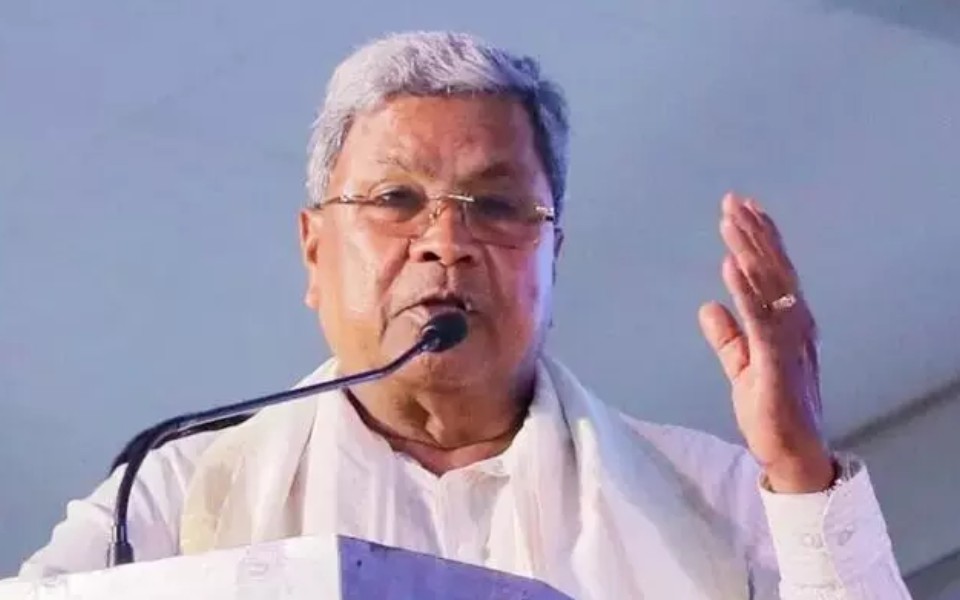
Siddaramaiah’s greatest strengths have been his long political experience, his commitment to the oppressed and backward communities, his dedication to social justice, his ideological consistency, and his political clarity. Through his distinctive style of people oriented governance, he was able to bring dignity to the office of Chief Minister.

With his resignation, the chair is now likely to be occupied by the “Kanakapura Rock,” D. K. Shivakumar.

Siddaramaiah the Socialist

“I do not present the budget after checking for Rahu Kalam, Gulika Kalam, or Yamaganda Kalam. Every day is the same to me. That is why I eat meat even on Ugadi or Shivaratri. It is my choice. What is wrong with that?”

These were the words spoken by Chief Minister Siddaramaiah while replying to the debate on the 2026 and 2027 state budget.
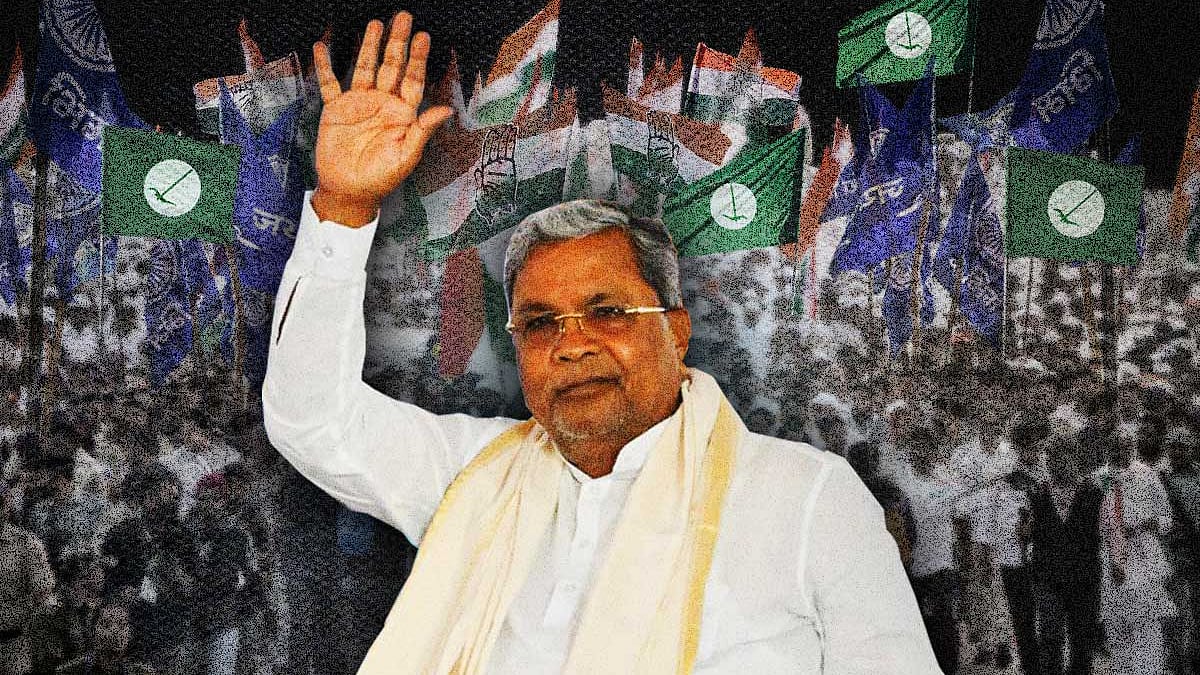
At a time when hollow religiosity has become the very breath of politics, Siddaramaiah is perhaps the only politician with the courage to make such statements on the floor of the Assembly. In the present political climate, there is no other politician who surpasses him in ideological conviction.

He is widely regarded as a powerful leader of the AHINDA communities, a statesman comparable to the late D. Devaraj Urs, and a record holder for presenting the state budget the highest number of times. I have never personally heard Siddaramaiah publicly describe himself as a socialist. Yet, for the media and many of his progressive admirers, he has become the very image of socialism.

At times, observing his words, conduct, and decisions, one feels that he truly is a socialist. Yet, on other occasions, when one sees his actions and his closeness to certain individuals, one cannot help but wonder, “What kind of socialism is this?” Be that as it may, in Karnataka politics today, Siddaramaiah is generally identified as a socialist.

Siddaramaiah Who Was Nearly Lost Amid the Gowda Turmoil

As a journalist interested in politics and as a development activist, I have closely observed Siddaramaiah over the years. When H. D. Deve Gowda and Siddaramaiah were successfully building the Janata Dal as an alternative political force to both the Congress and the BJP, I had become an admirer of both leaders.

Then circumstances changed dramatically. Convinced that the Gowda family’s obsession with dynastic politics would threaten his own political future, Siddaramaiah began mobilizing support through the AHINDA movement.

At that crucial time, the Mysuru based newspaper Andolana stood firmly with Siddaramaiah. Had it not been for the support of Andolana, the result of the Chamundeshwari by election might have been disastrous for him. Amid the political noise created by the Gowda camp, Siddaramaiah could very well have disappeared from Karnataka politics.

The conflict escalated to such an extent that Siddaramaiah, who was then the state president of the Janata Dal, was expelled from the party. Deve Gowda feared that as long as Siddaramaiah remained in the party, it would be impossible to make his son H. D. Kumaraswamy the Chief Minister.

Because of financial constraints, Siddaramaiah abandoned his plan to transform the AHINDA movement into a national political party under the banner of the All India Progressive Janata Dal. Instead, he was compelled to contest the December 2006 Chamundeshwari by election to safeguard his political future.

At that time, I was living in Mysuru. I had resigned from journalism and was working as an adviser at the prestigious Abdul Nazeer Sab institution. Having spent two years as a journalist in Mysuru, I had access to detailed information about every aspect of the by election.

Deve Gowda had made up his mind to politically eliminate Siddaramaiah.

H. D. Kumaraswamy, then the Chief Minister, along with Deputy Chief Minister B. S. Yediyurappa, fielded Shivabasavayya, a wealthy Class One contractor from the Veerashaiva community, as the Janata Dal candidate against Siddaramaiah.

The people of Chamundeshwari witnessed firsthand how caste calculations and the flow of money could influence an election. Kumaraswamy and Yediyurappa demonstrated how state power could be used to win an election.

I personally witnessed some senior bureaucrats, who had once been close friends of Siddaramaiah, quietly joining the Gowda camp and working for his defeat because of caste considerations.

Despite all these conspiracies, Siddaramaiah managed to win by a mere 257 votes. It was nothing short of a political rebirth for him.

The Role of Andolana

During that by election, a young leader who was very close to Siddaramaiah had become upset with him and decided to leave the party. Since he was personally known to me, I spoke with him and persuaded him not to take such a step.

At the same time, the Mysuru newspaper Andolana stood firmly behind Siddaramaiah. Without its support, the Chamundeshwari by election result could have been disastrous for him. Amid the uproar created by the Gowda camp, Siddaramaiah would almost certainly have been politically finished.

For and Against Siddaramaiah

As a development activist, I remain an admirer of Siddaramaiah, though not an unquestioning follower.

Having worked in Mysuru for seventeen years, I have gained some understanding of both his strengths and weaknesses. At a time when he was out of power, my friend Shivakumar, who is now a nominated member of the Karnataka Legislative Council from the Congress, and I spent nearly two hours discussing various issues with Siddaramaiah at the Jaladarshini Guest House.

Many of the ideas he spoke about that day remain fresh in my memory. Subsequently, he had the opportunity to serve two terms as Chief Minister. Unfortunately, he was not able to implement some of the very ideas he had advocated.

This disappoints me. At the same time, I understand the limitations he faced while trying to govern through a party like the Congress, which, in my view, lacks strong ideological commitment and often carries semi feudal tendencies.

On the Five Guarantee Schemes

I have publicly supported the five guarantee schemes introduced by Siddaramaiah’s government. Through these programs, a portion of taxpayers’ money has reached ordinary people. Lakhs of families have benefited from them, and I have argued strongly against those who oppose the guarantees.

Yet, personally, I have some reservations.

Even after so many decades of independence, why should governments still need to offer such benefits simply to secure electoral support? Do women earning between one thousand and five thousand rupees a day really require free bus travel? Could not schemes such as free ration, free electricity, free bus travel, and unemployment allowances be limited to those who genuinely need assistance?

My question is not confined to the guarantee schemes alone. Another welfare measure that deserves re examination is the free electricity scheme for farmers’ pump sets, introduced by another socialist former Chief Minister, the late S. Bangarappa, and still in force today.

An Uncommon Politician

Despite these concerns, I have no hesitation in saying that Siddaramaiah is one of the rarest politicians Karnataka has produced. As far as I can see, there is currently no politician in Karnataka who possesses the same combination of strength, capability, and ideological commitment to truly be considered his equal.
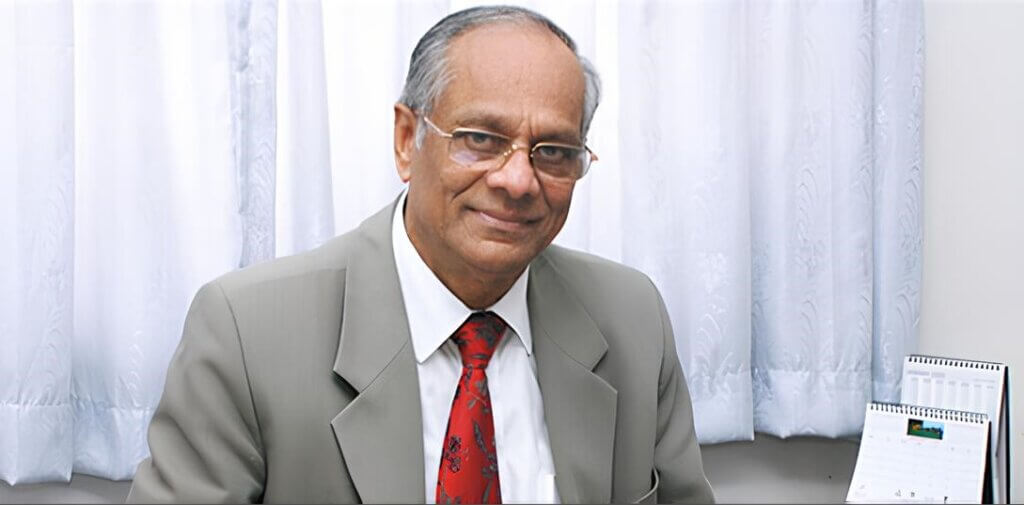
Dr. K.P. Gopalkrishna | Chairman of the National Public School (NPS) Group | President of Sapthagiri NPS University | Global TV

Dr. K.P. Gopalkrishna: A Visionary Who Built Generations

NV Paulose, Chairman, Global TV +91 98441 82044

Some individuals leave behind achievements, while others create a legacy that continues to shape society long after their work is done. Dr. K.P. Gopalkrishna, Chairman of the National Public School Group and President of Sapthagiri NPS University, belongs to the latter category. His lifelong commitment to education has influenced thousands of students, teachers, and families, making him one of the most respected educationists in the country.

From the establishment of the first National Public School in Bengaluru to the growth of a network of distinguished educational institutions, his journey has been guided by a simple yet powerful belief that education is the foundation of a strong and progressive nation. His institutions have consistently focused not only on academic excellence but also on the development of character, discipline, and social responsibility.

A Vision Beyond Classrooms

Dr. Gopalkrishna has always viewed education as more than the transmission of knowledge. For him, schools and universities are places where young minds are shaped into responsible citizens. He has emphasized the importance of values, integrity, and dedication, ensuring that students are prepared not only for successful careers but also for meaningful lives.

His leadership has created an educational environment where curiosity is encouraged, hard work is respected, and excellence becomes a habit. This vision has helped the National Public School institutions earn a reputation for quality and consistency over several decades.

The Importance of Teachers

One of the defining aspects of Dr. Gopalkrishna’s philosophy is his deep respect for educators. He believes that the strength of any institution lies in the commitment and character of its teachers. By empowering educators and encouraging them to lead with responsibility, he has built institutions that inspire learning and personal growth.

This approach reflects his understanding that great teachers do more than teach subjects. They nurture confidence, shape values, and inspire future generations to dream bigger.

A Forward Looking Approach

The establishment of Sapthagiri NPS University reflects Dr. Gopalkrishna’s ability to anticipate the changing needs of society. In an age driven by innovation and technology, he recognizes the importance of combining traditional values with modern education. The university aims to promote research, creativity, and practical learning while remaining rooted in the principles of ethics and service.

His vision demonstrates that progress and values can coexist, creating graduates who are both professionally competent and socially conscious.

Lessons for the Younger Generation

Dream with a Purpose

Dr. Gopalkrishna’s journey shows that true success comes from building something that benefits society. His institutions were created with the aim of shaping future generations, reminding young people that meaningful goals create lasting impact.

Make Excellence a Daily Habit

The consistent success of the National Public School institutions reflects the value of discipline and perseverance. Young minds can learn that excellence is rarely accidental. It is the result of dedication, hard work, and continuous improvement.

Value Education Beyond Marks

His philosophy teaches that education is not limited to academic achievement. Knowledge should be accompanied by integrity, compassion, and responsibility, because character ultimately defines a person’s contribution to society.

Respect Teachers and Lifelong Learning

Dr. Gopalkrishna’s faith in educators highlights the importance of learning from mentors. At the same time, his life encourages young people to remain curious and continue learning throughout their lives, regardless of age or profession.

Embrace Change While Staying Grounded

Through the growth of Sapthagiri NPS University, he has demonstrated that innovation and tradition can go hand in hand. The younger generation can learn the importance of adapting to a changing world without losing sight of their values and principles.

An Enduring Legacy

The institutions established and nurtured by Dr. K.P. Gopalkrishna stand as living examples of what visionary leadership can accomplish. His contribution extends far beyond buildings and campuses. It is reflected in the countless lives transformed through quality education and strong values.

For the younger generation, his story carries a timeless message. Dream with courage, work with dedication, remain grounded in principles, and strive to create a positive impact on society. Such a life leaves behind a legacy that continues to inspire generations.

Learn from the Mistakes of the Bigger Cities | Brooklyn Mangalore Comparison | Global TV

Mangalore Has Lessons from the Models and Mistakes of Brooklyn 1990

NV Paulose, Chairman, Global TV +91 98441 82044

The story of Brooklyn’s transformation since the 1990s is often celebrated as an urban success. Old industrial zones became thriving neighborhoods, neglected waterfronts turned into public destinations, and economic activity flourished. However, this progress also came with significant challenges, including rising land values, displacement of long time residents, and the concentration of development benefits among a few powerful interests.

Mangalore stands at a unique moment in its own history.

Unlike cities that had to learn through experience, Mangalore has the advantage of learning from both the achievements and the mistakes of Brooklyn.

Development Without Displacement

The riverfronts and coastal landscapes of Mangalore should not be viewed as vacant land waiting for acquisition. They are living ecosystems and home to communities that have protected and nurtured them for generations.

True development should strengthen these communities rather than replace them.

Government policy should focus on empowering riverfront property owners through incentives, technical guidance, environmental support, and infrastructure partnerships instead of large scale land acquisition.

Partnership Over Possession

The future of Mangalore can be built on a model where:

  • Private ownership is respected.
  • Public access is improved through collaboration.
  • Nature is protected and restored.
  • Local communities become active participants in economic growth.

This creates a development process where government acts as a facilitator rather than a central landholder.

Erection Rather Than Construction

Modern infrastructure does not always require massive permanent structures.

Light touch interventions such as elevated boardwalks, cycling paths, observation decks, floating platforms, ecological piers, and modular public spaces can provide accessibility while preserving the natural riverbanks.

Such infrastructure works with the landscape instead of replacing it.

A Living Riverfront

Mangalore’s rivers should remain ecological corridors, not concrete channels.

Development should include:

  • Native vegetation and mangrove restoration.
  • Rainwater management systems.
  • Public green spaces.
  • Community markets and cultural spaces.
  • Nature based tourism operated by local residents.
  • Small business opportunities connected to the waterfront.

A healthy river is itself an economic asset.

Learning from Brooklyn’s Mistakes

Brooklyn demonstrated that economic growth can transform a city.

It also demonstrated that uncontrolled speculation and aggressive redevelopment can weaken the social fabric by disconnecting people from the places they built.

Mangalore has the opportunity to choose a different path, one where growth is measured not only by buildings and investment, but also by environmental health, community participation, and the protection of individual property rights.

A Vision for Mangalore

The objective should not be to copy Brooklyn.

The objective should be to surpass it.

By combining modern infrastructure with ecological stewardship and respect for local ownership, Mangalore can become a model for sustainable riverfront development where progress does not come at the cost of people or nature.

The greatest lesson from Brooklyn 1990 is that development should create value for the community, not merely transfer value from the community to the powerful.

Nurture Nature | CMI Christ School | Iritty | Kerala | Global TV

CMI Christ School Iritty Celebrates World Environment Day with a Call for Climate Action

NV Paulose, Chairman, Global TV +91 98441 82044

Iritty, June 5: CMI Christ School, Iritty, observed World Environment Day with great enthusiasm and a strong commitment to environmental conservation. The celebration, centered around the theme “Inspired by Nature. For Climate. For Our Future,” encouraged students and staff to reflect on their responsibility toward protecting the planet.

The event featured Dr. Joselet Mathew, Director of Vijay Agri-farm School and Eco-Spirituality Center, as the chief guest. In his address, he highlighted the importance of living in harmony with nature and adopting sustainable practices in everyday life. He urged the younger generation to become active participants in building a greener and healthier future.

The programme emphasized simple yet impactful environmental actions such as planting trees, conserving water, reducing waste through reuse and recycling, and protecting wildlife and natural habitats. Through various awareness activities, students were inspired to understand that every small effort contributes to the well-being of the Earth.

With the message, “A Day to Care. A Future to Share,” the school reinforced the importance of collective action in addressing climate challenges. The World Environment Day celebration served as a meaningful reminder that preserving nature today is essential for securing a better tomorrow for future generations.

Artificial Intelligence for Hotel Promotion | Blueline Computers | Mangalore | Global TV

City Prosper when the hotel industry progresses | The Role of Hotels in the Prosperity of a City | Global TV

NV Paulose, Chairman, Global TV +91 98441 82044

Hotels are much more than places where travelers stay; they are powerful engines of economic growth. Every guest who visits a city contributes to the local economy through spending on accommodation, dining, transportation, shopping, and entertainment. This flow of visitor spending generates revenue for businesses, increases tax collections, and creates opportunities for further investment in infrastructure and public services. As tourism and business travel increase, hotels become catalysts for sustained economic development.

The hospitality sector is also a significant source of employment. Hotels create direct jobs in management, housekeeping, food and beverage services, maintenance, security, and guest relations. Beyond their own workforce, hotels support numerous indirect jobs through partnerships with local suppliers, tour operators, transport providers, event organizers, artisans, and retailers. This broad employment network strengthens household incomes and contributes to a more vibrant local economy.

Hotels play a vital role in enhancing a city’s reputation and attractiveness. High-quality accommodations encourage tourists, business travelers, conference delegates, and investors to choose a destination with confidence. Well-managed hotels serve as ambassadors for the city, showcasing local culture, cuisine, and hospitality. Their presence helps cities attract major events, exhibitions, and business meetings, which further stimulate economic activity and global visibility.

In addition to economic benefits, hotels contribute to community development and urban renewal. They often encourage improvements in transportation, public spaces, safety, and civic amenities. Successful hospitality businesses foster a sense of pride among residents and create opportunities for cultural exchange. When hotels thrive, neighboring businesses prosper, communities grow stronger, and the city becomes a more attractive place to live, work, and visit.

BlueLine Computers: Empowering Hotels Through AI Innovation

BlueLine Computers has created an impressive vision for the future of hospitality by combining advanced AI technologies with digital marketing expertise. Their innovative approach enables hotels to move beyond traditional promotion and embrace intelligent, data-driven engagement with guests. By leveraging AI-powered solutions, hotels can reach the right audience at the right time with personalized messaging that increases visibility, drives bookings, and strengthens brand recognition.

What makes BlueLine Computers particularly remarkable is its focus on enhancing customer relationships. Through AI-enabled customer engagement tools, hotels can provide instant responses to inquiries, deliver personalized recommendations, automate guest communications, and maintain meaningful interactions before, during, and after a guest’s stay. This creates a seamless customer experience that builds trust, improves satisfaction, and encourages repeat business.

BlueLine Computers also brings a new level of intelligence to digital campaigns. Their AI-driven marketing solutions can analyze customer behavior, identify market trends, optimize advertising spend, and create targeted campaigns across multiple digital platforms. This allows hotels to achieve greater marketing efficiency, higher conversion rates, and measurable business growth while reducing the complexity of campaign management.

By helping hotels harness the power of Artificial Intelligence for business promotion, customer relations, and digital marketing, BlueLine Computers is contributing not only to the success of individual hospitality businesses but also to the prosperity of entire communities. Their forward-thinking solutions demonstrate how technology can transform hospitality into a smarter, more connected, and more profitable industry for the future.

Prof. P.P. Gomathi (1930–2014) | eminent educator and former principal who dedicated her life to women’s education and social progress | Global TV

International Booker Prize Winner Deepa Bhasthi to Deliver P.P. Gomathi Memorial Oration in Mangaluru

NV Paulose, Chairman, Global TV +91 98441 82044

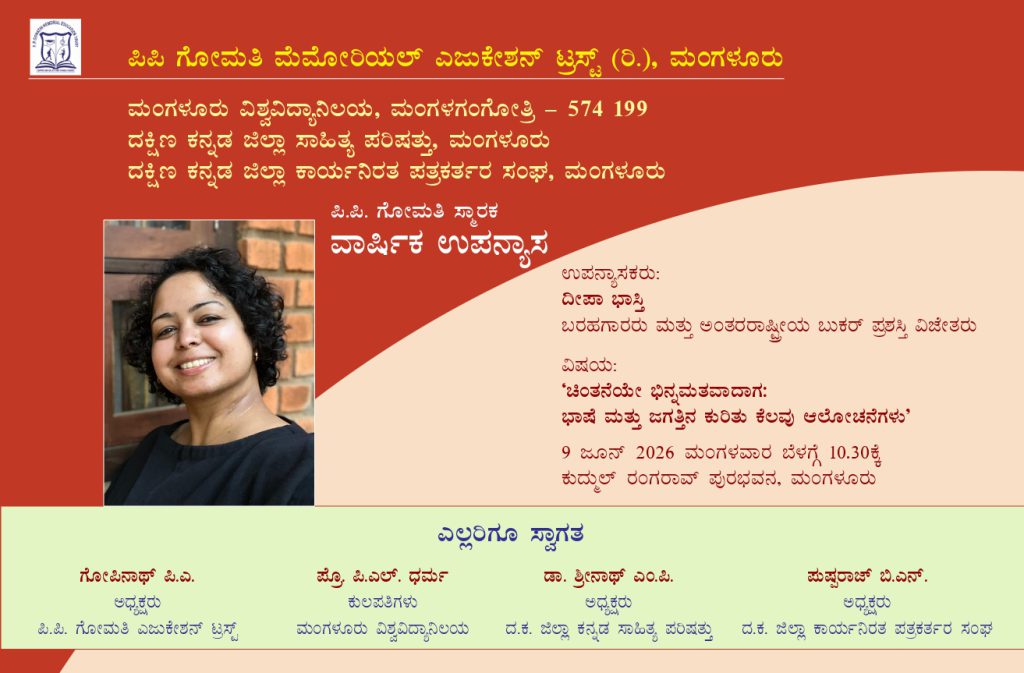
MANGALURU, June 2026: Renowned writer and International Booker Prize-winning translator Deepa Bhasthi will deliver the prestigious P.P. Gomathi Memorial Oration 2026 on June 9 at 10:30 a.m. at Town Hall, Mangaluru.

The annual event is jointly organised by the P.P. Gomathi Memorial Education Trust, Mangalore University, Dakshina Kannada District Sahithya Parishat, and the DK District Working Journalists Union. This year’s lecture is titled “Thinking as Dissent: Some Thoughts on Language and the World.”

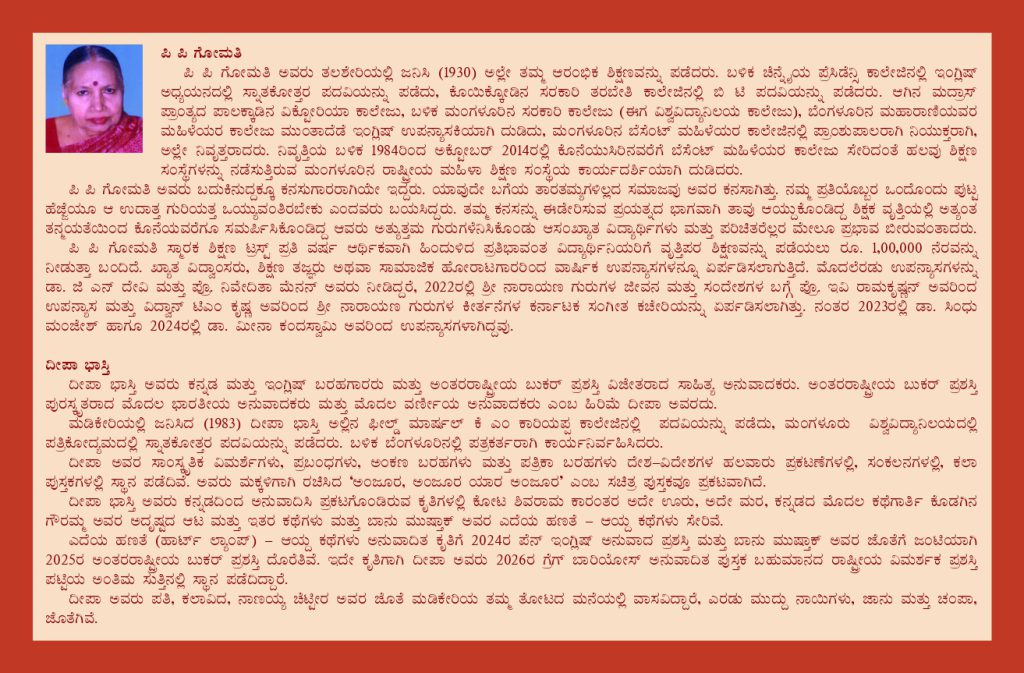
Deepa Bhasthi, writer, cultural critic, and literary translator working between Kannada and English, has earned international acclaim for her contribution to literature and translation. She became the first Indian translator and the first translator of colour to receive the International Booker Prize, which she shared in 2025 with Kannada writer Banu Mushtaq for Heart Lamp – Selected Stories. She was also awarded the PEN English Translation Award in 2024 and is a finalist for the 2026 Gregg Barrios Book in Translation Prize.

Born in Madikeri, Bhasthi completed her postgraduate studies in journalism at Mangalore University and worked as a journalist before establishing herself as a prominent literary voice. Her translations and essays have appeared in numerous national and international publications.

The memorial oration honours the legacy of Prof. P.P. Gomathi (1930–2014), an eminent educator and former principal who dedicated her life to women’s education and social progress. Through the P.P. Gomathi Memorial Education Trust, scholarships are awarded annually to academically outstanding but economically disadvantaged female students pursuing career-oriented education.

The Trust also organises an annual public lecture featuring distinguished scholars, writers, and social thinkers. Previous speakers have included Dr. G.N. Devy, Prof. Nivedita Menon, Prof. E.V. Ramakrishnan, Dr. Sindhu Manjesh, and Dr. Meena Kandasamy.

Organisers have extended an open invitation to the public, academics, students, writers, and literature enthusiasts to attend the event and engage with contemporary discussions on language, culture, and dissent. The programme will be held at Town Hall, Mangaluru, on June 9, 2026, beginning at 10:30 a.m.

Prof. Philomina Kurian | Vimala College | Thrissur | Kerala | Global TV

Vimala College Pays Tribute to Former English Professor Philomina Kurian

NV Paulose, Chairman, Global TV +91 98441 82044

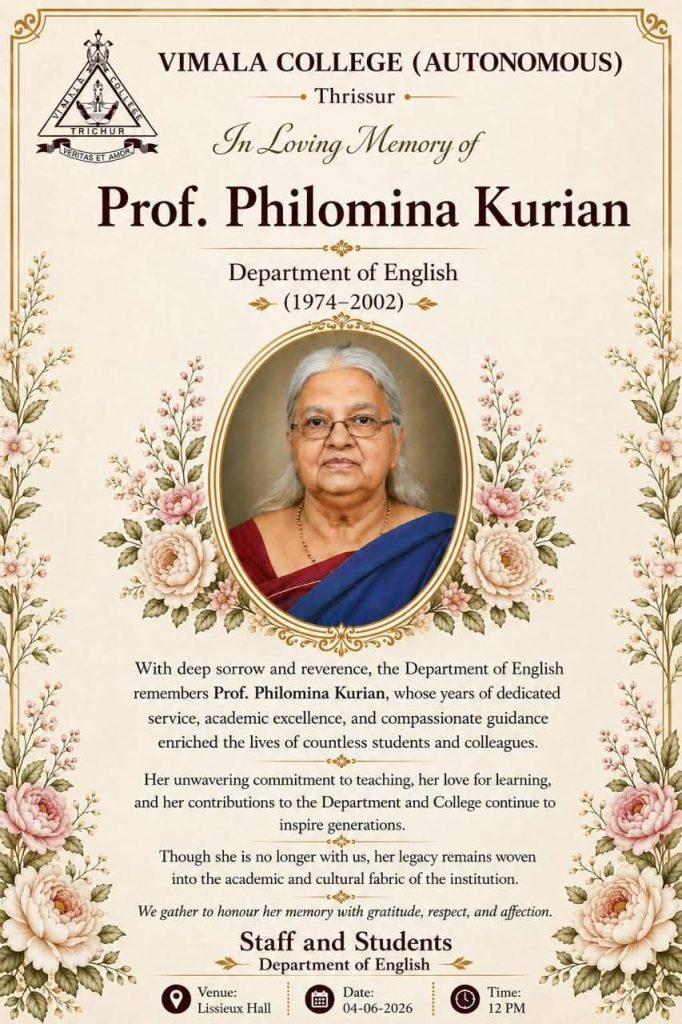
Thrissur, June 4, 2026: The Department of English at Vimala College (Autonomous) organized a memorial gathering on Thursday to honor the life and legacy of former faculty member Prof. Philomina Kurian, whose dedicated service to the institution spanned nearly three decades.

The commemorative event, held at Lissieux Hall at 12 noon, brought together staff, students, alumni, and well-wishers to remember the contributions of Prof. Kurian, who served in the Department of English from 1974 to 2002. The gathering was organized as a tribute to her enduring influence on generations of students and colleagues.

Prof. Philomina Kurian is remembered for her academic excellence, commitment to teaching, and compassionate mentorship. Faculty members recalled her as an educator who inspired a love for literature and learning while nurturing intellectual growth and personal development among her students.

The department noted that her unwavering dedication to education and her contributions to the college community continue to serve as a source of inspiration. Colleagues and former students shared memories of her professionalism, warmth, and commitment to academic values, emphasizing the lasting impact she made throughout her career.

Speakers at the event highlighted how Prof. Kurian’s legacy remains deeply woven into the academic and cultural fabric of the institution. The memorial gathering provided an opportunity for the college community to express gratitude and respect for her years of service and to celebrate the values she embodied as an educator.

The ceremony concluded with tributes from faculty and students, reaffirming the department’s commitment to preserving and honoring the memory of a teacher whose influence continues to resonate within the halls of the college.

“Though she is no longer with us, her legacy continues to inspire generations,” the Department of English stated in its remembrance message.

Forums | Professionals learn from one another | Build lasting relationships | Generate positive outcomes | Global TV

Dimensions Gathering Delivers Insights, Connections, and Inspiration

NV Paulose, Chairman, Global TV +91 98441 82044

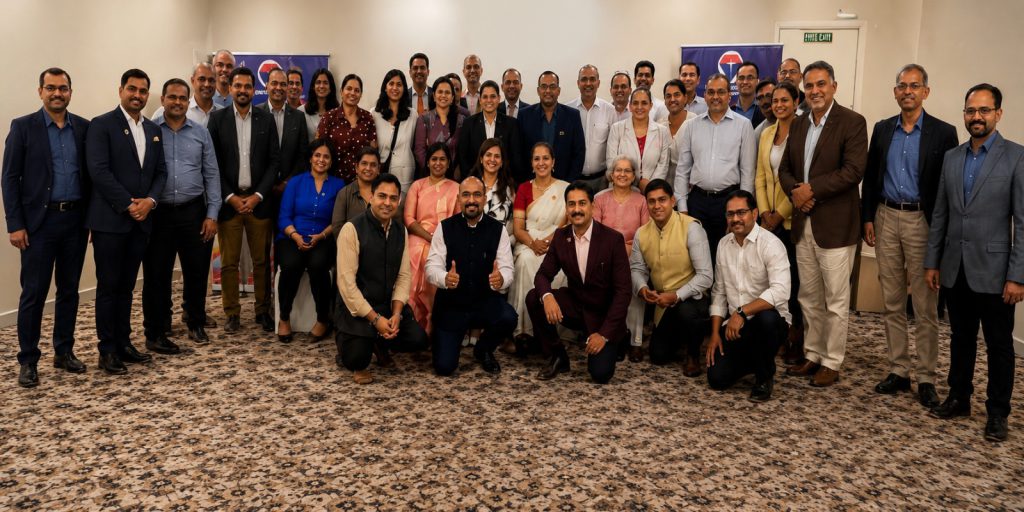
Mumbai, May 30 — Professionals from diverse industries came together for a joint meeting hosted by the Bandra and Vile Parle chapters of Dimensions, creating a dynamic platform for networking, learning, and collaboration.

The breakfast session brought together members and guests for presentations, discussions, and opportunities to build valuable professional relationships. The event focused on delivering meaningful insights, fostering new connections, and creating a lasting impact on attendees.

Participants expressed appreciation for the quality of the presentations and the engaging discussions that took place throughout the morning. Many highlighted the opportunity to connect with professionals from different backgrounds and exchange ideas in a productive environment.

One praised the session for its relevant insights and stimulating conversations, while another described the gathering as focused, vibrant, and highly productive. Several participants noted that the event inspired fresh thinking and encouraged personal and professional growth.

A first time participant shared that the meeting had significantly broadened their perspective and served as a positive influence that would continue to create meaningful change in their professional journey.

The event also encouraged open dialogue among members, strengthening the sense of community that Dimensions seeks to cultivate. Through knowledge sharing and relationship building, participants were able to engage in conversations that extended beyond business and focused on mutual growth and support.

A group photograph taken during the session reflected the strong participation and enthusiasm of members and guests, underscoring the growing strength of the Dimensions network.

As the event concluded, organizers thanked everyone for their participation and contribution to an impactful morning. They reaffirmed their commitment to creating forums where professionals can learn from one another, build lasting relationships, and generate positive outcomes for their businesses and communities.

The success of the gathering demonstrated the value of bringing people together through shared experiences, thoughtful discussions, and a commitment to continuous growth. According to attendees, the event was a clear example of how meaningful connections can lead to lasting impact.

Organ Donation Warriors | Building a powerful countrywide network of trained and motivated | Global TV

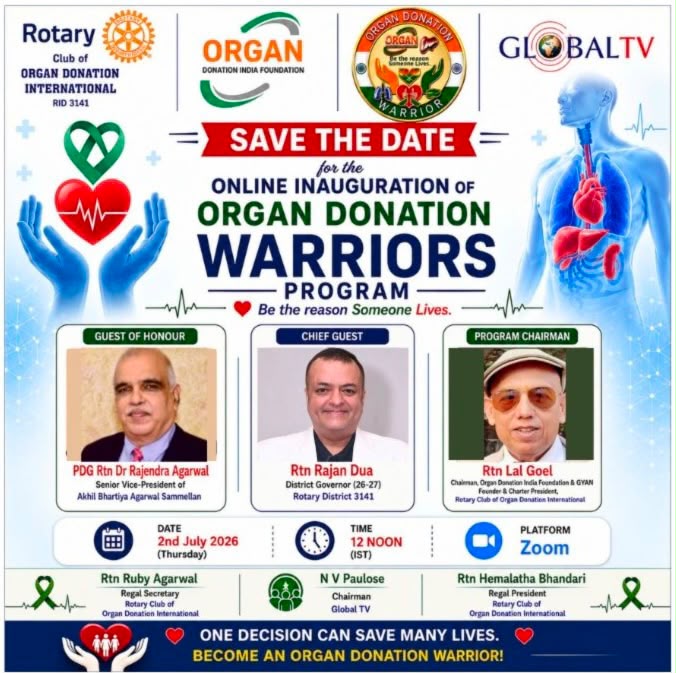
ORGAN DONATION WARRIORS’ PROGRAM TO BE LAUNCHED ON 2ND JULY 2026, SAYS ROTARIAN LAL GOEL

The All India Launch of the Organ Donation Warriors’ Program will take place online on 2nd July 2026— marking a historic milestone in India’s organ donation movement and the beginning of a nationwide mission to transform ordinary citizens into passionate ambassadors for this life-saving cause.

Rotarian Lal Goel, Chairman of Organ Donation India Foundation & GYAN and Founder & Charter President of the Rotary Club of Organ Donation International, who conceptualised and spearheaded this program, envisions building a powerful countrywide network of trained and motivated Organ Donation Warriors. These Warriors will spread awareness, dispel myths, encourage organ donation pledges, and bring hope to the thousands of patients across India waiting for a life-saving transplant.

Rotarian Rajan Dua, District Governor 2026-27 of Rotary International District 3141, will grace the occasion as Chief Guest, while PDG Rtn Dr. Rajendra Agarwal, Senior Vice President of the Akhil Bhartiya Agarwal Sammellan, will be the Guest of Honour.

The event will be hosted on the Zoom platform and telecast live by Global TV and GYAN, welcoming participants from every corner of India and beyond.

The Organ Donation Warriors’ Program — launched by the Organ Donation India Foundation in association with the Rotary Club of Organ Donation International and Global TV— is open to people of all ages and walks of life, including students, professionals, homemakers, senior citizens, and social activists. Participants will receive awareness resources, structured training sessions, certificates of participation, and meaningful opportunities for community engagement.

Rotarian Lal Goel has appealed to citizens across the country to join this noble movement and become active Organ Donation Warriors. He emphasised that awareness is the most powerful weapon in bridging the vast gap between the demand for organs and their availability, and expressed his firm belief that this program will grow into a transformative national movement — one that makes organ donation a social norm and saves countless lives.

To register, visit:
https://forms.gle/e76nzJ9uGU8Yndnr9

“Be a Warrior. Spread Awareness. Save Lives.”

FATTY LIVER: PREVENTION TODAY, TRANSPLANT TOMORROW IF IGNORED | Global TV

WHEN A ROTARY MEETING BECOMES A LIFE-SAVING SESSION | By Rotarian Lal Goel, Founder & Charter President, Rotary Club of Organ Donation International, Chairman, Organ Donation India Foundation & GYAN

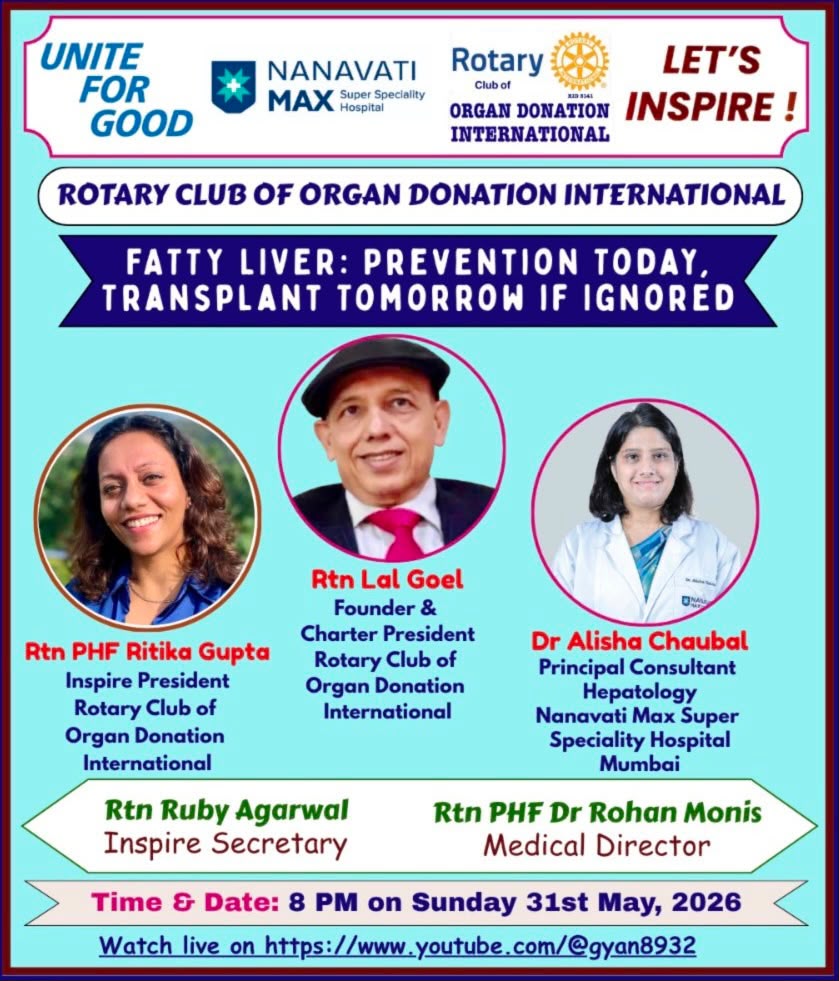
The Rotary Club of Organ Donation International recently hosted an interactive online talk titled “FATTY LIVER: PREVENTION TODAY, TRANSPLANT TOMORROW IF IGNORED” — and what followed was a masterclass in preventive healthcare awareness.

A testament to the dedication of Rotary members — even on the evening of the IPL Final, the majority of club members chose to join this session, reflecting their unwavering commitment to the cause of health awareness and service above self.

The speaker, Dr Alisha Chaubal, Principal Consultant Hepatologist, Nanavati Max Super Speciality Hospital, Mumbai, delivered an eye-opening presentation highlighting one of India’s fastest-growing yet least understood health challenges — Fatty Liver Disease.

Through an informative PowerPoint presentation and an engaging question-and-answer session, Dr Chaubal explained how a seemingly harmless accumulation of fat in the liver can gradually progress to inflammation, fibrosis, cirrhosis, liver failure, and ultimately the need for a liver transplant — if corrective action is not taken in time.

The session was particularly relevant for India, where changing lifestyles, increasing obesity, diabetes, and sedentary habits have created a silent epidemic affecting millions of adults and even children.

The Meeting Proceedings:

What is Fatty Liver Disease?

Fatty Liver Disease occurs when excess fat accumulates in liver cells. Normally, the liver contains very little fat. However, when more than 5% of the liver’s weight consists of fat, it is classified as a fatty liver.

In India, the condition is increasingly linked to:

•   Obesity and abdominal fat
•   Type 2 diabetes
•   High cholesterol and triglycerides
•   Lack of physical activity
•   Excessive consumption of sugar and processed foods
•   Frequent intake of fried foods and refined carbohydrates
•   Genetic predisposition among South Asians

The most alarming aspect of fatty liver disease is that it often produces no symptoms in its early stages. Many patients discover the condition accidentally during routine health check-ups or abdominal sonography.

Why Should Indians Take Fatty Liver Seriously?

India is witnessing an unprecedented rise in metabolic disorders, and experts estimate that a significant proportion of urban Indians may already have some degree of fatty liver disease.

The progression can be dangerous and swift:

Fatty Liver → Inflammation (NASH/MASH) → Fibrosis → Cirrhosis → Liver Failure → Liver Transplant

Once cirrhosis develops, the damage is largely irreversible. Complications such as liver cancer, internal bleeding, fluid accumulation in the abdomen, and liver failure can follow.

The good news: fatty liver in its early stages is often fully reversible through lifestyle modifications.

Understanding the FIB-4 Test

One of the most important tools discussed during the session was the FIB-4 (Fibrosis-4) Score — a simple, non-invasive method used to estimate the risk of liver fibrosis.

The score is calculated using:

•   Age
•   AST (SGOT)
•   ALT (SGPT)
•   Platelet Count

Formula: FIB-4 = (Age × AST) ÷ (Platelet Count × √ALT)

Free online calculators are widely available, and physicians use this score to determine whether a patient requires further evaluation.

FIB-4 Calculator
https://share.google/6RbD01jH0YlcKHgaH

Interpretation of FIB-4

For adults below 65 years:

•   Below 1.3 — Low risk
•   1.3 to 2.67 — Intermediate risk
•   Above 2.67 — High risk; specialist evaluation recommended

For adults above 65 years:

•   Below 2.0 — Low risk
•   2.0 to 2.67 — Intermediate risk
•   Above 2.67 — High risk

The FIB-4 score does not replace medical consultation but serves as an effective first-line screening tool, helping identify patients who may need further tests such as FibroScan or specialist assessment.

Prevention is Better than Transplant

The strongest message from the session was unambiguous: liver transplantation should never be viewed as the first solution. Prevention is the best treatment.

Research has shown that even a modest reduction in body weight can significantly improve liver health.

Lifestyle Changes That Can Reverse Fatty Liver

1.  Lose excess body weight gradually
2.  Walk at least 8,000–10,000 steps daily
3.  Exercise for 150–300 minutes per week
4.  Reduce sugar consumption
5.  Eliminate sugary beverages and packaged fruit juices
6.  Avoid frequent consumption of fried foods
7.  Sleep 7–8 hours daily
8.  Control diabetes, blood pressure, and cholesterol
9.  Avoid smoking and excessive alcohol
10. Undergo regular health check-ups

Even a 7–10% reduction in body weight can substantially improve liver health and reduce inflammation.

Recommended Indian Diet for Fatty Liver

For those looking to improve liver health through diet, the emphasis should be on whole, minimally processed foods. A good daily pattern includes options such as oats porridge with flaxseeds, vegetable poha, or sprout salad for breakfast; multigrain or whole wheat roti with dal, vegetables, and salad for lunch; green tea, buttermilk, or roasted nuts and chana for evening snacks; and vegetable soup with millet khichdi or dal and mixed vegetables for dinner. Non-vegetarians can incorporate egg whites, grilled fish, or skinless chicken in place of heavier proteins. Equally important is what to avoid — sugary soft drinks, packaged juices, white bread, maida products, deep-fried snacks, processed foods, excess sweets, and alcohol should all be eliminated or significantly reduced.

Rotary’s Role — And Why Organ Donation Matters Here

This session demonstrated how Rotary meetings can become powerful platforms for preventive healthcare education. By bringing medical experts directly to the community, Rotary empowers people to act before conditions become life-threatening.

And there is a deeper connection worth reflecting upon: when prevention fails and a liver reaches end-stage failure, a transplant becomes the only hope — and that transplant depends entirely on the generosity of an organ donor, living or deceased. This is precisely why the work of the Rotary Club of Organ Donation International carries such profound significance. Every awareness campaign, every pledge, every conversation about organ donation is a bridge between despair and survival.

A liver transplant can save lives — but preventing the need for one is even better. Through awareness, early detection, healthy lifestyle choices, and regular medical evaluation, countless Indians can avoid the devastating consequences of advanced liver disease.

The message from this meeting was clear:

“Your liver may be silent today — but it should not be ignored. Prevention today can save you from a transplant tomorrow.”