A new book by Josi Joseph shows a path to lasting joy.
Why is happiness so hard to find? Josi Joseph has an answer. He says the problem is how we think about pleasure. His new book, “The Power of Positive Pleasure,” offers a new idea. Happiness is not about saying no to pleasure. It is about choosing the right kind.
Joseph makes a clear distinction between two types of pleasure. The first is Negative Pleasure. This is the quick thrill from addictions, selfish acts, and bad habits. The second is Positive Pleasure. This deeper joy comes from learning new things, creating, serving others, and loving.
He explains that Negative Pleasure is like a withdrawal. It drains your life’s energy. But Positive Pleasure is like a deposit. It is an investment in your well being. This investment grows over time. It fills your life with meaning.
Joseph sees a bigger picture for this idea. He imagines families and schools that teach this joy. He sees children who love learning. He sees communities that find happiness in kindness. He sees leaders who gain fulfilment from service.
“Life is a happiness business,” he writes. “True success means building a surplus of positive pleasure. This surplus does more than sustain you. It also spreads to the people around you.”
Today, many people feel stressed and distracted. This book arrives at the right time. “The Power of Positive Pleasure” shares a simple but powerful truth. Pleasure is not the enemy of a good life. In fact, the right kind of pleasure is the very foundation of lasting happiness.
സുനിൽ ഞാവള്ളി | ആൽക്കമിസ്റ്റിലെ സാൻറ്റിയാഗോ | Global TV
എൻ വി പൗലോസ് , ചെയർമാൻ, ഗ്ലോബൽ ടി വി+91 98441 82044
എല്ലാം തുടർക്കഥകളാണ്. പലതും കാലാധീതമായി ബന്ധപ്പെട്ടുകിടക്കുന്നു. സമയാസമയങ്ങളിൽ അവ ഒത്തുചേർന്ന് പുതിയ കഥകൾ രചിക്കുന്നു. ഓർമ്മകളിൽ വിരാചിക്കുന്ന കാലാതീതമായ ഏടുകൾ ഒരു പക്ഷെ വേദനസംഹാരിയായി മാറുന്ന ചെറുനോവു കളുടെ കഥകൾ ധാരാളമായി പറഞ്ഞെന്ന് വരാം.
ഓരോ അധ്യായങ്ങളായി നമ്മുക്ക് നിരവധി പുസ്തകങ്ങൾ എഴുതാൻ കഴിഞ്ഞേക്കും. ഈ സാൻറ്റിയാഗോയുടെ കഥ ഇവിടെ വളരെ പ്രസക്തമാണ്. മലബാറിനെയും മലബാറിൽ ദീപിക തുടങ്ങിയതിനെയും അറിയുന്നവർക്ക് ഈ കഥ കൂടുതൽ എളുപ്പത്തിൽ മനസ്സിലാകും.
ഓരോ കഥകളും ഓരോ അമൃത വള്ളികളാണ്. അവയിൽ ഓരോന്നും തളിരിടുന്നത് ഒന്നിനൊന്ന് ചേർന്ന് നിന്നുകൊണ്ടുമാണ്. നന്നായി കളിച്ചാൽ ഓരോന്നും അപ്പപ്പോൾ കൈകാര്യം ചെയ്യാവുന്നതേയുള്ളൂ. പക്ഷെ അങ്ങനെ സംഭവിക്കുന്നില്ല. പതിയിരിക്കുന്ന അപകടം എപ്പോഴും അറിഞ്ഞുകൊള്ളണം എന്നുമില്ല. ഏറ്റവും അടുപ്പമു ള്ളവർ അറിഞ്ഞോ അറിയാതെയോ മുതലക്കുളത്തിൽ തള്ളിയിടുന്ന അവസ്ഥ. ആദ്യം കയ്ക്കും. പിന്നെ മധുരിക്കും.
മുതലക്കുളത്തിൽ നിന്നും രക്ഷപെടുത്തി കൊണ്ടുവന്നി രിക്കുന്ന കുഞ്ഞിന് ഇത് പുതുജീവൻ്റെ സന്തോഷം.
കൈവഴിയായി നിരവധി കഥകൾ ഇവിടെ എഴുതിച്ചേർക്കാൻ കഴിയും. ഒരു കുടുംബകഥയായും ഓരോരുത്തരുടെ കഥ വേറെ വേറെയും എഴുതാം. എല്ലാവരും പറയുന്നത് വേറെ കഥകളും കാര്യങ്ങളുമാണെങ്കിൽ കൂടിയും നമുക്ക വയെല്ലാം ചേർത്ത് ഒരു സിംഫണി ഒരുക്കുകയുമാകാം.
പാറപ്പുറത്ത് വീണിട്ടും തഴച്ചുവളർന്ന ആഴത്തിൽ വേരു കളുള്ള വിത്തോ തയ്യോ തായ്മരമോ ആയി നമ്മുക്ക് ഈ കഥ പറയാം. എന്റെയുള്ളിൽ തീയാണ് ഫാത്തിമാ എന്ന് പാടുകയും ആകാം. ഓരോ കഥകളും ഓരോ തുടർ കഥകളാണ്. എന്തിനാണ് ആ ഗുരുവായൂർ ബസ് അപ്പോൾ അവിടെ വന്നത് എന്ന് ചോദിച്ചാൽ കഥാകൃത്ത് അങ്ങ നെയാണ് ഈ കഥ എഴുതിവച്ചത് എന്ന് ഉത്തരം പറയേണ്ടി വരും. ആൽക്കമിസ്റ്റിലെ സാൻറ്റിയാഗോ ആൽക്കമിസ്റ്റിനോട് ചോദിക്കുന്ന ഒരു ചോദ്യമുണ്ട്. ഇവിടെ തിരിച്ചുവരാനായിരുന്നെങ്കിൽ ഇത്ര ദൂരം എന്നെ നടത്തണമായിരുന്നോ എന്നാണ് ആ ചോദ്യം. അതിനുത്തരമായി സാൻറ്റിയാഗോ കേൾക്കുന്ന അശരീരി ആൽക്കമിസ്റ്റിൻ്റെ ശബ്ദമാണ്. ഇത്ര ദൂരം പോയില്ലായിരുന്നെങ്കിൽ നീ ഇത് കാണുമായിരുന്നോ അത് കാണുമായിരുന്നോ എന്ന് ഒരു നീണ്ട ലിസ്റ്റാണ് ആൽക്കമിസ്റ്റ് അവതരിപ്പിക്കുന്നത്. സുനിലിനോടും ഈ അശരീരി പറയുന്നത് ഇതൊക്കെ തന്നെയാണ്. സംഭവിക്കുന്നത് എല്ലാം നല്ലതിനും നന്മയ്ക്കുമായി കാലം കാലേകൂട്ടി കരുതി വച്ചത്.
നന്നേ ചെറുപ്പത്തിൽ മാധ്യമ രംഗത്തേക്ക് ആകൃഷ്ടനായ വ്യക്തിയാണ് സുനിൽ ഞാവള്ളി. ദീപിക പ്രചാരണം മലബാറിൽ വളരെയധികം വർദ്ധിച്ചത് സുനിലിൻ്റെ പ്രവർത്തനം മൂലമായിരുന്നു. കണ്ണൂരിൽ ദീപികയ്ക്ക് സ്ഥലം എടുക്കുന്നതടക്കം പുതിയ എഡിഷനുവേണ്ട പ്രവർത്ത നങ്ങളെല്ലാം സുനിലിൻ്റെ നേതൃത്വത്തിൽ ആയിരുന്നു.
മലബാറിൻ്റെ ഭൂപ്രകൃതിയും സാമൂഹിക സാംസ്കാരിക രാഷ്ട്രീയ രംഗവും നന്നായി അറിയുന്നവരുടെ ചിട്ടയായ പ്രവർത്തനത്തിൻ്റെ ഫലമായി പത്രം അഭൂതപൂർവ്വമായ നേട്ടം കൈവരിച്ചപ്പോൾ മണ്ണും ചാരി നിന്നവൻ പെണ്ണും കൊണ്ട് പോയി എന്ന സ്ഥിതിയായി.
പലപ്പോഴും പലയിടത്തും സംഭവിക്കുന്നതുപോലെ അവിടെയും സംഭവിച്ചു. ചെറിയ ലോകത്ത് വലിയ സ്വപ്നങ്ങ ളുമായി കഴിഞ്ഞിരുന്ന സുനിൽ ദീപികയ്ക്ക് അപ്പുറം മറ്റൊരു ലോകത്തെക്കുറിച്ചു ചിന്തിച്ചിട്ട് പോലുമില്ലായിരുന്നു.
ചില വിത്തുകൾ ഫലഭൂയിഷ്ഠമായ മണ്ണിൽ വീഴുകയും കഷ്ടപ്പെടാതെ തഴച്ചുവളരുകയും ചെയ്തപ്പോൾ സുനിൽ മുള്ളുകൾക്കിടയിൽ എറിയപ്പെടുകയും വല്ലാതെ ശ്വാസം മുട്ടിക്കപെടുകയും, എന്നിട്ടും പോരാഞ്ഞിട്ട് പാറപ്പുറത്തെറിയ പ്പെടുകയും വല്ലാതെ പരീക്ഷിക്കപ്പെടുകയും ചെയ്തു.
കൂടെ നിന്നവർ കൈവിട്ടപ്പോൾ കുടുംബം ഒറ്റക്കെട്ടായി പൊരുതി. പ്രതിസന്ധികൾ പ്രചോദനങ്ങളായി. ഭാര്യയും മക്കളും ഒന്നിനൊന്ന് മികവ് പുലർത്തി. എല്ലാവരും അവരുടെ മേഖലകളിൽ മികച്ച പ്രകടനം കാഴ്ച വച്ചപ്പോൾ ഉർവശി ശാപം ഉപകാരമായി എന്ന നില യിലെത്തി കാര്യങ്ങൾ. കാലമേൽപ്പിച്ച മുറിവുകളോർ ക്കുമ്പോൾ ചിലപ്പോഴൊക്കെ അനല്പമായ സങ്കടം സുനിലിനെ പിടികൂടും. എന്തിനാണിവർ എന്നോട് ഇത് ചെയ്തത്? അപ്പോഴൊക്കെ ഒരു പക്ഷെ ആൽക്കമിസ്റ്റ് പതിയെ വിളിച്ചുപറയുന്നുണ്ടാകാം. ഇതെല്ലം വലിയൊരു മാസ്റ്റർ പ്ലാനിൻ്റെ ഭാഗമാണെന്ന്.
ഇത് സുനിൽ ഞാവള്ളിയുടെയും കുടുംബത്തിൻ്റെയും മാത്രം കഥയല്ല. പാറയിലെ വിത്ത് പോലെ, സമയവും സാഹചര്യങ്ങളും പരീക്ഷിച്ചെങ്കിലും എല്ലാ പ്രതിബ ന്ധങ്ങളെയും മറികടന്ന് വളരാൻ തീരുമാനിച്ച ഓരോ കുടുംബത്തിൻ്റെയും കഥയാണിത്. ഈ കഥ നമ്മുടെയെല്ലാം പ്രതിരോധശേഷിയുടെ കഥ മാത്രമല്ല, പ്രവർത്തന മികവിൻ്റെയും പരിവർത്തനത്തിൻ്റെയും കഥയാണ്.
നമ്മുടെയെല്ലാം ജീവിതത്തിലെ ഏറ്റവും വിലപ്പെട്ട നിധികൾ നമ്മുടെ ഹൃദയത്തിനുള്ളിൽ ഒളിഞ്ഞിരിക്കുന്നു എന്ന സത്യമാണ് നമ്മൾ ആത്യന്തികമായി മനസ്സിലാക്കുക. ഒപ്പം നമ്മുടെ അരികിൽ നടക്കുന്ന വരുടെ അചഞ്ചലമായ സ്നേഹത്തിലും വലുതായി മറ്റൊന്നും നമ്മുക്ക് നേടിയെടുക്കാനില്ല എന്ന തിരിച്ചറിവും.
കാലം സമയം സന്ദർഭം എന്നിവയെല്ലാം എഴുതപ്പെട്ടിരിക്കുന്നതുപോലെ തന്നെ നിറവേറുന്നു.
ആൽക്കെമിസ്റ്റിലെ സാൻറ്റിയാഗോയെപ്പോലെ നമുക്കും ചക്രവാളത്തിനപ്പുറത്തേക്ക് വ്യാപിച്ചു കിടക്കുന്ന സ്വപ്നങ്ങളുണ്ടാകും. മനോഹരമായ സ്വപ്നങ്ങൾ ധൈര്യം ആവശ്യപ്പെടുന്നു. തകർക്കാനാവാത്ത ആത്മവിശ്വാസം ത്യാഗം എന്നിവ ആത്മാവിന്റെ അഭിനിവേശമാണ്.
വർഷങ്ങളോളം ജീവിതം നമ്മെ പരീക്ഷിച്ചു എന്ന് വരാം. അനിശ്ചിതത്വത്തിൻ്റെ കാറ്റ് ആഞ്ഞടിക്കുകയും അലറുകയും ചെയ്തെന്ന് വരാം. മുന്നോട്ടുള്ള വഴി അവ്യക്തമായിരി ക്കുകയും വെല്ലുവിളികൾ മറികടക്കാൻ കഴിയാത്തതായി തോന്നുകയും ചെയ്ത നിമിഷങ്ങളുമുണ്ടാകാം.
എന്നാൽ ആ നിമിഷങ്ങളിൽ, ശ്രദ്ധേയമായ ഒരു കാര്യം നമ്മുടെ കുടുംബം നമ്മോടൊപ്പം പാറപോലെ ഉറച്ചുനിന്നു എന്നുളളതാണ്. കുടുംബം ഒരു തുടർക്കഥയാണ്. കാലാതീതമായി തുടരേണ്ടതും ചരിത്രത്തിൽ എഴുതപ്പെടേണ്ടതുമായ വലിയ കഥകൾ. വ്യക്തിഗത വിജയത്തേക്കാൾ വലിയ ഒന്നിലേക്കുള്ള യാത്രയിൽ സഹയാത്രികർ കൂട്ടായി നേടിയ വിജയങ്ങൾ!
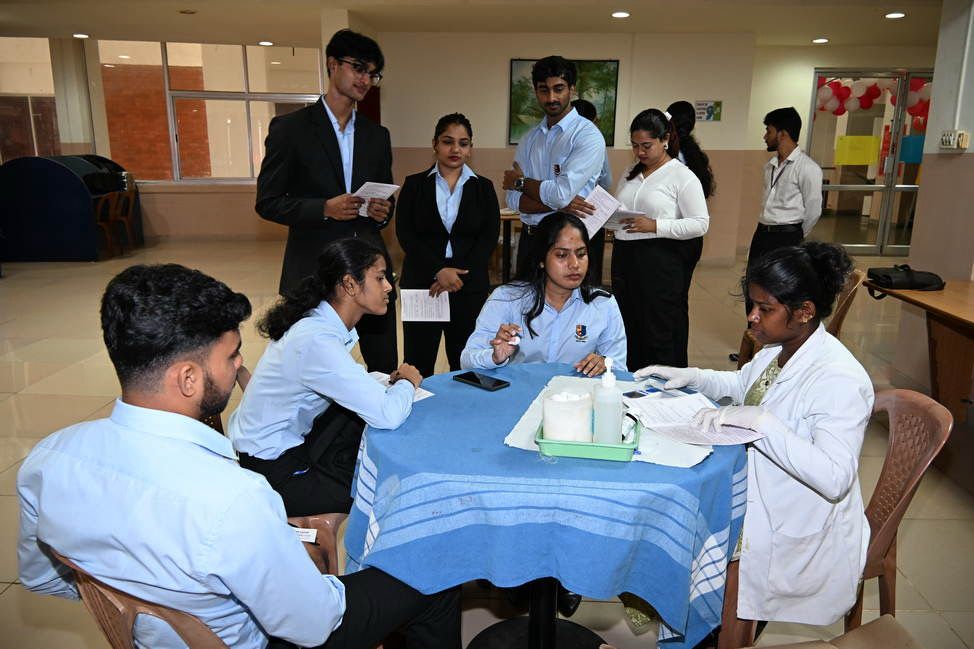
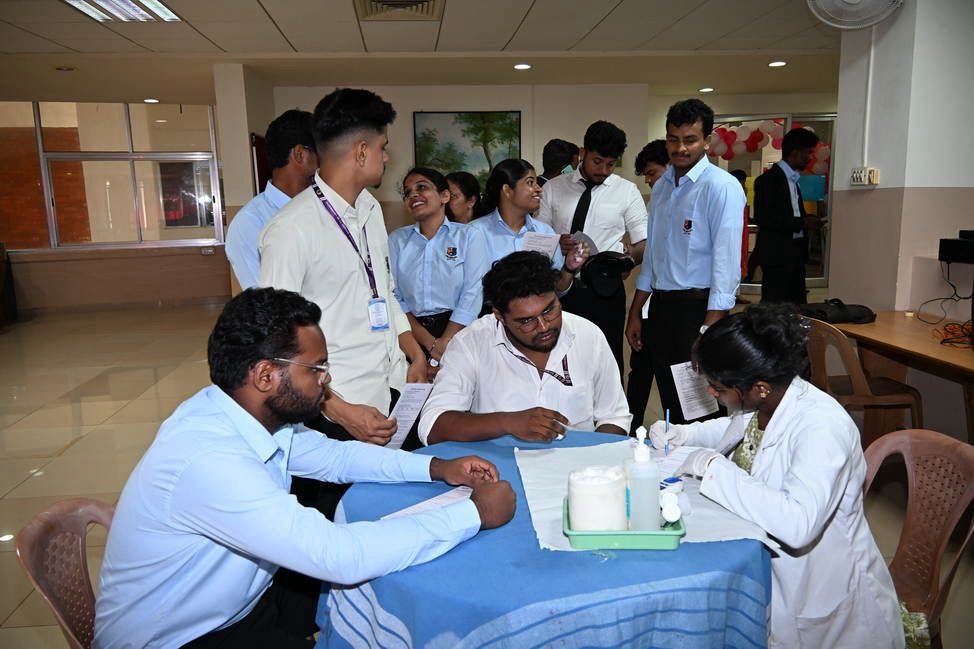
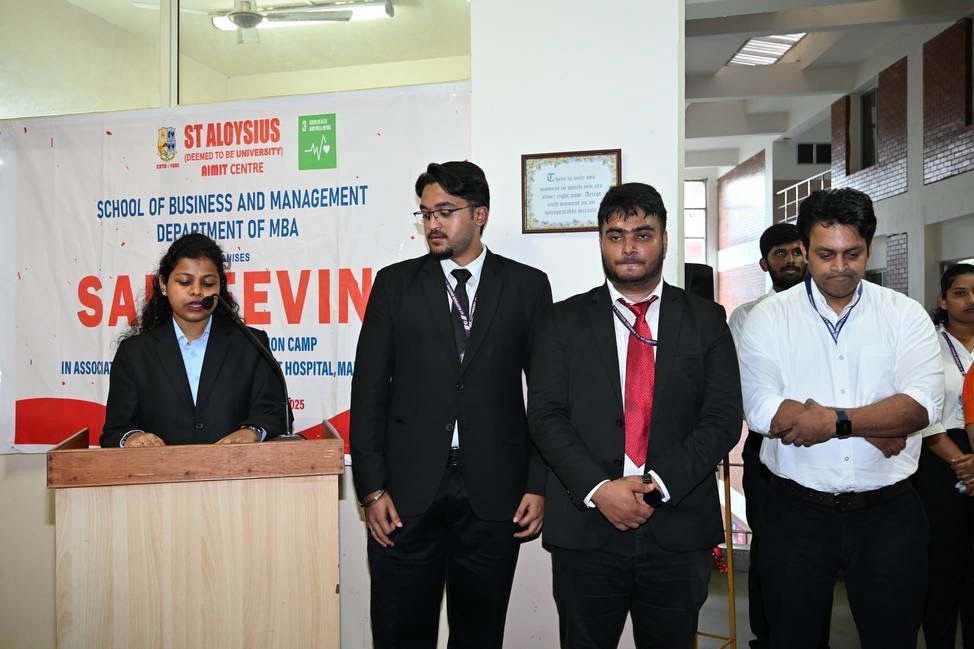
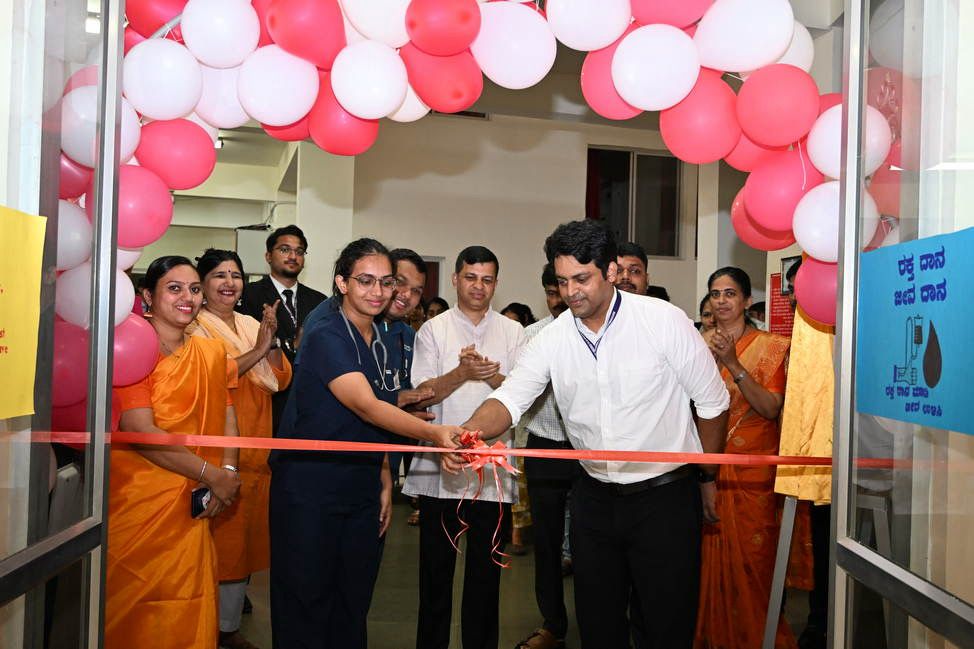
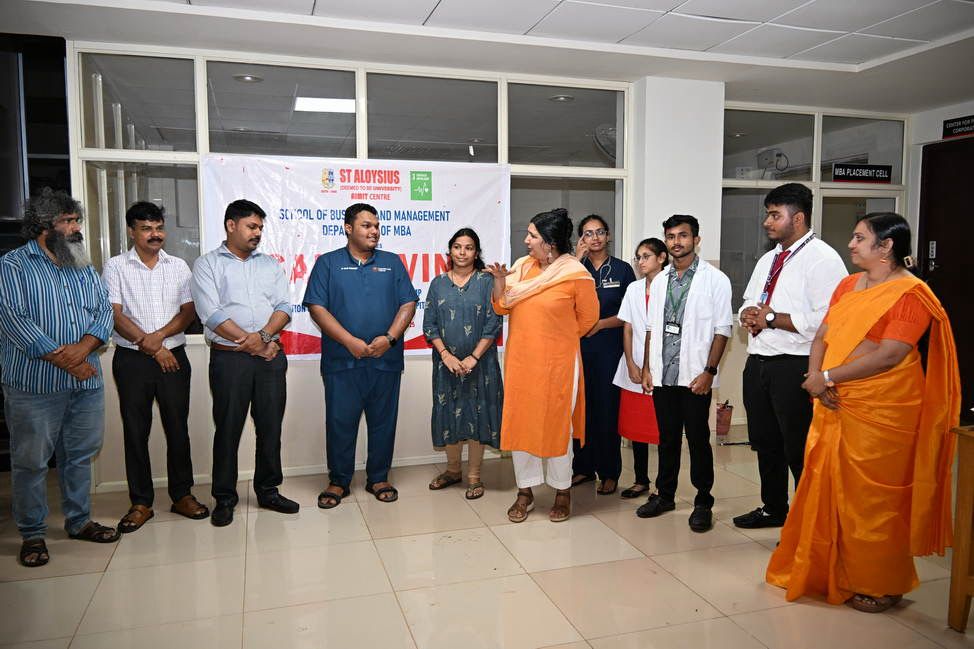
A Massive Blood Donation Camp was organised at St Aloysius (Deemed to be University), AIMIT Centre, Beeri, Mangalore, on Monday, 29th September 2025, in collaboration with the Government Wenlock District Hospital, Mangalore.
The camp was inaugurated by Director Dr (Fr) Kiran Cotha S J in the presence of Dr (Fr) Manoj, Dean Dr. Rajani Suresh, HOD Dr. Beena Dias, Faculty Co-ordinator Mrs. Harinakshi, Student Co-ordinator Mr. Joyal D’Souza, Ms. Delisha D’Souza, faculty members, and students. In his address, the Director highlighted the importance of voluntary blood donation as a life-saving service to society. The medical team, comprising doctors and medical staff from Wenlock District Hospital, Mangalore, efficiently managed the donation process, ensuring safety and comfort for all donors. Faculty members, non-teaching staff, and students came forward enthusiastically to participate. A total of 97 units of blood were collected during the camp. The program was well coordinated by the faculty and student coordinators, with the active support of the non-teaching staff. Their combined efforts ensured the smooth conduct of the event. This noble initiative not only contributed to the community’s health needs but also instilled in students a sense of social responsibility and service to humanity.
St. Joseph’s University Holds Second Annual Convocation
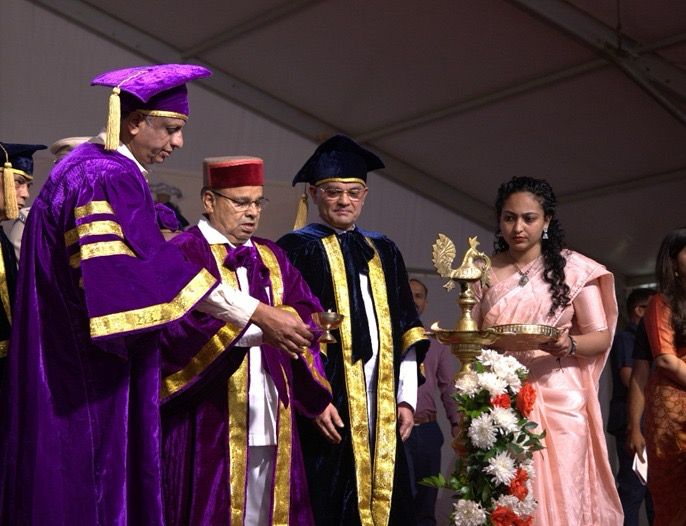
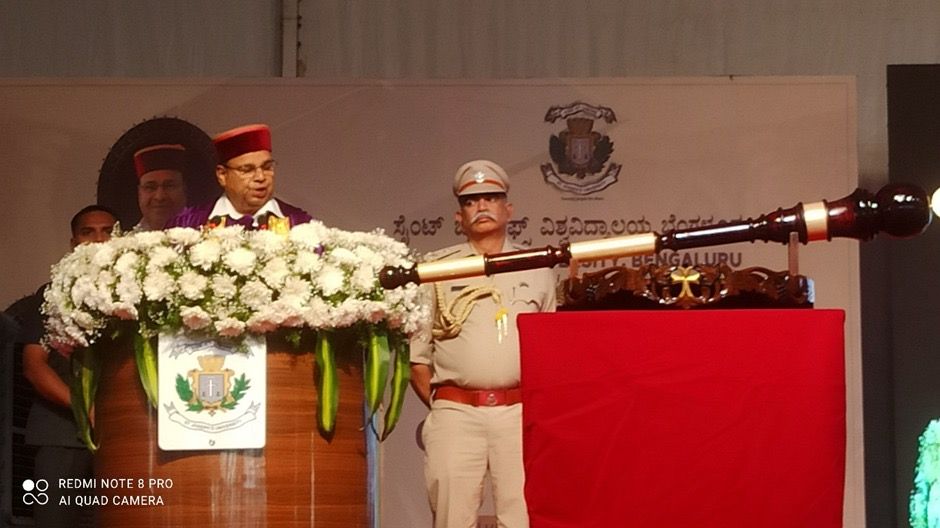
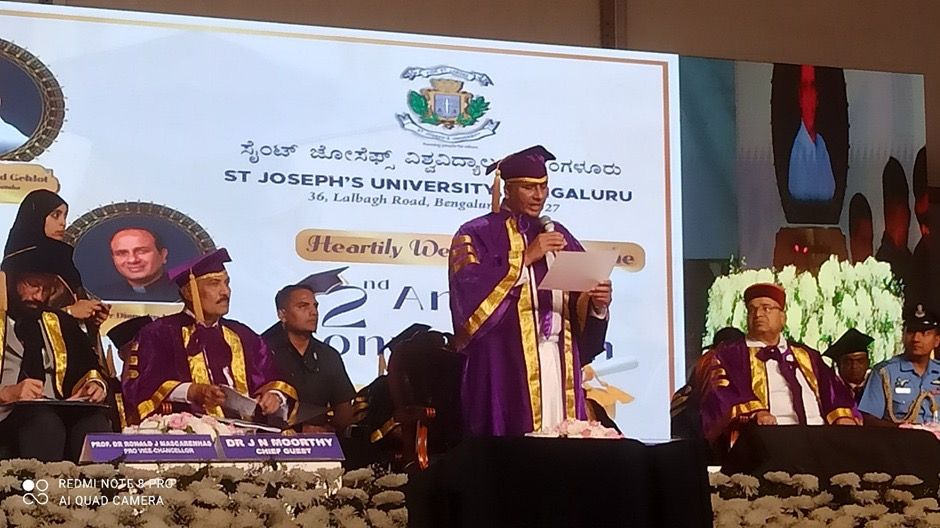
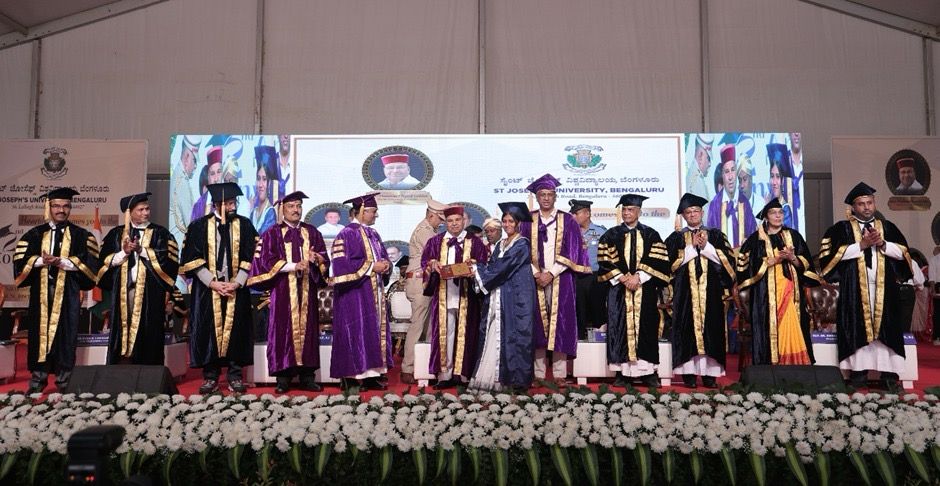
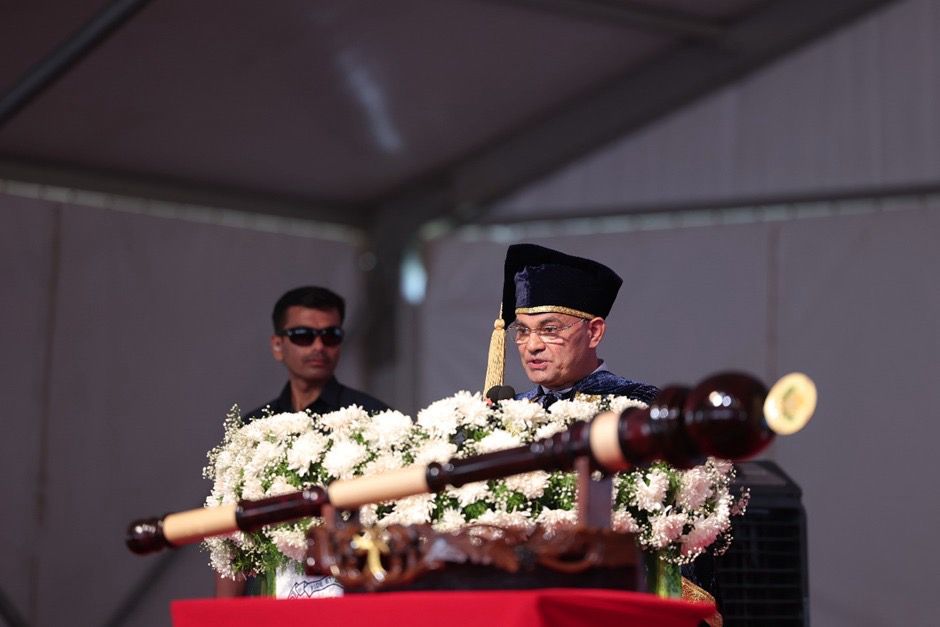
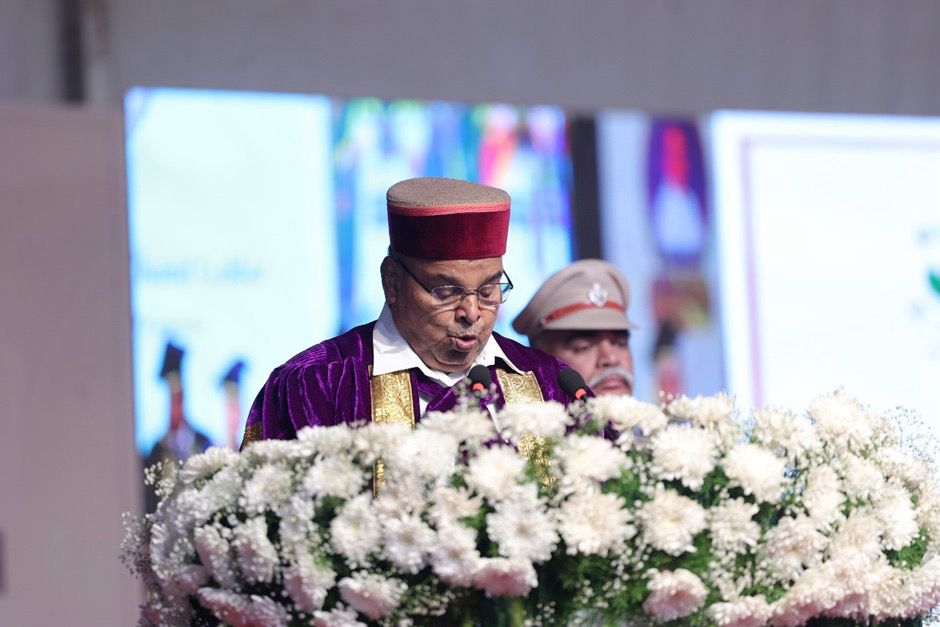
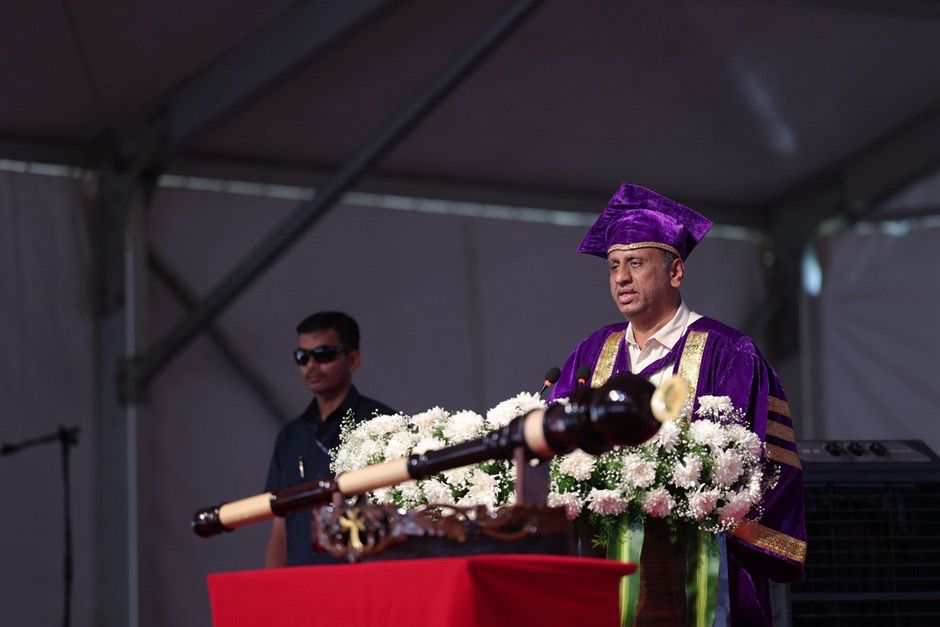
Bengaluru, September 27: St. Joseph’s University held its second annual convocation ceremony on Saturday, beginning at 10:00 a.m. with a procession of rank holders and special awardees, followed by the ceremonial march of dignitaries. The event was presided over by the Honourable Governor of Karnataka, Shri Thaawar Chand Gehlot, in the presence of the Honourable Minister for Higher Education, Dr M.C. Sudhakar, and Chief Guest Dr Jarugu Narasimha Moorthy, Director, Indian Institute of Science Education and Research (IISER), Thiruvananthapuram. Rev. Fr. Dionysius Vaz, SJ (Chancellor), and Rev. Dr Victor Lobo, SJ (Vice-Chancellor), were also present.
A total of 2,747 students graduated this year, comprising 2,009 undergraduates and 738 postgraduates. Among them, 143 rank holders were recognised, including 99 undergraduates and 44 postgraduates. Additionally, 40 special prizes were awarded to outstanding achievers across academics, NCC, sports, and co-curricular fields. Dr M.C. Sudhakar ( Minister for Higher Education) congratulated all the medal winners, mentioning the support from their parents and the faculty of the institution. “Opportunities don’t come to our doorsteps. We need to run behind the opportunities, make the best possible chances and see how we can progress in this competitive world”. He added.
In his convocation address, Dr J. N. Moorthy urged graduates to dream big, leverage emerging technologies, and pursue innovations to address pressing challenges such as green energy, waste management, healthcare, cybersecurity, and artificial intelligence. “No one anticipated there would be something called software when I graduated in 1994. Today, it has transformed lives. This is the change I want you to envision—pursue everything with passion and resilience and bring pride to your parents, institution, and nation,” he said.
Honourable Governor Shri Thaawar Chand Gehlot, in his presidential remarks, reminded graduates to balance professional success with civic responsibility. “Respect your teachers and parents—they have shaped your success. Always remain grateful to them, and contribute to building a developed nation and serving humanity,” he said. Other dignitaries present included Dr. Godwin D’Souza (Controller of Examinations), Dr. Syed Wajeed (Registrar), Dr. Ronald J. Mascarenhas (Pro Vice-Chancellor), Rev. Dr. Swebert D’Silva, SJ (Pro Chancellor), Dr. Regina Mathias (Pro Vice-Chancellor), and Rev. Fr. Arun P. D’Souza, SJ (Finance Officer).
Established in 1882, St. Joseph’s University marked 143 years of its legacy this year. The convocation paid tribute to its founders’ vision, the dedication of faculty, the achievements of students, and the support of parents and alumni, reaffirming the institution’s role as one of India’s oldest centres of higher education.
bringing together writers, literary enthusiasts, and community members.
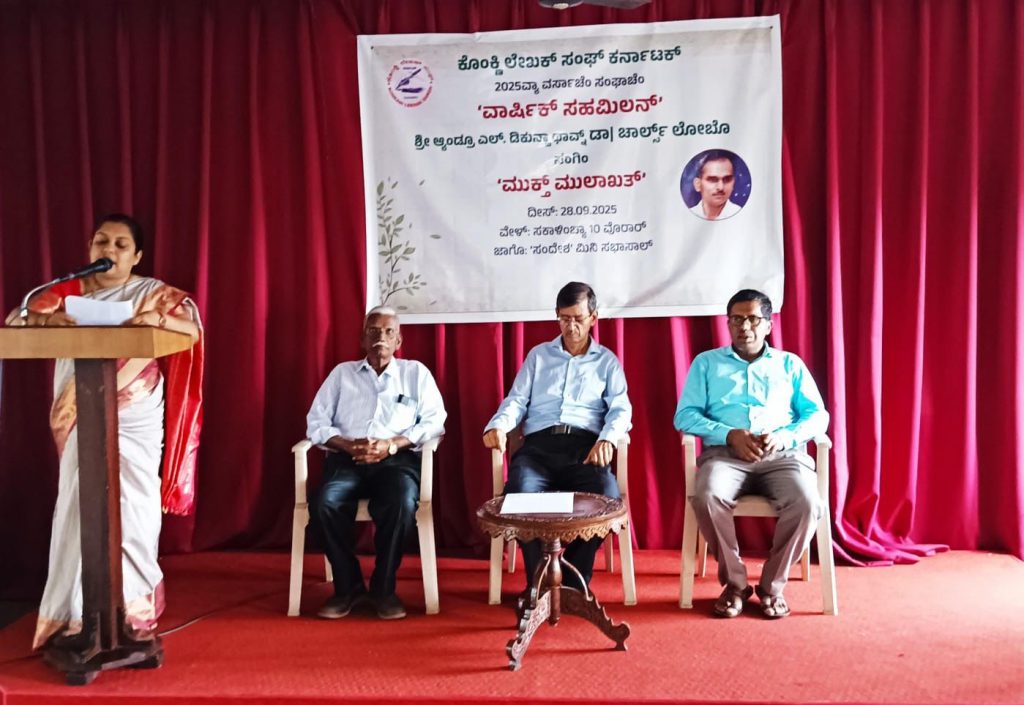
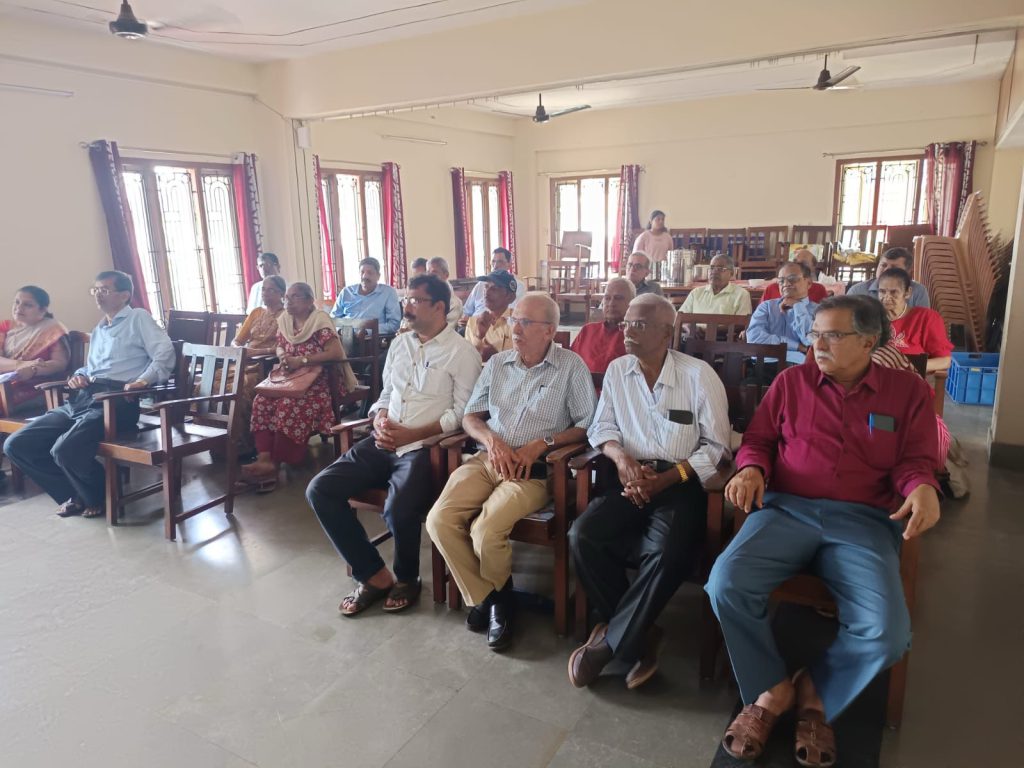
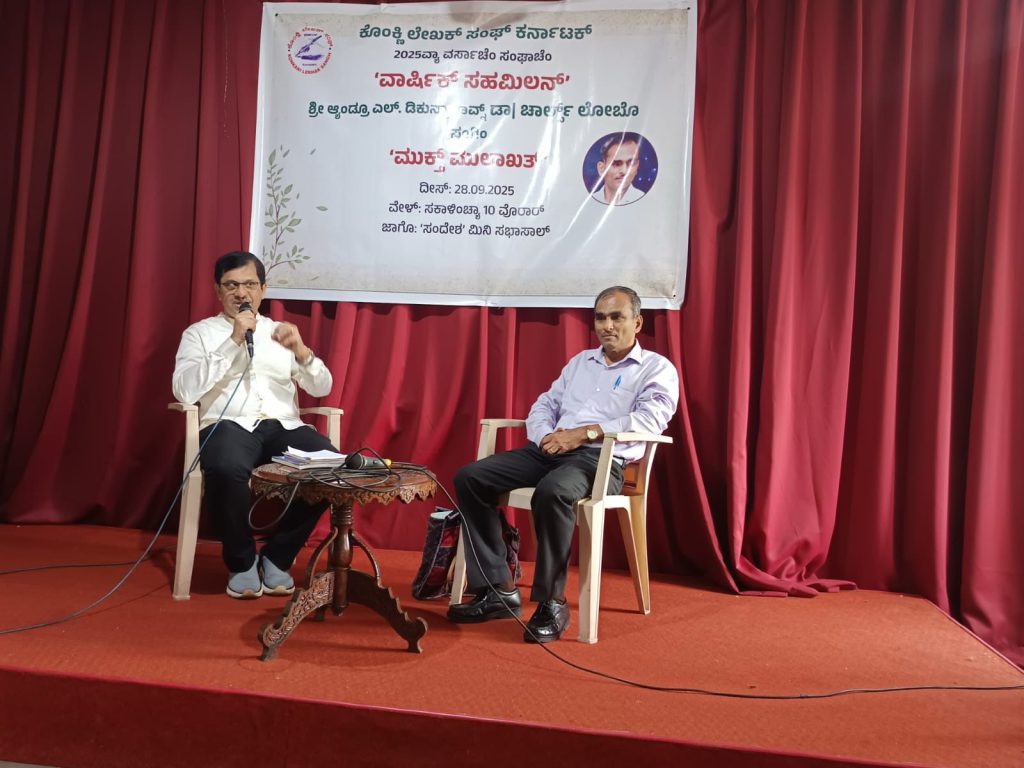
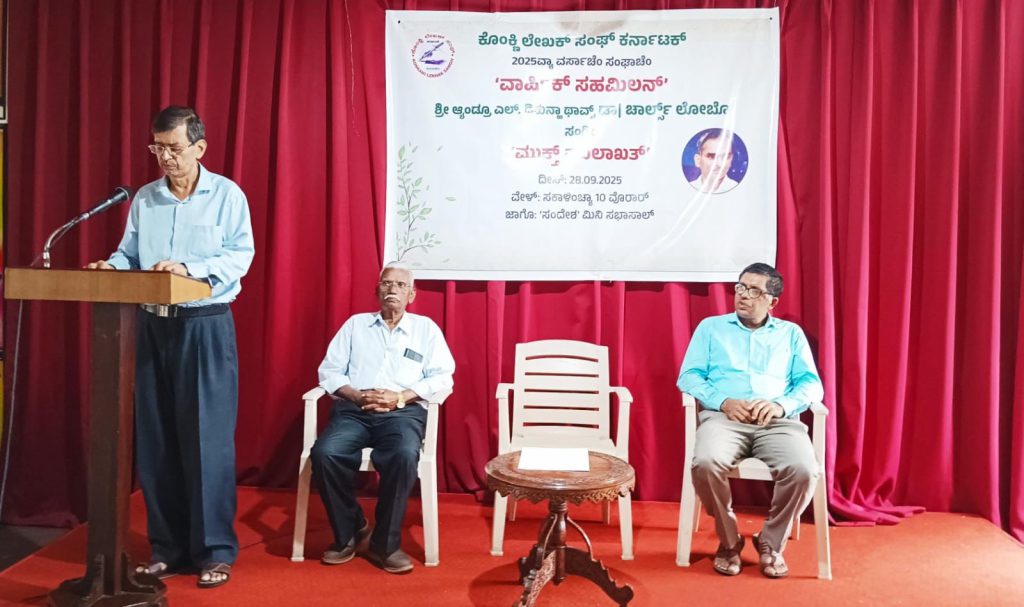
The Konkani Writers’ Association, Karnataka held its annual meeting at the Sandesha Foundation auditorium, bringing together writers, literary enthusiasts, and community members.
On the occasion, the Association’s Convener Mr. Richard Moras presented the statement of accounts and expenditure, which was reviewed and unanimously approved by the gathering.
A major highlight of the event was an interactive session between Dr. Charles Lobo, IPS (Retd.), former Postmaster General of the Indian Postal Department, and renowned Konkani poet and writer Mr. Andrew L. D’Cunha. The discussion shed light on Dr. Lobo’s professional journey, his accomplishments in public service, and his significant contributions to the growth of Konkani language and literature. His reflections and insights deeply inspired the audience.
The programme commenced with a welcome and introductory address by Mr. Dolphy Cassia, who set the tone for the evening. A heartfelt vote of thanks was proposed by Mr. Henry Mascarenhas, acknowledging the support and cooperation of all those involved. The proceedings were conducted with grace and precision by Dr. Annie Castelino, who compered the event.
25 Years of a Heartbeat: How Srinivasa Heart Foundation is Empowering India to Save Lives
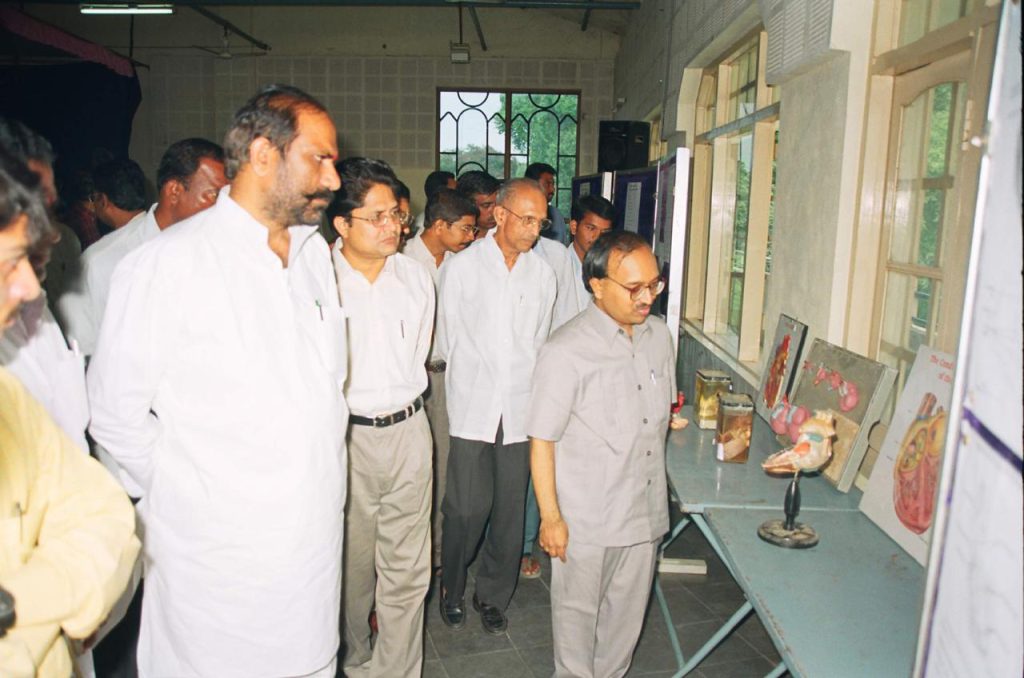
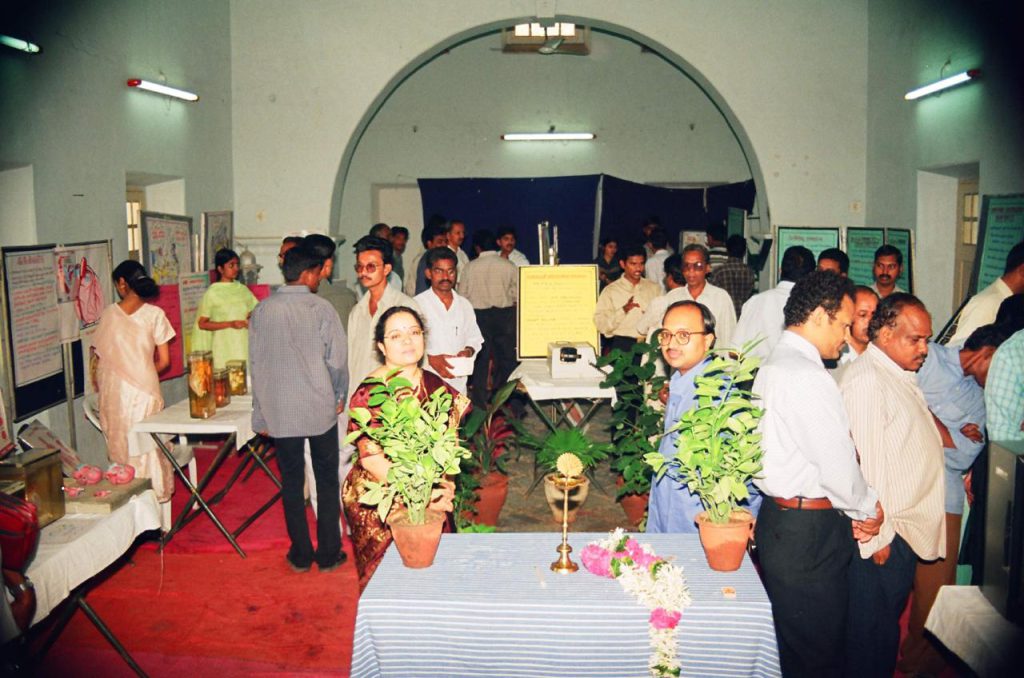
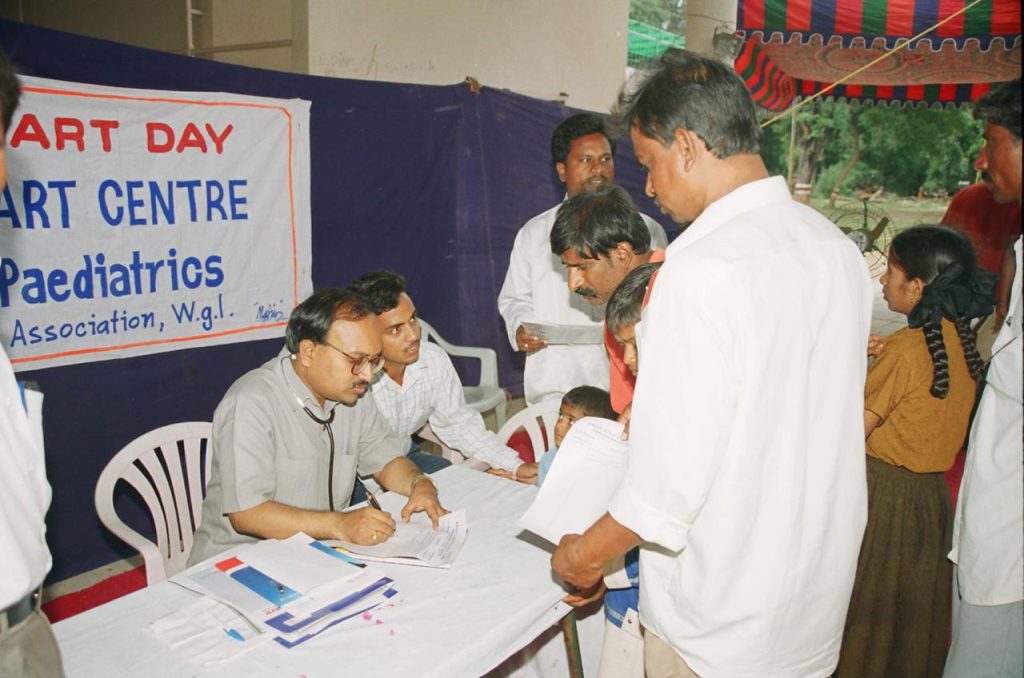
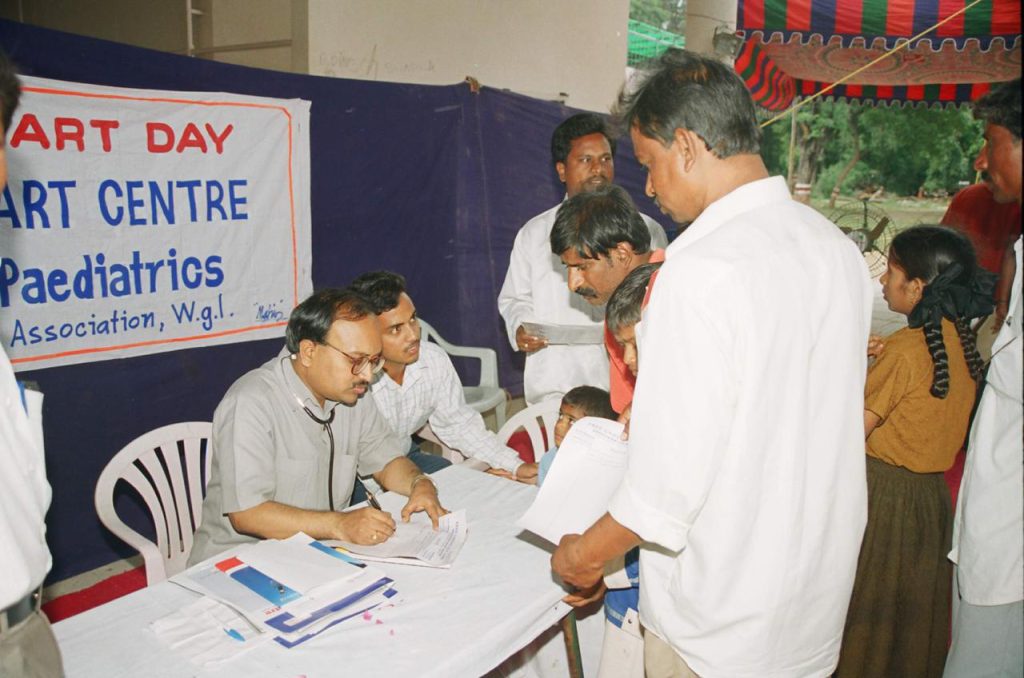
WARANGAL, India – For a quarter of a century, a quiet revolution in public health has been pulsating from the heart of Telangana. What began as a single exhibition on World Heart Day in 2001 has since evolved into a nationwide movement, equipping tens of thousands of Indians with the most critical skill of all: the power to restart a heart.
Led by the visionary Dr. Srinivas Ramaka, the Srinivasa Heart Foundation (SHF) is celebrating 25 years of pioneering excellence in CPR (Cardiopulmonary Resuscitation) training and preventive cardiology. This milestone is not merely a measure of time, but a testament to a relentless, strategic, and deeply impactful mission to transform bystanders into lifesavers.
From a Single Spark to a Nationwide Flame
The Foundation’s journey in public empowerment began early. Recognizing that most cardiac arrests occur outside hospitals, Dr. Ramaka and his team integrated CPR training into their World Heart Day activities from the very first event. The initial years saw modest numbers—training dozens in local communities. But the vision was always grand.
The strategy was multi-pronged and ingenious:
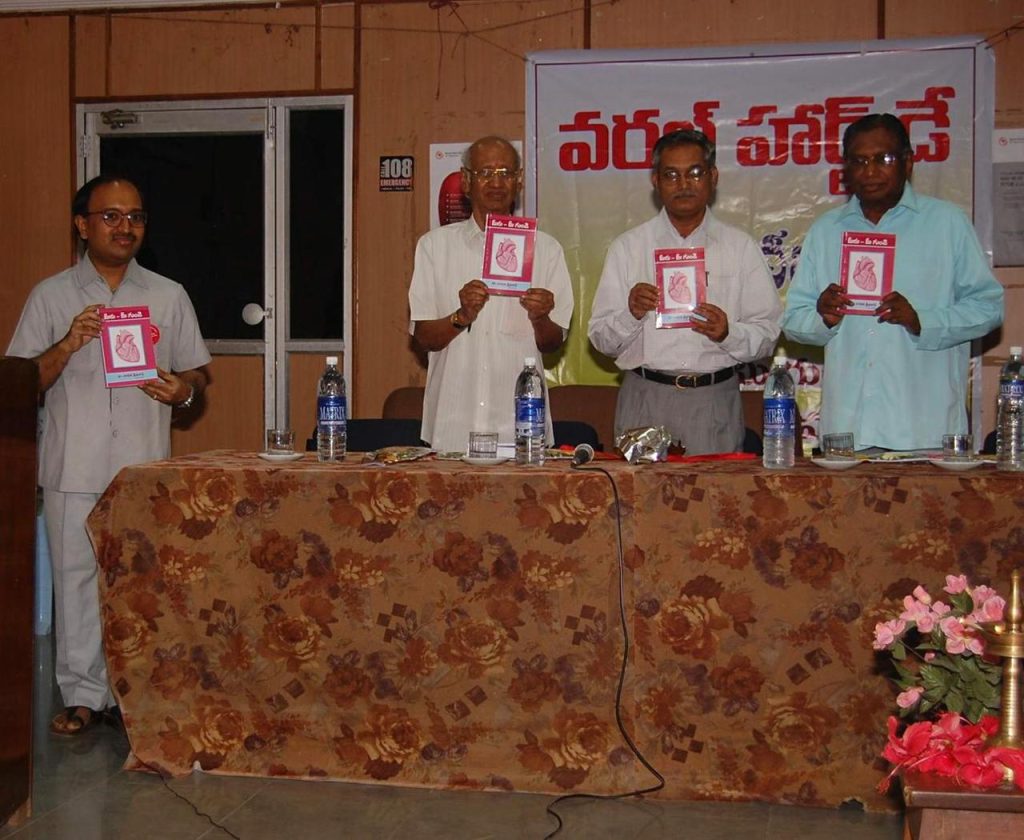
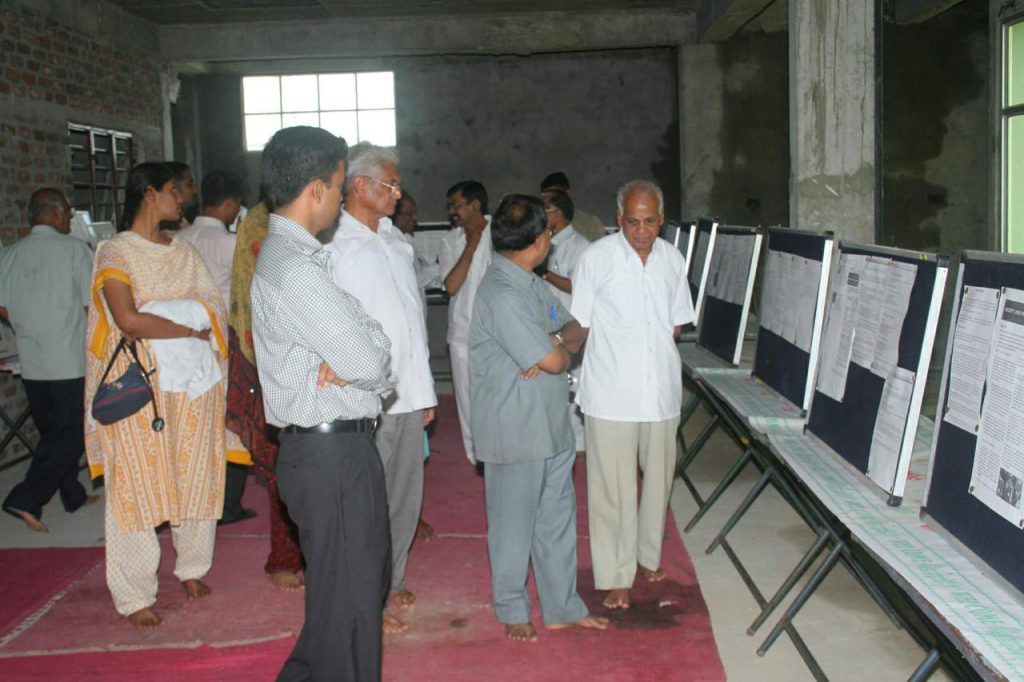
What started as groundlevel efforts to create community awareness on heart health through the World Heart day events of Dr Srinivas Ramaka and Srinivasa Heart Foundation took shape as a sustained campaign.The Community cardiology events of Srinivasa Heart Foundation were titled as Know Your Heart program. From creating community awareness on heart health through display of posters in 2001,took shape as a small bilingual booklet,Know Your Heart in 2003 and another book in Telugu in 2008-Meeru Mee Gunde.
Every year World Heart Day was organised on a theme mentioned by the World Heart Federation and recognising the sustained efforts of Srinivasa Heart Foundation,the World Heart Federation recognised the HEART program_Health Education and Awareness in Rural Telangana as a Case study,the one and only one form India.
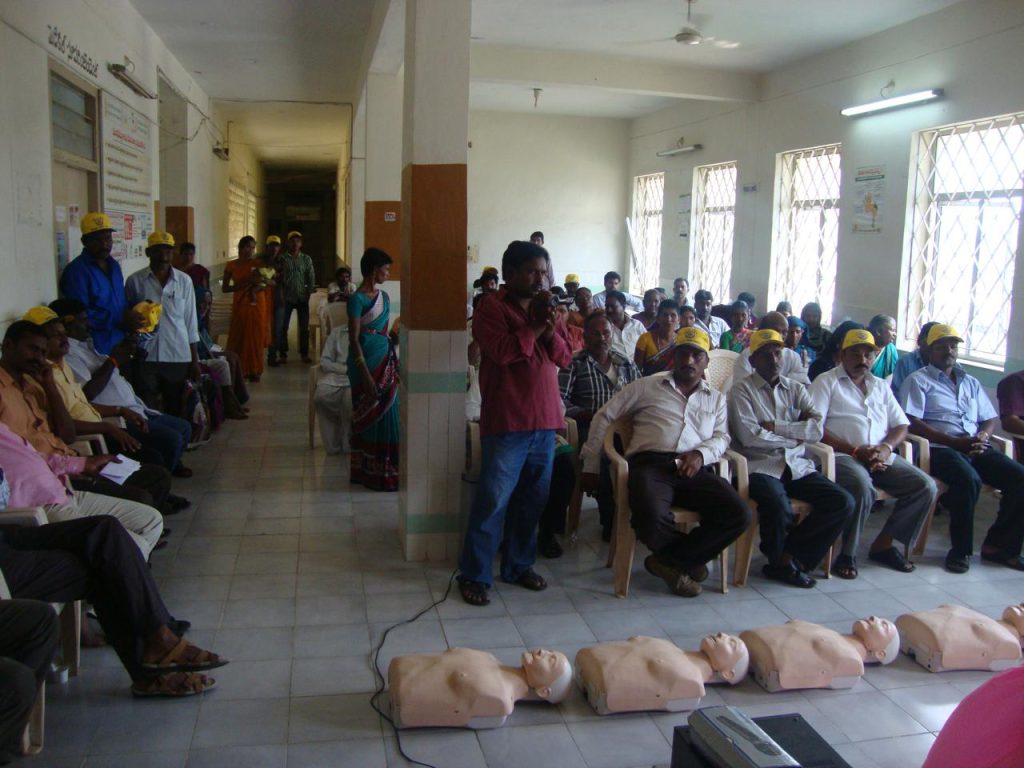
From World Heart Day 2016, apart from creating awareness on heart health,the focus has been on creating awareness on cardiac arrest and CPR.
Grassroots Penetration: Instead of staying confined to urban centres, SHF took community cardiology events and awareness on CPR to the people—to village squares, government hospitals in districts like Jangaon, Eturunagaram, and Mahbubabad, and even tribal areas.
· Diverse Audiences: They trained everyone—school children, college students, NCC cadets, bank employees, university staff, drivers, conductors, and homemakers. The “Marwadi Samaj” in Mahbubabad, high school quiz participants, and Kakatiya University staff were all part of this expanding network of potential rescuers.
· Strategic Partnerships: By collaborating with government bodies, the Indian Medical Association, educational institutions, and organizations like the Indian Red Cross, SHF amplified its reach, ensuring credibility and scalability.
The Evolution of a Lifesaving Campaign
The Foundation’s work culminated in the formal launch of the National CPR Challenge Campaign on World Heart Day 2019. With the powerful slogan “Each One Train One,” the campaign was designed for exponential impact. The goal was audacious: to train a majority of India’s vast population by creating a cascading chain of knowledge, where every person trained would, in turn, train others.
This campaign reached a crescendo on World Heart Day 2018, when Dr. Ramaka and his team trained an unprecedented 1,500 participants in a single day in Hands-Only CPR and AED use, a event featuring a walkathon and flash mob with 500 medical students.
A Legacy Quantified by Lives Empowered
The statistics gleaned from their reports paint a picture of staggering dedication:
· Massive Scale: Though Dr Ramaka has initiated the lay rescuer CPR programs in the year 2009 ,he incorporated it into World Heart Day events also.From training 100 people at a camp in Mahbubabad in 2014 to coordinating Zoom-enabled simultaneous training sessions across multiple districts in 2022, the Foundation has consistently scaled its operations.
· Innovation in Adversity: Even during the pandemic, SHF adapted seamlessly, launching the ART (Awareness,Research and Teaching and Training) initiative via virtual platforms and continuing its media outreach.
· Global Recognition: The Foundation’s commitment to data and research was internationally acknowledged when its registry on Out-of-Hospital Cardiac Arrest received the FAIRest Dataset International Award from Elsevier in 2021.
The Future: Project HEART India
As a prelude to the 25th-anniversary celebrations in 2025, the Foundation has launched its most ambitious project yet: Project HEART India. inaugurated in August 2025 in partnership with schools associations, this project aims to systematically embed high-quality CPR training into the community fabric, starting with the youth. In a single session, 673 high school students were trained by a dedicated team, symbolizing the next generation of lifesavers.
Project HEART (High- school Education and Awareness for Resuscitation Training)India is a Indo-US collaborative project with Dr Vemuri S Murthy ,(a renowned Indo-US Resuscitation expert and Founder of National India Hub Community Health and CPR Training Center,Schaumburg,Illinois ,USA)as Founder and Dr Srinivas Ramaka as cofounder.The project aims in training High school students in India in High-quality CPR and use of an Automated External Defibrillator in the local language with English supplementation.
A Heartbeat for the Nation
The story of the Srinivasa Heart Foundation is more than a case study; it is a blueprint for public health success. For 25 years, Dr. Srinivas Ramaka and his team have demonstrated that the gap between a cardiac arrest victim and the chance of survival can be bridged not just by doctors in ICUs, but by empowered citizens in homes, streets, and workplaces.
Their legacy is measured in the confidence of a student who can use an AED, the readiness of a bus conductor to perform chest compressions, and the hope that when a heart stops in India, someone nearby will know how to make it beat again. In the landscape of Indian healthcare, the Srinivasa Heart Foundation has not just trained people in CPR; it has planted a forest of lifesavers, one heartbeat at a time.
Every great story begins with a quiet birth, but some births carry the whispers of destiny.
Dr. Oommen Mammen, Mentor & Chief Editor, Global TV +91 96336 78896
On July 27, 1964, in Sweden, Thomas Hahn was born into a world already trembling under the weight of environmental neglect. He did not know then that his footprints would one day stretch across continents, from Arctic wetlands to the corridors of the United Nations, carrying with him a vision bold enough to reimagine how humanity relates to nature.
The Young Mind and the Call of the Soil
He chose agriculture, not because it was easy, but because it was real. Fields, forests, and rivers became his first classrooms.
From Uppsala University to University of Wisconsin, Madison, Hahn learned that farming was not just about crops, it was about people, values, and the fragile systems that bind us all. His PhD on the Sami economy was more than a dissertation; it was a manifesto on justice, culture, and ecological rights.
Turning Science into Strategy
Where most scientists publish and pause, Hahn pushed forward.
He became a professor at Stockholm University, yet he refused the ivory tower. He entered parliaments, stood before ministers, addressed kings, and negotiated with industries. His subject was never abstract. It was life itself with forests, water, food, and survival.
Each paper he wrote was not just an academic text. It was a strategy, a plan of action, a call to nations: adapt or collapse.
Balancing Children and Climate
There is a certain thrill in paradox.
Even as he shaped global policies, Hahn was also a father, carrying the cries of children in one hand and the burden of climate reports in the other. He took 18 months of parental leave, refusing to separate family from future. In his life, ecology and love were never apart.
Battles in Boardrooms and Biospheres
He entered boardrooms where forests were measured in profit margins.
He sat in negotiations where biodiversity was reduced to balance sheets. But Hahn never surrendered the higher ground. As a board member of Sveaskog, the largest forest company in Europe, he spoke not the language of exploitation, but of stewardship.
In Ecuador, in Korea, in Brussels, he stood as keynote speaker, daring to argue that ecosystem services need not be priced in dollars to be valued by humanity.
The Thrill of Adaptive Governance
Thomas Hahn’s true battlefield was governance.
He asked dangerous questions: Who owns nature? Who speaks for the rivers, the birds, the soil? Can democracy survive if ecosystems collapse? And he answered them with the concept of adaptive governance; a system where science, politics, and communities work together, not against each other.
It was this vision that made him a lead author for IPBES, advisor to governments, and a fellow of the Royal Swedish Academy.
Awards and Echoes
The world noticed. The Zayed International Prize for the Environment came. Features in Stockholm University spotlighted him. But the real award was different. It was the echo of his voice in policy documents, in farmers’ fields, in the hopes of students who believed change was still possible. The greatest award for him is the love of nature and the trust he had won in the hearts of the people. He remains humble and continue to work in the wider spectrum of natural Economics.
The Man and the Message
Thomas Hahn is not just a scholar. He is a messenger.
He carries an uncomfortable truth: the forests cannot wait, the climate cannot wait, and humanity cannot gamble its future for short-term gain.
His thrilling story is still unfolding; every time a law is rewritten, every time a farmer plants differently, every time a student rises to continue his work. With the courage of thought and the humility of service, he bridges science and society, governance and nature, present and future.
Thomas Hahn has done more than write papers. He has negotiated with nature on behalf of humanity. And the world is listening.
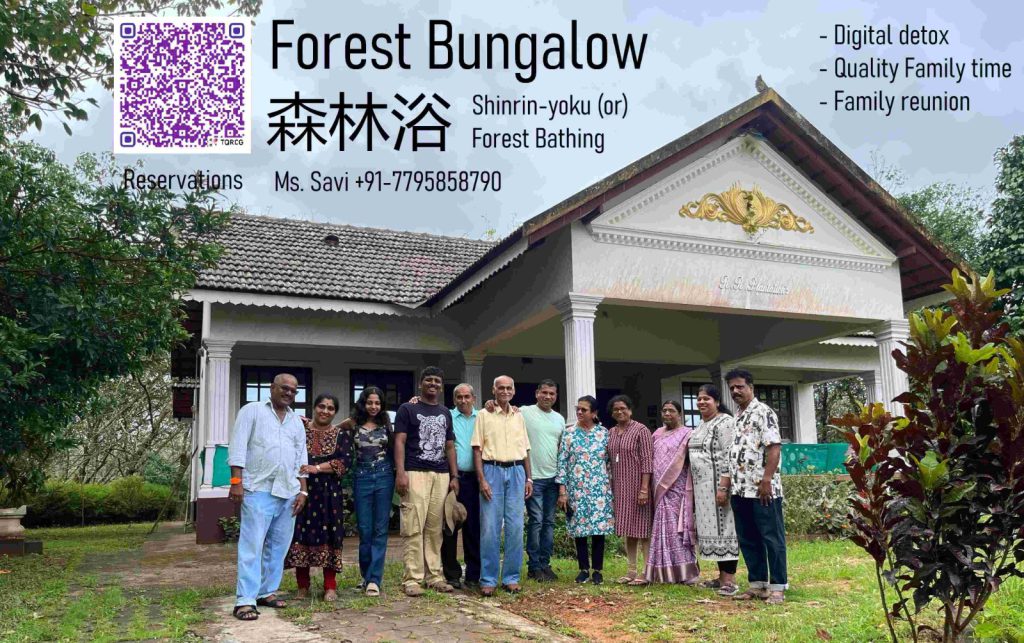
Discover the Untamed Beauty of Kanthavara Forest Basecamp | Global TV
NV Paulose, Chairman, Global TV +91 98441 92044
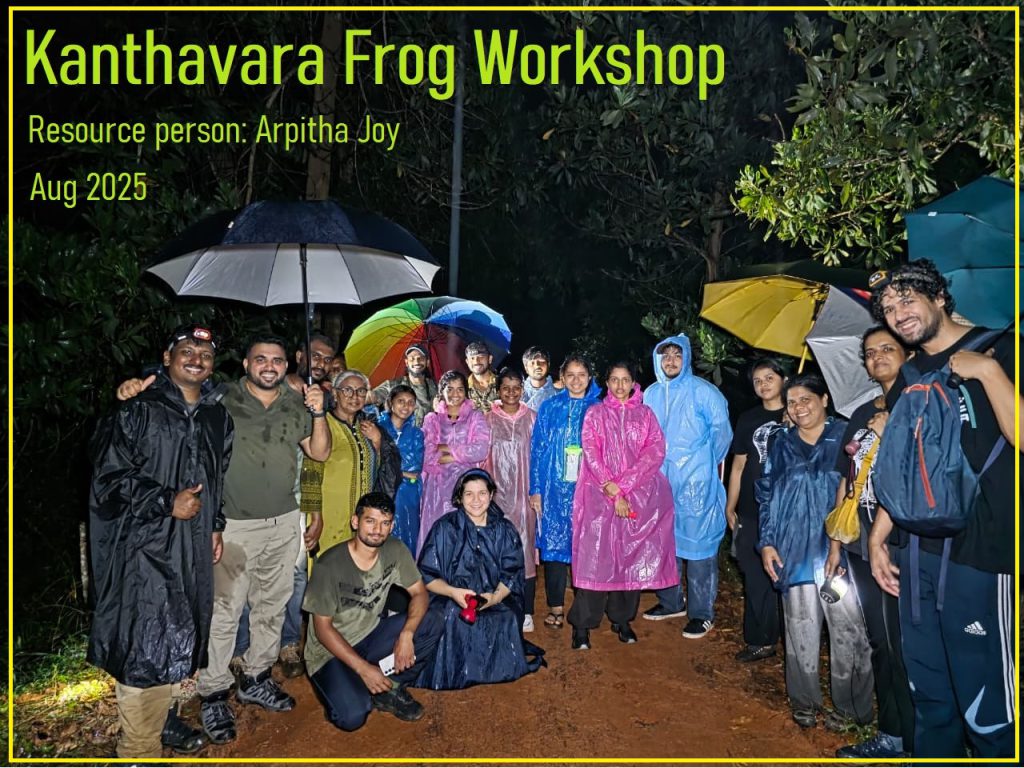
Just 42 kilometers from Mangalore. A hidden treasure where the forest comes alive with the sights and sounds of nature. It is Kanthavara Forest Basecamp. Nestled near the famous Belvai Butterfly Park and Soans Farm, this eco-friendly retreat offers a rare opportunity to step away from the rush of the city and immerse yourself in the wild.
A Forest Rich in Life
Kanthavara is known for its thriving wildlife and untouched landscapes. Leopards, wild boars, porcupines, and countless bird species call this forest home. Butterflies fill the air, adding a splash of color to the deep green canopy. For nature lovers, photographers, students, and families alike, every step here is a new discovery.
Full-Day Adventures
If you’re looking for a refreshing day trip, the Full-Day Package (₹380–₹580 per person) is perfect. The gates open at 8:30 am, welcoming you into a schedule filled with adventure and relaxation:
A Broken Forest Tour led by a knowledgeable resource person.
A visit to the Biodiversity Park.
Wholesome meals (breakfast & lunch) along with tea and snacks at 11 am and 4 pm.
Safe and enjoyable picnic and play areas, ideal for children and families.
The experience wraps up by 4:30 pm, leaving you refreshed and inspired.
Stay a Little Longer – Overnight Packages
For a deeper connection with the forest, the Overnight Package is highly recommended.
Dormitory stay: ₹1,200–₹1,800 per person.
Bungalow stay: ₹2,600–₹3,200 per person.
Arrive by 8:30 am on Day 1 and stay until 4:30 pm on Day 2, enjoying everything in the full-day package plus a range of exclusive experiences:
Leopard Trail & Bird Walk – Guided explorations of the forest’s most fascinating inhabitants. Mushroom Walk & Bamboo Study Tour – Discover hidden details of forest ecology. Forest Bathing (Shinrin-Yoku) – A Japanese-inspired wellness experience. Forest Night Walk & Firefly Trail – Magical encounters under the starlit sky. Wildlife Movie Night with Experts – Learn more about the creatures of Kanthavara. Forest Yoga & Campfire – Relax, reflect, and recharge.
With options designed for students, families, and corporate groups, Kanthavara Basecamp ensures that everyone—young or old—can explore safely and comfortably.
Why Kanthavara?
A safe, guided, and eco-conscious way to experience the forest. Perfect for weekend getaways, holidays, and group outings. A blend of education, adventure, and wellness. Just 60–90 minutes from Mangalore; close enough for a day trip, yet far enough to feel like another world.
Book Your Forest Experience.
Whether you’re seeking an exciting outdoor adventure, a meaningful learning experience, or simply a peaceful retreat in nature, Kanthavara Forest Basecamp is the destination for you.
For enquiries and reservations: Ms. Prameela: +91-7795858725 Ms. Savi: +91-7795858790
YOU ARE WELCOMED TO BECOME RESIDENT EDITORS OF GLOBAL TV AND PRACTICE NLP ALONG WITH US | TOGETHER WE CAN DO MIRACLES | NV PAULOSE
NV Paulose, Chairman, Global TV +91 98441 82044 | Gold Member ISNLP
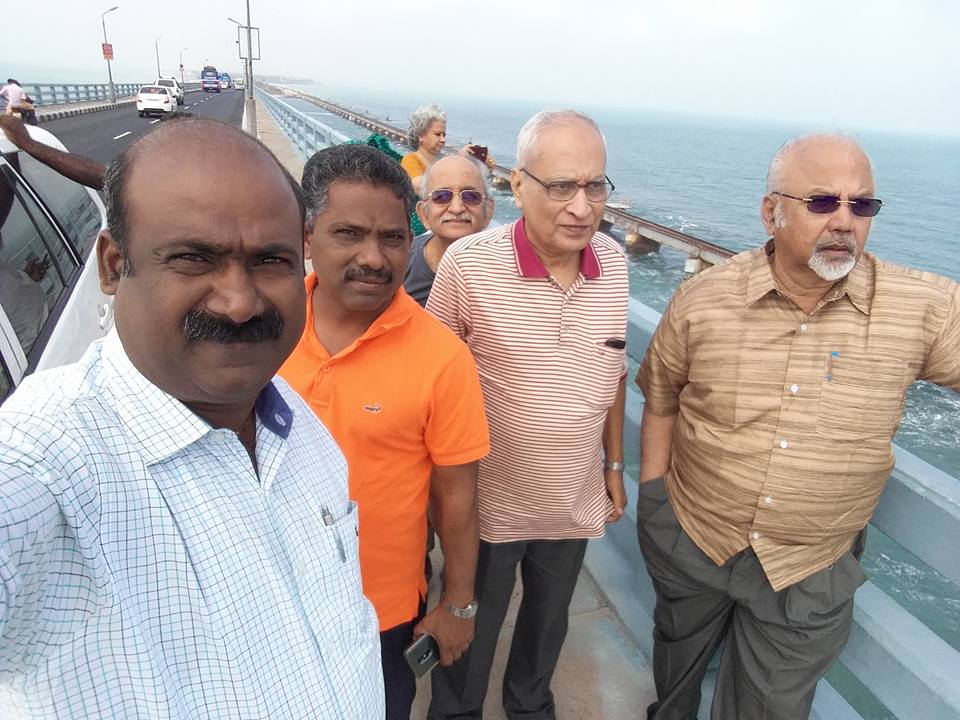
NV Paulose with Ram Sir and Clement Sir (NLP Mentors), Dr. Pandu Naik and Dr. Ishwar Prasad at Pamban Bridge.
Enrol for Free Now | Let us accumulate Referral Income for You | Later You can Participate NLP Program wherever You wish | To Enrol +91 98441 82044 Global TV
The conscious mind is the part of you that thinks. It helps you make decisions and take action. It works with your attention and your will. You use it when you plan, speak, or choose. The unconscious mind runs deeper. It stores your memories, emotions, and habits.
The unconscious mind holds the patterns you follow each day. It works quietly in the background. Even when you sleep, it remains active. You can merge both minds.
Often, these two minds do not work in harmony. The conscious mind may say, “I want to stay calm,” while the unconscious mind brings up anger from the past. You may want to wake up early, but your body does not respond. This disconnect causes stress, guilt, and inner conflict.
When both minds begin to work together, life becomes easier. This connection is called merging the minds. The process is simple. The outcome is powerful. When your thoughts and instincts are aligned, your actions feel natural. You do not have to struggle. Growth happens with ease.
Imagine learning to drive a car. At first, you are unsure. You try to control many things at once. An expert sits beside you, ready to step in. As you practice, your confidence grows. With time, driving becomes effortless. This is how it feels when your unconscious mind begins to support you. It becomes a quiet helper, always ready, always steady. When the two work as one, life becomes peaceful and purposeful. You no longer fight yourself.
The conscious mind is your guide. It is the part that plans, chooses, and questions. It is aware of the present moment. It says things like, “I want to learn,” or “I wish to be peaceful.”
The unconscious mind works silently. It stores habits, emotional responses, and deep memories. It does not judge or decide. It only follows what it has learned through repetition and feeling. It is fast and always alert. The relationship between these two minds is like that of a guide and a strong companion. The conscious mind sets the direction. The unconscious mind follows with power and loyalty. It cannot make choices on its own, but it responds to what you feed into it.
This is why clear thinking is important. Many people suffer not because their unconscious mind is broken, but because their conscious mind gives unclear or harmful instructions. If you often say, “I am not good enough,” your unconscious mind takes it in and acts on it. If you say, “I am improving every day,” it believes that too.
The unconscious mind does not know if something is true or false. It only accepts what is repeated with emotion and belief. It follows patterns that are stored within.
When you learn to give it positive and clear direction, it will begin to support you in powerful ways. This is the key.
Take another example. Think of a child learning to ride a bicycle. At first, there is fear. Someone holds the child steady. They fall, rise, and try again. In time, the body learns to balance on its own. That is how your unconscious mind also learning and remembering. It achieves the target set.
Or picture a strong horse and a calm rider. The horse is your unconscious mind. The rider is your conscious mind. If the rider is nervous or unsure, the horse may behave wildly. But if the rider is confident and focused, the horse moves with grace and power. Together, they move forward with harmony.
Merging these two parts of your mind requires practice and intention. The TRUMP CARD method offers simple tools to help you shape your thoughts, train your focus, and give clear direction to your inner self. With consistent practice, your conscious mind becomes a wise leader. Your unconscious mind becomes a faithful supporter. You walk forward with strength and clarity. You begin to live the life you are truly meant to live. This book helps you to do that in an easy manner.



%20(6).jpg)