
A Life Rooted in the Soil, Guided by Service, and Committed to the People
NV Paulose, Chairman, Global TV +91 98441 82044
Some lives are measured by the positions they held, the elections they won, or the offices they occupied. Others are remembered for something deeper; their connection with ordinary people, the values they upheld, and the institutions and ideas they left behind. The life of P. Cyriac John belongs to the latter category. A farmer at heart, a public representative by conviction, an institution-builder by vision, and a leader shaped by the realities of rural life, Cyriac John remained closely connected to the people and the landscape that formed him.

His political journey was not merely a pursuit of power, but an expression of his commitment to the farming community, the development of Kerala’s highland regions, and the dignity of ordinary people. As we remember him on his third death anniversary, his life offers more than memories of a political era. It reminds us that meaningful public service begins with understanding people, grows through commitment, and finds its lasting worth in the lives it touches.
From Marangattupilly to Kattippara: The Making of a People’s Leader
P. Cyriac John was born on June 11, 1933, at Marangattupilly, near Kadaplamattom in Pala, to John and Mariyamma. His early years were shaped by the simplicity of rural life and the values of hard work, family, faith, and perseverance. In 1950, when his family migrated to Kattippara in Kozhikode district, they became part of the larger story of Kerala’s migration to the highland regions—a story woven with hardship, hope, sacrifice, and the determination to build a better future from unfamiliar soil.
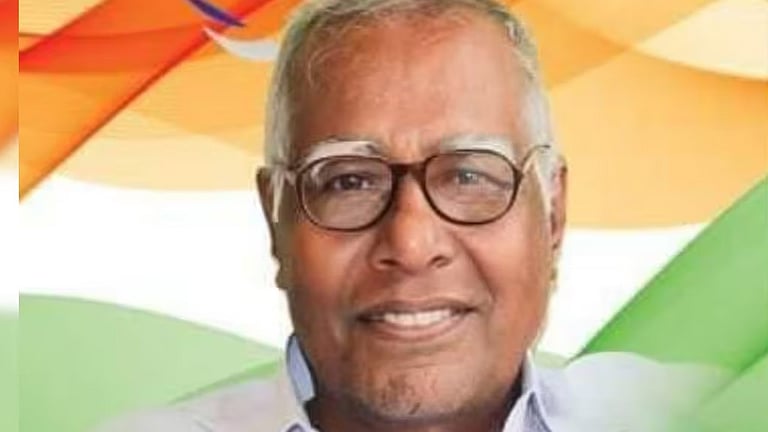
The migration to Kattippara was more than a change of place. It was a transition into a life where nature could be both generous and unforgiving, where livelihoods depended on the land, where roads and public facilities were scarce, and where communities had to rely upon their own resilience and solidarity.
Cyriac John began working in agriculture alongside his father. He was not a leader who learned about farmers merely through reports or meetings. He knew the soil through work, the uncertainty of seasons through experience, and the challenges of agricultural life through personal involvement. He understood that farming was not simply an occupation; it was the foundation of family security, community life, and rural dignity.
This lived experience became one of the defining strengths of his public life. It gave him an instinctive understanding of the people he represented and a sense of responsibility towards the region that had become his home. His political vision was grounded in the belief that development must reach those who live far from centres of power and opportunity.
A Farmer’s Perspective in Public Life
Cyriac John’s association with agriculture was not a chapter of his past that he left behind when he entered politics. It remained the central thread running through his public service. For him, the farmer was not simply a beneficiary of government schemes. The farmer was the person whose labour sustained society, whose uncertainties deserved institutional support, and whose progress was inseparable from the progress of Kerala.
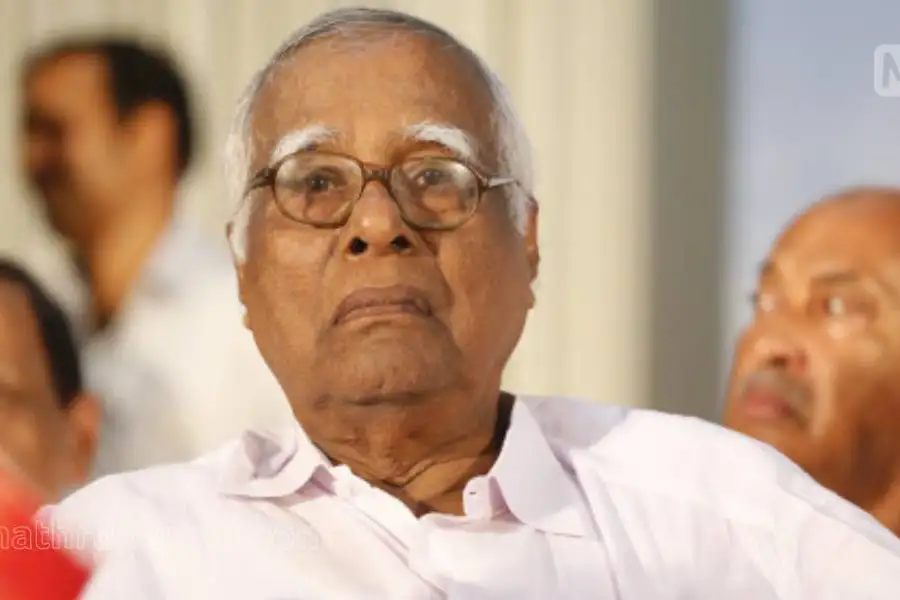
His understanding of the agricultural sector was shaped by the realities of small cultivators, plantation communities, rural families, and the emerging farming population in the highland areas. He recognized that agricultural development required more than financial assistance. Farmers needed access to information, technical guidance, institutions, markets, infrastructure, and a responsive administration.
It was this practical understanding that distinguished his approach. He believed that government should not remain distant from the people it was meant to serve. Public institutions had to be accessible, meaningful, and capable of responding to the everyday needs of ordinary citizens.
Legislative Leadership: Representing the Aspirations of the Highlands
Cyriac John entered the Kerala Legislative Assembly in 1970, elected from Kalpetta constituency, which then included Thiruvambady. He was subsequently elected from Thiruvambady in 1977, 1980, and 1982, becoming a four-time legislator. His repeated electoral victories reflected his close relationship with the people of the highland region.
Thiruvambady and its surrounding areas were places where development had to overcome geographical challenges, limited infrastructure, and the needs of communities spread across villages, hills, and forest fringes. His political work was closely associated with the development of these regions. Connectivity, roads, agricultural support, access to public services, and the strengthening of local institutions were not abstract policy concerns to him. They were essential requirements for improving the lives of the people he represented.
He understood that a road could mean more than transportation. It could connect a farmer to a market, a patient to a hospital, a student to an educational opportunity, and an isolated settlement to the wider world. Development, in his view, was meaningful only when it translated into tangible improvements in people’s lives. His contributions to the development of the highland region, including efforts associated with important road connectivity initiatives, reflected this practical and people-oriented approach.
Agriculture Minister: Institutions That Outlived Their Creator
One of the most significant chapters in Cyriac John’s public life was his tenure as Minister for Agriculture in the K. Karunakaran government from May 1982 to August 1983. Though his ministerial tenure was relatively brief, the significance of public service cannot always be measured by its duration. Sometimes, the enduring value of a leader lies in the institutions and systems established during that period—initiatives that continue to serve people long after the individual has left office.
Cyriac John is widely remembered for his role in establishing Krishi Bhavans across Kerala at the panchayat level. The idea reflected a fundamental understanding of agricultural administration: support for farmers must be available close to where they live and work.
The Krishi Bhavan concept helped bring agricultural extension services, technical advice, and institutional assistance closer to farming communities. It represented a shift towards making agricultural governance more accessible and decentralised, recognizing that the needs of a farmer in a village cannot always be effectively addressed from a distant state-level office. This initiative carries a value that extends beyond agriculture. It reflects the principle that good governance is not merely about creating policies; it is about bringing those policies within the reach of the people.
The enduring relevance of Krishi Bhavans is a reminder of his institutional vision. A leader may leave office, but an institution created to serve the public can continue its work across generations. Such contributions form a lasting legacy; one that is measured not by personal recognition, but by the continuing usefulness of the work. His association with agricultural development initiatives, including the Coconut Complex at Thiruvangoor, further reflected his interest in strengthening the institutional and economic foundations of farming.
Cooperative Movement: Collective Strength as a Path to Progress
Cyriac John also understood the importance of cooperation in the economic life of rural Kerala. His leadership in cooperative institutions—including his association with the Thamarassery Service Cooperative Bank and the Kerala State Cooperative Marketing Federation (Marketfed)—reflected his belief that collective institutions could help people overcome the limitations of individual resources.
For farmers, cooperation was more than an organizational structure. It was a means of building bargaining power, improving access to credit and markets, reducing vulnerability, and creating opportunities through collective effort. His involvement in the cooperative movement demonstrated his faith in institutions built around participation and shared responsibility. He recognized that the economic empowerment of rural communities required more than individual ambition. It required structures through which people could support one another and participate in their own development.
His association with the Rubber Board also reflected his engagement with the broader agricultural economy and the concerns of cultivators whose livelihoods were connected to plantation crops and fluctuating markets. The cooperative philosophy that he embraced remains relevant even today: when individuals unite around a common purpose, they can build strength, resilience, and opportunity that may be beyond their reach individually.
Conviction Beyond Political Comfort
Cyriac John’s political journey was not without disagreements, transitions, and difficult choices. He was associated with the Congress organisation in various capacities, served as a KPCC Executive Member, and led the Karshaka Congress at the state level. Political differences during the mid-1980s led him to leave the Congress and align with Congress (S). He stepped away from ministerial office amid political developments and subsequently contested elections from Sulthan Bathery in 1987 and Thiruvambady in 1991, 1996, and 2001.
His later association with the Nationalist Congress Party, including his tenure as its Kerala State President, and his eventual return to the Congress in 2007, illustrate a political life shaped by changing circumstances, ideological differences, and personal conviction. Not every chapter of his political life was marked by electoral success. After four consecutive victories in the Assembly, he faced defeats in subsequent elections. Yet political setbacks did not erase his earlier contributions or diminish the significance of his years in public service.
There is a lesson in this aspect of his life as well. Public life cannot be measured entirely by electoral victories. The true measure of a political leader lies in the work undertaken, the causes pursued, the relationships built, and the willingness to remain engaged with society even when circumstances are not favourable. His journey reflects the persistence required in public life; the ability to withstand setbacks, navigate disagreements, and continue one’s journey through changing political landscapes.
Development with Human Understanding
Cyriac John’s legacy is closely connected to the highland communities of Kozhikode district. These communities were shaped by migration, agricultural labour, the growth of plantations, the challenges of terrain, and the determination to build livelihoods in regions that often lacked adequate infrastructure. His approach to development was rooted in an understanding of these realities. Roads, agricultural institutions, cooperative networks, and public facilities were not isolated projects. They were parts of a larger vision of social and economic progress.
He believed, in practice, that development must begin by understanding the people who need it most. The farmer needs more than a promise; the rural family needs more than an announcement; the remote village needs more than a plan drawn in an office. Development must reach the ground. It must improve access, strengthen livelihoods, create opportunity, and restore confidence in public institutions. This people-centred outlook is perhaps one of the most valuable lessons his life offers to the generations that follow.
A Life of Simplicity, Family, and Personal Bonds
Behind the public figure was a man whose life was also shaped by family, personal relationships, and the ordinary experiences that give meaning to existence. He was married to the late Annakutty and was the father of five children; P. C. Babu, P. C. Bina, P. C. Mini, Manoj Cyriac, and Vinod Cyriac. Family life provided a personal foundation amid the demands and uncertainties of public service.
His life reminds us that public figures are not defined only by their official responsibilities. They are also shaped by the families who stand beside them, the friendships they nurture, the sacrifices made in the course of their journeys, and the personal values they carry into public life. The warmth of personal relationships, the bonds of community, and a sense of belonging to the land and its people formed an important part of his identity.
The Values That Continue to Speak
The passing of P. Cyriac John on November 30, 2023, in Kozhikode, at the age of 90, marked the end of a long life. His final rites at Holy Family Church, Kattippara, brought together the memories of a man whose life had been closely associated with the region and its people. Yet the values represented by his life continue to speak with relevance.
- Humility: His journey from working alongside his father in agriculture to occupying ministerial office reflects the importance of remaining grounded in one’s origins.
- Commitment: His association with farming, rural development, and cooperative institutions demonstrates the value of sustained engagement with the needs of society.
- Institution-building: The Krishi Bhavan initiative illustrates how lasting public service can create structures that benefit people beyond the tenure of a government.
- Courage of conviction: His political journey reflects the willingness to make difficult choices, even when they involve uncertainty or personal cost.
- Perseverance: His continued participation in public life through changing political circumstances and electoral setbacks reminds us that commitment cannot be measured only by success.
- People-centred leadership: His work in the highland regions reflects a belief that development must be judged by its impact on ordinary lives. These are values that transcend political affiliations. They are qualities that any society needs in its leaders, institutions, and citizens.
A Legacy Beyond Political Boundaries
Cyriac John belonged to a generation of leaders whose public lives were shaped by the social and economic transformations of Kerala’s rural regions. His contributions were rooted in the world of farmers, migrants, cooperatives, and highland communities. His life also reminds us that political legacies need not be confined to party histories or election records. A leader’s impact may be found in the institutions he helped establish, the communities he served, the ideas he advanced, and the public purpose he sought to fulfil.
In an era when politics is often dominated by immediate debates, personalities, and electoral calculations, his life invites us to reflect on a more enduring question: What remains after a leader is gone? The answer lies not merely in the titles once held, but in the work that continues; not in the speeches remembered, but in the services that remain available; not in political victories alone, but in the lives made better through public action.
Remembering a Life, Renewing a Responsibility
As we gather to commemorate the third death anniversary of P. Cyriac John and release a souvenir in his memory, the occasion should be more than an act of remembrance. It can also be an invitation to renew the values he stood for. The farmer’s dignity must continue to be protected. Rural development must remain inclusive. Cooperative institutions must serve their members with integrity. Public representatives must remain accessible to the people. Development must reach the most remote communities. And political leadership must never lose sight of the human beings behind every policy and every decision.
The greatest tribute to a leader is not simply to recall his achievements, but to carry forward the spirit that inspired them. P. Cyriac John began his journey in the soil, lived much of his public life in the service of its people, and leaves behind a legacy rooted in the conviction that the progress of society must be built from the ground up.
His life reminds us that leadership is not defined by how high one rises, but by how deeply one remains connected to the people; that public service is not measured by the length of one’s tenure, but by the value of one’s contribution; and that a life devoted to others can continue to inspire long after it has come to an end. The soil he once cultivated, the institutions he helped strengthen, and the people whose lives he touched remain enduring chapters of his story. In remembering P. Cyriac John, we remember not only a leader who served, but a life that taught us the meaning of rooted leadership. May his memory remain a source of inspiration for generations to come.


