From ancient trade routes and migrations to cultural revival and global initiatives, the story of Konkani is the story of a living heritage.
NV Paulose, Chairman, Global TV +91 98441 82044
When we speak about Konkani today, we are not merely speaking about a language of the past. We are speaking about a vibrant cultural identity that continues to evolve through the efforts of communities, institutions, artists, writers, educators, and language enthusiasts across the world.
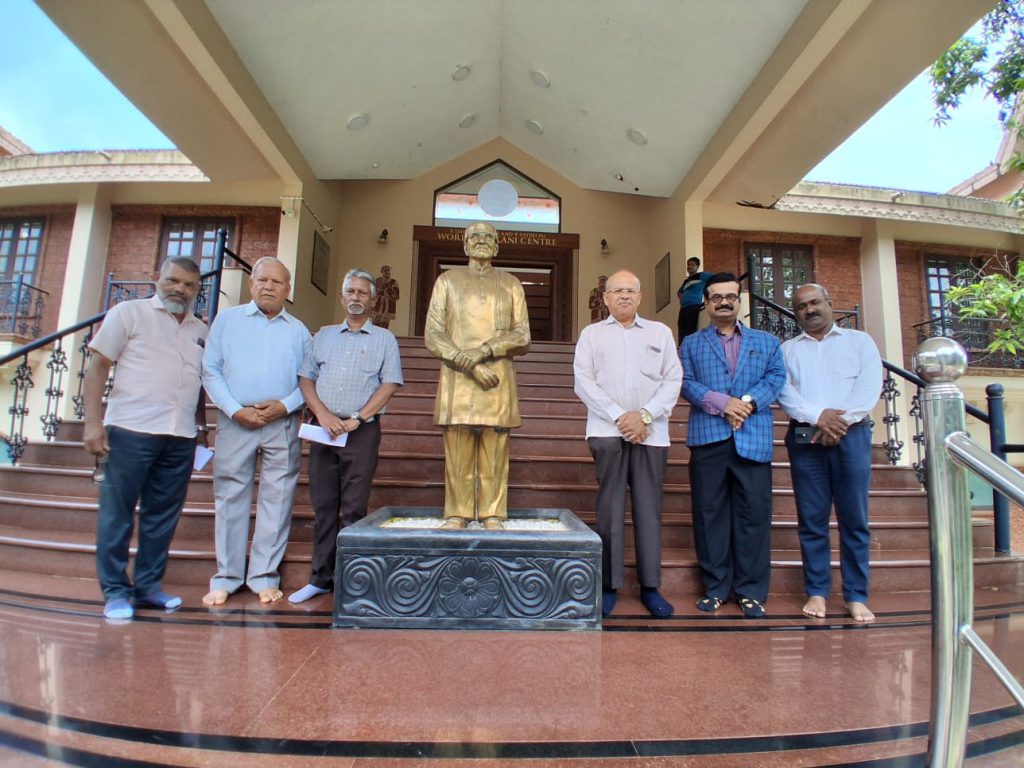
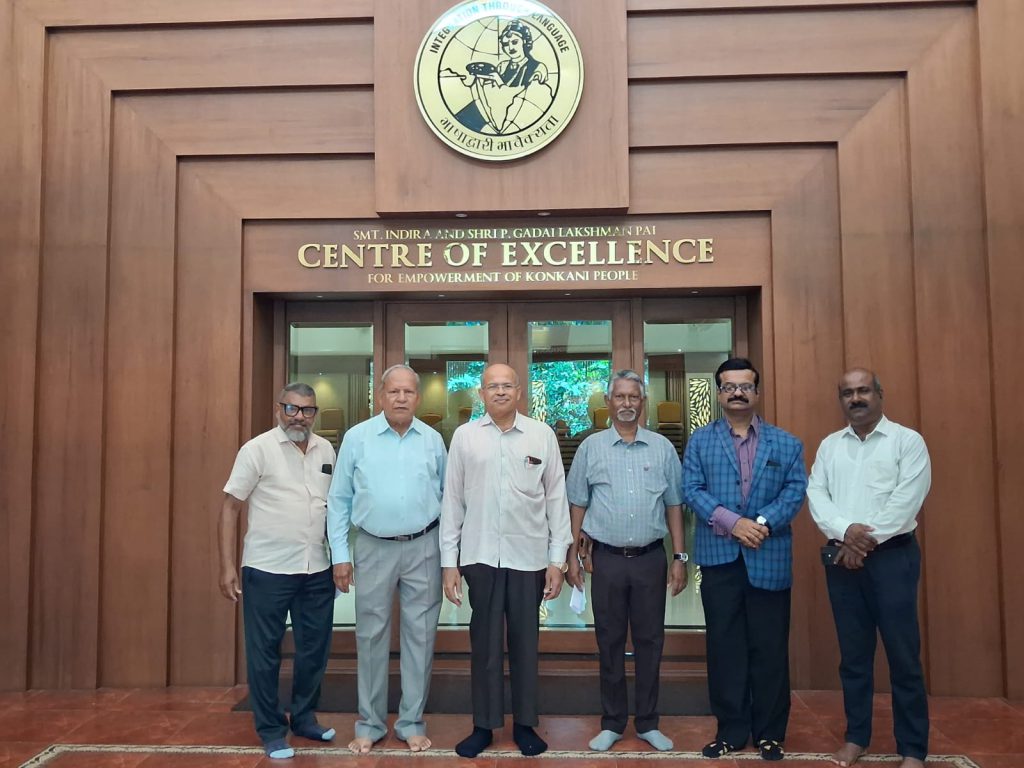
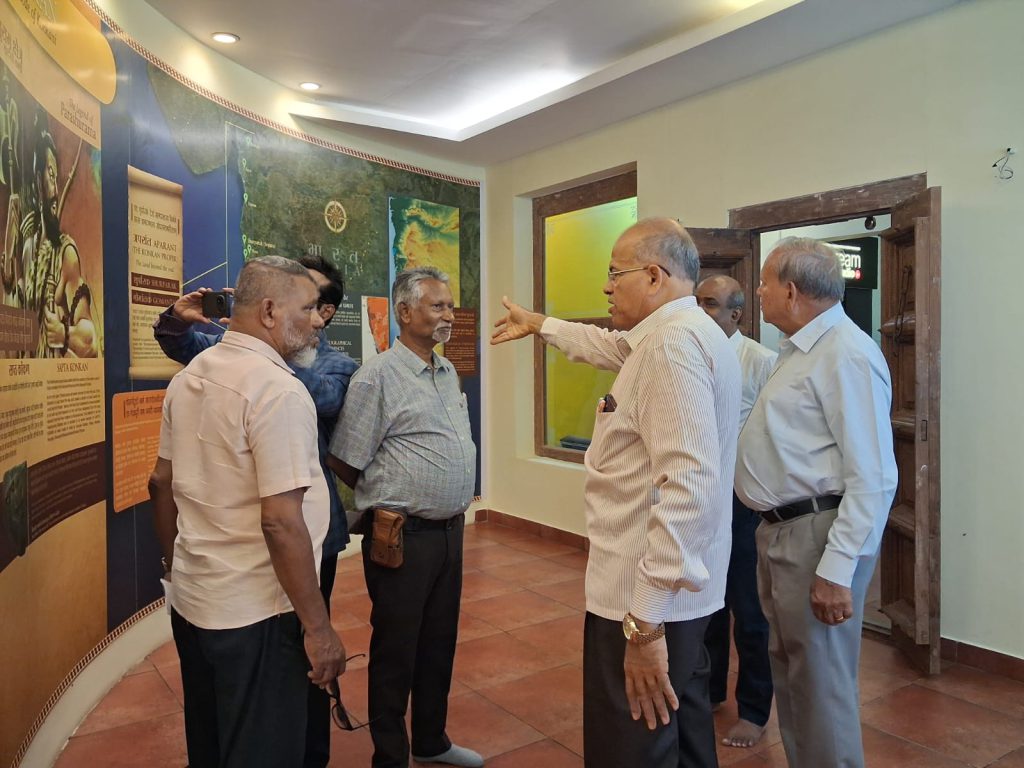
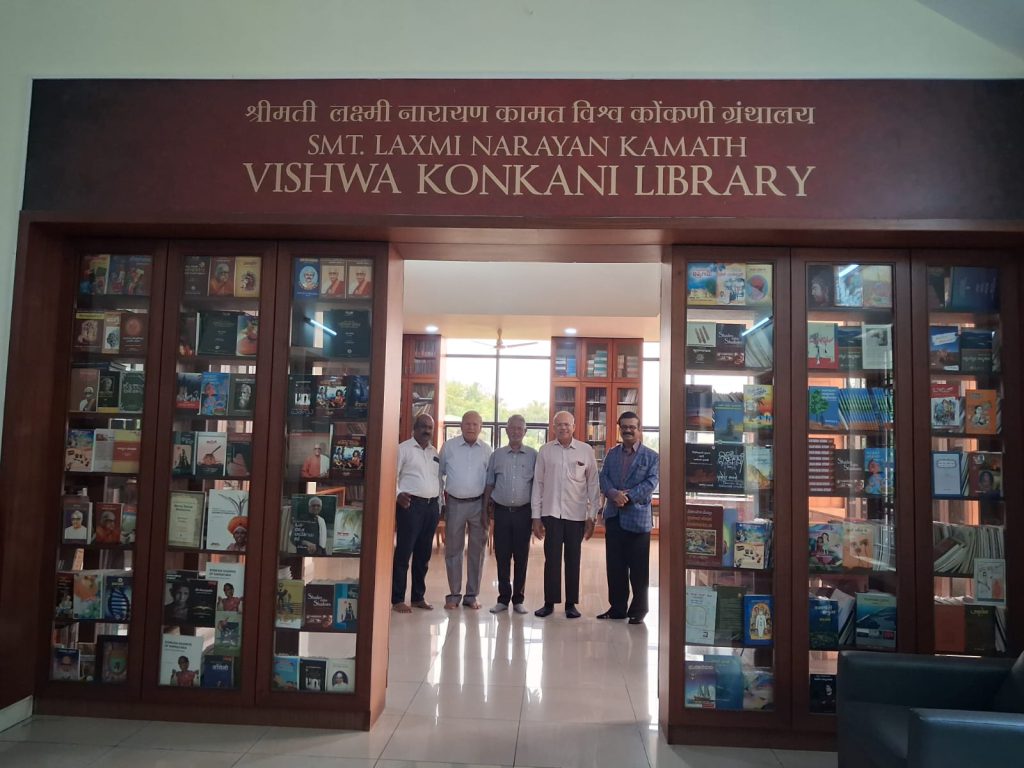
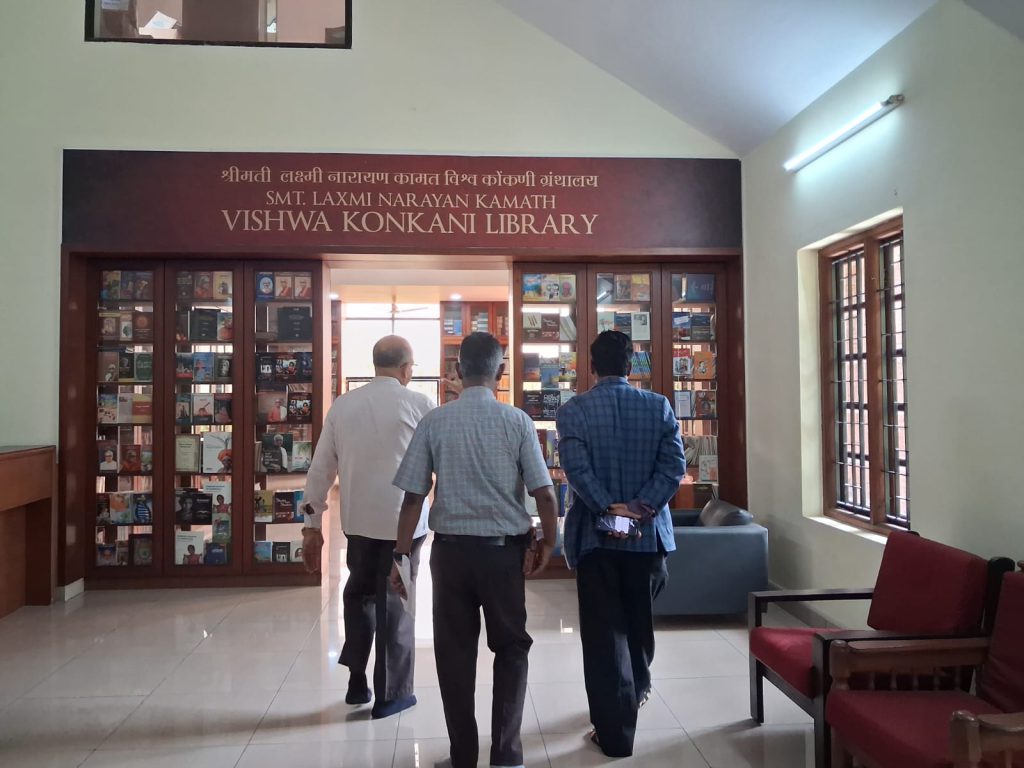
The preservation and promotion of Konkani has received renewed energy through institutions and movements dedicated to its growth. The World Konkani Centre in Mangaluru has emerged as a significant institution working towards the preservation, promotion, and development of Konkani language, literature, art, and culture. Through initiatives in research, education, literary activities, translation, documentation, and cultural programmes, the Centre has created a platform that brings together Konkani speaking people from different regions and communities.
Cultural movements such as Mandd Sobhann have played a remarkable role in strengthening Konkani identity through music, theatre, traditional arts, and cultural performances. Its Kalaangann, the Konkani Heritage Centre, stands as a unique space dedicated to preserving and showcasing the artistic traditions of Konkani communities. Through decades of cultural activities, Mandd Sobhann has demonstrated how music and performing arts can become powerful instruments for preserving language and identity.
Several other initiatives, including literary organisations, language academies, educational programmes, publications, digital platforms, and community-based efforts across India and abroad, continue to enrich Konkani. These collective efforts demonstrate that a language survives not only through books and dictionaries but through people who speak it, celebrate it, create in it, and pass it on to future generations.
A Language That Connects Many Communities
When people think of Konkani, they often think of Goa. While Goa remains one of the most important centres of Konkani culture, the story of the language extends far beyond its geographical boundaries. It is a story that connects communities across Karnataka, Kerala, Maharashtra, Gujarat, and different parts of the world through migration, trade, faith, education, and shared traditions.
Konkani is not merely a means of communication. It is a cultural identity shaped by centuries of history and carried forward by diverse communities. Few Indian languages represent such a remarkable combination of linguistic diversity, migration, resilience, and cultural continuity.
One of the most unique features of Konkani is that it is spoken by people belonging to different religious and social backgrounds. Hindus, Catholics, Muslims, and other communities have preserved Konkani as their mother tongue. Despite differences in customs, traditions, and beliefs, the language has remained a common bond connecting these communities.
This diversity is one of Konkani’s greatest strengths. The language has grown not because of one single group, but because generations of people across regions have contributed to its richness through their literature, traditions, music, customs, and everyday speech.
Contributions to Education, Healthcare, and Society
For generations, Konkani speaking communities have made significant contributions to the social and cultural development of the region.
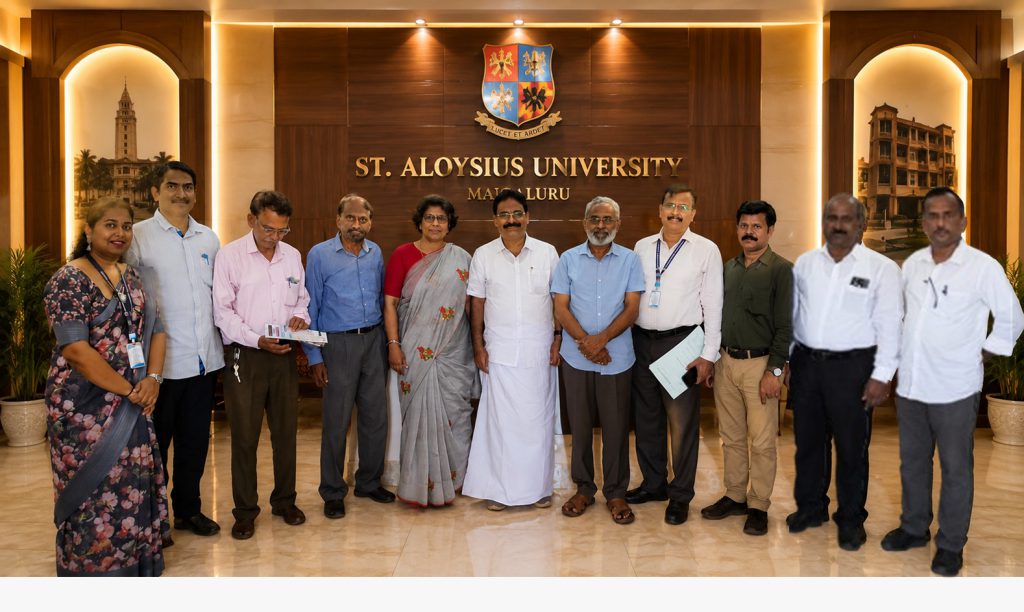
The Konkani speaking Catholic community has made remarkable contributions to the social development of coastal Karnataka, particularly through its longstanding commitment to education and healthcare. Institutions such as St. Aloysius, founded by the Jesuits, have played a transformative role in education. Over the decades, generations of Konkani speaking Catholics have contributed as students, educators, administrators, alumni, and benefactors, strengthening the institution’s legacy and expanding its impact on society.
The community’s contributions extend beyond education and healthcare into areas such as music, sports, business, literature, and social service. These contributions have benefited people across communities and have become an important part of the cultural history of the region.
The Journey of Migration
The history of Konkani is deeply connected with migration. Over many centuries, communities moved along the western coast of India, carrying their language, traditions, family histories, and religious practices with them.
Traditional accounts describe the migration of Saraswat communities from northern regions towards the Konkan coast. Whether viewed through historical records, oral traditions, or community memories, these movements played an important role in shaping the cultural landscape of Goa, Karnataka, Maharashtra, and Kerala.
Migration did not weaken Konkani identity. Instead, it created new expressions of the language and allowed Konkani culture to flourish in different regions.
Many Dialects, One Language
Konkani is remarkable for its variety of dialects. In earlier times, communication between distant villages was limited. Communities often lived in relative isolation, and language naturally changed from one region to another.
As a result, Konkani developed many forms, each carrying the influence of its surroundings. Some dialects absorbed words from Kannada, Marathi, Malayalam, Portuguese, and other languages. These variations should not be viewed as divisions. They are valuable records of history, showing how communities interacted and adapted over generations.
Every dialect contains unique words and expressions that represent the experiences of the people who preserved it. Documenting these dialects through dictionaries, recordings, and research is essential for protecting the richness of Konkani.
Konkani and the Ancient World
The history of the western coast of India has always been connected with the wider world. Archaeological discoveries such as the ivory figurine popularly known as the “Pompeii Lakshmi,” discovered during excavations at Pompeii, provide evidence of ancient trade links between India and the Roman Empire.
Indian ivory, spices, textiles, and other goods travelled through maritime trade routes connecting the Indian coast with distant lands. Such discoveries remind us that the regions where Konkani speaking communities lived were part of global networks long before modern transportation existed.
These connections reveal that the cultural history of Konkani is not isolated. It is part of a much larger story of human movement and exchange.
Language Changes, Identity Continues
One of the most fascinating aspects of community history is that language may change while identity continues.
Oral traditions describe instances where small groups of Konkani speaking people settled among other linguistic communities. Over generations, they adopted the local language while preserving elements of their ancestral identity, including family traditions, gotras, rituals, and memories of their origins.
Such stories demonstrate the complex relationship between language and culture. A community may change the language it speaks in daily life while continuing to preserve a deep connection with its heritage.
Temples, Family Traditions, and Historical Memory
Across the Konkan region, temples, family deities, and place names preserve important clues about the journeys of Konkani communities.
Family deities, known as kuladevatas, continue to connect present generations with their ancestral villages. The movement of temples and religious traditions during periods of political change, including the Portuguese period in Goa, reflects the efforts of communities to preserve their faith and identity.
These traditions are not only religious practices. They are also important sources of social history that help us understand migration patterns and community relationships.
Preserving the Stories of Konkani
Much of Konkani history exists not only in written records but also in the memories of elders. Oral traditions, family histories, local stories, and community experiences contain valuable knowledge that can disappear if not documented.
Recording these voices through interviews, books, digital archives, and research projects is essential. Every elder carries a part of history, and preserving these memories ensures that future generations understand the journey of their language and culture.
The Future of Konkani
The survival of Konkani depends on continued use, appreciation, and transmission to younger generations. Speaking Konkani at home, encouraging children to learn the language, supporting literature, preserving dialects, and documenting history are important steps towards strengthening its future.
Konkani has survived centuries of migration, social change, and historical challenges because people carried it in their homes, communities, songs, traditions, and daily conversations.
The story of Konkani is ultimately a story of connection. It connects regions, religions, generations, and civilizations. Preserving Konkani is not only about saving a language. It is about protecting the memory and heritage of the people who have carried it across centuries.
By celebrating its diversity, supporting institutions dedicated to its growth, and ensuring its continued use, we can help Konkani remain a vibrant language for generations to come.
Capital Career Windows | Open Both Windows to Success | Both are Companions | Global TV
NV Paulose, Chairman, Global TV +91 98441 82044
Success is never created by chance. It is built through vision, discipline, and the courage to prepare for tomorrow while performing well today. Among the many factors that shape a successful life, two stand above the rest. One is capital, which gives financial strength. The other is career, which gives purpose and direction. These two are like cross windows in a house. When both remain open, fresh opportunities, new ideas, and positive energy continue to flow into life.
Many people spend years concentrating on only one of these windows. Some work tirelessly to build a successful career but pay little attention to creating financial security. Others become obsessed with accumulating wealth but stop learning, growing, and improving their professional abilities. Both approaches leave life incomplete. Real success belongs to those who understand that career and capital are partners, not competitors.
Imagine living in a house where only one window is open. Fresh air enters from one side, but the room never feels completely alive. Open the second window, and everything changes. Light becomes brighter, air begins to circulate, and the entire atmosphere feels refreshed. Life works in exactly the same way.
A thriving career and growing capital create a balance that keeps opportunities flowing from every direction. Never believe that you have to choose between earning and learning. Every new skill you develop has the power to increase your income. Every wise financial decision gives you the confidence to pursue greater career opportunities. When both windows remain open, each strengthens the other and together they create lasting success.
Build Skills Before You Build Comfort
Your career is your engine of growth. Every experience teaches something valuable. Every challenge develops resilience. Every responsibility increases your confidence. The workplace is more than a source of income. It is a classroom where every project, every mistake, and every achievement prepares you for a greater future.
Do not become comfortable with yesterday’s knowledge. The world is changing faster than ever before. New technologies, new industries, and new expectations appear every year. Those who continue learning never become outdated. They remain valuable because they are willing to grow. Every book you read, every course you complete, and every new skill you master opens another door that once seemed impossible.
At the same time, remember that income alone does not create wealth. Many people earn well but struggle financially because they never learn to manage money wisely. Capital grows through discipline, patience, and thoughtful decisions. Saving, investing, and planning for the future transform today’s earnings into tomorrow’s freedom.
Do not wait until you become wealthy to start building capital. Wealth is not created by luck. It is created by consistent habits. Every small amount saved, every wise investment made, and every unnecessary expense avoided strengthens your financial future. Small decisions repeated over many years create extraordinary results.
Let Capital and Career Strengthen Each Other
There will be moments when life presents unexpected opportunities. You may want to start a business, pursue higher education, move to a better city, or explore a completely different profession. Dreams often require two things. They need knowledge and they need resources. Career provides knowledge. Capital provides resources. Together they give you the confidence to move forward.
Many successful people understand this powerful relationship. They invest in themselves before expecting others to invest in them. They improve their abilities while also building financial strength. They realize that every promotion, every business opportunity, and every investment begins with preparation. Preparation creates confidence, and confidence attracts success.
Do not fear temporary setbacks. Every successful person has experienced disappointment, rejection, or failure. These moments are not signs to stop. They are opportunities to learn. A stronger career is built through experience, and stronger capital is built through patience. Keep moving forward even when progress feels slow because consistency always defeats temporary difficulty.
Your greatest investment is not the money in your account. It is the knowledge in your mind, the character in your heart, and the discipline in your daily actions. When you invest in yourself, your career becomes stronger. When your career becomes stronger, your capital begins to grow. This positive cycle creates a future filled with possibilities.
Keep Both Windows Wide Open Forever
Life rewards people who stay curious, stay disciplined, and stay prepared. Never close the window of learning because education does not end with a degree. Never close the window of financial growth because every stage of life requires greater wisdom in managing resources. The moment one window closes, opportunities begin to slow.
Success is not about becoming rich alone. It is about creating a life where you have the freedom to make meaningful choices. Financial strength gives security. Professional excellence gives purpose. Together they give confidence, independence, and the ability to serve others with greater impact.
Every morning brings a fresh opportunity to improve both windows. Learn one new thing. Save one small amount. Develop one valuable skill. Make one wise financial decision. These simple actions may appear small today, but over time they become the foundation of extraordinary success. Great achievements are built from consistent daily habits.
Remember this powerful truth throughout your life. Capital and career are like cross windows. Keep both the windows wide open. Let your career invite knowledge, experience, and purpose into your life. Let your capital welcome security, freedom, and opportunity. When both remain open, your life becomes brighter, stronger, and richer in every sense. The future belongs to those who never stop learning, never stop growing, and never stop building both their career and their capital.
History moves forward because a few individuals dare to imagine what the rest of the world considers impossible. There was a time when slavery was accepted as normal. There was a time when democracy was dismissed as an unrealistic dream. There was a time when crossing oceans, flying across continents, or walking on the Moon belonged only to fantasy. Every great transformation began as an impossible idea in the mind of someone courageous enough to believe.
Today, another such vision is being presented, not by a politician seeking power, nor by a military strategist seeking superiority, but by Mr. Gilbert D’Souza, a visionary entrepreneur and an energetic senior citizen from Mangalore whose dream is beautifully simple:
A World Without Military.
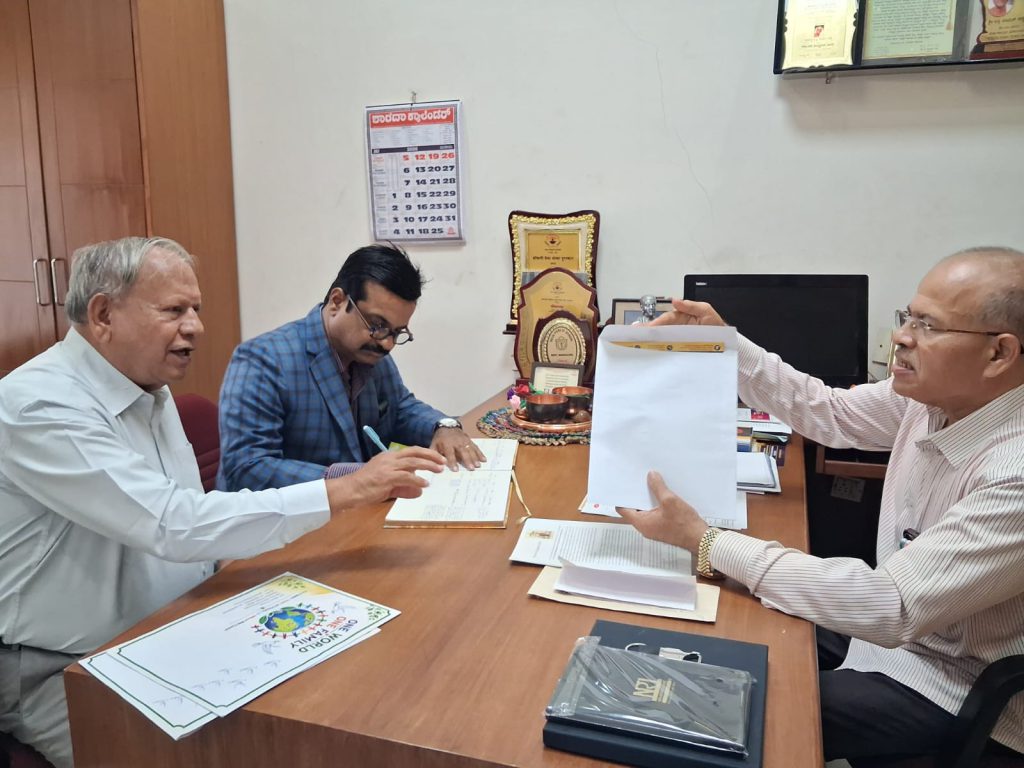
His broader philosophy is captured in the timeless Indian ideal of “Vasudhaiva Kutumbakam”, meaning The World is One Family, and in the powerful message of One World, One Family.
When Mr. Gilbert D’Souza shared this vision with me, what impressed me was not merely the proposal itself but the passion behind it. His enthusiasm reflected genuine faith in humanity’s ability to evolve beyond conflict. At first glance, the proposal may appear idealistic. Critics may immediately ask, “How can a world survive without armies?” Perhaps the better question is: “How long can humanity survive with them?”
The Greatest Contradiction of Civilization
Human civilization has achieved astonishing progress. We have decoded the human genome, communicate instantly across continents, use Artificial Intelligence to reshape industries, explore space, and rely on medical science that saves millions of lives each year.
Yet alongside these extraordinary achievements, nations continue to invest unimaginable sums in preparing for war. Every year, vast amounts of money are spent manufacturing weapons designed not to build life but to destroy it. The brightest engineers create smarter missiles, the most advanced scientists develop deadlier technologies, and entire economies depend upon the business of war.
This is perhaps the greatest contradiction of modern civilization. We possess the intelligence to build a better future, yet we continue investing enormous resources in preparing for humanity’s worst instincts.
Looking at Earth from Space
Astronauts often describe a profound emotional experience after seeing Earth from space. From that distance, there are no visible borders, no political divisions, no religious boundaries, and no racial identities. There is only one beautiful blue planet floating silently in the darkness of the universe.
As India’s astronaut Shubhanshu Shukla observed after viewing Earth from space, our planet appears as one home without visible borders, reminding humanity that we share a common destiny. That thought forms part of the inspiration behind this vision. Nature never created countries. Nature created one Earth. Humanity created borders. If borders were created by people, perhaps people can also learn to make them less divisive.
One Family, Many Nations
The phrase Vasudhaiva Kutumbakam is thousands of years old, yet its relevance has never been greater. It does not demand the disappearance of cultures, languages, or national identities. Instead, it asks humanity to recognise something larger.
A family may consist of individuals with different personalities. They may disagree. They may compete. But they do not seek each other’s destruction. The same principle can guide international relations. Countries may remain independent while accepting that cooperation is ultimately more rewarding than confrontation.
Is a World Without Military Possible?
Realistically, not immediately. Today’s geopolitical realities include territorial disputes, terrorism, organised crime, cyber warfare, and strategic rivalries. In such a world, military institutions continue to play significant roles in national security.
Recognising that reality does not diminish the value of a long term aspiration. The abolition of slavery once seemed impossible. Universal education once seemed impossible. International human rights once seemed impossible.
The European Union emerged from a continent devastated by repeated wars, demonstrating that former adversaries can build lasting institutions of cooperation. The important distinction is between today’s necessity and tomorrow’s aspiration. Dreams are not roadmaps. They are destinations.
Investing in Peace
Imagine if even a fraction of global military expenditure were redirected towards human development. Schools instead of bunkers. Hospitals instead of missiles. Scientific research instead of arms races. Renewable energy instead of destructive technologies. Food security instead of battlefield logistics.
Millions could be lifted out of poverty. Healthcare could reach remote communities. Children everywhere could receive quality education. Climate challenges could be addressed with unprecedented resources. The dividends of peace would benefit every nation.
Security Beyond Weapons
Military strength alone has never guaranteed lasting peace. Many of history’s most destructive conflicts occurred despite enormous military power. True security is broader. It includes economic stability, education, healthcare, environmental sustainability, trust between nations, respect for international law, and strong diplomatic institutions. Weapons may deter aggression. But trust prevents it. Dialogue resolves it. Justice reduces its causes. Peace is ultimately built not only through defence but through relationships.
Technology Can Unite
Ironically, the same technologies that can intensify conflict also possess unprecedented power to unite humanity. Artificial Intelligence can improve healthcare. Digital communication connects families across continents. Translation technologies reduce language barriers. Scientific collaboration crosses national boundaries every day.
Global research teams work together to solve problems that no single nation can address alone. Pandemics, climate change, ocean conservation, and space exploration are challenges that recognise no national borders. Increasingly, humanity succeeds together or fails together.
Leadership Beyond Politics
Great ideas are not always born in government offices. Sometimes they emerge from classrooms, laboratories, ordinary citizens, or experienced senior citizens who have watched history unfold and refuse to stop dreaming. Mr. Gilbert D’Souza belongs to that tradition. His proposal is not simply about removing armies. It is about changing human thinking. Every transformation begins first in imagination. Without vision, action has no direction.
The Responsibility of the Media
Media often reports wars, conflicts, and political disputes. But media also carries another responsibility. It must create conversations about peace and encourage humanity to think beyond today’s crises. Ideas shape public opinion. Public opinion shapes policy. Policy shapes history. Perhaps discussing bold visions today helps prepare wiser decisions tomorrow.
A Journey Rather Than an Event
No serious observer expects armies to disappear overnight. Nor should such a proposal ignore the complex realities of international security.
Yet history shows that lasting peace is built step by step: reducing hostility, strengthening diplomacy, expanding economic cooperation, building cultural understanding, promoting education, encouraging mutual trust, and supporting international institutions that reduce the risk of conflict. Each successful step makes the next one possible. Peace is not achieved through a single declaration. It is constructed patiently across generations.
The Courage to Imagine
Human progress depends upon imagination. Every invention, every scientific breakthrough, every social reform, and every democratic institution began as ideas that others once dismissed. The value of a visionary lies not merely in predicting the future but in inspiring society to build a better one. That is why visions matter, even when they appear distant and especially when they appear difficult.
One Earth, One Humanity
Perhaps the greatest lesson of our age is that humanity’s future is increasingly shared. Climate disasters affect everyone. Economic crises cross borders. Diseases travel internationally. Technology connects every society. The challenges are global. The solutions must increasingly become global as well. The idea of One World, One Family therefore extends beyond philosophy. It is becoming practical wisdom. The more interconnected humanity becomes, the less sustainable permanent conflict appears.
A Vision Worth Discussing
Whether or not the world ever reaches a stage where militaries become unnecessary remains uncertain. Honest discussion requires acknowledging that current security challenges are real and that peace also depends on effective diplomacy, justice, and responsible governance.
Yet the importance of Mr. Gilbert D’Souza’s vision lies elsewhere. It invites us to ask difficult questions. Can humanity reduce its dependence on military confrontation? Can nations invest more in cooperation than competition? Can future generations inherit a world where peace becomes the highest measure of national greatness? History belongs to those who dare to ask such questions.
The dream of One World, One Family is ultimately not about eliminating nations. It is about strengthening our shared humanity. It reminds us that beyond every border, every language, every religion, and every flag lives the same human aspiration: to live in safety, dignity, and hope. Perhaps that is where every lasting peace begins: not on the battlefield, but in the human heart.
From Space Missions to Shaping Minds: The Purpose-Driven Journey of Dr. Oommen Tharakan
NV Paulose, Chairman, Global TV +91 98441 82044
On a quiet morning in the mist laced hills of Peerumedu, Kuttikkanam in Idukki District, an unusual sight drew the attention of the world. Students were thrilled, faculty were inspired, and local residents were very proud. A slender rocket stood elegant on a modest launchpad not in Sriharikota, not backed by massive infrastructure, but on the grounds of an engineering college in semi-rural Kerala.
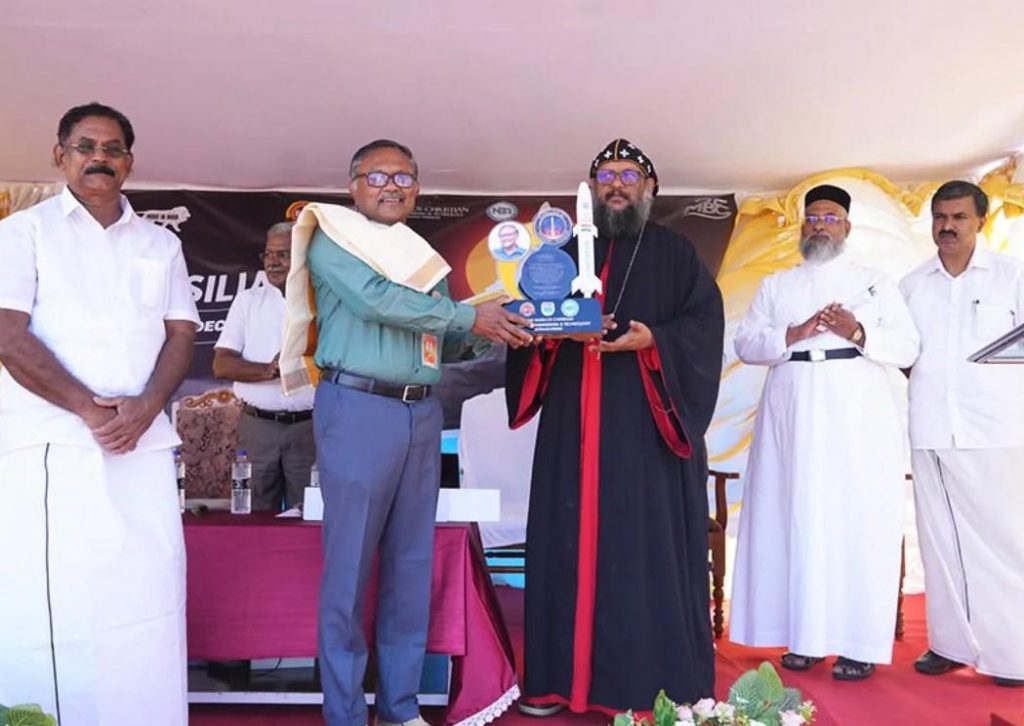
BASILIAN-01 Recognition from HG Zacharias Mar Severios
As the countdown began, there was excitement, nervousness, and disbelief. When the rocket lifted off successfully, it carried more than sensors and circuitry. It carried proof that ambition, when guided by experience and belief, can defy geography.
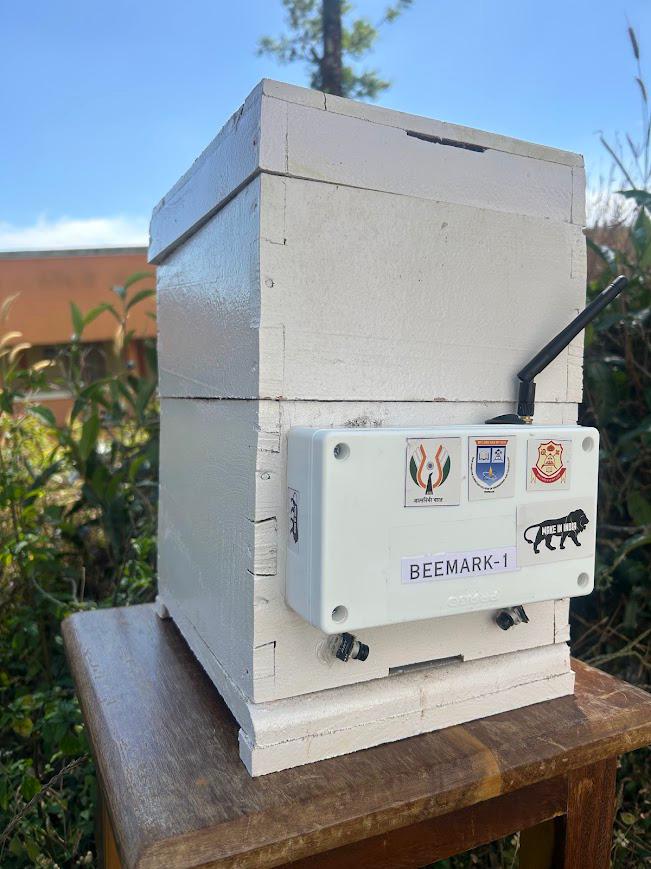
BEEMARK-I embedded in the Beehive
Behind that moment stood Dr. Oommen Tharakan, a man whose professional life had once revolved around India’s most critical space missions, and who later chose a quieter, yet more difficult challenge: building futures through education. His journey from the Vikram Sarabhai Space Centre (VSSC) to the classrooms and laboratories of Mar Baselios Christian College of Engineering and Technology, Kuttikkanam is not a story of stepping back from science, but of stepping deeper into its purpose.
Dr. Oommen Tharakan was awarded the title “Rocket Man of Idukki” in recognition of his pivotal role in leading the Basilian-01 student rocket mission, a landmark achievement in Kerala’s academic space research landscape. Launched on 18 December 2025, Basilian-01 became the first student-built technology demonstrator rocket in Kerala developed outside the ISRO ecosystem, marking a major milestone for independent collegiate aerospace innovation. Drawing on his extensive experience as a former senior scientist at ISRO, Dr. Tharakan provided technical vision, mentorship, and strategic leadership to the student team at Mar Baselios Christian College of Engineering and Technology (MBC Peermade). His guidance not only ensured the mission’s success but also demonstrated how advanced space technology capabilities can be nurtured within regional academic institutions, inspiring a new generation of student innovators.
Early Life and Family Roots
Dr. Oommen Tharakan Kuttiyil Thomas was born in Trivandrum, Kerala, a city renowned for its cultural richness and intellectual traditions. His childhood unfolded in a household deeply rooted in values of faith, discipline, and education. His parents, Thomas Tharakan Kuttiyil Kochummen and Mariamma Thomas Tharakan, instilled in him the importance of perseverance and humility—qualities that would later define his professional and personal journey.
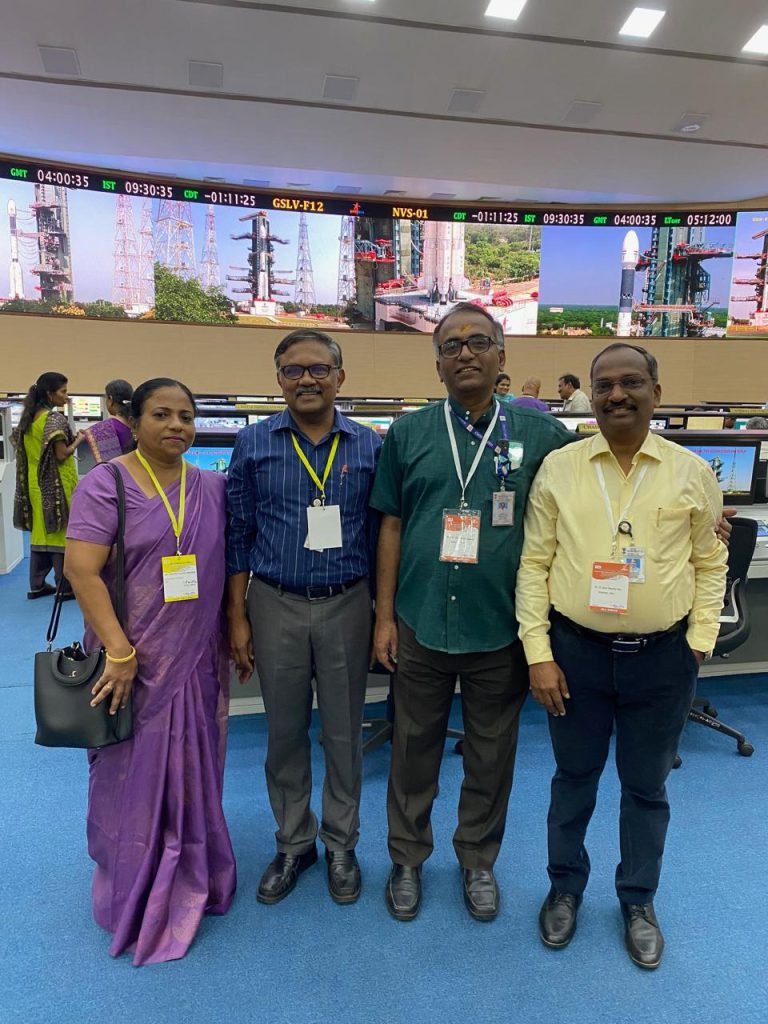
GSLV F-12 Launch
Growing up in Kerala during the 1960s and 1970s meant being surrounded by a society in transition. The state was witnessing rapid developments in education, with literacy rates climbing and scientific curiosity spreading among the younger generation. For young Oommen, this environment was fertile ground. He was fascinated by the mechanics of everyday objects—radios, bicycles, and electrical appliances and books—and often spent hours dismantling and reassembling them. This curiosity was not mere play; it was the seed of a lifelong passion for engineering. During his childhood days his parents promoted writing books and articles in Malayalam and English. His early schooling reflected both diligence and creativity. Teachers often remarked on his ability to grasp complex concepts quickly, but more importantly, they noticed his determination to understand the why behind every principle. Unlike many of his peers, he was not content with rote learning. He sought deeper meaning, often challenging conventional explanations and proposing alternative ways of thinking. This intellectual independence became a hallmark of his later career as a scientist and educator.
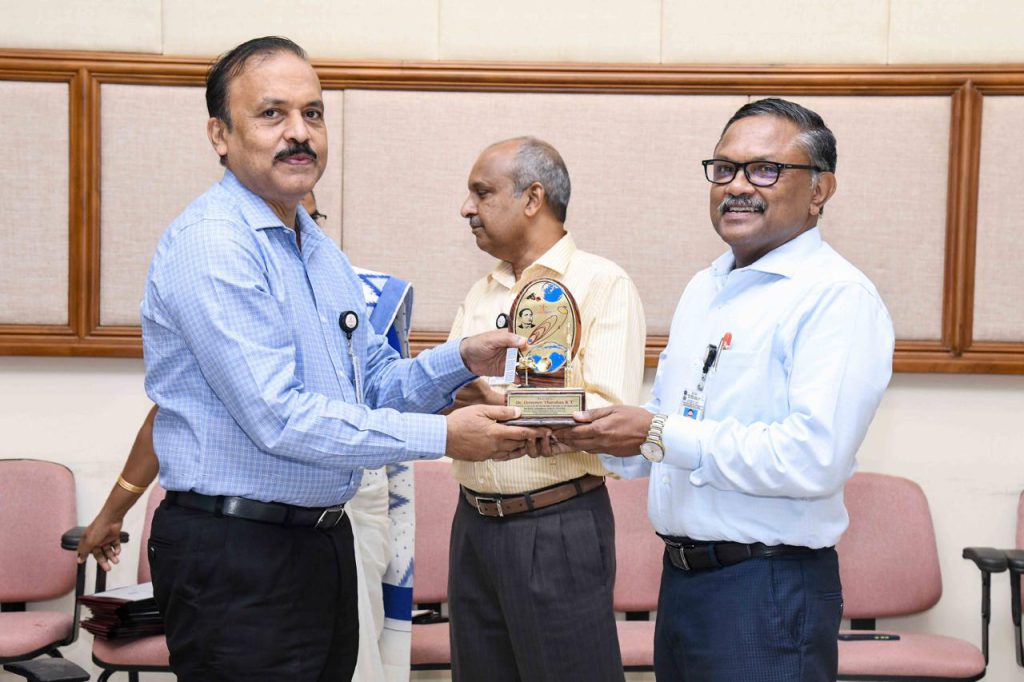
Recognition plaque from Director VSSC
Family traditions also played a significant role in shaping his character. The Kuttiyil household emphasized service to society, respect for knowledge, and resilience in the face of adversity. These values were reinforced through community interactions, church activities, and the close-knit social fabric of Kerala. Oommen learned early that success was not measured solely by personal achievement but by the ability to contribute meaningfully to the community.
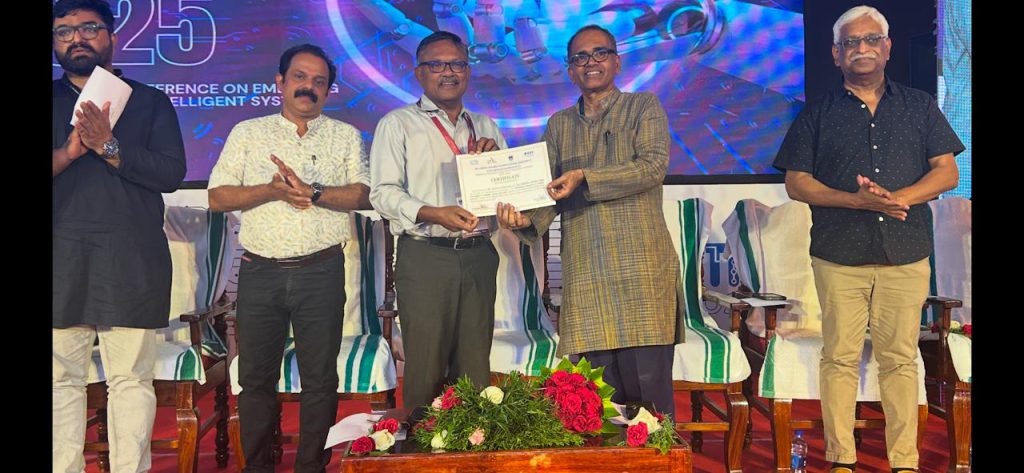
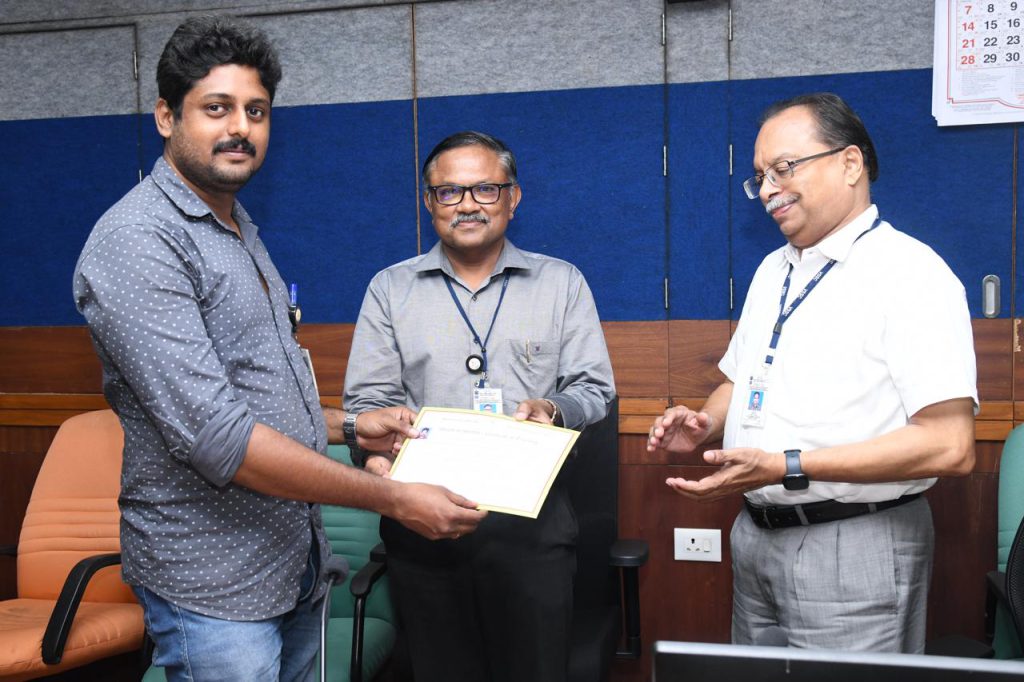
Research Paper Reviewer Certificate from VC, APJ Abdul Kalam Technological University
Another defining aspect of his childhood was exposure to Kerala’s vibrant intellectual culture. The state’s emphasis on education meant that libraries, debates, and science clubs were common even in smaller towns. Oommen participated actively in such forums. These experiences nurtured his confidence and prepared him for the rigorous academic journey that lay ahead.
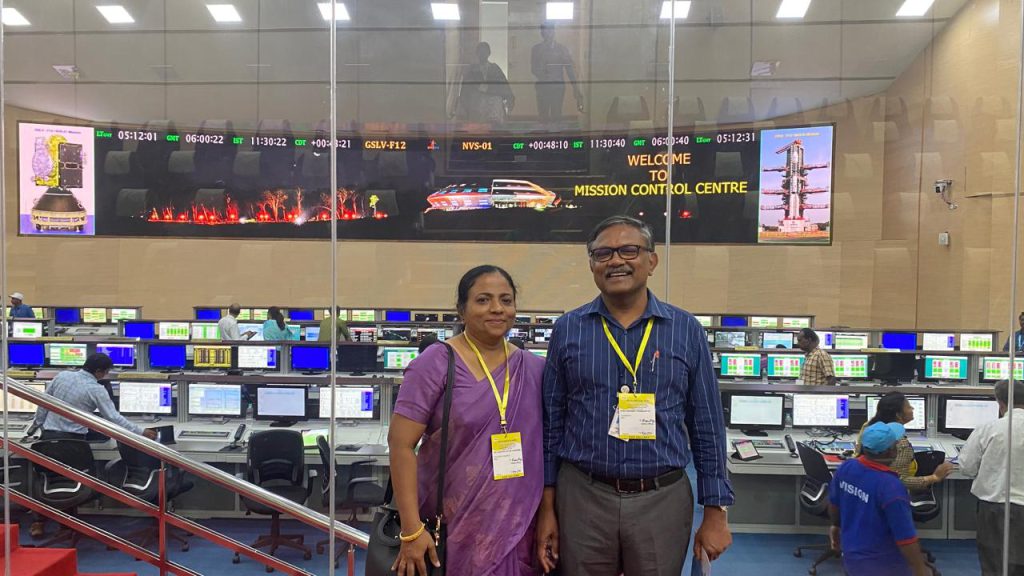
Mission Control Center GSLV F12 launch
By the time he completed his secondary education, it was clear to his family and teachers that Oommen was destined for a career in science and engineering. His decision to pursue a Bachelor of Technology at the University of Kerala was not merely a personal ambition but a natural extension of his early life experiences. The strong foundation laid during his formative years—family values, intellectual curiosity, and community engagement—would serve as the bedrock for his future contributions to India’s space program and academia.
Education and Academic Formation
The pursuit of knowledge was always central to Dr. Oommen Tharakan Kuttiyil Thomas’s life. After completing his schooling in Kerala, he embarked on a journey that would take him through some of India’s most prestigious institutions of higher learning. Each stage of his academic formation not only sharpened his technical expertise but also broadened his intellectual horizons, preparing him for the multifaceted career that lay ahead.
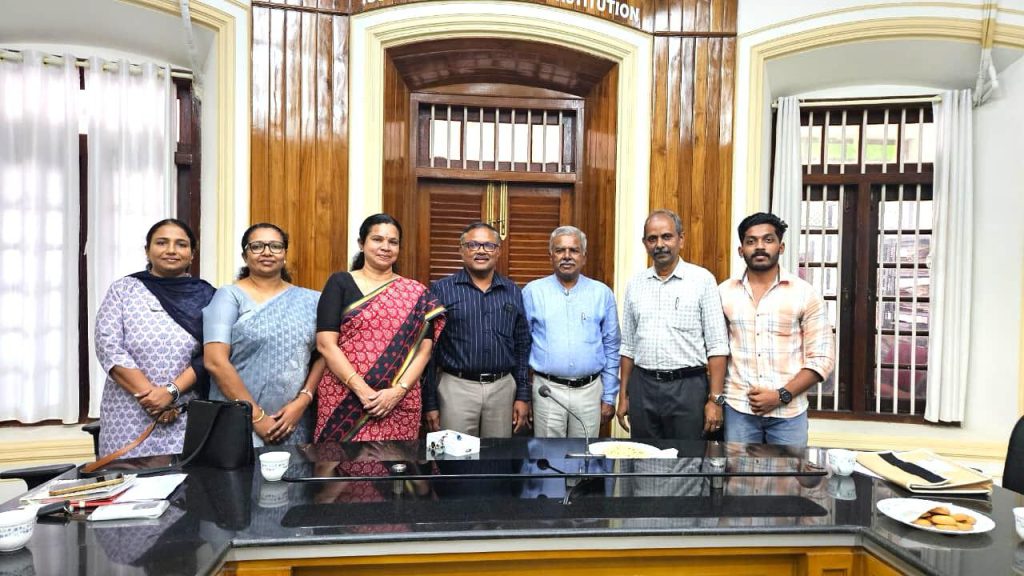
Meeting with Agricultural College Vellayani faculty on BEEMARK-I
His first major academic milestone was the Bachelor of Technology degree at the University of Kerala, completed in 1985. The University of Kerala, with its strong emphasis on foundational sciences and engineering, provided him with a rigorous grounding in electrical and electronic principles. During these formative years, Oommen distinguished himself as a student who combined theoretical mastery with practical ingenuity. He was known among his peers for his ability to translate classroom concepts into working models, often building small prototypes to demonstrate the application of engineering principles. This hands-on approach would later become a hallmark of his teaching and research philosophy.
Becoming a Scientist: The ISRO Years
Dr. Oommen Tharakan’s defining professional journey began in 1985 when he joined the Vikram Sarabhai Space Centre, the heart of India’s launch vehicle program. Fresh from his undergraduate studies, he entered an ecosystem shaped by national urgency, intellectual rigor, and an uncompromising commitment to reliability.
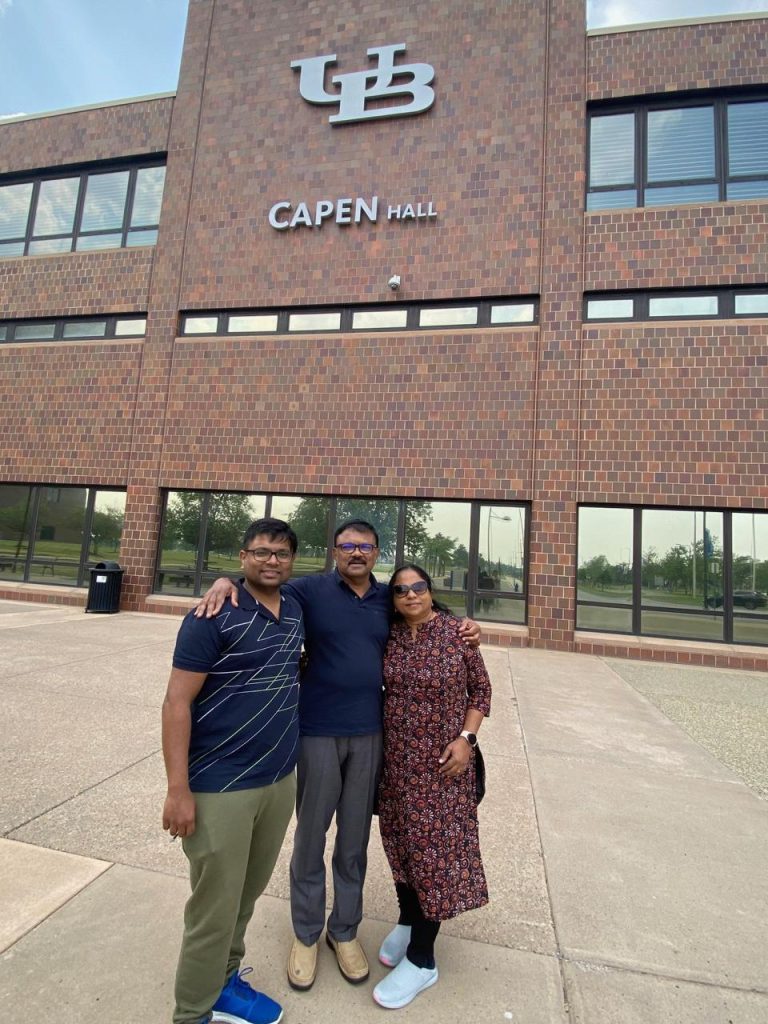
University at Buffalo, New York
These were years when India’s space program operated under severe international technology embargoes. Access to advanced components and test systems was limited, forcing engineers and scientists to innovate with what was available. The challenging times, when looked back on, give tremendous joy to the community of dedicated scientists.
For a young scientist, the challenging environment was demanding and formative. Working on avionics, propulsion related electronics, and reliability engineering, Dr. Oommen Tharakan learned early that in space missions, failure is not an abstract concept; it has consequences measured in lost missions and national setbacks.
Soldering School certificate distribution
The “zero defect” mandate was not a slogan but a lived reality. Each component had to survive vibration, thermal extremes, radiation, and the unforgiving physics of launch. In this crucible, he developed a mindset that would define his career: rigor without shortcuts, creativity grounded in fundamentals, and perseverance under pressure.
He contributed vastly to the indigenisation of electrical, electronic and electromechanical components, helping Indian Space Research Organisation (ISRO) move from dependence on imports toward self-reliance through inspiring Indian industry. We see the echo of this approach in today’s Atmanirbhar Bharat initiatives.
Sriharikota (SHAR) guest house Chennai
Another significant achievement was his involvement in knowledge transfer and training. Recognizing the importance of building capacity within ISRO, Oommen mentored younger engineers and scientists, sharing his expertise in Indigenisation, VLSI design and test, formal verification, avionics production, reliability engineering and systems design. His ability to explain complex concepts in simple terms made him a respected teacher within the organization. Many of his trainees went on to assume leadership roles in subsequent ISRO missions, a legacy that Oommen continues to cherish.
By the time he left ISRO, Oommen had established himself as a scientist whose contributions had directly impacted the success of India’s space program. His work in components screening, VLSI design and test, reliability engineering, and indigenous innovation ensured that India could pursue its space ambitions with confidence. More importantly, his years at ISRO instilled in him a deep sense of national service and scientific responsibility—values that would guide his later transition into academia.
Deepening the Mind: IISc and IIT Bombay
While his professional responsibilities at ISRO grew, Dr. Oommen Tharakan never viewed learning as complete. His pursuit of higher education was not driven by credentialism, but by a need to understand systems more deeply. Completing his M.E. at the Indian Institute of Science (IISc), Bengaluru in 1991 marked a critical intellectual shift.
IISc exposed him to a culture where questioning assumptions was as important as solving problems. The environment at IISc was transformative: surrounded by some of the brightest minds in the country, Oommen was exposed to cutting-edge research and interdisciplinary collaboration. He learned to approach problems not just as technical challenges but as opportunities for innovation. His time at IISc also instilled in him a strong appreciation for research methodology, scientific rigor, and the importance of publishing work that could contribute to the global body of knowledge.
Years later, his doctoral work at IIT Bombay further transformed his approach to engineering and research. IIT Bombay, known for its emphasis on innovation and entrepreneurship, offered him a platform to explore the intersection of engineering and applied research. Here, he honed his skills in systems design, microelectronics, formal verification and communication technologies. The exposure to diverse faculty and international collaborations at IIT Bombay broadened his perspective, reinforcing the idea that engineering was not confined to laboratories but was a tool for solving real-world problems.
Completing a Ph.D. while handling demanding professional tasks required discipline and sacrifice, but it also reinforced a lifelong lesson: serious scholarship is less about brilliance and more about sustained effort. His research in Genetic algorithms, VLSI design and testing, automatic test pattern generation, and fault simulation addressed practical problems at the intersection of design and production areas often overlooked but crucial to system reliability. Throughout his academic journey, he faced challenges that tested his resilience. The transition from Kerala to Bangalore and later to Bombay required him to adapt to new environments, cultures, and academic expectations. Financial constraints and the pressure of excelling in highly competitive institutions were hurdles he had to overcome. Yet, these challenges only strengthened his resolve. He learned to balance rigorous coursework with independent research, often working late into the night to refine his projects and papers.
By the time he completed his advanced studies, Oommen had acquired not only technical expertise but also a vision for how engineering could serve society. His academic formation was marked by a blend of discipline, creativity, and resilience—qualities that would define his later contributions to ISRO and academia. More importantly, his experiences at the University of Kerala, IISc Bangalore, and IIT Bombay instilled in him a lifelong commitment to learning, teaching, and innovation.
For students and young researchers, this phase of his life stands as a powerful reminder that learning is not confined to age or stage. Intellectual growth is a choice to be renewed daily.
A Global Lens, an Indian Core
International exposure played a complementary role in richly shaping Dr. Oommen Tharakan’s worldview. Serious participation in global conferences and workshops in Hong Kong, Seoul, Washington DC, Scarborough (Canada), and other international hubs offered him a firsthand view of how engineering problems were approached across cultures.
These experiences did not dilute his commitment to India; instead, they sharpened it. He observed that while resources and infrastructure varied widely, excellence was ultimately driven by clarity of thought, disciplined processes, and ethical responsibility. Returning to India, he carried with him not just technical insights but a conviction that global standards could and should be pursued within Indian institutions, even in environments far removed from metropolitan privilege.
The Shift: From Spacecraft to Students
After nearly four decades at ISRO, culminating as Group Director at VSSC, Dr. Oommen Tharakan made a transition that surprised many. Moving into academia full time, particularly in a semi-rural setting, was not an obvious next step. Yet for him, it represented continuity rather than change. “At ISRO, we built systems that would leave the Earth,” he reflects. “In academia, we build minds that must learn to escape limitations.” As Dean of Research and Development and Head of Electronics and Communication at Mar Baselios Christian College of Engineering and Technology (MBCET), he encountered a different set of challenges. Limited resources, diverse student preparedness, and the absence of an entrenched research culture could have become constraints. Instead, they became design parameters.
He approached academic leadership much like a complex engineering problem: define objectives clearly, work with available resources, build robust processes, and iterate relentlessly. The result was the emergence of a vibrant research ecosystem, international collaborations, and most visibly, the BASILIAN-01 rocket project; that made everyone proud. We could look on to the sky and reach our dreams over there as well.
Under his guidance, undergraduate students designed, fabricated, tested, and successfully launched a technology demonstrator rocket, the first such achievement by an engineering college in India. More than the launch itself, the project redefined what students believed was possible. It transformed classrooms into living laboratories and replaced passive learning with ownership and accountability.
Success as a Byproduct of Purpose
Dr. Oommen Tharakan’s career is marked by achievements that span institutions and decades, yet he speaks of them with restraint. Completing his Ph.D. later in life remains a personal milestone, not because of the degree itself, but because it reaffirmed his belief in perseverance. His work on test vector generation for VLSI devices and indigenous component reliability has influenced both academic research and mission critical applications.
His Springer Nature book, Electronics Production Defects and Analysis, fills a crucial gap between design theory and manufacturing reality, serving engineers and researchers worldwide. Recognition followed in the form of awards, IEEE Senior Membership, and invitations to global expert panels not as goals pursued, but as acknowledgments of sustained contribution.
Equally telling is his work beyond aerospace. The BEEMARK-I smart beehive monitoring system, which applies aerospace grade sensor logic to agriculture, reflects his conviction that advanced technology must ultimately serve society. By helping farmers monitor bee colony health, the project demonstrates how high-end engineering can address grassroots needs; bringing collaboration offers from premium centres.
Agriculture Universities to Space Research Organisations opens their doors and windows to welcome students and faculties to practice what is being taught; in fact, going beyond the curriculum and its boundaries. The mindset set in the campus has impacted the thought process of the educational ecosystem in the state of Kerala and beyond.
Personal Life and Values
Behind the professional achievements and academic leadership of Dr. Oommen Tharakan Kuttiyil Thomas lies a deeply grounded personal life shaped by family, faith, and enduring values. For him, success has never been measured solely by titles or accolades, but by the balance between professional dedication and personal integrity.
Raised in Kerala, his early life was steeped in the traditions of community, spirituality, and resilience. These foundations instilled in him a sense of humility and service that carried through his career. Even as he worked on mission-critical projects at ISRO or guided students in academia, he remained rooted in the values of honesty, perseverance, and compassion.
Family has always been central to his journey. He often reflects on how the support of his loved ones enabled him to pursue demanding roles across India and abroad. Their encouragement provided strength during moments of challenge, whether it was the long hours at ISRO, the adjustments required in international environments, or the responsibilities of academic leadership. For Dr. Oommen Tharakan, family is not only a source of personal joy but also a reminder of the importance of balance between work and life.
In essence, Dr. Oommen Tharakan’s personal life and values form the bedrock of his professional achievements. They explain his resilience in the face of challenges, his humility despite recognition, and his unwavering commitment to mentorship and service. For him, the true measure of a life well lived is not in accolades but in the values upheld and the lives touched.
Lessons from a Life in Science
Asked about the principles that guide him, Dr. Tharakan is unequivocal: perseverance outweighs perfection. In research, he believes, solutions emerge once one commits fully to the problem. Curiosity, not rote memorization, is the foundation of education. Students must understand the “why” behind every equation and algorithm.
Failure, in his view, is not an endpoint but feedback. Every setback refines judgment and strengthens resolve. Above all, he emphasizes scientific social responsibility, the idea that technology’s true value lies in its capacity to uplift people and empower communities.
These lessons resonate far beyond engineering. They speak to anyone navigating uncertainty, ambition, and change.
Building Futures: The Hardest Engineering
As the echoes of the BASILIAN-01 launch spread into the hills of Idukki, what remained was not just data or headlines, but a shift in mindset. Students who once doubted their place in advanced engineering began to see themselves as contributors, not spectators.
Dr. Oommen Tharakan’s journey reminds us that while launch vehicles rise once, well taught students rise again and again carrying knowledge, confidence, and purpose into the world. In choosing to build futures rather than rest on past achievements, he has undertaken perhaps the most demanding engineering challenge of all. And by every measure that truly matters, he continues to succeed.
Stories of Vision, Service and Sacrifice from the World Konkani Hall of Fame
NV Paulose, Chairman, Global TV +91 98441 82044
“History is not merely about remembering the past. It is about inspiring the future.”
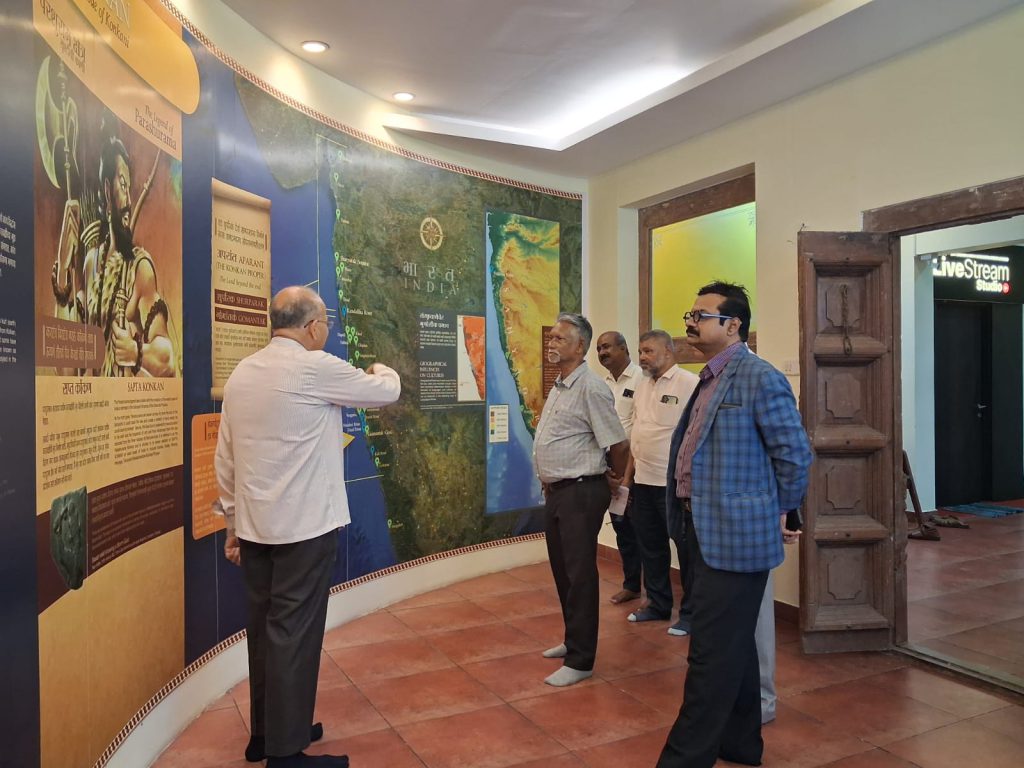
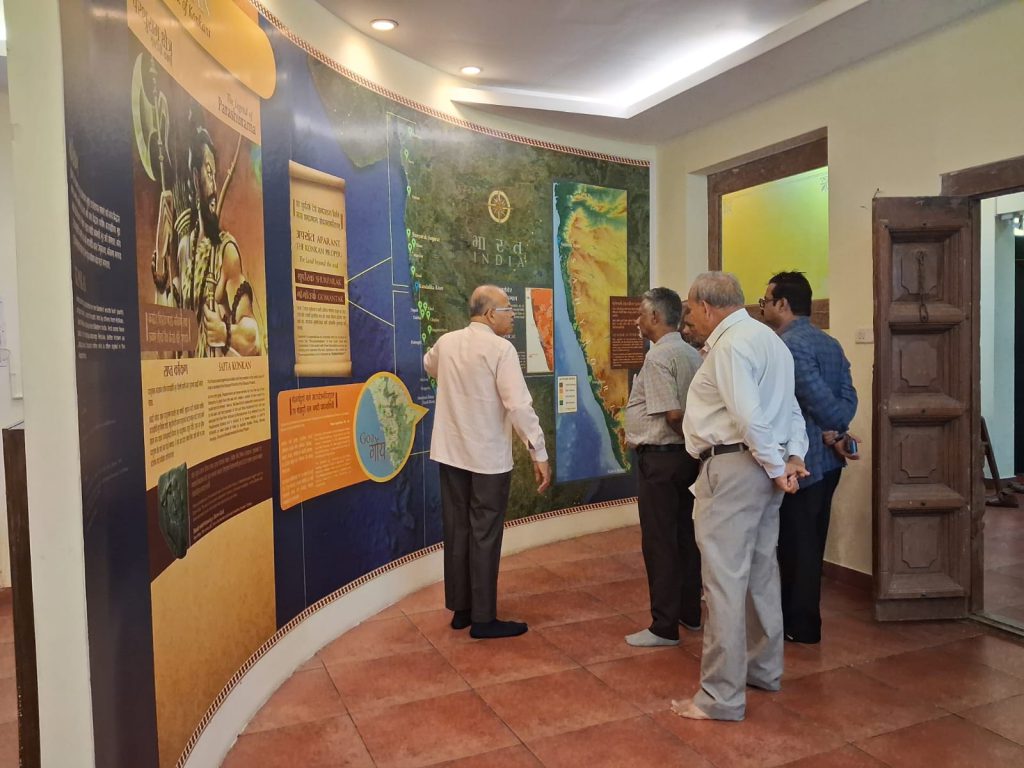
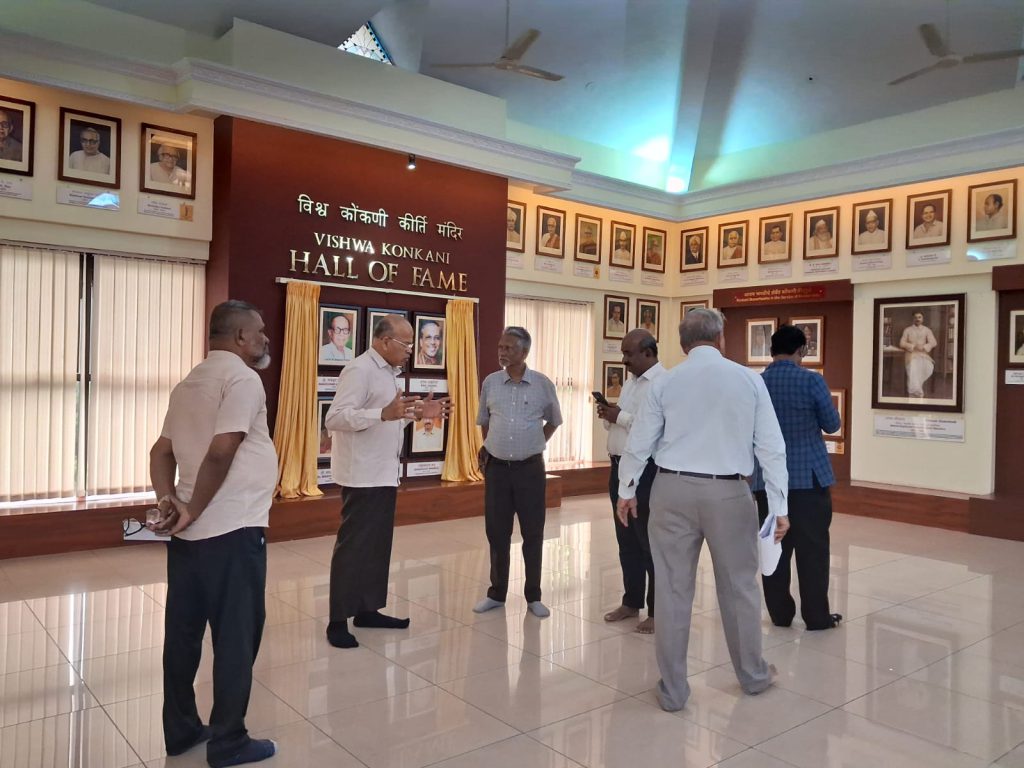
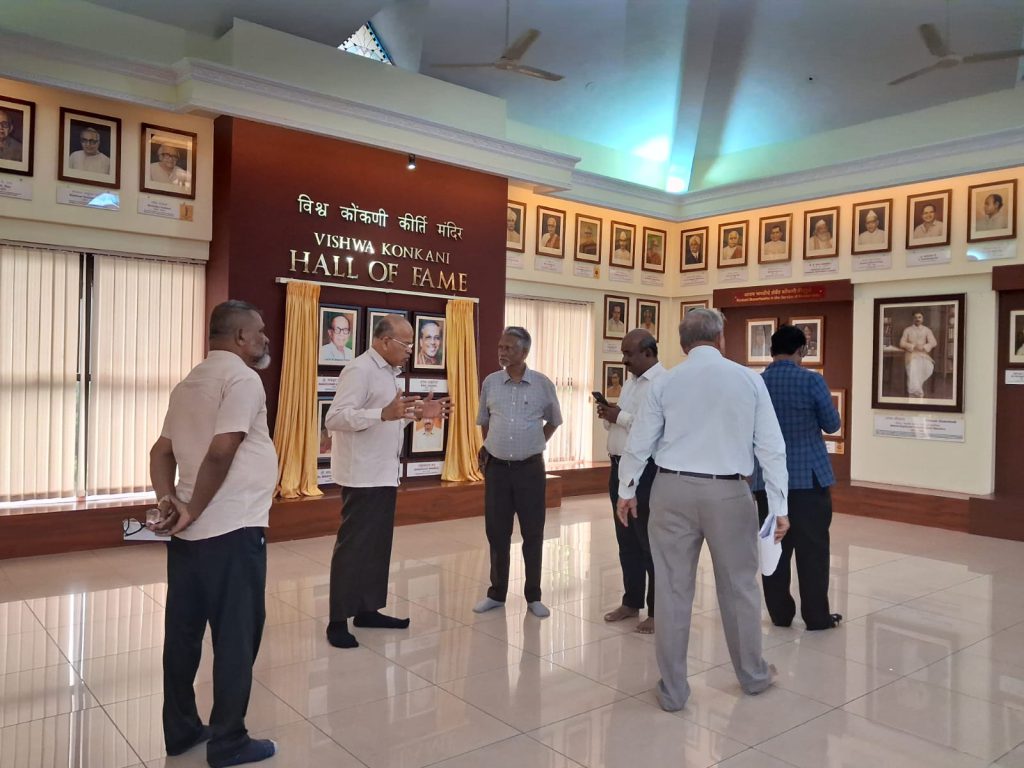
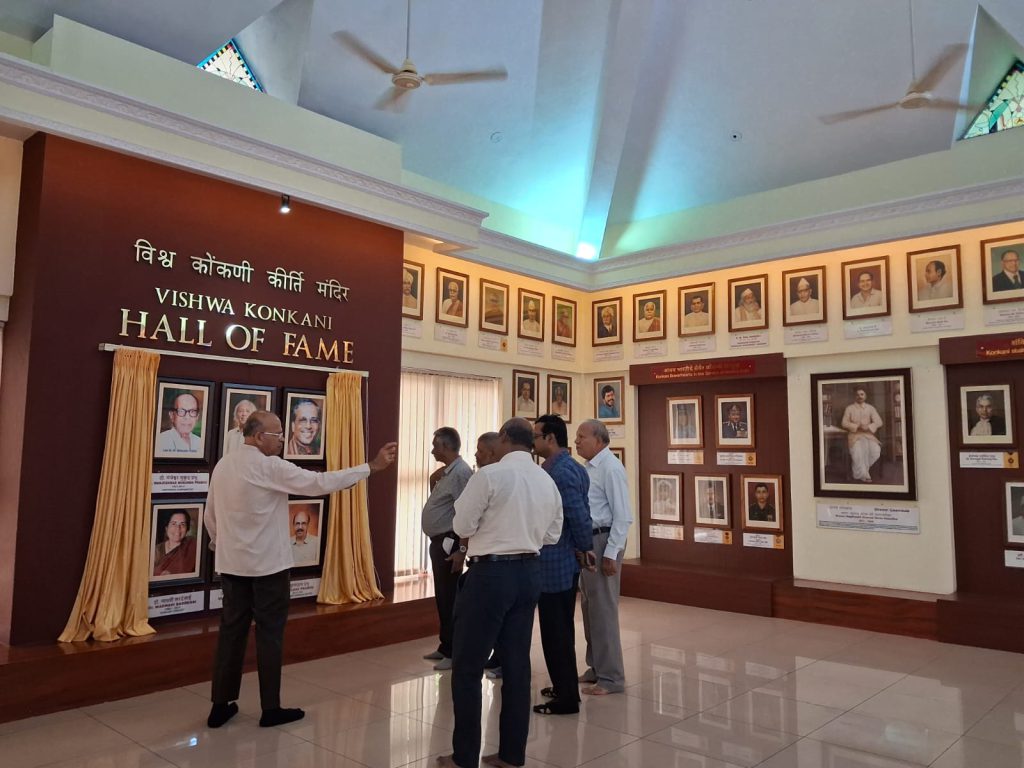
That philosophy comes alive the moment one steps into the Hall of Fame at the World Konkani Centre in Mangaluru. At first glance, it appears to be a gallery of portraits. Rows of distinguished faces look down from the walls, representing different generations, professions and achievements. But within moments, one realizes that this is no ordinary gallery. It is a conversation across time.
Every portrait has a story, every name carries a legacy and every face offers a lesson. As one walks through the gallery in the company of Mr Nandagopal Shenoy, President of the World Konkani Centre, the walls seem to come alive. He does not merely identify the personalities. He narrates their lives with warmth, pride and deep affection, revealing little known anecdotes that transform history into lived experience.
The Hall of Fame was never conceived as a museum where visitors quietly admire portraits before moving on. It was created as a place of inspiration. Young people arrive at the Centre for camps, leadership programmes and skill development initiatives. They walk through these corridors and begin asking questions. Who were these people? What made them extraordinary? What can we learn from them? For Mr Shenoy, those questions are the true measure of the Hall’s success.
“When youngsters come here and begin asking questions, the portraits have already begun their work.”
The World Konkani Centre itself stands as a symbol of the community’s commitment to preserving its language, culture and identity. The Hall of Fame adds another dimension to that mission. It reminds every visitor that greatness is never inherited. It is earned through courage, scholarship, compassion, perseverance and service.
More Than Portraits
Unlike conventional galleries that celebrate fame, the Hall of Fame celebrates contribution. Here, judges stand beside teachers, soldiers beside scholars, artists beside administrators, industrialists beside social reformers. Some names are instantly recognizable while others have quietly disappeared from public memory. Yet every individual displayed here has enriched society in a meaningful way.
As Mr Shenoy leads visitors from one portrait to another, it becomes evident that this is not a collection of famous people. It is a collection of remarkable lives. Each story leaves behind an enduring question.
What will your contribution be?
The Forgotten Architects of the Constitution
One section of the Hall surprises almost every visitor.
Most Indians know Dr B R Ambedkar as the chief architect of the Constitution of India, and rightly so. Yet the creation of the Constitution was the result of years of collective effort by many brilliant minds. Standing together on one wall are five distinguished personalities from the Konkani community who played significant roles in that historic process.
Sir Benegal Narsing Rau, the Constitutional Adviser, prepared the initial draft that became the foundation of the Constitution. His exhaustive study of constitutions from around the world helped shape India’s democratic framework. Alongside him are Benegal Shiva Rao, the noted parliamentarian and constitutional scholar, Ullal Srinivasa Mallya, who represented South Canara in the Constituent Assembly, H V Kamath, remembered for his incisive debates, and Father Jerome D Souza, whose wisdom and moderation enriched discussions on education and minority rights.
Standing before these portraits, Mr Shenoy gently reminds visitors that history often celebrates a few towering figures while many equally dedicated contributors remain hidden behind the pages of textbooks. Their presence on this wall restores that forgotten balance.
“A Constitution of such magnitude could never have been the work of one person alone.”
When a Name Becomes History
One of the most engaging moments during the tour comes when Mr Shenoy pauses before a series of portraits bearing the surname Benegal. The name, he explains, is much more than a family identity.
Like many Chitrapur Saraswat families, the Benegal family derived its surname from its native village. Across the Konkan coast, families often adopted the names of the places from which they originated. Over generations these village names became family names, preserving geography within identity itself.
A surname therefore became a living archive. Every such name tells a story of migration, settlement, administration and community life. Even today, these names quietly preserve chapters of history that might otherwise have been forgotten.
The Spirit of Social Reform
Among the portraits that command immediate respect is that of Kudmul Ranga Rao, one of the greatest social reformers produced by coastal Karnataka.
Long before social justice became a national movement, Kudmul Ranga Rao devoted his life to improving the lives of the underprivileged. At a time when society remained deeply divided by caste and inequality, he chose to challenge convention through education and compassion. He established institutions, encouraged learning and opened doors for those who had long remained outside the mainstream. Standing before his portrait, one realizes that genuine reform rarely begins with dramatic speeches. It begins quietly with individuals who believe society can become more humane than it is.
The Wall of Courage
If one section of the Hall stirs admiration, another touches the heart. Here are the portraits of men and women who wore the uniform of the nation with honour. As Mr Shenoy narrates their stories, the atmosphere changes. These are no longer stories of achievement alone. They are stories of sacrifice.
One portrait in particular continues to move every visitor. It belongs to Captain Omkar Nath Rao, who laid down his life during the Kargil conflict while still in the prime of his years. Mr Shenoy recalls the day when the portrait was unveiled. The hall was filled with people. Captain Rao’s father had come for the ceremony. “I thought he would break down while speaking,” he recalls.
Instead, the father stood before the gathering with remarkable composure. There was sadness, there was grief, but above all there was immense pride. Usually a son unveils his father’s portrait. Here, it was a father unveiling the portrait of his son. The silence that filled the hall spoke louder than any speech.
It became one of the defining moments in the history of the World Konkani Centre. The family’s commitment to national service continued despite unimaginable loss. For Mr Shenoy, this is the true spirit of the armed forces. It is not loud or dramatic. It is quiet, steadfast and deeply rooted in values.
“Sacrifice is not remembered because it is tragic. It is remembered because it inspires.”
Lives That Continue to Inspire
The Hall of Fame continues to grow with time. New portraits are added as the community discovers forgotten pioneers and honours contemporary achievers. It remains a living institution rather than a completed project, reflecting the continuing journey of the Konkani community across generations.
Scientists, judges, artists, industrialists, educationists, administrators, freedom fighters, entrepreneurs and philanthropists all find their place here. Together they demonstrate that excellence has no single definition. It can be found in scholarship, in public service, in entrepreneurship, in creativity and in quiet acts of compassion. The Hall celebrates none of these achievements for the sake of prestige. It celebrates them because they changed lives.
The Questions That Matter
Perhaps the greatest achievement of the Hall of Fame is not the preservation of history but the creation of aspiration. As school children and young professionals walk through its corridors, they begin to look beyond the portraits. They wonder what choices these people made. What obstacles they overcame. What values guided their lives.
The gallery encourages them to believe that extraordinary achievements are not reserved for extraordinary people. They are the result of ordinary individuals pursuing excellence with unwavering commitment. That quiet realization can change the course of a young life.
A Living Legacy
The World Konkani Hall of Fame is many things at once. It is a museum, a classroom, a memorial and an archive. Above all, it is a celebration of identity and achievement.
History here refuses to remain confined to books. It speaks through the forgotten architects of the Constitution. It smiles through the lives of scholars, artists and reformers. It stands tall in the quiet dignity of soldiers who gave everything for the nation. It reminds every visitor that the measure of a community lies not in its numbers but in the values it nurtures and the contributions it makes to society.
As visitors leave the gallery, the portraits no longer appear as painted faces on a wall. They become companions on a journey, silently urging every young mind to dream a little bigger, serve a little more selflessly and leave behind a legacy worthy of remembrance. That is the enduring purpose of the Wall of Fame. It does not merely preserve memories. It creates aspirations.
“Every portrait has a story, every name carries a legacy and every face offers a lesson.”
The Hall of Fame celebrates contribution rather than celebrity, reminding visitors that true greatness is measured by service to society.
The gallery honours scholars, soldiers, artists, reformers, industrialists, judges and visionaries whose lives continue to inspire future generations.
For every youngster who walks through these corridors, the Wall of Fame asks one timeless question: What will your contribution be?
For nearly four decades, Mandd Sobhann has stood as one of the most respected cultural organisations dedicated to the preservation and promotion of Konkani language, music, theatre, literature, and heritage. More than an organisation, it has evolved into a vibrant cultural movement that has inspired generations of artists, writers, musicians, and theatre enthusiasts. Through its unwavering commitment to artistic excellence and community participation, Mandd Sobhann has become a symbol of pride for Konkani speaking people across India and around the world.
At the centre of this continuing journey is Louis J. Pinto, the President of Mandd Sobhann. Calm in his approach yet firm in his vision, he has played a significant role in ensuring that the organisation continues to grow while remaining faithful to the ideals on which it was founded. Under his leadership, Mandd Sobhann has expanded its cultural activities, strengthened its training programmes, and continued its tradition of regular performances and community engagement. His emphasis on discipline, teamwork, and consistency has enabled the organisation to remain active throughout the year, nurturing young talent while celebrating the richness of Konkani culture.
A Vision Rooted in Culture
The story of Mandd Sobhann cannot be told without remembering its visionary founder, Eric Ozario, whose dream transformed the cultural landscape of the Konkani community. Established on 30 November 1986, Mandd Sobhann began as an experiment in Konkani music but soon blossomed into a comprehensive cultural movement embracing music, theatre, dance, literature, cinema, and traditional art forms.
Eric Ozario believed that language survives only when its culture remains vibrant. Guided by this conviction, he composed music for hundreds of Konkani poems, created memorable stage productions, organised festivals, encouraged young artists, and inspired an entire generation to take pride in their mother tongue. His vision also led to the establishment of Kalaangann, the Konkani Heritage Centre, which today serves as the permanent home of Mandd Sobhann and a thriving centre for artistic and cultural activities.
Even after his passing, his ideals continue to inspire every programme, every performance, and every initiative undertaken by the organisation. His legacy remains deeply woven into the identity of Mandd Sobhann.
The Dedicated Team Behind the Mission
While Louis J. Pinto provides the leadership, Mandd Sobhann thrives because of a committed team that shares the responsibility of carrying the organisation forward. Co ordinator Stany Alvares oversees the smooth functioning of numerous cultural initiatives, while Vice President Navin Lobo contributes valuable organisational experience and supports the development of artistic programmes. Together they ensure that every activity reflects the values of excellence, discipline, and service that define Mandd Sobhann.
The administrative responsibilities are managed with equal dedication by Secretary Rony Crasta, Joint Secretary Kishore Fernandes, Treasurer Sunil Monteiro, and Public Relations Officer Victor Mathias. Their careful planning and teamwork make it possible for the organisation to conduct year round activities that include music training, theatre workshops, literary programmes, film festivals, cultural camps, and community events. Their efforts often remain behind the scenes, yet they are essential to the organisation’s success.
Supporting the office bearers is an experienced executive committee along with Ex Officio members Roy Castelino and Ronald Mendonca, besides representatives from Goa, Mumbai, Uttara Kannada, Dubai, Qatar, Australia, the United Kingdom, and the United States. This broad network reflects the growing reach of Mandd Sobhann and demonstrates how volunteers across the world continue to work together for the preservation of Konkani culture. Their commitment ensures that the organisation remains vibrant, inclusive, and forward looking.
A Living Institution Looking Towards the Future
One of the most remarkable qualities of Mandd Sobhann is its consistency. Every month the organisation conducts its cultural programmes with unwavering punctuality. Even during the Covid pandemic, when public gatherings became impossible, the programmes continued online, reflecting the resilience and determination of its members.
The organisation trains children and young people in music and theatre, encouraging them to discover their talents and develop confidence through performance. Alongside these regular activities, Mandd Sobhann organises theatre productions, music festivals, literary gatherings, film screenings, workshops, and cultural conventions that bring together artists and audiences from different regions.
Today, Mandd Sobhann is preparing for another landmark initiative that seeks to bring together thousands of singers in a unique cultural celebration. Such ambitious programmes reflect not only the organisation’s ability to dream big but also its capacity to translate those dreams into reality through careful planning and collective effort.
Under the leadership of Louis J. Pinto and his dedicated team, Mandd Sobhann continues to honour the vision of Eric Ozario while embracing new opportunities for growth. It remains a beacon of cultural excellence where tradition and innovation walk hand in hand. More importantly, it stands as a reminder that language, music, and culture flourish when communities come together with passion, commitment, and a shared sense of purpose. The journey of Mandd Sobhann is the story of a movement that has enriched countless lives through art, inspired generations to cherish their heritage, and continues to strengthen the cultural fabric of the Konkani community across the world.
Language, Music, Films, Cuisine, Media and Cultural exchanges could become powerful tools in bringing communities closer together | Global TV
NV Paulose, Chairman, Global TV +91 98441 82044
Mangaluru: A renewed effort to strengthen the historic and cultural ties between the Goan and Mangalorean communities took centre stage at a special gathering in Mangaluru, where community leaders, journalists, cultural activists and business personalities came together to discuss the shared heritage of Konkani-speaking people.
The event celebrated the long-standing relationship between Goa and Mangaluru while highlighting the need to transform historical goodwill into meaningful cultural collaboration. Speakers stressed that language, music, films, cuisine and cultural exchanges could become powerful tools in bringing the two communities closer together.
Opening the programme, Mr. Gilbert D’Souza recalled that the desire to strengthen ties between Goa and Mangaluru dates back several decades. He noted that many Mangaloreans had travelled to Goa during the exposition of the sacred relics of St. Francis Xavier, where they experienced the warmth and hospitality of the Goan people. Since then, there has been a strong wish among many to foster closer relations between the two regions.
He also acknowledged the contributions of Dr. William Rego, a Mangalorean dentist who has practised in the United Kingdom for more than five decades. Through his efforts in promoting community initiatives and cultural associations, he helped establish stronger links between Goans and Mangaloreans. While these efforts laid an important foundation, speakers felt that much more could still be done to deepen the relationship between the two communities.
Dr. Vivek Mendonsa, Group Director of Lawrence & Mayo, then introduced the veteran Goan journalist Anthony Fernandes, who came all the way from Goa to attend the event despite his demanding professional commitments and personal responsibilities at home. His dedication to strengthening cultural bonds was warmly appreciated by the organisers. In his address, Anthony Fernandes emphasised that Konkani remains one of the strongest links between Goa and Mangaluru. While Goa is predominantly Konkani-speaking, there are also large Konkani-speaking populations across Mangaluru and coastal Karnataka. Despite this shared linguistic heritage, he observed that there has been relatively little interaction between the two communities.
He pointed to Konkani cinema as an example of this disconnect. Films produced in Goa are generally screened only within Goa or occasionally in Mumbai, while Mangalorean Konkani films rarely reach audiences in Goa. As a result, many excellent productions fail to receive the wider appreciation they deserve. According to Fernandes, films, music and cuisine possess the unique ability to transcend geographical boundaries and unite people. He also highlighted the ongoing debate surrounding the various scripts used for Konkani, including Devanagari, Roman, Kannada and Malayalam. Rather than allowing script differences to divide the community, he urged Konkani speakers to focus on the language itself and the shared cultural identity it represents.
He further suggested greater academic collaboration between institutions such as Goa University’s Konkani Department and the Konkani Department at St. Aloysius University in Mangaluru. Such partnerships, he said, would help preserve the language while encouraging greater readership, research and cultural exchange.
The programme also welcomed Rex Fernandes, who has played a significant role in preserving Goa’s heritage by translating Portuguese archival documents. He was recognised not only for his historical work but also for producing a celebrated Konkani feature film that is now being re-screened in Mangaluru after more than a decade.
Speaking at the event, Rex Fernandes explained that the film, originally released in 2014, was created with the objective of celebrating the Konkani language through music, dance and storytelling. Featuring more than twenty-one songs, the film is now being presented to younger audiences in Mangaluru to strengthen their connection with their mother tongue and shared cultural roots.
He observed that today’s younger generation is increasingly interested in reconnecting with fellow Konkani-speaking communities across Goa, Mangaluru, Udupi, Karwar and even parts of coastal Kerala. Language, he said, naturally creates a sense of belonging and opens the door to stronger friendships and community life. Along with language, cultural exchanges through music, dance, food, cinema and media can help remove barriers that have existed for generations.
The discussion also turned to the many cultural similarities shared by Goa and Mangaluru. Speakers praised the rich coastal cuisine of both regions, noting that while each has its own distinctive flavours, both reflect a common heritage. Visitors from Goa also appreciated Mangaluru’s hospitality, clean surroundings and vibrant cultural atmosphere.
Emphasising the importance of national unity, participants remarked that India’s cultural diversity should be celebrated through mutual respect and understanding. Festivals, traditions, clothing, music and cuisine all provide opportunities for communities to appreciate one another while strengthening social harmony across regions and religions.
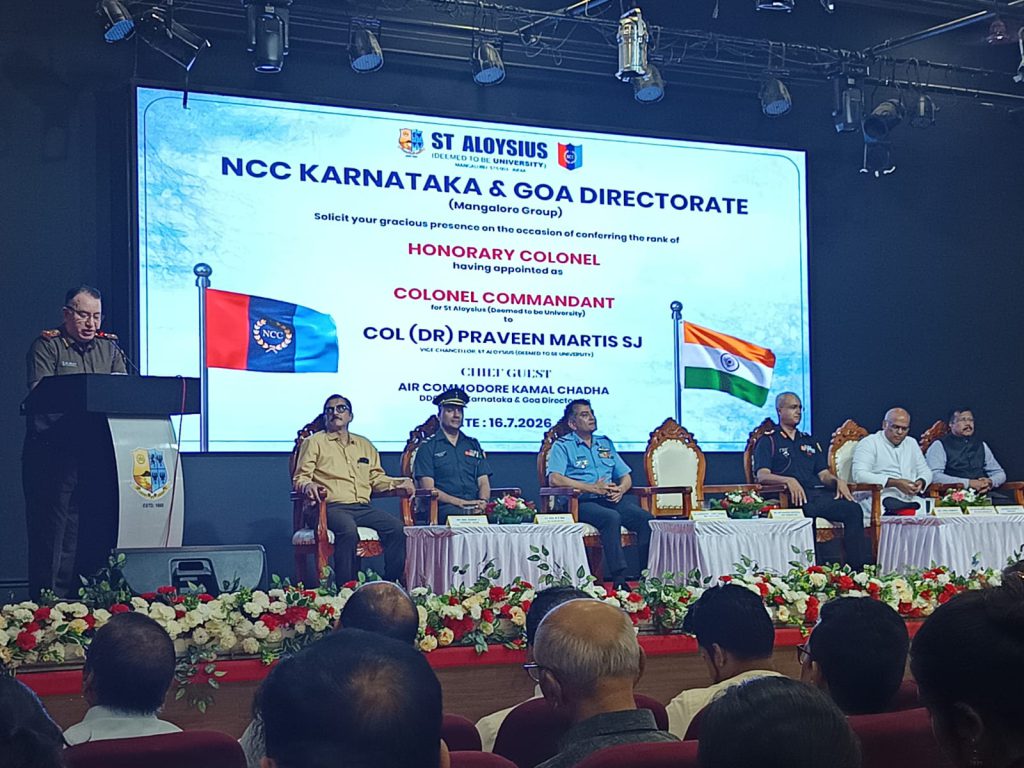
In his concluding remarks, prominent businessman and host Gilbert D’Souza highlighted Mangaluru’s growing role as a centre for Konkani culture. He spoke about the World Konkani Centre, one of the leading institutions dedicated to preserving and promoting the Konkani language and its rich heritage. He spoke about Mandd Sobhann, the premier Konkani cultural organization dedicated to preserving and promoting Konkani culture, language, and heritage. He encouraged visitors from Goa to experience its activities firsthand and to participate in the many literary and cultural programmes organised throughout the year. He also referred to the annual Konkani cultural events and music festivals held in Mangaluru, expressing hope that greater participation from Goans would encourage reciprocal visits by Mangaloreans to Goa for similar programmes.
The meeting concluded on an optimistic note, with participants agreeing that the future of the Konkani-speaking community lies in stronger cooperation, greater cultural exchange and sustained efforts to bridge regional divides. Through language, arts, education and shared traditions, the gathering reaffirmed that Goa and Mangaluru are connected not only by history but also by a common cultural identity that deserves to be celebrated and strengthened for generations to come.
Every generation is presented with an opportunity to redefine its future | Global TV
NV Paulose, Chairman, Global TV +91 98441 82044
Some generations inherit stability. Others inherit uncertainty. The defining characteristic of our time is not a shortage of talent or knowledge but a shortage of systems that enable people to discover their strengths, contribute meaningfully, and create opportunities for one another. Across the world, millions of capable individuals remain underutilized, not because they lack ability, but because they lack pathways to transform their potential into productive action.
For decades, economic development has largely been viewed through the lens of employment, investment, infrastructure, and industrial growth. These remain important, yet they represent only part of the picture. The greatest and most renewable resource of every nation is its people. Every individual possesses knowledge, experience, creativity, relationships, and aspirations that can contribute to society. When these human resources remain disconnected, communities lose opportunities. When they are organized, mentored, and empowered, they become the foundation of lasting prosperity.
The twenty-first century calls for a new approach. Instead of waiting for opportunities to emerge, societies must learn to create them. Instead of measuring success only by the number of jobs available, they must measure success by the number of meaningful roles created, the number of teams formed, the number of leaders developed, and the number of lives transformed. Progress is no longer determined solely by economic indicators. It is determined by the capacity of communities to continuously learn, innovate, collaborate, and improve.
This manifesto proposes a simple yet profound shift in perspective. Every citizen is not merely a job seeker but a creator of value. Every student is not merely preparing for employment but preparing to contribute. Every teacher is not merely imparting knowledge but nurturing future leaders. Every entrepreneur is not merely building a business but creating opportunities for others. Every institution is not merely delivering services but also strengthening society.
From Opportunity Seeking to Opportunity Creation
The purpose of this manifesto is not to establish another organization or launch another programme. Its purpose is to inspire a movement that enables people to recognize their strengths, organize their collective capabilities, and build prosperous communities through collaboration, innovation, and purposeful action. It presents a framework that any city, institution, educational campus, professional association, village, or community can adopt according to its own needs and aspirations.
At the heart of this movement lies a simple belief. Every person has something valuable to contribute. Every community possesses strengths waiting to be discovered. Every challenge contains an opportunity for innovation. Every relationship has the potential to become a partnership. Every institution can become a centre of learning, leadership, and opportunity creation.
This belief is reinforced by Appreciative Inquiry, which encourages communities to discover and expand what is already working well. Rather than beginning with problems, it begins with possibilities. It asks what strengths already exist, what achievements deserve recognition, and what successful experiences can be replicated and expanded. When people focus on strengths, confidence grows. When confidence grows, participation increases. When participation increases, innovation becomes natural.
This manifesto also embraces Strength-Based Development, recognizing that every individual possesses unique abilities that deserve opportunities for expression. No two people contribute in exactly the same way, and that diversity becomes the foundation of creativity and resilience. Communities become stronger when they enable people to contribute according to their strengths rather than expecting everyone to follow identical paths.
The principles of Asset-Based Community Development further remind us that sustainable progress begins by recognizing existing community assets. Knowledge, skills, traditions, institutions, relationships, local enterprises, cultural heritage, and natural resources already exist within every community. Economic evolution does not begin by importing solutions. It begins by connecting and strengthening these existing assets.
The complexity of modern society also requires Systems Thinking. Every action influences many others. Education shapes entrepreneurship. Entrepreneurship strengthens local economies. Strong economies support better education, health, culture, and civic participation. Communities therefore thrive when individuals and institutions understand these interconnected relationships and work together toward shared goals.
Innovation becomes sustainable through Design Thinking, which encourages empathy, creativity, experimentation, and continuous refinement. Solutions emerge by understanding real needs, testing ideas, learning from experience, and improving continuously. Innovation is not reserved for scientists or technologists. It belongs to every citizen willing to solve meaningful problems.
The collective wisdom of communities is often greater than the knowledge of any individual. This principle of Collective Intelligence recognizes that diverse perspectives create stronger decisions, better solutions, and greater resilience. Collaboration transforms isolated knowledge into shared capability.
Communities that continuously learn become communities that continuously improve. The concept of the Learning Organization reminds us that institutions must evolve with changing circumstances. Learning is not confined to classrooms. It becomes a lifelong process embedded within families, workplaces, organizations, and communities. Every experience becomes an opportunity to gain knowledge, improve systems, and develop future leaders.
Continuous Improvement completes this philosophy by encouraging every activity, every project, every partnership, and every institution to become slightly better every day. Small improvements accumulated consistently produce extraordinary long-term results. Excellence is therefore not a destination but a habit of continuous learning and thoughtful action.
Together, these principles create a new vision of development. They move society from dependence to participation, from competition to collaboration, from scarcity to abundance, and from isolated success to collective prosperity. They provide the philosophical foundation for a movement that values people not merely for what they know, but for what they can become and what they can contribute.
This movement is called the Career Revolution.
Career Revolution is like a heat-seeking missile. It searches continuously for open doors and windows. Establishments with open systems and opportunities to prosper faster will benefit by engaging with the large number of people without the burden of additional salaries. Each one joining hands with definite initiatives will create new avenues for revenue. The purpose is to create meaningful opportunities for every individual to learn, contribute, lead, innovate, and prosper. Its destination is Economic Evolution, where communities become self-sustaining ecosystems of knowledge, enterprise, leadership, and shared prosperity.
The journey begins with a simple decision. To stop waiting for an opportunity. To start creating opportunity. For ourselves. For one another. For future generations.
An Innovative Movement for a Shared Future | Freedom with Responsibility | Global TV
Dr. Vivek G. Mendonsa, Group Director of Lawrence and Mayo +91 98202 88817
Languages are means of communication. They are the living expression of a people’s history, values, identity, creativity, and aspirations. Every language flourishes when its speakers become active custodians rather than passive inheritors. The United Konkani Movement (UKM) emerges from this belief: that the future of Konkani depends not merely on preserving its legacy, but on creating opportunities for people to live, celebrate, innovate, and collaborate through the language.
The United Konkani Movement is not conceived as another conventional organization. It is envisioned as a living movement, continuously evolving through participation, mentorship, leadership, and meaningful action. It is designed to inspire individuals from every generation to contribute according to their abilities while maintaining complete flexibility, local autonomy, and financial sustainability.
The concept has been initiated by Dr. Vivek G. Mendonsa, Group Director of Lawrence and Mayo, with the vision of building a movement that belongs to every Konkani-speaking individual irrespective of region, dialect, profession, or background. At the heart of the movement lies a simple belief:
When people are empowered, communities prosper. When communities collaborate, languages flourish.
Unlike traditional institutions that rely upon rigid hierarchies, UKM views organization as an evolving process. Its structure grows organically through what may be called a Chain of Circles.
Each Circle functions independently while remaining connected to the larger vision. Every Circle is encouraged to become a Circle of Excellence, continuously improving itself through innovation, learning, service, and collaboration. This model allows the movement to expand naturally across cities, states, countries, and eventually the global Konkani diaspora without creating unnecessary bureaucracy.
Growth is measured not by the size of the organization but by the quality of engagement and the impact of its initiatives. Every Circle has the freedom to innovate while remaining aligned with the larger mission of strengthening the Konkani language, culture, leadership, and community.
The Mentoring Core Team
The foundation of every city chapter is the Core Mentoring Teams. Each Mentoring Team consists of 10 like-minded mentors who bring together experience, commitment, credibility, and a willingness to guide younger generations.
The mentors are not administrators.
They are facilitators.
They are enablers.
They are catalysts.
Their role is to nurture leadership rather than control it.
Every city may have any number of independent Mentoring Teams, depending upon local participation and interest. Each team functions independently while sharing the common philosophy and values of UKM. This decentralized approach encourages diversity of ideas while maintaining unity of purpose.
The Core Mentoring Team helps in:
Guiding new initiatives
Providing strategic direction
Mentoring youth leaders
Facilitating partnerships
Encouraging innovation
Supporting community projects
Building long-term sustainability
Maintaining ethical standards
Promoting collaboration
Celebrating excellence
The Mentoring Team becomes the anchor that provides wisdom while allowing complete freedom for action.
United Konkani Ambassadors (UKA)
If the mentors are the roots of the movement, the United Konkani Ambassadors (UKA) are its energy.
Every UKA group consists of 10 dynamic youth ambassadors who are passionate about community building, cultural promotion, education, entrepreneurship, leadership, creativity, and public engagement.
The ambassadors are encouraged to organize themselves flexibly. They may work in groups of two, three, four, or five, depending upon the nature of the activity. One ambassador may simultaneously participate in several project teams. This fluid structure ensures maximum participation without imposing rigid boundaries.
The movement believes that leadership is not a designation. Leadership is action. UKAs are encouraged to imagine, initiate, and implement new ideas.
They become the face of the movement by conducting:
Cultural festivals
Language promotion drives
Literary events
Heritage walks
Youth forums
Educational workshops
Social campaigns
Digital initiatives
Volunteer programmes
Community celebrations
Networking events
Innovation challenges
Every successful initiative becomes an inspiration for other circles to replicate, adapt, and improve.
Freedom with Responsibility
One of the defining characteristics of UKM is the balance between autonomy and accountability. Every UKA team enjoys substantial freedom to innovate. Ideas are not expected to flow only from the top. Innovation is encouraged at every level. The Core Mentoring Team provides broad guidance without limiting creativity. This approach encourages ownership.
When individuals feel trusted, they naturally become more responsible. Rather than asking, “Who gave permission?” the movement encourages the question, “How can we create value?”
Self-Financing and Self-Sustainable
A movement becomes stronger when it does not depend entirely upon external funding. Therefore, every Circle within UKM follows a self-financing and self-sustainable working model. Each team is encouraged to develop its own resources through responsible fundraising, memberships, partnerships, event revenues, sponsorships, donations, and collaborative initiatives.
Financial independence creates organizational independence. It enables quicker decision-making. It encourages entrepreneurship. It promotes accountability. Above all, it builds long-term resilience. Every Circle is expected to become financially responsible while maintaining complete transparency and ethical governance.
The Ten Parameters of Excellence
Every team functions according to ten broad parameters that guide its activities and measure its effectiveness. While these parameters may evolve, they are intended to encourage excellence in every dimension of the movement.
These include:
Commitment to the Konkani language and culture.
Ethical leadership and integrity.
Innovation and creativity.
Community participation.
Youth empowerment.
Collaboration and networking.
Financial sustainability.
Continuous learning and mentoring.
Measurable social impact.
Celebration and sharing of success.
These parameters are not restrictions. They are guiding principles that help every Circle strive for excellence.
The Foundation: Appreciative Inquiry and the 5D Model
The philosophical foundation of UKM is inspired by the 5D Model of Appreciative Inquiry (AI). Rather than concentrating on problems, Appreciative Inquiry focuses on discovering strengths, possibilities, and opportunities. It encourages individuals and communities to build upon what already works well.
The five dimensions include:
Define Clearly identifying the purpose and possibilities.
Discover Recognising existing strengths, talents, traditions, and success stories.
Dream Imagining a vibrant future for the Konkani language and community.
Design Creating practical strategies, projects, and partnerships to realise that vision.
Destiny (or Deliver) Taking collective action while continuously learning, improving, and expanding.
This positive approach transforms community development from a process of solving problems into a journey of creating possibilities.
Exploring New Dimensions
UKM is intentionally designed as an open architecture. No single team can anticipate every opportunity. Therefore, every Circle is encouraged to explore entirely new dimensions.
These may include:
Artificial Intelligence in Konkani
Digital archives
Podcasts
Film festivals
Success Storytelling
Theatre
Tourism
Entrepreneurship
Children’s education
Research
Documentation
Translation
Heritage conservation
Global networking
Scholarships
Leadership academies
Women’s leadership
Rural development
Technology innovation
Startup incubation
International collaborations
Every successful experiment enriches the movement. Innovation becomes everyone’s responsibility.
A Movement Beyond Geography
Konkani is spoken across many regions and by communities living around the world. UKM therefore seeks to transcend geographical boundaries. Whether someone belongs to Goa, Karnataka, Maharashtra, Kerala, or the global diaspora, every individual becomes part of one larger family connected through language and shared cultural heritage. The movement values diversity.
Different dialects, traditions, scripts, customs, and regional identities are celebrated as strengths that enrich the collective identity of the Konkani community. Unity does not require uniformity. It requires mutual respect.
Leadership Through Service
The movement promotes servant leadership.
Mentors mentor.
Ambassadors act.
Volunteers contribute.
Communities participate.
Everyone learns.
Everyone teaches.
Leadership is earned through contribution rather than position. Every successful project creates new leaders who, in turn, mentor others. This creates an ever-expanding cycle of leadership development.
Measuring Success
The success of UKM will not be measured merely by membership numbers. Instead, success will be reflected in:
New leaders are emerging.
More youth speaking and promoting Konkani.
Increased community participation.
Innovative local projects.
Sustainable city circles.
Strong mentoring networks.
Collaborative partnerships.
Cultural pride.
Educational impact.
Global recognition of Konkani.
Every activity should leave the community stronger than before.
An Invitation to Build Together
The United Konkani Movement is ultimately an invitation. It invites experienced professionals to mentor. It invites youth to lead. It invites artists to create. It invites educators to teach. It invites entrepreneurs to innovate. It invites volunteers to serve. It invites every Konkani-speaking individual to become an active participant in shaping the future of the language. No contribution is too small.
Every conversation, every event, every campaign, every partnership, every new idea, and every inspired individual strengthens the movement.
Looking Ahead
The list of Lead Campaigners will be announced separately as the movement expands across different regions and communities. These campaigners will serve as champions who inspire participation, encourage collaboration, and help establish new Circles of Excellence.
The United Konkani Movement is not simply about preserving a language. It is about nurturing confidence. It is about building leadership. It is about connecting generations. It is about creating opportunities. It is about inspiring innovation. It is about celebrating identity.
Most importantly, it is about ensuring that Konkani continues to thrive; not only in literature and memory, but in everyday life, education, enterprise, technology, culture, and global engagement.
As envisioned by Dr. Vivek G. Mendonsa, Group Director of Lawrence and Mayo, the United Konkani Movement seeks to become a vibrant, self-sustaining, mentor-driven, youth-powered movement where every Circle is a Circle of Excellence, every Ambassador is a catalyst for change, and every individual contributes to a stronger and more united Konkani future.
The journey begins with ten mentors, ten ambassadors, one Circle, one idea, and one shared commitment: to unite, empower, and celebrate the Konkani community for generations to come.
Rev. Dr. Praveen Martis SJ: A Shepherd of Education, Leadership and National Service
NV Paulose, Chairman, Global TV +91 98441 82044
16 July 2026 will forever remain a landmark day in the illustrious history of St. Aloysius Deemed to be University, Mangaluru. On this memorable occasion, the university witnessed a rare and prestigious moment as Rev. Dr. Praveen Martis SJ, Vice Chancellor, was ceremonially conferred the rank of Honorary Colonel and appointed Colonel Commandant of the National Cadet Corps. The magnificent Pipping Ceremony, held at the LCRI Auditorium in the distinguished presence of Air Commodore Kamal Chadha, Deputy Director General, NCC Karnataka and Goa Directorate, symbolised not merely a military honour but the recognition of a lifetime devoted to nation building through education.
The honour reflects a profound truth. Leadership is measured not only by academic achievement but also by the ability to inspire generations to serve a cause greater than themselves.
For more than a decade, Rev. Dr. Praveen Martis SJ has transformed the NCC ecosystem at St. Aloysius into one of the finest in the country. Under his visionary stewardship, the university has strengthened its proud legacy of hosting all three wings of the National Cadet Corps. His unwavering commitment has resulted in modern infrastructure, expanded training opportunities and an institutional culture where discipline, patriotism and excellence flourish naturally.
His vision extends far beyond producing graduates. He believes that education must shape responsible citizens, compassionate leaders and committed servants of the nation. Every initiative undertaken during his tenure reflects this philosophy. Whether encouraging cadets to excel at Republic Day Camps, national competitions, adventure activities or community service, he has consistently emphasised that character is the highest form of education.
The impact of this leadership is visible in the remarkable achievements of the university’s cadets. Numerous Aloysians have gone on to serve with distinction in the Armed Forces, while many others continue to contribute to society as exemplary citizens guided by the NCC motto, Unity and Discipline. Every success story bears testimony to the environment nurtured under his guidance.
Rev. Dr. Praveen Martis SJ embodies the rich Jesuit tradition of forming men and women for and with others. Inspired by the ideals of St. Ignatius of Loyola, himself once a soldier before embracing religious life, he seamlessly integrates academic excellence with service, leadership, integrity, compassion and patriotism. Under his leadership, St. Aloysius has become a place where classrooms produce scholars and parade grounds produce leaders.
Wearing the Uniform with Humility and Honour | Colonel Rev. Dr. Praveen Martis SJ
The conferment of the rank of Honorary Colonel upon Rev. Dr. Praveen Martis SJ was a ceremonial recognition. It represented the culmination of a lifelong commitment to education, leadership and national service. Speaking with characteristic humility, he described the honour as a collective achievement belonging to the entire St. Aloysius University family. For him, the uniform was not merely an emblem of rank. It symbolised sacrifice, discipline, courage and the unwavering commitment of the countless men and women who dedicate their lives to safeguarding the nation. Accepting the appointment as Colonel Commandant, he reaffirmed his resolve to uphold these ideals with integrity and responsibility, recognising that the distinction carried not privilege alone but a solemn duty to inspire future generations.
Reflecting on the university’s enduring association with the National Cadet Corps, Rev. Dr. Praveen Martis SJ celebrated the remarkable journey of its cadets who have consistently distinguished themselves through leadership, service and excellence. He acknowledged the invaluable contribution of Associate NCC Officers, commanding officers, faculty members, support staff and alumni whose dedication has strengthened the institution’s proud tradition.
He expressed particular pride in the many Aloysians who have entered the Armed Forces and those who continue to serve the nation in diverse capacities. Emphasising that leadership is measured by the lives one influences rather than the authority one holds, he encouraged every cadet to embrace the values of unity, discipline, resilience and compassion, reminding them that true patriotism is reflected in service to both the nation and humanity.
The Vice Chancellor spoke with a deeply personal reflection on his lifelong admiration for the Armed Forces, inspired by his father’s military service and his own early experiences as an NCC cadet. Recalling how the dream of wearing the uniform had remained close to his heart, he dedicated this historic honour to the youth of St. Aloysius University and to the young people of Mangaluru.
He envisioned a future in which every graduate carries forward the values of discipline, integrity and selfless service nurtured through the NCC. Expressing heartfelt gratitude to the Society of Jesus, the NCC Directorate, the Ministry of Defence, university colleagues, students, family and friends, he reaffirmed his commitment to strengthening the university’s partnership with the National Cadet Corps and inspiring generations to march forward with courage, conviction and an unwavering love for the motherland.