All posts by admin

About admin

Chairman of Global TV | Excellent Writer | Exceptional PR Skills | Author of Six books | MASTER HEALER | +91 98441 82044 |

NICO | The International Media Conclave 2026 | Nitte Institute of Communication | Global TV

From Propaganda to Peace Ethics Truth and the Future of Journalism

NV Paulose, Chairman, Global TV +91 98441 82044

The International Media Conclave 2026, hosted by the Nitte Institute of Communication NICO, concluded with a powerful valedictory ceremony that brought together reflection, recognition, and a renewed commitment to ethical journalism. Over two days, the conclave evolved into a vibrant platform for dialogue, debate, and introspection on the role of media in an increasingly complex global environment.
A Theme Rooted in Global Urgency.
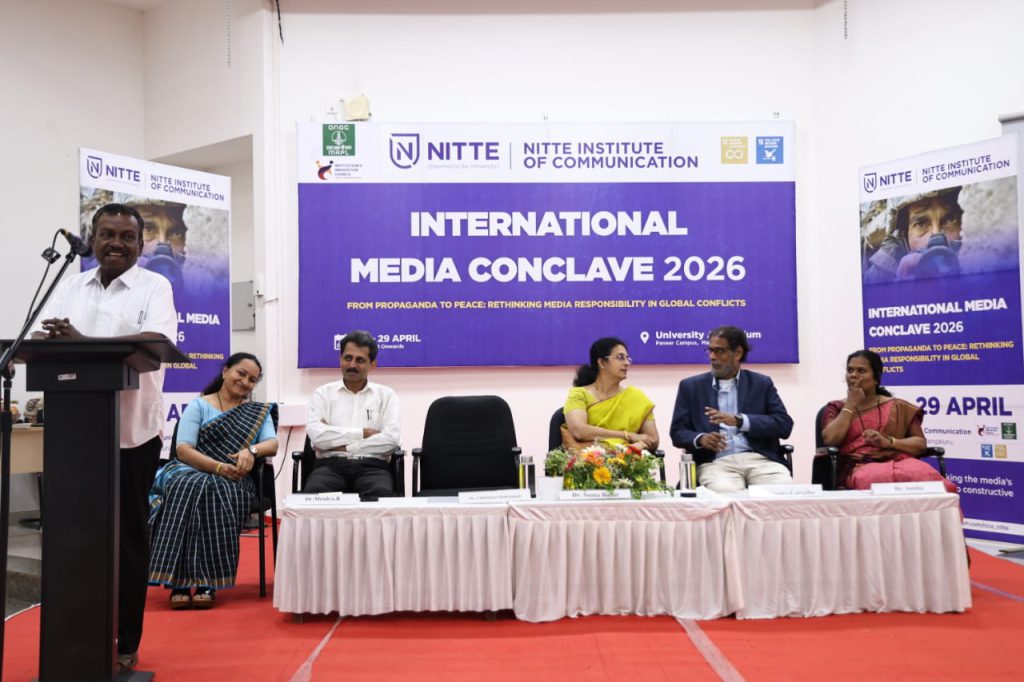
The conclave revolved around the theme: From Propaganda to Peace: India’s Responsibility Amid Rising Global Tensions. In an era marked by misinformation, digital manipulation, and polarized narratives, this theme is both timely and necessary. Participants engaged deeply with issues such as:

  • Propaganda and information warfare
  • Fake news and misinformation
  • Social media influence
  • Media ethics and responsibility

These discussions echoed participants to rethink not only how media operates, but also how it should evolve in the face of global uncertainty.
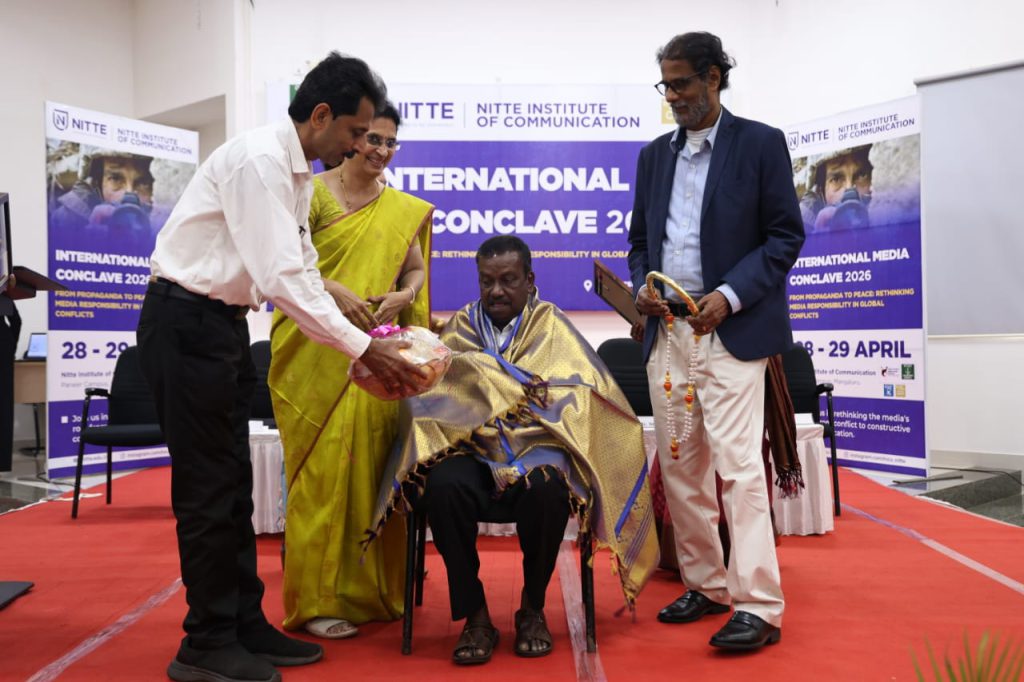
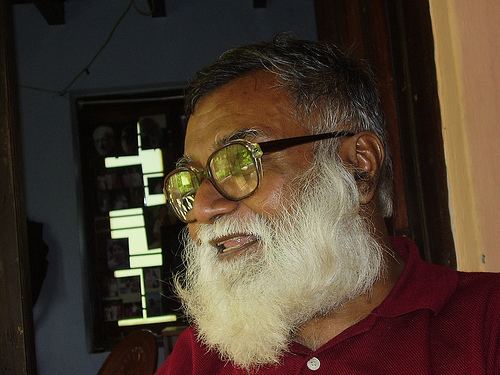
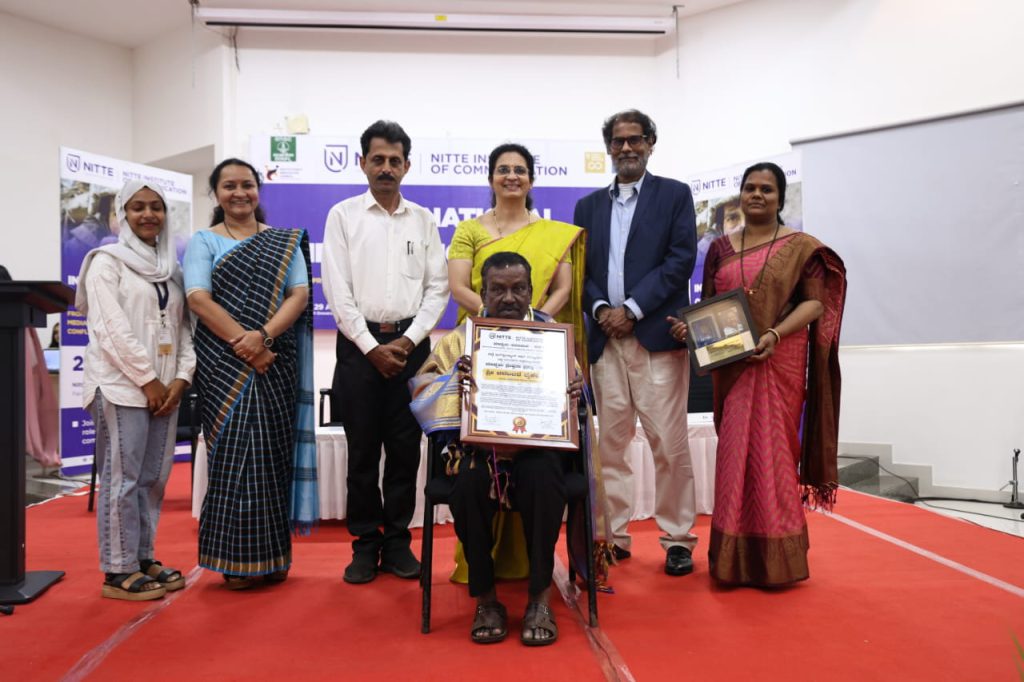
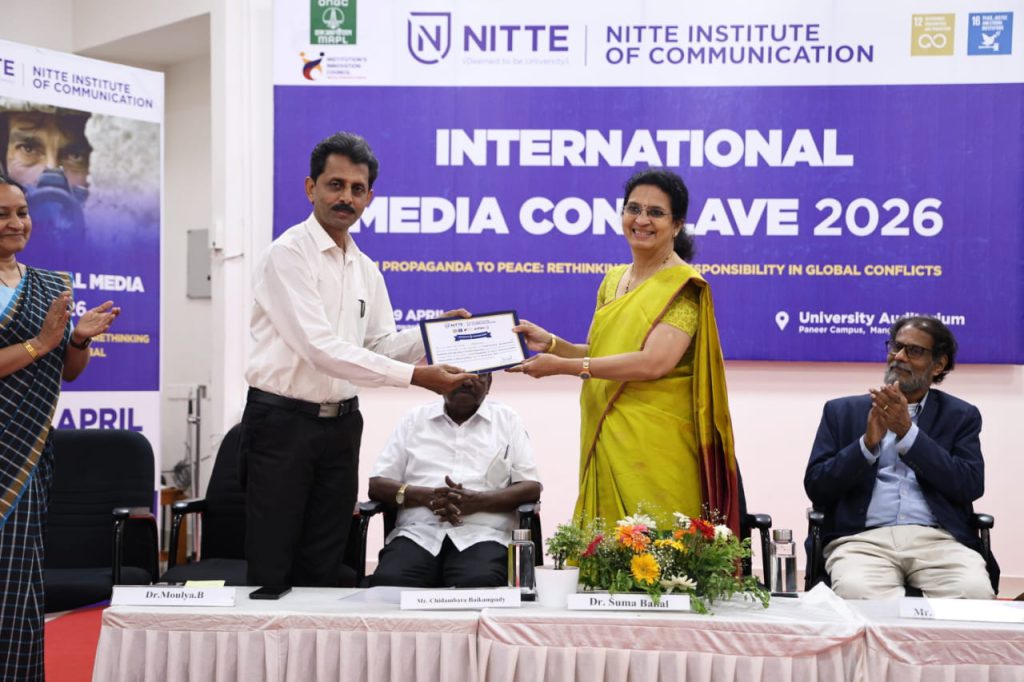
NICO honoured Chidambara Baikampady, Most Reputed Among the Senior Journalist, recipient of the Media Excellence Award. His contributions to journalism reflect on a deep ethical commitment. He spoke in depth about the way truth is replaced in journalism over the years. Individualised Reporting is lost its ways in front of AI Journalism. Today, the involvement of Journalists are less in truth finding. We see same news in all newspapers, he said. In those days, politicians were afraid to face the journalists and were cautious while answering their questions. A mistake would have cost their political career. Today, the scenario had reversed almost brutally.

Valedictory Ceremony A Moment of Gratitude and Reflection

The valedictory ceremony marked the culmination of the conclave, beginning with a warm welcome to distinguished guests. The Chief Guest, Dr Suma Ballal, Deputy Registrar, was acknowledged for her leadership and commitment to sustainability and environmental awareness within academia. The presence of Dr Varadesh Hiregange, Former Director of MIC and GCPAS at MAHE Manipal, added significant academic depth to the session. His reflections on Chidambara Baikampady highlighted the enduring values of truth, sensitivity, and social responsibility in journalism.

The conclave also witnessed the notable presence of senior journalists, led by Pushparaj B N, who currently serves as the President of the Dakshina Kannada Working Journalists’ Association for the 2025 to 2028 term. A seasoned journalist and Mangaluru Bureau Chief of Vartha Bharati, he brings nearly three decades of experience in journalism and public engagement, adding significant credibility and professional insight to the proceedings.
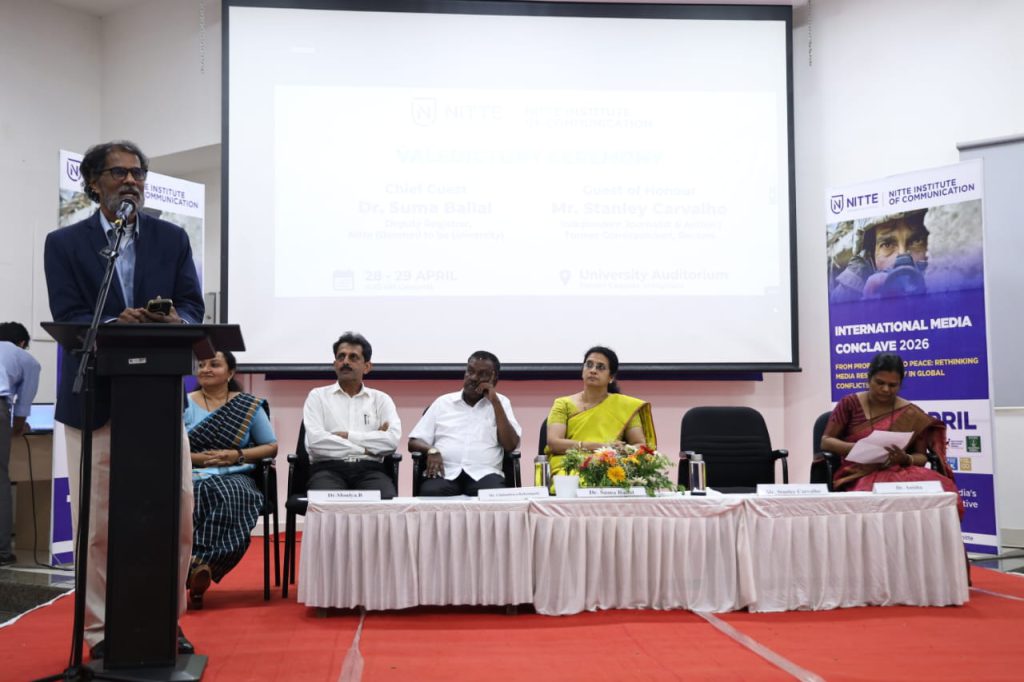
The presence of Stanley Carvalho, a columnist, author, and former correspondent with Reuters, added depth to the ceremony. His insights during both the panels and the closing address left a lasting impression on the audience. One of the strongest messages emerging from the conclave was the primacy of ethics in journalism. In his address, Stanley Carvalho posed critical questions to aspiring journalists:

  • Will you choose speed over accuracy
  • Amplification over verification
  • Sensation over substance

His message was clear. Truth and accuracy must always come before speed. The real battlefield is not just digital. It is our judgment. In a world flooded with information, the responsibility of journalists lies in discerning truth from noise and maintaining credibility.

Truth, Facts, and the Responsibility to Question

A key philosophical insight discussed during the session was the nature of truth itself. Truth is often multidimensional and shaped by perception. However, one principle remains non-negotiable: Facts are sacred and comment is free. This distinction defines responsible journalism. While interpretations may vary, facts must be verified, protected, and presented without distortion. Equally important is the courage to ask questions. Journalism thrives on curiosity and critical inquiry. The zeal to question narratives, challenge authority, and seek clarity is what sustains the integrity of the profession.

Journalism as an Ism

An engaging perspective that emerged was the idea of journalism as an ism, a philosophy comparable to ideologies like Marxism or Gandhism.

In this sense, journalism is not merely a profession but a commitment to:

  • Truth
  • Justice
  • Accountability
  • Social responsibility

At its core lies a timeless principle. Journalism must serve as the voice of the voiceless.
Giving Voice to the Marginalized

A recurring theme in the discussion of Chidambara Baikampady’s work was the role of journalism in representing the marginalized. Historically, journalism has stood as a platform for:

  • The oppressed
  • The unheard
  • The underrepresented

This responsibility remains crucial today. In an age dominated by powerful narratives and digital amplification, ensuring that marginalized voices are heard is more important than ever.
Baikampady’s work was praised for its sensitivity and authenticity in capturing these voices, reinforcing the human dimension of journalism.

The Creative Expression of Truth

While journalism often operates within constraints such as deadlines, formats, and editorial limits, creative writing offers a space for deeper and more personal expression. Reflections on Baikampady’s literary contributions, including his work Black Boy, highlighted how creative writing allows for:

  • Honest self-expression
  • Emotional depth
  • Exploration of nuanced truths

In creative spaces, a writer is free from structural limitations, enabling a more complete and authentic articulation of ideas.
Media, Humanity, and Ethical Balance

Another significant concern raised during the conclave was the over sensationalization of news, particularly tragic events. While breaking news is essential in a competitive media environment, excessive repetition and dramatization can desensitize audiences. Instead of fostering empathy, it risks turning suffering into spectacle. The message was clear. Journalism must balance urgency with humanity. Ethical reporting requires not just accuracy, but also compassion and responsibility toward those affected by the news.

The Digital Battlefield and the Crisis of Trust

The conclave repeatedly emphasized that today’s media landscape is a digital battlefield, not merely of information, but of perception and judgment. Key challenges include:

  • Declining trust in media
  • Rapid spread of misinformation
  • Narratives shaped by algorithms

In this context, the future of media will not be shaped solely by technology, but by the choices journalists make:

  • To verify before believing
  • To question before sharing
  • To listen before reacting

Behind the Scenes The Making of a Conclave

Organizing an international conclave of this scale is no small feat. It requires months of preparation, coordination, and teamwork. The event was widely appreciated for its:

  • Meticulous planning
  • Seamless execution
  • Thoughtful selection of themes
  • Effective coordination of speakers and logistics

From travel arrangements to session scheduling, every detail was handled with precision, reflecting the dedication of the organizing team.

A Collective Effort

Special recognition was given to the HoD,  Dr. Moulya Baladi, faculty members and organizers, including , Dr Anisha, Dr Mesa, and Mr.Jayanth Kodkani, for their leadership and commitment. Equally commendable was the active participation of students, who played a vital role in:

  • Organizing sessions
  • Engaging in discussions
  • Contributing to the overall success of the conclave

Their enthusiasm and involvement highlighted the importance of experiential learning in media education. Supported by MRPL, the conclave brought together journalists, scholars, and media professionals to deliberate on media responsibility in global conflicts.

Beyond the Conclave A Beginning Not an End

As the conclave concluded, speakers emphasized that it should not be seen as the end of a conversation, but the beginning of a responsibility. Students were encouraged to:

  • Reflect on the discussions
  • Continue questioning dominant narratives
  • Carry forward the values of truth and integrity

A Call to the Next Generation

The final message of the International Media Conclave 2026 was both inspiring and challenging.
The future of media lies in the hands of today’s students. They are stepping into a world that is complex and often uncertain. Yet, with courage, clarity, and conscience, they have the power to shape a media landscape that is ethical, trustworthy, and humane.

The International Media Conclave 2026 converged into a platform for transformation. By addressing critical issues at the intersection of media, ethics, and global responsibility, it encouraged participants to rethink the purpose of journalism. At its core, the conclave reaffirmed a timeless truth. Journalism is not just about reporting the world. It is about shaping it responsibly.


Organ Donation Warriors | SUMMARY | For Free Registration | WhatsApp 9892724908 | Global TV

ORGAN DONATION WARRIORS

  • A mission to create a nationwide network of Organ Donation Warriors to spread awareness and inspire organ donor pledges.
  • Open to anyone aged 18 or older, including organ donors, recipients, donor families, social workers, students, healthcare professionals, Rotary & Lions members, and all citizens passionate about saving lives.
  • Completely FREE programme — No registration fee or charges of any kind for Organ Donation Warriors.
  • Free online training will be provided covering:
    • Organ donation awareness*
    • Brain death & legal aspects
    • Public speaking & social media advocacy
    • Community outreach & leadership*
  • Volunteers will participate in:
    • Awareness drives
    • Seminars & workshops
    • School & college campaigns
    • Social media campaigns
    • Walkathons & public events
  • Outstanding volunteers will receive:
    • Digital Certificates
    • Identity Cards
    • Recognition Awards
    • Leadership opportunities
  • The movement aims to build India’s largest citizen-led organ donation awareness network and help save thousands of lives.

For Free Registration
WhatsApp 9892724908
Email: odindia4@gmail.com
Website:
rcorgandonationinternational.rotaryindia.org

Conceptualised & Led By
Rotarian Lal Goel
Chairman — Organ Donation India Foundation
Founder & Charter President
Rotary Club of Organ Donation International

Initiated by Organ Donation India Foundation & GYAN
In association with Rotary Club of Organ Donation International and Global TV

ORGAN DONATION WARRIORS | Gift Life. Spread Hope | Rotarian Lal Goel | Chief Editor | Global TV

ORGAN DONATION WARRIORS | A National Volunteer Movement for Organ Donation Awareness & Advocacy | Initiated by Organ Donation India Foundation | In Association with Rotary Club of Organ Donation International | Global TV

ORGAN DONATION WARRIORS

A short video capturing the powerful and historic speech delivered by Rotarian Lal Goel at a recent meeting of the Rotary Club of Organ Donation International.

Rotarian Lal Goel is the Chairman of the Organ Donation India Foundation & GYAN, and the Founder & Charter President of the Rotary Club of Organ Donation International — globally recognised for his relentless commitment to promoting organ donation and saving lives.

INTRODUCTION

India continues to face one of the most severe organ donor shortages in the world. Despite rapid advances in transplant medicine, thousands of patients lose their lives every year — not because treatment is unavailable, but because a donor could not be found in time. The roots of this crisis run deep: entrenched myths, social hesitation, inadequate awareness, and the absence of structured community support systems have long stood in the way of a culture of voluntary organ donation.

It is against this backdrop that the Organ Donation India Foundation, in association with the Rotary Club of Organ Donation International and Global TV, is proud to launch Organ Donation Warriors. This nationwide volunteer movement seeks to transform ordinary citizens into ambassadors of life, hope, and humanitarian change.

This is not simply a programme. It is a call to action — an invitation to every compassionate Indian citizen to become a messenger of life, hope, and humanity in their own community.

VISION & MISSION

The vision of Organ Donation Warriors is to build a compassionate and informed India where every citizen understands the profound importance of organ donation and actively supports the mission of saving lives through organ and tissue donation.

To realise this vision, the mission of the movement is to develop a nationwide network of trained volunteers who will spread awareness, encourage donor pledges, support grieving families through the donation process, and champion a lasting culture of giving across every corner of the country.

OUR ASSOCIATIONS

The Organ Donation Warriors movement draws its strength from the collaboration of three committed organisations, each bringing unique reach, credibility, and purpose to the initiative.

Organ Donation India Foundation is the founding body behind this movement, with years of dedicated advocacy, outreach, and policy engagement in the field of organ donation across India. The Foundation brings together medical expertise, legal knowledge, and grassroots networks to drive systemic change.

Rotary Club of Organ Donation International (RID 3141) is a distinguished Rotary club whose sole mission is the promotion of organ donation awareness across India and internationally. Its members bring the ethos of “Service Above Self” to every interaction, giving the movement a trusted, values-driven foundation and access to Rotary’s vast volunteer network.

Global TV lends its media presence and broadcast capabilities to the movement, ensuring that the message of Organ Donation Warriors reaches millions of viewers across platforms. Through live sessions, awareness broadcasts, testimonials, and digital campaigns, Global TV amplifies the voice of every volunteer and donor family associated with the initiative.

Together, these three partners form a powerful alliance of civil society, community service, and media — united in their commitment to saving lives.

WHAT WE AIM TO ACHIEVE

The Organ Donation Warriors movement is guided by a set of clear, measurable objectives. At its core, the initiative seeks to dramatically increase public awareness about organ donation in both urban and rural India, while systematically dismantling the myths and misconceptions that continue to prevent families from consenting to donation.

Beyond awareness, the movement is committed to action. It will actively encourage citizens to pledge organ donation and will create a trained corps of community-level volunteers in every district of the country. By engaging youth, healthcare professionals, social workers, transplant recipients, and donor families alongside everyday citizens, the movement will build a broad and lasting coalition for change.

The movement also aims to help significantly improve India’s deceased organ donation rate through sustained community engagement and public awareness.

In the long term, Organ Donation Warriors aspires to become the largest citizen-led organ donation advocacy network in India — a movement that outlasts any single campaign and becomes a permanent force for compassion in Indian public life.

WHO CAN JOIN

One of the defining principles of Organ Donation Warriors is its openness. The movement welcomes anyone above the age of eighteen who carries a genuine desire to contribute to the cause — no prior experience in advocacy or healthcare is required.

Organ donors and recipients, donor families who wish to share their experience and inspire others, social workers, teachers, university and college students above 18 years of age, healthcare professionals, NGO members, and Rotary and Lions Club members are all especially welcome. So too are media professionals, influencers, and any citizen who believes that a single act of awareness can save a life.

Registration is free of cost. Interested individuals may write to odindia4@gmail.com with their full name, city and state, mobile number, occupation, and a brief introduction. A registration form and onboarding details will be shared promptly in response.

TRAINING & PREPARATION

Every registered volunteer will receive free, structured online training designed to equip them with the knowledge, skills, and confidence needed to advocate effectively in their communities. The training is organised across five carefully designed modules.

Module 1 — Understanding Organ Donation

This module introduces volunteers to the fundamentals of organ donation — the distinction between living and deceased donation, the organs and tissues that can be donated, and why India’s donor rate remains critically low.

Module 2 — Legal & Ethical Framework

This module covers the legal and ethical landscape, including an overview of the Transplantation of Human Organs Act (THOA), the meaning and significance of brain death, and the ethical principles that govern the donation process.

Module 3 — Communication & Awareness

This module focuses on communication — how to speak persuasively in public, how to run a social media awareness campaign, and how to address myths and misconceptions with sensitivity, evidence, and compassion.

Module 4 — Community Outreach

This module prepares volunteers for community outreach, covering the planning and execution of awareness drives, school and college engagement programmes, and the nuances of working with religious and community groups.

Module 5 — Volunteer Leadership

This module develops volunteer leadership skills, including event coordination, team building, mentorship, and the documentation and reporting practices that will allow the movement to monitor and demonstrate its impact.

ACTIVITIES & CAMPAIGNS

Organ Donation Warriors will be active across multiple fronts simultaneously. At the community level, volunteers will organise seminars, workshops, and public talks, complemented by street campaigns that take the message of donation directly to the people.

Schools and colleges will be priority targets, with dedicated ambassador programmes designed to make the next generation of Indians the most organ-donation-aware in history.

In the digital space, volunteers will drive coordinated social media campaigns, create and share video content, and record testimonials from donor families and transplant recipients whose stories have the power to change minds and move hearts.

Dedicated digital campaigns in multiple Indian languages will ensure outreach across diverse communities and regions.

The movement will also mark key occasions on the national and international calendar — National Organ Donation Day, World Organ Donation Day, Eye Donation Fortnight, and targeted campaigns around Mother’s Day and Youth Awareness events — with walkathons, candlelight tributes, and human chain campaigns that build visible, public momentum for the cause.

Through Global TV’s media platform, select sessions and awareness broadcasts will be streamed live, extending the reach of the movement far beyond what any single volunteer or local event could achieve.

ORGANISATIONAL STRUCTURE

Organ Donation Warriors operates through a four-tier structure designed to balance national vision with local action.

National Level

A National Advisory Board and a panel of Medical and Legal Experts, provide strategic direction and ensure the movement’s integrity and coherence across the country.

State Level

State Coordinators oversee regional implementation, coordinate with district leaders, and represent the movement in state-level advocacy forums.

District Level

District Leaders manage local volunteer networks, plan district-level campaigns, and maintain activity records for their areas.

Community Level

At the foundation of the entire structure are the Community Volunteers — the Organ Donation Warriors themselves — who engage directly with citizens, conduct awareness sessions, and drive donor pledges at the grassroots level. They are the heartbeat of the movement.

RECOGNITION & CERTIFICATION

Every volunteer who completes the training programme and actively contributes to the movement will receive a Digital Certificate of Recognition and an official Identity Card.

Outstanding contributors may also receive Appreciation Letters, special Awards, and the opportunity to be elevated to District or State Coordinator roles.

The movement will honour exceptional volunteers annually — recognising those whose dedication, creativity, and impact have gone above and beyond in service of the cause of organ donation in India.

PARTNERSHIPS & COLLABORATION

Organ Donation Warriors actively invites collaboration from hospitals and transplant centres, NGOs, educational institutions, corporate CSR programmes, Rotary and Lions Clubs, media organisations, and government health departments.

Each partnership strengthens the movement’s reach and reinforces the message that saving lives through organ donation is a cause that transcends institutional boundaries.

Together, civil society, healthcare, education, media, and government can create an environment in which organ donation is not merely permitted, but embraced — as an act of love, service, and profound human solidarity.

CONCLUSION

India stands at a historic crossroads in the journey toward a stronger culture of organ donation. The gap between the number of patients awaiting organ transplants and the number of donors willing to give is vast — but it is not unbridgeable.

What is needed is not new technology or new policy alone, but a shift in the consciousness of a nation.

Organ Donation Warriors exists to bring about that shift, one community, one conversation, and one pledge at a time. With the expertise of the Organ Donation India Foundation, the network of the Rotary Club of Organ Donation International, and the reach of Global TV, the movement has the foundation it needs to grow into something truly transformative.

Every Warrior who joins this movement becomes more than a volunteer. They become a messenger of hope, a guardian of life, and a living testament to the belief that ordinary people, acting together with extraordinary purpose, can change the world.

“One Organ Donor Can Save Multiple Lives. One Warrior Can Inspire Thousands.”

Conceptualised & Led By

Rotarian Lal Goel
Chairman — Organ Donation India Foundation
Founder & Charter President
Rotary Club of Organ Donation International

Registration

WhatsApp 9892724908
Email: odindia4@gmail.com

Website: rcorgandonationinternational.rotaryindia.org

Prof. John C. Jacob | He believed education should ignite curiosity and responsibility

The Teacher Who Awakened Kerala’s Environmental Conscience | Global TV

NV Paulose | Dr. Shaji Mon T. John

Prof. John C. Jacob, affectionately known as “Johnsi,” was a zoology professor who taught lessons from real life than from textbooks. He was a teacher who believed that education must open the eyes of students to the world around them. He stands out in the history of environmental awareness in Kerala. He had a farsighted vision about inspiring the young minds to keep nature close to their hearts.

Through teaching, positivism, writing, and grassroots movements, he helped nurture the earliest environmental consciousness movements in Kerala. His influence extended far beyond the walls of a classroom, inspiring generations of students to understand, respect, and protect nature. The story of John C. Jacob is ultimately the story of how a committed teacher can transform society.

A Teacher With a Mission

Born in 1936 in Kerala, John C. Jacob developed an early fascination with the natural world. Like many children who grow up close to rivers, forests, and fields, he learned to observe life carefully. That curiosity eventually led him to study zoology and become a teacher.

But teaching for him was never about delivering lectures and finishing the syllabus. He believed education should ignite curiosity and responsibility. When he joined Payyannur College in northern Kerala in the early 1970s as the head of the Zoology Department, he saw an opportunity not merely to teach students about animals and ecosystems, but to inspire them to protect the environment itself.

At that time, environmental awareness was not widely discussed in India. Development was often equated with industrial growth and large infrastructure projects. Questions about ecological damage were rarely raised. John C. Jacob saw the danger long before it became widely understood. His walk on the streets with his students is historical.

The Birth of a Campus Movement

In 1972, Jacob started a Zoology Club at Payyannur College. What began as a small student group soon evolved into something far more influential. Instead of limiting activities to laboratory work, the club encouraged students to step outside and explore nature directly.

Field trips to forests, wetlands, and coastal ecosystems became regular activities. Students learned to observe birds, insects, plants, and animals in their natural habitats. These experiences changed how students understood the environment. Nature was no longer an abstract concept in textbooks. It became a living system they could see, touch, and appreciate. The club gradually expanded beyond observation.

It began addressing environmental threats in the region. Students organized discussions, public meetings, and awareness campaigns. Slowly, the club became the earliest campus-based environmental initiatives in the state. What John C. Jacob created was a movement. The impact was remarkable. Teachers, students, and the community began to discuss ecological issues more openly. Environmental awareness began spreading from campuses into society.

The Silent Valley Struggle

One of the defining moments in Kerala’s environmental history was the movement to save Silent Valley, a pristine tropical rainforest in the Western Ghats. During the 1970s, plans were proposed to build a hydroelectric dam in the Silent Valley region. The project promised electricity. Scientists and environmentalists warned that it would destroy one of the last remaining stretches of untouched rainforest in India. John C. Jacob was among the early voices who raised concern about the ecological consequences of the project. Through student discussions, awareness meetings, and public campaigns, he helped bring attention to the issue. The movement gradually grew into a statewide effort involving scientists, writers, activists, and citizens. What began as a small awareness campaign eventually became one of India’s most significant environmental movements.

The Silent Valley project was eventually cancelled, and the region was declared a national biodiversity park. Today it remains one of the most important biodiversity hotspots in the country. Jacob’s role in raising early awareness among students and the public demonstrated how education can become a powerful force for environmental protection.

The Power of Communication

John C. Jacob understood that environmental awareness could not remain confined to classrooms or academic journals. If society was to change, ordinary people needed access to information and ideas about nature and conservation. To achieve this, he helped establish the Society for Environment Education in Kerala (SEEK).

SEEK became a platform for environmental education and positive activism. Through camps, training programs, and community initiatives, it brought ecological discussions into public life. One of its most influential contributions was the publication of Soochimukhi, an environmental magazine written in Malayalam. At a time when environmental journalism was rare in India, this magazine served as an important voice for ecological awareness. Soochimukhi discussed topics such as forest conservation, pollution, pesticide hazards, and biodiversity protection. It helped people understand environmental issues were connected to everyday life. Through writing and publishing, Jacob ensured that environmental knowledge reached beyond academic circles and entered public consciousness.

A Writer With Ecological Vision

Apart from teaching and activism, Jacob was also a thoughtful writer. His books reflected deep observation of nature and a philosophical understanding of humanity’s relationship with the environment. Among his works are Prakrithi: Nireekshanavum Vyakhyanavum and Urangunnavarude Thazhvaraka. These writings encouraged readers to observe nature carefully and reflect on their responsibilities toward the environment. Jacob’s writing was not merely scientific analysis; it was a call to rethink the way humans interact with the natural world.

He believed that modern society often forgets that human survival ultimately depends on the health of ecosystems.

A Legacy Honored by Nature

The scientific community recognized John C. Jacob’s contributions in a meaningful way when a plant species discovered in the Western Ghats was named Impatiens johnsiana in his honour. This rare plant grows in evergreen forests in the high ranges of the Western Ghats and exists in very small numbers. It is considered critically endangered.

Naming the species after him symbolized his deep commitment to preserving biodiversity in one of the world’s richest ecological regions.

He also received awards such as the Haritham Award from the Kerala Biodiversity Board and the Vana Mithra Award from the Kerala government in recognition of his environmental contributions.

Yet his greatest legacy lies not in awards or titles, but in the generations of students and citizens he inspired.

The Responsibility of Teachers Today

The story of John C. Jacob carries an important message for educators today. In modern education systems, teachers often face pressure to focus only on examinations, grades, and employment statistics. While these concerns are important, education must aim for something deeper.

A teacher’s role is not limited to transferring information. A true teacher shapes the thinking, curiosity, and values of students. John C. Jacob understood that education must connect knowledge with real life.

By encouraging students to explore nature and question destructive development, he transformed learning into a tool for social change.

Teachers today hold the same potential.

World is facing biodiversity loss, and social inequality. Students need more than technical skills. They need critical thinking, creativity, and a sense of responsibility toward society and the environment. Education must encourage students to observe, question, and innovate.

Creating Opportunities at Home

Another important lesson from Jacob’s life is the idea that meaningful work can be created wherever people choose to build it. In many parts of India today, young people often believe that success requires leaving their hometowns or even their country in search of opportunities abroad. While global exposure can be valuable, we should explore the opportunity exists in and around our own society and community.

Jacob showed a different path.

He built his work in small towns and local communities. He created environmental movements from classrooms and college campuses. His initiatives grew because he believed in the potential of people around him. Opportunity does not always come from outside.

Often it is created by those who recognize possibilities where others see limitations. In fact, places with large populations often hold immense potential. Where there are more people, there are more ideas, more needs, and more possibilities for innovation.

Creating opportunities for others may be the greatest opportunity of all. When students develop the confidence to build solutions in their own communities, they become agents of transformation rather than passive job seekers. We need opportunity creators more than spectators.

Education as a Force for Change

India today stands at a critical moment in its development. The country has a young population, vibrant institutions, and extraordinary cultural and ecological diversity. But these strengths can only be fully realized through education that encourages creativity, responsibility, and leadership. Teachers must help students discover their abilities and passions. They must create spaces where young minds can experiment, collaborate, and imagine solutions to real problems.

Environmental conservation, sustainable development, innovation, and community leadership are areas where young people can make contributions. John C. Jacob demonstrated that when students are given the freedom to explore, they can influence society in powerful ways.

An Enduring Inspiration

John C. Jacob passed away in 2008, but his influence continues to be felt. The students he inspired have carried forward environmental work in many parts of Kerala and beyond. The institutions he helped create, the books he wrote, and the awareness he spread continue to inspire new generations. More importantly, his life reminds us that social change often begins with individuals who dare to think differently.

  • A teacher who encourages curiosity.
  • A student who asks questions.
  • A small group that begins discussing an idea.

From such beginnings, movements grow.

Prof. John C. Jacob showed that protecting nature is not merely a scientific responsibility; it is a moral responsibility shared by all citizens. His legacy is a powerful reminder that education, when guided by vision and courage, can transform society itself.

After Your Duty Hours Matters | Have clarity about what YOU want to become | Global TV

ADHD Matters: How What You Do After Your Duty Hours Quietly Shapes Your Character, Defines Your Discipline, and Ultimately Builds the Future You Aspire to Achieve

NV Paulose, Chairman, Global TV +91 98441 82044

What you do after your duty hours matters far more than most people are willing to admit. During the structured part of the day, responsibilities guide our actions. There are expectations to meet, tasks to complete, and roles to fulfill. But when the formal day ends, something far more powerful begins. Choice.

It is in these unstructured hours that the true direction of a person’s life is determined. No one is watching. No one is demanding output. There is no immediate reward or recognition. Yet, these are the hours where growth either quietly takes root or slowly fades away.

The idea of After Duty Hour Dedication is not about working endlessly. It is about understanding that personal growth does not happen by accident. It is built through small, intentional actions repeated consistently over time.

The people we admire and look up to understand this deeply. They are not always in a rush. They do not live in constant pressure. They know how to enjoy life, how to rest, how to connect with others, and how to work with purpose. But what sets them apart is what they choose to do beyond what is required of them.

They invest in themselves.

Clarity of Purpose

Great individuals do not drift through their free time without direction. They have clarity about what they want to become, even if the path is not fully defined. This clarity allows them to use their time with intention.

After duty hours are not treated as empty space to be filled randomly. Instead, they are seen as an opportunity. Whether it is learning a new skill, improving knowledge, or refining a craft, their actions are aligned with a larger vision.

Clarity does not mean perfection. It simply means having a sense of direction. Without it, time slips away unnoticed. With it, even one hour a day becomes meaningful.

When a person knows why they are putting in the effort, discipline becomes easier. Distractions lose their power. Time gains value.

Respect for Time

One of the most defining attributes of successful individuals is their respect for time. They understand that time is not something to be spent casually. It is something to be invested wisely.

After duty hours are often the most easily wasted part of the day. It is easy to fall into passive routines that offer comfort but little growth. While relaxation is important, unconscious consumption can slowly take control of valuable hours.

People who grow consistently are aware of this. They do not eliminate rest, but they balance it with purpose. They set aside time to unwind, but they also protect time for progress.

Even a focused sixty to ninety minutes each day can create a powerful impact over months and years. What matters is not the length of time, but the intention behind it.

Consistency in Action

Progress is not built through occasional bursts of effort. It is built through consistency.

Anyone can feel motivated for a short period. Anyone can start something new with enthusiasm. But very few continue when the excitement fades. This is where true growth begins.

Consistency creates rhythm. It transforms effort into habit. Over time, it removes the need for constant motivation. Actions become part of daily life rather than something that requires force.

After duty hour dedication is powerful because it operates in this quiet, consistent space. There are no dramatic changes overnight. Instead, there is steady improvement that compounds over time.

The difference between where a person is today and where they will be in the future is often found in these repeated, consistent efforts.

Emotional Balance and Self Control

There is a common misunderstanding that success comes from constant pressure and endless work. In reality, great individuals maintain balance.

They understand their limits. They know when to push forward and when to step back. They do not allow stress, fatigue, or distractions to completely control their decisions.

After duty hours can easily be influenced by mood. A tiring day can lead to avoidance. A stressful situation can lead to distraction. But those who grow learn to manage these emotions.

They do not depend entirely on how they feel. They act based on what matters.

At the same time, they do not ignore rest. They recharge, reflect, and return stronger. This balance allows them to sustain their efforts over long periods without burnout.

Commitment to Continuous Growth

Perhaps the most important attribute of great individuals is their commitment to becoming better every day.

They do not see learning as something limited to formal education or structured environments. They carry it into their daily lives. They remain curious. They remain open. They continue to improve, even when no one is asking them to.

After duty hours become a personal space for growth. It is where ideas are explored, skills are developed, and potential is expanded.

This commitment is not driven by pressure from others. It comes from within. It is a quiet decision to not remain the same.

Over time, this mindset creates a significant difference. Opportunities begin to align with preparation. Confidence grows. Capabilities expand.

The power of After Duty Hour Dedication lies in its simplicity. It does not require extraordinary talent or resources. It requires awareness, intention, and discipline.

Consider two individuals with similar responsibilities and abilities. One completes the day and allows the remaining hours to pass without direction. The other chooses to invest even a small portion of that time in growth. At first, the difference is invisible. But over time, it becomes impossible to ignore.

Skills improve. Thinking evolves. Opportunities increase.

This is not because one person had more time. It is because one person used time differently.

It is important to remember that this approach is not about doing more for the sake of doing more. It is about doing what matters. It is about aligning actions with goals. It is about making small, meaningful choices consistently.

There will always be challenges. Fatigue, distractions, and lack of motivation are part of the journey. But these challenges are not obstacles to growth. They are the conditions in which discipline is built.

After duty hours represent freedom. And how that freedom is used defines the direction of life.

No one may notice the effort immediately. There may be no recognition in the beginning. But growth does not depend on visibility. It depends on consistency.

Over time, results speak clearly.

Success is rarely sudden. It is the outcome of daily decisions made when there is no pressure to act. It is built quietly, step by step, through effort that often goes unseen.

Your responsibilities may shape your present. But what you choose to do beyond them shapes your future.

That is why After Duty Hour Dedication truly matters.

Bengaluru University | Dr Jayakar Shetty | Global TV

Where Silence Breathes Discovering the Hidden Wilderness Inside Bengaluru University

NV Paulose, Chairman, Global TV +91 98441 82044

Most of us imagine a university by lecture halls libraries and constant move of academic life. But step into Bengaluru University and that assumption quietly dissolves. Beneath its academic surface lies a landscape that feels almost untouched a space where nature exists not as decoration but as a living breathing presence.

This is not something you notice at first glance. Like many meaningful things it reveals itself slowly. Walk a little further than usual take a turn away from the crowded paths and suddenly the environment changes. The noise fades the air cools and you begin to sense something deeper than just a campus it feels like an escape.

The Quiet Spread of Green

The vastness of the university plays a crucial role in this transformation. Spread across hundreds of acres the campus allows nature the room it needs to thrive. Unlike manicured parks this is not controlled greenery. It is layered uneven and alive in ways that feel authentic.

Tall trees form natural canopies their shadows stretching across pathways that seem to lead nowhere in particular. Shrubs and grasses grow freely filling in the spaces between structures. There are patches where sunlight barely touches the ground creating a soft filtered glow that makes everything feel still and suspended in time.

A Living Ecosystem in the City

What makes this space truly remarkable is not just its beauty but its ecological richness. In the middle of a rapidly expanding city the campus has become a refuge for countless species. Birds call from hidden branches insects hum softly in the background and occasionally more elusive creatures move unseen through the undergrowth.

This is urban biodiversity at its most subtle. It does not announce itself loudly. Instead it exists quietly rewarding those who pay attention. Early mornings especially reveal a different world one where the campus feels less like an institution and more like a forest waking up.

The Illusion of Secrecy

There is a reason people describe this side of the university as hidden. It is not because it is locked away or restricted. In truth it is open to anyone willing to explore. The sense of secrecy comes from how easily it is overlooked. Most visitors remain within familiar zones classrooms administrative buildings and main roads. The deeper greener parts require intention. They ask you to slow down to wander without a fixed destination. In a culture that often prioritizes efficiency that kind of exploration has become rare.

Spaces That Invite Stillness

In these quieter corners something shifts internally. The constant pressure to move to achieve to stay connected begins to loosen. You find yourself pausing more often listening observing simply being present. There are moments when the silence feels almost tangible. Not empty but full filled with subtle sounds distant bird calls the rustle of leaves. It is a kind of stillness that does not demand attention yet leaves a lasting impression. For many this becomes the most valuable part of the experience.

Nature as a Silent Teacher

Without saying a word these spaces offer lessons that classrooms often cannot. They remind you of balance of patience of coexistence. Watching how life unfolds here without urgency without force can quietly reshape how you think about your own pace.

There is a humility in recognizing that such richness exists without human intervention. It challenges the idea that everything meaningful must be built structured or controlled. Sometimes the most powerful environments are the ones that are allowed to remain as they are.

People Behind the Preservation

Places like this do not sustain themselves by accident. Leadership within Bengaluru University has played a role in protecting and maintaining its green character. The Vice Chancellor Dr Jayakar Shetty has been associated with administrative efforts that support campus development while retaining its natural spaces. Environmental awareness within the campus is also shaped by educators and researchers such as Dr H S Sathyanarayana who have contributed to ecological studies and sustainability initiatives. Beyond official roles independent naturalists and wildlife enthusiasts including Gurunandan Rao help document and protect biodiversity especially reptiles and amphibians that often go unnoticed.

The Role of Awareness

Despite its presence this natural side of the campus remains underappreciated. Awareness is growing but slowly. A few enthusiasts researchers and nature lovers have begun to highlight its importance not just as a scenic feature but as a vital ecological space.

Their efforts matter. In a city where green areas are constantly under pressure places like this serve as reminders of what can still be preserved. They show that development and nature do not always have to exist in conflict if given the chance they can coexist.

A Personal Escape Within Reach

What makes this environment so special is its accessibility. You do not need to travel far plan extensively or spend money to experience it. It is right there waiting quietly behind the familiar.

For students and visitors alike it offers something rare a chance to disconnect without leaving the city. Whether it is a short walk between classes or a deliberate visit early in the morning even a brief encounter with this space can shift your perspective. Once you start noticing it you cannot unsee it. The same campus begins to feel different richer deeper more alive. What once seemed ordinary reveals layers you had not considered before. And that shift in perception often extends beyond the campus itself.

The hidden wilderness within Bengaluru University is more than just a physical space. It is a reminder a quiet nudge to look beyond the obvious to explore what lies beneath the surface of everyday life.

In a world that constantly pulls attention outward places like this draw it inward. They remind you that peace does not always require distance and beauty does not always demand visibility. Sometimes it exists quietly waiting for you to notice.

And once you do it changes the way you see not just a campus but the world around you.

GIVE BACK TO MOTHER | By Rotarian Lal Goel | Chief Editor | Global TV

GIVE BACK TO MOTHER | Honouring Mothers by Saving Mothers — A Call to Pledge Organ Donation

Mother’s Day Special | May 2026

By Rotarian Lal Goel | Founder & Charter President | Rotary Club of Organ Donation International | Chairman: Organ Donation India Foundation & GYAN

“A mother gives us life and nurtures it with her very being. The greatest tribute we can offer is to pass that gift forward by pledging to donate our organs and saving mothers who are waiting for a second chance at life.”

She Who Gave Life

A mother is the first giver of life, of strength, of unconditional love.
Before we could breathe, she sustained us. Before we could stand, she carried us.

This Mother’s Day, let us not only celebrate her — let us honour her in the most meaningful way possible:
by giving life to someone else.

Because today, across India, thousands of mothers are waiting.
Waiting for a kidney. Waiting for a liver. Waiting… for hope.

Many will not get that chance.

A Tribute Through Action

Flowers fade. Cards are forgotten.
But a life saved becomes a legacy.

This year, let your tribute go beyond words.
Pledge to donate your organs.

Every donor card signed is not just a form —
It is a promise to a mother you may never meet.

A Truth We Must Confront

In many families, when a mother needs an organ, she is placed last.
Others are considered first. She is told to wait.

This must change.

A mother who gave everything should not be the last to receive care.
If you are medically eligible as a child, sibling, or loved one, step forward.

Living donation is not just a medical act.
It is gratitude in its purest form.

The Mothers Waiting in Silence

They do not protest.
They do not demand.

They wait just as they once waited through sleepless nights for us.

But waiting is costing them their lives.

India’s organ donation rate remains critically low.
And behind every statistic is a mother, a family, a story that could have continued.

What You Can Do Today

  • Pledge your organs after life
    Register at the National Organ and Tissue Transplant Organisation (www.notto.mohfw.gov.in) after talking with your family.
  • Consider living donation
    If your mother or a mother in your family needs a transplant, explore your eligibility.
  • Change the mindset
    Do not let the mother be the last option. Let her be the priority.
  • Start the conversation
    Speak about organ donation at home. Make it a tradition, not a taboo.
  • Spread awareness
    One conversation can save multiple lives.

A Tribute Beyond a Day

Mother’s Day is not just a celebration — it is a reflection.

When we choose organ donation, we carry forward her greatest lesson:
that life is meant to be given, not held back.

Come forward.
Pledge. Donate. Save a Mother.

Because she saved you first.

Vinchnar Motiyam | The survival of any language’s literature depends on its readers,” remarked Dr. Fr. Praveen Martis, Vice-Chancellor of St Aloysius University | Global TV

St Aloysius University Konkani Institute launches ‘Vinchnar Motiyam’ series

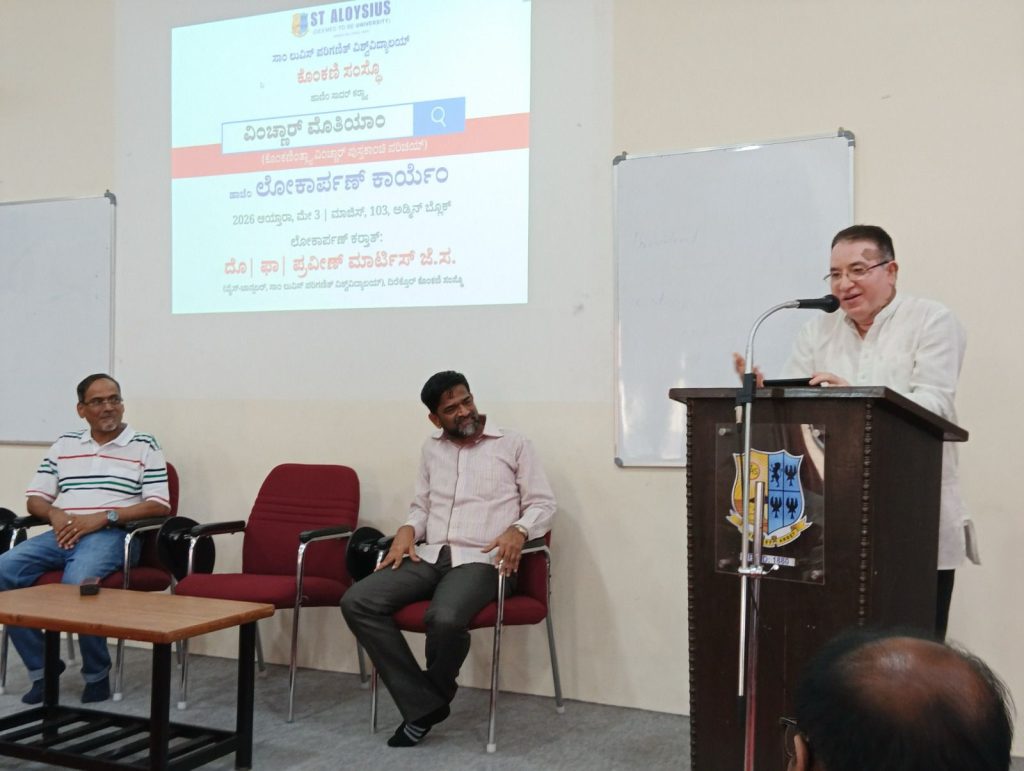
“The survival of any language’s literature depends on its readers,” remarked Dr. Fr. Praveen Martis, Vice-Chancellor of St Aloysius University, as he inaugurated the new video series Vinchnar Motiyam (Selected Pearls) at the University’s Konkani Institute.

The initiative aims to revive the declining reading habit in Konkani by introducing a new medium. Through this series, readers will share their reflections on their favorite literary works. Episodes will be broadcast on the University’s official YouTube channel on the first and third Saturday of every month, serving as a valuable resource for students and teachers engaged in Konkani literary studies.

For over 46 years, the Konkani Institute has been dedicated to the promotion of Konkani language and literature. In the past year, it has successfully hosted Bolkawv (Balcony), a unique program that engaged audiences in literary discussions. The new Vinchnar Motiyam series builds on this legacy, offering readers a platform to connect with classic works.

Dr. Martis also highlighted that the Institute has been publishing the research journal Amar Konkani for the past 44 years. Under the leadership of Dr. Fr. Vijay D’Souza, a new Konkani language research project is set to begin shortly.

Introducing the program’s framework, Dr. Alwyn D’Souza, advisor to the Konkani Institute, explained the design and vision behind Vinchnar Motiyam. He expressed confidence that the series would nurture a culture of reading. He further revealed that another upcoming series will simplify literary criticism theories for readers.

The inaugural event was hosted by noted writer and journalist H. M. Pernal, who welcomed the gathering and anchored the program. Pinto Vamanjoor proposed the vote of thanks, with assistance from Ms. Vanitha.

Online Video Magazines (OVMs) are organized around different locations and themes.

Global TV OVM (globaltv.in/ovm)

NV Paulose. Chairman, Global TV +98441 82044

An Online Video Magazine OVM is a digital publication format similar in concept to a Special Supplement in newspapers. While Supplements focus on events or occasions, OVMs are organized around different locations and themes. Each edition of an OVM highlights a specific place, such as a Global City, Campus, or a Specific Historic Place.

Special Supplements on Occasions | OVMs on Locations | Global TV innovation

In addition to location-based storytelling or highlights, it also includes thematic coverage such as people, education, health, environment, travel, career, or culture, which allows a broader and more meaningful exploration of the subject. OVM is a combination of all forms of media presentation, including newspapers, magazines, video, audio, short text, images, and interactive elements, packaged into a unit and presented into a micro-URL like GLOBALTV.IN/643 on an instant speed.

Just as special newspaper supplements provide in-depth coverage of a theme or celebration, OVMs offer immersive digital storytelling that helps viewers experience both places and themes more vividly in one unified format. Content gets 24/7 basis additions and modifications.

OVM has a Collective advantage wherein the Wheel Creation is not repeated at every instance. Everyone enjoys the benefits of Teamwork.

Anil Lobo | The Leadership Journey of Transformation at Mangalore Catholic Co-operative Bank | Global TV

When Professionalism Becomes Your Core, Transformation Follows | Global TV

NV Paulose, Chairman, Global TV +91 98441 82044

Transformation in institutions is often discussed as if it begins with strategy, policy, or financial restructuring. In reality, it begins much deeper. It begins when professionalism is no longer an external expectation but an internal standard. Change begins to unfold naturally when it becomes part of a leader’s thinking, behaviour, and discipline.

Mangalore Catholic Cooperative Bank. A century old institution rooted in community service has, in recent years, redefined its direction and performance. At the center of the shift is Sahakari Ratna Anil Lobo, whose leadership has quietly but firmly reshaped the bank’s identity.

MCC Bank was established in 1912 with a purpose of serving people who needed accessible and reliable financial support. Over the decades, it built credibility and trust across Dakshina Kannada and surrounding regions. However, like many long-standing cooperative institutions, it reached a stage where stability began to outweigh progress. Growth slowed, expansion paused, and modernization lagged behind the pace of the wider banking sector. When Anil Lobo assumed leadership, he did not enter as an outsider with theoretical ideas. He came with years of experience as a director within the same institution.

He understood its systems, its strengths, and its limitations. More importantly, he understood that real change would not come from isolated decisions but from a consistent shift in standards. His approach was simple in principle but demanding in practice. Professionalism had to become the foundation of every function within the bank.

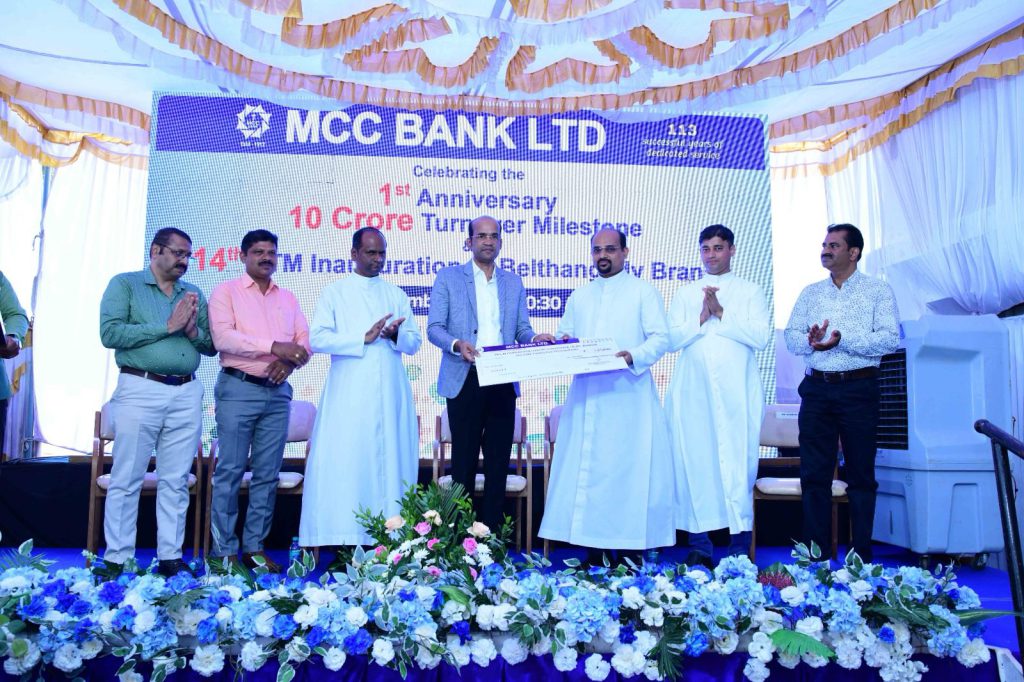
One of the earliest signs of this shift was visible in expansion. For over two decades, the bank had seen little movement in terms of branch growth. Under his leadership, that changed with intent and clarity. New branches were opened in key locations, increasing the total network significantly within a short period. This expansion was not carried out for visibility alone. It reflected renewed institutional confidence. It allowed the bank to reach new communities, strengthen its regional presence, and demonstrate that it was ready to grow again.

Expansion, in this context, became a signal that the bank had moved out of inertia and into action. Financial performance began to reflect and the bank recorded its highest ever net profit, crossing ten crore rupees. Total business exceeded fifteen hundred crore rupees. These figures were not the result of aggressive risk taking. They were built on structured improvements in lending, monitoring, and recovery.

What stands out in this phase is the balance that was maintained. Growth did not come at the cost of stability. The bank continued to hold strong financial indicators, which included

  • A capital adequacy ratio above regulatory expectation
  • A controlled and low level of nonperforming assets (NPA)
  • Consistent profitability supported by disciplined operations

These are not small achievements in the cooperative banking space. They reflect a system that is not only growing but doing so with responsibility and control. At the same time, modernization was treated as essential, not optional. Banking had already entered a digital phase, and any delay in adaptation would have widened the gap between customer expectations and service delivery. Recognizing this, Anil Lobo ensured that technology was integrated across operations.

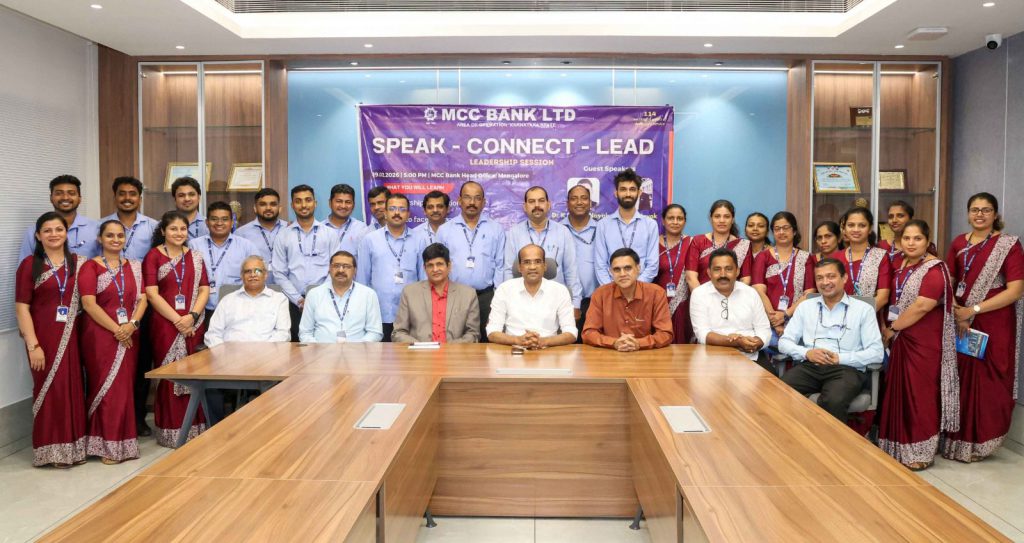
Core banking systems were implemented across all branches. Customers were given access to digital transaction facilities, including online transfers and internet banking. ATM services were expanded, and further digital services were prepared for rollout. These changes improved efficiency internally and enhanced trust externally.

However, systems alone do not define an institution. The real measure lies in how it connects with people. In this area, the leadership approach remained direct and grounded. Customer interactions were not left to routine processes. Meetings were organized across branches, giving customers an opportunity to voice concerns and share feedback.

This created a different kind of relationship between the bank and its customers. It reduced distance. It replaced assumption with understanding. Most importantly, it signalled that the institution was willing to listen and respond. A similar focus was placed on the internal team. Employees were not expected to adapt without support.

A structured training environment was introduced to improve skills and align staff with evolving expectations. Regular reviews ensured that performance was monitored and guided. Employee welfare was also given importance. Health and accident insurance coverage provided a sense of security. These measures contributed to a work environment where employees felt supported, which in turn influenced the quality of service delivered. Even as the bank focused on growth and efficiency, it did not move away from its social responsibility.

Financial assistance programs continued to support families in need, covering areas such as education, healthcare, and essential life expenses. This balance between financial discipline and social commitment preserved the original spirit of the institution.

Recognition followed these efforts in a natural way. In the board elections, the leadership panel was elected without opposition, reflecting strong confidence among members. The conferment of the Sahakara Ratna Award by the Government of Karnataka further acknowledged the impact of this leadership.

Yet, beyond awards and numbers, the real transformation lies in a shift that is less visible but more powerful. MCC Bank moved from functioning as a traditional institution maintaining stability to operating as a focused organization pursuing growth with clarity and discipline.

Looking ahead, the direction remains steady. Plans for further expansion are already in place. Digital services will continue to improve. Support for small businesses and entrepreneurs will expand. The objective is not only to increase scale but to strengthen relevance in a changing financial environment.

The leadership journey of Anil Lobo offers a clear lesson. Institutions do not transform because of occasional effort. They transform when standards change at the core. When professionalism becomes part of everyday thinking, it influences decisions, shapes systems, and builds trust over time. This is not a dramatic process. It is steady, consistent, and often quiet. At MCC Bank, professionalism is a culture. And once it became a culture, transformation is something inevitable.