All posts by admin

About admin

Chairman of Global TV | Excellent Writer | Exceptional PR Skills | Author of Six books | MASTER HEALER | +91 98441 82044 |

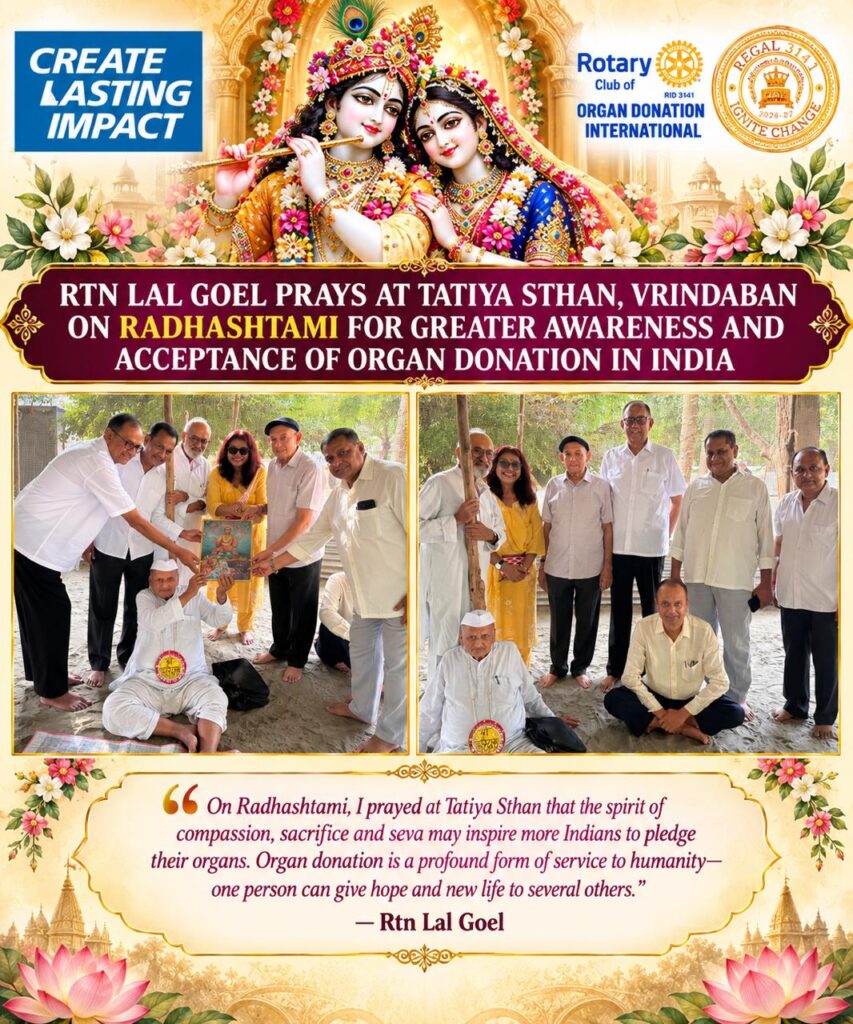
ROTARIAN LAL GOEL PRAYS AT TATIYA STHAN, VRINDABAN ON RADHASHTAMI FOR GREATER AWARENESS AND ACCEPTANCE OF ORGAN DONATION IN INDIA

“From Bhakti to Seva, from Prayer to the Gift of Life”

Vrindaban (Mathura), 19 September 2026: On the auspicious occasion of Radhashtami, Rotarian Lal Goel, Founder & Charter President of the Rotary Club of Organ Donation International (RCODI) and Chairman of Organ Donation India Foundation & GYAN, offered prayers and Darshan at the revered Tatiya Sthan, Vrindaban, seeking divine blessings for greater awareness and acceptance of organ donation in India.

Radhashtami, celebrated as the appearance day of Sri Radha, holds special significance in the spiritual tradition of Braj. Darshan at Tatiya Sthan on this sacred day is especially meaningful to devotees, as the site is associated with the devotional traditions of Swami Haridas and the saints of Vrindaban. The sacred surroundings are known for prayer, meditation, devotion and sadhana.

“On Radhashtami, I prayed at Tatiya Sthan that the spirit of compassion, sacrifice and seva may inspire more Indians to pledge their organs. Organ donation is a profound form of service to humanity—one person can give hope and new life to several others.”
— Rtn Lal Goel

Tatiya Sthan: A Sacred Heritage

Tatiya Sthan is an important spiritual site of Vrindaban associated with the Swami Haridas tradition, known for devotion to Sri Radha-Krishna, music, meditation and spiritual practice. Its secluded natural setting and association with saints and sadhana have made it a revered place of devotion in Braj. On Radhashtami, the site assumes particular spiritual significance as devotees gather to offer prayers and seek the blessings of Sri Radha.

Rtn Lal Goel said that the spirit of seva reflected in India’s spiritual traditions can inspire a stronger culture of organ donation. He emphasised that organ donation is not only a medical issue but also a humanitarian responsibility, through which the loss of one life can become an opportunity to save or transform several other lives.

On this occasion Rotation Lal Goel was honoured by Freedom Fighter Shri Ramesh Chand Garg for his selfless service to humanity.

Rtn Deepak Goel, Foundation Chair, RCODI; Rtn Asha Goel; Rtn Sanjay Pathak; Rtn Ravi Sarin, Ann Sadhana Sarin all of the Rotary Club of Organ Donation International, and PP Rtn Mohan Singh Chowdhry of Rotary Club of Mathura, Mr Ashok Chaturvedi, and Mr Girdhari Pathak were present among other dignitaries.

Corrupt Thinking and Pure Thinking (CTPT) | The Quality of What We Watch

Is Your Thinking Manipulating or Manifesting? Is Your Viewership Fruiting or Rotting?

NV Paulose, Chairman, Global TV +91 98441 82044

Corrupt Thinking and Pure Thinking (CTPT) offer two fundamentally different ways of understanding human thought and its consequences. Corrupt Thinking manipulates; Pure Thinking manifests. Corrupt thinking attempts to influence, exploit, or control others to achieve an outcome, often without considering the consequences for human dignity and well-being. Pure thinking, in contrast, begins with clarity of intention, integrity, and an understanding of what is genuinely worthwhile. It seeks to bring meaningful ideas into reality through conscious choices and constructive action. The distinction is not merely between good and bad intentions, but between the way we think, the way we act, and what we ultimately create.

Corrupt thinking often begins when desire takes priority over discernment. A person may become so focused on attention, profit, popularity, or power that other people are reduced to instruments for achieving personal goals. Manipulation then becomes a means of getting results, regardless of whether those results contribute anything meaningful. Pure thinking begins by examining the desire itself: Why do I want this? What am I creating? Who might be affected? Does my intention respect the dignity and freedom of others? These questions establish the foundation for conscious living. Before attempting to manifest something worthwhile, we must purify the thinking process that guides our actions.

Purifying thought does not mean suppressing every desire or pretending that human beings are free from selfish impulses. It means becoming aware of those impulses and refusing to let them govern our decisions unquestioningly. Honesty, self-control, empathy, responsibility, and wisdom help us distinguish constructive ambition from destructive obsession. Pure thinking must also be connected to action: positive thoughts alone cannot produce meaningful change without effort, discipline, and accountability. In this sense, manifestation is not magical wish fulfilment; it is the process of translating clear intentions into purposeful conduct and tangible outcomes. We manifest through what we consistently choose to create.

CTPT also provides a useful lens through which to examine the digital world. When content creators manipulate curiosity, insecurity, attraction, or outrage merely to capture attention, they demonstrate how corrupt thinking can operate within the attention economy. When creators use their talents to entertain responsibly, communicate truthfully, inspire reflection, or enrich people’s lives, they demonstrate how pure thinking can produce constructive outcomes. The same distinction applies to viewers: our attention can reinforce manipulation, or it can support meaningful creativity. This brings us to a fundamental question about our digital habits: Is our viewership cultivating something valuable, or is it gradually diminishing the quality of our thinking? Think about the Media Scenario in India Today.

Is Your Viewership Fruiting or Rotting?

In the age of viral content, viewership has become a currency. A video can collect millions of views within hours, yet leave behind almost nothing of lasting value. Much of today’s attention economy is filled with sensational, provocative, vulgar, or deliberately shocking videos that are designed to attract clicks rather than enrich the viewer. The question, therefore, is not simply whether a video is popular, but whether its popularity is producing something worthwhile. Is our viewership fruiting (developing knowledge, character, creativity, or empathy) or is it rotting, feeding curiosity while weakening our standards? The quality of what we consume deserves serious examination.

The Quality of What We Watch

The first test should be simple: What does this content actually offer? Good content does not have to be serious, educational, or traditionally respectable. Entertainment itself has value. Humour can refresh the mind, stories can deepen empathy, and even light-hearted content can provide healthy relaxation. The problem begins when content depends mainly on indecency, humiliation, exaggerated sexuality, cruelty, misinformation, or manufactured controversy. Such material may be technically attractive and professionally edited, but production quality is not the same as moral or intellectual quality. A polished package can still contain very little nourishment.

Viral dirty videos often succeed because they exploit basic human impulses (curiosity, shock, attraction, envy, anger) and the desire to witness something forbidden. Their creators understand that strong emotional reactions increase sharing and repeated viewing. The result is a strange competition in which content becomes increasingly extreme simply to remain visible. When originality is replaced by provocation, the audience is no longer being invited to think or feel deeply; it is being trained to react. This is where the fundamentals of virtue become important. Self-control, dignity, honesty, respect, responsibility, and moderation are not outdated concepts. They are standards that help us decide whether something deserves our attention.

A useful way to judge quality is to ask what remains after the screen is turned off. Does the viewer remember an insight, a useful skill, a beautiful idea, a meaningful story, or a moment of genuine joy? Or does the experience disappear almost immediately, leaving only the desire for another stimulus? Content that constantly demands stronger sensations can create an appetite without satisfying it. Like junk food for the mind, it may be consumed quickly and repeatedly while offering little nourishment. This does not mean every minute of entertainment must teach a lesson. It means that a healthy media environment should contain more than stimulation.

Who Is the Target Audience?

The second question concerns who is being targeted. Online platforms can make content available to people of almost every age, background, and level of maturity. Yet sensational material frequently finds its strongest audience among young people, who are still developing their understanding of relationships, sexuality, dignity, responsibility, and self-worth. When provocative material is repeatedly presented as normal entertainment, it can quietly influence expectations about how people should look, behave, speak, or treat one another. What begins as casual viewing can become a model for attitudes and behaviour.

Creators and platforms also know that audiences are not passive. Every click provides information about what attracts attention. Algorithms then recommend similar material, creating a feedback loop: provocative content receives attention, attention produces more provocative content, and repeated exposure makes that content appear increasingly normal. The responsibility therefore does not belong only to creators. Viewers are participants in the media economy. Our choices tell platforms what we want more of. If we repeatedly reward material that humiliates people or reduces human beings to objects, we should not be surprised when such material multiplies.

This is where virtue becomes practical rather than theoretical. Temperance teaches us not to surrender control to every impulse. Respect reminds us that people appearing on a screen are human beings rather than objects for consumption. Discernment helps us distinguish popularity from genuine value. Responsibility reminds us that sharing content can extend its influence beyond our own screen. And wisdom asks a larger question: not merely “Can I watch this?” but “Is watching this making me a better version of myself?” Freedom without judgment can easily become another form of dependence.

Purpose and Impact

The third question is perhaps the most important: What is the purpose of the content, and what does it do to its audience? There is nothing inherently wrong with seeking views. Creators need audiences, and successful entertainment can provide livelihoods, cultural expression, and community. The problem occurs when attention becomes the only objective. If the purpose is simply to generate clicks at any cost, then moral boundaries become obstacles rather than principles. The viewer becomes a number, curiosity becomes a commodity, and human attention becomes something to extract rather than something to respect.

The impact of this culture can extend beyond individual viewing habits. When low-value material repeatedly receives enormous attention, it influences what creators produce, what advertisers support, and what platforms promote. Meanwhile, thoughtful journalism, educational work, artistic experimentation, and constructive social commentary may struggle for visibility because they cannot always compete with instant outrage or sensationalism. A society does not merely consume its media; it gradually becomes accustomed to the standards that its media normalizes. If vulgarity receives constant applause while integrity receives little attention, our collective sense of value can slowly become distorted.

Summary of Manifestation and Viewership

The question “Is your viewership fruiting or rotting?” is a question about what we are cultivating within ourselves. Attention is not neutral. What we repeatedly watch can shape our expectations, emotions, habits, and even our understanding of other people. We do not need to reject entertainment or become suspicious of everything popular. We need stronger standards. Before clicking, sharing, or watching again, we can ask: Is this creative or merely provocative? Is it respectful or degrading? Does it leave me enriched or merely stimulated? Does its popularity reflect genuine value? A fruitful media culture will still laugh, entertain, surprise, and challenge us, but it will not sacrifice human dignity simply to gain another million views.

KONKANIZ | a collective platform for the Konkani speaking communities spread across the globe

COLLECTIVE PLATFORM LAUNCHED TO UNITE KONKANI COMMUNITIES

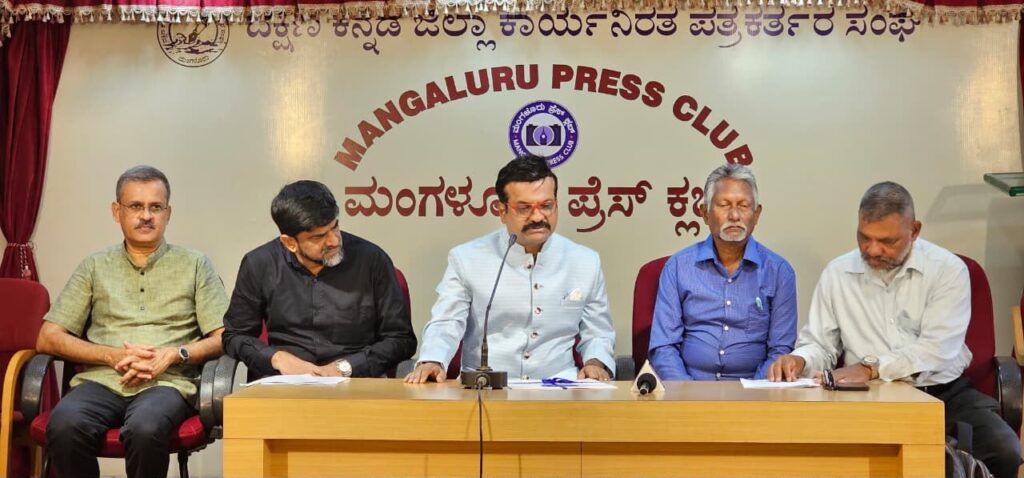
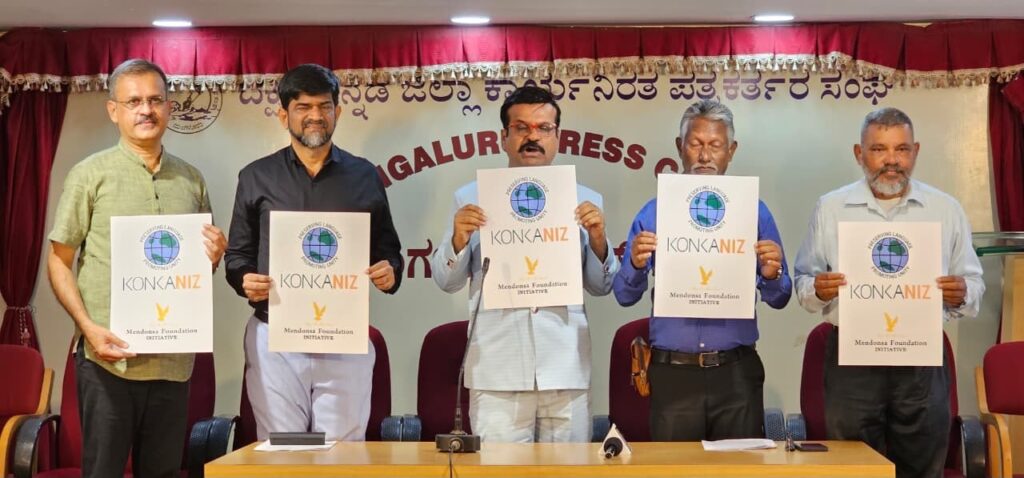
KONKANIZ, a collective platform for the Konkani speaking communities spread across the globe was launched in Mangalore today, in the presence of dignitaries from Konkani speaking communities.

The KONKANIZ community driven platform, with the active support of Dr Vivek Mendonsa of Mendonsa Foundation, seeks to unite the Konkani speaking communities on a single platform and build bridges between the people divided by dialects, scripts and geographical boundaries and strengthen the common shared bonds by promoting spoken language, cuisine, music, dance, films, sports and cultural heritage.

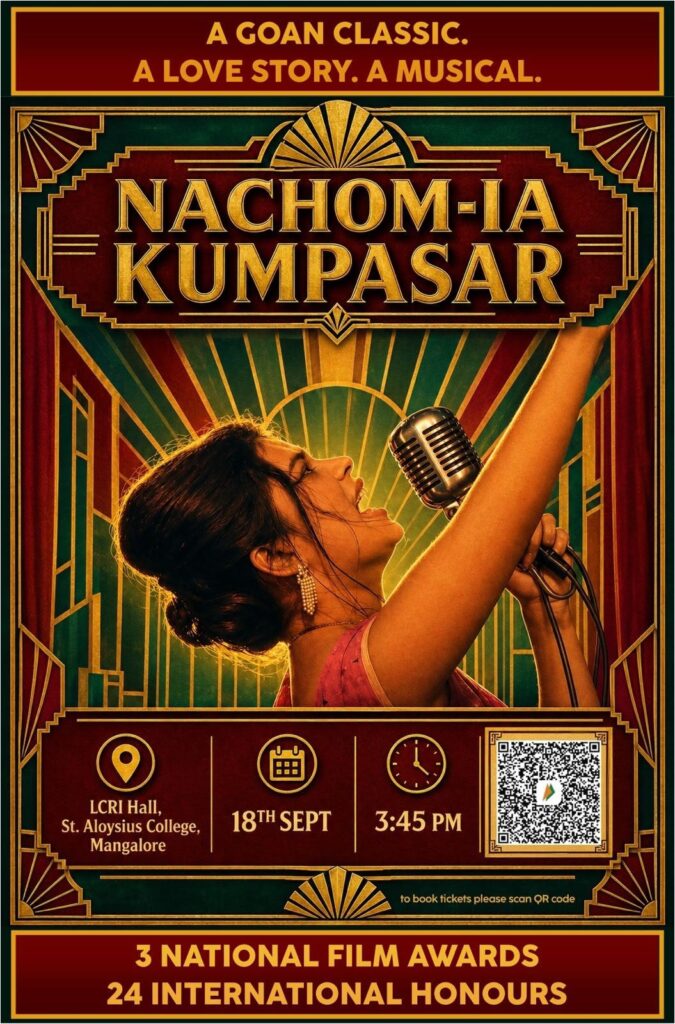
As a precursor to the broader vision of building bridges of lasting bonds of unity through creative expression, the Department of Konkani, St Aloysius (Deemed to be University) will screen the internationally acclaimed Konkani film Nachom-ia Kumpasar at LCRI Hall, University Campus on Friday, 18th September 2026 at 3.45 pm.

The screening is being organised under the leadership of Prof. Flora Castelino, Head of the Department of Konkani, in association with Mr Rex Fernandes, and Mr Bardroy Barretto, the film’s director, writer and producer.

Produced by Goa Folklore Productions, Nachom-ia Kumpasar is among the most celebrated films in the history of Konkani cinema. The film has received 24 international honours, 3 National Awards and 10 Goa State Awards. It was also recognised at the London Indian Film Festival and celebrated at several prestigious film festivals worldwide.

Set against Goa’s vibrant music scene of the 1960s and 1970s, the film draws inspiration from the lives and music of legendary Goan musicians. Through memorable Konkani songs, powerful performances and evocative storytelling, it pays tribute to an extraordinary generation of Goan musicians whose contribution took Konkani music far beyond India’s shores.

The screening forms part of a broader cultural vision to bring the people of Goa and Karnataka closer together. Though the two states possess distinct identities and traditions, they are connected by centuries of shared history, the Konkani language, migration, music, faith, cuisine and family ties.

Speaking about the initiative, Prof. Flora Castelino said:

“Language and culture have the power to build bridges between people. Through cinema, drama, literature, music and other creative expressions, we want the younger generation to understand and appreciate the deep cultural relationship between Goa and Karnataka. Nachom-ia Kumpasar is an ideal film with which to strengthen this dialogue.”

Mr Rex Fernandes said:

“This film is not merely entertainment; it is a tribute to Konkani music, musicians and the cultural memories of an entire generation. We are delighted that the film is being presented at St Aloysius, an institution that has consistently supported Konkani language, literature and culture.”

Mr Bardroy Barretto added:

“Goa and Karnataka may have distinct identities, but we share so much, our language, music, food, memories and, above all, our people. These connections have endured across generations and geography.

I believe cinema can help us rediscover what unites us. Nachom-ia Kumpasar is rooted in the memories and music of Goa, but its emotions belong to a much larger Konkani world. I hope this screening opens the door to more films, music, conversations and collaborations between Goa and Karnataka.”

The organisers envision this screening as part of a continuing Goa–Karnataka cultural exchange involving films, drama, theatre, music, dance, food festivals, literature, heritage programmes and sporting activities. Such engagements can encourage students, artists, cultural organisations and citizens from both states to meet, collaborate and celebrate their shared heritage.

Come, let us celebrate our distinct identities, rediscover our shared roots and build a lasting cultural bridge between Goa and Karnataka.

Dr. Vivek Mendonca, Rex Fernandes, Antonio Fernandes, HM Pernal and Titus Noronha were present

Ashwini GN | The Courage to Stand, and the Heart to Help Others Stand

From Technology Leadership to Human Transformation

NV Paulose, Chairman, Global TV +91 98441 82044

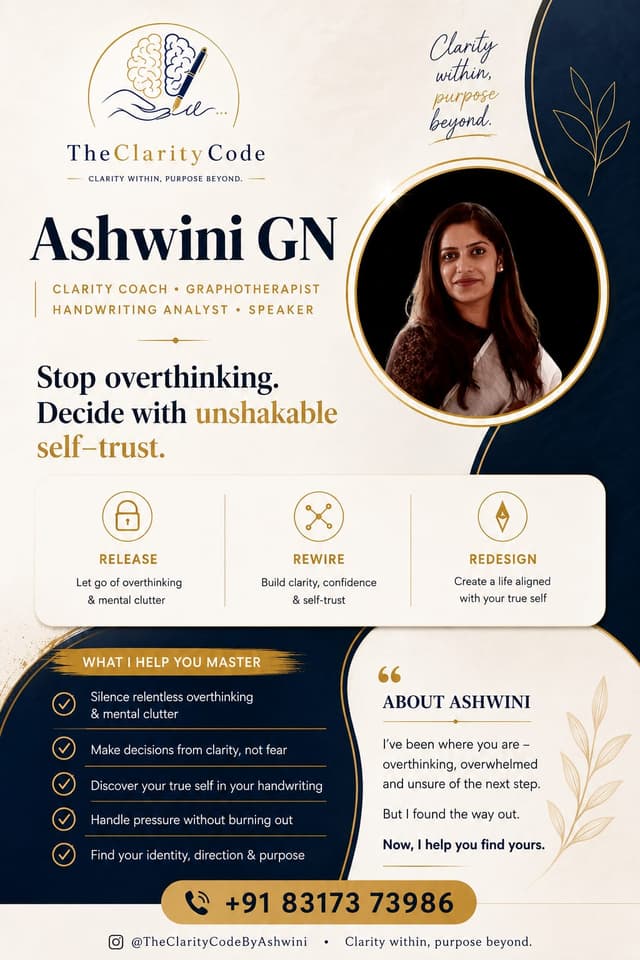
Some people spend their lives trying to overcome fear. Some learn to live with it. And then there are those who face it, understand it, work through it, and emerge stronger. Ashwini belongs to that third category. Her journey is not simply about professional achievement; it is about continually choosing growth over comfort and courage over hesitation. From building a 17-year career in technology to mentoring people into leadership and then stepping into coaching, she has repeatedly challenged herself to move beyond familiar ground. Today, her purpose is larger than personal success: she wants to guide one million youngsters to stand on their own, believe in themselves, and develop the confidence to face life independently.

Ashwini’s professional journey gives her story a strong foundation. She works at leadership level in the IT industry and has spent years understanding technology, innovation, teams, and people. She has also groomed many professionals from the early stages of their careers into leadership roles. Her own coaching platform, The Clarity Code, reflects the connection between these two worlds. She describes her work as helping working professionals caught in cycles of overthinking, burnout, and self-doubt find greater clarity. Her approach combines handwriting analysis with EFT and Ho’oponopono, under the philosophy of “Release. Rewire. Redesign.”

What makes this transition particularly interesting is that Ashwini is not approaching these struggles as an outsider. She understands the demands of professional life because she continues to live that life herself. The Clarity Code describes her as someone who understands what goes into leadership, work pressure and burnout from personal experience. Her coaching journey therefore appears less like a sudden change of career and more like an expansion of something she has already been doing for years: observing people, developing them, recognising potential and helping them move forward.

Her interest in graphology adds another fascinating dimension to that ability to observe. She encourages people to look beyond what is immediately visible. Her method examines features such as pressure, slant, spacing, and baseline, but importantly, handwriting patterns are interpreted in context rather than in isolation and are not presented as a diagnostic or predictive tool. For Ashwini, handwriting becomes a starting point for conversation and self-reflection. Her message is simple but powerful: what appears obvious on the surface may not tell the whole story.

That idea connects closely with the messages she shares about people. Messy handwriting, for instance, should not automatically be dismissed as laziness; sometimes, she suggests, the mind may simply be moving faster than the hand. Similarly, large handwriting is not automatically confidence, just as small handwriting is not automatically shyness. These observations reflect a larger philosophy: do not judge a person only by what you see. Someone who appears quiet may possess tremendous focus. Someone who appears confident may be struggling internally. Someone who looks as though they have everything under control may actually be exhausted from holding everything together.

Seeing the Person Behind the Fear

Perhaps this is where Ashwini’s work becomes most relevant to young people. Fear rarely announces itself clearly. Sometimes it appears as procrastination. Sometimes as overthinking. Sometimes as dependence on other people’s opinions. Sometimes as the inability to make a decision. And sometimes it hides behind achievement itself. A youngster can be talented and still doubt their ability. They can be intelligent and still be afraid to speak. They can have opportunities and still lack the confidence to take them. Ashwini’s mission is to help people recognise those barriers and move beyond them.

Her work already includes personal-development workshops for college students, speaking sessions and brain-development sessions for children and young people. The Clarity Code lists workshops specifically for college students and children aged 7–16. This is important because her vision of reaching youngsters is not merely an idea for the future; there are already indications of her engagement with younger audiences. Her goal is to help young people develop the inner strength to make decisions, understand themselves, and eventually stand independently.

There is a beautiful connection here with something that we see while we are in an interaction with Ashwini: sometimes we cannot see our own calibre, while another person may be able to recognise something in us that we have not yet understood ourselves. When somebody fails to recognise that potential, it is not necessarily the individual’s failure. That thought seems particularly relevant to Ashwini’s mission. Perhaps one of the most valuable things a coach can do is not give a person a new identity, but help them discover the strength and capability already present within them.

The impact described by people who have worked with Ashwini also points in this direction. Testimonials describe clients moving from self-doubt toward greater self-trust, from constant overthinking toward greater presence, and from burnout toward healthier boundaries and balance. People learn to make decisions with clarity and become more independent. Someone breaks out of an endless cycle of overthinking and begins to live more fully in the present. These are not dramatic overnight transformations; they are changes in how people relate to themselves and their everyday lives.

That may explain why Ashwini’s vision of guiding one million youngsters is so meaningful. She is not simply talking about producing high achievers. Her goal is broader: helping young people become capable of standing on their own. Independence requires more than qualifications. It requires confidence, emotional awareness, the ability to make decisions, the courage to handle failure, and the willingness to keep moving when circumstances become difficult. These are qualities that can influence an entire lifetime.

From One Life to One Million

My conversation with Ashwini highlighted the importance of people coming together. People coming together itself is a form of success. The power of listening as a way of building confidence, communication, calmness, and concentration needs to be understood first before we discuss it with others. These ideas fit naturally with the kind of community coaching Ashwini hopes to develop. Her ambition is not simply to work one-to-one forever; she wants to create spaces where more people can learn, share, listen and grow together.

There is something courageous about choosing such a large mission. One million is an enormous number, but every meaningful transformation begins with one person. One youngster overcoming the fear of speaking. One student trusting their own decision. One professional setting a boundary instead of burning out. One person learning that asking for help is not weakness. One individual discovering that their circumstances do not have to dictate their future. When enough of these individual transformations come together, the number becomes a movement.

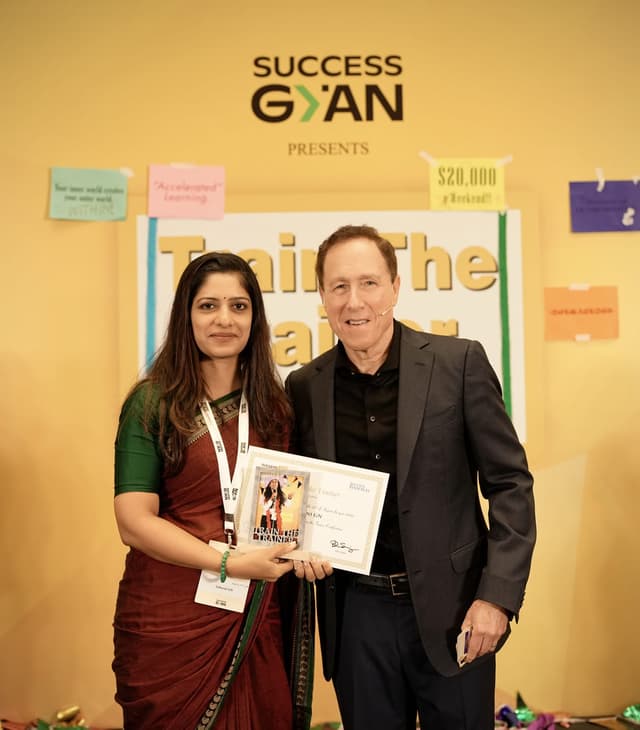
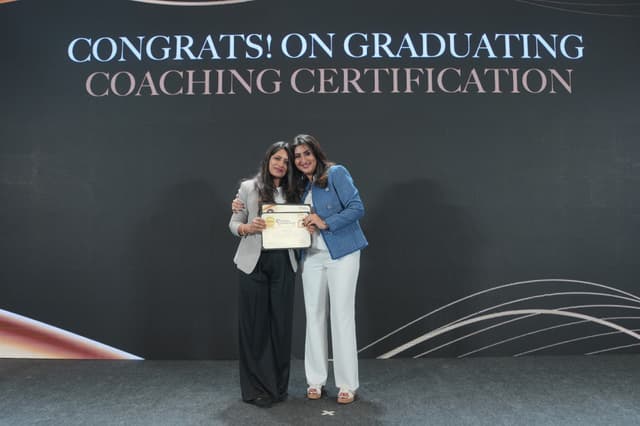
Ashwini’s own story gives weight to that mission. She has not abandoned the discipline of her professional world; she has carried that discipline into a new purpose. She continues to learn, add skills and explore ways of understanding people more deeply. Her qualifications include Master Practitioner of Graphology, Certified Graphotherapist, training as a Handwriting Analyst, EFT Practitioner, and Certified Trainer under Blair Singer. But perhaps the most important qualification is harder to put on paper: the willingness to keep learning and to use that learning in service of others.

Ashwini’s story is not just about handwriting, technology, coaching or even one million people. Those are parts of a much larger picture. At its centre is a woman who has repeatedly chosen to face what lies ahead rather than remain limited by fear. She has built a career, helped others grow, invested in understanding human behaviour and now wants to use that experience to help a younger generation discover its own strength. Her message is one of courage and responsibility: once you learn to stand, help someone else stand. And perhaps that is the most beautiful part of her vision. She does not want one million people to depend on her; she wants one million people to become strong enough to depend on themselves. That is a mission that begins with one person, one conversation, one moment of clarity, and then keeps moving forward, one life at a time.

“I trust myself, take decisions with clarity, and feel proud of the person I’m becoming.”

I just wanted to take a moment to thank you. Your coaching has truly helped me increase my confidence and step into an independent, new version of myself. I used to doubt myself so much and rely on others for everything. But now, I trust myself, take decisions with clarity, and feel proud of the person I’m becoming. This transformation is priceless. Thank you for believing in me and guiding me so well.

Lonely Homes into Emotional Wellness Centres | Sanctuaries for digital detoxes, mindfulness retreats, and cultural reconnection

Globalization of Cities and Villages and the Conversion of Lonely Homes into Emotional Wellness Centres

NV Paulose, Chairman, Global TV +91 98441 82044

The traditional narrative of globalization has long been one-sided, disproportionately favoring the rapid expansion, digitization, and economic dominance of corporates. However, this hyper-globalization of cities has birthed a profound paradox: as our urban environments become more connected and technologically advanced, their inhabitants increasingly suffer from severe isolation, digital fatigue, and chronic burnout. Meanwhile, on the other end of this migratory spectrum, villages are experiencing their own quiet crisis. As youth flock to the cities for economic opportunities, rural landscapes are left with aging populations and “lonely homes” vacant ancestral properties echoing with fading memories.

The future of sustainable human development relies on a paradigm shift: the reciprocal globalization of cities and villages. In this new model, cities and villages do not compete; they serve complementary roles on the global stage. While cities remain the hubs of commerce, innovation, and technological acceleration, villages and cities that are not in the rush are positioned to become the global sanctuaries for emotional restoration and psychological grounding. By converting lonely rural and urban homes into Emotional Wellness Centres, we can forge a symbiotic relationship between the exhausted corporate and the tranquil villager. Coupled with a conscious reclamation of our digital habits and the rise of advanced psychological tools, this movement offers a transformative blueprint for community healing and unprecedented career opportunities.

1. Repurposing “Lonely Homes”: The Architecture of Rural Healing

A balanced globalization recognizes that rural or urban life is no longer a sign of underdevelopment, but a highly sought-after global resource. Across the world, thousands of ancestral homes stand empty or house isolated elders. Converting these “lonely homes” into Emotional Wellness Centres offers a profound solution to the dual crises of urban burnout and rural decay.

These transformed spaces act as sanctuaries for digital detoxes, mindfulness retreats, and cultural reconnection. Unlike the clinical, sterile therapy offices found in globalized cities, an ancestral home surrounded by nature offers innate psychological grounding. The architecture of the home, the rhythm of the village, and the silence of the landscape become active components of the therapeutic process. Furthermore, this model revitalizes the village micro-economy organically. Instead of relying on destructive industrialization, the village thrives on an economy of care.

Crucially, this system cures the isolation of the rural and city elderly. Rather than being left behind by modernization, local elders are reintegrated into the community as cultural guides, storytellers, and hosts. They provide visiting urbanites with multi-generational wisdom and a profound sense of rootedness. Through this lens, the village globalizes not by mimicking the city, but by offering the very peace the city has lost, making it a premier destination for deep, restorative emotional healing.

2. Wealth from Wasted Time: The Role of Positive Media

To physically move people from urban burnout to rural wellness, we must first alter their mental landscapes. The globalized city is an engine of productivity, yet it is also where the most time is squandered. Millions of hours are lost daily to the passive consumption of negative news, doomscrolling on commutes, and idle digital distraction. True wealth is generated when we reclaim these interstitial moments and intentionally redirect our attention toward emotional and intellectual growth, turning wasted time into compounding personal assets.

By shifting the focus of media from fear-mongering to Appreciative Inquiry and solutions-based storytelling, such networks champion the “productive utilization of time, devices, and creativity.” Global TV act as the connecting ground and the catalyst for this change. By broadcasting the inspiring stories of these revitalized lonely homes, the wisdom of rural elders, and the therapeutic work being done in villages, positive media transforms wasted screen time in the city into a journey of self-discovery. It inspires urban individuals to log off, step away from their high-stress environments, and physically visit these spaces of healing. This creates a seamless loop: healthy, intentional digital consumption in the city directly drives the real-world emotional wellness economy in the village.

3. A Clear Roadmap: Career Opportunities for Beginners in NLP Therapy

As the reciprocal globalization of cities and villages accelerates, the demand for skilled practitioners who can bridge the gap between urban stress and rural peace is skyrocketing. Neuro-Linguistic Programming (NLP) introduces a psychological approach that analyzes the internal strategies of the mind to reframe trauma, overcome burnout, and achieve personal goals. It is highly effective in these retreat settings. For beginners looking to build a career in NLP Therapy within this new ecosystem, here is a clear roadmap:

Phase 1: Foundation and Urban Contextualization Your journey begins with acquiring accredited certification at the NLP Practitioner and Master Practitioner levels. Focus your studies on techniques that address modern urban ailments: anxiety reduction, sensory overload, and corporate burnout. A strong grasp of the “NLP Communication Model” is essential, as you will be treating city-dwellers whose internal representations of the world have been distorted by high-stress, hyper-competitive environments.

Phase 2: Contextual Application in Rural Retreats Standard NLP is often practiced in rigid, hourly clinic sessions. However, working in a rural Emotional Wellness Centre allows for immersive, environmental therapy. Beginners must learn to integrate NLP techniques with nature. For instance, use “anchoring” techniques while clients walk through a quiet forest, or utilize “spatial reframing” in the open courtyard of an ancestral home. The physical space of the village becomes your co-therapist.

Phase 3: Collaboration and Niche Building Position yourself as a “Wellness Retreat Facilitator.” Work alongside the local elders, blending your modern NLP techniques with their traditional wisdom and storytelling. This synthesis creates a unique therapeutic niche that honors the heritage of the village while addressing the psychological needs of the global citizen.

Phase 4: Content Creation for Positive Media To attract clients from the city to your rural center, leverage Media by creating Storytelling Videos narrating the success stories of people originally from the village and are settled elsewhere. Connecting people to their roots through storytelling sessions will become a career opportunity for many people in the cities and villages. Students can record the stories. Educated Housewives can do Amateur Editing and professional studios can do the Professional Editing part. Plenty of career opportunities can be created in the spectrum of Media to connect people to their native roots.

4. AI (Appreciative Inquiry) Based Social Constructionism: Building the Communities of Tomorrow

Social constructionism posits that our reality is created through our shared language, interactions, and media. If we constantly discuss what is broken, we construct a reality of despair. Appreciative Inquiry (AI) turns this on its head. It is a transformational philosophy that focuses on what is working, seeking out the positive core of individuals and communities. For beginners looking to build a career in community wellness and positive media, mastering Appreciative Inquiry offers a profound roadmap to bridging the gap between urban exhaustion and rural healing.

Step 1: Mastering Context Engineering and Positive Questioning You do not need to be a traditional therapist to thrive here; you need to be a “context engineer.” In Appreciative Inquiry, human systems move in the direction of the questions they ask. Your first step is learning to design and ask unconditional, positive questions. Instead of dwelling on a client’s deficits or urban trauma (“What is wrong with your city life?”), you learn to facilitate frameworks that focus on their peak experiences and future aspirations (“What does a day of total peace look like for you?”).

Step 2: Value-Based Matchmaking for Wellness A massive career opportunity lies in becoming an Appreciative Facilitator who connects urban individuals with the exact rural Emotional Wellness Centre suited to their needs. Rather than using cold algorithms, this is done through deep, value-based discovery. By engaging an exhausted urban professional in an Appreciative Inquiry interview, you uncover their core values and pair them with a remote village whose specific cultural strengths, elder wisdom, and natural pace perfectly match their psychological needs.

Step 3: Scaling Positive Journalism through Appreciative Storytelling. Working with Global TV, you can utilize the frameworks of Appreciative Inquiry to revolutionize journalism. Instead of traditional reporting that hunts for conflict, you become a story-gatherer who actively seeks out narratives of rural revitalization, ancestral wisdom, and human excellence. By interviewing rural elders and visiting urbanites using the Appreciative Inquiry model, you naturally unearth stories of hope. These stories ensure that the globalization of both cities and villages is driven by a narrative of healing and inclusivity.

Step 4: Creating “Glocal” Support Ecosystems Finally, beginners can use Appreciative Inquiry to maintain the connection between the urban client and the rural wellness center long after the retreat ends. By building community forums (both digital and physical) that moderate themselves based on Appreciative principles, you ensure the visitors remain connected. When the visitors return to the city, their continued interactions are guided by future-focused, empowering dialogues rather than complaining. This creates a lasting “glocal” (global and local) network, proving that human empathy, guided by the right questions, is the ultimate bridge between the rapid pulse of the city and the healing heart of the village.

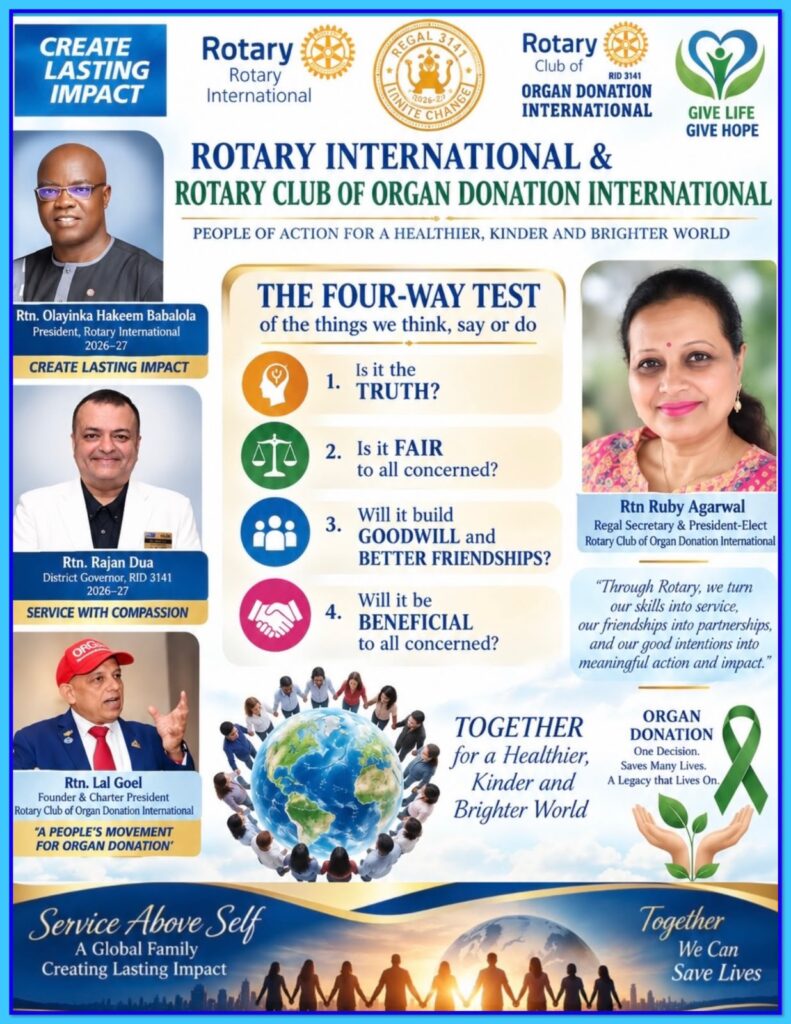
ROTARY INTERNATIONAL & ROTARY CLUB OF ORGAN DONATION INTERNATIONAL

By Rtn Ruby Agarwal, Regal Secretary & President-Elect, Rotary Club of Organ Donation International

What is Rotary?

Rotary is much more than a club, a meeting, or a membership. Rotary is a global family of people who come together with a shared passion—to make a difference and improve lives.

Today, Rotary has more than 1.2 million members, over 35,000 clubs, and a presence in more than 220 countries and geographical areas. Yet, despite this enormous global network, Rotary begins with something very simple—people coming together to serve their communities.

The story of Rotary began on 23 February 1905 in Chicago, when Paul Harris, a young attorney, brought together professionals from different backgrounds. His idea was simple yet visionary: create a place where people could build meaningful relationships, exchange ideas and, most importantly, use their relationships, knowledge and skills for service.

That vision grew into a worldwide movement.

Rotary’s guiding motto is:

“Service Above Self.”

These three words beautifully capture the spirit of Rotary—putting service, humanity and the greater good above personal interests.

The Power of Rotary

Rotary gives us many different avenues through which we can serve. We can contribute within our clubs, through our professions, in our communities and internationally.

Rotary also invests in the next generation through programmes such as Interact, Rotaract, RYLA and Youth Exchange, helping young people develop leadership, confidence, international understanding and a spirit of service.

Rotary’s areas of focus address some of humanity’s most pressing challenges—promoting peace, fighting and preventing disease, providing clean water and sanitation, supporting mothers and children, education, and helping communities develop stronger local economies.

Perhaps one of Rotary’s most inspiring achievements is its fight against polio.

Since 1985, Rotarians have worked alongside governments, health organisations, communities and global partners to help eradicate polio. Rotary’s contribution to the global fight against polio demonstrates what is possible when ordinary people come together with determination, resources and a common purpose.

It teaches us an important lesson:

One person may begin an idea, but a united community can turn that idea into a movement.

You may sometimes ask yourself, “What difference can I make?”

Rotary’s answer is simple: You can make a difference—and when we join hands, that difference can become extraordinary.

Through Rotary, we meet people from different professions, cultures, backgrounds and parts of the world. We develop friendships, leadership and communication skills, learn project management, exchange ideas and, most importantly, discover new opportunities to serve.

And perhaps one of the most beautiful things about Rotary is this:

You do not have to be an expert in everything. If you have a heart that wants to serve, you already possess the most important qualification.

The Four-Way Test

Another beautiful principle that guides Rotarians is the Four-Way Test.

Before we say or do something, we ask:

Is it the TRUTH?
Is it FAIR to all concerned?
Will it build GOODWILL and BETTER FRIENDSHIPS?
Will it be BENEFICIAL to all concerned?

Imagine applying these four questions not only in Rotary, but also in our personal lives, our professions, our families and our communities.

What a difference that could make.

As Rotarians, we have the privilege of turning our skills into service, our friendships into partnerships, and our good intentions into meaningful action and lasting impact.

⸻

OUR ROTARY LEADERSHIP

For the Rotary Year 2026–27, Rotary International is led by Rtn Olayinka Hakeem Babalola, President of Rotary International.

Our club is part of Rotary International District 3141, which is led during 2026–27 by Rtn Rajan Dua, District Governor.

District 3141 serves the Greater Mumbai and Mulund areas of Maharashtra and comprises approximately 120 Rotary clubs, along with numerous Rotaract and Interact clubs.

Every Rotary year begins on 1 July and ends on 30 June. The District Governor, supported by a team of volunteer Rotarians, coordinates and supports the clubs, encourages new club development, promotes Rotary’s programmes and represents the district within the Rotary structure.

ROTARY CLUB OF ORGAN DONATION INTERNATIONAL

A Rotary Club Built Around the Gift of Life

Rotary Club of Organ Donation International is a unique Rotary initiative built around a cause that transcends geographical, cultural, religious and social boundaries—the gift of life through organ donation.

The Club was founded three years ago by Founder & Charter President Rtn Lal Goel, with a vision of bringing the power, network and reach of Rotary to the cause of organ donation.

What makes our Club particularly special is that it is the first cause-based e-Club dedicated to organ donation, bringing together Rotarians from across India and around the world.

For us, geography is no barrier.

Our members are united not by a common city or location, but by a common cause and a common commitment—to create a stronger culture of organ donation.

Taking the Message Beyond Boundaries

Our meetings reflect the international character of our Club.

We meet virtually on Zoom every Sunday at 8 PM. Our meetings are also live telecast on YouTube, allowing our programmes, speakers and message to reach audiences far beyond our membership.

But our work does not remain online.

We also conduct organ donation awareness programmes and talks on physical public platforms across India, taking the message directly to communities and encouraging people to have conversations about organ donation.

A Journey of Remarkable Growth

The journey of the Club is itself a story of remarkable growth.

We began just three years ago with 30 members.

Today, we have grown to 123 members.

This growth is more than a number. It reflects the growing recognition that organ donation deserves a much stronger voice in society and that more people are willing to come forward and become ambassadors for this life-saving cause.

The Vision of Our Founder

At the heart of this journey is our Founder & Charter President, Rtn Lal Goel, whose passion, determination and perseverance have helped establish a Rotary platform dedicated exclusively to organ donation.

His vision is clear:

Organ donation should not remain a subject confined to hospitals, doctors and the medical fraternity. It must become a people’s movement.

Because transplantation does not begin in an operating theatre.

It begins with a decision made by a person—and a conversation within a family.

Creating a Culture of Organ Donation

The Club works to create awareness, dispel myths and misconceptions, encourage informed decision-making and promote conversations about organ donation among families and communities.

We believe that awareness is the first step towards action.

A person cannot make an informed decision about organ donation if they have never discussed it, understood it or had their misconceptions addressed.

That is why our mission goes beyond simply asking people to pledge their organs.

We want people to understand the cause, discuss it with their families and make a conscious, informed decision.

Why “International”?

The word “International” in our name reflects our ambition and our belief.

Organ donation is a universal humanitarian cause.

The gift of one person can potentially transform the lives of many others—irrespective of their religion, language, nationality, gender, economic status or social background.

In organ donation, humanity comes before every boundary.

One donor can potentially give the gift of life to multiple recipients and bring hope to many more families.

From Service Above Self to Life Beyond Self

As Rotarians, we believe in Service Above Self.

Our Club seeks to give this principle a very profound meaning:

To give someone the possibility of life even after our own journey has ended.

Organ donation is perhaps one of the most extraordinary expressions of selfless service. It allows a part of our legacy to continue—not in monuments or possessions, but in human lives saved, families reunited and futures restored.

Our message is simple, but powerful:

*ONE DECISION.

SAVES MANY LIVES.
A LEGACY THAT LIVES ON.*

This is Rotary Club of Organ Donation International.

A Rotary Club with a cause.
A cause with a purpose.
And a purpose that can give someone the greatest gift of all—the gift of life.

Listeners Club | listening leads to social construction | the power of social construction

The Power of Listening with a Purpose | Appreciative Listening | Listening as a Career

NV Paulose, Chairman, Global TV +91 98441 82044

Listening is far more than hearing words. Hearing receives sound; listening gives attention, meaning, presence, and direction to what is being communicated. When we listen deeply, we do not merely understand another person, we participate in creating the reality that follows the conversation. In this sense, listening leads to social construction. Families, relationships, organisations, communities, identities, beliefs, and possibilities are continuously shaped through what people say, what others hear, and what they choose to do with what they have heard.

Listening with a purpose is therefore a powerful human practice. It asks a simple but transformative question: “What am I listening for?” We may listen to understand, to heal, to appreciate, to learn, to connect, to create possibilities, or to prepare for the future. The purpose changes the quality of listening, and the quality of listening changes the quality of the relationship and the results that become possible.

Listening Creates Reality

Every conversation has the potential to create something. A child who is repeatedly listened to with respect may construct an identity of being worthy of attention. A person in distress who is genuinely heard may discover courage to face a difficult situation. A team that listens to different perspectives may construct a more intelligent solution than any individual could have created alone. This is the power of social construction. Reality, particularly our social and relational reality, is not simply something that exists independently of us. We continuously create and recreate it through language, interpretation, interaction, and shared meaning. Listening is one of the major forces behind this process.

When we listen, we give importance to something. We allow a person’s words, experiences, emotions, and possibilities to enter our awareness. Our response then influences what that person says next. The conversation becomes a cycle: speaking influences listening, listening influences speaking, and together they create new meaning. Purposeful listening therefore becomes a creative act.

Listening and Cellular Memory

The idea of cellular memory offers another way of understanding the depth at which experiences can be carried in the body. Human Experiences can become deeply associated with bodily sensations, emotional patterns, reactions, habits, and ways of responding. When a person listens to themselves carefully, they may notice patterns that were previously invisible: tension arising in certain situations, a familiar emotional response, a recurring fear, or a bodily sense of safety and openness. Purposeful listening creates an opportunity to recognise these patterns and work with them.

Listening to the body can therefore become part of personal transformation. Instead of treating a physical or emotional reaction merely as a problem, we can listen to it as information. “What is my body telling me?” “What does this reaction want me to notice?” “What happens when I listen differently?” The result can be greater awareness and a new relationship with one’s own experience. Listening becomes an internal dialogue between mind, body, memory, emotion, and intention.

Listening as a Career

Listening is also a professional capability. In many careers, the ability to listen well is more valuable than simply having the ability to speak well. Therapists listen for emotions and patterns. Teachers listen for understanding. Doctors listen for symptoms and concerns. Coaches listen for possibilities and obstacles. Leaders listen for the needs of people and organisations. Journalists listen for stories. Mediators listen for better coordination. Sales professionals listen for needs rather than merely presenting products.

A career built around listening requires more than silence. It requires attention, curiosity, patience, empathy, observation, and the ability to distinguish what is said from what is meant. A powerful professional listener does not rush to fill silence. They allow information to emerge. In this way, listening itself becomes a professional instrument. The better we listen, the better questions we ask; the better questions we ask, the better understanding we develop; and better understanding produces better action.

Mutual Listening: Creating Together

Listening becomes especially powerful when it is mutual. Mutual listening means that two or more people are genuinely available to hear one another. It is not a competition to decide whose opinion wins. It is not waiting silently for one’s turn to speak. It is a shared process of discovering what each person means and what may become possible between them. Mutual listening can transform relationships because it replaces the need to immediately defend, correct, or persuade.

When people experience being heard, they often become more willing to listen themselves. A conversation that begins with disagreement can gradually become collaborative. Each person contributes information, emotion, experience, and perspective. The shared reality changes as the conversation develops. This is social construction in action. A family can construct greater trust through mutual listening. A team can construct cooperation. A couple can construct intimacy. A community can construct understanding. The quality of the collective reality depends greatly on the quality of the conversations people are willing to have.

Appreciative Listening

Not every conversation needs to solve a problem. Appreciative listening is listening for enjoyment, beauty, inspiration, connection, and meaning. We practise it when we listen to music, poetry, stories, speeches, laughter, nature, or the voice of someone we love. Appreciative listening teaches us that listening does not always have to be productive in the conventional sense. Sometimes the purpose is simply to experience. When we listen appreciatively to another person, we communicate something powerful: “Your experience is worth listening to.”

Appreciation can strengthen confidence and relationships. It can help people notice strengths that they have forgotten. It can turn an ordinary conversation into an experience of recognition. A leader who listens appreciatively does not only search for mistakes. They listen for contribution. A parent does not only listen for problems. They listen for the child’s creativity. A friend does not only listen when something is wrong. They listen to the person’s dreams, humour, excitement, and stories. Appreciative listening creates a culture in which people are valued for more than their problems.

Listening in Therapy

Listening becomes particularly significant in therapy and counselling. A person may enter therapy carrying thoughts and feelings that have never been expressed clearly. The experience of being listened to without immediate judgment can itself open new possibilities. Therapeutic listening is purposeful presence. The therapist listens not merely to the information being provided but also to emotions, patterns, contradictions, pauses, changes in tone, and meanings emerging beneath the conversation.

The therapist does not have to provide an answer to every statement. Sometimes the most powerful intervention is a carefully chosen question, a reflection, a pause, or the simple experience of being fully present. Through this process, clients can begin listening to themselves differently. They may hear a desire they had ignored, recognise a pattern they had repeated, discover a strength they had overlooked, or imagine a future they previously considered impossible. Therapy demonstrates an important principle: when people are listened to differently, they may begin to understand themselves differently. When they understand themselves differently, they can act differently.

Future Listening

One of the most creative forms of listening is future listening. Future listening means listening not only to what has happened but also to what wants to happen. It asks: What possibility is trying to emerge? What future is calling for attention? What could become possible if we listened beyond the present problem? This is valuable in leadership, education, therapy, relationships, entrepreneurship, and personal development. A conventional listener may hear a person’s complaint. A future-oriented listener may hear the possibility hidden inside the complaint.

Someone saying, “I hate my job,” may actually be expressing a desire for meaningful work. Someone saying, “Nobody understands me,” may be expressing a need for connection. Someone saying, “This organisation cannot continue like this,” may be identifying the beginning of a new organisational possibility. Future listening turns listening into an act of creation. It helps people move from describing reality to imagining and constructing a different one.

Listening With Purpose

Purposeful listening ultimately begins within us. Before entering an important conversation, we can ask:

What am I listening for?

  • Am I listening to understand?
  • Am I listening to connect?
  • Am I listening to appreciate?
  • Am I listening to learn?
  • Am I listening for healing?
  • Am I listening for possibility?
  • Am I listening for the future?

The question changes the listener. When we listen merely to reply, we collect words. When we listen to understand, we collect meaning. When we listen to appreciate, we discover value. When we listen therapeutically, we create space for transformation. When we listen to the future, we discover possibilities. When we listen mutually, we construct something together. The deepest power of listening is therefore not that it helps us receive information. It helps us create relationships, meanings, identities, possibilities, and futures.

  • Listening is not passive.
  • It is an action.
  • It is a relationship.
  • It is a form of leadership.
  • It is a professional skill.
  • It is a therapeutic presence.
  • It is a way of appreciating life.

And ultimately, it is one of the ways human beings construct the world they live in. The person who learns to listen with purpose does not simply become a better listener. They become a more powerful participant in the creation of their own reality and the realities they share with others. We listen, and something begins to take shape.

Becoming an Institutional Entrepreneur: Creating Personal Prosperity Through Institutional Growth

The Changing Meaning of Additional Income | The Institutional Entrepreneur |

NV Paulose, Chairman, Global TV +91 98441 82044

Your base income often provides stability, but stability alone may not be sufficient to fulfil all of your personal aspirations. You have dreams related to a better quality of life. As the cost of living increases and aspirations expand, the search for additional income has become an important part of financial planning. However, additional income does not always have to come from activities completely unrelated to one’s primary profession. There is an opportunity to develop a more meaningful approach in which an individual’s additional income is connected to the growth of the institution where that person works.

An Institutional Entrepreneur is an employee who identifies opportunities within or around the institution, develops innovative ideas, creates additional value and helps generate new institutional income. In return, the institution creates a legitimate and transparent mechanism through which the employee can participate in the additional value created. The philosophy is simple: instead of asking only, “How can I earn more?”, the employee asks, “How can I help my institution earn more, and how can I participate in the value I create?”

From Employee to Institutional Entrepreneur

The traditional relationship between an institution and an employee is largely based on a fixed exchange. The employee contributes time, knowledge and skills, while the institution provides a salary and other benefits. This model provides security, but it may not fully utilize the creativity, entrepreneurial ability and untapped potential of employees. An employee often possesses knowledge that is extremely valuable to the institution. Employees understand customers, students, clients, markets, operational difficulties and emerging opportunities. They may notice possibilities that senior management does not see because they are directly involved in day-to-day activities. The Institutional Entrepreneur model attempts to unlock this hidden potential.

The employee is no longer viewed merely as someone who performs an assigned job. The employee can also become a creator of new opportunities. For example, a teacher may identify a demand for professional certification programmes. A bank employee may identify a new financial education service. A hospital professional may develop a specialised training programme. An engineer may identify a process that can be converted into a consultancy service. A university employee may identify opportunities for executive education, industry collaboration or commercialisation of knowledge. In each case, the employee uses institutional knowledge and capabilities to create something new. This does not mean that every employee has to become an entrepreneur. Rather, institutions can create an environment in which employees who have entrepreneurial ideas are encouraged and supported.

The AI, BI, CI and II Framework

The concept can be understood through four forms of income.

  • BI represents Base Income. This is the regular salary or remuneration received by an employee and provides financial stability.
  • AI represents Additional Income. This is income earned beyond the regular salary and can help individuals fulfil aspirations that may not be possible through base income alone.
  • CI represents Complementary Income. This is additional income that is connected to the employee’s professional capabilities and complements the institution’s activities.
  • II represents Institutional Income. This is the income generated by the institution through its products, services, assets, knowledge and other activities.

The innovative opportunity lies in connecting these four elements. Instead of creating additional income that competes with institutional interests, employees can create complementary income opportunities that increase institutional income. The relationship becomes: Employee innovation creates additional institutional value, institutional value generates additional income, and the employee receives a fair share of the value created. This creates a mutually beneficial system. The employee earns more. The institution earns more. Customers receive new or improved services. Society benefits from greater innovation.

Creating a Culture of Shared Value

For Institutional Entrepreneurship to succeed, institutions must change the way they think about employee initiative. An employee who proposes a new idea should not automatically be seen as someone seeking personal financial benefit. The first question should be whether the idea creates value for the institution. Suppose an employee develops a new training programme using institutional infrastructure. The programme attracts external participants and generates significant new revenue. Instead of paying the employee only the existing salary and treating the new programme as an ordinary additional responsibility, the institution could establish a transparent revenue-sharing mechanism.

A defined portion could go to the institution. Another portion could be allocated to the employee or team responsible for creating and managing the programme. Another portion could potentially support an institutional innovation fund. The exact formula would vary according to the institution and its legal and financial framework. The principle, however, remains the same: people who create measurable additional value should have an opportunity to participate in that additional value. Such a system can transform the psychology of the workplace. Employees begin to ask different questions.

  • Where are the unmet needs?
  • What resources are currently underutilised?
  • What knowledge can be converted into a service?
  • What new avenues can the institution enter?
  • What problem can we solve better than others?
  • What can we create that people are willing to pay for?

This is the beginning of an entrepreneurial culture.

Building the Institutional Entrepreneurship Ecosystem

The idea can be taken further by creating an Institutional Entrepreneurship Programme within organisations. Employees could submit proposals for new products, services, training programmes, consultancy activities, digital solutions, publications, events, research commercialisation, partnerships or other revenue-generating initiatives. A small institutional committee could evaluate proposals according to criteria such as institutional relevance, customer demand, financial potential, feasibility, ethical considerations and resource requirements. Promising ideas could then receive institutional support.

The institution might provide infrastructure, technology, marketing, administrative assistance, mentoring, seed funding or access to existing networks. The employee contributes expertise, creativity and entrepreneurial leadership. A small pilot could be conducted before the idea is scaled. This approach reduces risk because the institution does not have to invest heavily in every idea. It can experiment with several ideas, identify successful ones, and invest more heavily in those that demonstrate potential. Over time, the institution could develop a portfolio of employee-generated ventures. The result would be an organisation that continuously creates new sources of income from its own internal talent.

From Additional Income to Shared Prosperity

The ultimate objective of Institutional Entrepreneurship is not simply to help employees earn more money. Its deeper purpose is to create a culture in which personal prosperity and institutional prosperity reinforce each other.

  • Base income provides security.
  • Additional income provides opportunity.
  • Complementary income creates alignment.
  • Institutional income provides sustainability.

When these elements are connected intelligently, an employee’s ambition does not have to conflict with the institution’s interests. Instead, ambition becomes a source of innovation. This represents a significant change in organisational thinking. The institution does not merely employ people. It develops an ecosystem in which people can create. The employee does not merely receive income. The employee creates value. The institution does not merely provide employment. It provides a platform for entrepreneurship. The relationship therefore evolves from a traditional employer and employee relationship into a partnership based on value creation.

The most important principle is that additional income should not be viewed simply as something obtained outside the institution. It can be created by looking more deeply into the institution itself and discovering opportunities that have previously remained invisible. The Institutional Entrepreneur asks a powerful question: “What can I create that makes my institution stronger, more valuable and more prosperous, while also creating a legitimate opportunity for my own additional income?”

That question can change the future of work. An institution that embraces this philosophy can become more innovative, more entrepreneurial and more financially sustainable. Employees become motivated not only by their salaries but also by the opportunity to transform their ideas into value. The future may therefore belong not simply to employees or entrepreneurs, but to a new category of professional: the Institutional Entrepreneur, a person who grows personally by helping the institution grow collectively. The guiding principle is simple: Create more value. Grow the institution. Share the opportunity.

THE WISDOM OF LIFE | A conversation with Rev. Dr. Willy R. D’Silva

Beyond Religion, Toward the Unity of Life

NV Paulose, Chairman, Global TV +91 98441 82044

There is a remarkable idea running through the history of human civilisation: human beings have always tried to understand the unity of life. We looked at the sky, the Earth, animals, plants, breath, birth and death, and attempted to give meaning to what we experienced. Before science developed its modern vocabulary, human beings expressed these understandings through stories, symbols, metaphors and religious traditions. In a recent conversation, Rev. Dr. Willy R. D’Silva reflected on this relationship between science, religion, language, nature and human life. His starting point was the work of physicist and philosopher Fritjof Capra and the movement from physics toward a systemic understanding of life.

Speaking about Capra’s engagement with Eastern thought, Rev. Dr. Willy R. D’Silva explained that the Chinese concept of Yin and Yang presents “opposites” within a larger unity. From this understanding, he connected Capra’s work to the idea of the Dao or Tao; the unity underlying apparent opposites. Capra’s first major book, The Tao of Physics, became an important expression of this attempt to bring modern physics into conversation with Eastern philosophy. But, for Rev. Dr. Willy R. D’Silva, the significance of this journey does not end with physics.

FROM PHYSICS TO THE PROCESSES OF LIFE

Rev. Dr. Willy R. D’Silva described a movement from physics and chemistry toward biology, and from biology toward human life itself. In this context, he referred to the work of the Jesuit thinker Pierre Teilhard de Chardin and his ideas of cosmogenesis, anthropogenesis and noogenesis. Cosmogenesis concerns the development of the cosmos. Anthropogenesis concerns the emergence and development of human beings. Noogenesis concerns the emergence of intelligence and knowledge.

Rev. Dr. Willy R. D’Silva noted that Teilhard, being a Christian and a Jesuit, also used the idea of Christogenesis and the Omega Point. But he suggested that if one moves beyond the specifically Christian formulation, the broader framework remains: the development of the cosmos, the development of human life, and the emergence of intelligence. The important point is the movement from seeing the universe as a static creation toward seeing it as a continuing process. The universe is becoming. Life is becoming. Human consciousness is becoming. And humanity is now capable of reflecting upon the process itself.

THE UNITY OF LIFE

This leads to one of the central ideas in D’Silva’s conversation: life is one. He returned repeatedly to the relationship between human beings, animals, plants and the atmosphere. Human beings breathe oxygen and breathe out carbon dioxide. Plants take in carbon dioxide and return oxygen. “There is this exchange,” he explained. That exchange is not a metaphor. It is part of the physical process that sustains life. If that exchange were to disappear, human and animal life could not continue.

For Rev. Dr. Willy R. D’Silva, this gives us a way of looking at religion differently. Religious symbols may be attempts to represent larger processes of life and nature. The mistake comes when we become attached to the symbol and forget the reality behind it. “All our gods are symbolic representations of the entire process of life,” he said. That statement provides a powerful starting point for understanding religion, not as a collection of competing claims, but as humanity’s attempt to give symbolic expression to the mysteries and processes of existence.

BREATH BEFORE DOCTRINE

The conversation then moved toward the idea of breath. Rev. Dr. Willy R. D’Silva connected the concepts of prana, prani, atma, spiritus and pneuma with the fundamental human experience of breathing and being alive. Whatever the precise linguistic history of these terms, his larger point was clear: across cultures, human beings repeatedly associated breath with life and spirit. Animals breathe. Birds breathe. Human beings breathe. Living beings share the fundamental experience of life. This gives a different meaning to the idea of prani: those who possess life-breath. The question then becomes: at what point does this direct experience of life become religious symbolism? And once it becomes symbolism, what happens to the original experience?

WHEN SYMBOLS BECOME DIVISIONS

For Rev. Dr. Willy R. D’Silva, one of the central problems in human history has been discrimination. He spoke of discrimination against women, poorer communities and working people, and of systems that placed kings, ritual specialists and powerful groups above others. The question is therefore not simply what a religion says, but what happens when religious institutions become associated with social power.

Rev. Dr. Willy R. D’Silva pointed to the symbolism of baptism as one example. Men and women enter the same water. Their bodily and social distinctions do not determine the meaning of the ritual. The deeper message, he suggested, is equality. The symbol points toward unity. The ritual is meaningful only if the moral principle behind it survives. This is why he wants religious ideas to be understood in a way that moves beyond ritual alone.

RELIGION AS A LANGUAGE OF METAPHOR

The conversation also examined the way religious language uses metaphor. Consider the expression that Jesus is seated at the “right hand of God.” If taken literally, the image creates an obvious physical problem: where is the left hand? Where are the feet? The answer is that it is a metaphor. D’Silva emphasised this point repeatedly: “It is a metaphor.” The right hand represents power or authority. The image does not necessarily describe a physical arrangement in space.

The same applies to traditional images of heaven above and hell below. Once humanity understands the Earth as a sphere moving through space, the absolute distinction between “above” and “below” disappears. What is above one person is below another. There is no universal physical “up” and “down.”

The religious image therefore needs to be understood symbolically rather than mistaken for a geographical description of the universe. The problem is not metaphor. The problem is forgetting that it is metaphor.

LANGUAGE MATTERS

The conversation then moved into the relationship between language and religious meaning. When religious ideas travel from one culture to another, symbols are translated. But translation is never simply a matter of replacing one word with another. The cultural meaning surrounding the word may change. D’Silva gave examples from Konkani and other Indian languages to illustrate how religious metaphors and terminology can become mixed with local cultural traditions. This raises an important question: when a religious symbol enters another language, does it retain its original meaning? Language, therefore, is not merely a vehicle for ideas. Language shapes the way ideas are understood.

As Rev. Dr. Willy R. D’Silva put it: “Language is important. Extremely important. And that meaning behind the words has to be extremely well put.” For a project concerned with wisdom, this is crucial. If words are misunderstood, the wisdom contained within them can also be misunderstood.

KNOWLEDGE DID NOT BEGIN IN UNIVERSITIES

The same principle applies to knowledge. Human knowledge existed long before modern universities and scientific institutions. Farmers, fishermen, artisans, healers, cooks, builders and other communities developed knowledge through generations of observation and experience. Much of this knowledge was transmitted orally. Some of it was eventually written down by scholars. But writing it down did not create the knowledge. The knowledge already existed in the community.

Rev. Dr. Willy R. D’Silva’s discussion of Hortus Malabaricus illustrates this point. He referred to the great work on the plants, food, medicine and natural knowledge of Malabar and emphasised the role of local people in supplying the knowledge recorded within it. Konkani-speaking communities, Malayalam-speaking communities and others possessed knowledge of plants and their uses. Different languages and scripts were used to record this knowledge. The written work therefore represents not simply the work of scholars but a meeting between scholarly documentation and local knowledge. The question for our own time is simple: Should this knowledge disappear, or should we gather it and make it public?

PRESERVE THE KNOWLEDGE OF PEOPLE

This question is particularly important today. Modern society often separates “scientific knowledge” from “traditional knowledge.” But both are products of human observation and experience. The difference is often the method of transmission. One may be recorded in scientific papers. Another may be transmitted through a community. One may be expressed through equations. Another may be expressed through a plant name, a farming practice, a recipe or an oral tradition. That does not automatically make one form of knowledge valuable and the other worthless. Rev. Dr. Willy R. D’Silva’s argument is for preservation.

Gather the knowledge. Translate it. Document it. Make it accessible. And recognise the people who carried it. This becomes part of the larger responsibility of a wisdom project: not merely to collect famous ideas, but to preserve the knowledge of ordinary people whose experience has contributed to human civilisation.

FROM RELIGIOUS UNITY TO PLANETARY UNITY

The ideas of Capra and Teilhard therefore meet at an important point. Capra moves from physics toward systems and the interconnectedness of life. Teilhard moves from cosmogenesis toward the development of life, humanity and consciousness. Rev. Dr. Willy R. D’Silva connects these ideas with a larger ethical question: what should human beings do with this understanding? If the cosmos is interconnected, then human beings cannot treat nature as something completely separate from themselves.

If human beings depend upon plants for the atmospheric conditions necessary for life, then the destruction of nature is ultimately self-destructive. If all human beings participate in the same life, then discrimination becomes difficult to justify. If different cultures have accumulated different forms of knowledge, then destroying those traditions impoverishes humanity as a whole. The next stage of human development therefore cannot be merely technological. It must also be ethical. It must be planetary.

THE REAL TEST OF RELIGION

Perhaps the deepest question arising from Rev. Dr. Willy R. D’Silva’s conversation is this: What is religion for? Is it for defending rituals? Is it for proving that one community possesses the truth? Is it for establishing authority? Or is it for helping human beings understand how to live? D’Silva’s answer points toward the last possibility. He wants religion to return to the preservation of life, the preservation of the universe, the preservation of human beings and the removal of discrimination. “Life is one,” he says.

That sentence is simple enough to be dismissed as philosophy. But it becomes much more serious when we consider its consequences. If life is one, then the atmosphere connecting human beings and plants matters. If life is one, then discrimination against another human being is not simply a social problem; it is a denial of our common existence. If life is one, then the destruction of nature is not external to humanity. If life is one, then knowledge should be shared rather than used merely as an instrument of power.

BEYOND THE SYMBOL

Perhaps humanity does not need to abandon its religious traditions. Perhaps it needs to learn how to read them again. We can preserve the symbol without confusing the symbol with reality. We can preserve the metaphor without turning it into literal geography. We can preserve tradition without preserving discrimination. We can respect religious identity without allowing identity to become a reason for conflict. And we can bring science into conversation with spirituality without forcing either one to become the other. The task is not to destroy religion. The task is to understand it.

WISDOM IS WHAT CONNECTS

At the heart of the conversation with Rev. Dr. Willy R. D’Silva is a very old idea expressed in a modern context: Life is one. The universe is connected. Living beings are connected. Human beings are connected. Knowledge is connected. And the different languages, religions and traditions through which humanity has tried to understand existence are also part of this long human search for meaning.

Perhaps wisdom begins when we stop asking which symbol belongs to which group and start asking what the symbols are trying to teach us. Perhaps it begins when we stop using religion to divide human beings and begin using it to understand our common life. And perhaps the future of religion is not another doctrine, but a deeper responsibility toward the life that all of us share.

As Rev. Dr. Willy R. D’Silva put it, the purpose is ultimately the “preservation of the whole universe, preservation of life, preservation of human life, removing discrimination.” That is not merely a religious proposition. It is a proposition about the future of humanity. Life is one. The question is whether we are wise enough to live as though it is.