Radhakrishnan Manikoth, orator and National Award-winning teacher from Mayyil, Kannur will be the chief guest and keynote speaker
NV Paulose, Chairman, Global TV +91 98441 82044
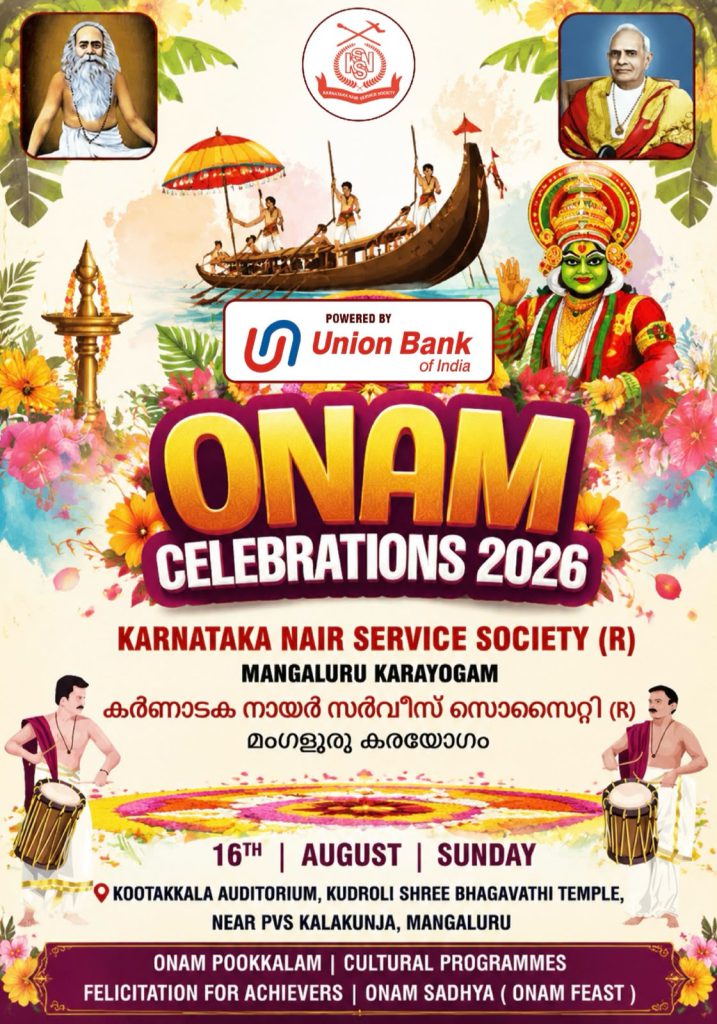
Mangaluru, August 15: The Karnataka Nair Service Society (KNSS), Mangaluru Karayogam, will celebrate Onam 2026 on Sunday, August 16, at Kootakkala Auditorium, Kudroli Shree Bhagavathi Temple, Mangaluru.
The celebrations will begin at 9.30 am with flag hoisting, followed by a series of traditional and cultural programmes, including Thiruvathira dance, cultural performances and felicitation of achievers.
Noted orator and National Award-winning teacher from Mayyil, Kannur, Radhakrishnan Manikoth, will be the chief guest and keynote speaker.
The programme will be attended by Minister U.T. Khader, MP Brijesh Chowta, MLAs Vedavyas Kamath and Dr Bharath Shetty Y, and MLCs Ivan D’Souza, Kishore Kumar Botyady and P.V. Mohan. Other distinguished guests include BJP Dakshina Kannada president Sathish Kumpala, former Karnataka minister Ramanath Rai, Union Bank DGM and Regional Head Tejaswini, Mookambika Temple Kollur trustee P.V. Abhilash, Rohan Corporation chairman and managing director Dr Rohan Monteiro, and Daijiworld Media founder Walter Nandalike.
The celebrations will feature a traditional Kerala Onam Sadhya, cultural programmes and entertainment, bringing together members, families and well-wishers to celebrate the spirit and traditions of Onam.
The programme will be presided over by KNSS president Murali Hosamajalu, along with the organisation’s board office-bearers and Karayogam committee members.
Independence Day Celebrated with Patriotic Fervour at Snehalaya Charitable Trust(R), Mangalore
NV Paulose, Chairman, Global TV +91 98441 82044
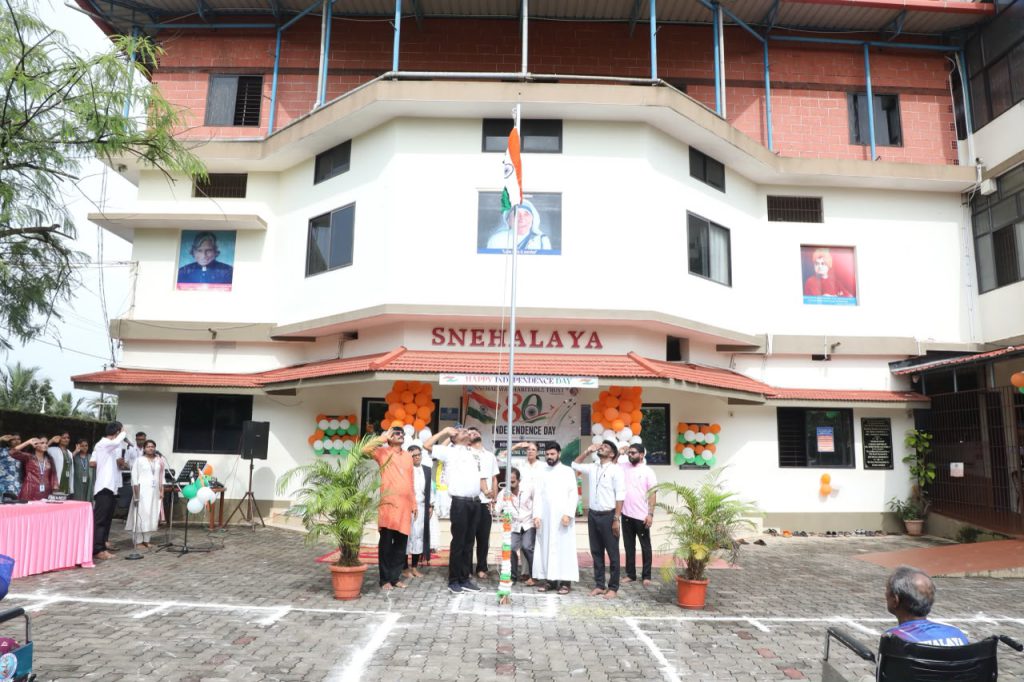
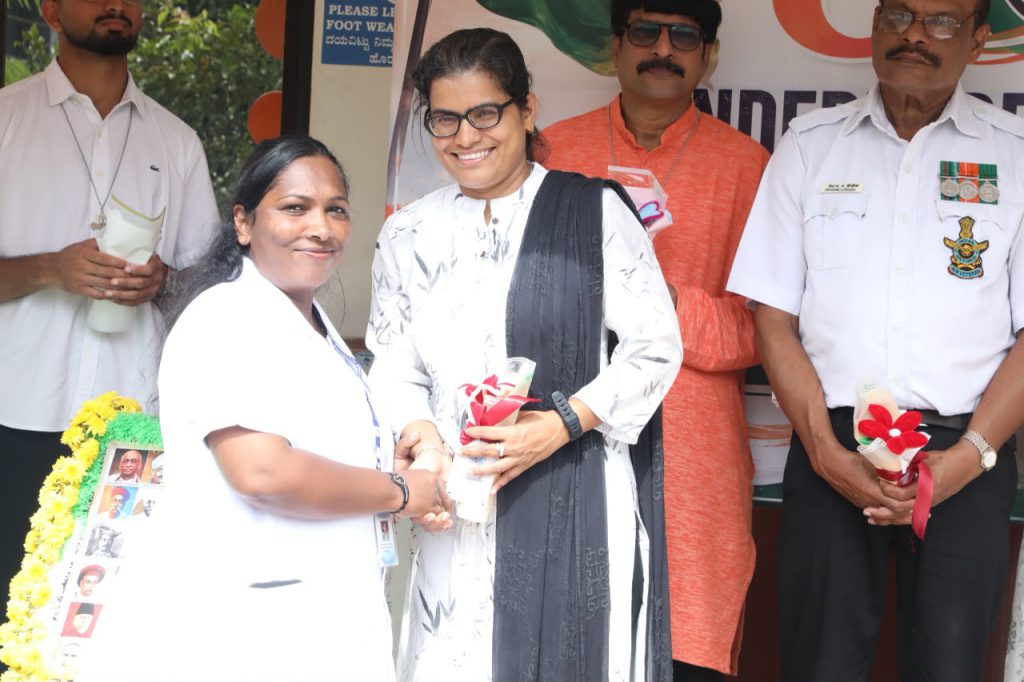
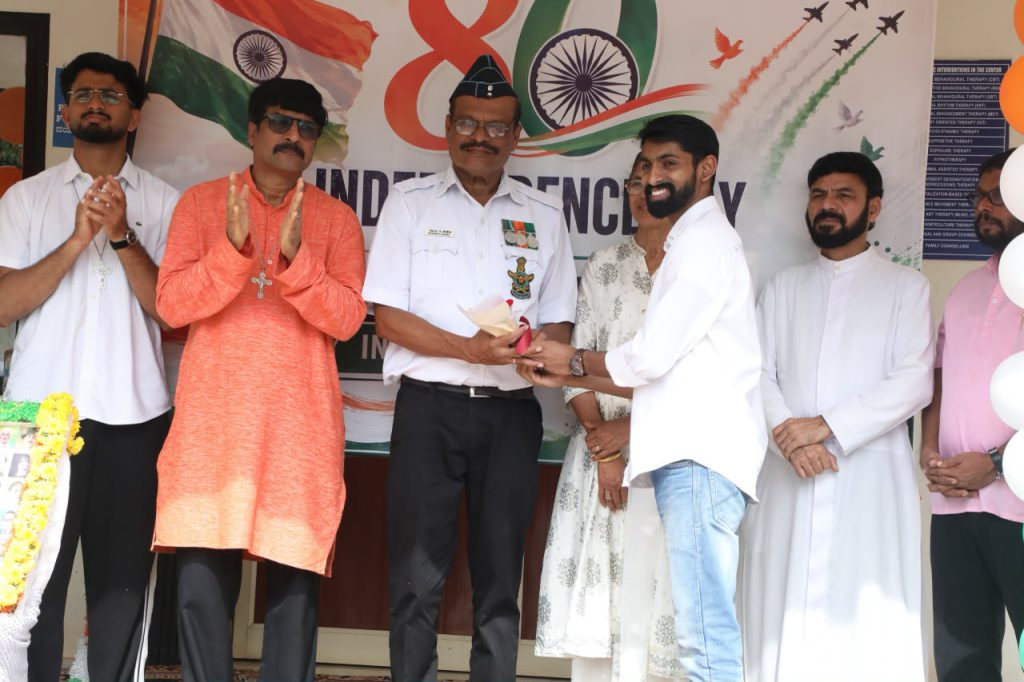
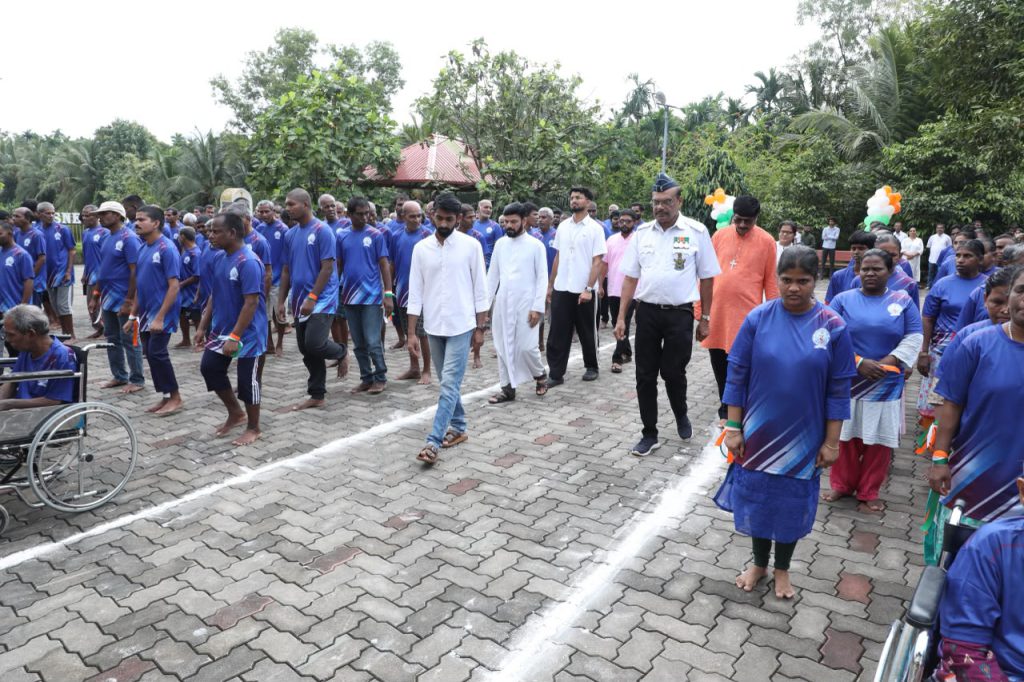
Snehalaya Psychosocial Rehabilitation Center, Manjeshwar, celebrated the 80th Independence Day of India with great enthusiasm, patriotic spirit and joy on August 15. The celebration was marked by a warm gathering of residents, staff members, trustees and well-wishers, creating an atmosphere of unity, pride and togetherness at the Snehalaya campus.
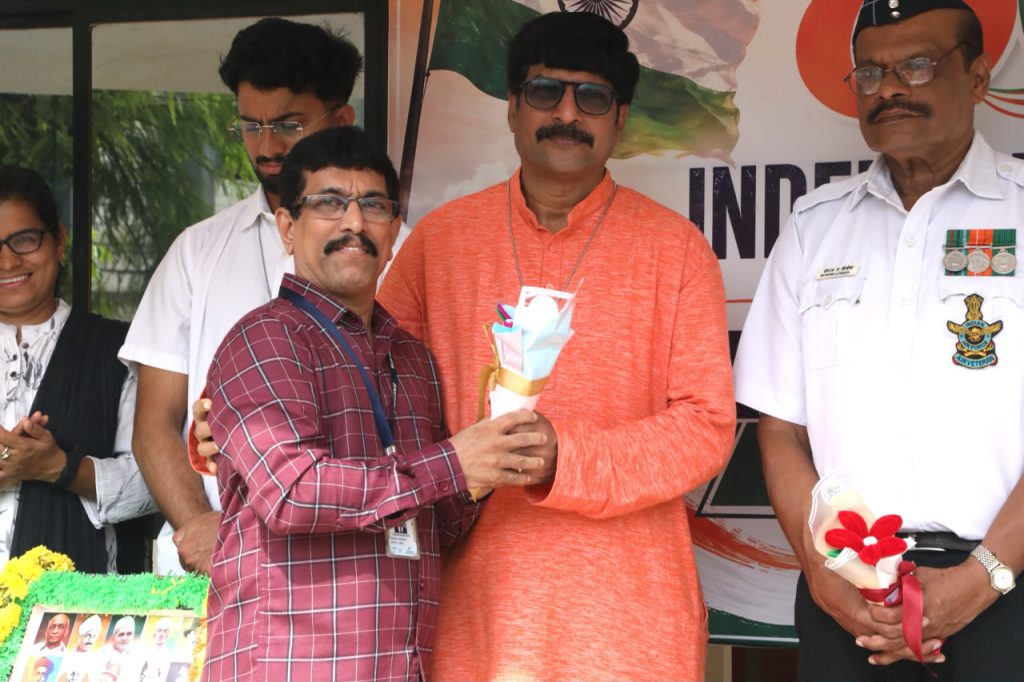
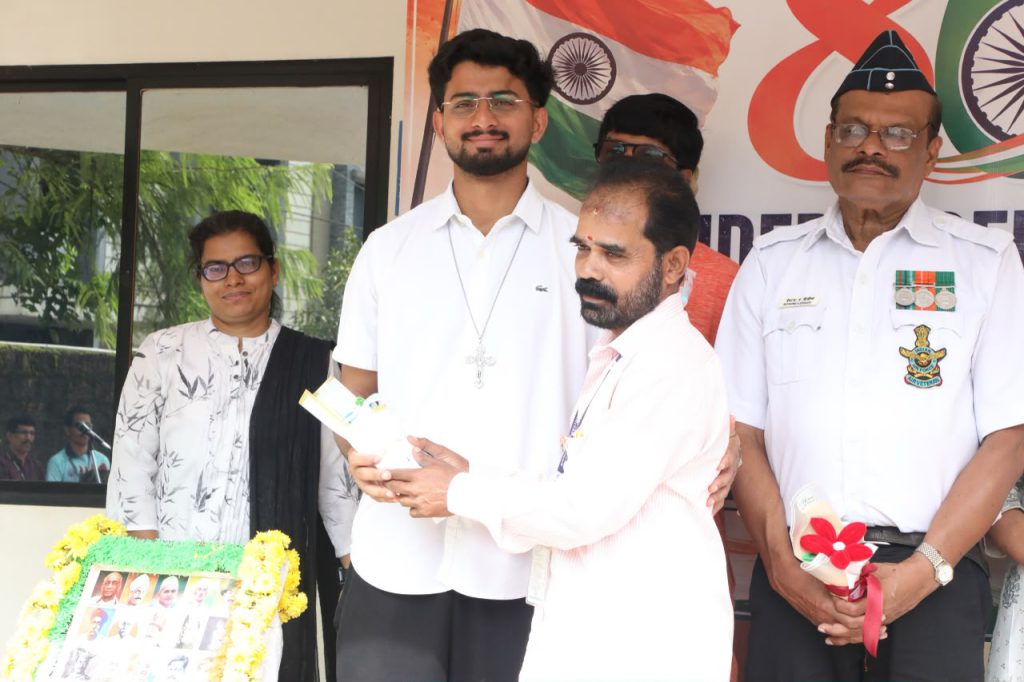
Sergeant Raymond A. D’Souza of the Indian Air Force and Rev. Fr. Cyril D’Souza, Chaplain of Snehalaya, were the Chief Guests of the programme. Their presence added special significance to the celebration, inspiring the gathering with the values of patriotism, service and dedication to the nation.
The programme was attended by Executive Director Mr. Joseph Crasta and Trustees Mr. Jovial Crasta, Ms. Saritha Crasta and Mr. Prakash Pinto. Other well-wishers, staff members and members of the Snehalaya community also participated in the celebration, making the occasion a memorable one.
Mrs. Veena D’Souza, Administrator, warmly welcomed the guests and everyone gathered for the celebration. The programme continued with a beautiful patriotic song presented by the Snehalaya Choir Team under the able leadership of Rev. Fr. Cyril D’Souza. The soulful performance filled the atmosphere with national pride and added colour to the Independence Day celebrations.
Mrs. Lavitta D’Souza, Institutional Incharge, served as the Master of Ceremony and coordinated the programme smoothly. Her efforts helped ensure that the various activities of the celebration proceeded in an orderly and meaningful manner.
The celebration also provided an opportunity for everyone at Snehalaya to remember the sacrifices of the freedom fighters and to renew their commitment to the values of freedom, unity, equality and compassion. The spirit of Independence Day was reflected not only in the patriotic presentations but also in the sense of belonging and togetherness shared by all those present.
Mr. Clint Joseph, Head of the Clinical Department, proposed the vote of thanks, expressing gratitude to the Chief Guests, management, trustees, staff, choir team, well-wishers and all participants who contributed to the success of the programme.
The Independence Day celebration at Snehalaya concluded on a joyful and patriotic note, leaving everyone with a renewed sense of pride in the nation and a deeper appreciation for the spirit of service, care and humanity that continues to guide the Snehalaya community.
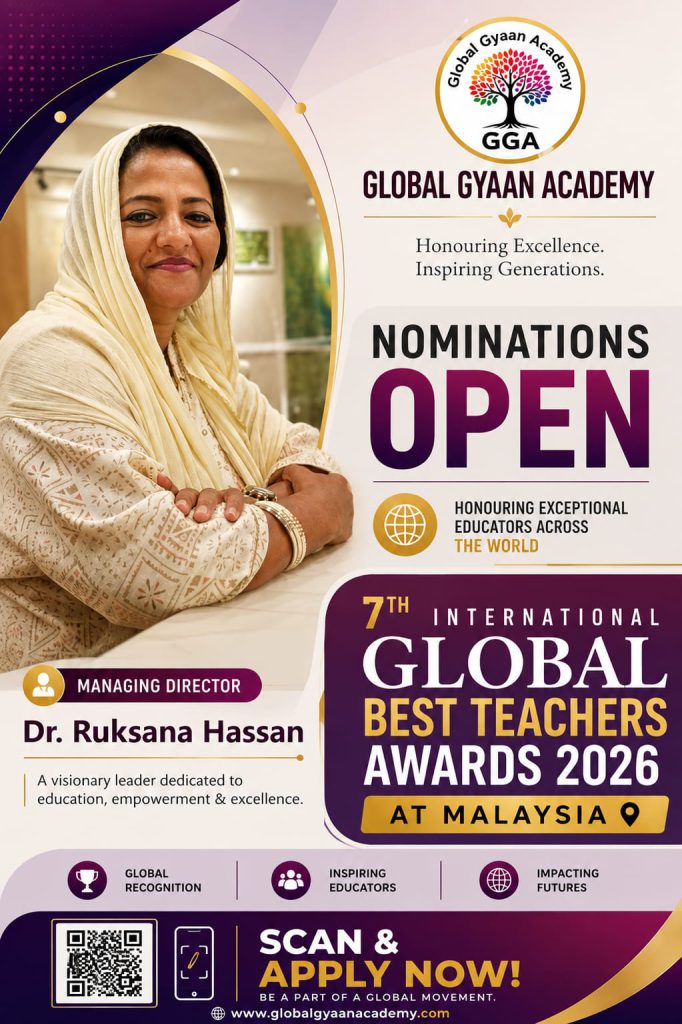
The 7th International Global Best Teachers Awards 2026, Malaysia
NV Paulose, Chairman, Global TV +91 98441 82044
Education is more than the transfer of knowledge. It is the art of shaping confidence, character, curiosity and possibility. Behind every successful student, there is often a teacher who believed in them before they believed in themselves.
It is in this spirit that the 7th International Global Best Teachers Awards 2026, taking place in Malaysia, emerges as a meaningful celebration of educators and educational leadership.
Through the Global Gyaan Academy, this initiative brings educators together on an international platform where learning, research, professional development, recognition and meaningful connections come together. The international conference in Malaysia includes a conference, workshop, training, research paper presentation, awards and networking opportunities.
A Celebration of Those Who Inspire Generations
Teachers rarely seek applause for the countless lives they influence. Their greatest rewards are often invisible. A child discovering confidence. A student finding purpose. A young person learning to dream bigger.
The Global Best Teachers Awards 2026 provides an opportunity to bring those contributions into the spotlight.
According to the conference information, the international awards are completely free, with no entry fee and no registration fee for the awards. Eligible participants can therefore participate in the Award Ceremony without an additional award registration fee.
That spirit of recognition matters.
When society celebrates educators, it sends a powerful message. Teaching matters. Teachers matter. Education matters. And the future of our communities depends greatly on those who dedicate themselves to educating the next generation.
Beyond an Award, A Global Learning Experience
What makes the Malaysia initiative particularly inspiring is that it extends beyond an awards ceremony.
Participants have the opportunity to engage in an international conference featuring an international workshop, research paper presentation, training in early childhood education, international certification, conference participation, an award ceremony and a gala dinner.
For educators, researchers and education professionals, such a gathering can become a valuable space for exchanging ideas, sharing experiences and discovering perspectives from beyond their own communities.
The opportunity to present research is equally significant. Participants who wish to present their research paper can register for the paper presentation, creating a platform where educational ideas and research can be shared in an international setting.
In that sense, the initiative is not simply about receiving an award.
It is about learning, contributing, connecting and being recognised.
An Initiative Supported by Global TV
The initiative is supported by Global TV, adding another positive dimension to its mission of bringing educational excellence and inspiring stories to a wider audience.
Support from a media platform can help give greater visibility to educators and educational leaders whose work deserves recognition. When stories of educational excellence reach a wider audience, they can encourage more people to appreciate the importance of teachers and the transformative role of education.
It creates an opportunity for the achievements, ideas and dedication of educators to be seen, appreciated and celebrated.
Independently Curated by Dr. Ruksana Hassan
At the heart of this initiative is Dr. Ruksana Hassan, Managing Director of Global Gyaan Academy, who is independently curating the initiative with a vision centred on education, empowerment and excellence.
Her leadership represents an important reminder that meaningful educational initiatives often begin with a person who is willing to create opportunities for others.
The official conference information identifies Dr. Ruksana Hassan as the Managing Director and the contact person for the Malaysia programme.
Her independent curation of this initiative adds a personal dimension to its vision. It creates an opportunity for educators to step beyond their everyday classrooms, share their achievements, present their ideas and experience international recognition.
From Classroom Impact to Global Recognition
A teacher’s influence may begin in one classroom, one school or one community, but its impact can reach much further.
A teacher who inspires a child can influence a family.
A teacher who develops a future leader can influence a community.
A teacher who shares an innovative educational practice can influence an entire profession.
This is why recognising educators is not simply about honouring individuals. It is about recognising the wider impact of education itself.
The Malaysia gathering provides an opportunity for participants to learn, present, network, receive international certification, attend the award ceremony and become part of an international education gathering.
A Journey Worth Celebrating
International gatherings can create memories that remain long after the certificates have been placed safely in a folder.
The programme provides the option of coordinated group travel and accommodation arrangements for participants who prefer to travel together. Participants may also make their own travel and accommodation arrangements and reach the venue independently.
Conference registrants will also receive a welcome kit containing items such as a conference bag, diary, pen, conference badge, writing pad, pencil and ID card.
Yet the most valuable part of the experience may be something that cannot be placed inside a welcome kit.
It is the inspiration that comes from meeting people who share the same passion for education.
A Call to Educators Everywhere
The 7th International Global Best Teachers Awards 2026 in Malaysia represents an invitation to educators to pause, reflect and celebrate their journey.
It is an invitation to say:
My work matters.
My students matter.
My ideas are worth sharing.
My contribution deserves to be recognised.
And there is always more to learn.
For teachers, researchers and education professionals who have dedicated themselves to transforming lives through education, platforms such as this can provide encouragement and recognition at a meaningful moment in their professional journey.
The vision is beautifully expressed through four simple actions:
Because when we honour exceptional educators, we do more than celebrate their achievements.
We celebrate the lives they have touched and the generations they are preparing for tomorrow.
The Malaysia 2026 initiative, supported by Global TV and independently curated by Dr. Ruksana Hassan, stands as a positive celebration of educational excellence, professional growth and the global community of educators who continue to make a difference.
One learner at a time.
One classroom at a time.
One generation at a time.
Here is to the educators who teach.
Here is to the leaders who inspire.
Here is to the visionaries who create opportunities for others.
And here is to a global celebration that reminds us that education remains one of humanity’s greatest investments in the future.
Growing Fruit Trees, Bringing Birds Back: A Community Movement for a Greener Mangaluru
NV Paulose, Chairman, Global TV +91 98441 82044
The “Grow Fruit Trees. Get the Birds Back.” initiative at St Aloysius Deemed to be University went as a celebration of community, collaboration and social movement for a greener Mangaluru.
Held on 14 August 2026 at Magis Hall, St Aloysius Deemed to be University, the event brought together the university community, environmental enthusiasts and social workers with a shared vision: to make Mangaluru more biodiverse by planting fruit trees and creating spaces where birds and nature can flourish.
The programme was made even more meaningful through the collaboration between St Aloysius Deemed to be University and Eco Warriors, working together with the Grow Fruit Trees, Get the Birds Back movement. The message was simple yet powerful: when we plant a fruit tree, we do not merely grow a tree—we create food, shelter and life for countless living beings.
The presence of Mrs. Rekha Shetty, Zonal Commissioner, City Corporation Mangaluru, as Chief Guest added special significance to the occasion. Despite her busy schedule, she made time to be part of the programme and expressed her happiness at visiting the Aloysius campus for the first time. Her commitment to environmental causes was evident, particularly with the upcoming initiative to address the use of single-use plastics in September. Her presence demonstrated how institutional efforts and civic leadership can come together to create meaningful environmental change.
The event was presided over by Rev. Dr. Melwyn D’Cunha SJ, Pro Vice Chancellor of St Aloysius Deemed to be University, whose witty, thoughtful and to-the-point address added warmth and purpose to the gathering. His words reinforced the importance of moving beyond discussion and taking practical steps towards caring for our common home.
The programme also reflected the dedicated work of the coordinators and volunteers who made the initiative possible. The efforts of Mrs. Crasta, Dr. Ravindra Swami K and Mr. Glavin T. Rodrigues, along with the coordinators Mrs. Teena Pereira, Mrs. Vineetha Rai and Mrs. Akshita Shetty, demonstrated what can be achieved when people work together with a shared purpose.
Interestingly, even the weather seemed to cooperate. The skies remained sunny from the beginning of the programme until its conclusion, allowing everything to proceed smoothly. Only after the participants reached home did the rain begin—a gentle reminder of nature’s own unpredictable rhythm.
The success of the event was not measured merely by what happened on that day. Its real success lies in what happens next: more trees planted, more birds returning, more young people becoming conscious of biodiversity, and more communities taking responsibility for the environment.
The collaboration between St Aloysius Deemed to be University and Eco Warriors opens the door to many more community-based environmental programmes. It is a partnership rooted in the belief that meaningful change begins when institutions and communities come together with a common purpose.
As Mrs. Crasta aptly reflected after the event, everything went well, and there is much to look forward to in future collaborations.
The message of the initiative will continue to inspire:
Plant a fruit tree. Give a bird a home. Give a community a greener future.
Because every fruit tree makes a difference—and when many hands come together, that difference can transform an entire city.
Together for a Greener Mangaluru. Youth. Community. Nature.
Daughter’s love has no bounds | Global TV Editorial and Salutations
The passing of Mrs. Benita Harini Maben on 13th August 2026 leaves behind a deep sense of loss in the hearts of her family, friends and all those who had the privilege of knowing her. She was a woman whose life was shaped by faith, family, friendship and a genuine concern for others. She valued relationships deeply and believed that the bonds we create with people are among God’s greatest blessings.
Her life reflected a God-fearing spirit, a caring heart and a willingness to extend affection and kindness to those around her. She was a host of warmth, love and affection, and her presence brought comfort and happiness to many.
During the difficult period of her illness and declining health, the love surrounding her became especially evident. Her daughter, Annette, dedicated herself wholeheartedly and was present through the difficult days and nights, giving her mother the care, attention and companionship she needed. It was a commitment born not merely out of duty, but out of a daughter’s profound love for her mother. Annette stood beside her through the challenges, ensuring that her mother was never alone and that she received the care and dignity she deserved. Her devotion was a beautiful expression of the bond between a mother and daughter; a bond that remains powerful even in the face of the deepest sorrow.
Equally touching was the love and dedication of her granddaughter, Aanya Samruddhi, who remained an important source of affection and closeness during this difficult chapter. The bond between a grandmother and granddaughter carries a special tenderness. Aanya’s presence and love brought moments of joy and comfort, reminding her grandmother of the generations of love that would continue beyond her lifetime. The care given by both Annette and Aanya will remain a lasting testimony to the love they shared with her.
Chetan deserves special mention for the unwavering support he gave during this challenging time. He made himself available whenever he was needed and stood beside Annette and the family through every difficult moment. His willingness to help, his presence during times of uncertainty and his constant support provided strength to the family when it mattered most. Such support often goes beyond words, and Chetan’s actions reflected the true meaning of family, compassion and solidarity.
Her son, Sherwin Namrith, and daughter-in-law, Mona, were a constant source of love, strength and support throughout her difficult time. They stood by her with unwavering care and commitment, making themselves available whenever they were needed and ensuring that she was surrounded by comfort, dignity and affection. Their presence and support brought reassurance to the family during challenging moments, and they remained steadfast through every uncertainty and hardship. Their dedication reflected not only their deep love for her as a mother and mother-in-law, but also the respect, gratitude and affection they carried for her throughout her life.
Mrs. Benita will be remembered not only as a mother and grandmother, but also as a cherished friend and a person who treasured people. She cared about the joys and struggles of others and was generous with her affection. Her faith and God-fearing way of life guided her, while her love for people made her approachable and deeply valued.
Though her earthly journey has come to an end, the love she gave will continue through her children, grandchildren, family and friends. Her memories will live on in the stories shared, the values she passed down, and the countless lives she touched. May her soul rest in eternal peace, and may God grant strength and comfort to Annette, Aanya Samruddhi, Chetan and the entire family as they carry forward her legacy of love, faith and compassion
ROTARY CLUB OF ORGAN DONATION INTERNATIONAL | Global TV
A Journey of Growth Through Innovation | From a Medical College to a Healthcare Ecosystem | Global TV
NV Paulose , Chairman, Global TV +91 98441 82044
In 1997, when the UAE was rapidly emerging as a global centre for business and innovation, a young entrepreneur, Dr. Thumbay Moideen, embarked on a journey that would eventually grow into one of the region’s most diversified business groups.
Today, 29 years later, Thumbay Group stands as a multifaceted UAE-based conglomerate with a strong presence in healthcare, medical education, research, diagnostics, pharmacy, wellness, hospitality, retail, technology, media, real estate and other sectors. Its journey is a story of entrepreneurship, diversification and, above all, a commitment to innovation.
The origins of Thumbay Group are closely connected with education.
In 1997, Dr. Thumbay Moideen established the UAE’s first private medical college in Ajman. The institution later developed into Gulf Medical University (GMU), which was formally established in 1998. From the beginning, the vision was larger than simply creating an educational institution: it was about contributing to the development of healthcare professionals and strengthening the UAE’s healthcare ecosystem.
As the university grew, a practical challenge emerged: medical students needed access to quality clinical training. The answer was to build teaching hospitals. That decision became the foundation of Thumbay’s healthcare division and eventually transformed the group from an education-focused initiative into an integrated academic healthcare system.
Building an Integrated Academic Health System
Over the years, the Thumbay brand expanded through hospitals, clinics, diagnostic laboratories and pharmacies. Today, the group says its healthcare division operates seven academic hospitals, family clinics and medical centres, diagnostic laboratories and a large retail pharmacy network. Its hospitals serve patients from more than 175 nationalities, supported by a multicultural workforce.
One of the most significant milestones in this journey was Thumbay Medicity in Ajman, launched in 2019. The integrated development brings together medical education, healthcare and research, including Thumbay University Hospital, Thumbay Dental Hospital and Thumbay Physical Therapy and Rehabilitation Hospital. This model represents one of Thumbay Group’s defining strengths: connecting education, healthcare and research rather than treating them as separate businesses.
Students can learn within an academic environment, healthcare professionals can work within teaching hospitals, and research can contribute to better clinical practice. It is an ecosystem built around the idea that education and healthcare should continuously strengthen each other.
A Portfolio That Goes Beyond Healthcare
While healthcare remains at the heart of Thumbay Group, the organisation has grown well beyond hospitals and universities. The group today describes itself as operating across 26 brands and multiple sectors, including education, healthcare, medical research, diagnostics, retail pharmacy, health communications, optical retail, wellness, hospitality, real estate, publishing, technology, media, events and medical tourism.
The brands displayed across the group’s corporate portfolio illustrate this diversification. They include Gulf Medical University, Thumbay Hospitals, Thumbay University Hospital, Thumbay Dental Hospital, Thumbay Labs, Thumbay Pharmacy, Thumbay Clinic, Thumbay Medical Tourism, Body & Soul Health Club, Thumbay Media, Thumbay Builders, The Thumbay Shop and other businesses serving different aspects of healthcare, lifestyle and the wider community.
This diversification has allowed the Thumbay name to become more than a healthcare brand. It has developed into an ecosystem of businesses connected by a common philosophy.
Growth Through Innovation
The phrase “Growth through Innovation” has long been associated with Thumbay Group. That philosophy is particularly visible in the organisation’s evolution. Rather than remaining focused on one business, Thumbay has repeatedly identified opportunities around its core strengths and developed new services around them.
Medical education led to teaching hospitals. Healthcare created demand for diagnostics and pharmacies. The wider healthcare ecosystem created opportunities in wellness, medical tourism, technology, communications and other supporting industries. This approach has enabled the group to build a network in which many of its businesses complement one another.
Nearly Three Decades of Impact
After 29 years, the scale of the organisation is reflected not only in the number of businesses it operates but also in the people it serves. Thumbay Group currently reports around 3,000 employees, more than 5,000 students, patients from 175 nationalities, and approximately 19 million patients treated across its healthcare journey.
Behind those figures are doctors, nurses, academics, researchers, administrators, students, technicians, entrepreneurs and other professionals who have contributed to the organisation’s growth.
The group’s journey also mirrors the UAE’s own development. The country’s transformation into a global destination for healthcare, education, business and innovation has provided an environment in which ambitious private-sector organisations could develop new models and serve increasingly international communities.
Looking Toward the Next Chapter
Reaching 29 years is a milestone, but for an organisation built around innovation, it is also a point from which to look forward. The healthcare industry is changing rapidly. Artificial intelligence, digital health, advanced diagnostics, precision medicine, longevity science and new approaches to medical education are reshaping the sector.
For Thumbay Group, the next phase will be about how effectively it can use its existing ecosystem to participate in that transformation. Its combination of medical education, hospitals, research, diagnostics, technology and supporting businesses gives it a foundation from which to pursue that next generation of healthcare and education.
29 Years of a Vision
From a single medical education initiative in Ajman in 1997 to a diversified international group with operations spanning dozens of brands and sectors, Thumbay Group’s story is ultimately a story of vision followed by execution. The organisation began with an idea: contribute to the future of healthcare by investing in medical education. Nearly three decades later, that idea has evolved into an integrated ecosystem encompassing universities, hospitals, laboratories, pharmacies, clinics, wellness, technology, media and more.
As Thumbay Group celebrates 29 years in the UAE, its journey demonstrates what can happen when education, entrepreneurship and innovation are brought together with a long-term vision. And if the first 29 years were about building the ecosystem, the next chapter may be about redefining what that ecosystem can achieve.
From 1997 to 2026, the journey continues — with growth through innovation.
13 August 2026 | A Day of Innovation, Knowledge and Engineering Excellence
NV Paulose, Chairman, Global TV +91 98441 82044
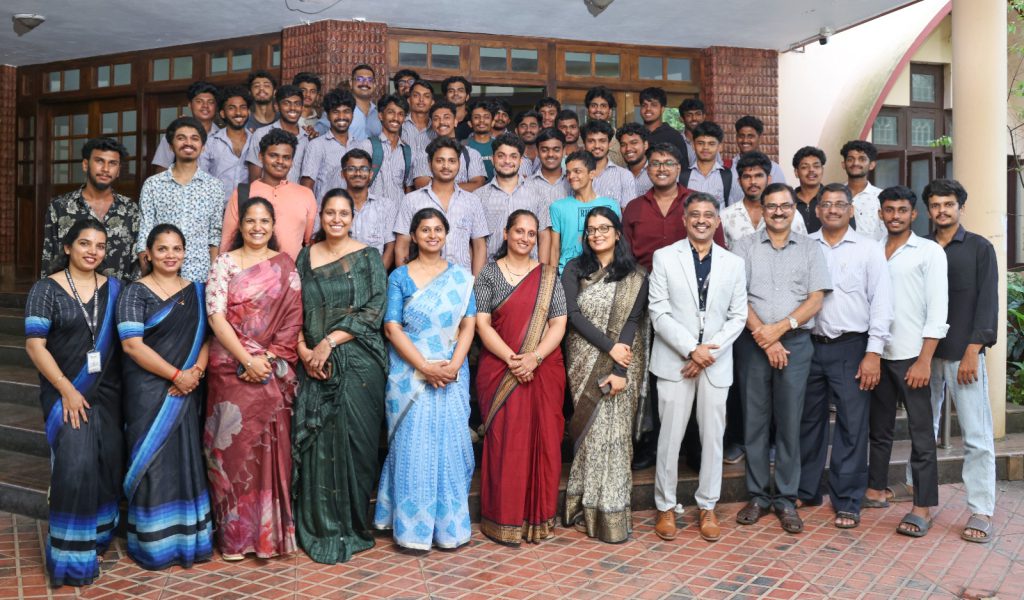
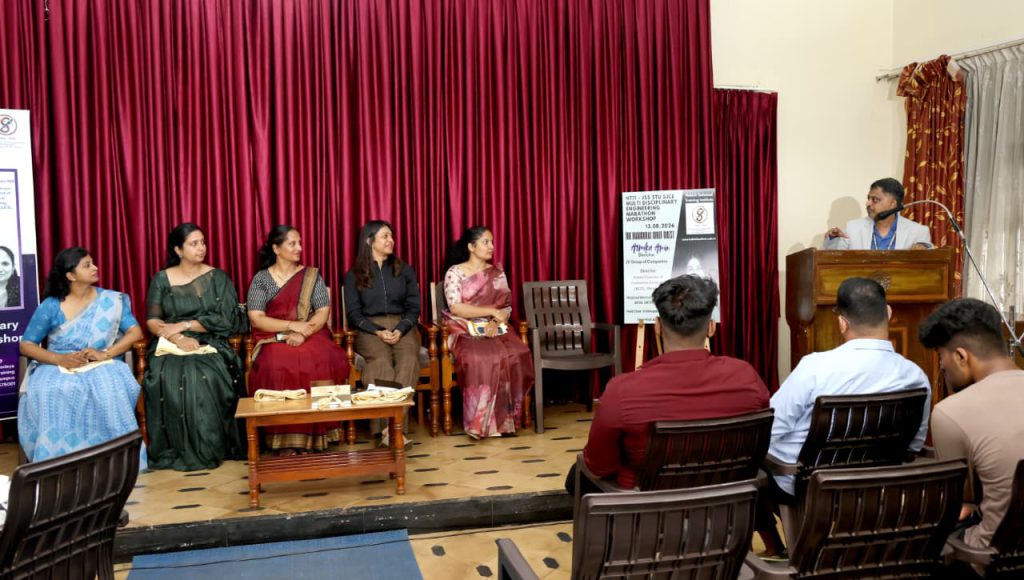
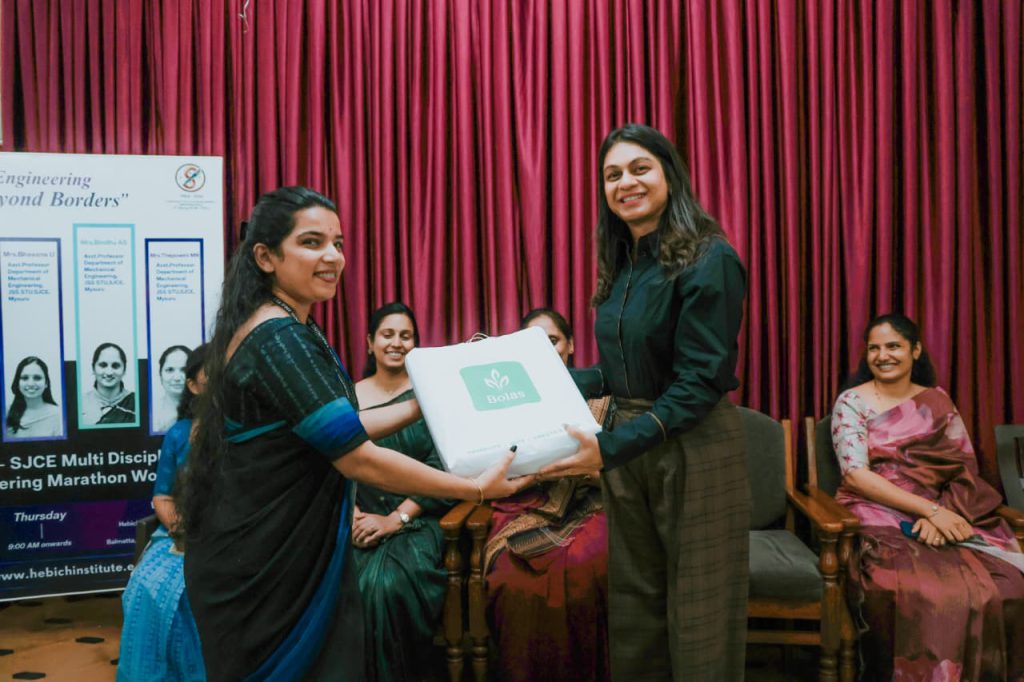
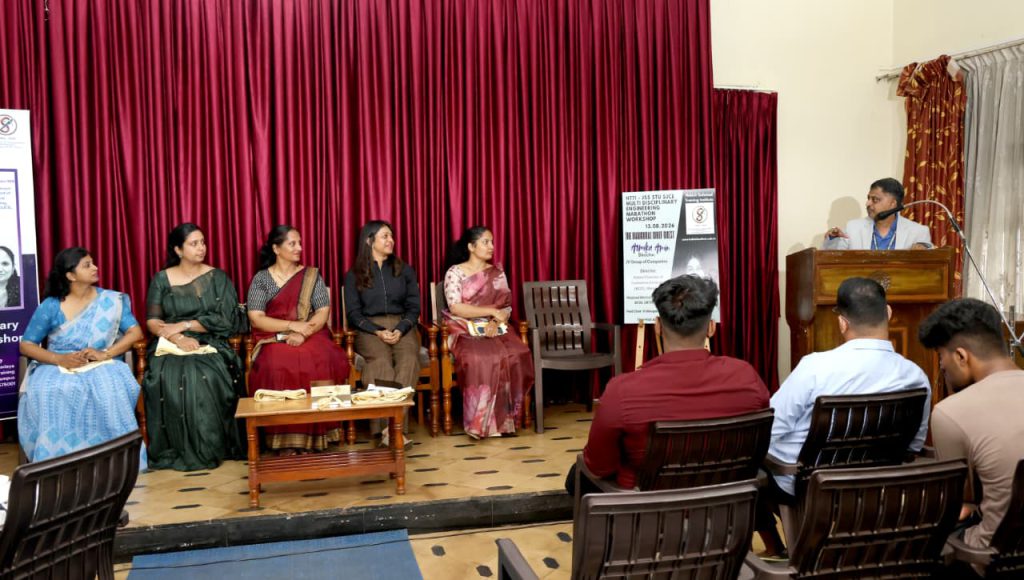
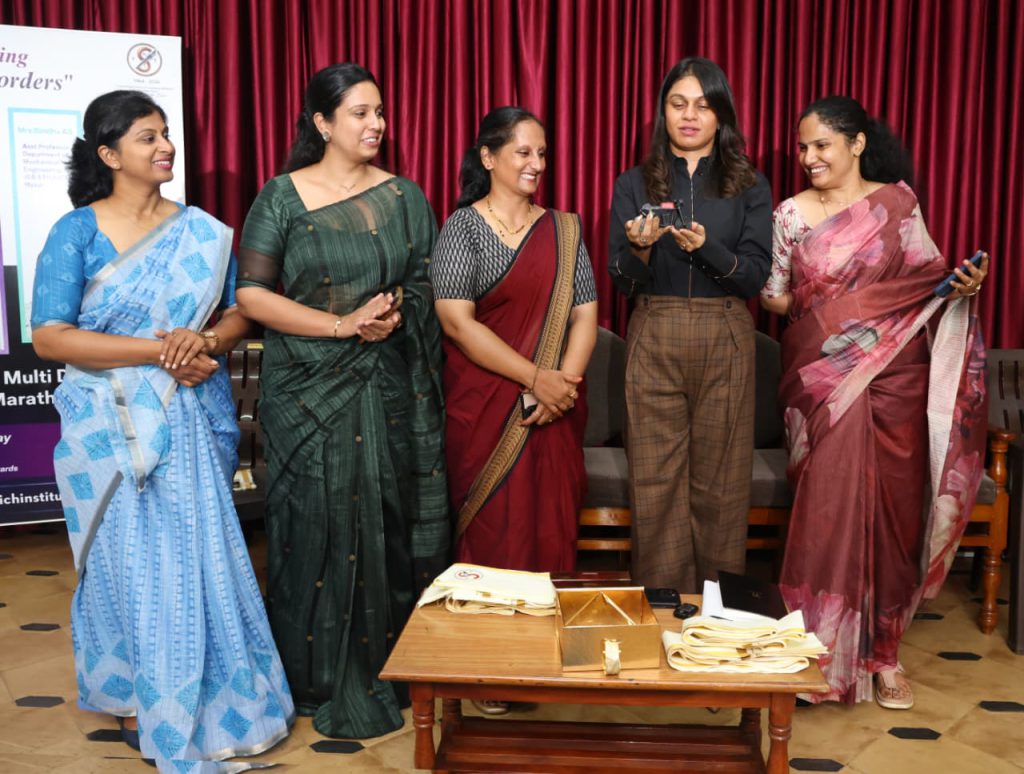
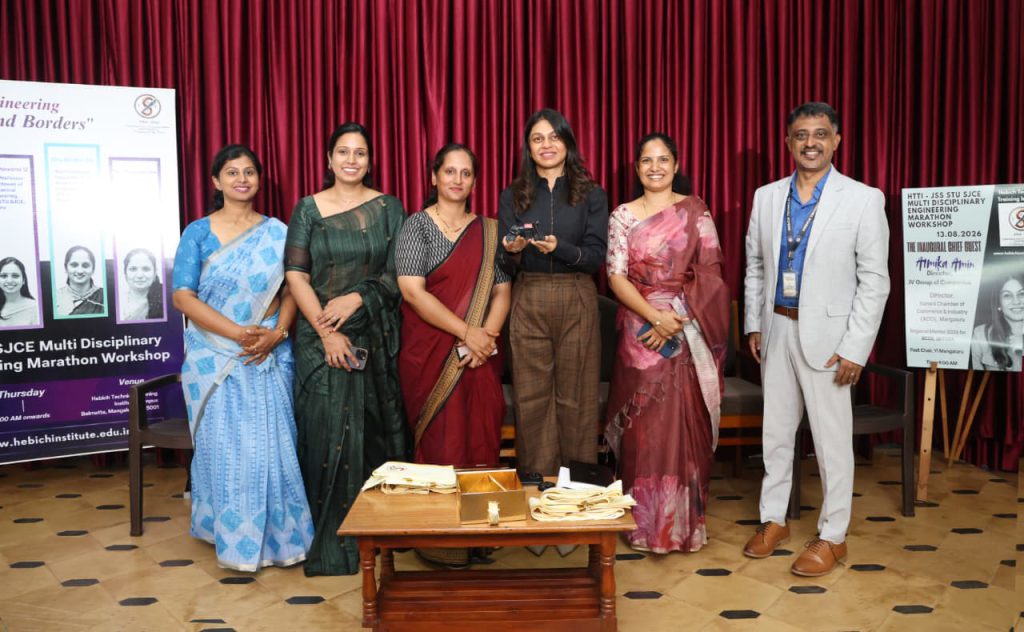
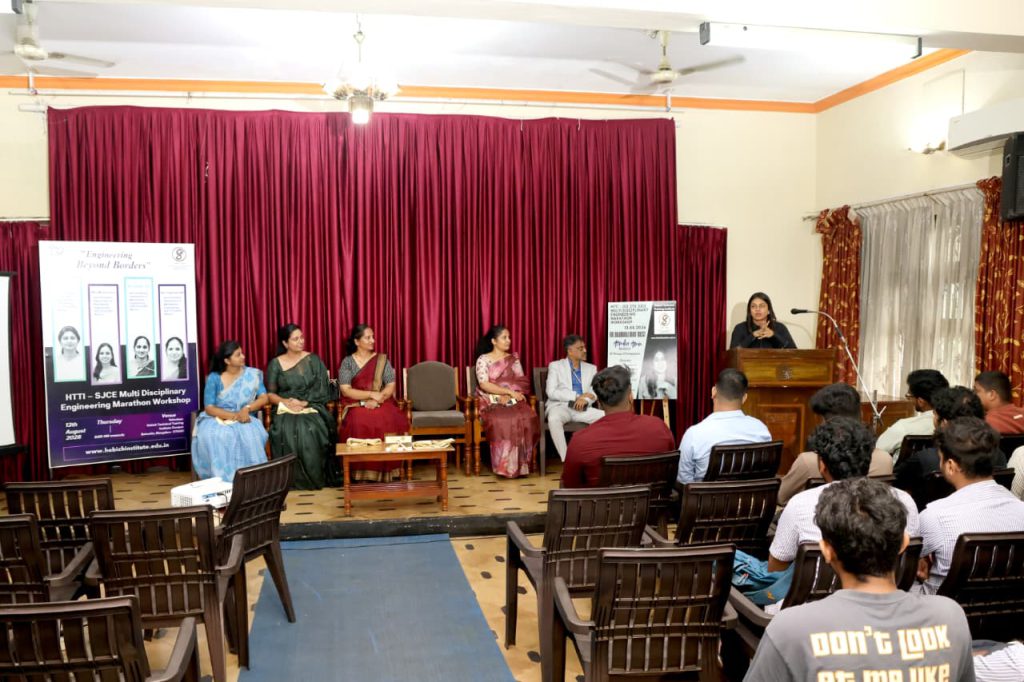
HTTI proudly hosted a Multi Disciplinary Engineering Marathon Workshop on 13 August 2026, bringing together distinguished academicians and industry experts to create an engaging platform for students to explore the fascinating world of engineering beyond the boundaries of conventional classroom learning.
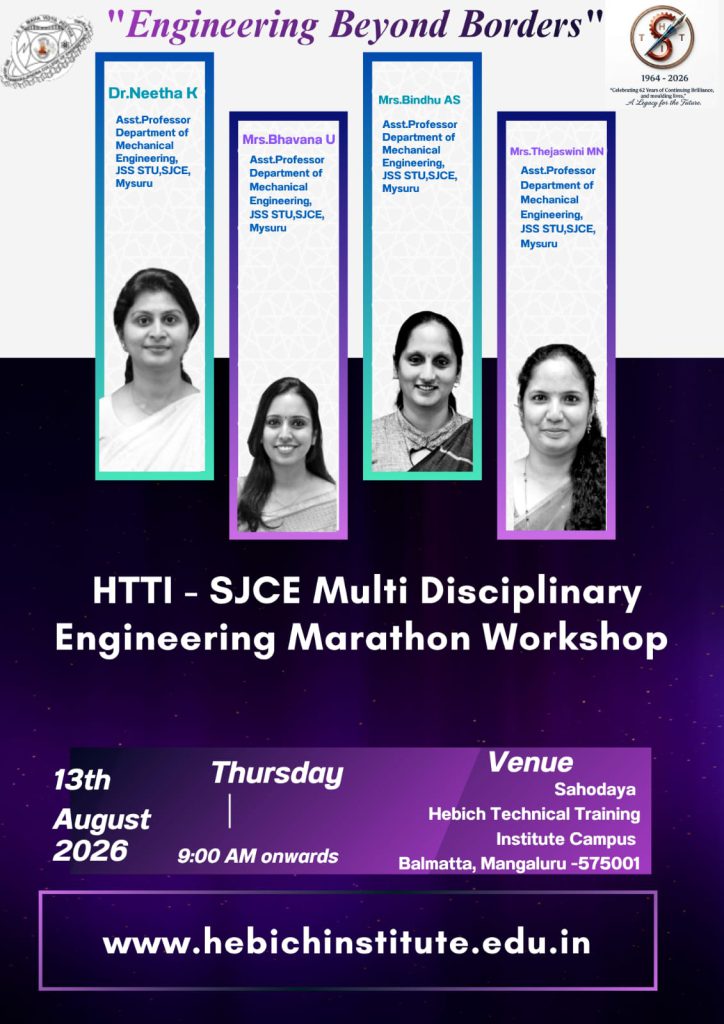
The workshop was conceived with a clear vision of connecting engineering fundamentals with real world applications, emerging technologies and contemporary industry practices. The programme featured four thought provoking technical sessions covering entertainment engineering, intelligent manufacturing, cryogenic machining and precision engineering, giving participants a broad and enriching exposure to different dimensions of mechanical engineering.
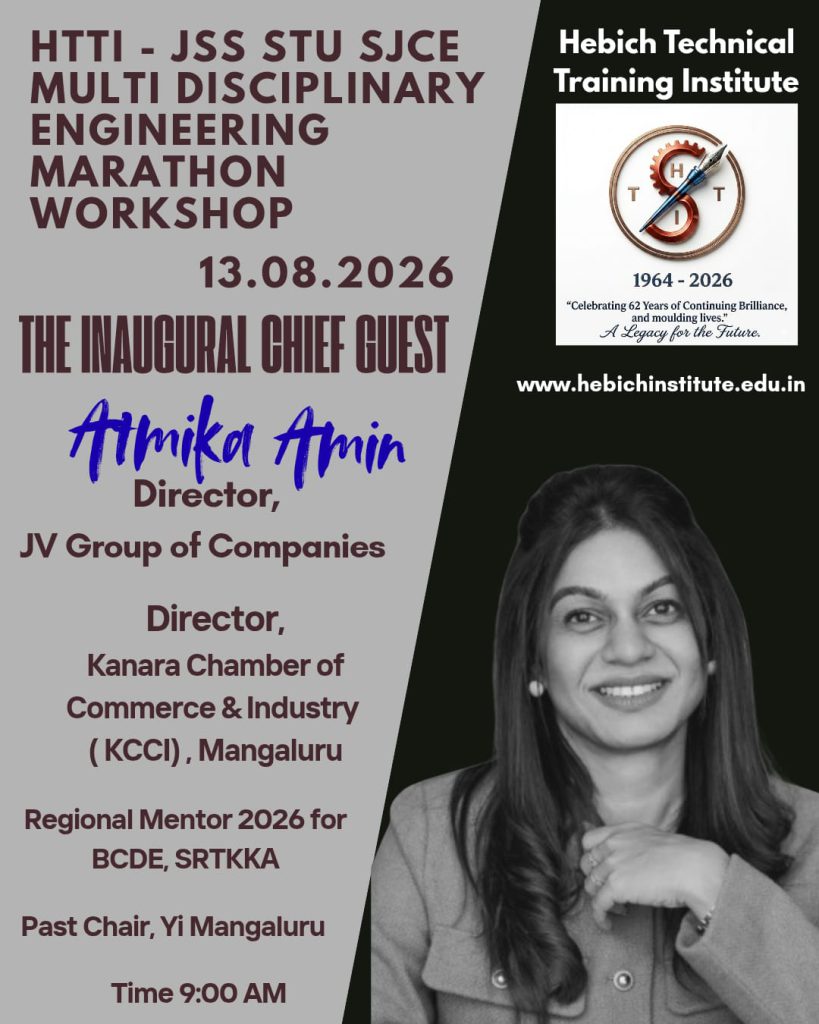
The programme commenced with the inauguration from 9:00 AM to 9:30 AM, graced by Ms. Athmika Amin, Director, JV Group of Companies.
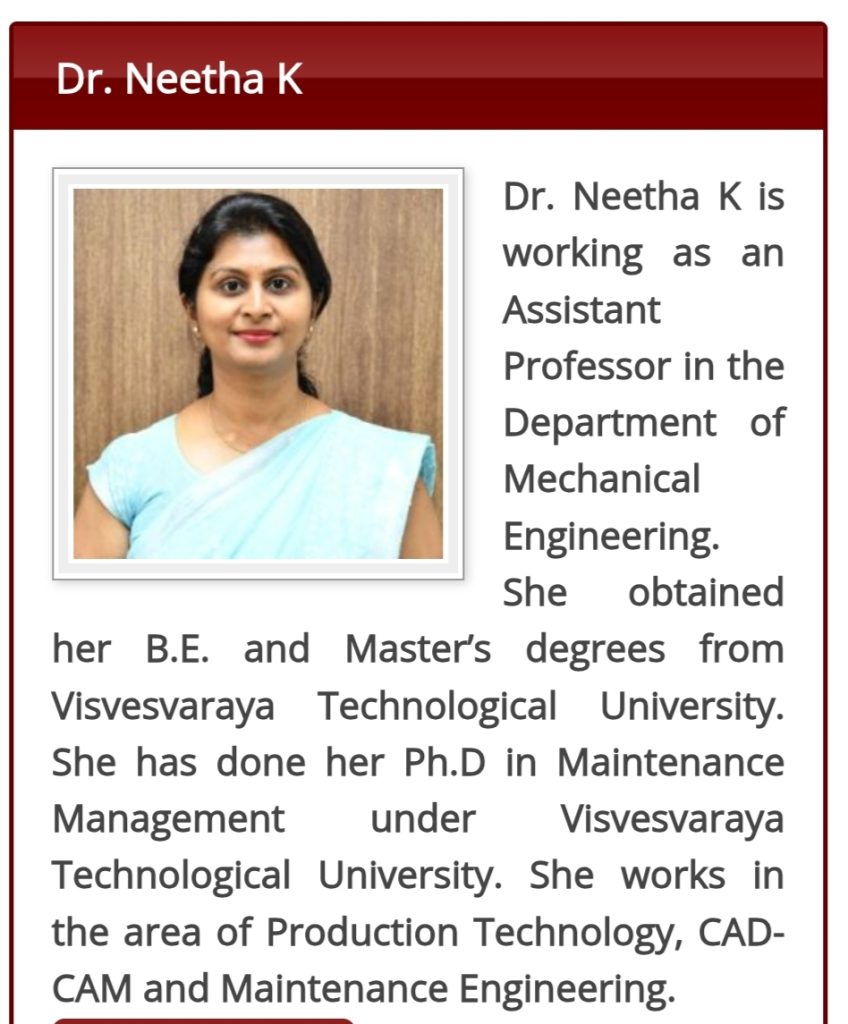
The first technical session, from 9:30 AM to 11:00 AM, was delivered by Dr. Neetha K, Assistant Professor, Department of Mechanical Engineering, JSS STU JCE, Mysore, on the fascinating topic “The Hidden Engineering Behind Entertainment.” Through examples such as theme park roller coaster rides, 5D movies and sports, the session demonstrated how fundamental mechanical engineering concepts such as force, energy, materials, mechanisms, hydraulics, vibrations and robotics are integral to creating exciting experiences in the world of entertainment. Dr. Neetha holds her B.E. and Master’s degrees from Visvesvaraya Technological University and has completed her Ph.D. in Maintenance Management. Her areas of professional interest include Production Technology, CAD CAM and Maintenance Engineering.
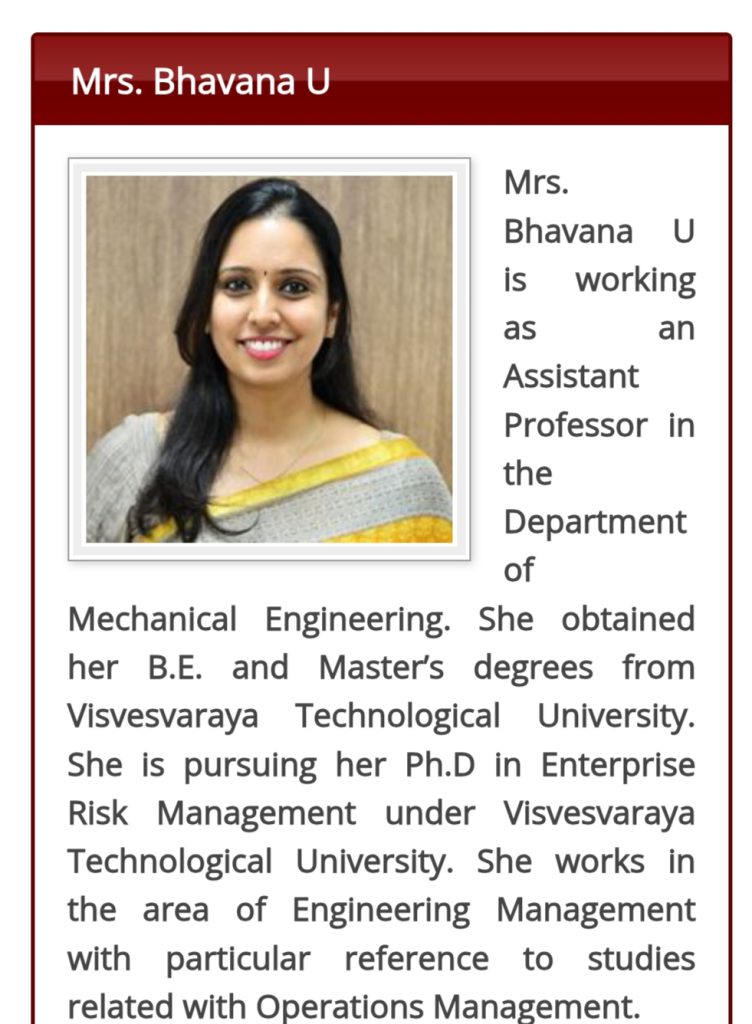
The second session, held from 11:00 AM to 12:30 PM, featured Mrs. Bhavana U, Assistant Professor, Department of Mechanical Engineering, JSS STU JCE, Mysore, who addressed the topic “The Future of Manufacturing: Connected Factories and Intelligent Maintenance.” The session provided valuable insights into the transformation of modern manufacturing through connected systems, intelligent technologies and advanced maintenance practices. Mrs. Bhavana holds her B.E. and Master’s degrees from Visvesvaraya Technological University and is pursuing her Ph.D. in Supply Chain Management at JSS Science and Technology University. Her area of work is Engineering Management, with particular reference to Operations Management.
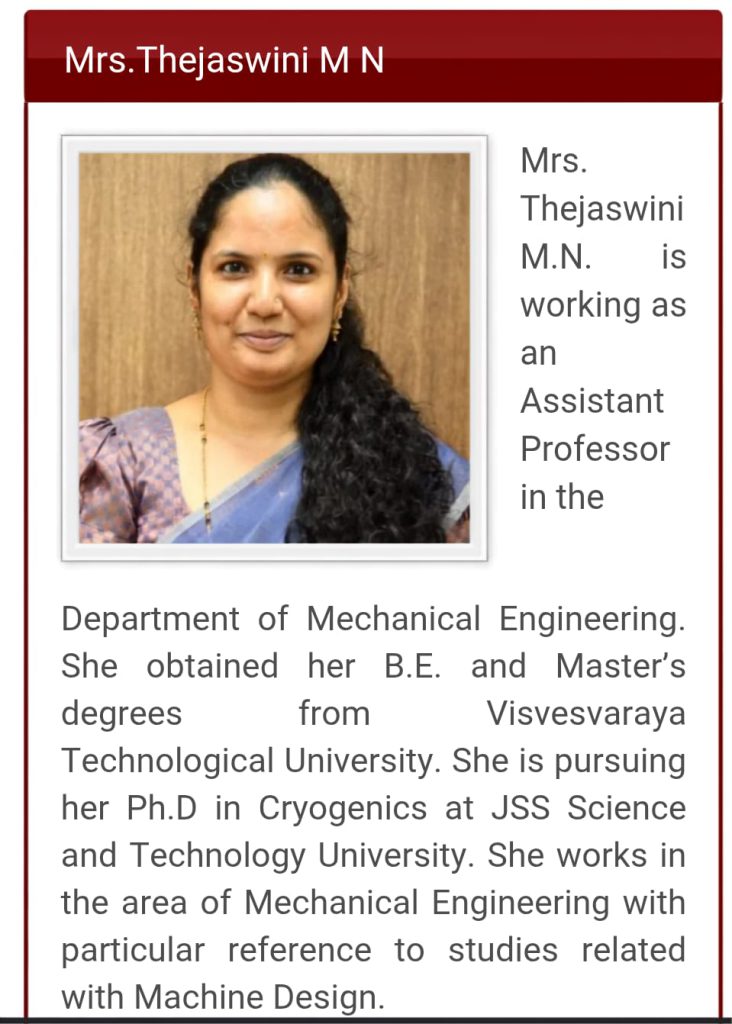
Following the lunch break, the workshop resumed from 1:30 PM to 3:00 PM with an insightful session by Mrs. Thejaswini M.N., Assistant Professor, Department of Mechanical Engineering, JSS STU JCE, Mysore, on “Cryogenic Machining.” The session introduced participants to an advanced machining approach and its significance in modern manufacturing. Mrs. Thejaswini holds her B.E. and Master’s degrees from Visvesvaraya Technological University and is pursuing her Ph.D. in Cryogenics at JSS Science and Technology University. She works in the field of Mechanical Engineering, with particular reference to Machine Design.
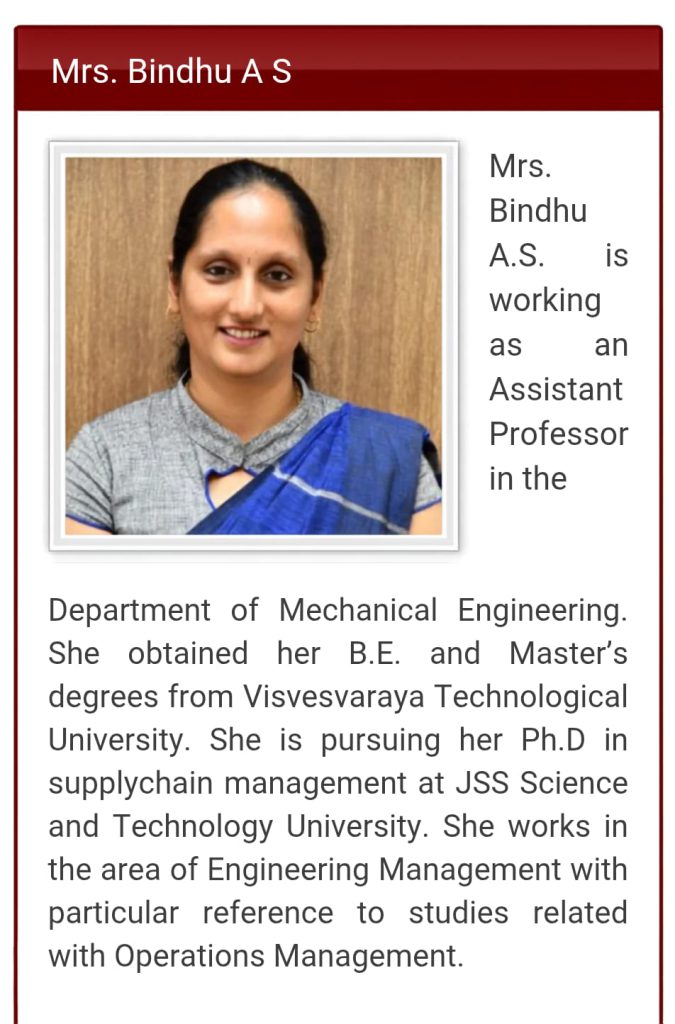
The final technical session, from 3:00 PM to 4:30 PM, was conducted by Mrs. Bindhu A.S., Assistant Professor, Department of Mechanical Engineering, JSS STU JCE, Mysore, on “Fundamentals of Geometric Dimensioning and Tolerancing, GD&T.” The session introduced participants to the principles of GD&T and its importance in achieving precision, consistency and effective communication of engineering design requirements. Mrs. Bindhu holds her B.E. and Master’s degrees from Visvesvaraya Technological University and is pursuing her Ph.D. in Supply Chain Management at JSS Science and Technology University. Her area of work is Engineering Management, with particular reference to Operations Management.
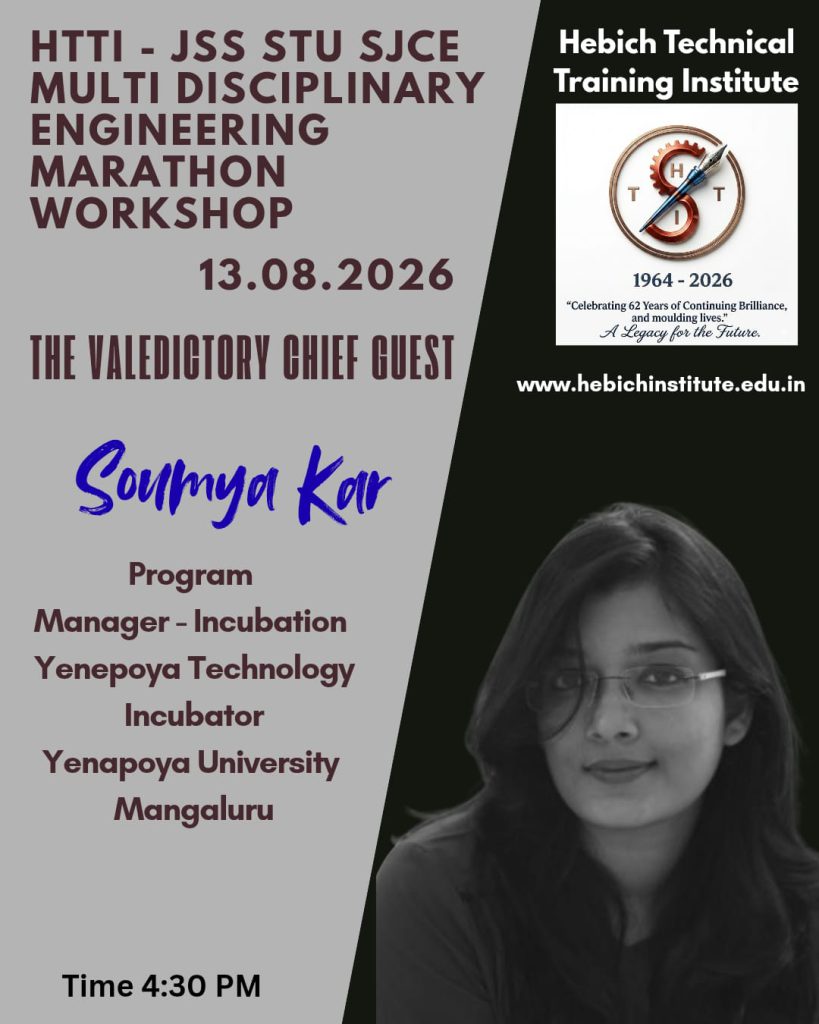
A tea break from 4:30 PM to 4:45 PM gave participants an opportunity to interact and exchange ideas before the programme concluded with the valedictory ceremony from 4:45 PM to 5:15 PM. The valedictory programme featured Ms. Soumya Kar, Yenepoya Technology Incubator, Yenepoya University, Mangalore, as the Chief Guest.
This was an ambitious initiative of Mr. Chetan R, Principal of HTTI. His vision, initiative and leadership pbrought the programme to life. Recognising the importance of exposing students to emerging technologies and practical applications, Mr. Chetan R envisioned a learning experience that would take students beyond textbooks and conventional academic boundaries. His thoughtful planning, selection of contemporary topics and coordination of eminent resource faculties helped shape the workshop into a meaningful and intellectually stimulating experience. His leadership reflects a strong commitment to creating innovative learning opportunities and preparing students to meet the evolving demands of engineering and technology.
The Multi Disciplinary Engineering Marathon Workshop was a celebration of engineering in its many forms, demonstrating how fundamental principles come alive in entertainment, manufacturing, machining, design and intelligent industrial systems. The programme encouraged students to think across disciplines, ask meaningful questions and appreciate the powerful connection between academic knowledge and real world engineering.
Through this initiative, HTTI reaffirmed its commitment to fostering curiosity, innovation and technical excellence among students, while creating a platform where knowledge, industry relevance and academic expertise came together to inspire the engineers of tomorrow.
Global TV Club Editions Brings Storytelling to the Breakfast Table
NV Paulose, Chairman, Global TV +91 98441 82044
Global TV Club Editions is introducing a people-focused breakfast experience that combines food, personal stories and meaningful conversations, with participation starting at ₹500. The initiative offers two formats, “Storytelling with Breakfast” and “Breakfast with Storytelling”, under the theme “Two Choices. One Powerful Experience.”
The idea is simple. Bring people together around a table, create space for genuine conversation and allow personal experiences to become a source of inspiration, learning and connection.
The initiative is part of Global TV’s wider Transformation Through Storytelling campaign, which promotes storytelling as a way to connect individuals, institutions and communities. Global TV says stories have always played a central role in building communities, preserving knowledge and inspiring change.
Two choices for one shared experience
The first format, Storytelling with Breakfast, places storytelling at the centre of the gathering. Participants can share experiences while enjoying breakfast, creating an informal setting where food becomes a starting point for conversation.
The second format, Breakfast with Storytelling, begins with the shared meal and allows stories and conversations to develop naturally around the table.
The difference is mainly in the entry point. One starts with the story and brings people to the table. The other starts at the table and allows the stories to emerge.
Both formats are built around the same objectives: meeting people, sharing experiences, building relationships and growing together.
Stories are at the centre
Global TV’s Transformation Through Storytelling campaign argues that people are surrounded by information, but stories provide the human context behind that information.
A success story can reveal the effort behind an achievement. A family story can reveal values and relationships. A campus story can capture learning and discovery. A friendship story can demonstrate the importance of support. A community story can show what people can accomplish when they work together. Innovation stories can reveal the curiosity, experimentation and courage behind new ideas.
The Club Edition takes this philosophy into a face to face setting.
Instead of asking participants only what they do, the experience encourages a deeper question.
What happened in your life that changed you?
That could be a turning point, a difficult period, a major achievement or a lesson that continues to influence the person’s decisions.
Four stories worth hearing
The promotional concept highlights four areas of storytelling.
Turning Points
These are the moments that changed the direction of a person’s life or career. They may include an unexpected opportunity, a difficult decision, a meeting with an influential person or an experience that changed one’s outlook.
Challenges
Challenges often reveal the strongest part of a person’s journey. Sharing these experiences can help others understand that difficulties are not necessarily the end of a journey and can sometimes become the foundation for growth.
Success Stories
Success stories celebrate achievements, but the focus is not simply on the result. The deeper interest lies in understanding the journey, the persistence, the setbacks and the people who contributed to the achievement.
Learnings
Every meaningful journey produces lessons. These lessons can become valuable for people who are at an earlier stage of their own journey.
From networking to real relationships
The Club Edition also presents an alternative to conventional networking.
Many networking events begin with professional introductions and business objectives. Global TV’s storytelling model takes a more personal route.
Participants first get to know the experiences, values and journeys of the people around them. Business relationships and collaborations can then emerge from a stronger human connection.
Global TV describes its storytelling gatherings as conversations involving thought leaders, educators, entrepreneurs, innovators and community builders. The objective is to exchange experiences, learn from one another and develop collaborations that can continue beyond the gathering.
This makes the breakfast more than a meal and more than a conventional networking event.
It becomes a meeting point for people.
Why breakfast?
Breakfast provides a relaxed environment for conversation.
There is no formal stage required. There is no need for a long presentation. People can sit together, eat together and listen to one another.
The promotional message captures the idea clearly: “Good food opens the table. Good stories open the heart.”
That approach fits naturally with Global TV’s larger belief that meaningful conversations can create connections between people, institutions and communities.
Every person has a story
One of the strongest messages on Global TV’s Transformation Through Storytelling platform is that meaningful stories are not limited to celebrities or major organisations.
The organisation specifically highlights the value of stories from ordinary people who have made extraordinary efforts to improve their lives or help others.
That creates a wider definition of storytelling.
An entrepreneur can talk about building a company.
A teacher can talk about a student who changed their life.
A professional can talk about a career turning point.
A parent can talk about values passed from one generation to another.
A young person can talk about overcoming uncertainty.
A community leader can talk about how people came together to solve a local problem.
Each story can offer something that another person may need to hear.
From a local story to a wider impact
Global TV believes that when stories are shared beyond their original setting, their impact can grow.
A local experience can become a lesson for someone in another city. A personal challenge can encourage another person facing a similar situation. An innovation story can spark a new idea. A community story can demonstrate what collective action can achieve.
This is the larger purpose behind the Transformation Through Storytelling campaign.
The question promoted by Global TV is direct:
What is the story that transformed you, your institution or your community?
The answer can become more than content. It can become a way of inspiring people, creating connections and preserving collective experience.
Building connections through Global TV Club Editions
The promotional material for the Club Edition identifies four intended outcomes: Meet Amazing People, Share and Connect, Grow Together and Build Lasting Relationships.
These objectives position the programme as a community platform where personal stories and human relationships come together.
The starting participation amount shown in the promotional material is ₹500.
For participants, the value may ultimately extend well beyond the breakfast itself. A conversation could lead to a friendship, mentorship, collaboration, professional opportunity or simply a new understanding of another person’s journey.
A platform for stories that deserve to be heard
Global TV’s March 2026 publication on Transformation Through Storytelling describes storytelling as a continuing force in human connection and says the organisation wants to provide a platform through which meaningful journeys can reach wider audiences.
The Club Edition brings that philosophy into a more intimate environment.
There is no requirement for a story to be extraordinary in scale. What matters is whether the experience contains something meaningful.
A turning point.
A challenge.
A success.
A lesson.
A relationship.
An idea.
A moment of change.
These are the building blocks of the stories that shape people’s lives.
The experience begins at the table
Global TV Club Editions is therefore positioning breakfast as more than a social occasion.
It is presenting the table as a meeting point where people can listen, share experiences, discover common ground and create new relationships.
The two choices may be Storytelling with Breakfast or Breakfast with Storytelling.
The larger purpose remains the same.
People meet. Stories are shared. Connections are created. Experiences become learning. And conversations can become opportunities for growth.
Global TV invites people to bring their stories to the table and become part of a wider storytelling community.
Global TV Club Editions Know People. Grow Together.
For more information and registration, the promotional material directs participants to www.globaltv.in. The Transformation Through Storytelling initiative and its philosophy are available through Global TV’s official platform.
SOUTH INDIAN DIARY WITH ROTARIAN LAL GOEL | GLOBAL TV
From a 3 AM Alarm to the Airwaves of Chennai
A day of flights, friendship, nursing students, technology, Tamil, and organ donation
31st July — 3:00 AM
Some journeys begin with excitement. Some begin with a cup of coffee. And some begin with the most unwelcome sound in the world—the alarm ringing at 3:00 AM!
For me, 31st July began exactly that way.
The alarm went off at three in the morning, reminding me that I had very little time to waste. Within minutes, I was out of bed and into my morning routine. By 4:30 AM, I was ready and sitting in an Uber heading towards Terminal 2 of Mumbai Airport.
My destination was Chennai.
My mission was, as always, organ donation awareness.
My flight was scheduled for 6:30 AM, and the first programme of the day was waiting for me in Chennai. So there was little room for delays, detours or the luxury of a leisurely morning.
But airports have their own way of adding surprises to even the busiest schedules.
A Pleasant Surprise at the Check-in Counter
While standing at the Air India check-in counter, I suddenly remembered an old acquaintance whom I had known for almost 20 years—Ms Krithi.
Krithi had been associated with Jet Airways during its days of glory. She had now moved to Air India.
I was thinking about her when, almost magically, there she was!
And as always, she greeted me with her ever-smiling face.
It is amazing how sometimes a two-minute conversation can do what a strong cup of coffee cannot.
We exchanged a few words, recalled old times and smiled at the coincidence. Those two minutes somehow made me feel completely fresh and ready for the long day ahead.
I proceeded to the Air India Business Lounge, where I quickly had a black coffee before boarding.
The coffee was good.
But the unexpected meeting with Krithi was probably the real morning energiser!
And Then… a 40-Minute Delay
Once comfortably seated on the aircraft, I thought I could relax.
But flights, like life, don’t always follow our schedules.
The Air India flight was delayed by about 40 minutes because of the late arrival of international connecting passengers.
For someone who had a packed schedule ahead, forty minutes can feel like forty hours.
Fortunately, the delay did not completely disrupt the day’s plans.
When we finally landed at Chennai, the delay had effectively come down to around 30 minutes, and I was still confident that we would reach the first programme on time.
And waiting for us at Chennai Airport was someone who has become an important part of my Chennai journeys.
The Regal President Arrives
As always, Regal President Rtn Hemalatha Bhandari was there inside the terminal to receive us.
Something is reassuring about seeing a familiar face in an unfamiliar airport.
The moment we arrived, the porter took care of my luggage, and we walked out of the terminal.
Two Rotarians were waiting for us.
One was from our own Rotary Club of Organ Donation International and Principal Aide to President Rtn J H Martin.
The other was Rtn Biju Narayan from the Rotary Club of Chennai Sagar.
After my traditional welcome, there was hardly any time for formalities.
The Chennai clock was ticking.
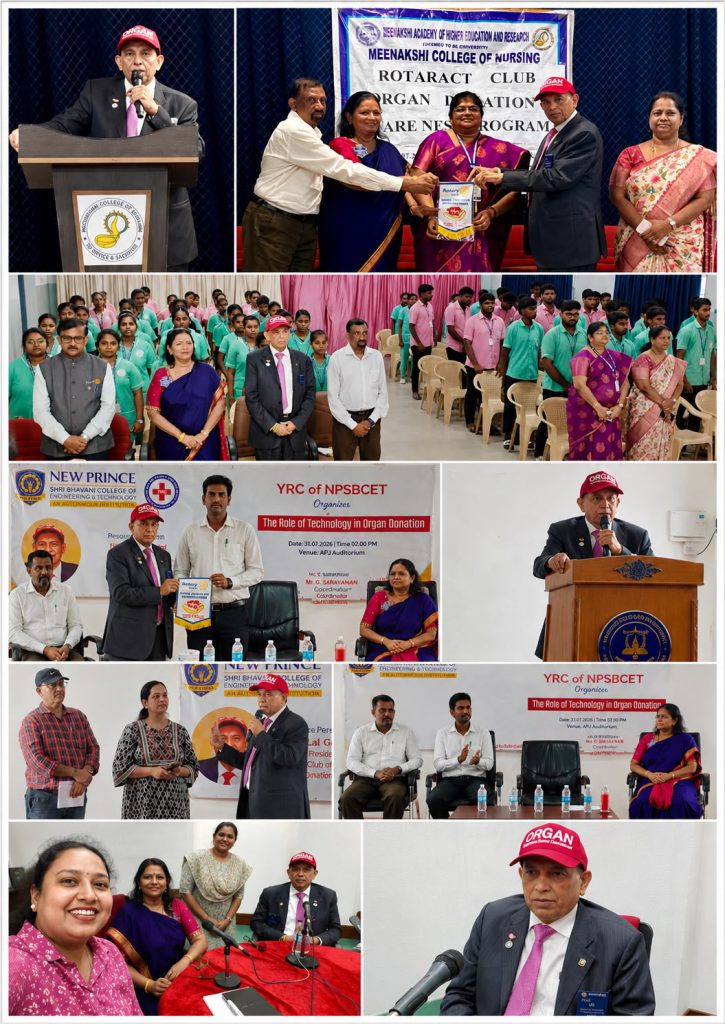
Our first destination was Meenakshi College of Nursing at Chikkarayapuram.
And the subject waiting for me there was one very close to my heart:
“THE ROLE OF NURSES IN ORGAN DONATION”
The programme was organised by the Rotary Club of Chennai Golden Galaxy in association with the Rotary Club of Organ Donation International.
When Nurses Become Organ Donation Warriors
The hall was filled with nursing students and faculty members.
Among those present were Dr Fabiola M. Dhanaraj, Principal, Dr B. Jayabharathi, Vice-Principal, and Rtn Jegannath Nambi, President, Rotary Club of Chennai Golden Galaxy, along with many others.
Looking at the young nursing students, I was reminded once again why awareness programmes are so important.
Doctors may diagnose and treat
Surgeons may perform complex procedures.
But nurses are often the professionals who remain closest to patients and families during the most difficult moments of their lives.
And when it comes to organ donation, that human connection can make all the difference.
I spoke for nearly one and a half hours.
But it wasn’t a one-way lecture.
It became a conversation.
The students asked questions. I answered them. They raised doubts about organ donation, brain death, consent, the role of families and the responsibilities of healthcare professionals.
The more questions they asked, the more convinced I became that India’s young nursing professionals could become a powerful force in creating organ donation awareness.
Before my talk, Regal President Rtn Hemalatha Bhandari introduced me.
But she did something that immediately changed the atmosphere.
She spoke in Tamil.
The students applauded enthusiastically.
I looked at her and thought to myself:
“Perhaps I should finally learn Tamil!”
After all, if I want to be part of such wonderful conversations, knowing the local language would certainly help.
The programme ended on a very positive note, but there was no time to linger.
Another programme was waiting.
One Hour on the Road—and Another Full Hall
From Meenakshi College of Nursing, we had approximately one hour of driving before reaching our next destination:
New Prince Shri Bhavani College of Engineering & Technology at Gowrivakkam.
By the time we arrived, Dr T. Saravanan, Principal, was eagerly waiting to receive us.
After a welcome round of fresh juice—which was particularly refreshing after the morning’s hectic schedule—we entered a large hall.
Once again, students and faculty members filled the venue.
But this time, my topic was different:
“THE ROLE OF TECHNOLOGY IN ORGAN DONATION”
The audience was largely young and technically inclined.
And that made the interaction especially interesting.
Technology is changing almost every aspect of our lives.
It is transforming healthcare.
It is improving diagnosis.
It is making communication instantaneous.
And it has enormous potential in organ donation as well—from donor registration and awareness campaigns to data management, matching, transportation, communication and coordination.
But what impressed me most was the curiosity of the students.
They had questions.
Lots of them!
And once again, I realised that awareness is not about standing on a stage and delivering a speech.
Here comes our member from Chandigarh, a Liver Donor, Rtn Roopa Arora and her husband the Liver recipient Rtn P K Ratan. I called them on stage and asked questions about their experiences with liver Transplantation. Their narrative gave credibility to what I was explaining.
It is about creating a space where people feel comfortable asking questions.
The programme was proceeding beautifully.
Perhaps a little too beautifully for our schedule!
Because there was another important appointment waiting for us.
“Sir, Please Wind Up!”
Our Regal President suddenly transformed from a gracious host into a strict headmaster!
She reminded me that we had to leave early because our next destination was All India Radio, Chennai, and we had to reach there on time.
I knew better than to argue with the headmaster!
After the customary exchange of mementoes, we quickly said our goodbyes and got back into the car.
Another long drive lay ahead.
From College Halls to the Airwaves
The destination was All India Radio, Chennai.
And here, our Regal President had a special advantage.
She had been a regular part-time news reader at All India Radio, Chennai.
That explained why, the moment we entered, it felt as though we had arrived at the home of an old friend.
From the peon to the Director, almost everyone seemed to know her.
We were treated like VVIPs!
There was no waiting around.
We were quickly escorted to the recording room.
And there she was:
RJ Kaviya Sanjeevi.
I soon discovered that Kaviya was not someone who would allow a guest to simply speak in generalities.
She was sharp.
Knowledgeable.
Focused.
And very much to the point.
In other words, she was ready to grill me!
We recorded two episodes, discussing organ donation and the need to create greater awareness among the public.
The interaction was extremely interesting.
After the recording, Kaviya revealed another fascinating part of her professional journey.
She was essentially a journalist, having earlier worked with both The Times of India and The Indian Express.
That explained her questioning style!
She knew exactly what to ask, how to ask it and, more importantly, when an answer needed to be clarified.
Behind the microphone, meanwhile, every detail was being carefully watched.
The recording engineer, Er T. E. Vimala, was extremely particular about the minutest details.
Sound quality.
Timing.
Clarity.
Every little thing mattered.
And when the final recording was completed, I realised that organ donation awareness had once again travelled through another medium—from a college classroom to the radio waves of Chennai.
Back to the Toyota Cresta
With the recording completed, we took leave of the wonderful All India Radio team.
And once again, we were back in the luxurious Toyota Cresta of our Regal President.
By now, the car had almost become our mobile office, meeting room, resting place and transport headquarters—all rolled into one!
Hemalatha dropped me at my hotel.
But there was no thought of a relaxed Chennai evening.
The next morning was already planned.
We had to leave at 4:15 AM for Puducherry.
And waiting there would be not one, not two, but three organ donation programmes lined up back-to-back.
Another day.
Another journey.
Another set of audiences.
Another opportunity to spread the message that organ donation is not merely a medical subject.
It is a human responsibility.
A Very Early Night
After the day’s hectic schedule, I finally reached my room.
A good, relaxing bath felt like a reward.
Then came an early dinner.
And at around 10:00 PM, I was in bed.
For me, that was unusually early—almost two hours earlier than my normal bedtime.
But the body had earned its rest.
The alarm would ring again soon.
The journey would continue.
And the message would continue.
Because when the cause is bigger than the individual, tiredness becomes secondary.
One Day. Three Venues. Hundreds of Young Minds. One Message.
As I looked back on the day before falling asleep, I realised how much had happened in just a few hours.
A 3 AM alarm.
A 4:30 AM Uber ride.
A flight from Mumbai to Chennai.
A chance meeting with an old friend from the Jet Airways days.
A quick black coffee.
A delayed flight.
A warm welcome at Chennai Airport.
A nursing college.
One and a half hours of questions and answers.
A President speaking Tamil and winning applause.
A second college.
Technology and organ donation.
Another enthusiastic group of students.
A strict reminder to wind up!
A long drive.
All India Radio.
Two recorded episodes.
An inquisitive journalist-turned-RJ.
A meticulous recording engineer.
And finally, a comfortable hotel room for a few precious hours of sleep.
Yet, behind all these events was one common thread:
ORGAN DONATION.
Every student who asked a question had taken one step closer to understanding the subject.
Every faculty member who listened could carry the message forward.
Every nurse who becomes aware can influence patients and families.
Every engineering student who understands the role of technology can potentially contribute new ideas.
Every radio listener who hears the message may discuss it with a family member.
And perhaps, someday, one of those conversations may help save a life.
That is why I continue to travel.
That is why I wake up at 3 AM.
That is why a delayed flight, a long road journey, endless meetings and very little sleep do not discourage me.
Because somewhere, in some hospital, a family is waiting.
A patient is waiting.
And another human being may have the power to give them a second chance at life.
One organ donor can save multiple lives.
But before someone becomes an organ donor, someone has to create awareness.
Someone has to start the conversation.
Someone has to remove the myths.
Someone has to explain brain death.
Someone has to tell a family that donation is not about death—it is about giving life another chance.
And that someone could be you.
So, as this first chapter of my South Indian Diary comes to an end, I leave you with a simple request:
Please take care of your health.
But more importantly,
please take care of your organs.
They may one day become the greatest gift you can give to another human being.
The journey to Puducherry was only a few hours away.
And the diary was far from over.
South Indian Diary with Rotarian Lal Goel will continue in the next issue.
Until then—
Stay healthy. Take care of your organs. Talk to your family about organ donation. And consider becoming an organ donor.
Because sometimes, the greatest journey of an organ begins when its owner’s journey comes to an end.
Co Publishing and Timeless Vision Editions | Are you ready to innovate | Think Simple | Take small steps Massive and Collective
NV Paulose, Chairman, Global TV +91 98441 82044
ലക്ഷക്കണക്കിന് മാധ്യമ പ്രവർത്തകരെ ശമ്പളം കൊടുക്കാതെ പണിയെടുപ്പിക്കുന്ന യൂട്യൂബ് രീതി, മൂല്യാധിഷ്ഠിത മാധ്യമങ്ങളും പത്ര മുത്തശ്ശിമാരുമായ ദീപിക പോലുള്ള മാധ്യമങ്ങൾ ഉപയോഗപ്പെടുത്തണം.
അകത്ത് കത്തിയും പുറത്ത് പത്തിയും എന്ന കോർപ്പറേറ്റ് മാതൃകകൾക്ക് പകരം ക്രിയാത്മകമായ പരസ്പര സഹകരണ പദ്ധതികൾ ആവിഷ്കരിക്കപ്പെടുകയും വേണം. ഒരു തേനീച്ചക്കൂടുപോലെ വേണം ഒരു സംസ്ഥാനം പ്രവർത്തിക്കാൻ. എല്ലാവരും വികസന പ്രക്രിയയിൽ പങ്കെടുക്കണം. എനിക്കുവേണ്ടി മുഖ്യമന്ത്രിയ്ക്ക് എന്തുചെയ്യാൻ കഴിയും എന്നതിന് പകരം നാടിനുവേണ്ടി എനിക്ക് എന്തുചെയ്യാൻ കഴിയും എന്ന് നമ്മൾ ചിന്തിക്കണം. നാട്ടിൽ എവിടെയെങ്കിലും നടക്കുന്ന അനുകരണനീയമായ കാര്യങ്ങൾ നാട്ടിലെങ്ങും പാട്ടാക്കുകയാണ് മാധ്യമ ധർമ്മം. ആ നിലയ്ക്ക് വികസന പ്രവർത്തനങ്ങളുടെ ചുക്കാൻ പിടിക്കേണ്ടത് മാധ്യമങ്ങളാണ്.
മണ്ണും ചാരി നിൽക്കുന്നവൻ പെണ്ണും കൊണ്ട് പോകുന്ന യൂട്യൂബ് കാഴ്ച
യൂട്യൂബ് ഇന്ന് ലോകത്തിലെ ഏറ്റവും വലിയ ഡിജിറ്റൽ മീഡിയ പ്ലാറ്റ്ഫോമുകളിലൊന്നാണ്. 2025-ൽ യൂട്യൂബിൻ്റെ ആഗോള വാർഷിക വരുമാനം പരസ്യങ്ങളും സബ്സ്ക്രിപ്ഷൻ സേവനങ്ങളും ഉൾപ്പെടെ 60 ബില്യൺ യുഎസ് ഡോളറിലധികമായിരുന്നു. ഇന്ത്യൻ രൂപയിൽ ഇത് ഏകദേശം ₹5 ലക്ഷം കോടിയിലധികം വരും. പരസ്യ വരുമാനമാണ് യൂട്യൂബിൻ്റെ പ്രധാന വരുമാന സ്രോതസ്സ്. കൂടാതെ YouTube Premium, YouTube Music, YouTube TV, ചാനൽ മെമ്പർഷിപ്പുകൾ, Super Chat, Shopping തുടങ്ങിയവയും വരുമാനം സൃഷ്ടിക്കുന്നു.
യൂട്യൂബിൻ്റെ ആഗോള വരുമാനത്തിൽ ഇന്ത്യയുടെ ഏറ്റവും വലിയ സംഭാവന അതിൻ്റെ വൻ പ്രേക്ഷകശേഷിയും ശക്തമായ Creator Economy-യുമാണ്. 2025-ൽ ഇന്ത്യയിൽ പ്രതിമാസം 65 കോടിയിലധികം logged-in Shorts viewers ഉണ്ടായിരുന്നുവെന്ന് യൂട്യൂബ് റിപ്പോർട്ട് ചെയ്തു. കൂടാതെ ഇന്ത്യയിൽ കോടിക്കണക്കിന് ആളുകൾ Content സൃഷ്ടിക്കുകയും ആയിരക്കണക്കിന് ചാനലുകൾക്ക് ഒരു മില്യണിലധികം subscribers ലഭിക്കുകയും ചെയ്തിട്ടുണ്ട്.
ഇന്ത്യ യൂട്യൂബിൻ്റെ ഒരു വലിയ viewership market, advertisers, brands, digital businesses എന്നിവ ഉൾപ്പെടുന്ന വലിയൊരു സാമ്പത്തിക ecosystem ആണ്. അമേരിക്ക പോലുള്ള രാജ്യങ്ങളിൽ ഒരു view-ന് ലഭിക്കുന്ന പരസ്യ വരുമാനം സാധാരണയായി കൂടുതലായിരിക്കുമ്പോഴും, ഇന്ത്യയുടെ വലിയ ജനസംഖ്യയും viewing hours-ഉം creator base-ഉം യൂട്യൂബിന് ദീർഘകാലത്തിൽ വലിയ വാണിജ്യ സാധ്യത നൽകുന്നു.
Work From Home to Work @ Home | Our Home will work for Us when we learn the Value of Housekeeping and Hospitality.
കാലത്തിനൊത്ത് നമ്മൾ മാറേണ്ടിയിരിക്കുന്നു. വർക് ഫ്രം ഹോം എന്ന ആശയത്തെ വർക് അറ്റ് ഹോം ആക്കിയാൽ ധാരാളം തൊഴിലവസരങ്ങൾ സൃഷ്ടിക്കാൻ നമ്മുക്ക് കഴിയും. നമ്മുടെ വീടുകൾ നമ്മുക്ക് വേണ്ടി പണിയെടുക്കുന്ന നല്ല നാളെ നമ്മുക്ക് സ്വപ്നം കാണാം. നമ്മൾ മനുഷ്യരാണ് ( Human Beings ) ജോലിക്കാരല്ല (Human Doings). ജീവിക്കാൻ വേണ്ടി ജോലി ചെയ്യുക എന്നതിൽ നിന്നും ജീവിത മാതൃകകൾ സൃഷ്ടിക്കാൻ നമ്മുക്ക് കഴിയണം.
ബ്രൂസ് ലീയുടെ മാസ്റ്റർ അദ്ദേഹത്തിന് ഏറ്റവും വലിയ ടെക്നിക് പഠിപ്പിച്ചുകൊടുക്കുന്ന രംഗം സിനിമയിലുണ്ട്. ബെസ്ററ് ടെക്ക്നിക് പഠിക്കാൻ എത്തിയ ബ്രൂസ് ലീ യോട് മാസ്റ്റർ പറഞ്ഞു. The best technique is to have no technique.
ഇതാണ് നമ്മൾ യൂട്യൂബിനെ കണ്ടുപഠിക്കണം എന്ന് നമ്മൾ ആദ്യം പറഞ്ഞത്. വാതിലുകൾ തുറന്ന് ക്രിയാത്മക പത്രപ്രവർത്തനം ചെയ്യുന്നവരെ സ്വാഗതം ചെയ്യുകയാണ് പത്രങ്ങളും പ്രസിദ്ധീകരണങ്ങളും അടച്ചു പൂട്ടുന്നതിനു പകരം നമ്മൾ ചെയ്യേണ്ടത്.