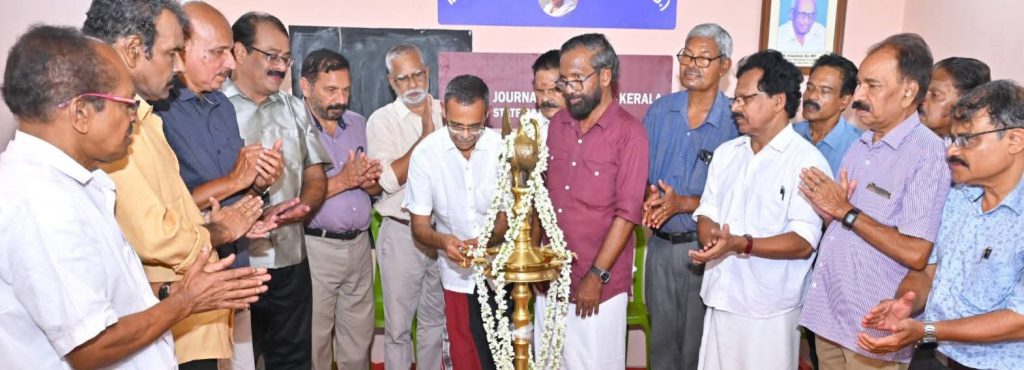
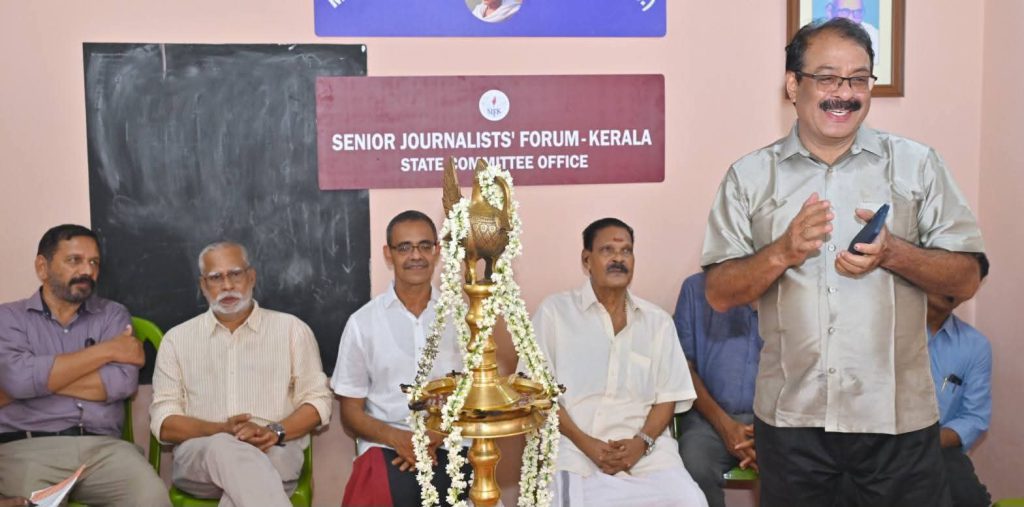
കോഴിക്കോട് : സീനിയർ ജേണലിസ്റ്റ്സ് ഫോറം – കേരള യുടെ സംസ്ഥാന കമ്മിറ്റി ഓഫീസ് സീനിയർ ജേണലിസ്റ്റ് ഫെഡറേഷൻ ഓഫ് ഇന്ത്യ പ്രസിഡൻ്റ് സന്ദീപ് ദീക്ഷിത് ഭദ്രദീപം കൊളുത്തി ഉദ്ഘാടനം ചെയ്തു.
കോഴിക്കോട് നഗര ഹൃദയത്തിൽ ടൗൺ ഹാൾ റോഡിലുള്ള മഹാത്മജി മെമ്മോറിയൽ ട്രസ്റ്റിൻ്റെ കെട്ടിടത്തിലാണു ഓഫീസ് തുടങ്ങിയത്. ചടങ്ങിൽ ഫോറം രക്ഷാധികാരി സി. എം കൃഷ്ണപണിക്കർ അദ്ധ്യക്ഷത വഹിച്ചു. സംസ്ഥാന കമ്മിറ്റിക്ക് വേണ്ടി സംസ്ഥാന വൈസ് പ്രസിഡൻ്റ് ഹരിദാസൻ പാലയിൽ സന്ദീപ് ദീക്ഷിതിനെ ഷോൾ അണിയിച്ചു.
ഫോറം രക്ഷാധികാരി എ മാധവൻ, സീനിയർ ജേണലിസ്റ്റ്സ് ഫെഡറേഷൻ ഓഫ് ഇന്ത്യ സെക്രട്ടറി ജനറൽ എൻ.പി ചെക്കുട്ടി, ഫോറം സംസ്ഥാന വൈസ് പ്രസിഡൻ്റുമാരായ ഹരിദാസൻ പാലയിൽ, സണ്ണി ജോസഫ് സെക്രട്ടറിമാരായ പി അജയകുമാർ, ഫ്രാങ്കോ ലൂയീസ്, സി.കെ. ഹസ്സൻ കോയ , പി ബാലകൃഷ്ണൻ ട്രഷറർ സി അബ്ദുറഹിമാൻ എന്നിവരും അഡ്വ. കെ. സി. രാജഗോപാൽ , പി ബാലകൃഷ്ണൻ, കെ .നീനി, എം.പി. രാമചന്ദ്രൻ , വി . എൻ ജയ ഗോപാൽ , സി. പി. എം സെയ്ദ് അഹമ്മദ്, എം.പി. മുരളി കൃഷ്ണൻ, കുന്നത്തൂർ രാധാകൃഷ്ണൻ, പി. ഭുവനദാസ് എന്നിവരും ആശംസകൾ നേർന്നു.
ഫോറം സംസ്ഥാന ജനറൽ സെക്രട്ടറി കെ.പി. വിജയകുമാർ സ്വാഗതവും കോഴിക്കോട് ജില്ലാ സെക്രട്ടറി എം സുധീന്ദ്രകുമാർ നന്ദിയും പറഞ്ഞു.
When People Stand Together, Limits Disappear | The True Meaning of Collective Strength | From Individual Effort to National Transformation | Global TV
NV Paulose, Chairman, Global TV +91 98441 82044
“When people are with me; I have no limits.” With these words, C. Joseph Vijay, while taking oath as the Chief Minister of Tamil Nadu, captured a truth that goes far beyond a moment of ceremony. It was not merely a statement of confidence, but a recognition that leadership draws its real strength from people. An individual in office may hold authority, but it is the collective will of people that determines how far that authority can translate into meaningful change. The line sets the tone for a deeper understanding of power, not as something possessed, but as something shared.
“When people are with me; I have no limits” is not a statement of personal power. It is a statement of collective possibility. An individual, no matter how capable, operates within natural constraints of time, reach, and influence. But when people align behind a shared purpose, those constraints begin to fade. Strength multiplies. Ideas expand. Effort compounds.
This is not just about numbers. It is about belief and participation. When people trust a vision and choose to contribute to it, they bring more than physical presence. They bring commitment, creativity, and resilience. A single person can inspire, but it is people together who execute, sustain, and scale that inspiration. That is where limits begin to dissolve.
Collective strength also changes the psychology of action. Individuals who might hesitate alone often act decisively as part of a group. Confidence becomes shared. Responsibility becomes distributed. Success becomes a common goal rather than a personal milestone. This shift is what turns potential into movement.
Lessons from India’s Freedom Movement
India’s freedom struggle remains one of the most powerful examples of collective strength in action. The success of the movement did not come from isolated acts of resistance, but from structured participation across millions of people. Leaders like Mahatma Gandhi understood that true power lay in mobilizing people with clarity and discipline.
Movements such as non cooperation and civil disobedience were not random protests. They were carefully guided efforts where people knew their role. Whether it was refusing foreign goods, participating in marches, or standing firm in the face of repression, each action was part of a larger design. This structure turned public emotion into a coordinated force that challenged a global empire.
At the same time, leaders like Subhas Chandra Bose demonstrated another dimension of collective effort. By organizing the Indian National Army, he brought together Indians across regions and backgrounds with a shared objective. Despite differences in methods, the underlying principle remained the same. When people unite with purpose, they create momentum that no authority can easily suppress.
The lesson from this period is clear. Numbers matter, but direction matters more. Without structure, even large groups remain ineffective. With structure, even limited resources can produce extraordinary outcomes.
What Eight Crore People Can Achieve Together
Now imagine this principle applied to eight crore people. Eighty million individuals acting with shared intent is transformative. That scale alone has the capacity to influence the future of a state or a nation. In economic terms, the possibilities are immense. If eighty million people actively improve their productivity and earning potential, the cumulative impact would be enormous. Even a modest increase in income per person would translate into a massive rise in national economic activity. If a fraction of them become entrepreneurs, they could generate employment for millions, creating a self reinforcing cycle of growth.
Education can also be reshaped at this scale. If each person commits to learning and sharing knowledge, skill development can spread rapidly across communities. Instead of waiting for institutional expansion, people themselves become carriers of progress. This kind of distributed learning has the power to reduce inequality and unlock talent that often remains hidden.
Public health outcomes would also improve significantly. When large groups adopt disciplined habits such as hygiene, preventive care, and awareness, the burden on healthcare systems reduces. Entire communities become healthier not because of intervention alone, but because of participation.
Infrastructure and local development can accelerate when people take ownership. Clean surroundings, better water usage, and local problem solving can all be driven by organized citizen effort. When millions act with responsibility, development becomes both faster and more sustainable.
The Role of Appreciative Inquiry in Channeling Collective Energy
Appreciative Inquiry offers a practical way to direct large groups of people toward meaningful and constructive action. Instead of focusing on problems alone, it begins by identifying what is already working well within a community or system. This shift in perspective is not about ignoring challenges. It is about building from strength rather than reacting from weakness. When people are invited to recognize their own successes, capabilities, and shared values, they become more confident and willing to participate. This is especially important when engaging large numbers like eight crore people, where motivation and clarity must go hand in hand. By focusing on possibilities rather than limitations, Appreciative Inquiry creates a positive momentum that encourages people to act with purpose.
A key strength of this approach lies in its structured 5D model, which includes Define, Discover, Dream, Design, and Destiny. This model provides a clear pathway for collective engagement. People first define the focus, then discover existing strengths, dream about what could be, design practical steps, and finally move toward sustaining those outcomes. This structure ensures that energy is not scattered but directed toward meaningful goals. When people see their ideas being valued and translated into action, their sense of ownership increases. They do not remain passive participants but become active contributors to change. In a diverse and large scale context like India, this method helps align people without forcing uniformity, making it a powerful way to channel collective strength into the right avenues.
The Power of Structure, Discipline, and Shared Vision
It is tempting to believe that large numbers automatically create impact. In reality, numbers without direction often lead to confusion. What turns eight crore people into a force is structure, discipline, and shared vision.
Structure provides clarity. People need to understand what they are working toward and how their actions contribute to the larger goal. Without this, effort becomes scattered. Discipline ensures consistency. Real change does not come from short bursts of enthusiasm, but from sustained action over time.
Shared vision is the glue that holds everything together. India is diverse, with differences in language, culture, and perspective. Unity does not mean removing these differences. It means aligning them toward a common purpose. When people see themselves as part of something larger, their actions begin to reflect that understanding.
Institutions like the Indian Space Research Organisation offer a glimpse of what structured collective effort can achieve. Thousands of individuals working with precision and coordination have produced outcomes that place India among the leading spacefaring nations. The same principle, when applied at a mass level, can redefine what is possible.
Governance Beyond the Boundaries of Government
Governance is often seen as the responsibility of governments alone. Policies, laws, and administration are expected to drive order and progress. But true governance extends far beyond formal institutions. It lives in the daily actions of people, in how communities organize themselves, and in how responsibility is shared.
When eight crore people act with awareness and accountability, they begin to create systems of self governance. Communities can manage resources, resolve local issues, and maintain standards without waiting for external intervention. This does not replace government. It strengthens it by reducing pressure and improving outcomes.
Such a model creates a partnership between citizens and institutions. Governments provide direction and infrastructure, while people ensure implementation and continuity. When this balance is achieved, governance becomes more responsive, efficient, and inclusive. It moves from being top down to being participatory.
The impact of this shift is profound. Corruption reduces when people demand transparency. Public services improve when communities monitor and engage. Social harmony strengthens when individuals take responsibility for collective well being. Governance, in this sense, becomes a shared duty rather than a distant function.
From Individual Effort to National Transformation
The journey from individual effort to national transformation begins with a simple realization. No one succeeds alone. Every achievement, whether personal or collective, is supported by others in visible and invisible ways. Recognizing this changes how people act.
When individuals start aligning their efforts with a larger purpose, their impact multiplies. Small actions, when repeated across millions, create large outcomes. This is how nations grow. Not through isolated excellence, but through widespread participation.
The statement “When people are with me; I have no limits” becomes a practical truth in this context. It is not about removing challenges, but about expanding the capacity to overcome them. With eight crore people moving in a structured, disciplined, and purposeful way, possibilities are no longer constrained by traditional limits.
India’s history shows that collective strength can achieve independence, drive development, and build institutions. The future holds even greater potential. With the right alignment, the energy of millions can be directed toward solving complex challenges and creating new opportunities.
The real question is not whether such transformation is possible. It is whether people are willing to come together with clarity, commitment, and consistency. If they are, then limits will not just be pushed. They will become irrelevant.
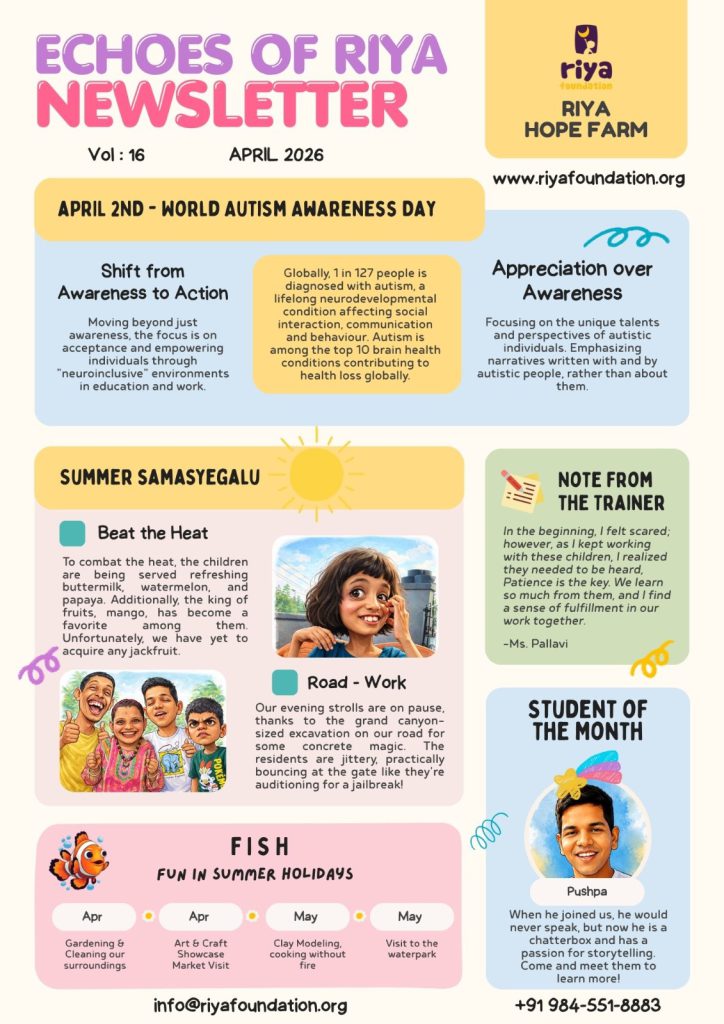
Riya Foundation Champions Neuroinclusion and Action on World Autism Awareness Day
April 2026 | Vol. 16 Newsletter Highlights
The Riya Foundation marked World Autism Awareness Day on April 2nd with a renewed call to move beyond awareness and toward meaningful action. Through its latest edition of Echoes of Riya, the organization emphasized the importance of creating inclusive environments that empower autistic individuals in both education and the workplace.
With autism affecting approximately 1 in 127 people globally, the Foundation highlighted the urgent need for societal shifts. Autism, a lifelong neurodevelopmental condition impacting communication, behavior, and social interaction, is among the top contributors to global brain health challenges. Riya Foundation advocates for “neuroinclusive” systems that prioritize acceptance, accessibility, and opportunity.
A key theme this month was “Appreciation over Awareness”, encouraging communities to recognize the strengths, talents, and perspectives of autistic individuals. The Foundation stressed the importance of amplifying voices from within the autistic community, promoting narratives shaped by lived experiences rather than external assumptions.
Building Lives Through Care and Community
At Riya Hope Farm, the Foundation continues to support children through structured programs and everyday care. With rising summer temperatures, efforts are underway to ensure the well-being of residents. Children are being served cooling foods such as buttermilk, watermelon, and papaya, with mango emerging as a seasonal favorite.
However, infrastructural challenges persist. Ongoing road excavation near the facility has temporarily halted evening walks, affecting the children’s routine. Staff members report that residents are adapting with resilience, even as disruptions continue.
A Trainer’s Perspective
Ms. Pallavi, a trainer at the Foundation, shared her journey working with the children. Initially apprehensive, she discovered that patience and consistency were key to building trust. Over time, she found the experience deeply fulfilling, emphasizing that the children’s growth and openness reinforced the value of empathy-driven care.
Celebrating Progress: Student of the Month
This month, the Foundation recognized Pushpa as “Student of the Month.” Once non-verbal, Pushpa has made remarkable progress and is now actively communicating and expressing a love for storytelling. His journey reflects the impact of sustained support and individualized attention.
Learning Beyond the Classroom
The Foundation also announced its summer engagement program, featuring activities such as gardening, art and craft showcases, clay modeling, and recreational outings. These initiatives aim to blend learning with creativity and life skills, ensuring holistic development during the school break.
For more information, the Foundation can be reached at info@riyafoundation.org or via phone at +91 984-551-8883.
WHEN A NATION STOPS WAITING AND STARTS BUILDING | THE OPPOSITION IS NOT AN ENEMY | FROM ZERO-SUM THINKING TO POSITIVE-SUM THINKING | TRUE NEWS EMERGES WHEN PEOPLE WALK THEIR TALK | INFORMAL TEAMWORK AND THINKING TOGETHER (IT & TT) | THE RISE OF CONTRIBUTORY LEADERSHIP |
Rotarian Lal Goel Leads Nationwide Push to Boost Organ Donation Awareness in India | Global TV
By Staff Reporter | May 8, 2026
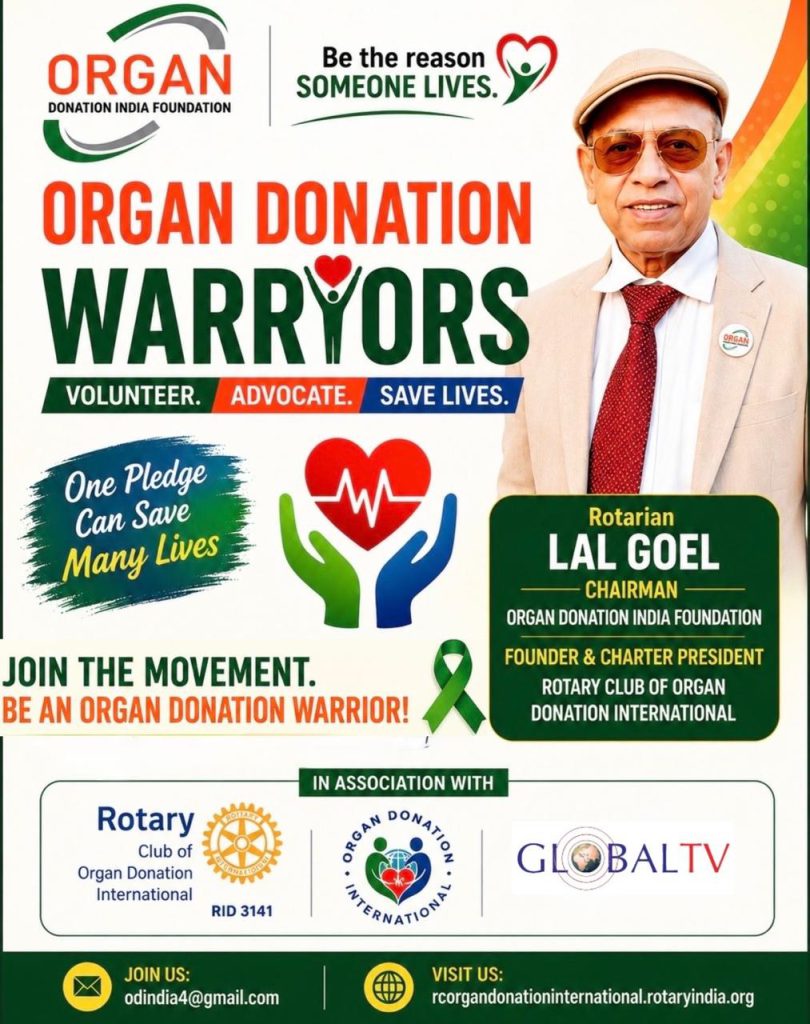
A growing national movement to address India’s organ donation crisis is gaining momentum under the leadership of Rotarian Lal Goel, founder of the Rotary Club of Organ Donation International and chairman of the Organ Donation India Foundation.
In the latest weekly bulletin released by the organization, Rotarian Lal Goel issued a powerful Mother’s Day call to action, urging citizens to give back to mother by pledging their organs and prioritizing life saving donations for women in need. The campaign highlights a stark reality. Thousands of patients across India lose their lives each year not because treatment is unavailable, but due to a severe shortage of organ donors.
At the center of this effort is Organ Donation Warriors, a nationwide volunteer initiative conceptualized by Rotarian Lal Goel. The program aims to build a network of trained citizens who can spread awareness, challenge misconceptions, and encourage organ donation pledges across communities. “Every donor card signed is a promise to a mother you may never meet,” Rotarian Lal Goel emphasized in his message.
The movement, supported by healthcare professionals, volunteers, and media platforms, offers free training and is open to all individuals above 18 years of age. Its long-term vision is to create a more compassionate and informed society where organ donation becomes a shared social responsibility. Beyond advocacy, Rotarian Lal Goel’s message also challenges social attitudes, particularly the tendency to place mothers last in line for medical care within families. His appeal calls for a shift in mindset, urging people to prioritize those who have given life. Organ Donation Warriors should bridge the gap between need and availability, by creating awareness around them in all ways.
WHEN A NATION STOPS WAITING AND STARTS BUILDING | THE OPPOSITION IS NOT AN ENEMY | FROM ZERO-SUM THINKING TO POSITIVE-SUM THINKING | TRUE NEWS EMERGES WHEN PEOPLE WALK THEIR TALK | INFORMAL TEAMWORK AND THINKING TOGETHER (IT & TT) | THE RISE OF CONTRIBUTORY LEADERSHIP |
Positive Media has a Major Role to Play in the development of Keralam | Demographic Dividend | Create a Conducive atmosphere for Development| Global TV
From Propaganda to Peace Ethics Truth and the Future of Journalism
NV Paulose, Chairman, Global TV +91 98441 82044
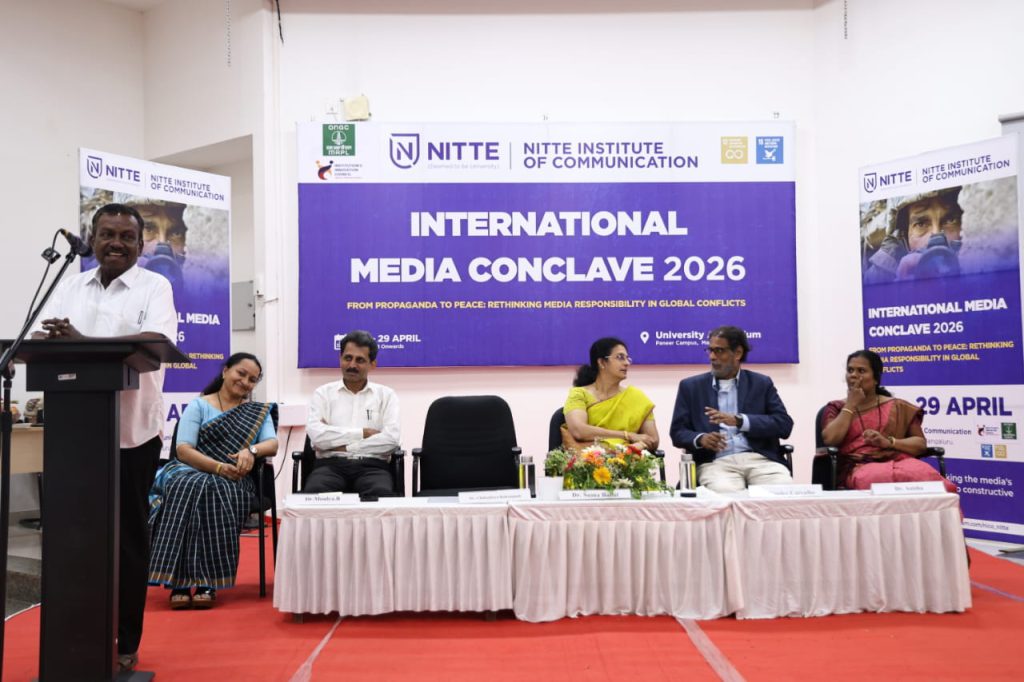
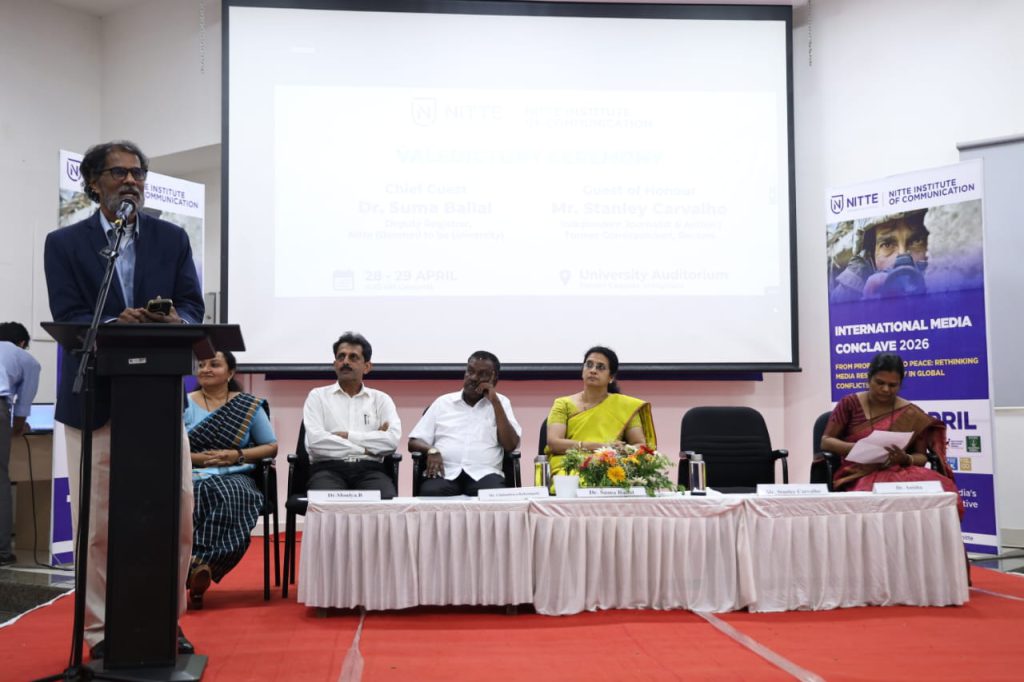
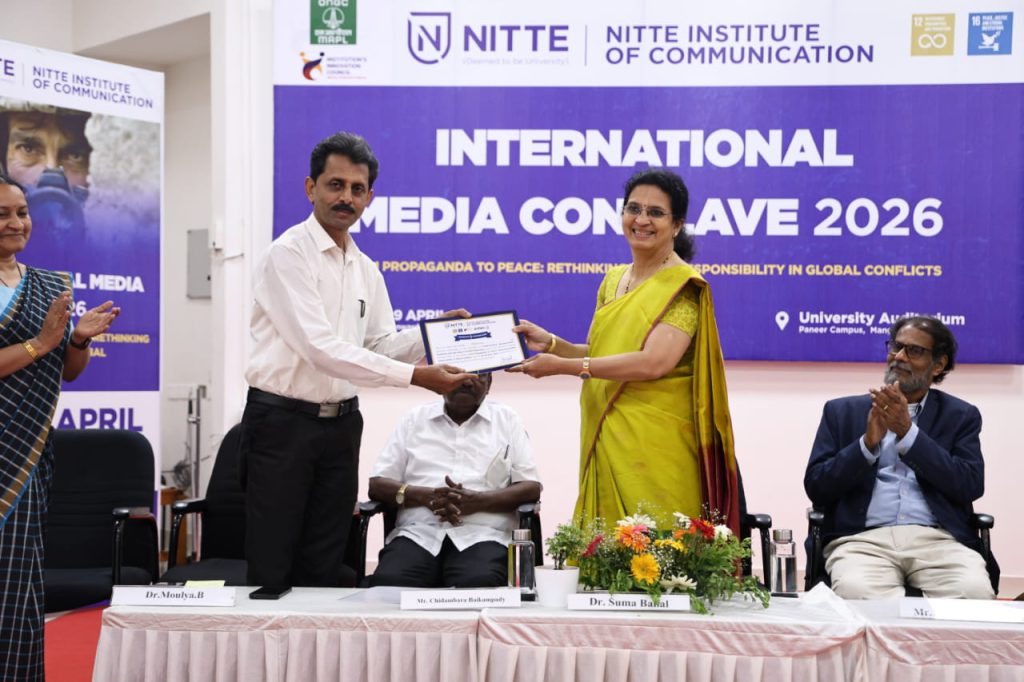
The International Media Conclave 2026, hosted by the Nitte Institute of Communication NICO, concluded with a powerful valedictory ceremony that brought together reflection, recognition, and a renewed commitment to ethical journalism. Over two days, the conclave evolved into a vibrant platform for dialogue, debate, and introspection on the role of media in an increasingly complex global environment. A Theme Rooted in Global Urgency.
The conclave revolved around the theme: From Propaganda to Peace: India’s Responsibility Amid Rising Global Tensions. In an era marked by misinformation, digital manipulation, and polarized narratives, this theme is both timely and necessary. Participants engaged deeply with issues such as:
Propaganda and information warfare
Fake news and misinformation
Social media influence
Media ethics and responsibility
These discussions echoed participants to rethink not only how media operates, but also how it should evolve in the face of global uncertainty.
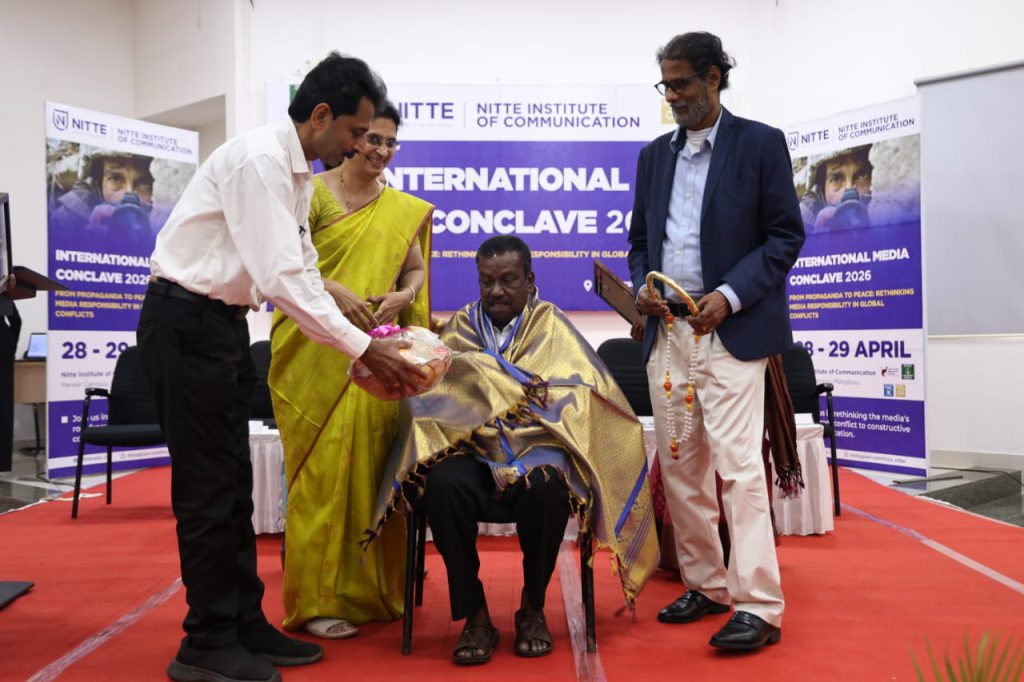
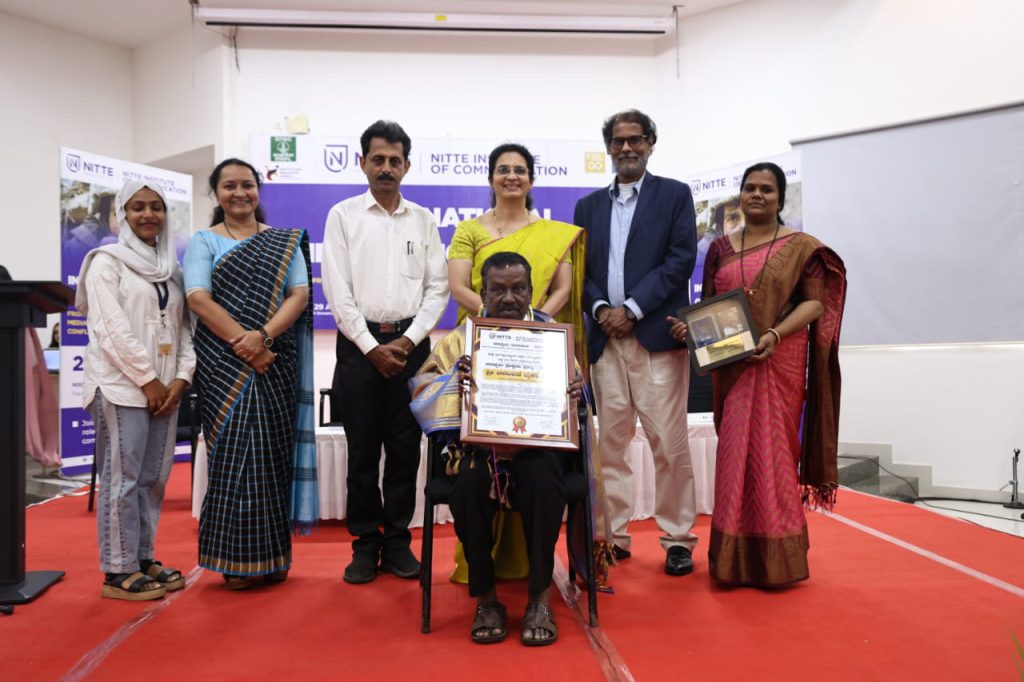
NICO honoured Chidambara Baikampady, Most Reputed Among the Senior Journalist, recipient of the Media Excellence Award. His contributions to journalism reflect on a deep ethical commitment. He spoke in depth about the way truth is replaced in journalism over the years. Individualised Reporting is lost its ways in front of AI Journalism. Today, the involvement of Journalists are less in truth finding. We see same news in all newspapers, he said. In those days, politicians were afraid to face the journalists and were cautious while answering their questions. A mistake would have cost their political career. Today, the scenario had reversed almost brutally.
Valedictory Ceremony A Moment of Gratitude and Reflection
The valedictory ceremony marked the culmination of the conclave, beginning with a warm welcome to distinguished guests. The Chief Guest, Dr Suma Ballal, Deputy Registrar, was acknowledged for her leadership and commitment to sustainability and environmental awareness within academia. The presence of Dr Varadesh Hiregange, Former Director of MIC and GCPAS at MAHE Manipal, added significant academic depth to the session. His reflections on Chidambara Baikampady highlighted the enduring values of truth, sensitivity, and social responsibility in journalism.
The conclave also witnessed the notable presence of senior journalists, led by Pushparaj B N, who currently serves as the President of the Dakshina Kannada Working Journalists’ Association for the 2025 to 2028 term. A seasoned journalist and Mangaluru Bureau Chief of Vartha Bharati, he brings nearly three decades of experience in journalism and public engagement, adding significant credibility and professional insight to the proceedings.
The presence of Stanley Carvalho, a columnist, author, and former correspondent with Reuters, added depth to the ceremony. His insights during both the panels and the closing address left a lasting impression on the audience. One of the strongest messages emerging from the conclave was the primacy of ethics in journalism. In his address, Stanley Carvalho posed critical questions to aspiring journalists:
Will you choose speed over accuracy
Amplification over verification
Sensation over substance
His message was clear. Truth and accuracy must always come before speed. The real battlefield is not just digital. It is our judgment. In a world flooded with information, the responsibility of journalists lies in discerning truth from noise and maintaining credibility.
Truth, Facts, and the Responsibility to Question
A key philosophical insight discussed during the session was the nature of truth itself. Truth is often multidimensional and shaped by perception. However, one principle remains non-negotiable: Facts are sacred and comment is free. This distinction defines responsible journalism. While interpretations may vary, facts must be verified, protected, and presented without distortion. Equally important is the courage to ask questions. Journalism thrives on curiosity and critical inquiry. The zeal to question narratives, challenge authority, and seek clarity is what sustains the integrity of the profession.
Journalism as an Ism
An engaging perspective that emerged was the idea of journalism as an ism, a philosophy comparable to ideologies like Marxism or Gandhism.
In this sense, journalism is not merely a profession but a commitment to:
Truth
Justice
Accountability
Social responsibility
At its core lies a timeless principle. Journalism must serve as the voice of the voiceless.
Giving Voice to the Marginalized
A recurring theme in the discussion of Chidambara Baikampady’s work was the role of journalism in representing the marginalized. Historically, journalism has stood as a platform for:
The oppressed
The unheard
The underrepresented
This responsibility remains crucial today. In an age dominated by powerful narratives and digital amplification, ensuring that marginalized voices are heard is more important than ever. Baikampady’s work was praised for its sensitivity and authenticity in capturing these voices, reinforcing the human dimension of journalism.
The Creative Expression of Truth
While journalism often operates within constraints such as deadlines, formats, and editorial limits, creative writing offers a space for deeper and more personal expression. Reflections on Baikampady’s literary contributions, including his work Black Boy, highlighted how creative writing allows for:
Honest self-expression
Emotional depth
Exploration of nuanced truths
In creative spaces, a writer is free from structural limitations, enabling a more complete and authentic articulation of ideas.
Media, Humanity, and Ethical Balance
Another significant concern raised during the conclave was the over sensationalization of news, particularly tragic events. While breaking news is essential in a competitive media environment, excessive repetition and dramatization can desensitize audiences. Instead of fostering empathy, it risks turning suffering into spectacle. The message was clear. Journalism must balance urgency with humanity. Ethical reporting requires not just accuracy, but also compassion and responsibility toward those affected by the news.
The Digital Battlefield and the Crisis of Trust
The conclave repeatedly emphasized that today’s media landscape is a digital battlefield, not merely of information, but of perception and judgment. Key challenges include:
Declining trust in media
Rapid spread of misinformation
Narratives shaped by algorithms
In this context, the future of media will not be shaped solely by technology, but by the choices journalists make:
To verify before believing
To question before sharing
To listen before reacting
Behind the Scenes The Making of a Conclave
Organizing an international conclave of this scale is no small feat. It requires months of preparation, coordination, and teamwork. The event was widely appreciated for its:
Meticulous planning
Seamless execution
Thoughtful selection of themes
Effective coordination of speakers and logistics
From travel arrangements to session scheduling, every detail was handled with precision, reflecting the dedication of the organizing team.
A Collective Effort
Special recognition was given to the HoD, Dr. Moulya Baladi, faculty members and organizers, including , Dr Anisha, Dr Mesa, and Mr.Jayanth Kodkani, for their leadership and commitment. Equally commendable was the active participation of students, who played a vital role in:
Organizing sessions
Engaging in discussions
Contributing to the overall success of the conclave
Their enthusiasm and involvement highlighted the importance of experiential learning in media education. Supported by MRPL, the conclave brought together journalists, scholars, and media professionals to deliberate on media responsibility in global conflicts.
Beyond the Conclave A Beginning Not an End
As the conclave concluded, speakers emphasized that it should not be seen as the end of a conversation, but the beginning of a responsibility. Students were encouraged to:
Reflect on the discussions
Continue questioning dominant narratives
Carry forward the values of truth and integrity
A Call to the Next Generation
The final message of the International Media Conclave 2026 was both inspiring and challenging. The future of media lies in the hands of today’s students. They are stepping into a world that is complex and often uncertain. Yet, with courage, clarity, and conscience, they have the power to shape a media landscape that is ethical, trustworthy, and humane.
The International Media Conclave 2026 converged into a platform for transformation. By addressing critical issues at the intersection of media, ethics, and global responsibility, it encouraged participants to rethink the purpose of journalism. At its core, the conclave reaffirmed a timeless truth. Journalism is not just about reporting the world. It is about shaping it responsibly.
A mission to create a nationwide network of Organ Donation Warriors to spread awareness and inspire organ donor pledges.
Open to anyone aged 18 or older, including organ donors, recipients, donor families, social workers, students, healthcare professionals, Rotary & Lions members, and all citizens passionate about saving lives.
Completely FREE programme — No registration fee or charges of any kind for Organ Donation Warriors.
Free online training will be provided covering:
Organ donation awareness*
Brain death & legal aspects
Public speaking & social media advocacy
Community outreach & leadership*
Volunteers will participate in:
Awareness drives
Seminars & workshops
School & college campaigns
Social media campaigns
Walkathons & public events
Outstanding volunteers will receive:
Digital Certificates
Identity Cards
Recognition Awards
Leadership opportunities
The movement aims to build India’s largest citizen-led organ donation awareness network and help save thousands of lives.
For Free Registration WhatsApp 9892724908 Email: odindia4@gmail.com Website: rcorgandonationinternational.rotaryindia.org
Conceptualised & Led By Rotarian Lal Goel Chairman — Organ Donation India Foundation Founder & Charter President Rotary Club of Organ Donation International
Initiated by Organ Donation India Foundation & GYAN In association with Rotary Club of Organ Donation International and Global TV